

Yes, it is that time of year when we gardeners have to get out there and cut everything back. Failure to take action now will mean that your garden will not fulfil its potential this Summer. Over the next few weeks I will be pruning, cutting back and generally getting my garden into shape for the coming summer. I will be working with the types of plants you have in your Spanish gardens, so just follow what I do over the next few posts and we can guarantee a lovely garden this summer.
Unlike most of you I have certain hindrances whilst doing my garden, namely: Cruella (my wife), her brood of chickens from hell, and as a special treat the idiot son has come home for a holiday and Cruella has declared him a chicken whisperer. Anyway, let’s get on with the gardening.
10th January 2024. Things I have been doing lately:
Over the next few posts I will keep you up to date with the big winter cutback, but this particular post will cover the following:
- Pollarding Peruvian False Pepper trees
- Pruning Sago Palms
- Cutting back Dame de Noche
- Pruning climbers
- Dealing with the chicken whisperer
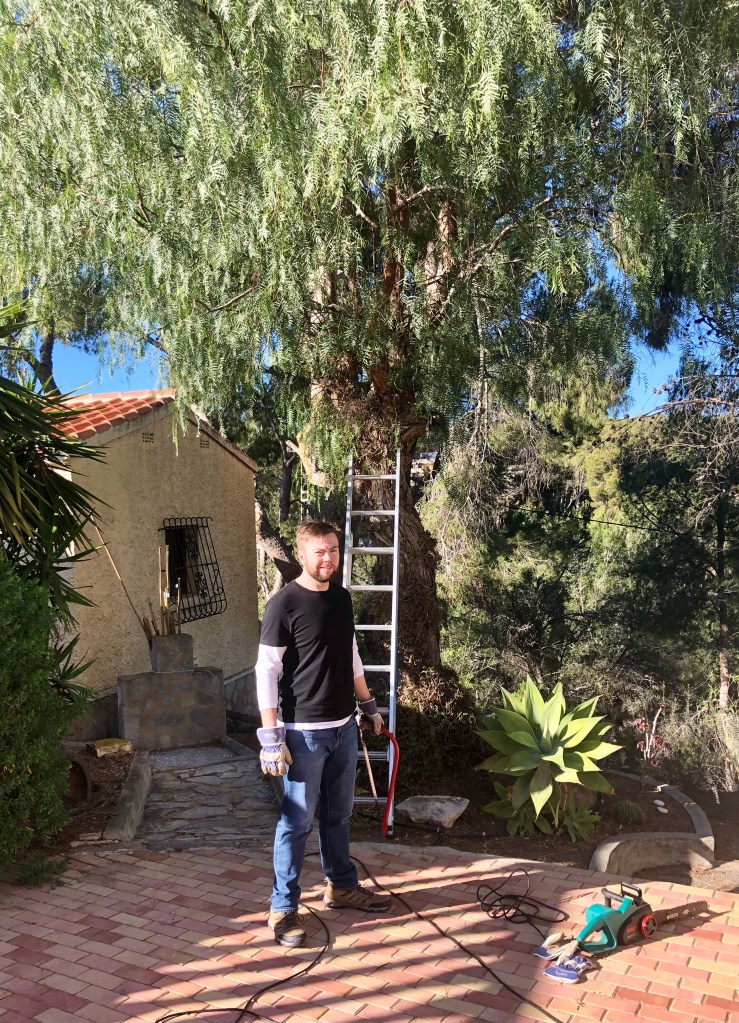
Pollarding Peruvian False Pepper trees: This tree can be found in many Spanish gardens. Its weeping willow type foliage and lovely little red peppercorn fruits provide an attractive tree that can grow up to 15 metres tall. However, too often the false pepper is allowed to grow into a huge behemoth that whips around in the wind and covers you terraces in discarded foliage and blocks your swimming pool skimmers. The photo below shows my tree before pollarding.

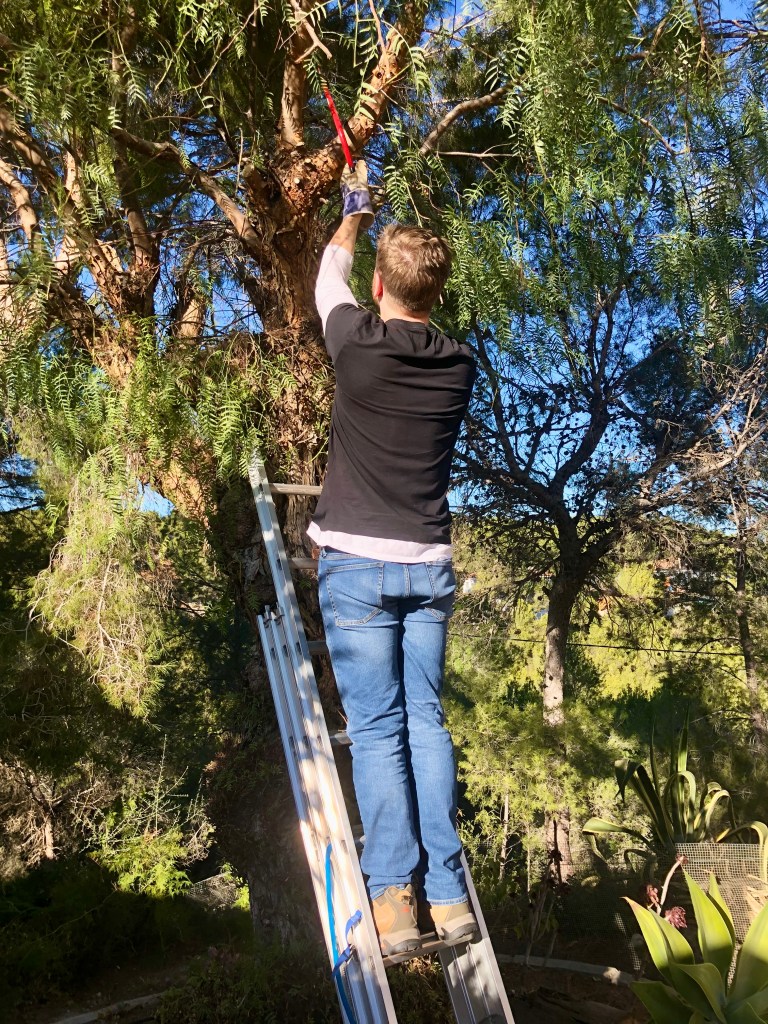
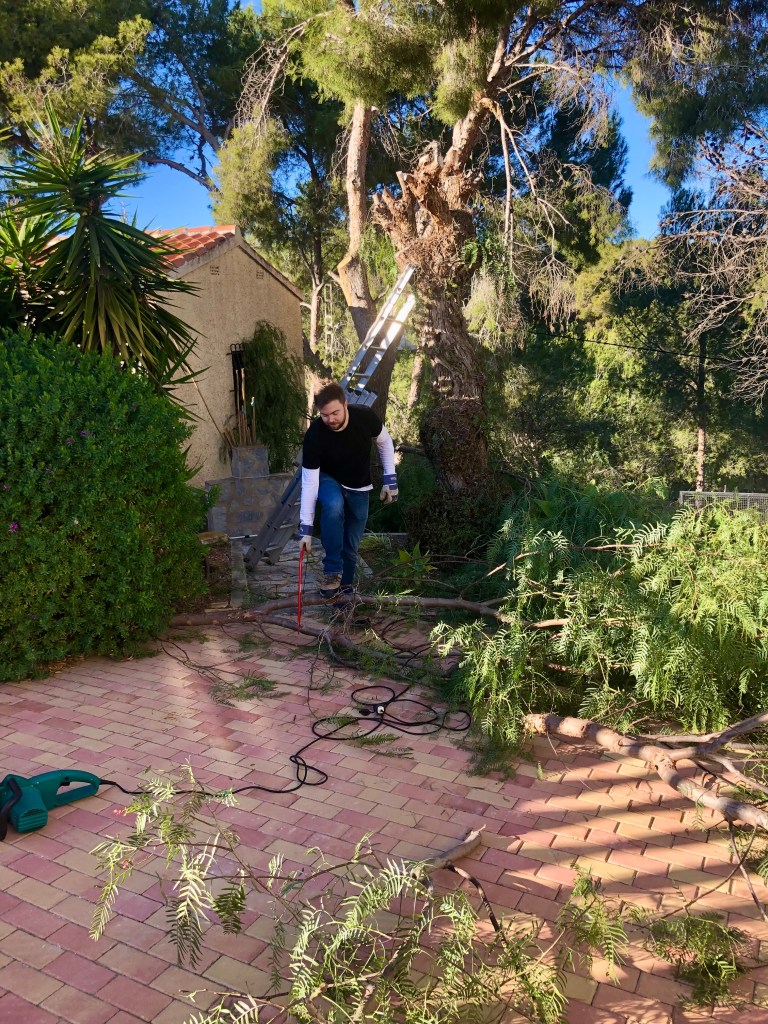
The secret to keeping the false pepper as a useful part of your garden landscape is to ensure that you pollard it every 5 years or so. Pollarding involves radically pruning back the main branches which reshapes the tree and encourages secondary growth that will stay manageable for a few years. When pollarding you need to use a chain saw or bow saw to cut each of the main branches about 6 inches from the base of the branch. By keeping the correct distance from the base of the branch you will not damage the branch “collar” which contains the growth instructions for the branch.
Luckily the idiot son was visiting so I persuaded him to help me pollard the tree. I had to promise him copious quantities of beer and Cruella insisted that I held the bottom of the ladder at all times. The photos below show the idiot in action with the final photo showing the finished pollard. Click on each photo for a larger view.


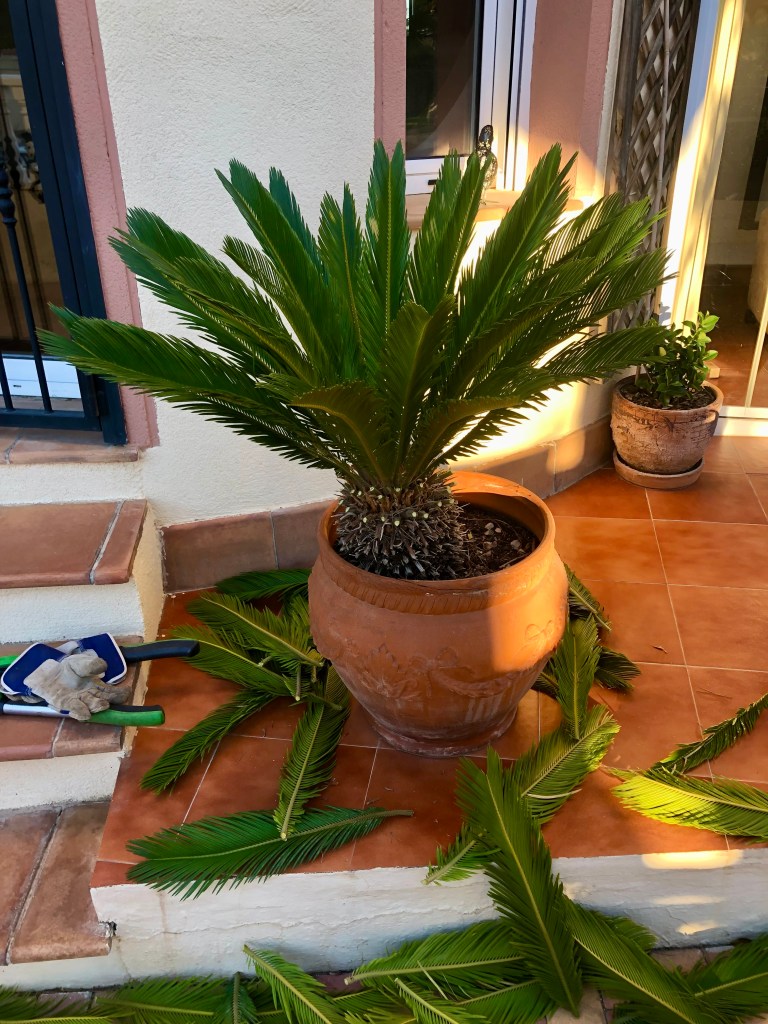
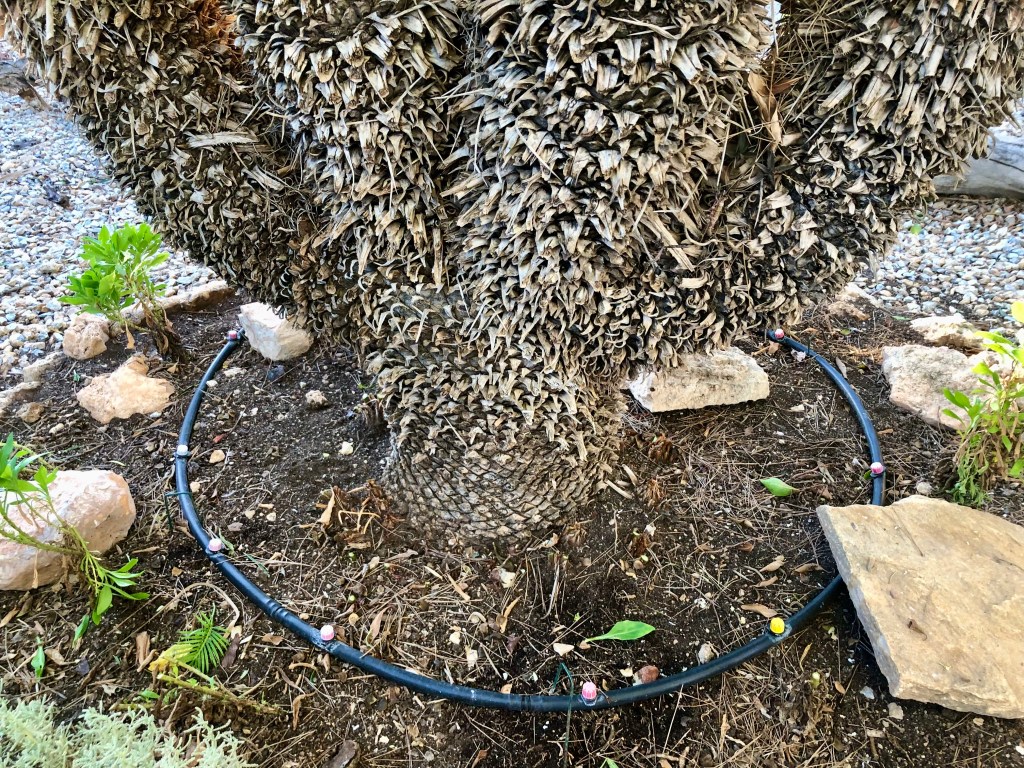
Pruning Sago Palms: The slow growing sago palm is another perrenial favourite in most Spanish gardens. These can be majestic if pruned correctly, but if just left to their own devices, they are just another green lump in your garden. There are two schools of thought on pruning sago palms. The first says that you must leave the fading yellowing fronds on the plant as they provide nutrients. The other says keep it pruned and tidy and if necessary give it a feed. I support the latter process and always prune mine back to two rows of fronds from the top. Two rows is important as if you left just one row and then these became diseased then you could lose the plant. I have two main sago palms; one is in the ground and the other in a pot. Both are shown below. Click on each photo for a larger view.


From the photos above you can see that both are due a trim. Using long handled lopers I gradually move round the trunks taking off rows of fronds until I am left with just two rows on each stem. The photos below show my handiwork.


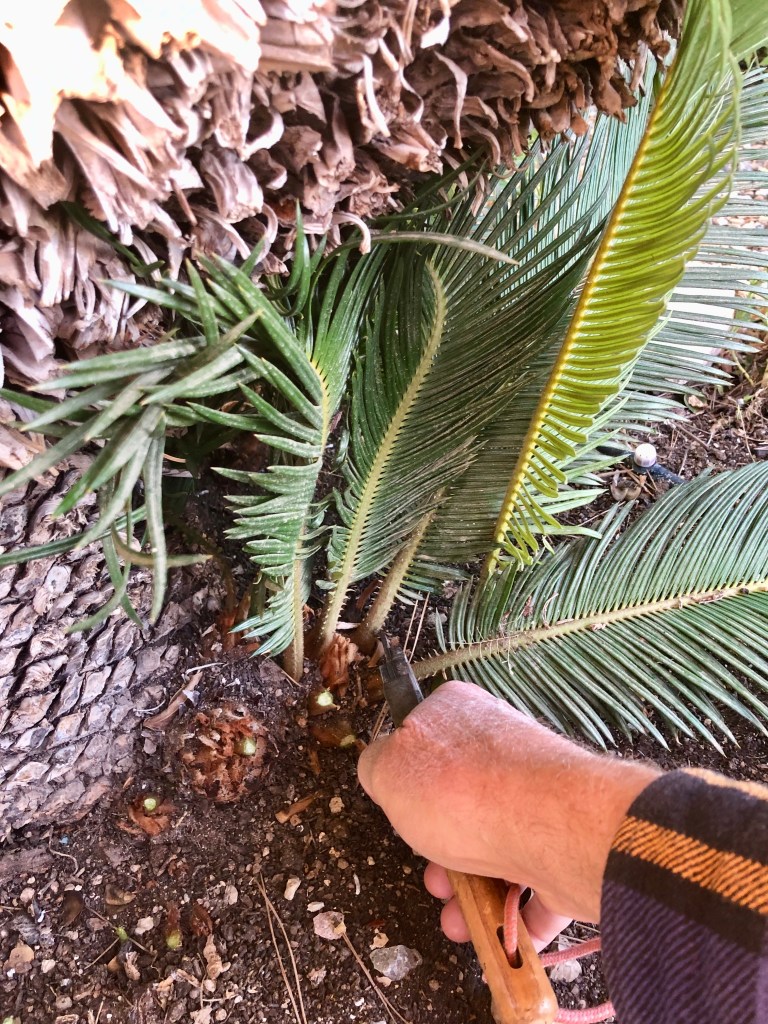
The final stage in pruning the sago palm is to remove any pups it has thrown from the base of its trunk. These look like mini sago palms that are emerging, and you can pot these up, but that is for another days post. Today we just need to take them off to tidy up the plant. The first photo below indicates the pups circled in red. You just need to remove these with your secateurs or lopers and then the plant is left nice and tidy for the summer.

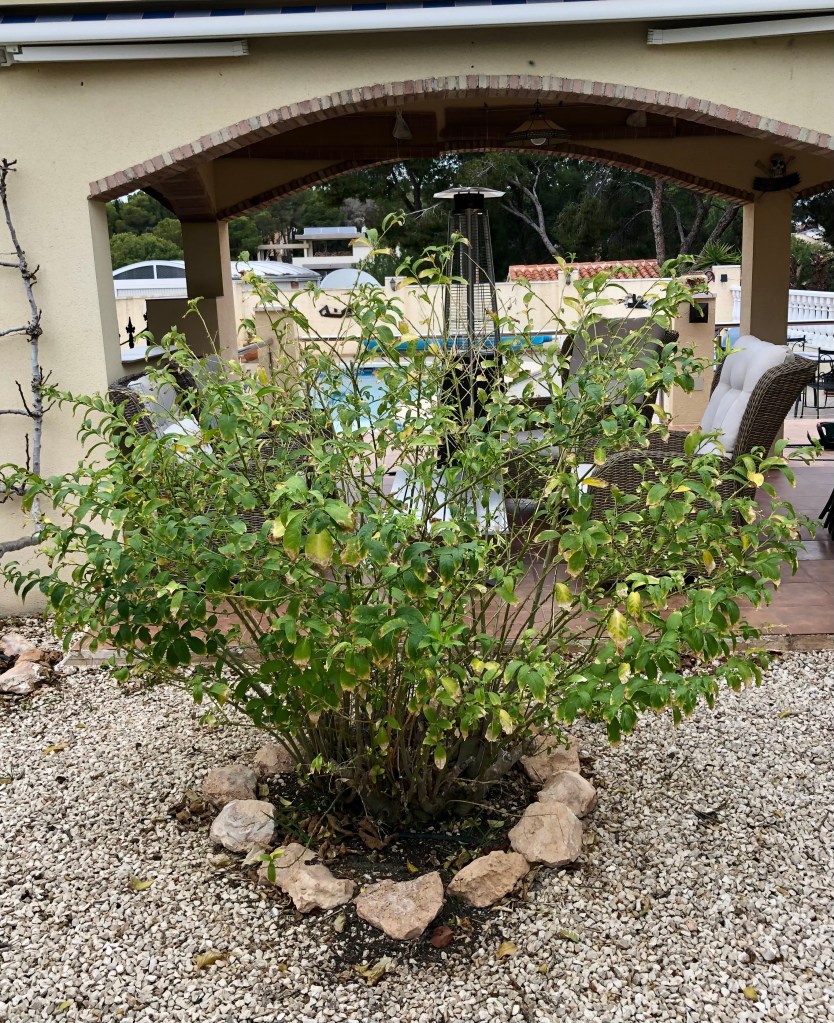
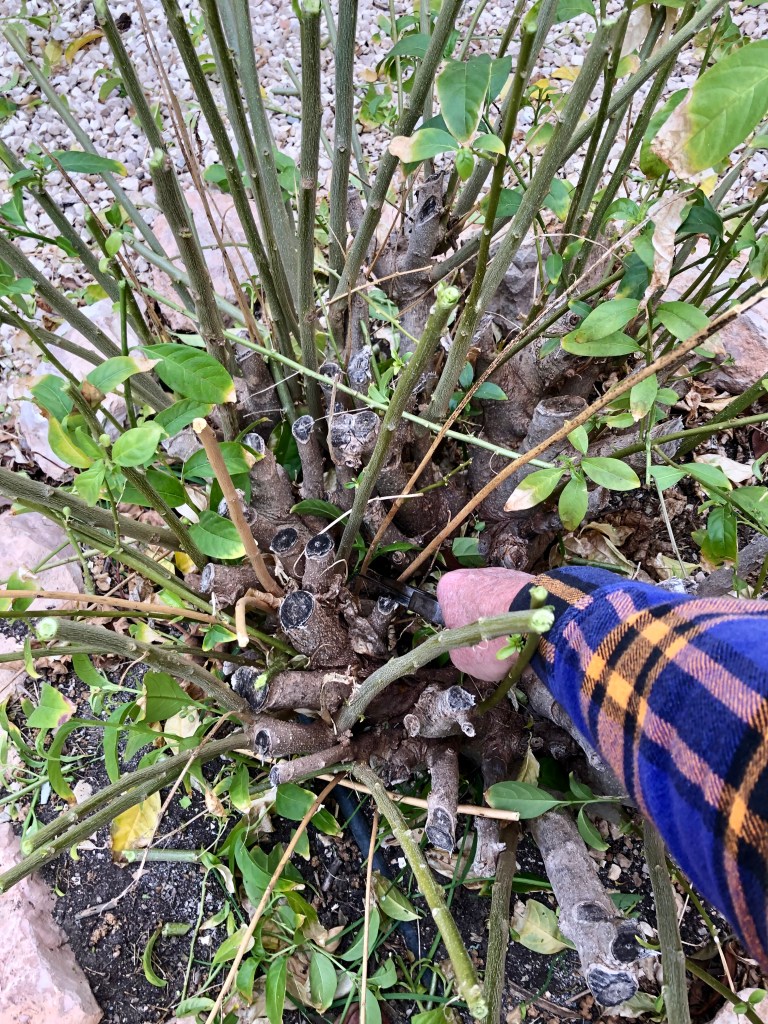
Cutting back Dame de Noche. The lady of the night which is a night scented Jasmine needs to have its final cut back now if you are to enjoy its lovely scent in the summer. You should have already cut the plant back by a third after its first flowering to allow a second flush of flowers. This final cutback can be quite drastic to encourage a healthy shapely growth. Depending on the age of your plant you can take it back to 6 inches.
The first two photos below show my dame de Noche looking straggly and ready for its cutback. Notice that I have planted my dame de Noche close to our outside seating and eating area so that we can benefit from the beautiful night scent. Click on each photo for a larger view.

The next photos show the plant cutback and ready for its final pruning. To finish the prune use your secateurs to open up the centre of the plant to take out crossing stems and let light and air in.



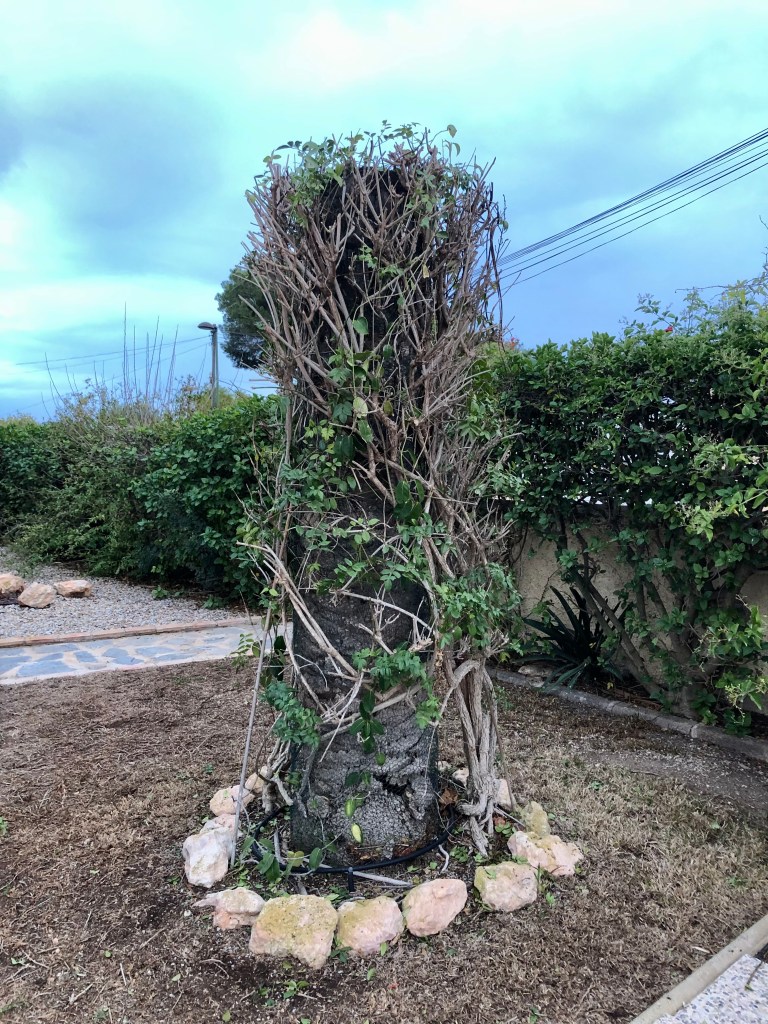
Pruning climbers: The trick with pruning climbers is that you do not want to lose height but you do want to reduce bulk so that you can let light into the plant. So in effect what you need to do is remove side shoots. The simplest way to do this is to run your electric hedge trimmers up the front of the plant aiming to stay away from the upward growth. Lacking hedge trimmers just use garden shears to achieve the same effect.
So far I have cut back the Solanum that grows up the side of my outside kitchen and dining area and also my column of plants that I trained up a palm trunk. The photos below show that all that is needed is to just take away bulk and bring back shape. Click on each photo for a larger view.


Finally, don’t be tempted to feed or overwater the plants you have pruned. Wait a couple of months till you see new leaf growth and then give a light feed.
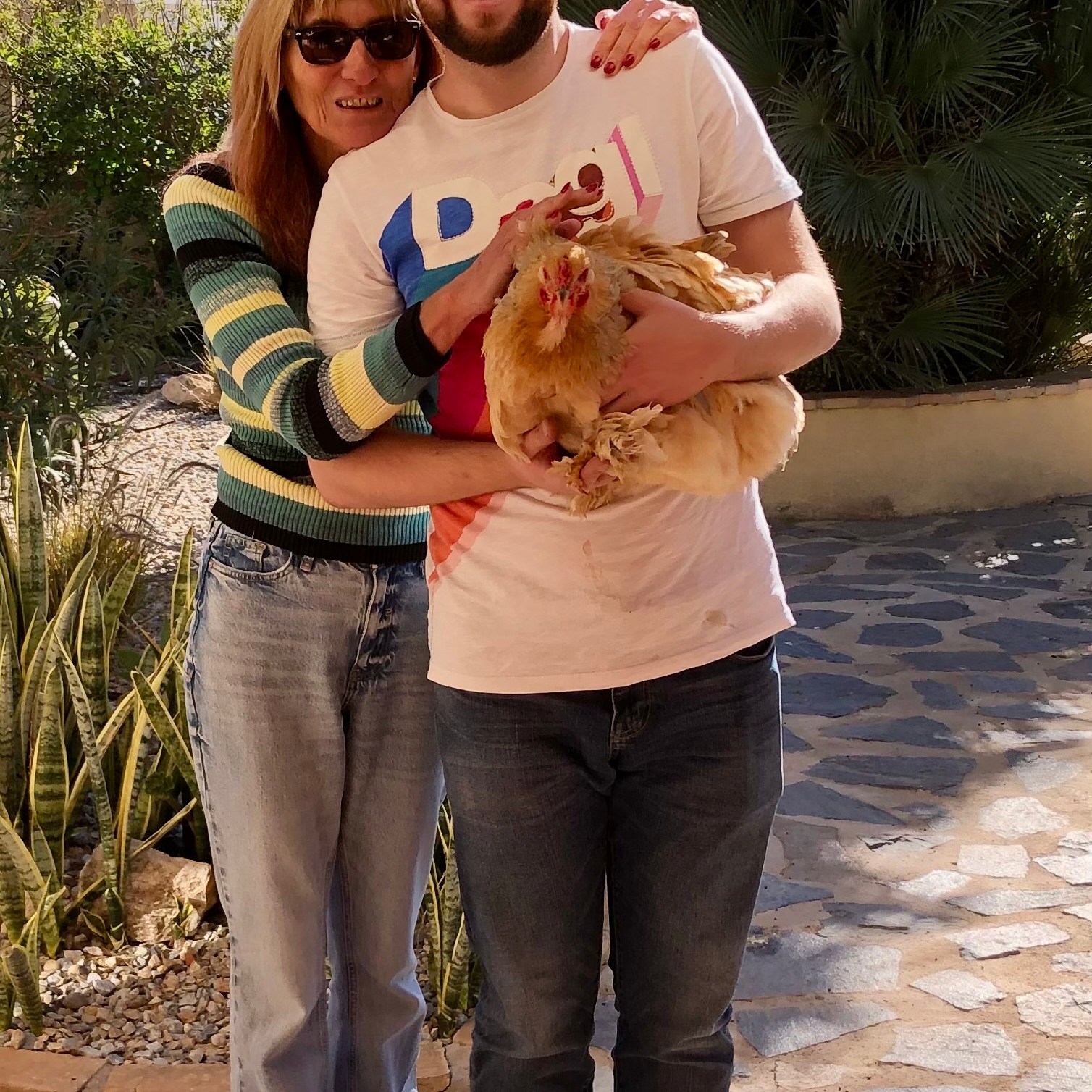
Dealing with the chicken whisperer. Whilst I have been dealing with the start of the big Winter cutback, Cruella (my wife) has been training the idiot son in the art of chicken whispering. She is trying to convince him to leave the world of Finance and become her rightful heir, or as she calls him “Prince of Chickens”. So far he is holding out, but she is making him follow a strict curriculum of chicken studies. This includes lessons in Chickenese every morning followed by hands on work with the chickens in the afternoon. Early evening is spent in the so called art of chicken whispering. The later evening is spent in the rites and mysteries of putting the chickens to bed, but I can’t tell you anything about this as I am not allowed to see what goes on.
The photos below give you an idea of what they get up to, I did have some others but Cruella made me delete them! I am only allowed to show you these ones as Cruella is using them in his graduation album. Click on each photo for a larger view.



 Spanish Garden
You must be logged in to post a comment.