

What about the above for the headline of a blog post. It has everything alliteration, drama and a hint of menace. However, now that we are swinging into summer there are a number of things you should be doing, and a number of things you should stop doing. So this is what I will be covering in this post.
- What you should be doing with your citrus trees and other fruits
- Dealing with seedlings
- Time to give roses a feed and mulch
- Check your irrigation system and timers
- The final days of the big Agave Attenuata
- I am getting bees
6th April 2024 Things I have been doing lately.
What you should be doing with your citrus trees and other fruits. By now all of your citrus trees should be in full bloom. So it is time to stop messing around with them and just let them get on with it. Don’t cut, don’t prod, don’t replant, just leave them alone. There are however, three exceptions.
Firstly, make sure that you remove any suckers that are growing on the trunk of your trees. Suckers are bright green, pliable small shoots that have a habit of popping out on your tree trunks this time of year (especially on older trees). Suckers take away the goodness from your tree before it gets to the leaves and fruit. Especially deleterious are suckers growing from below the earth at the foot of the trunk as these will often be growing from below the graft and will probably be root stock. The photos below show examples of suckers on my trees. Click on each photo for a larger view.
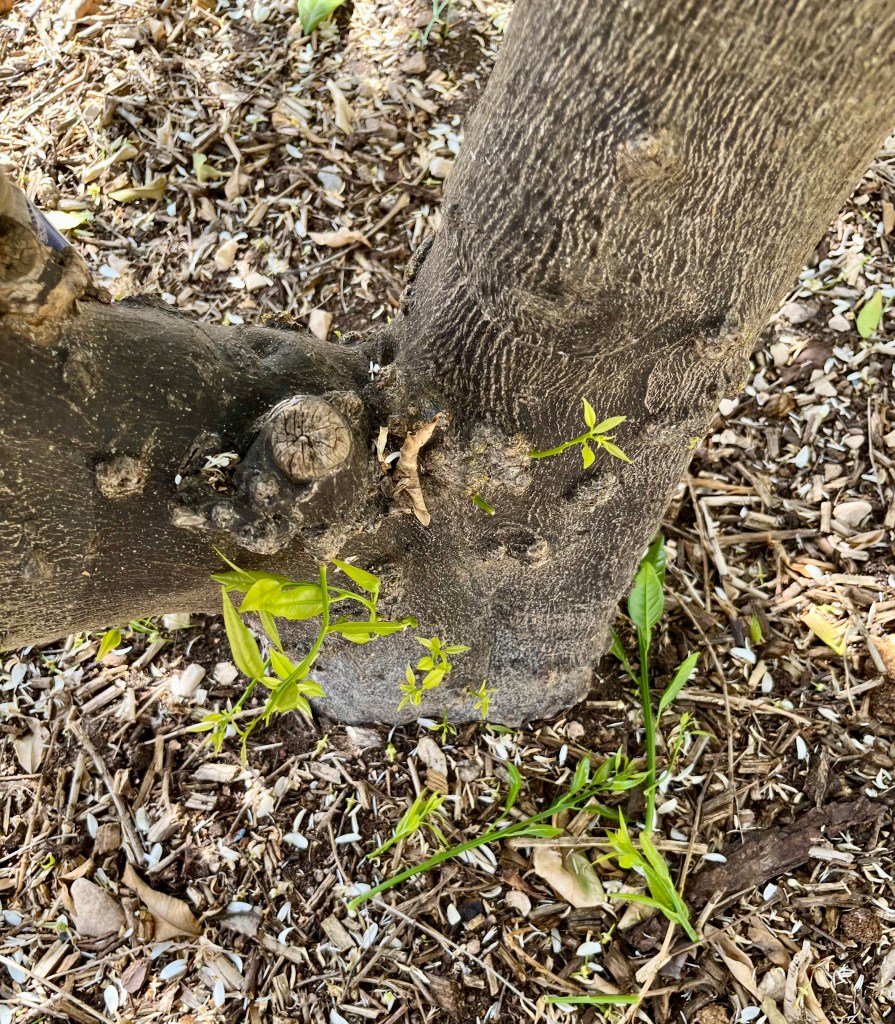

The simplest way to deal with suckers is to don your gardening gloves and go around pulling sharply down on each sucker. If you catch suckers early they will come away very easily. However, if they have been left for a while they will have hardened to wood, in this case you will need your secateurs, and need to cut as close to the trunk as possible. If you leave a spur it will grow back.
Secondly, go around each of your trees and look for branches that are absolutely dead – no leaves and definitely no blossom. By now these are definitely dead so you can cut them right back. This process lets air and light into the tree; but remember no other cutting. The photo below shows me actively hunting dead branches.

Thirdly, you should have been actively feeding your citrus from January; so if you haven’t been, get on with it. There are a variety of feeds you can use whether pelleted or liquid, but you must always use a citrus feed rather than a general purpose feed. I also find it helps if you can give them a glug of iron. The photo below shows some of the feeds that I use.

In addition to feeding citrus trees you can start feeding other fruiting trees and vines. In this case do not use citrus feed, but another specialist feed for fruiting plants. The feed second from the left in the photo above is the one I use.
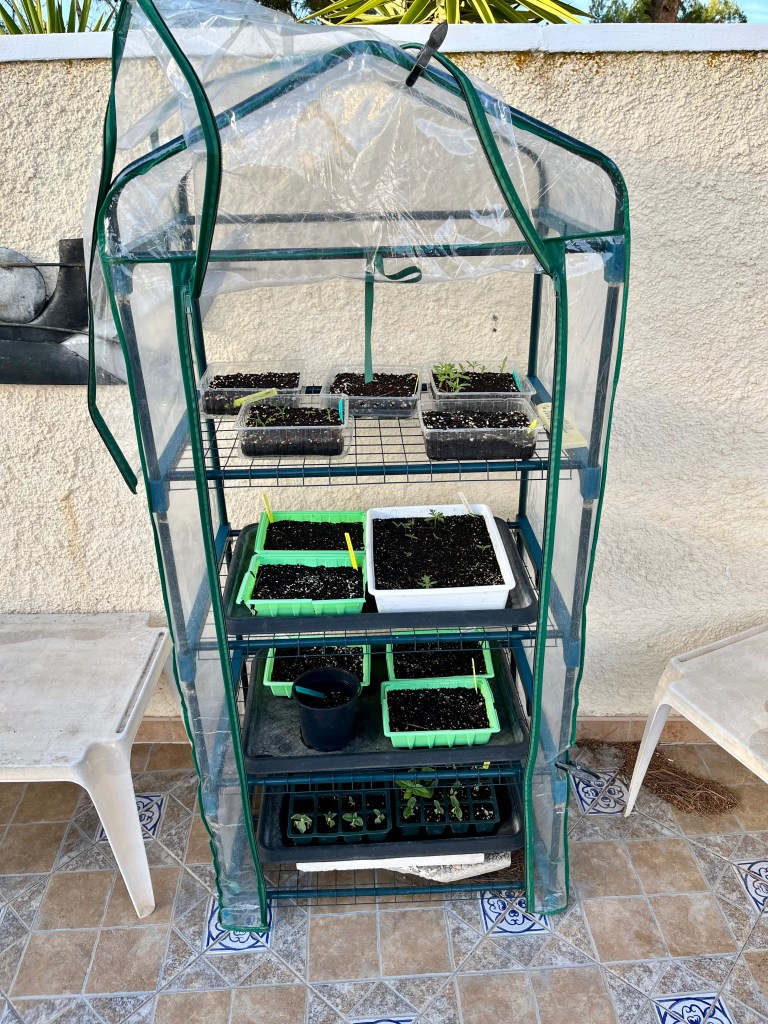
Dealing with seedlings. Normally by this time of year I have a potting bench full of seedlings ready for pricking out and potting on. However, this year has been a disaster. Apart from the chicken vandalism; which I mentioned in my last post, whereby the chickens threw over my mini greenhouse and killed all my first seeds. I resowed them all and then inflicted another disaster on myself. Because of the changeable weather I left all my seedling trays in my mini greenhouse for the day whilst I was out, but unfortunately the sun came blazing back and by the time I got home all my seeds had been baked..
The photos below show the various stages of disaster with my mini greenhouse. I have tried to rescue what I can but as you can see very few seeds have germinated. Don’t let this put you off planting seeds, they are normally a fantastic way to stock your garden and improve your gardening skills. You can still plant seeds now, but make sure you do not put them in a mini greenhouse, but instead make sure they are out of the sun for the fiercest part of the day. The one consolation I have is that my cuttings and bare root plants are coming on fine. Click on each photo for a larger view.



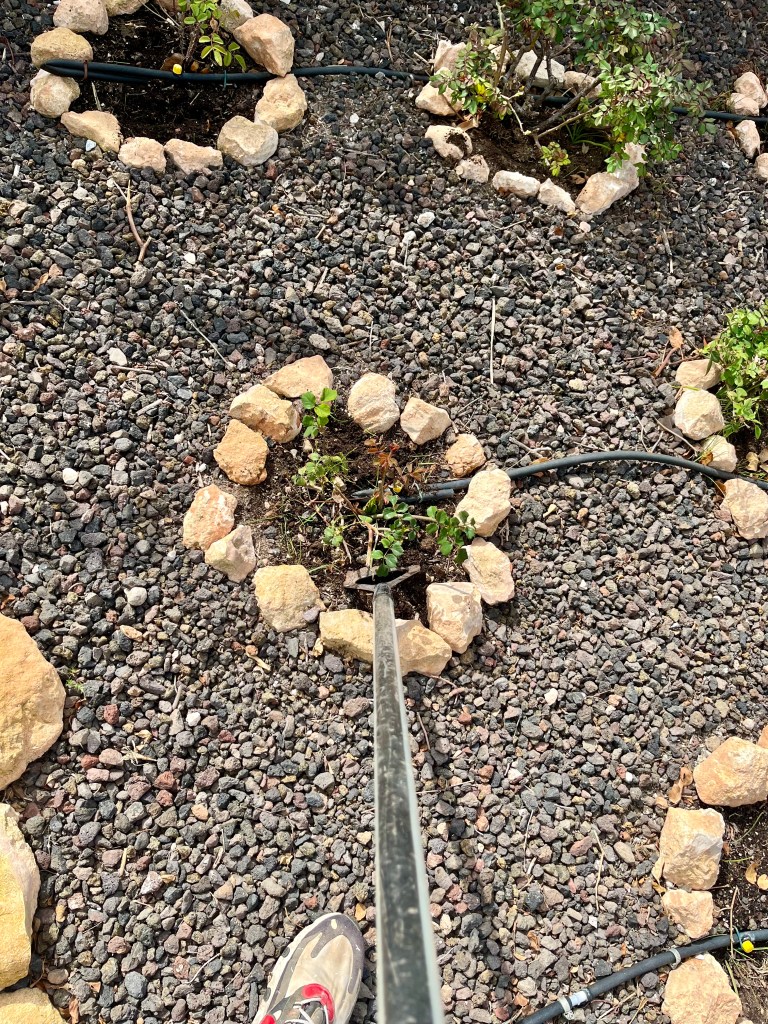
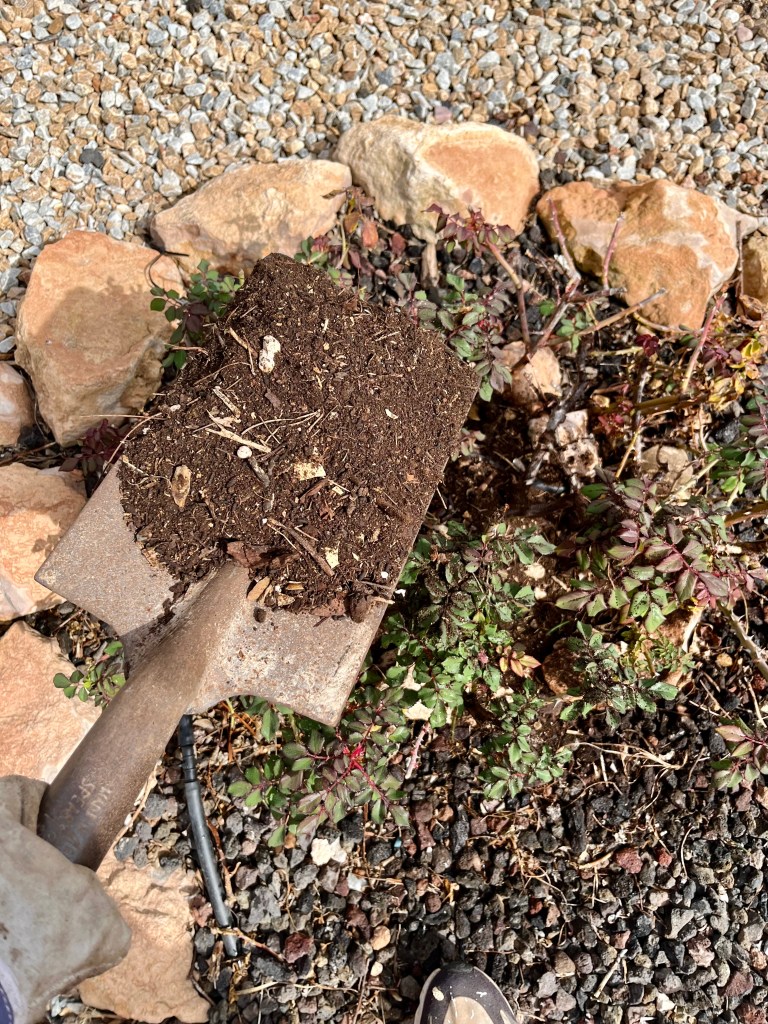
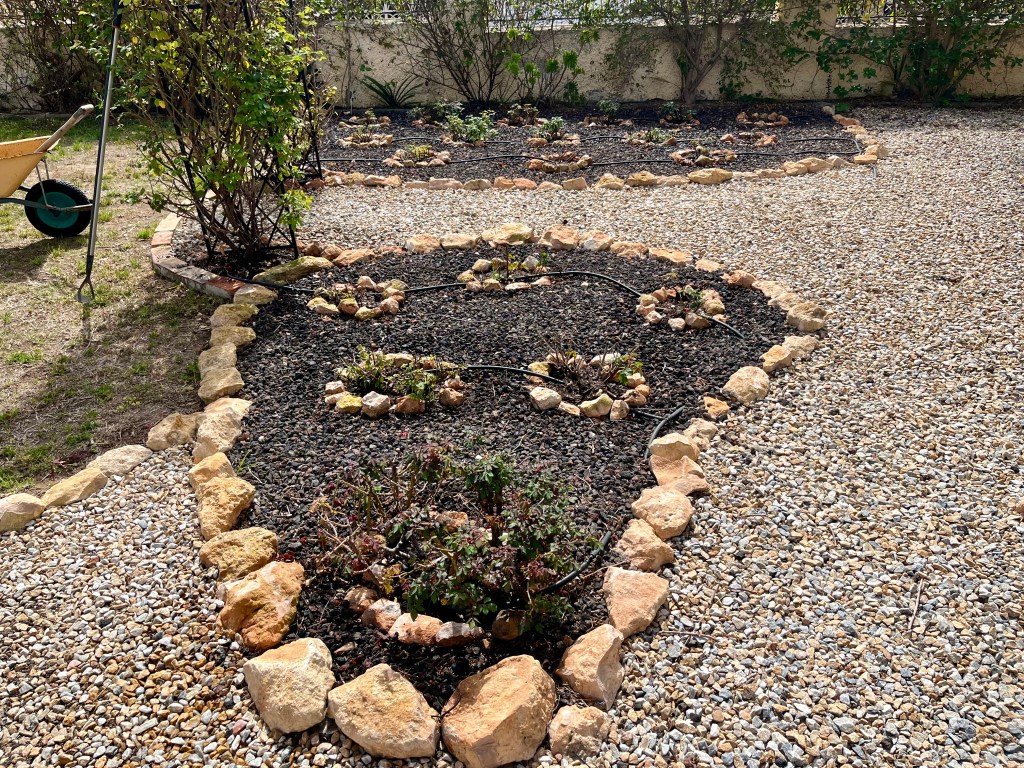
Time to give roses a feed and mulch. Roses grow surprisingly well in Spain, but it is time now to mulch them and feed them to get the best blooms this summer. Before feeding I highly recommend that you mulch. This is a simple process involving 3 stages.
- Hoe all around your roses to remove all weeds, you can do this by hand but it can be a bit prickly.
- Water your roses profusely.
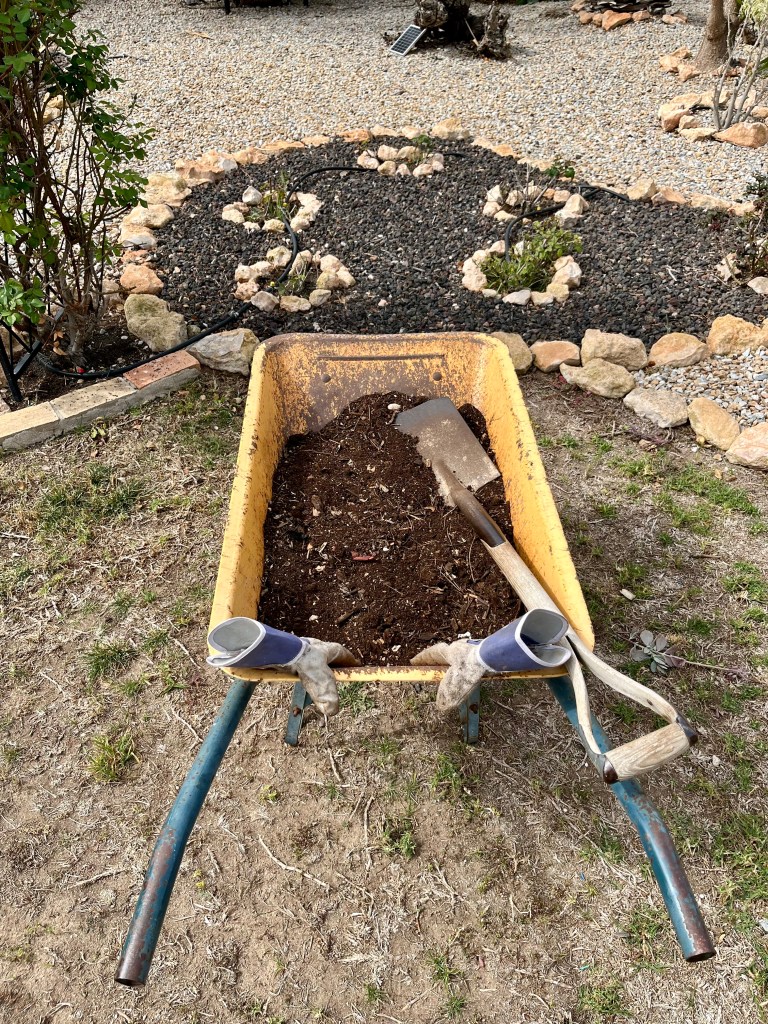
- Apply a thick mulch of about two inches using either bark or compost.
Once you have mulched then you can start to apply feed. Roses are hungry feeders so I feed once every month. The photos below show the mulching process followed by a photo of the feed that I use (others are available). Click on each photo for a larger view.


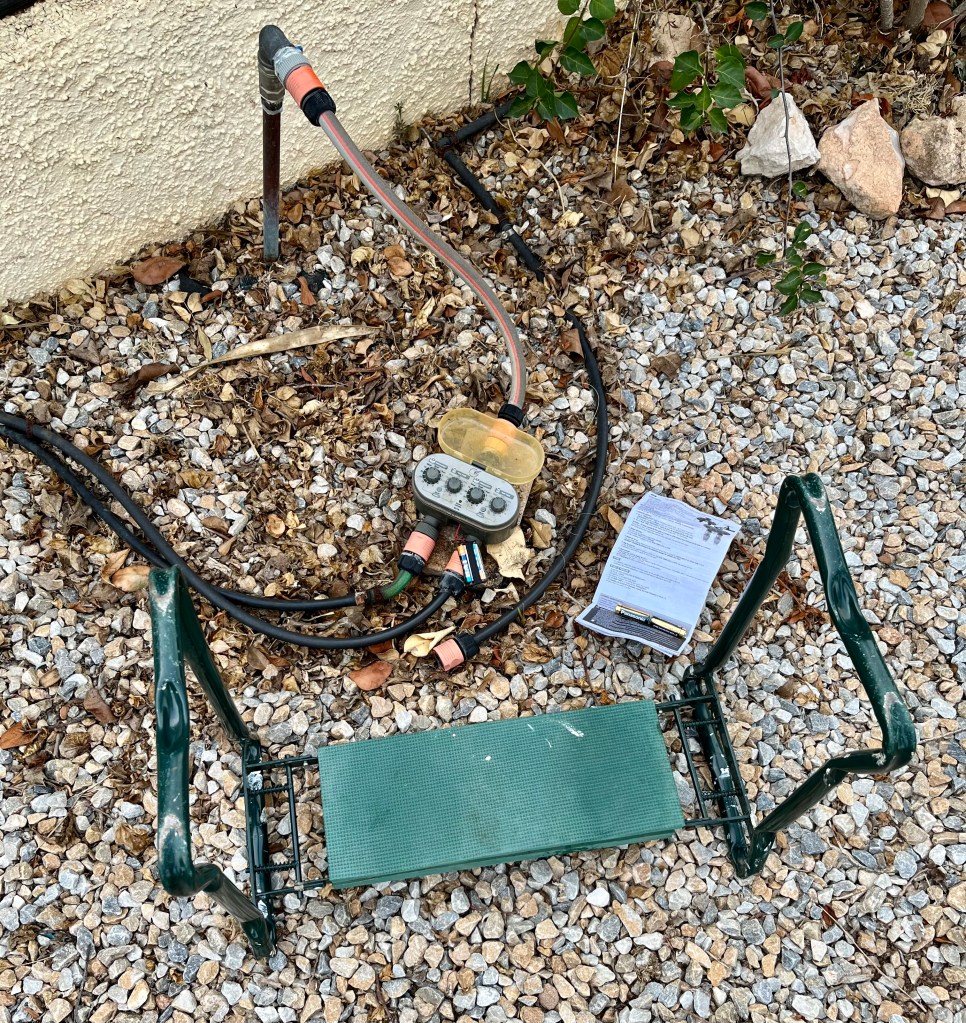
Check your irrigation system and timers. Irrigation and timers are essential in the Spanish garden. I know you think you will remember to water your plants, but you will forget and they will start to die. However, irrigation timers are no good to you if they have run out of battery or your irrigation pipes are leaking all over the place.
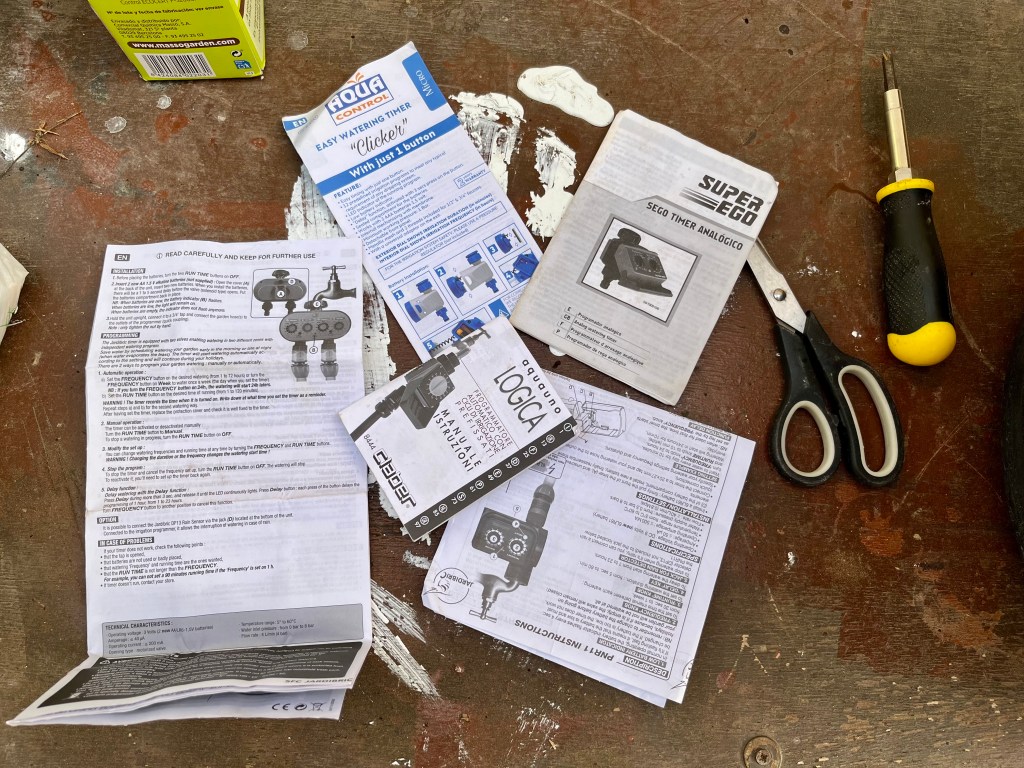
I have 6 separate irrigation timers in the various parts of my garden and a couple of hundred yards of irrigation pipe. Now is the time to go around and change all the batteries in your timers. Once you have changed your batteries, turn your irrigation on (one at a time) and wander round checking for leaks. The photos below show some of my irrigation issues, including all the various instructions for my many and varied timers and a few leak issues. Click on each photo for a larger view.


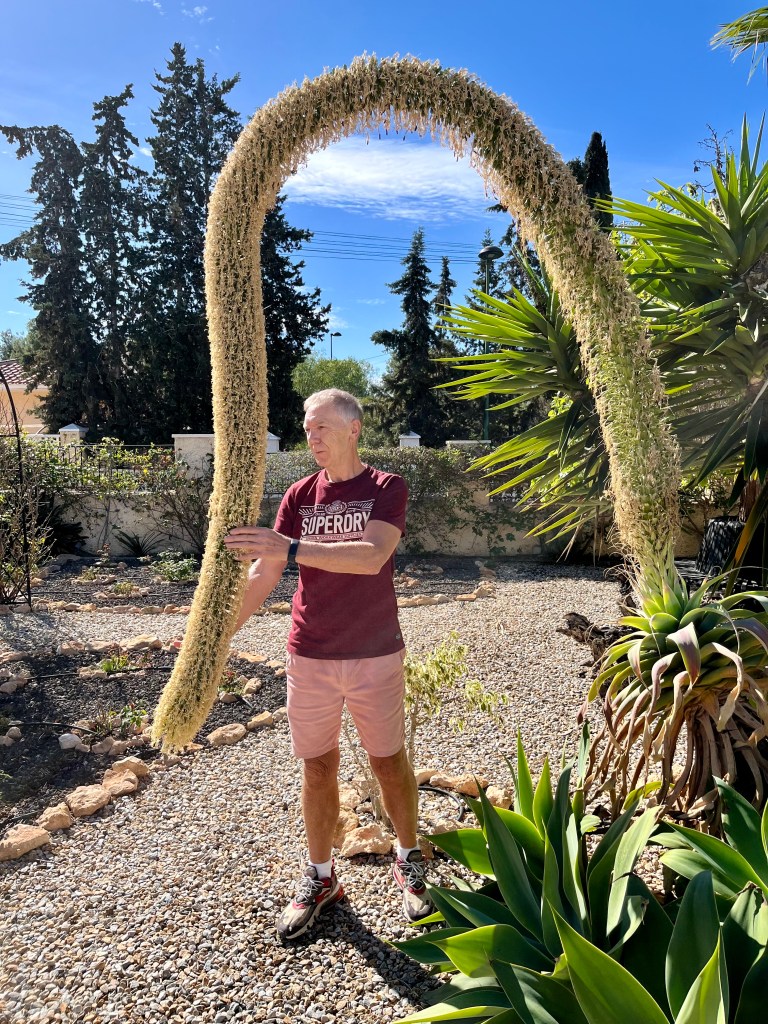
The final days of the big Agave Attenuata. Regular readers of this blog will know that one of my large Agave Attenuata has flowered spectacularly and is now dying. As a mark of respect for the dying plant I spend days in quiet contemplation and discussion with the plant as the end comes near. We talk about all the good times when she was a mere pup and laugh about how she kept bending the wrong way when I wanted her to grow in another direction. She is obviously concerned for her pups but I have reassured her and promised I will always look after them.
Sadly the end is here. We always spend the last few hours singing her favourite arias. We have been singing Madame Butterfly with her taking the part of Cio-Cio-San (Madama Butterfly), whilst I reluctantly play the part of Lieutenant Pinkerton. We end with the tragedy of Cio-Cio San’s suicide whilst singing “Con onor muore”. I asked Cruella (my wife) to take some photographs during the aria so that I could keep her memory alive for her pups.
The photos below show us singing. Her final words were “Io muoio con onore”; if you look carefully you can see that I am crying. Cruella just laughed and said she couldn’t hear the plant singing and all the neighbours think I am mad. I told her she can’t hear the plant singing as it requires a soul. Click on each photo for a larger view.

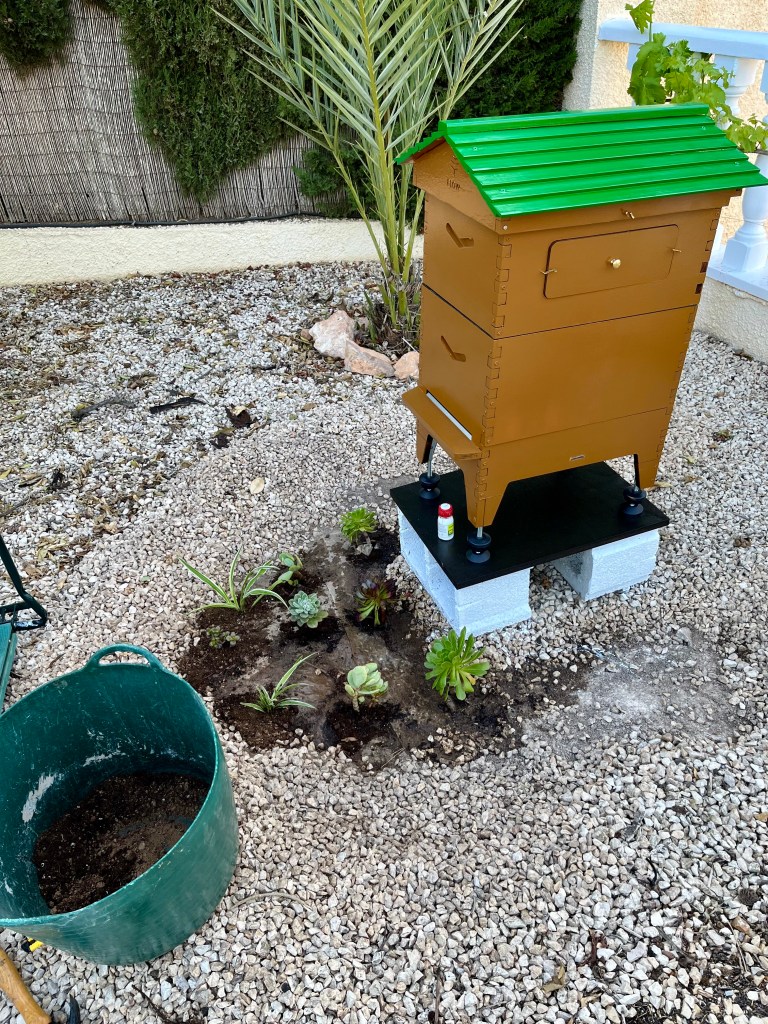
I am getting bees. I must confess I was a little bit down for a few days after the Agave death. Even Cruella was worried about me and decided to ask me what I wanted for my birthday, I said no it’s ok. But she insisted, saying go on I will get you anything you want. And that’s how I am getting bees. Watch this space. The photo below shows my hive ready assembled for their arrival at the end of the month. I have even planted them a little flower bed to welcome them.

 Spanish Garden
You must be logged in to post a comment.