

Hooray it’s Spring, Cruella (my wife) has flown off to our English house and I am free to merrily prepare the garden for summer unhindered. I started going about my tasks with joy in my heart a spring in my step and a glint in my eye, but unfortunately things soon took a dark turn and I have become a victim of serious garden chicken crime. Anyway more of that later, on with the gardening.
11th March 2024. Things I have been doing lately:
There are a number of jobs we need to be getting on with in Spring.
- Lift and separate Cannas
- Guarding against Palm Weevils
- Applying mulch to flower beds
- Fighting and losing the mulch wars
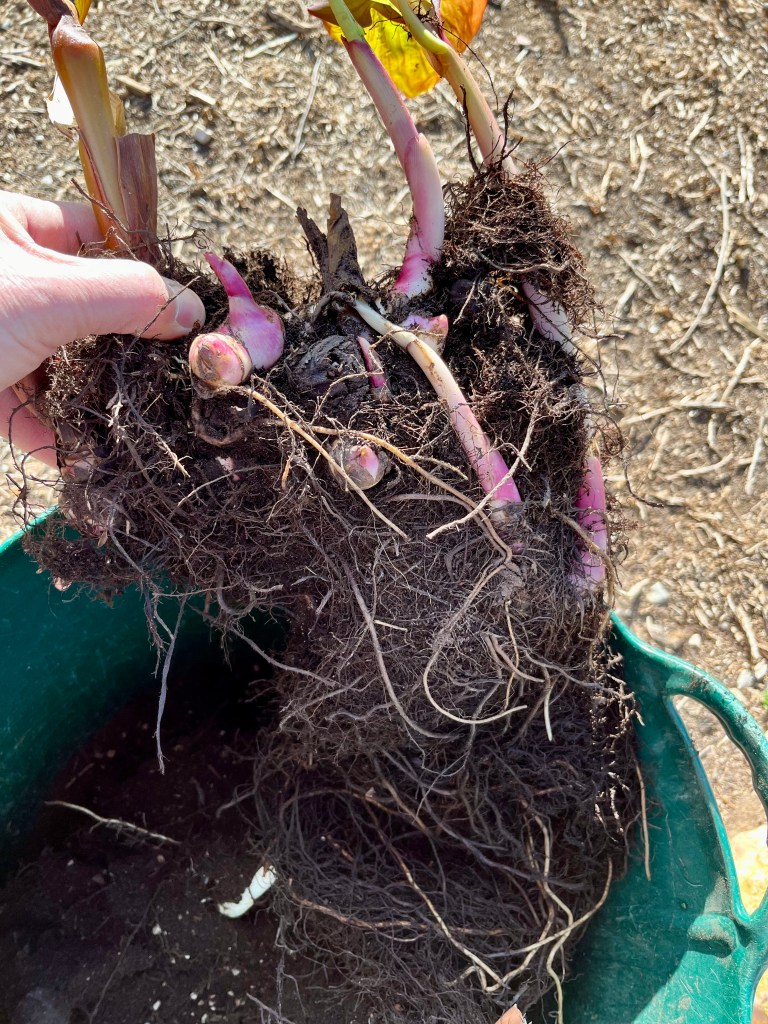
Lift and separate Cannas. I call this the Wonderbra treatment – I recognise this is both accurate and sexist. If you grow cannas then you will know that they are delightful plants that provide wonderful flower spikes that add height and drama to any garden. Unfortunately here in Spain drought is taking a toll on canna rhizomes (ugly bulbs) as they are drying up and failing to thrive. Normally you can happily leave cannas in the soil and the rhizomes will gradually multiply and provide you with more plants.
However, by this time of year I should have been seeing the first shoots of my cannas poking through, but when they failed to reveal themselves I have had to dig them up, separate them and give them a good drink before replanting them. Luckily my friend Pip has regifted back to me some cannas I had previously given to her, so I was able to replenish my stock. The first photo shows my cannas ready for some work followed by them having a drink by soaking for 24 hours in a trug before replanting. Click on each photo for a larger view.

When replanting canna, they need to be planted shallowly in rich but free draining compost. Where there are shoots from the rhizomes these need to be left poking from the soil. The photos below show the planting process. Click on each photo for a larger view.


Guarding against Palm Weevils. The problem of Palm weevils won’t really mean that much to those of you who don’t live in Spain. But, if you live in Spain and you have Phoenix palms, then you dread the advent of palm weevil season. For those of you who are mere disinterested bystanders the photo below shows the culprit together with its malignant grub.
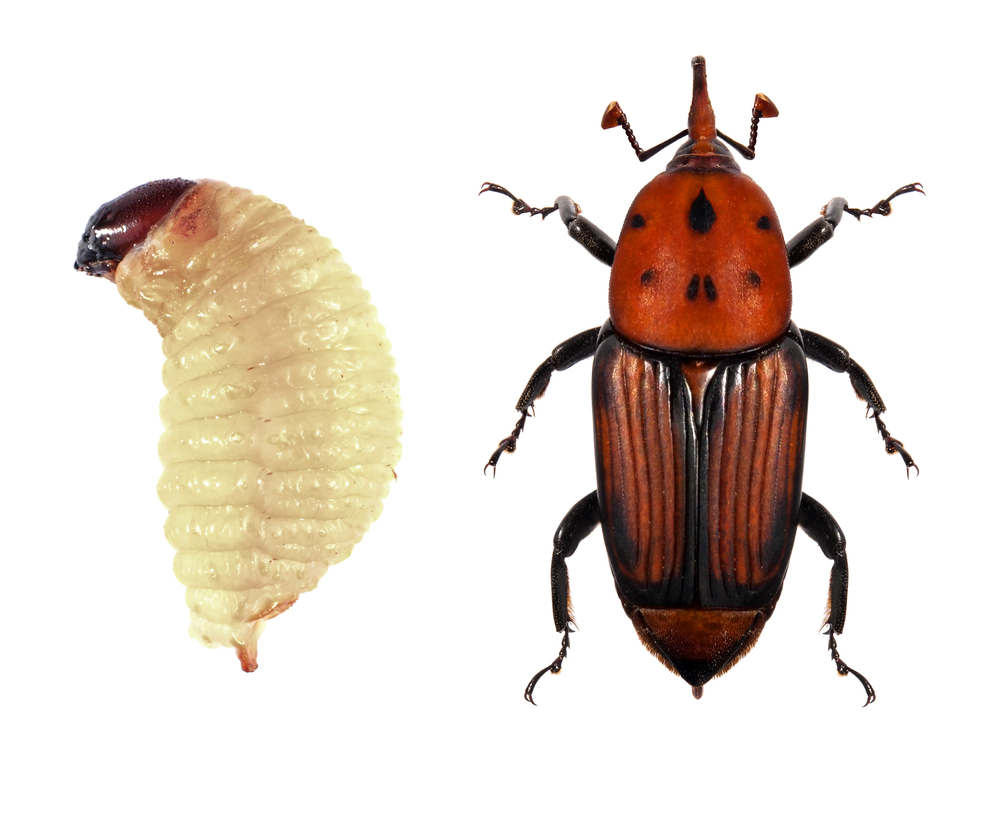
The modus operandi of this weevil is to lay its eggs at the base of Phoenix palm fronds. When hatched into grubs, they merrily chomp their way up inside the fronds and in most cases destroying the tree. The weevil can be treated by spraying the crown of the palm with a proprietary chemical, but there are two main problems with this. Firstly, unless you know what you are looking for, the weevil grubs can remain undetected until it is too late. Secondly, many palm trees are much to tall for the normal gardener to reach the crown and therefore require specialist contractors.
You can guard against Palm weevils. The easiest way is not to cut your palms between the end of March and October. The adult weevil flys only in the hot months, and I am assured by experts that it can smell a cut palm frond from a very long distance.
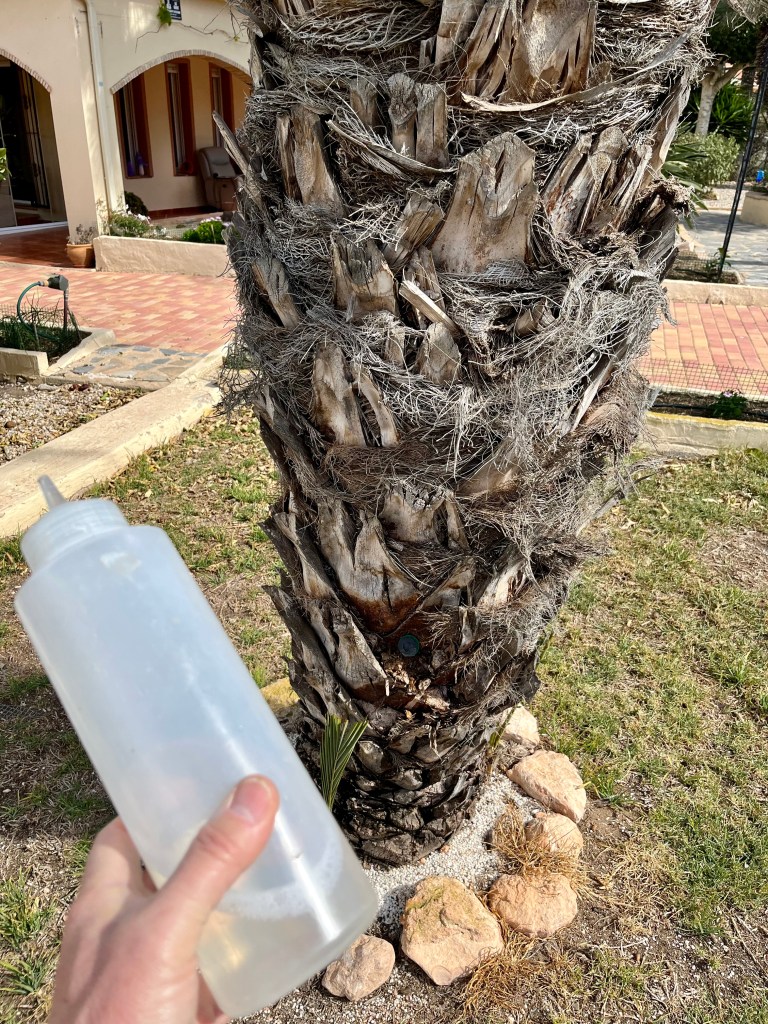
In addition to not cutting my palms at certain times, I have drilled holes into the centre of my very large palms into which I drip a chemical during the summer months which allows the sap to take the chemical to the palm crown making it a poisonous environment for Palm weevils. If you want to find out more about this method then just use the search bar on this blog to search for Palm weevils as I have covered this in detail in past posts. The photos below show my poisoning technique in action, followed by some photos of some of my newly cut palms. Click on each photo for a larger view.


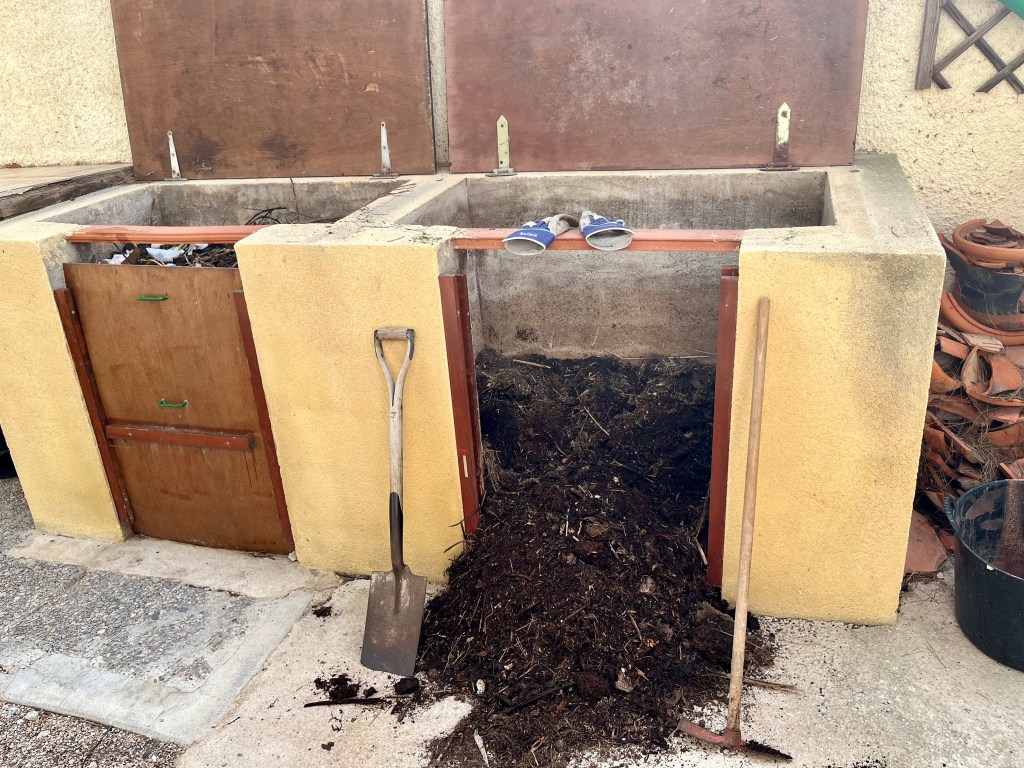
Applying mulch to flower beds. I have waxed lyrical in the past about the importance of compost to the soil of all Gardens. A good friable soil rich in nutrients and natural enzymes is the perfect medium in which all plants will thrive. Compost bought from garden centres will have been violently heat treated to kill off weed seeds, which in turn can damage or destroy the micro nutrients. So if you possibly can set yourself up a compost bin or two. The photo below shows my compost bins in action.
Applying a deep mulch to your flower beds at this time of the year will remarkably improve even the most depleted of soils. There are three basic stages to mulching:
- Hoe the flower beds to remove all weeds
- Water profusely
- Apply a thick mulch of compost at least 2 inches thick
If you haven’t got your own compost then buy a good one from a garden centre, or if you prefer use shredded bark (though this will not instantly improve the soil). The photos below show my flower beds in the process of being mulched. Notice in the last photo some of the big fat worms from my compost making their way into the soil, you only get this benefit by making your own compost. Click on each photo for a larger view.


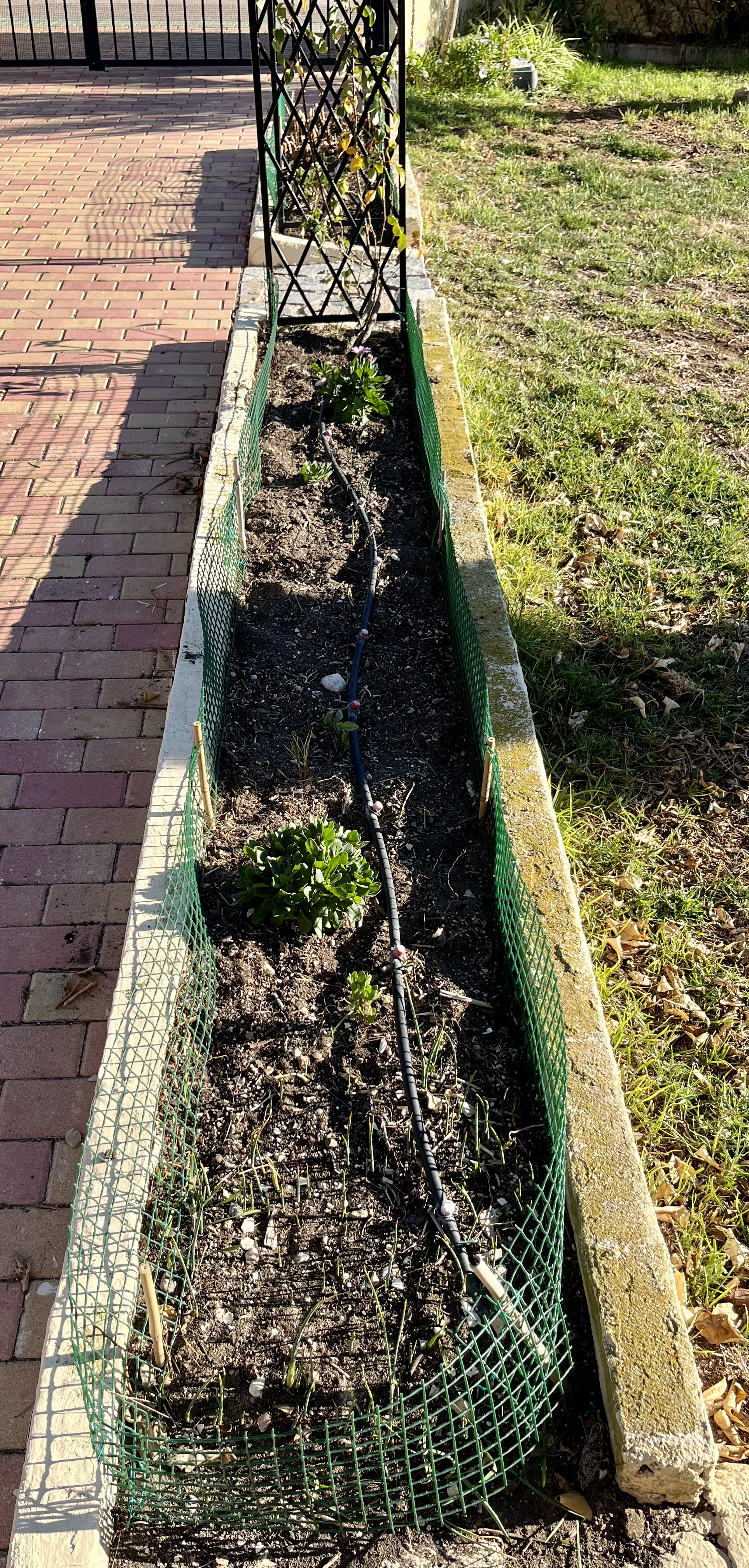


Fighting and losing the mulch wars. Who would have thought that an innocent activity such as mulching could be the cause of so much grief. I mentioned earlier that Cruella (my wife) had flown off to our English house to continue her nurturing of our idiot son. I had been left in charge of Tango the lonely blind Labrador and the bloody chickens.
As you can imagine this caused immense resentment by the chickens who refused to accept my authority, wouldn’t go to bed at night, ate junk food and continually swore at me in Chickenese (or at least I think they were). Cruella also insisted that I left my IPad in their coop on FaceTime so that she could could converse with them at all times.
At first this didn’t bother me I happily got on with mulching around all my fruit trees accompanied by Tango the lonely blind Labrador. The photo below shows all my trees lovingly mulched.

However, no sooner had I completed the mulching and retired indoors for a nice cup of tea, when I heard loud chicken squawking. I emerged to the terrible sight of the chickens frolicking under the trees and kicking my newly completed mulch all over the place. The photos below show the extent of the venal criminality. Click on each photo for a larger view.
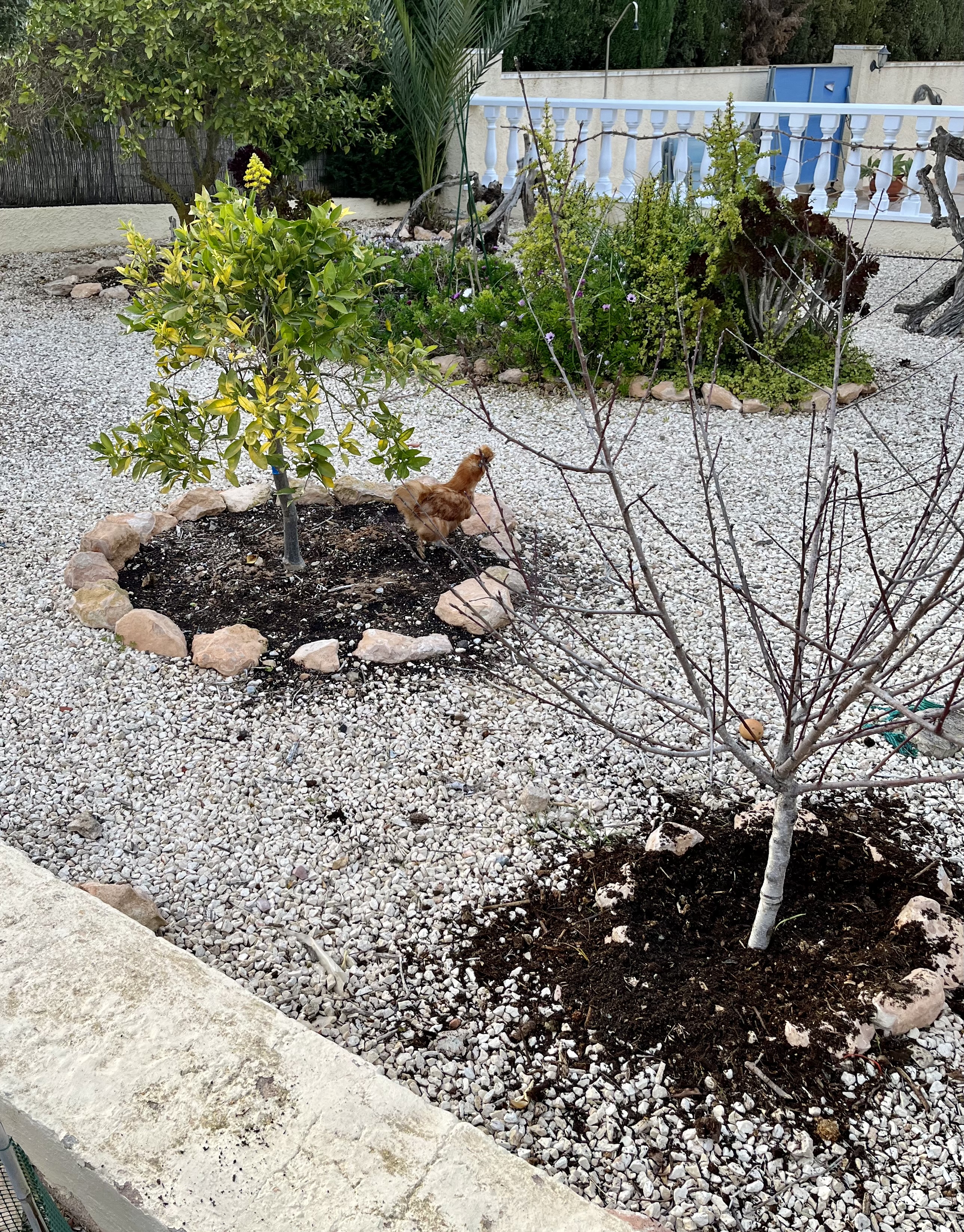
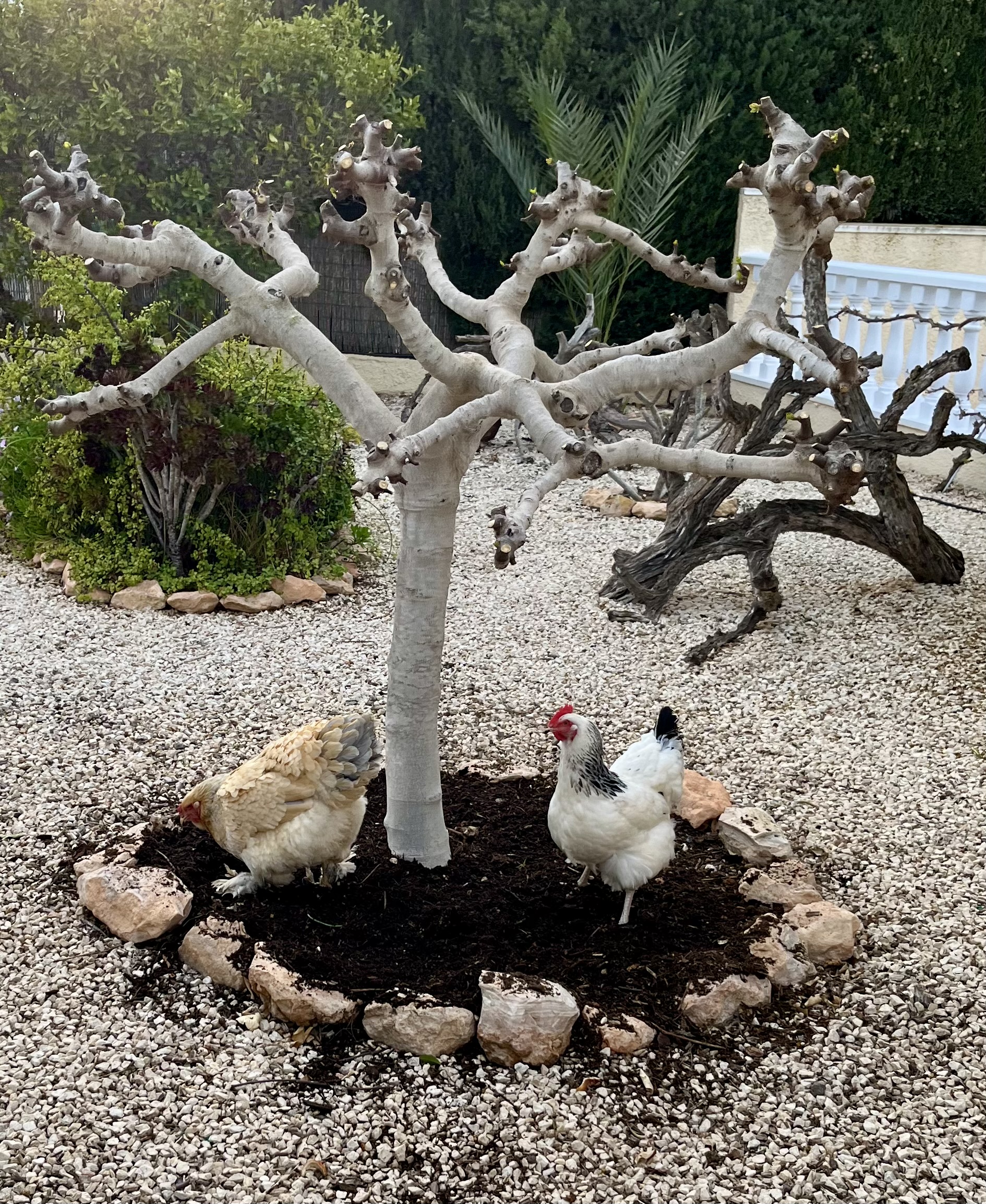

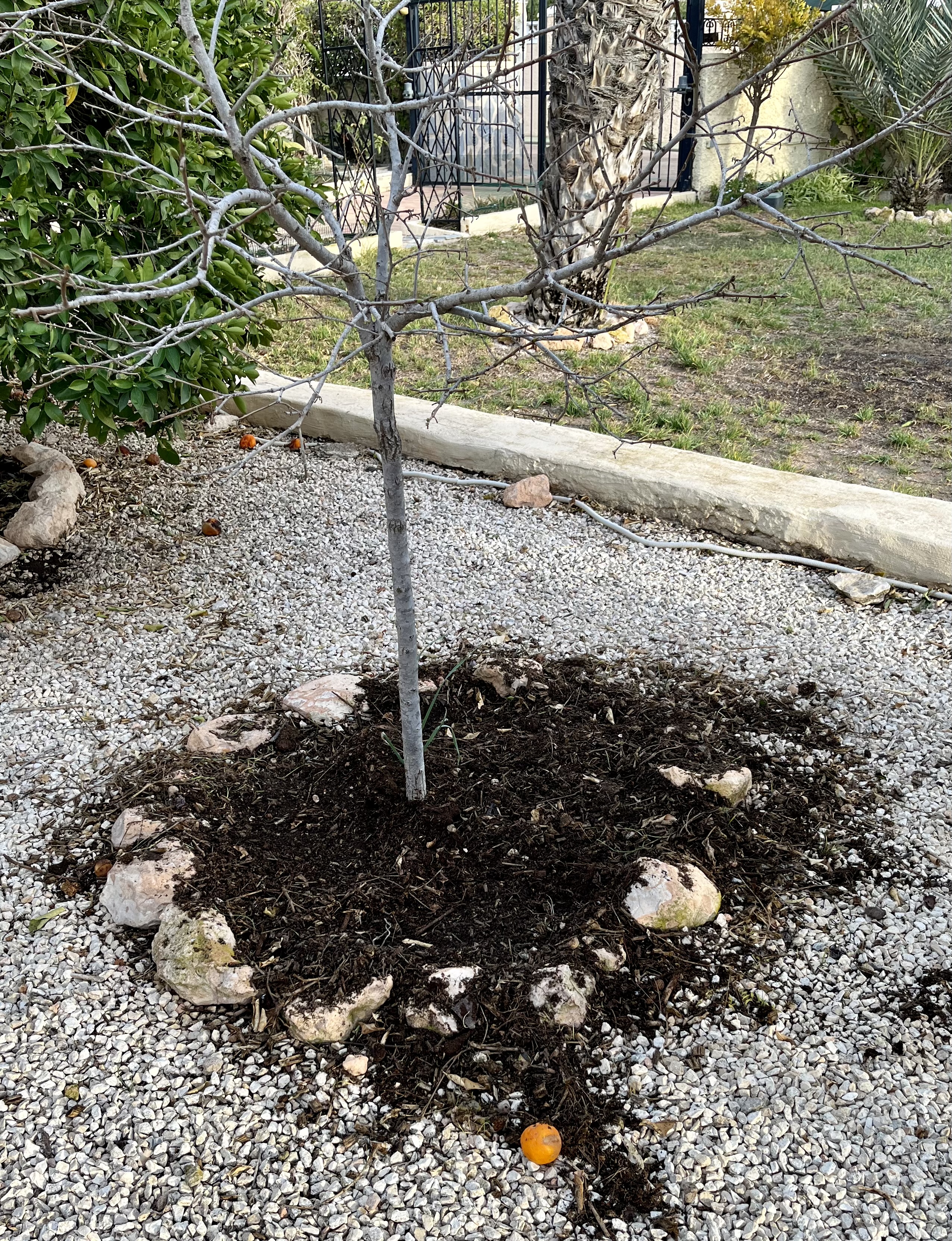
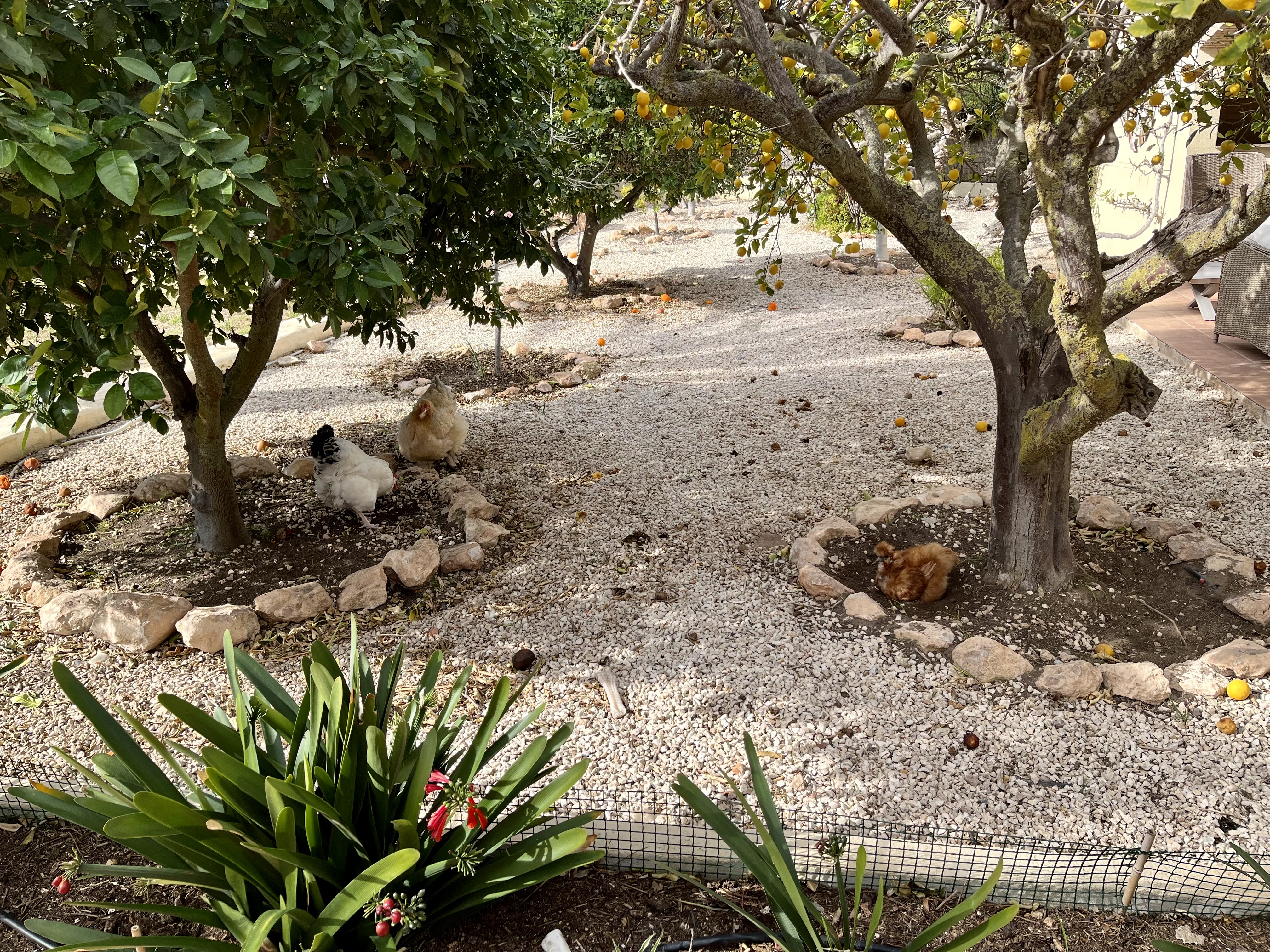

I managed to scare them off with my water pistol (which is in breach of the restraining order Cruella took out against me) I was assisted by Tango the lonely blind Labrador who did his best running around barking and banging into trees. I could see the seething resentment in the chickens little eyes and I knew this wouldn’t be the end of it.
What happened next is like something from a horror film. The next morning I emerged to find that my mini greenhouse had been knocked over and all my lovingly planted seedlings had been destroyed. The photo below fails to convey the anguish and sense of loss; it was so bad that I even mentioned it in Church at the end of a sermon. Anyway I knew it was them as there were feathers everywhere.
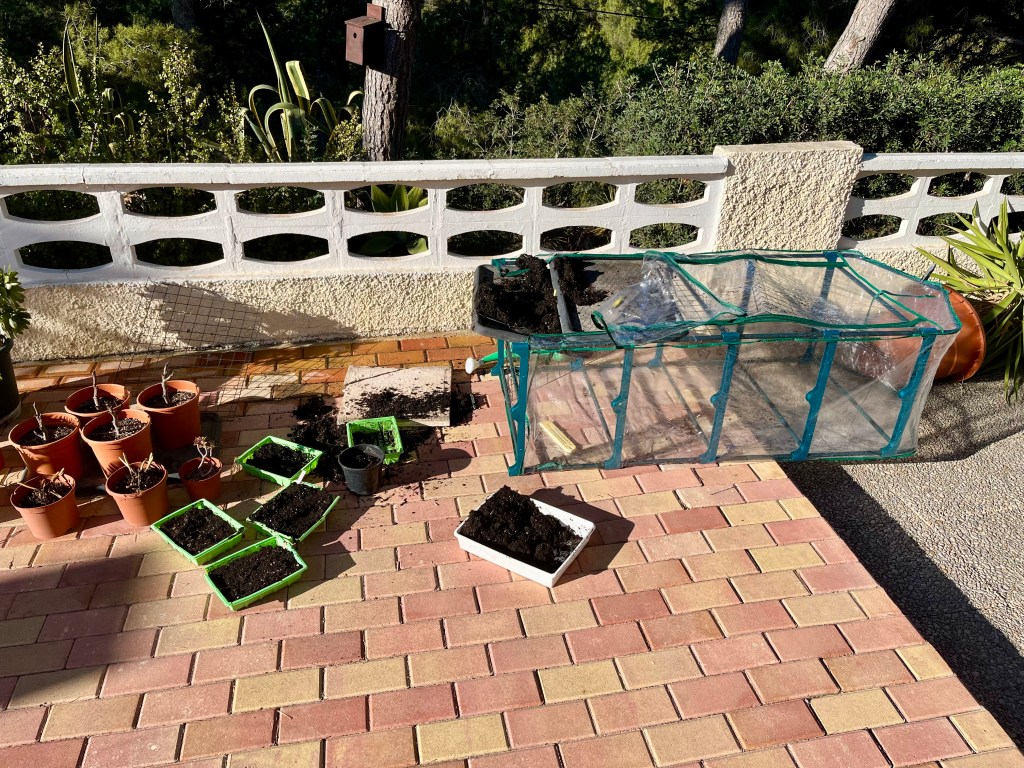
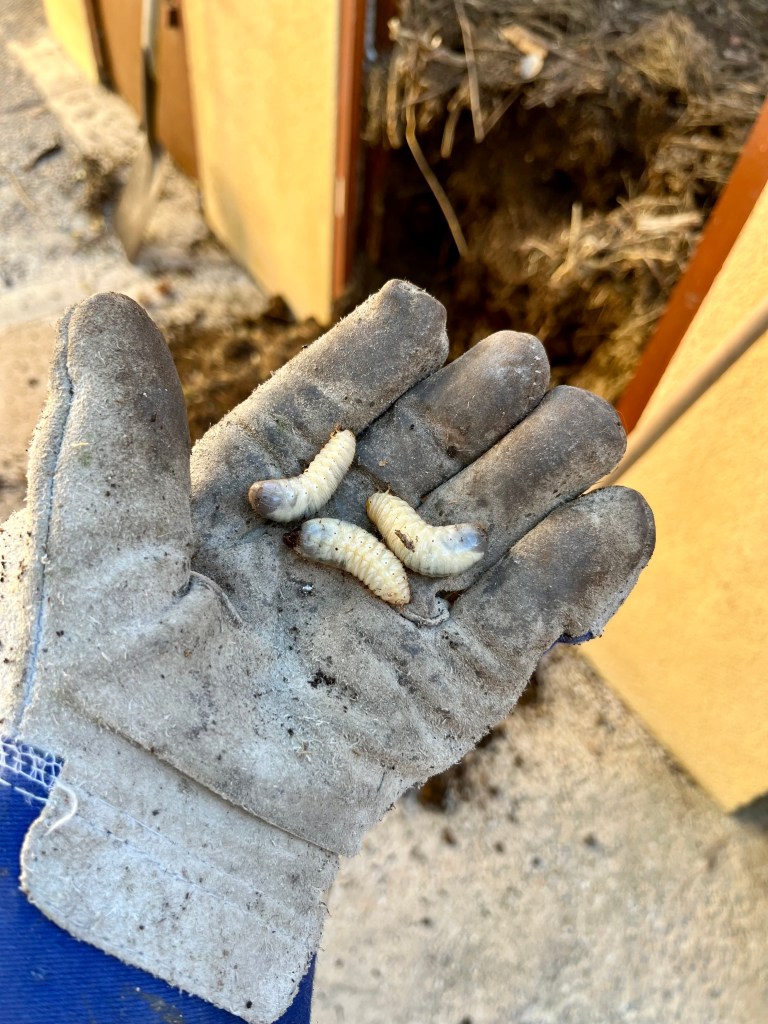
I phoned Cruella (my wife) straight away to confront her but she completely refuted any suggestion that her girls were involved. She then asked for privacy so that she could have a FaceTime conversation with her girls. They all trooped off to the coop and emerged smirking 10 minutes later (I’ve told you before chickens really can smirk). A few minutes later the phone rang and it was Cruella (my wife) she told me that her girls had denied any involvement, but they had said that if I would supply them with maggots from the compost bins then they would keep an eye on my mini greenhouse to ensure nothing happens in the future. I complained that this was blackmail but she merely replied that this was “mulch ado about nothing” which she thought was hilarious.
The upshot of all this is that I have been paying a ransom of maggots every day since. If ever I forget to give them some, then one of them goes up and makes a big show of just bumping into the mini greenhouse ‘by accident’. The photos below show me paying the daily ransom. Click on each photo for a larger view.


 Spanish Garden
You must be logged in to post a comment.