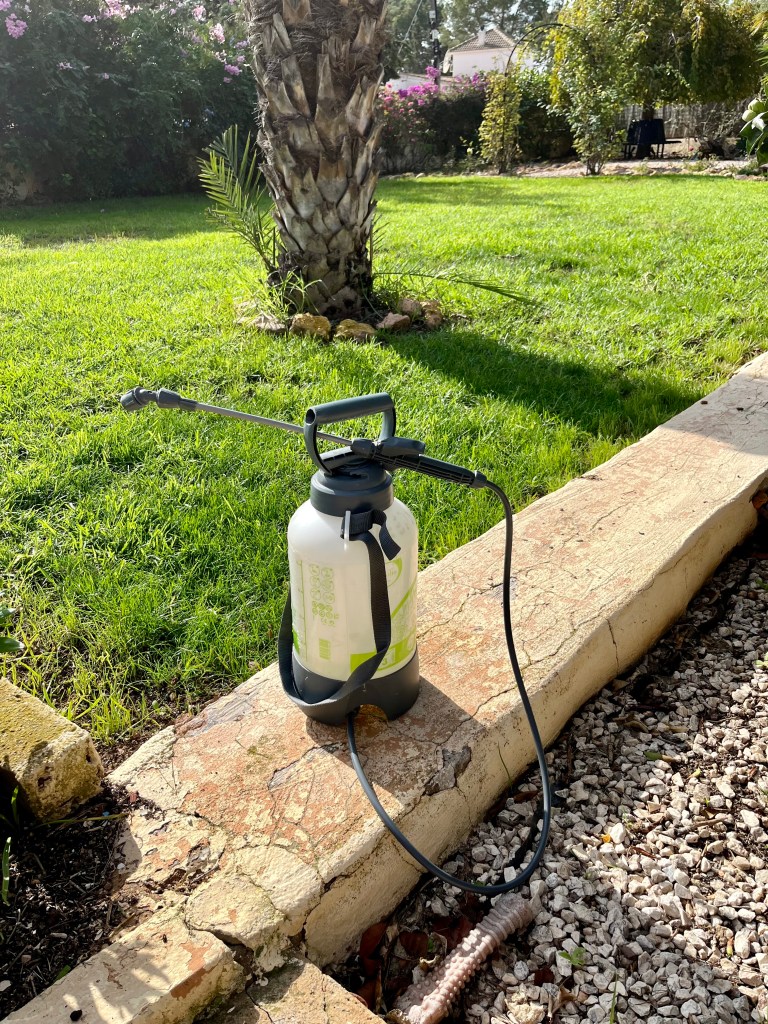
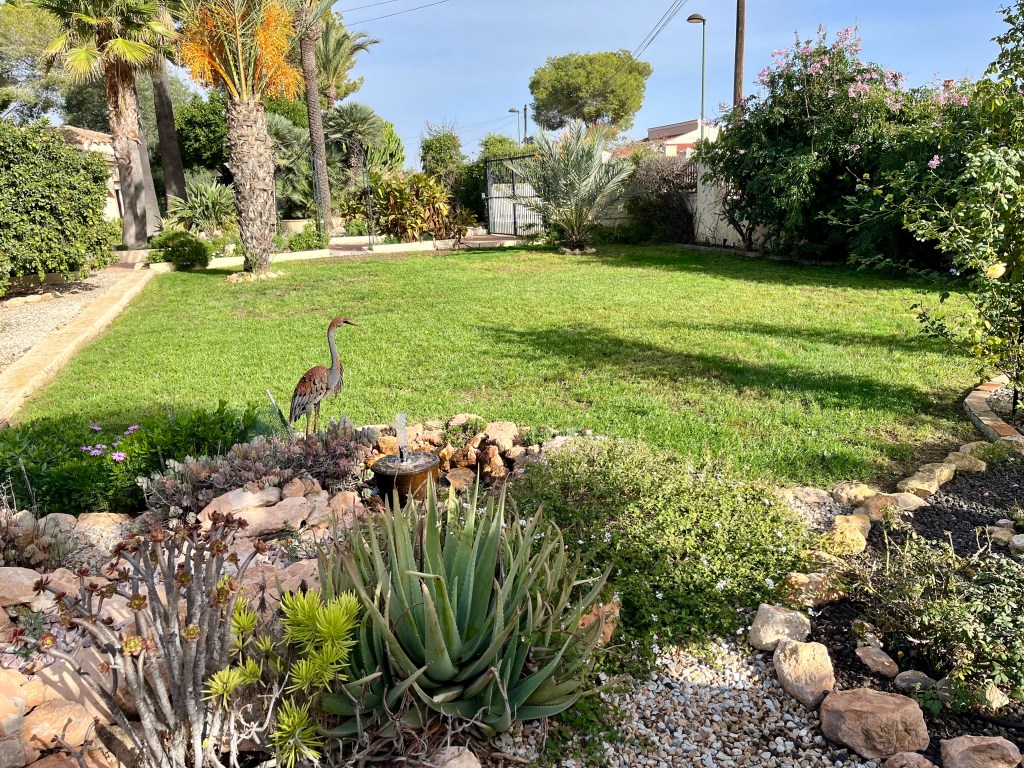
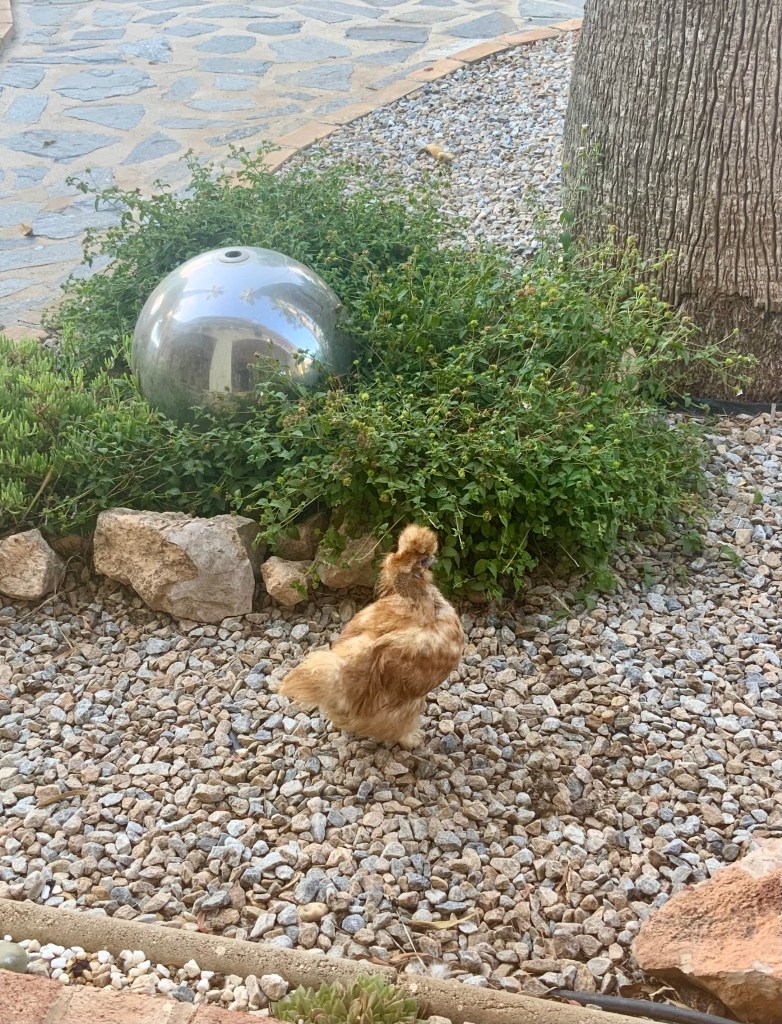
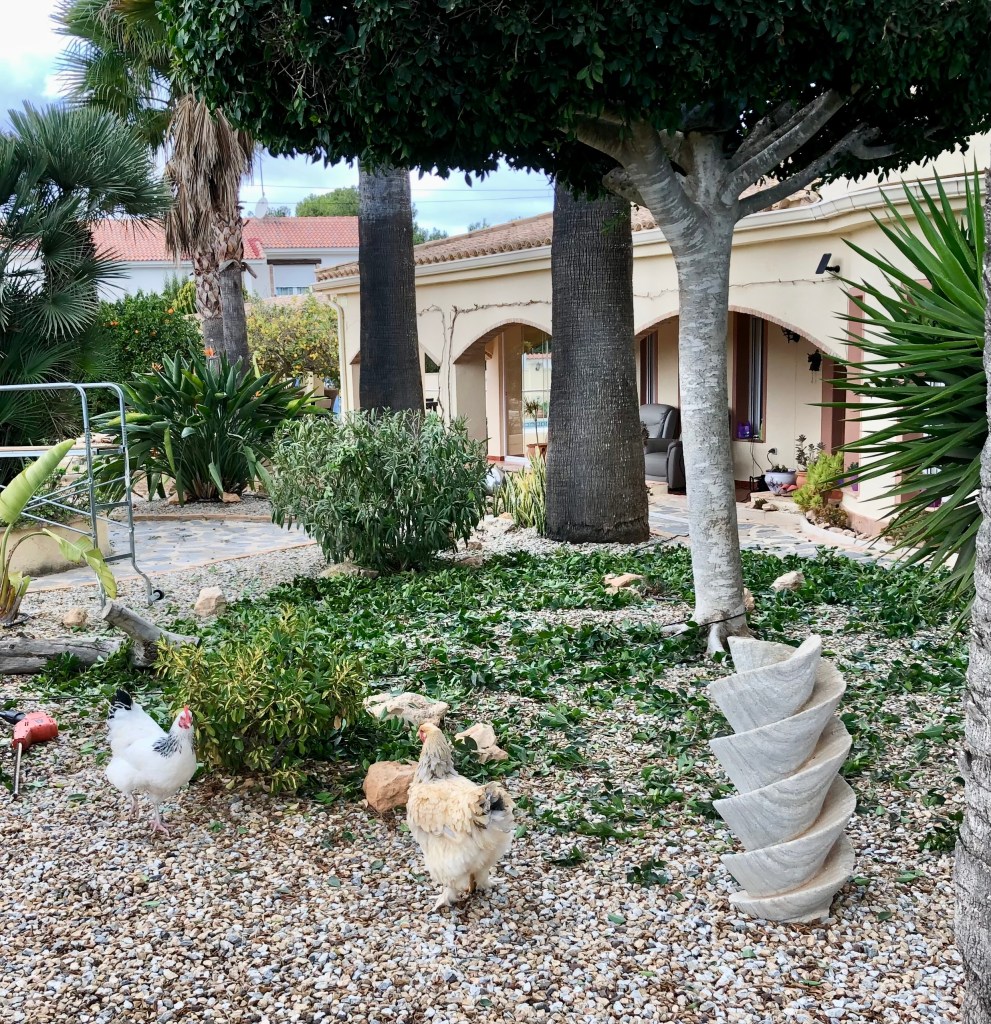
The Summer has been a gardening disaster and now I am being terrorised by a chicken

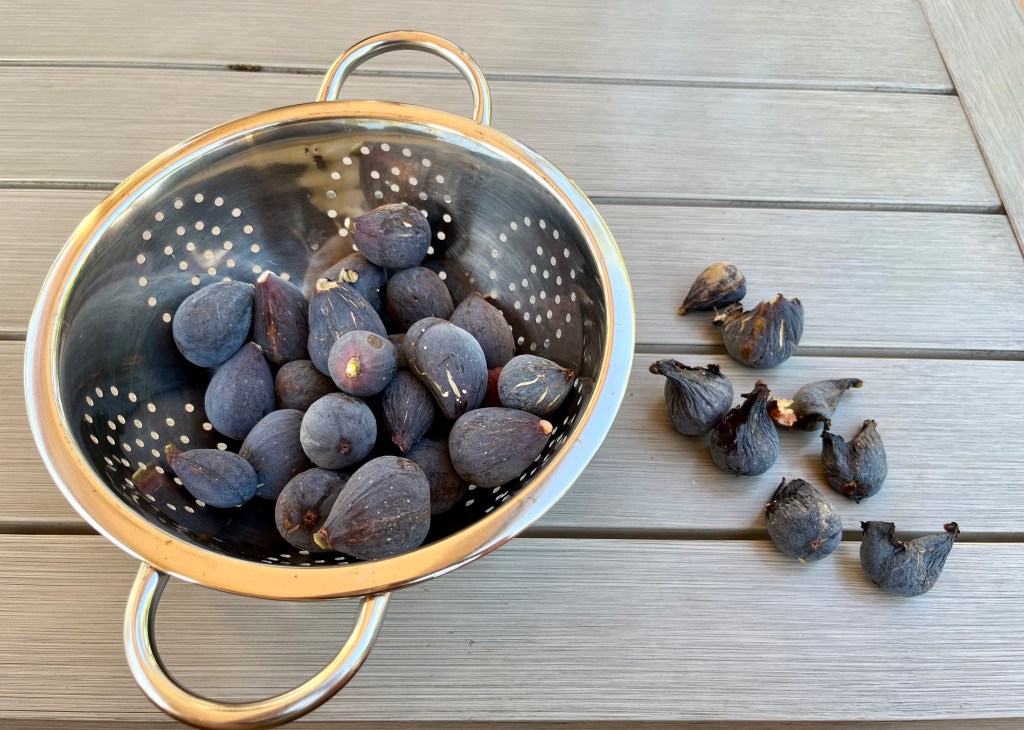
To be honest I am really fed up with this summer, it has been a gardening disaster: my seedlings never properly germinated, my lawn looks like the surface of the moon, my figs and grapes have been eaten by birds, my favourite Agave died, my Dame de Noche refused to flower and now I am being terrorised by Cruella’s new chicken.

I could cry. But never mind, we gardeners are made of sterner stuff, let’s get on with the gardening – what’s left of it.

1st September 2024. Things I have been doing lately:

  • Repairing the lawn
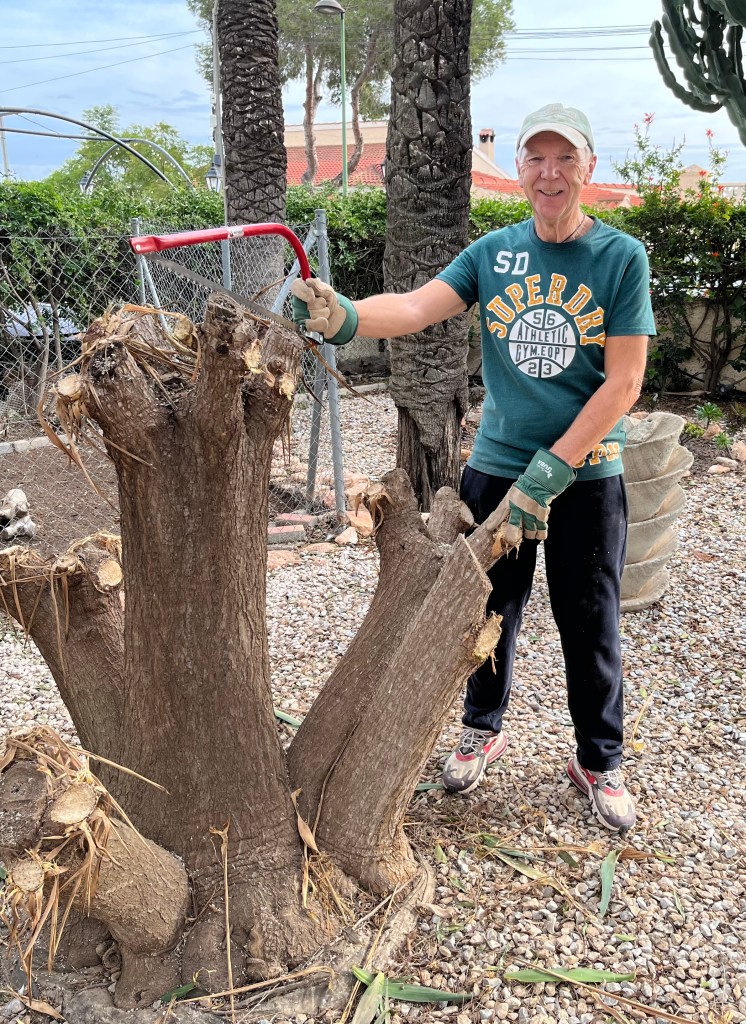
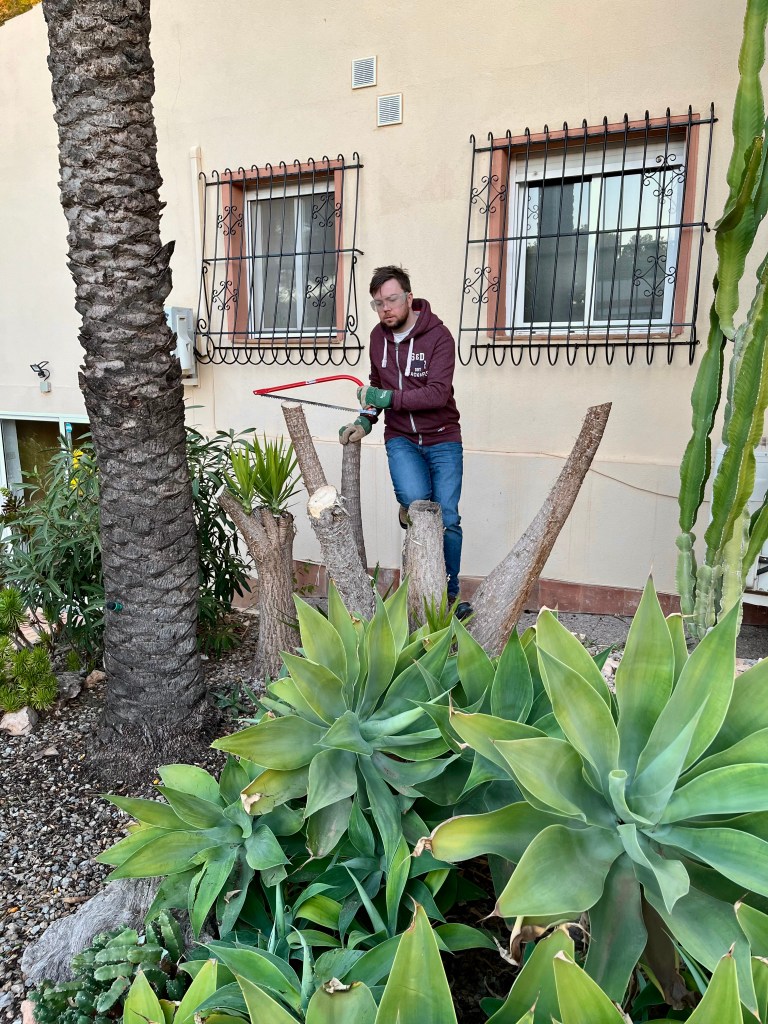
  • Chopping down the dead Agave
  • Pruning the Dame de Noche
  • Netting fruit
  • Taking summer cuttings
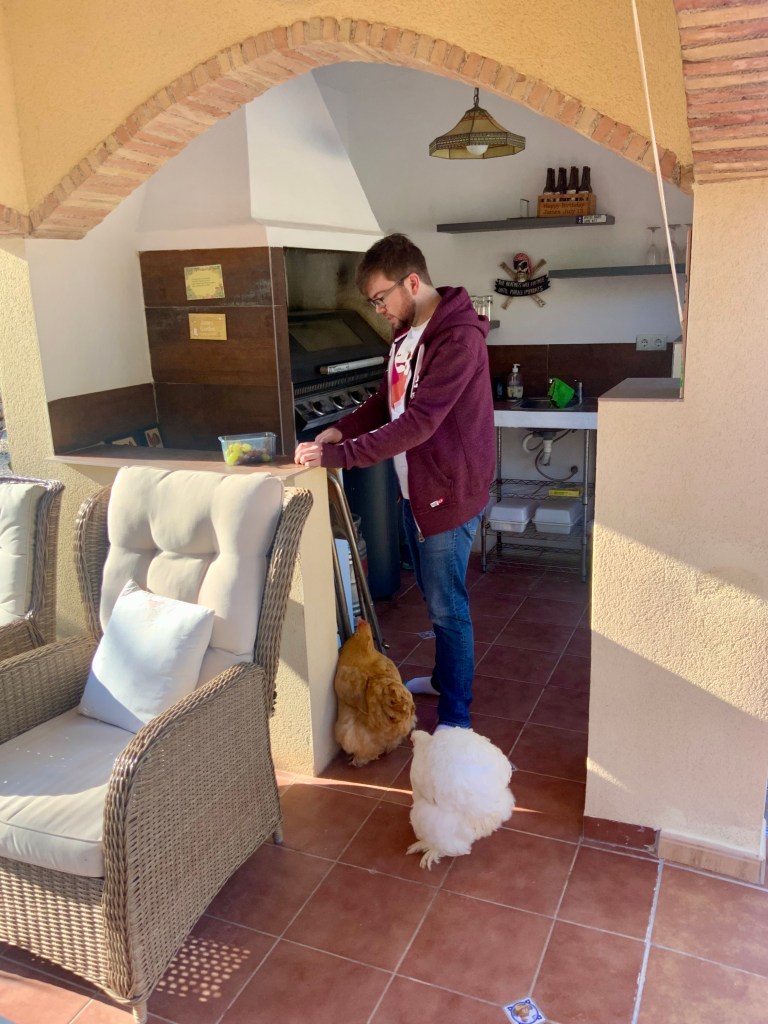
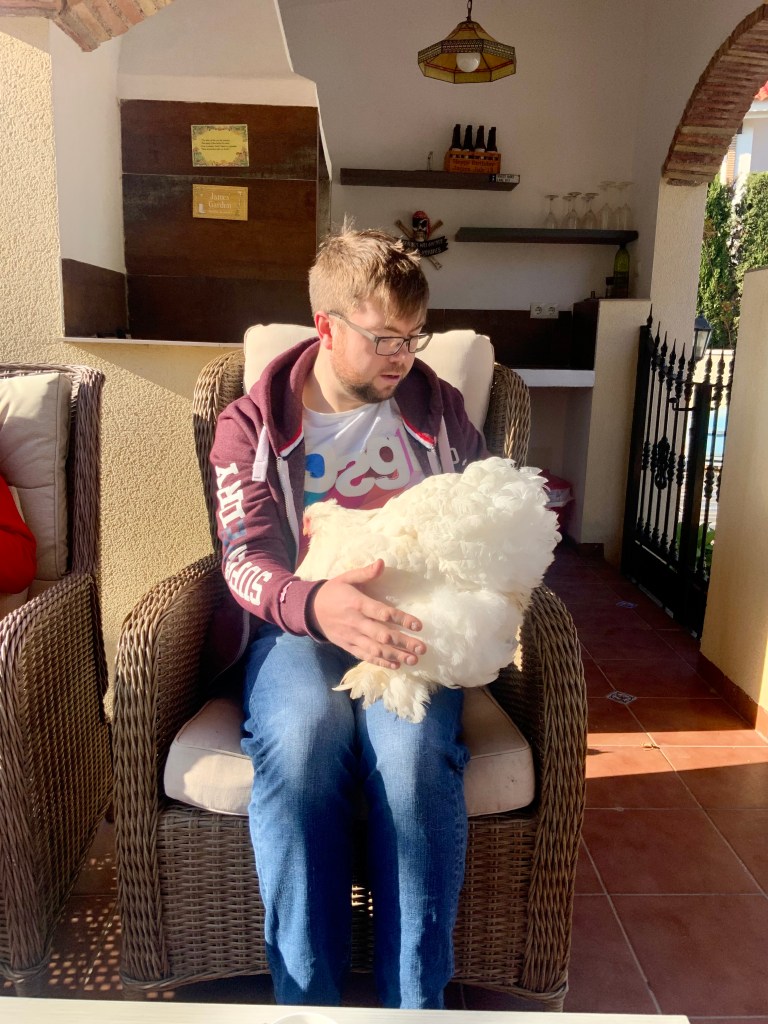
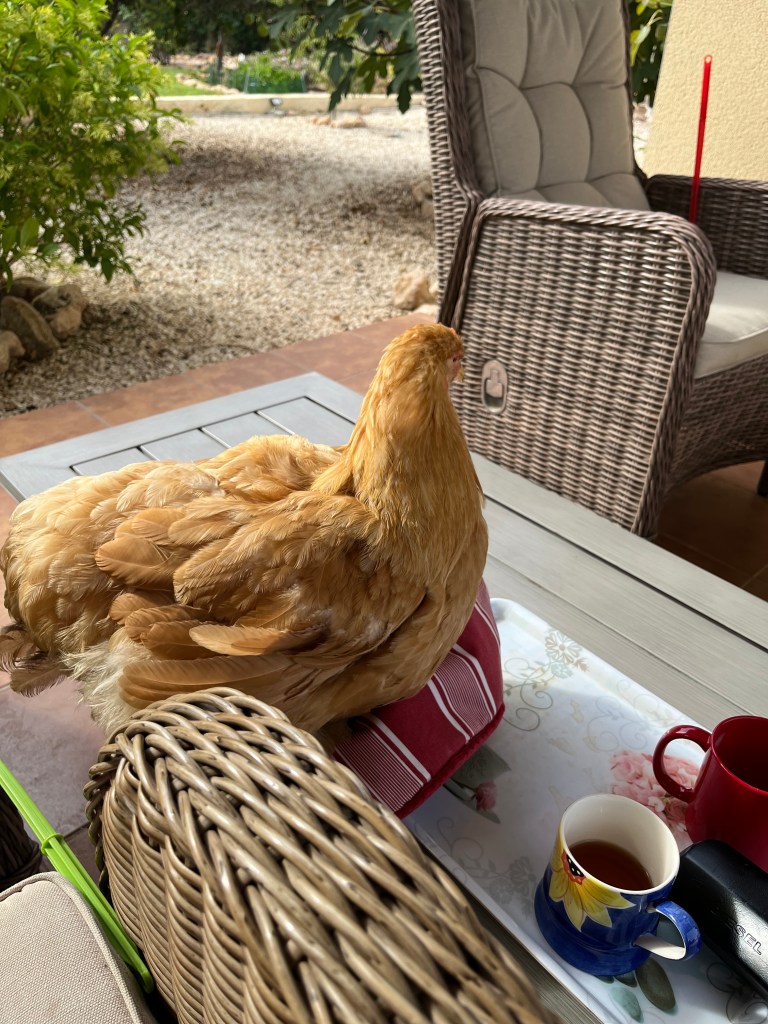
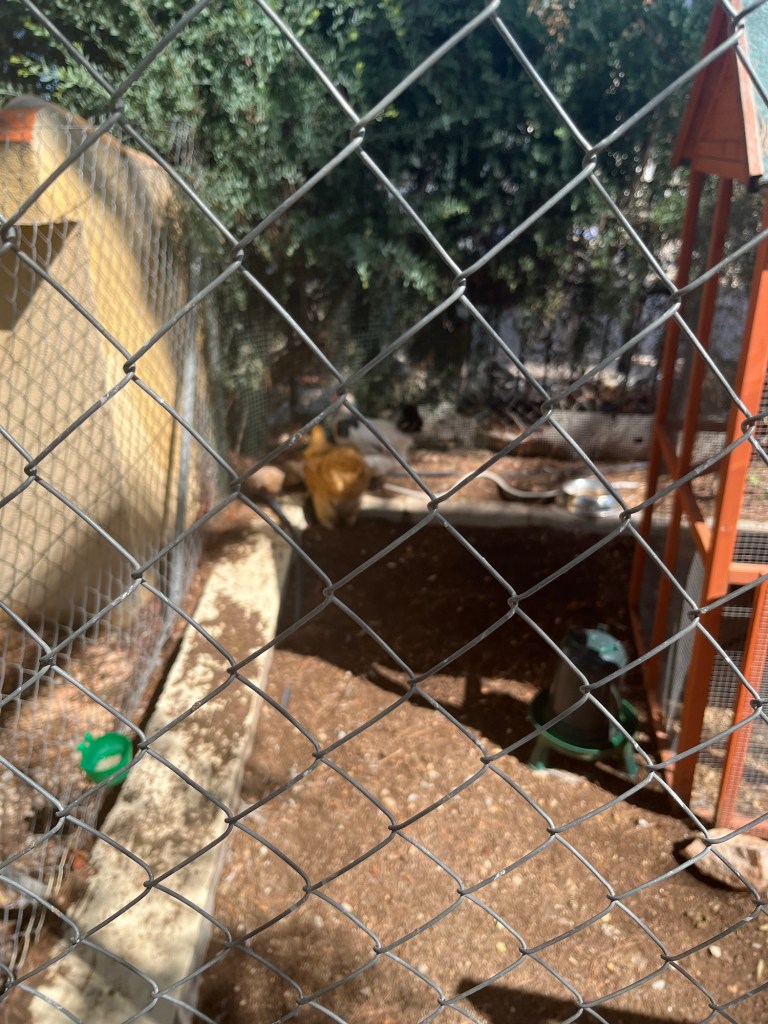
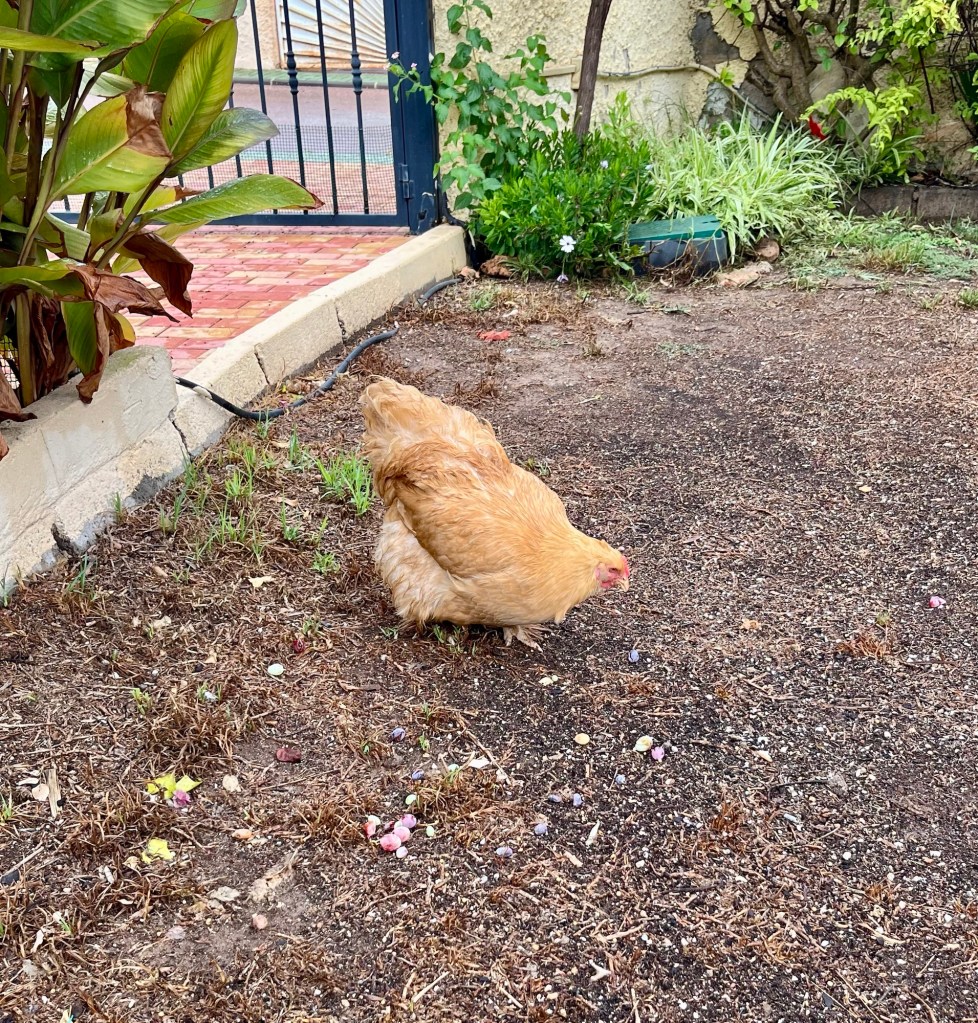
  • Dealing with Helga the hen

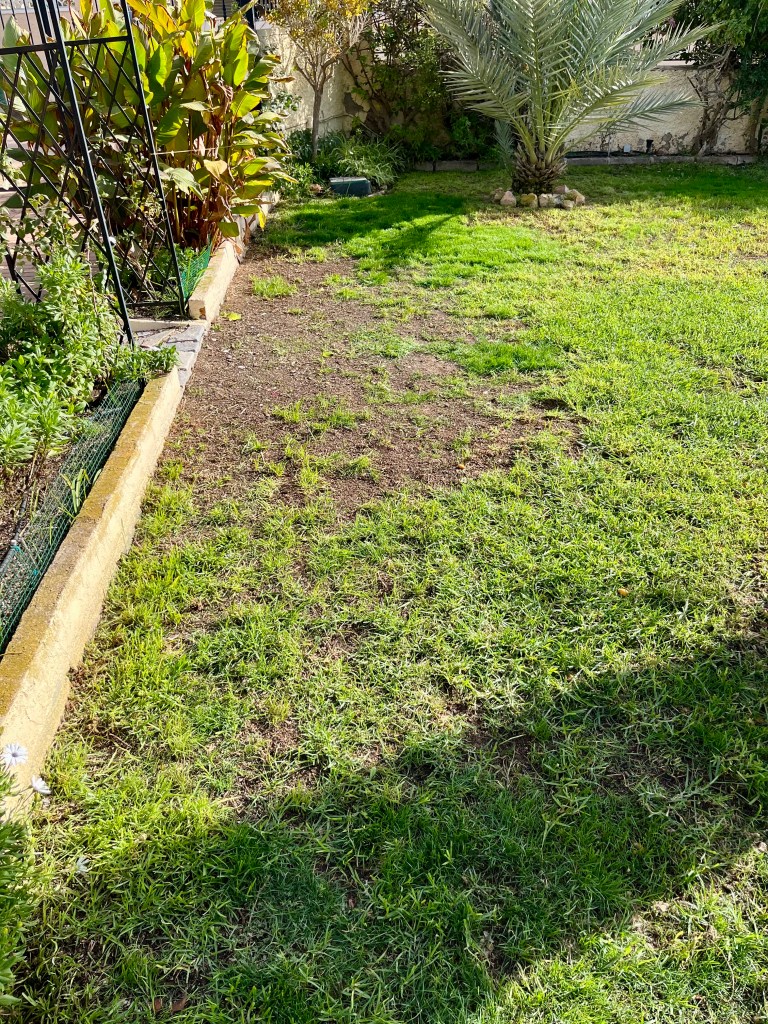
Repairing the lawn. The last time I posted about my lawn I was in the depths of despair. The lack of rain and constant chicken attacks had made a mockery of my grass. I was seriously contemplating tearing it all up and planting a range of new beds with succulents. But after many a sleepless night I have decided to take Madonna’s advice in her greatest hit and I am definitely keeping my baby (the lawn).

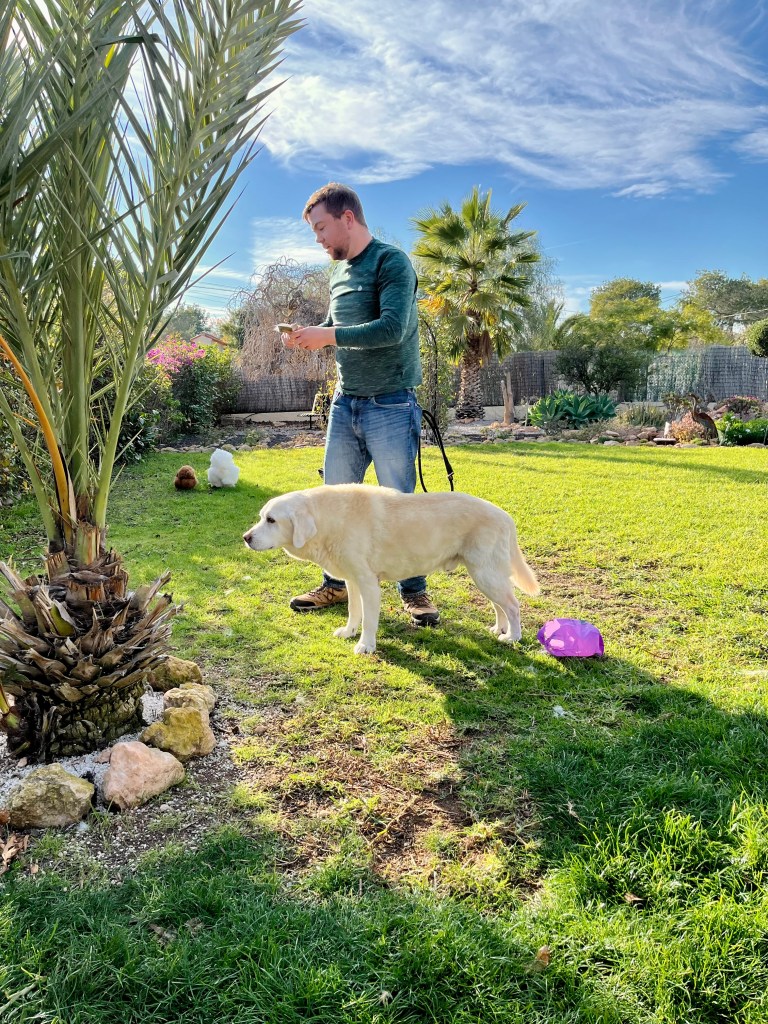
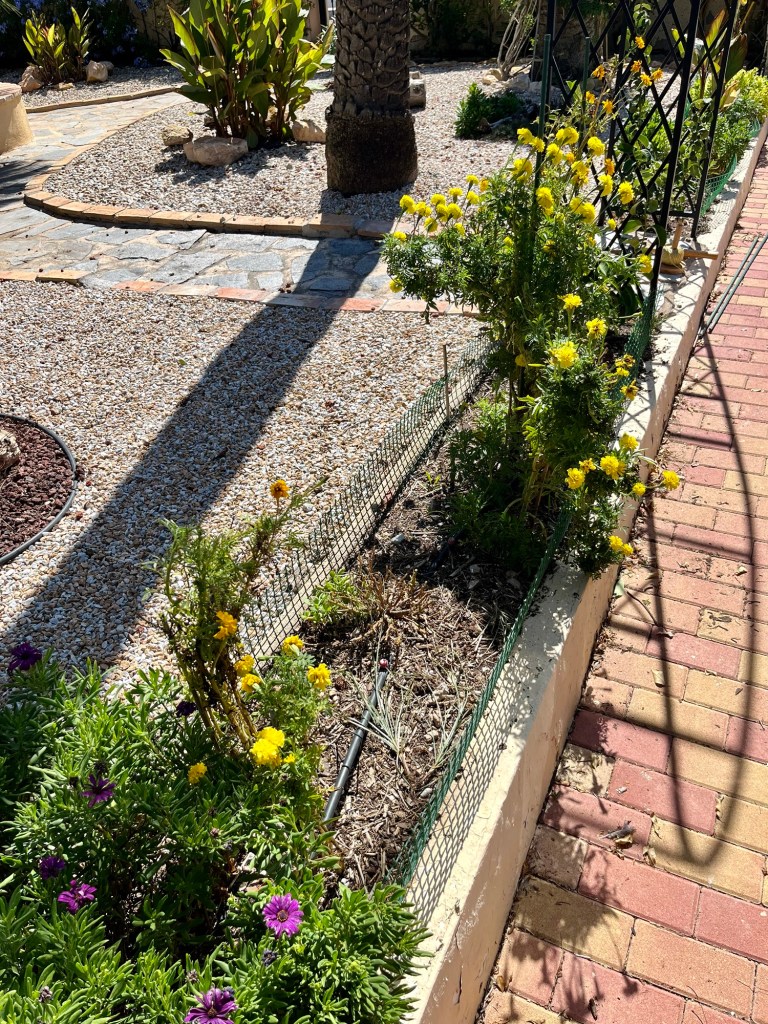
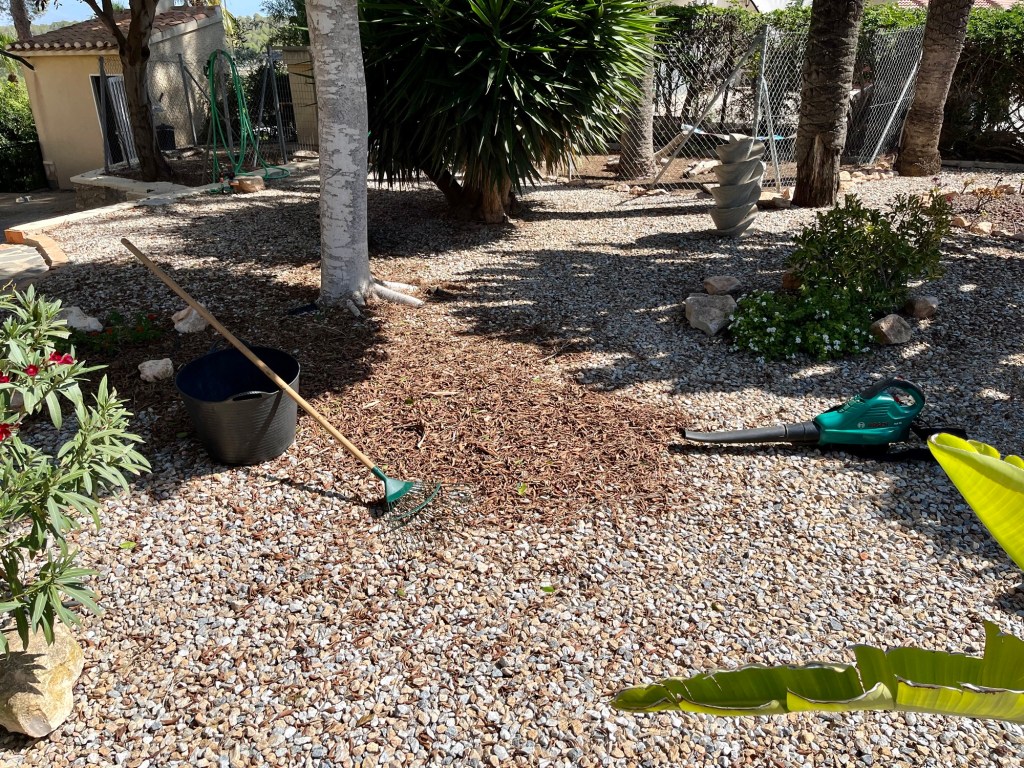
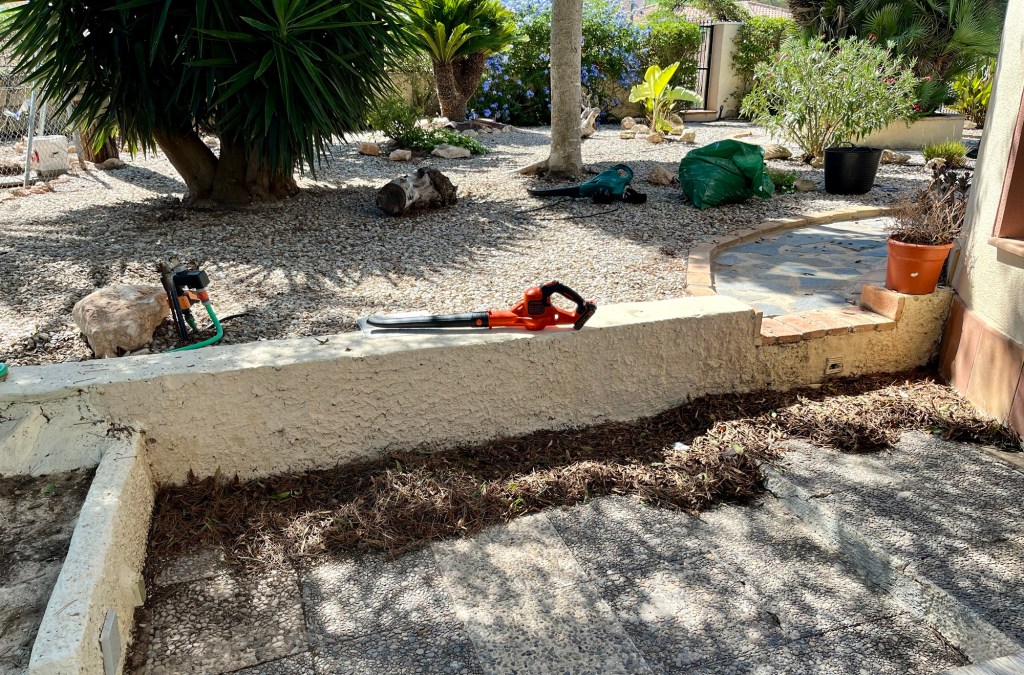
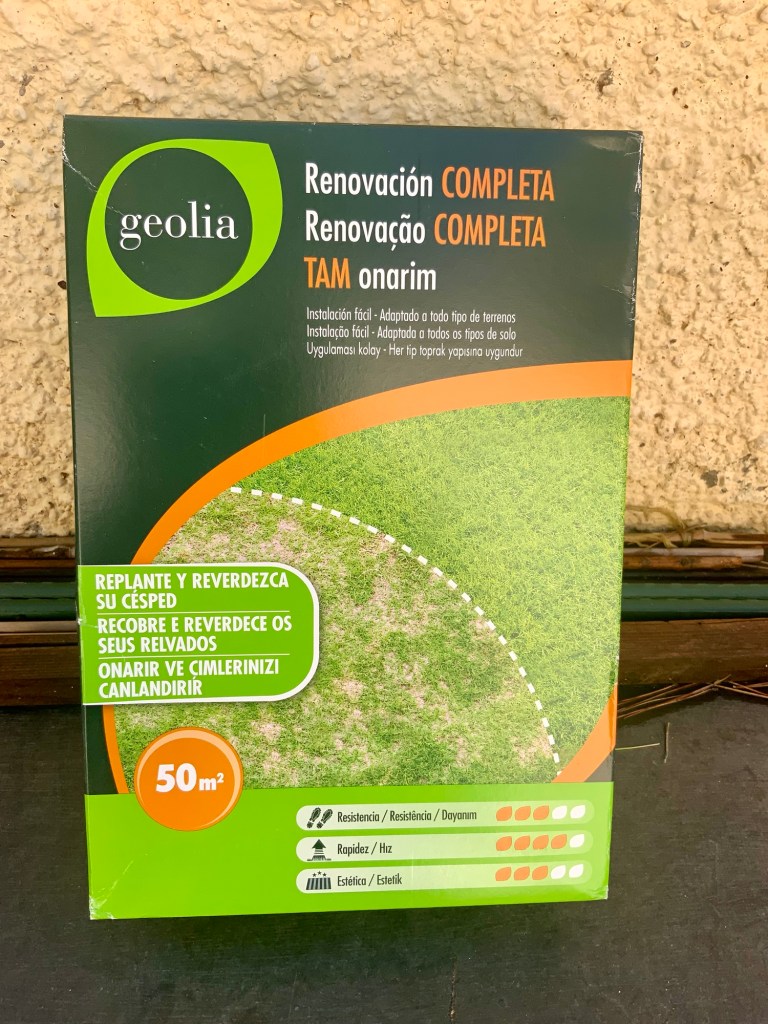
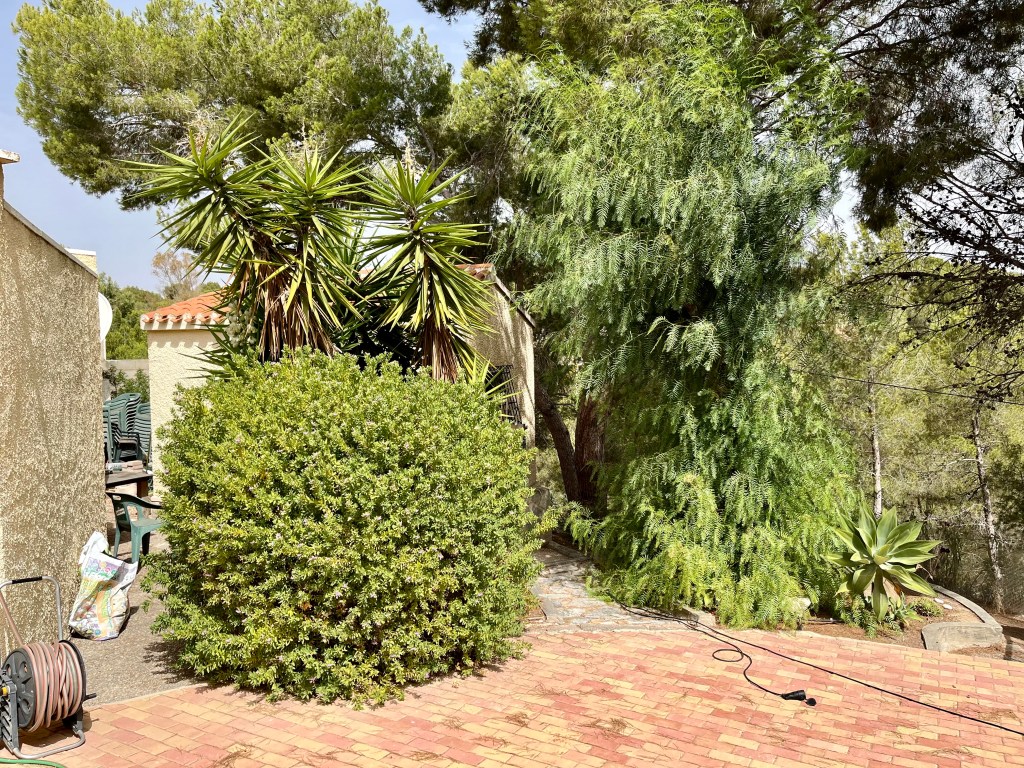
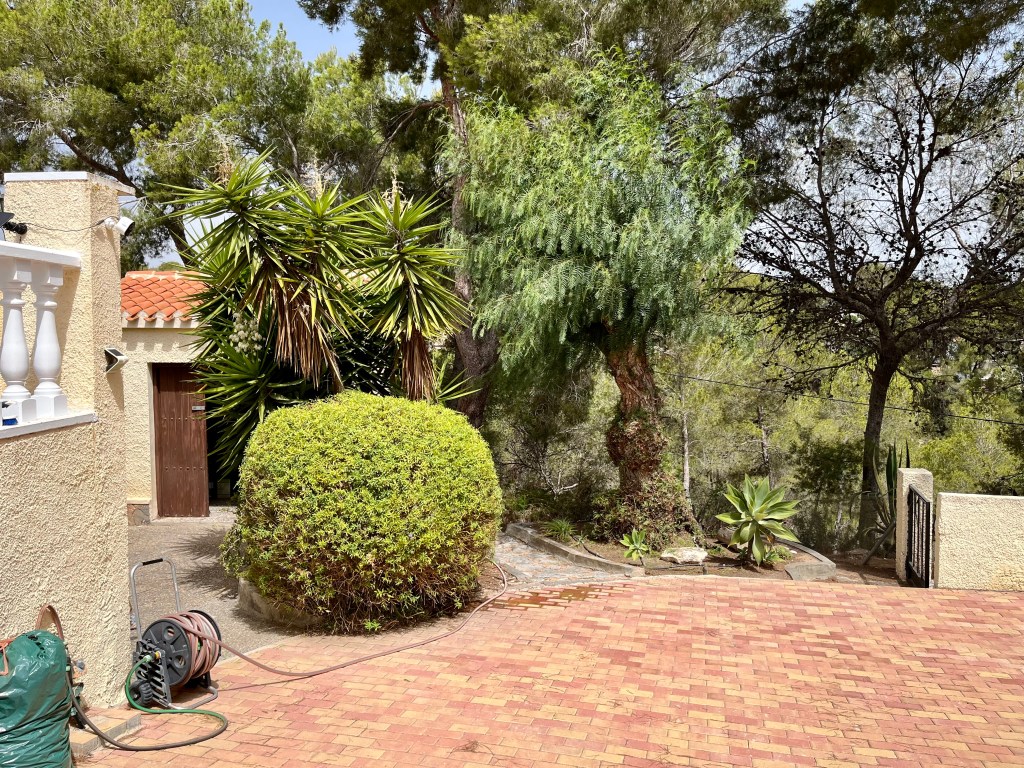
This has meant I am now in the process of planning a major renovation. The first thing I did was feed the grass and I have now re-started a twice weekly irrigation programme. I will be ordering new Grama type grass seed for the Autumn. The photos below show the challenge I face. Click on each photo for a larger view.

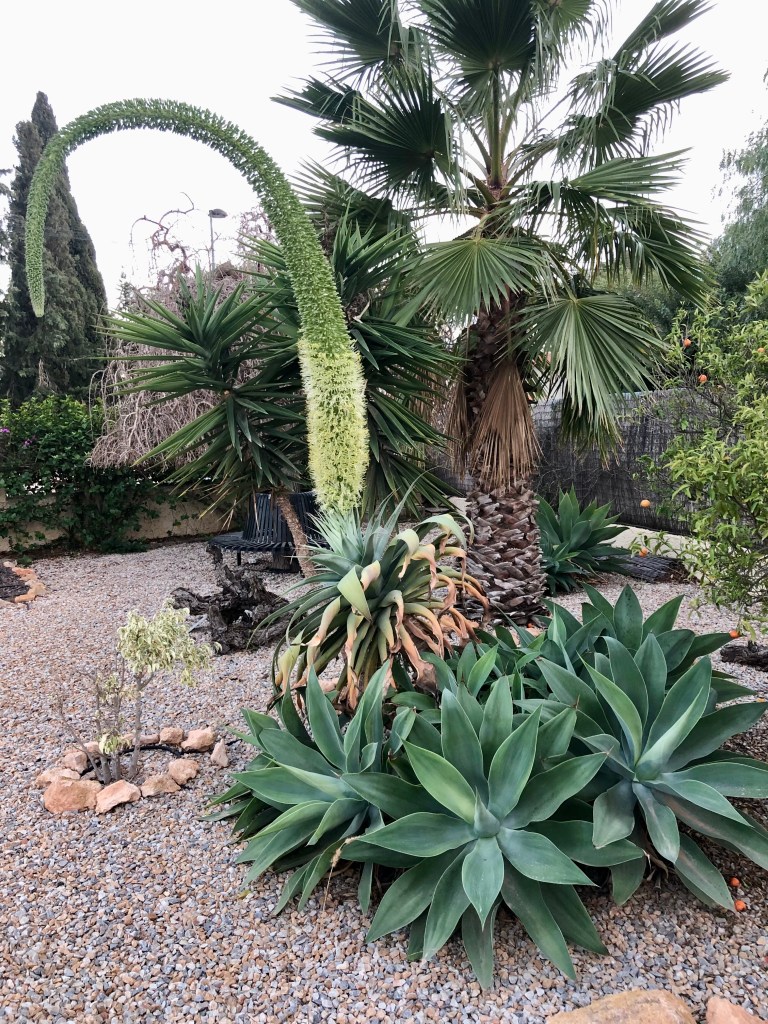
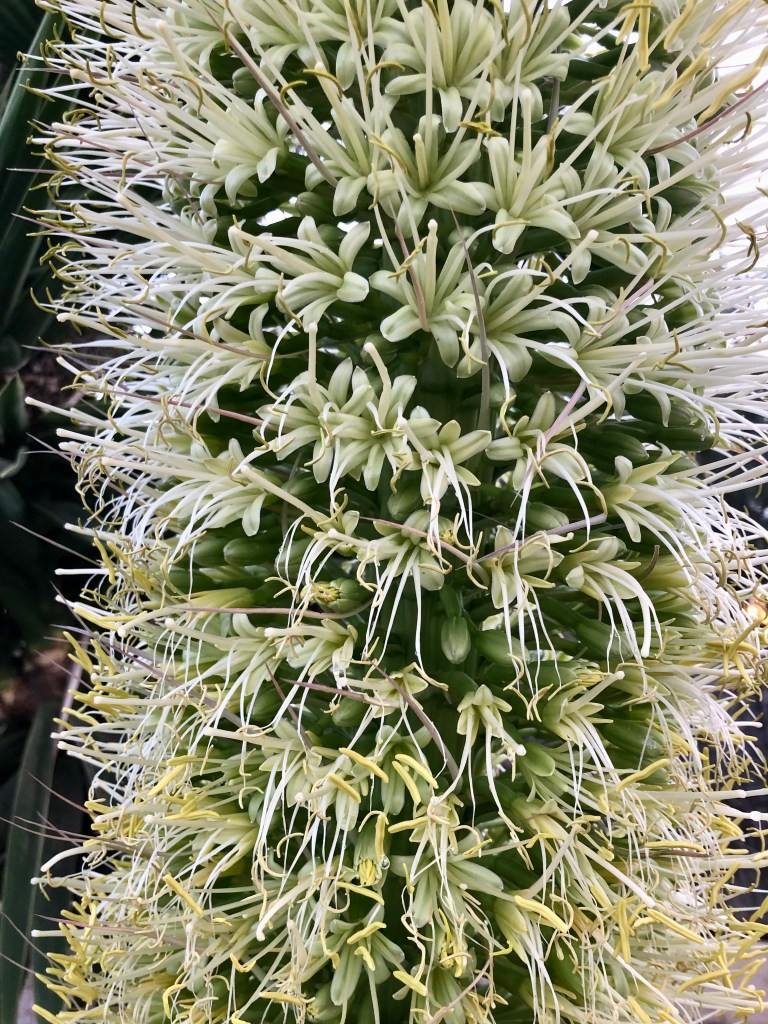
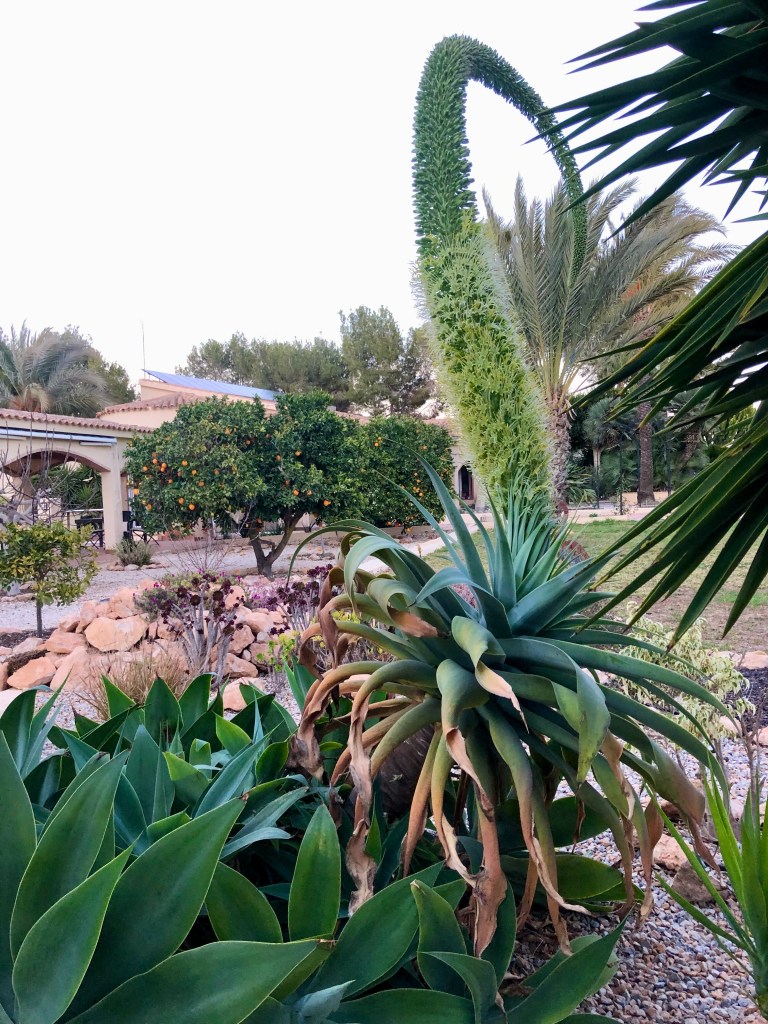
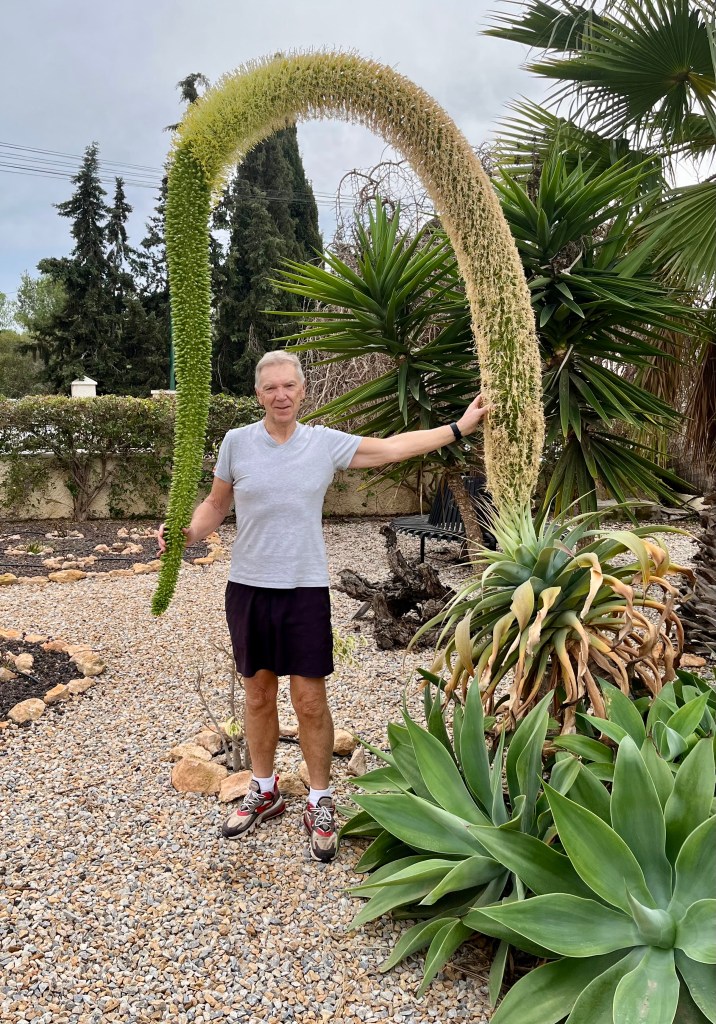
Chopping down the dead Agave. I have lots of Agave Attenuata around my garden and I particularly love this plant as it forms a family of pups around the main plant. Every 10-20 or so years the main plant will flower spectacularly in a huge arc of flowers and then die just as spectacularly leaving behind the motherless pups.

Over a period of time 3-5 years the pups will sit there motherless until one suddenly decides to become mummy and grows much bigger, and so the cycle continues.

Once the main stem has finished its magnificent flowering, then it is time to cut it right back. The photo below shows me with the Agave in all its flowering pomp.

I sang to her every night as she slowly passed away

The next photos show the poor Agave 3 months later accompanied by a photo of its orphan pups. Click on each photo for a larger view.

Finally the flowering spike is cut off and makes its way ceremonially to the compost bin. I do not take the death of an Agave lightly and therefore ensure that all due bereavement procedures are followed.

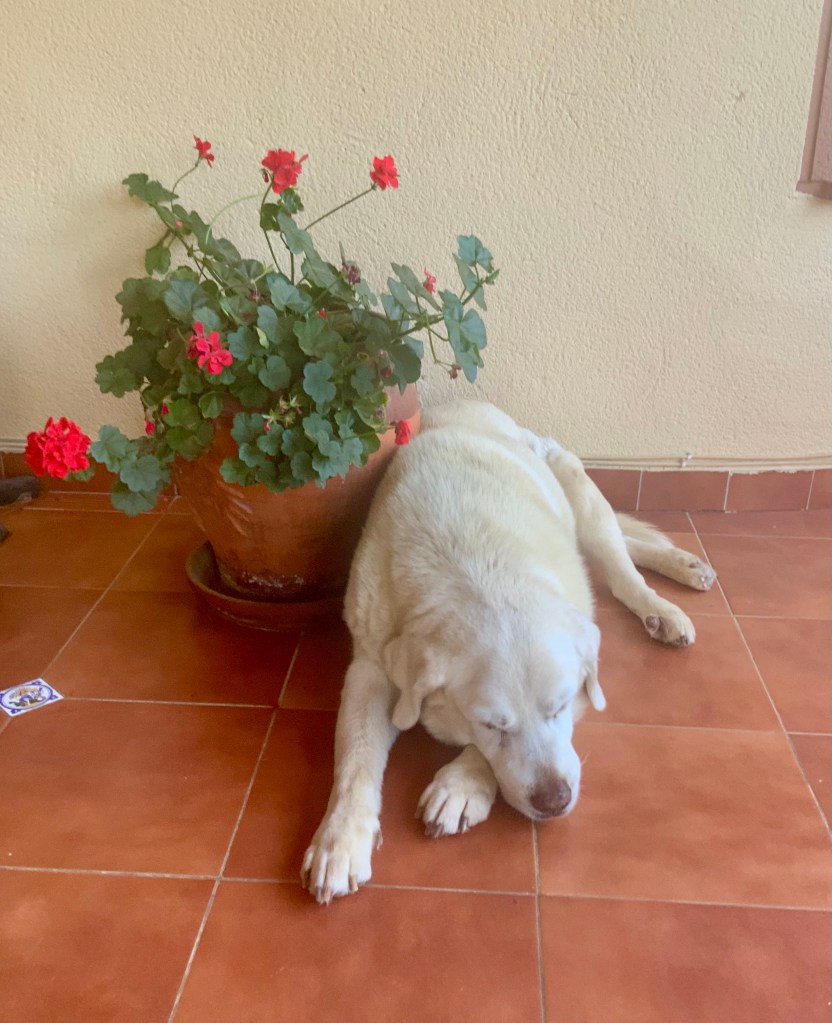
I dress in black and the compost bins are draped in black crepe. We set off from the point where the flowering arch has been cut and process across the big lawn and down the drive to the compost bins. Tango the lonely blind Labrador has black rosettes either side of his ears and he follows mournfully behind the wheel barrow. Chopin’s Funeral March from Sonata number 2 is played loudly.

Cruella and her chickens line up, but only to mock me and Tango. They point at us and shriek away in Chickenese, especially when poor Tango goes the wrong way or bumps into a tree.

When we arrive at the compost bin I lay the big Agave to rest and sprinkle composting powder over her and say a prayer. Our last ceremonial flourish is the last post, but this was somewhat spoiled as when I stepped back to salute, Tango was right behind me and I fell over backwards. We both ended up in a sprawling heap which caused paroxysms of mirth from Cruella and her cackling crew.

Click on each photo for a larger view.

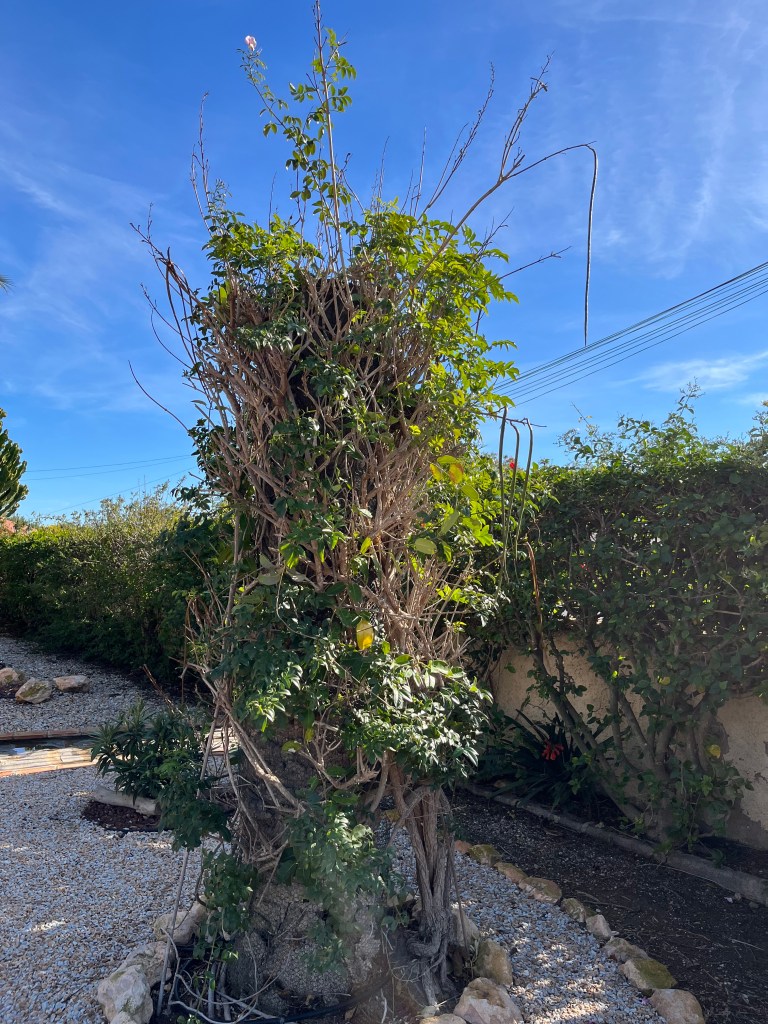
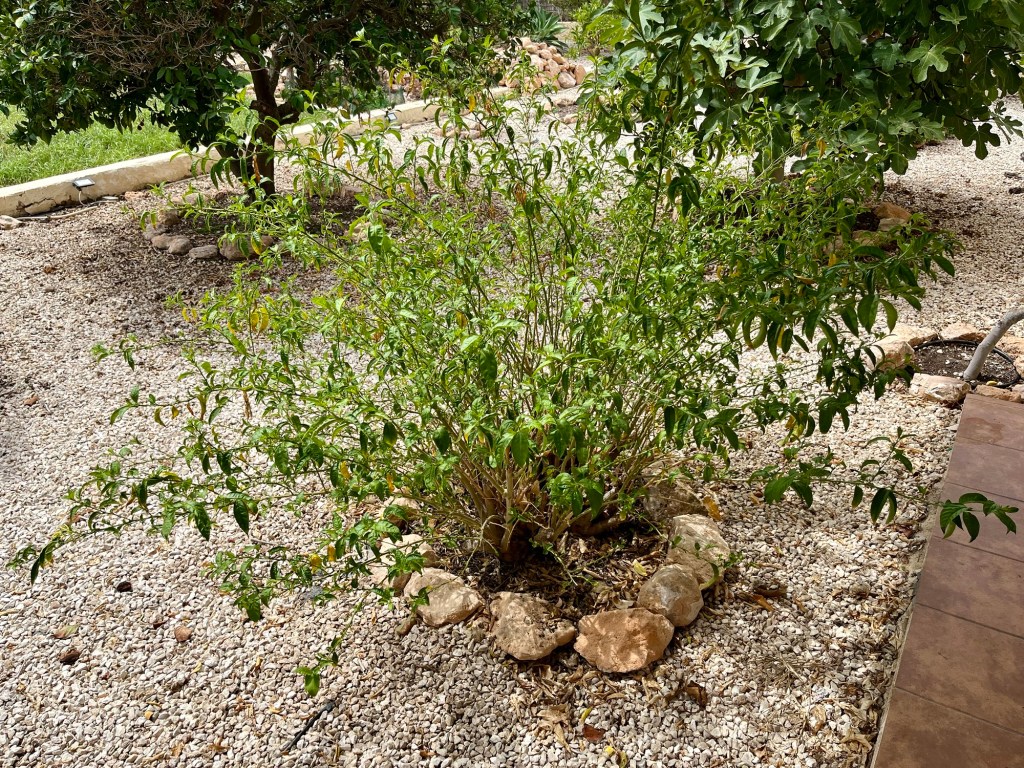
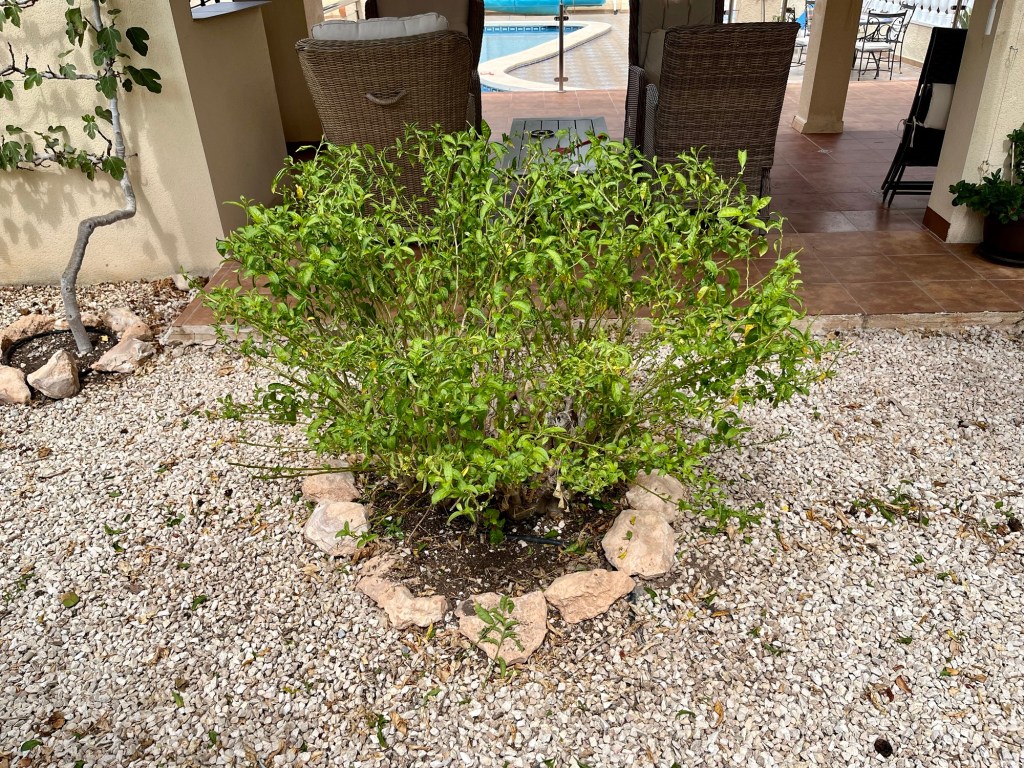
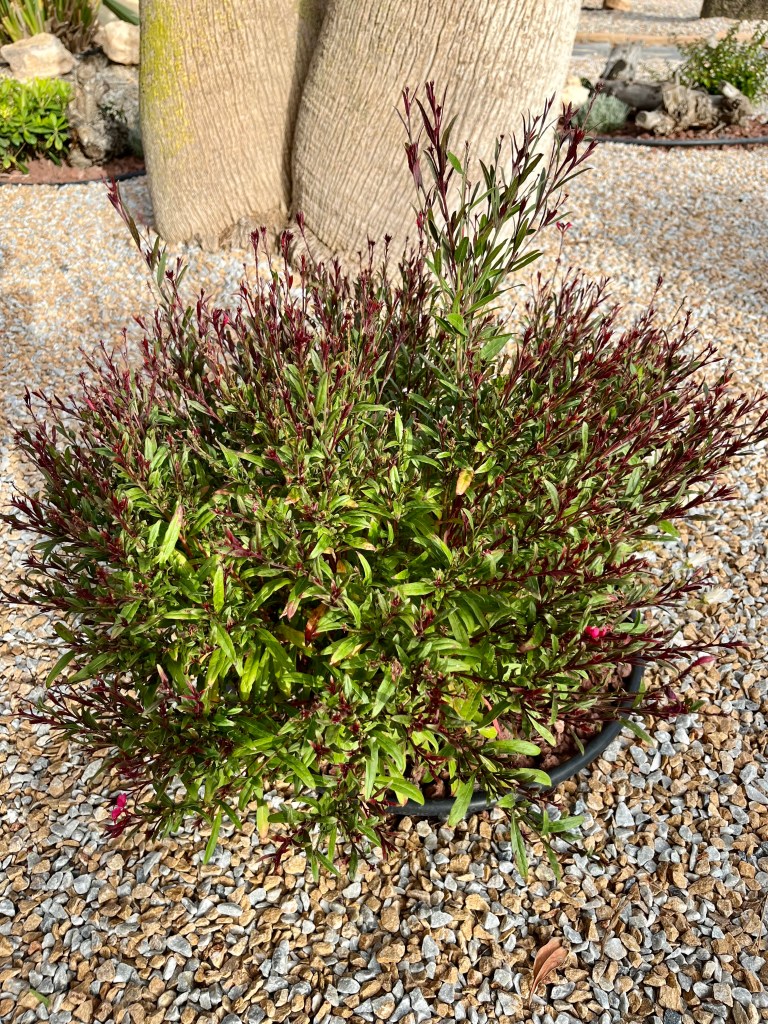
Pruning the Dame de Noche. If you have a Dame de Noche, and many of you will have – then it has been a terrible year for this normally reliable night scenter. The severe lack of rain has meant then even mature well rooted plants like mine have struggled to produce blooms.

The normal pruning procedure I use for this plant involves cutting back by a third in late August to encourage a second flowering followed by a big cut back in January to about 12-18 inches. This has not been possible this year because of the state of the plant, see the photo below.

Not one flower this year

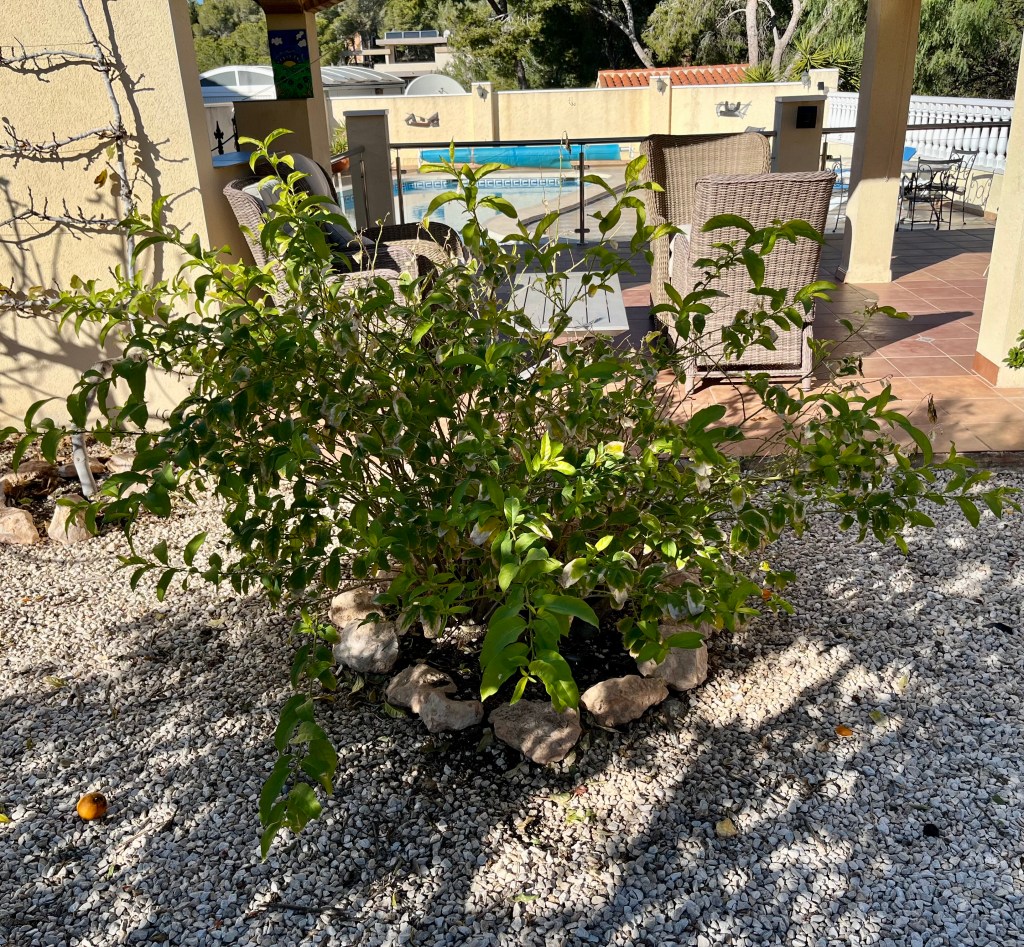
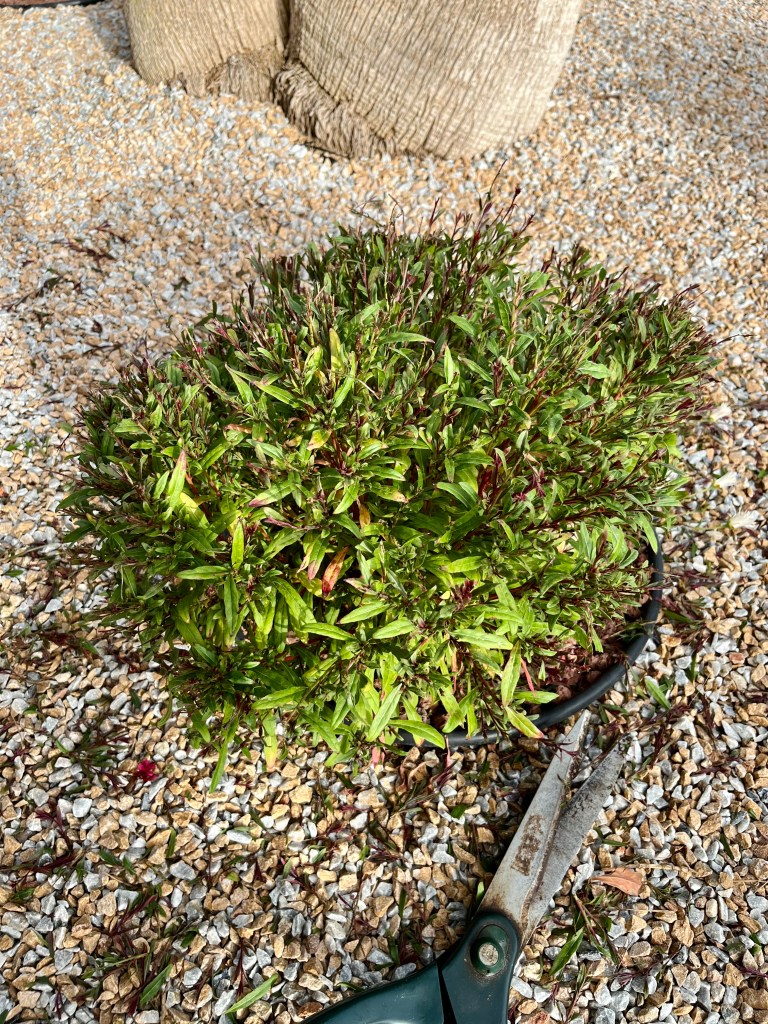
Instead of the normal pruning procedure I have taken one third of the foliage away and I will not cut back in January. This will mean that the plant will be substantially bigger next year, but I am hoping that the winter rains will bulk it up. The photo below shows my Dame de Noche finished for this year.

Better luck next year

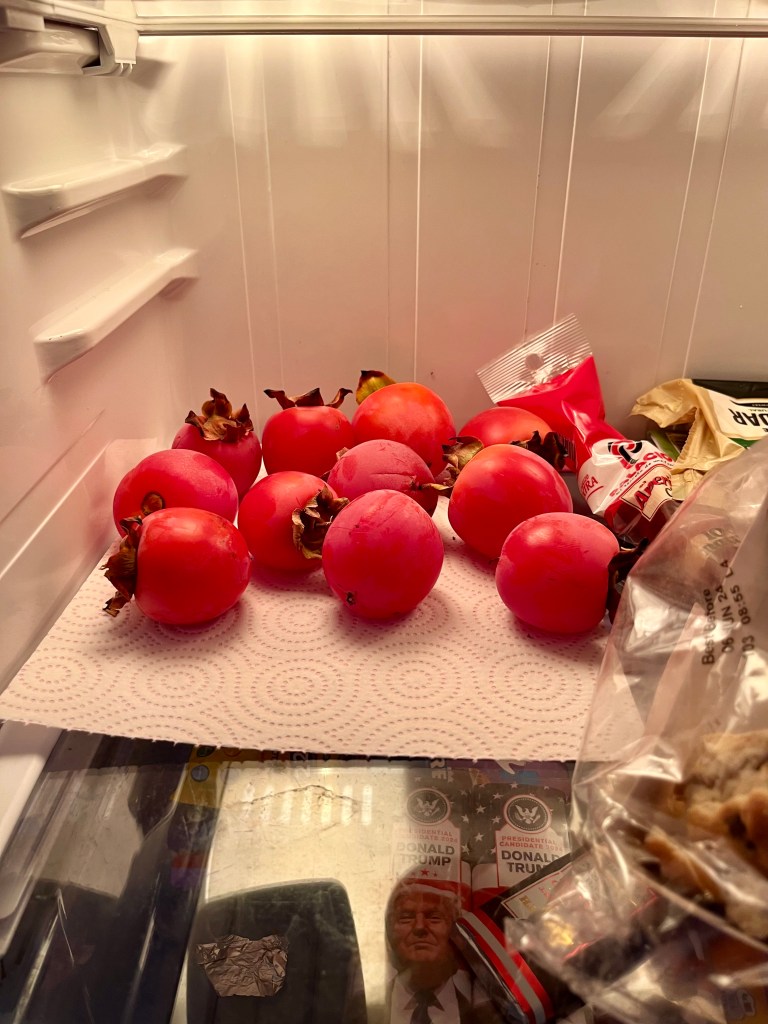
Netting fruit. The only soft fruit I have left this year is my Persimmons. Normally, I would net them at the same time as my figs, but given that I was late with the figs and suffered huge bird depredations, I was not going to make the same mistake again.

Persimmon will slowly go from a soft blush red to a bright yellow as they mature. The birds are watching them just as you are, and they know exactly when they are at their best.

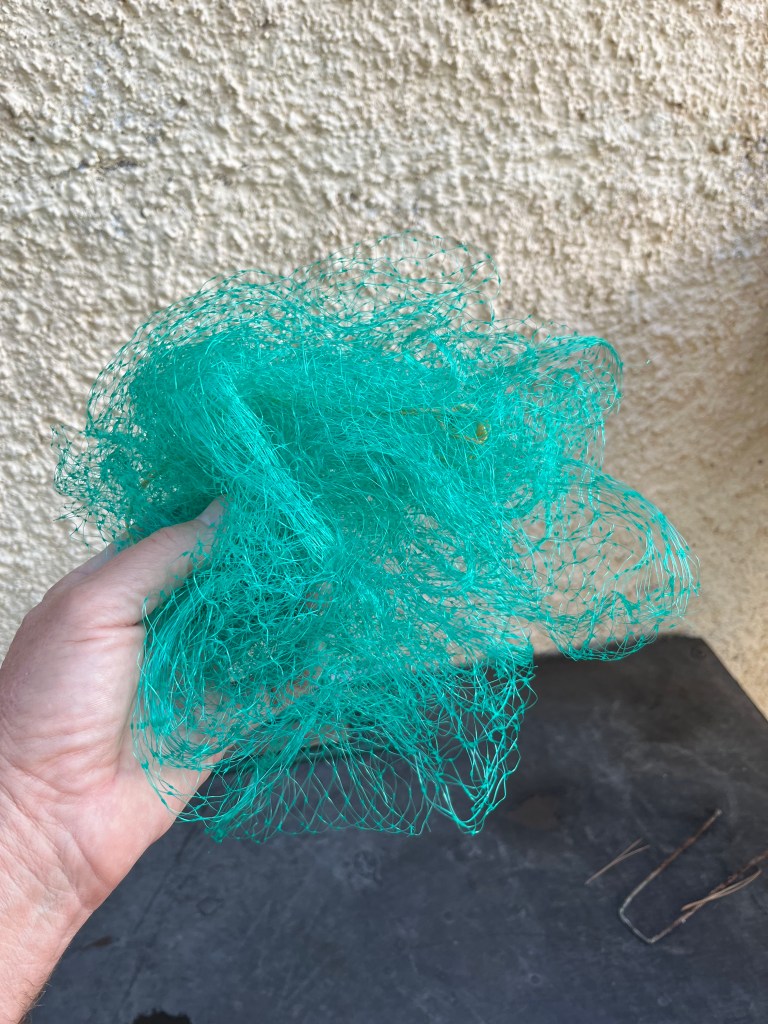
You need to net now with a small mesh net (so you don’t end up with birds hanging upside down each morning). As the fruits mature you can take them off and let them ripen off the tree. They are lovely in fruit salads or eaten directly with a spoon. The photos below show my little tree full of fruit and eventually netted. Click on each photo for a larger view.
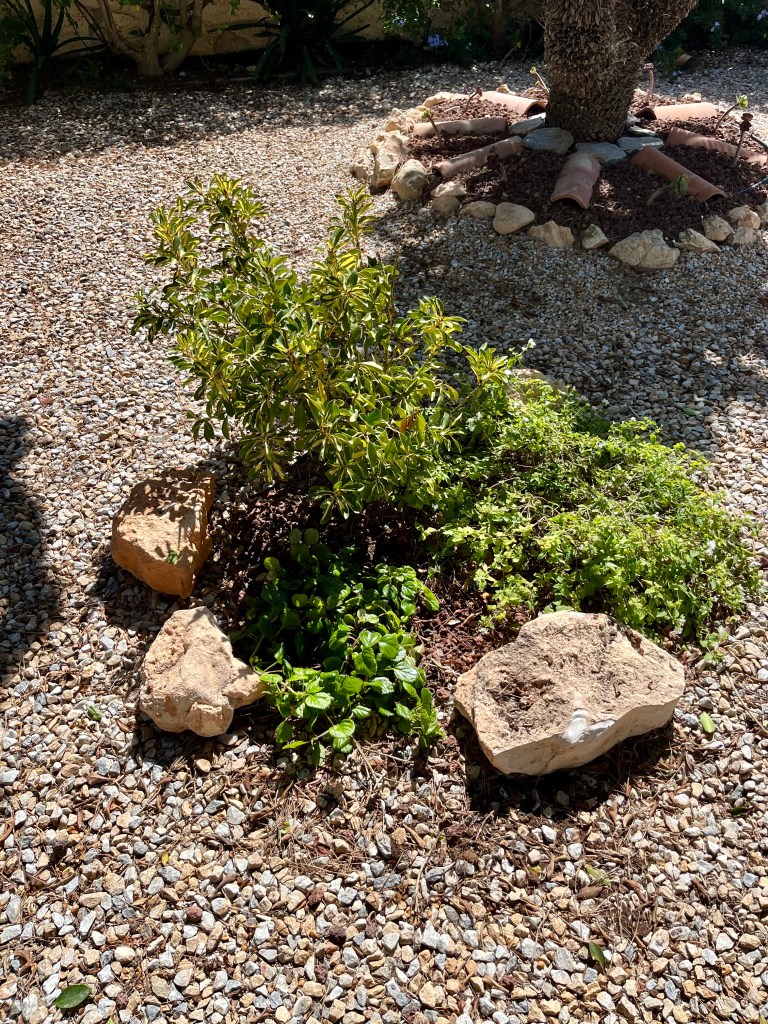
Taking summer cuttings. Most plants will by now be heading for seed, but occasionally as you wander round your garden you may notice the odd particularly lush plant that is bursting with new growth. If you find them, then why not try some late summer cuttings.

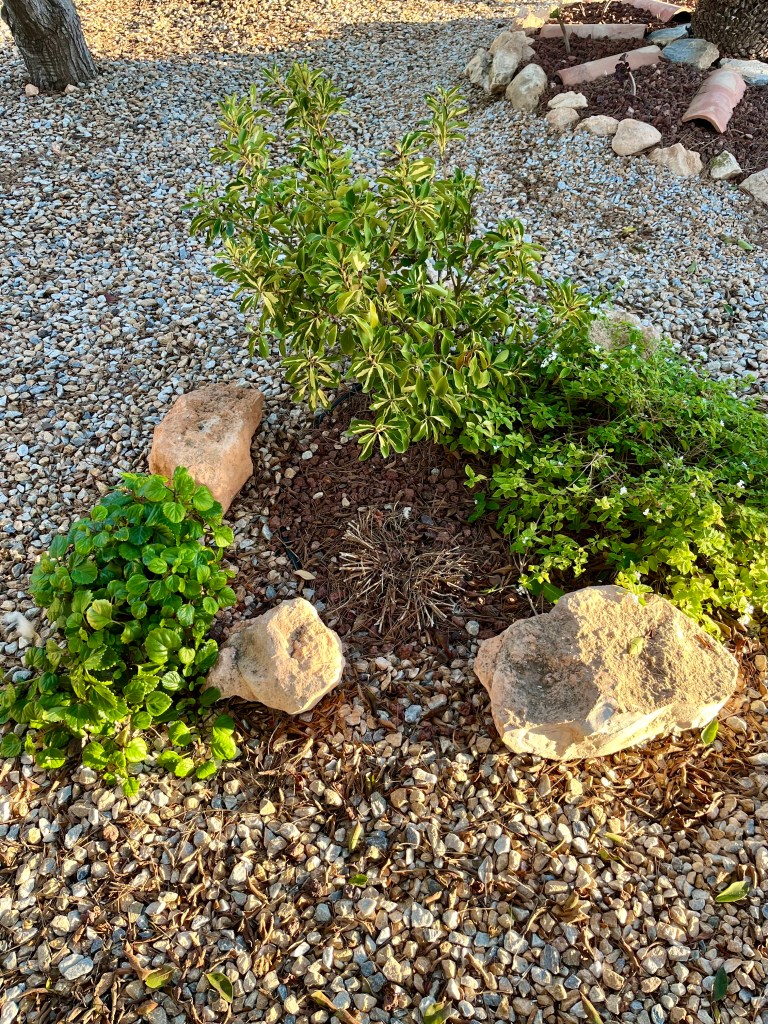
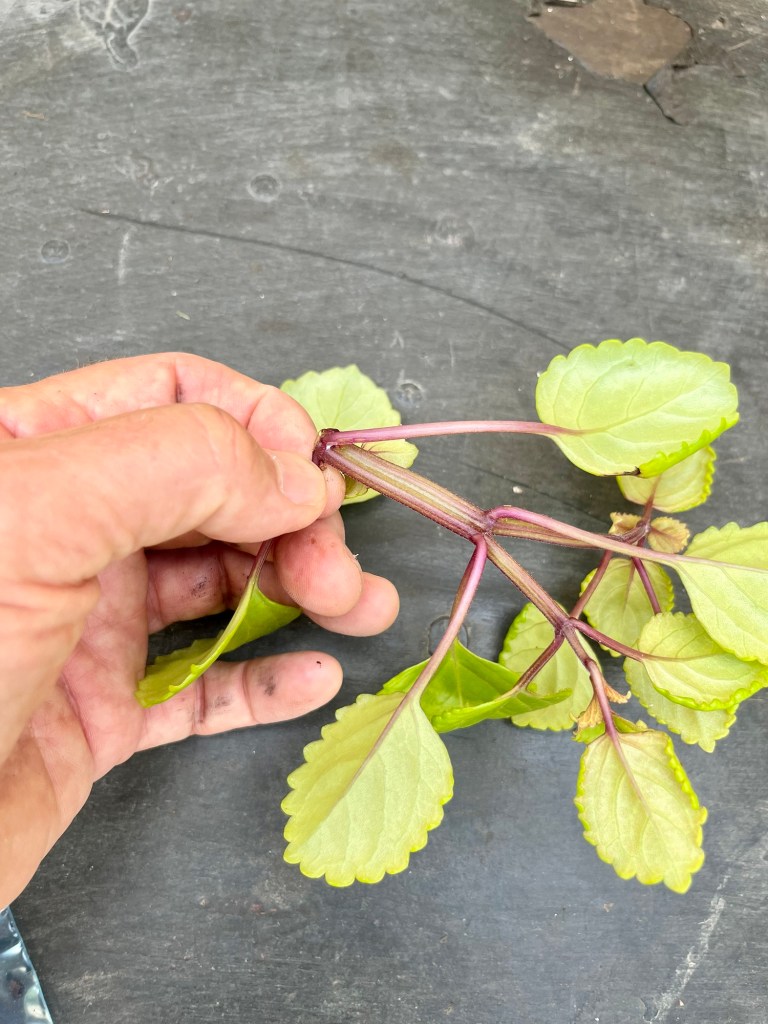
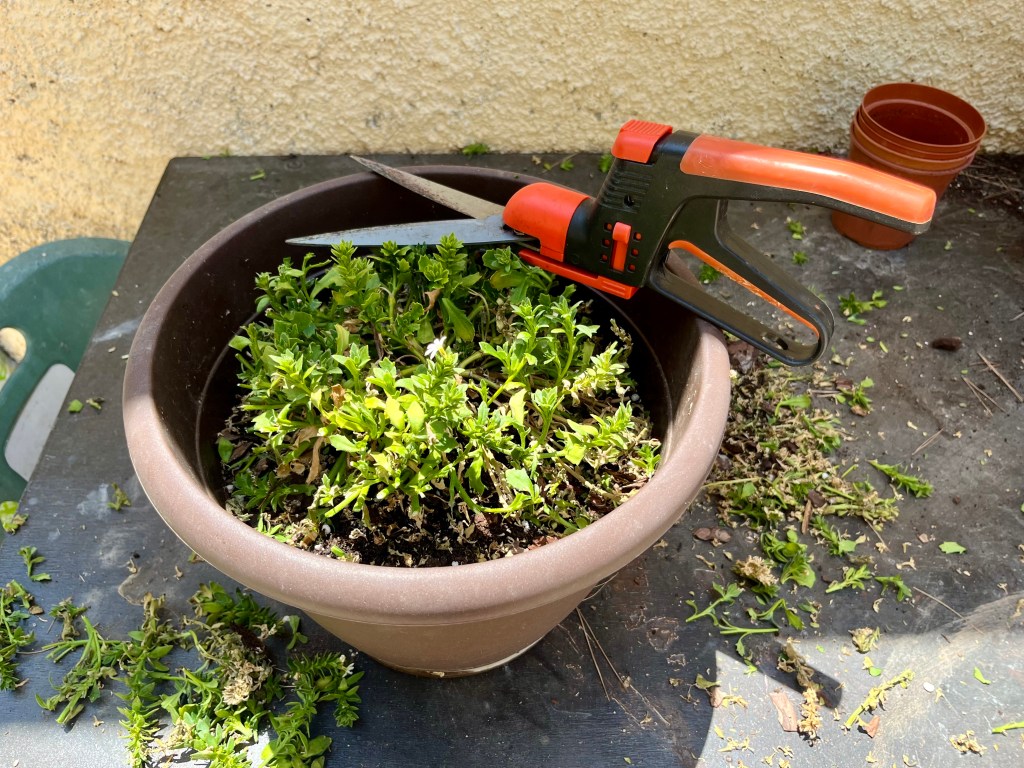
I have a Swedish Ivy (Creeping Charlie) in a pot that I got as a root cutting from my friend Camilla. This is bursting with new growth and I have decided to take some cuttings. The photo below shows the plant bursting with new growth.

I could easily take 10 cuttings off this plant

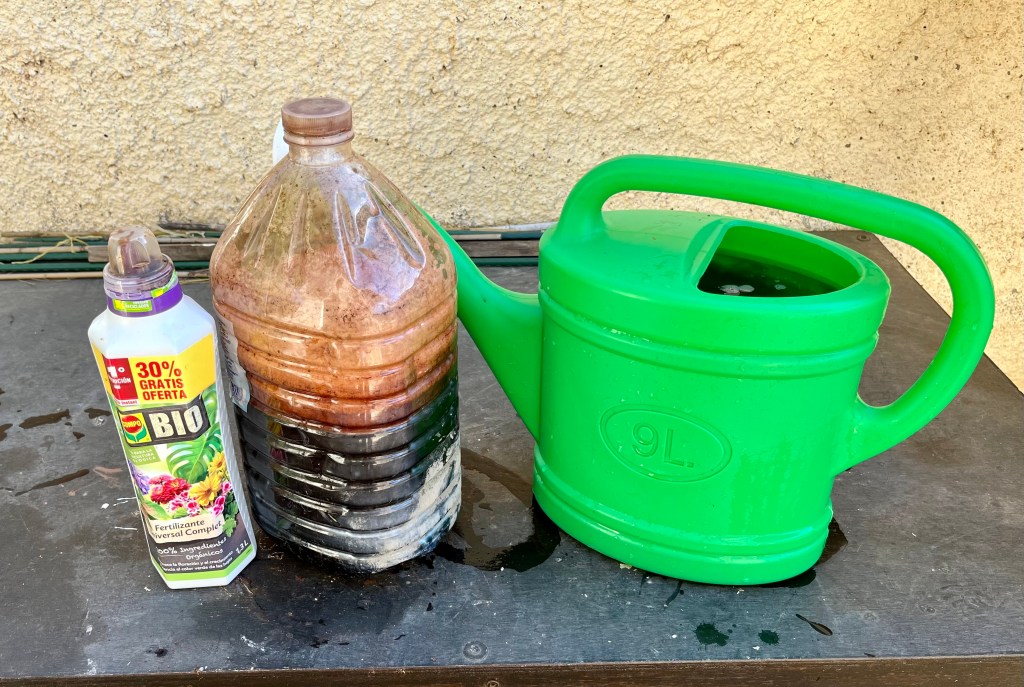
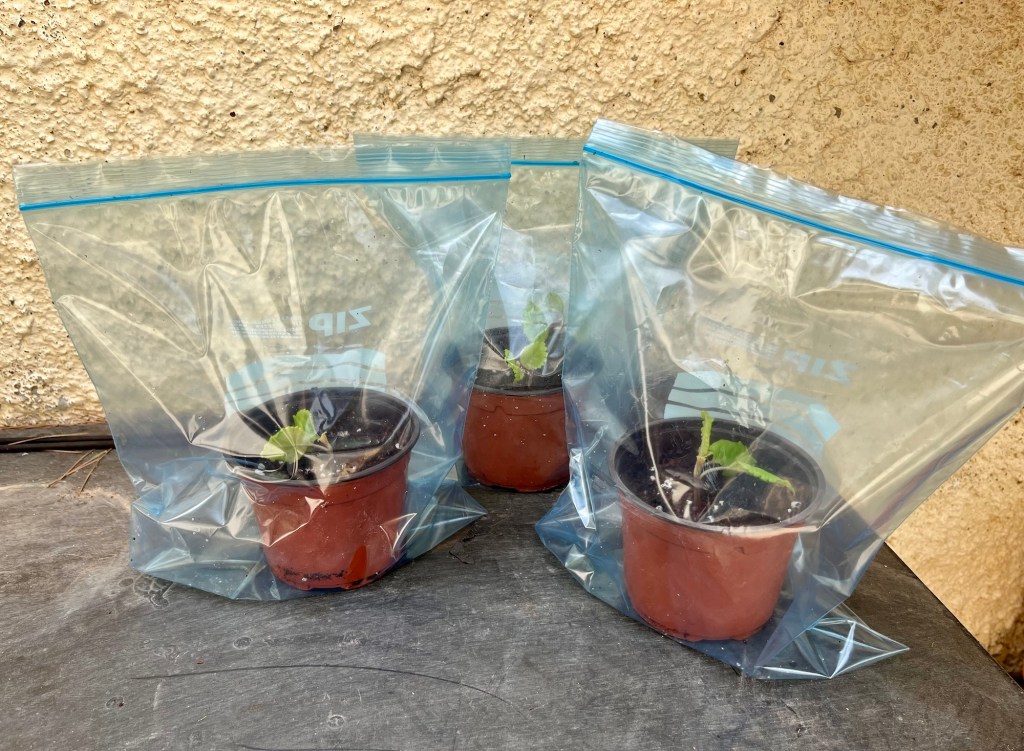
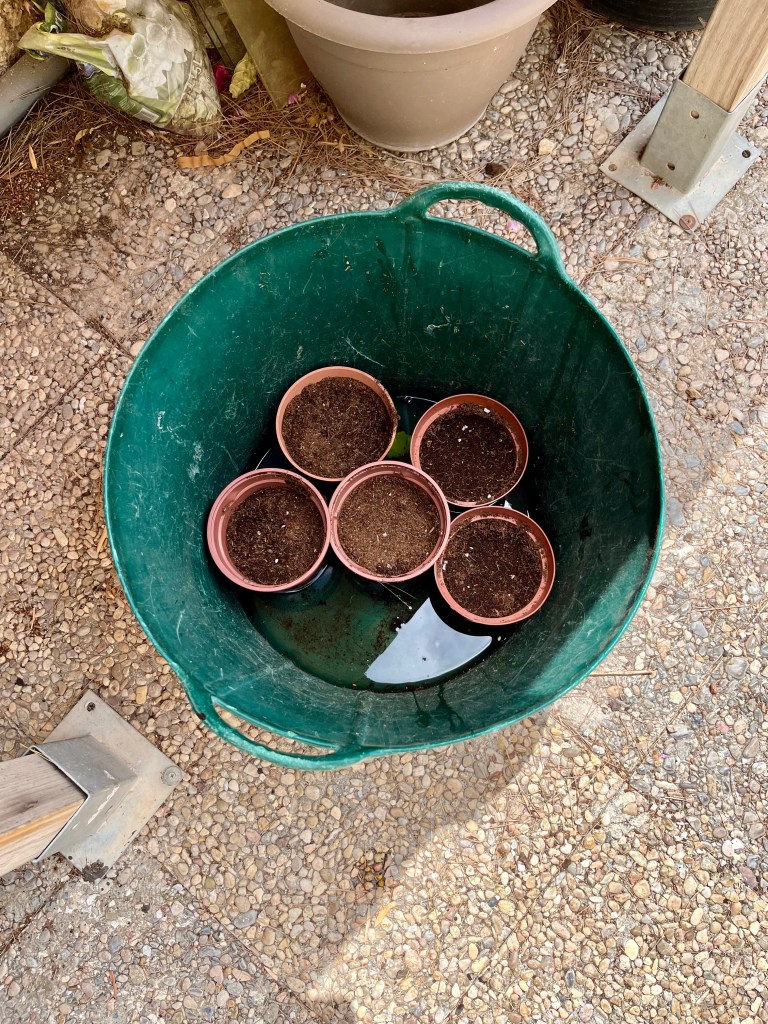
When you take cuttings this time of year it is useful to purchase some ziplock plastic bags (sold in every supermarket) these will aid humidity by keeping the plant moist. It is also useful to have some rooting liquid or powder (not necessary but useful). The photo below shows my preparations.

Once you are ready fill 4 inch pots with a good compost and water them well. Take the cuttings from just below a growth node, and then using your thumbnail pinch out all the leaves up the cutting stem leaving just a couple of leaves at the top. Dip each cutting in hormone liquid before planting it securely in the pot. Place the pot in the ziplock bag and seal.

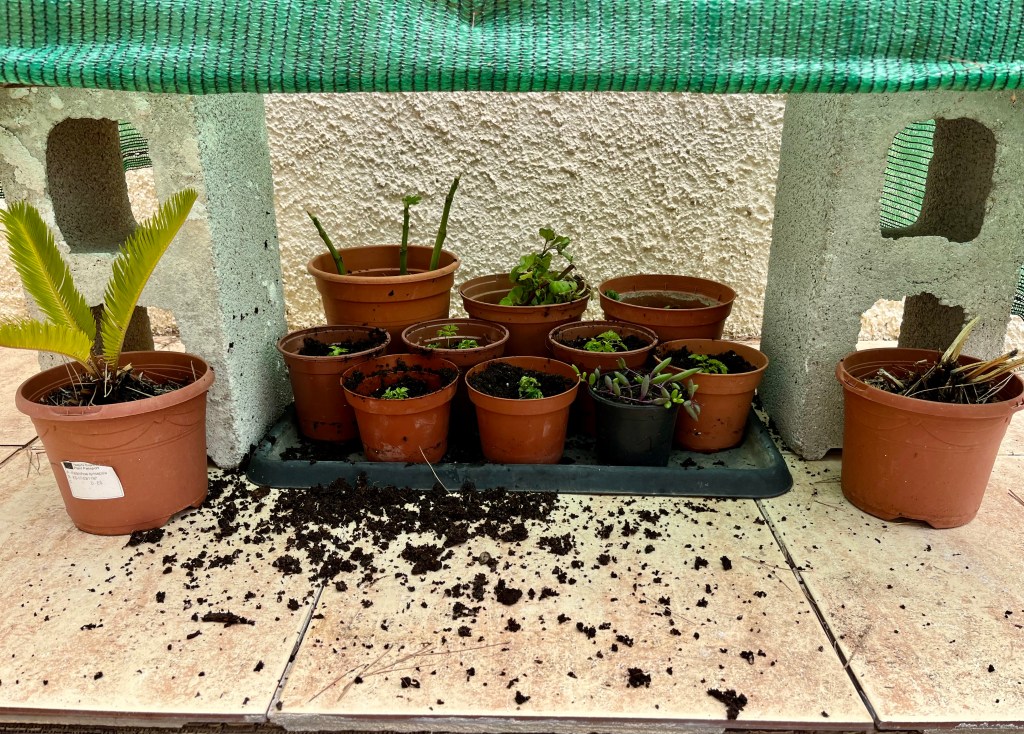
It is a good idea to open the bag at the top for about half an hour each day and ensure you keep the cuttings in the shade for a few weeks until growth starts. See photos below. Click on each photo for a larger view.

Remember open for half an hour each day

Dealing with Helga the hen. Regular readers of this blog will remember that Cruella (my wife) favourite hen died last month. She quickly announced that her girls would need a new friend and promptly ordered another giant chicken.

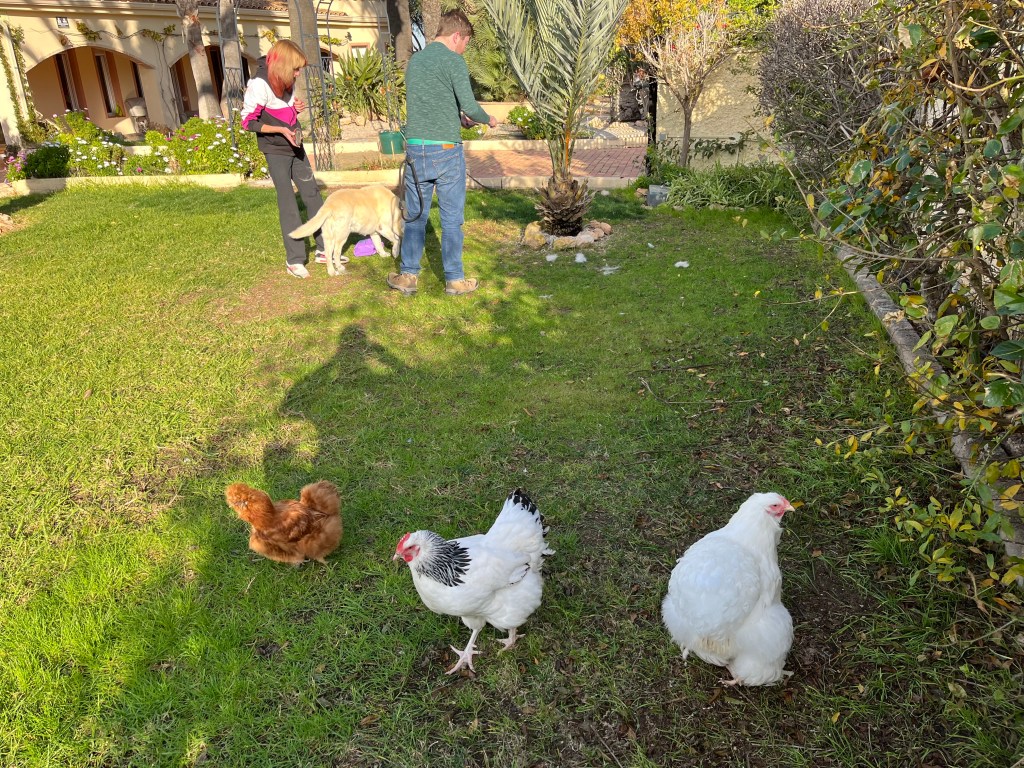
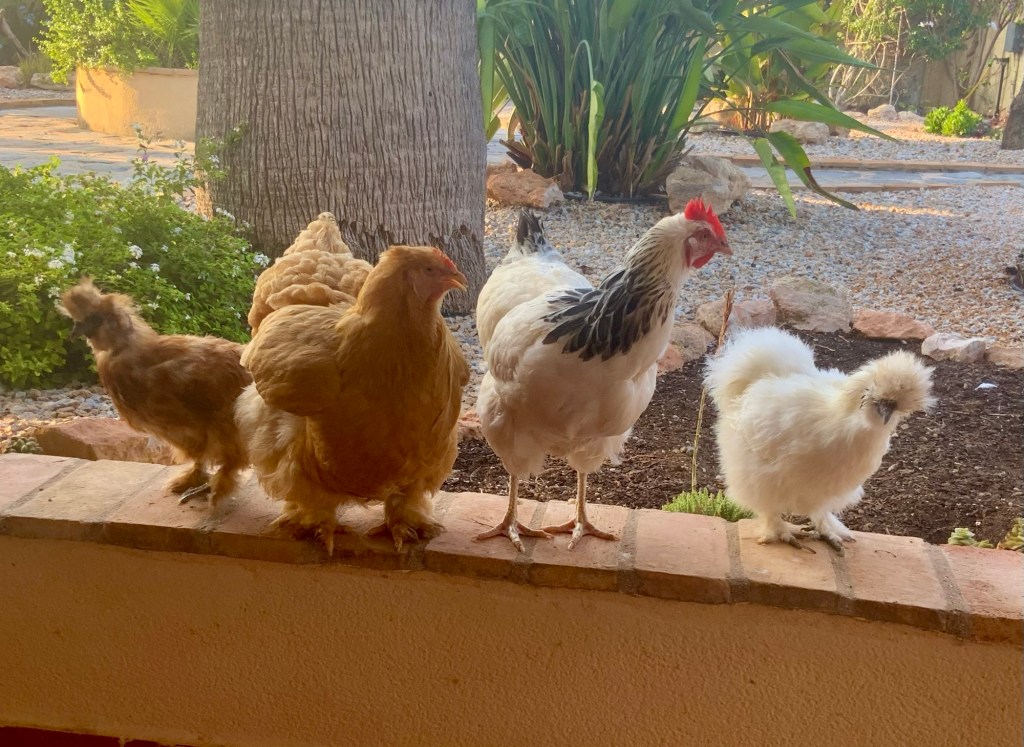
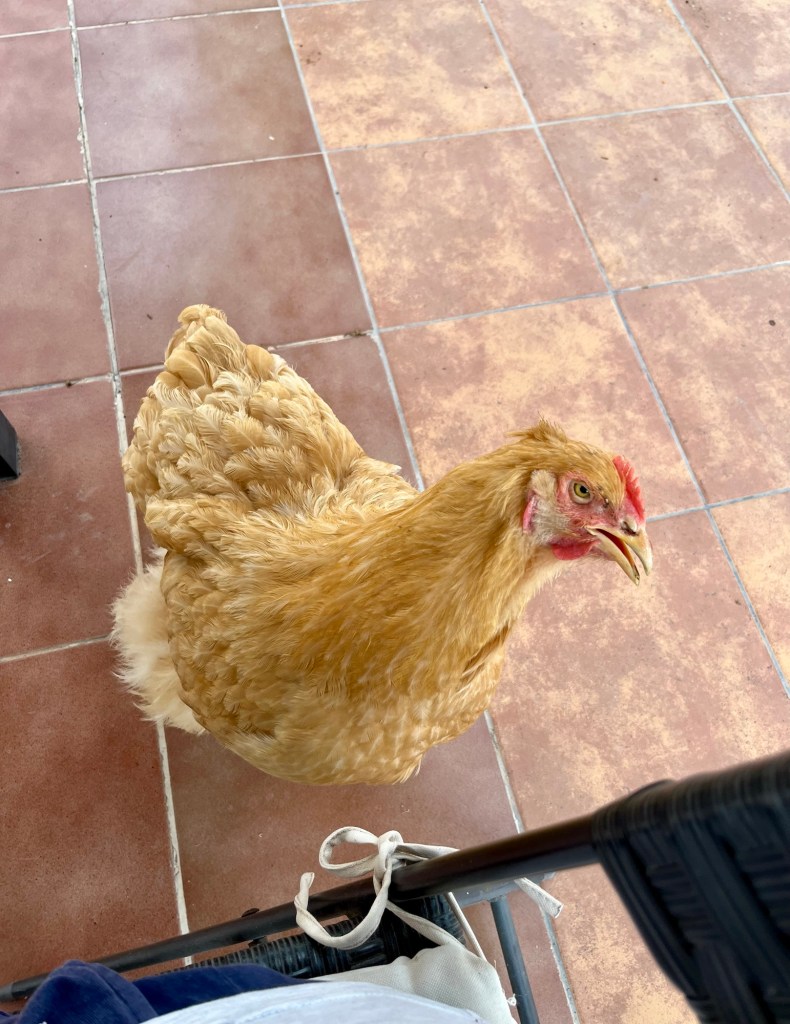
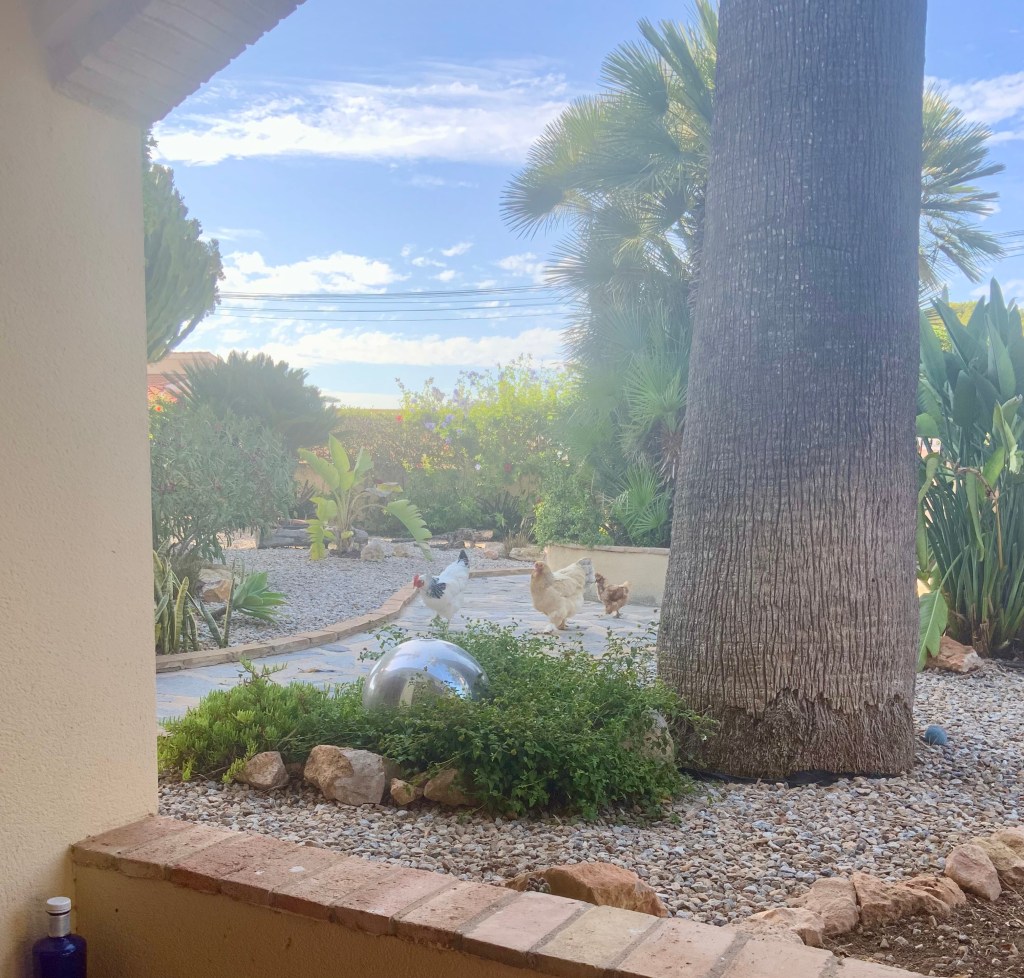
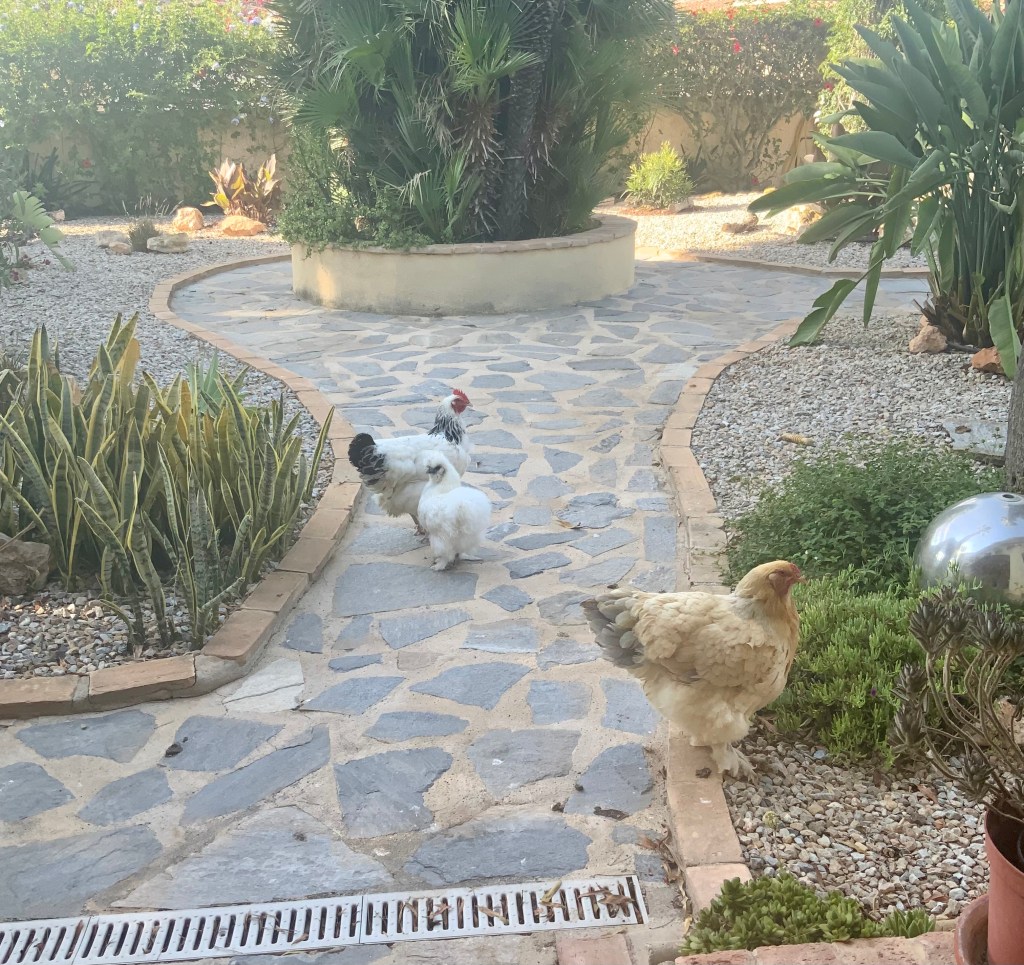
Helga the giant hen duly arrived two days later. Cruella was immediately smitten and declared her the love of her life. In case you are interested I am seventh on this particular list. First the idiot son, then the four chickens followed by Tango the lonely blind Labrador and then me. The photos below show Helga and the new line up. Click on each photo for a larger view.

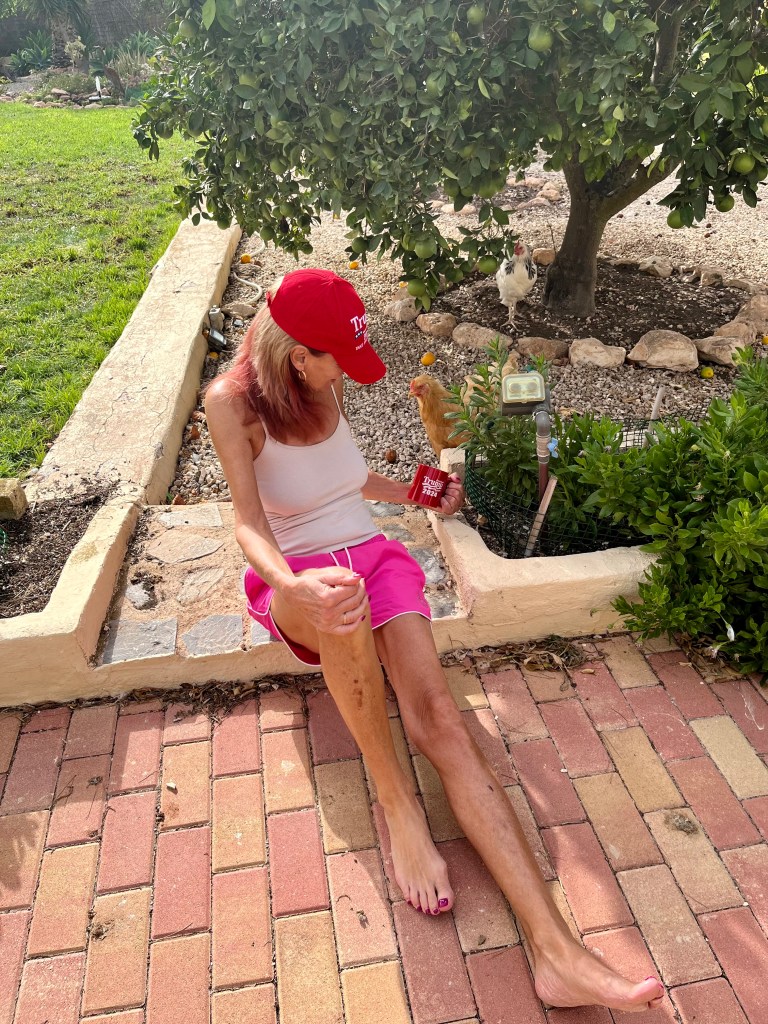
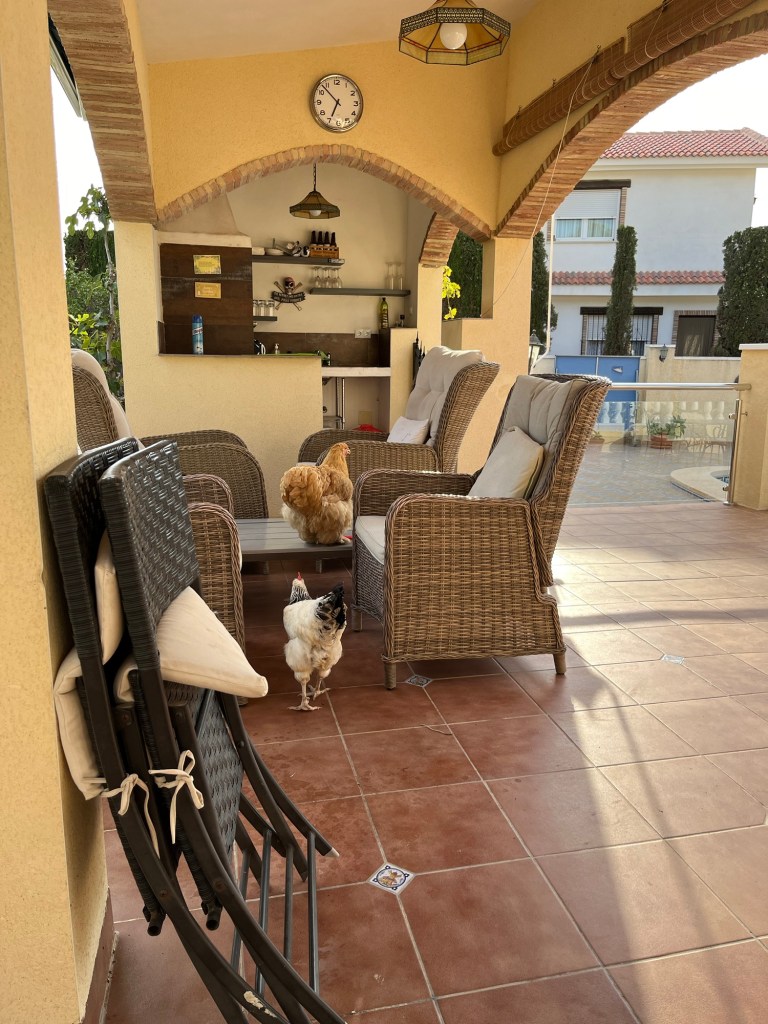
In a stupid attempt to curry favour with Cruella I started to feed Helga by hand with what was left of my figs and grapes. This has resulted in her continually following me everywhere demanding more food. If I fail to give her a grape or fig she starts to peck my toes. I have tried shouting at her but she only speaks chickenese.

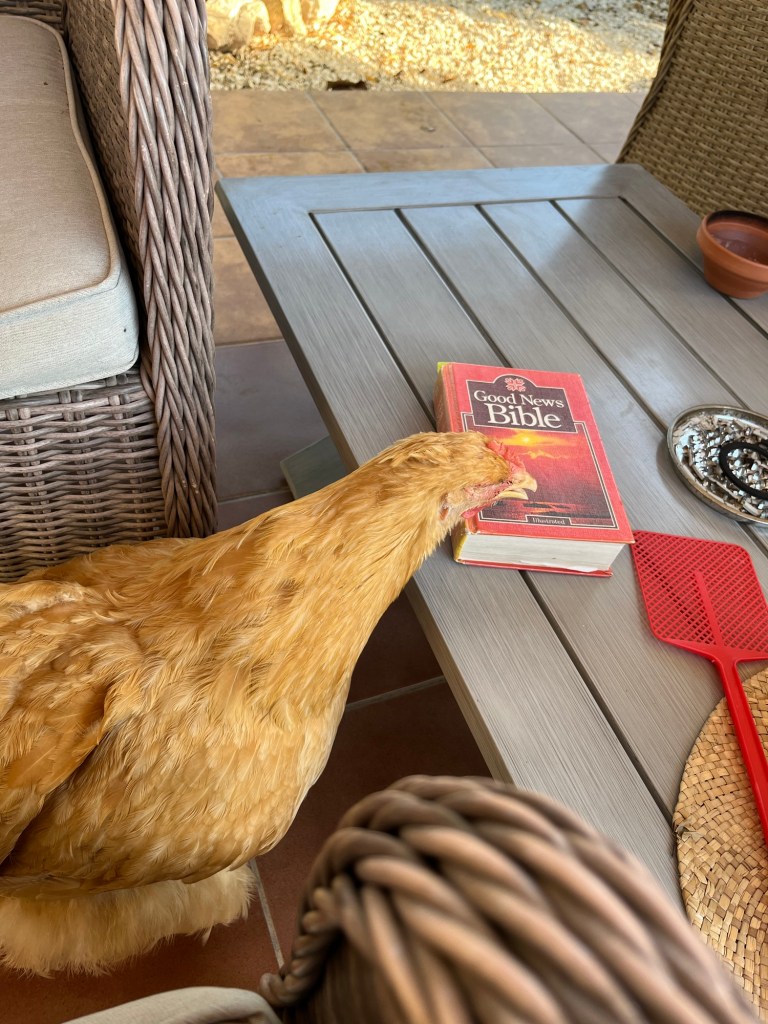
I have explained to Cruella (my wife) that Helga is out of control, but she says it’s only girlish fun. But you can see from the photos below that she sits on my chair, waits on the table to be fed, stops me reading my Bible and is currently sitting beside me as I write this. I fear for the future. Click on each photo for a larger view.

The big summer cutback, I forgot to net my figs and I am accused of killing Big Bertha

I suppose I better start with the bad news; Big Bertha my wife’s favourite chicken is dead! The really bad news is that I am being accused of deliberately killing her (the chicken that is). I won’t go in to it all now, we will do the garden stuff first then I will plead my innocence.

11th August 2024. Things I have been doing lately:

  • The late Summer cutback
  • Gathering in the few crops the birds have left me
  • Continuing to deadhead
  • Dealing with the fall out from the death of Big Bertha

The late Summer cutback. As we move towards late summer here in Spain the heat has been building for months and we have had no rain in the Costa Blanca. This has meant that most of us will have lost some plants and the rest of the garden looks very wilted and sorry for itself.

Now is the time to stroll round your garden in the cool of evening and decide whether some areas need cutting back. There are two main reasons for cutting back at this time of the year. Firstly, you may want to redefine the shape of your plants where they have got floppy and overblown. Secondly you may want to cut off old growth to encourage a new flush of flowers or green growth.

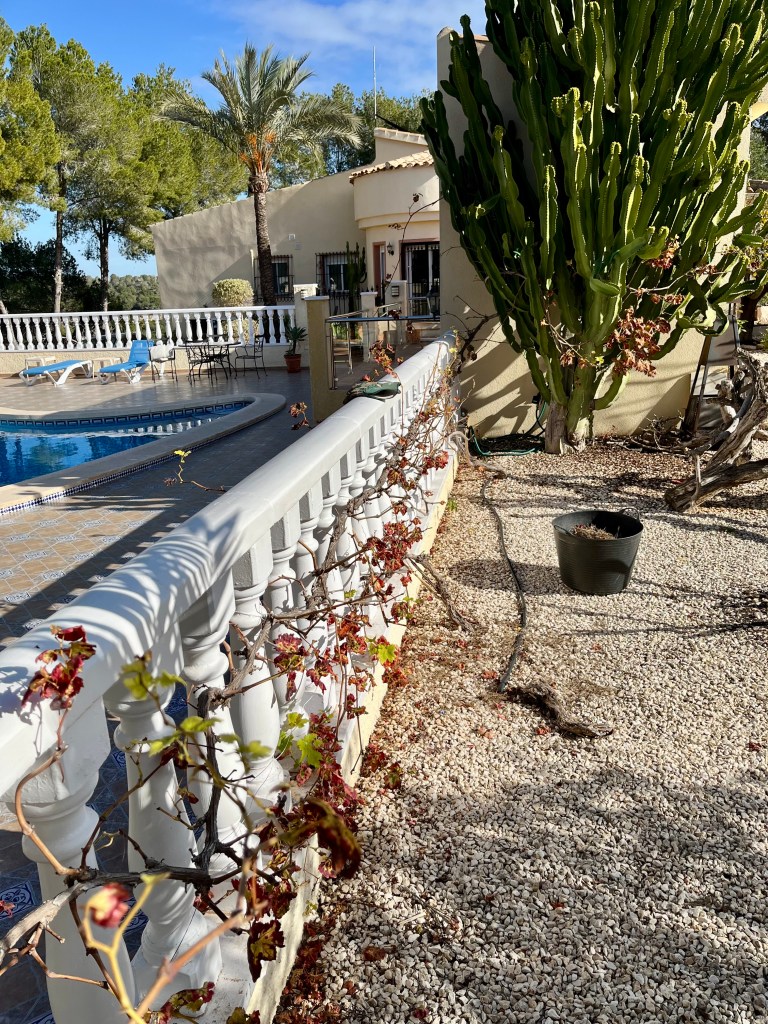
The photos below show the bottom of my drive where the large Peruvian false pepper tree and the Myrtle bush normally make for an attractive scenario that draws the eye down the drive. The first photo shows them both slightly out of shape, whilst the second shows them back at their best after trimming. Click on each photo for a larger view.

If you have hedges (and I have a lot), then now is a good time to give them a light trim to bring them back into shape and stop them shadowing lawns and your bedding plants. Don’t be tempted to trim hedges before round about now as you may disturb or even destroy bird nests. But also remember this is not the big winter cutback so don’t cut into wood, unless you really need to, instead just concentrate on taking back leaf. The photos below my various trimming efforts before and after. Click on each photo for a larger view.

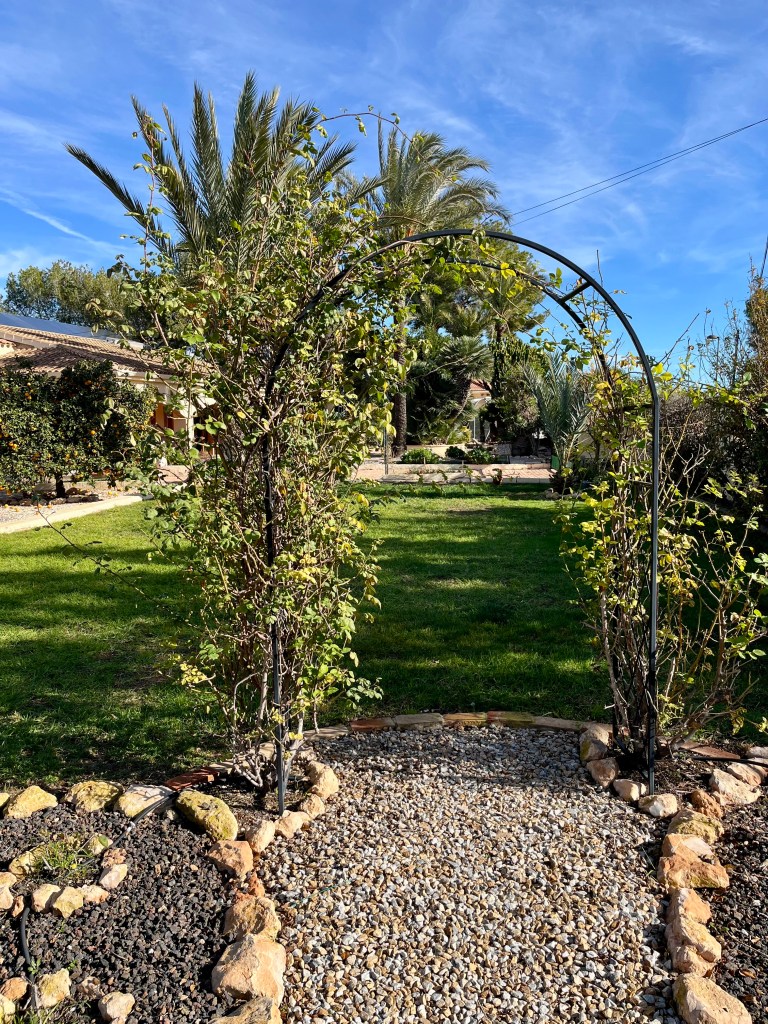
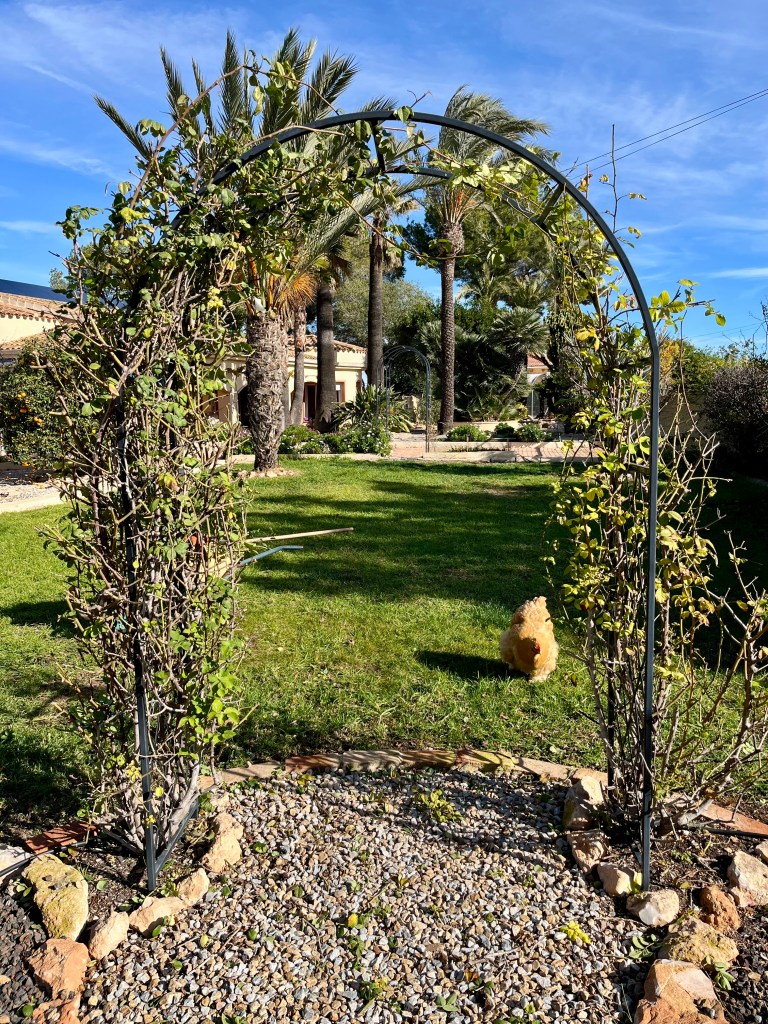
If you have arches over gates or other entry points into your garden then tidy these up as well so that cars don’t get scratched and people don’t snag their clothes on overgrown plants. The photos below show some little areas of tidying up. Click on each photo for a larger view.
Gathering in the few crops the birds have left me. Regular readers of this blog will remember that I prepared my fig trees for netting just before I went away for a couple of weeks. Unfortunately, when I got back, I didn’t get around to netting them as I became distracted with other tasks. Then I stupidly decided not to net them this year as an experiment. The results were predictable. A good third of my fig crop is being lost to birds. Each morning I go out and harvest that days ripened figs, but large numbers have been pecked by birds, most annoyingly sometimes just one peck, but enough to spoil the fruit. The photos below show the morning devastation. Click on each photo for a larger view.

The photo below shows a typical morning collection including the spoiled figs that I will never enjoy.

In addition to figs I have been harvesting my grapes. I don’t normally bag or net grapes as it would be too time consuming. The secret with grapes is not to try and harvest them before they are ripe. Grapes do not continue to ripen once they are cut, so you have to be patient.

Keep an eye on your grapes, twice a day if necessary. Taste one each day as they get close to ripening. Then once you are happy take off the ripe bunches straight away. The birds will know exactly when your grapes are at their best so don’t leave them any longer than necessary. The photos below show my grapes waiting to be harvested, and then the daily harvest. Click on each photo for a larger view.

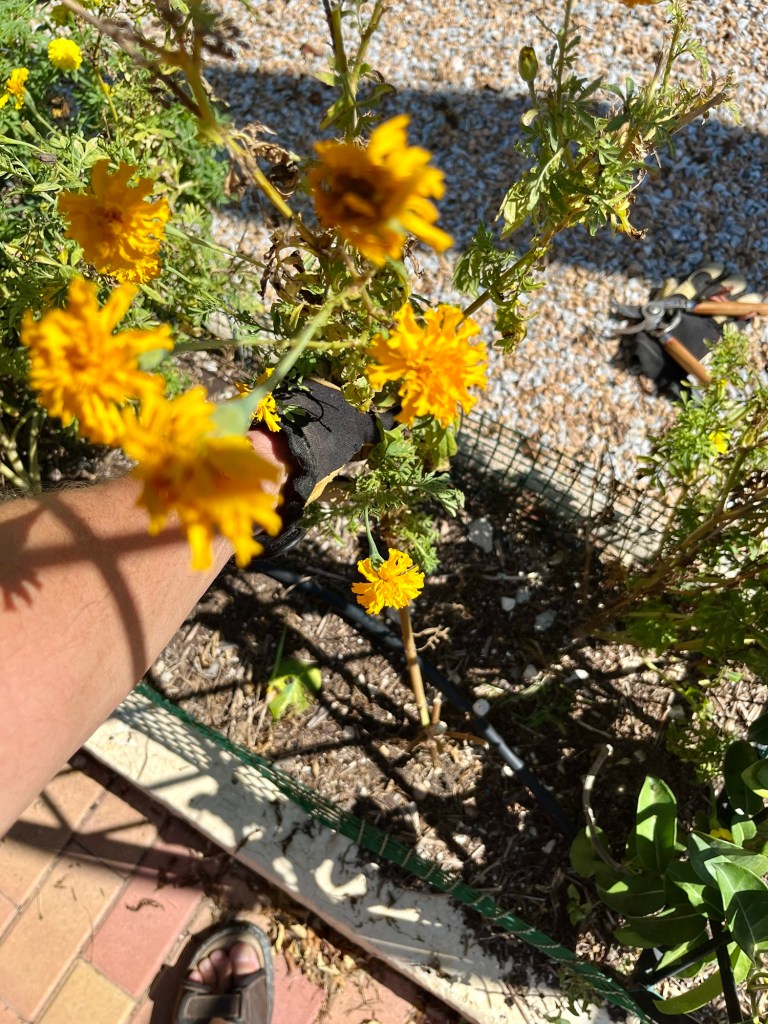
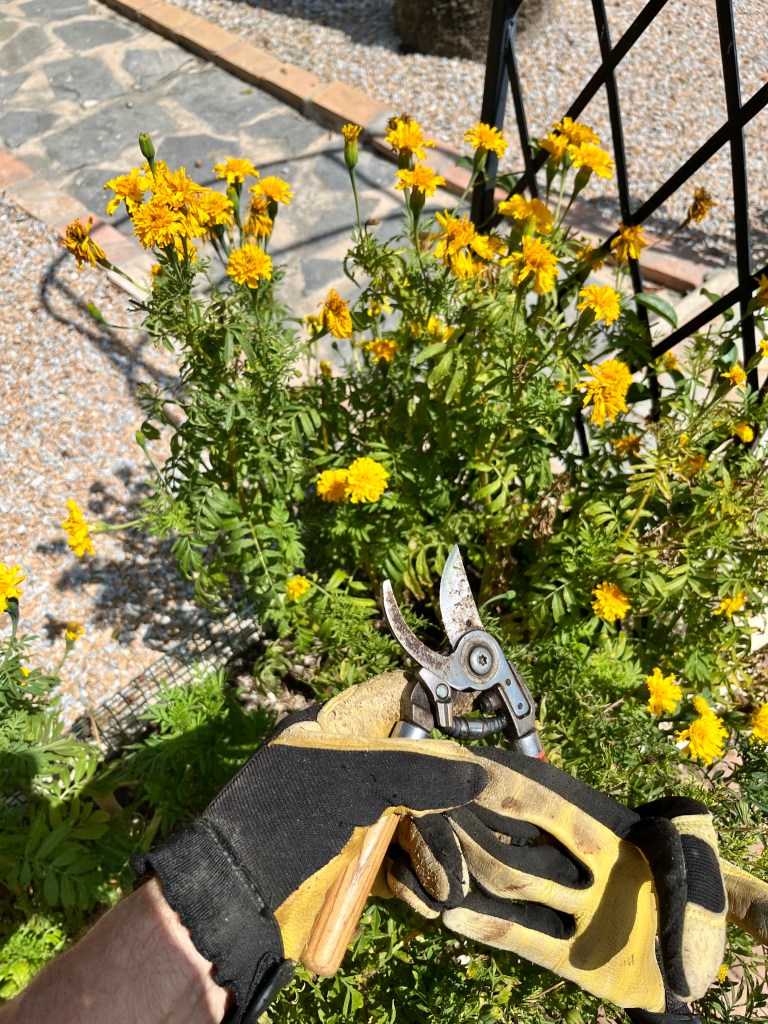
Continuing to deadhead. I know it is hot, and you have cold beer and wine waiting for you. But, if you don’t deadhead daily then you will run out of flowers in late summer. Once most plants have 50% of dead flowers going to seed, then they will stop even trying to put on more flowers. By deadheading daily you are forcing the plant to produce more flowers to reproduce itself. The photo below, shows me on my daily rounds.

Dealing with the fall out from the death of Big Bertha. I started this post by informing you that Big Bertha, my wife (Cruella’s) favourite chicken had died. But let’s start with the facts. Yes Bertha is dead, and yes I may have had something to do with her demise. But I feel I need to explain and get you to understand the sequence of events and extenuating circumstances. But just to remind you of the late great Big Bertha, she is the one on the left in the photo below, in case you hadn’t guessed.

What happened was this. I have a spray irrigation system watering under all of our fruit trees on a timed system. It was a hot evening and Bertha had positioned herself under one of the trees where she seemed to be happily enjoying the irrigation spray. I thought it was funny and even took the photo below to show Cruella.

Anyway, that night when Cruella went to put her to bed and gave her, her normal goodnight cuddle (all I get is goodnight pig), she discovered that Bertha was soaking wet. The next day Cruella came hurtling into the house in hysterics screaming that Bertha was dead and that I had murdered her. It turns out that when Cruella went to let her girls out Bertha didn’t appear, only to be discovered stiff as a board.

I can’t begin to tell you what it has been like in our house since. The recriminations and hysterics are terrible. They all shout and scream at me in chickenese and accuse me of Water Boarding Bertha. Cruella has already reported me to the ICC (International Chicken Court). She gets things mixed up and insists that the ICC is somewhere in Europe overseen by William Hague who she insists will see that justice is done.

We had Bertha’s funeral yesterday down in our wild wood. It wasn’t really a funeral as Cruella insisted that Big Bertha was burned on a funeral pyre. We all stood around, Cruella and her girls all wore black and sang dirges in chickenese. As the flames licked around Big Bertha’s corpse they all burst out into loud wailing. I just stood there, all I could think of was KFC!

Leaks, borders, deserts and birthdays

I have had to leave the garden. Cruella (my wife) demanded we go back to our English house to celebrate the 30th birthday of our idiot son. She insisted we have house sitters with previous experience of chickens as she was worried her girls would pine; no mention of needing gardening experience. Every night she insisted on FaceTime calls with the chickens; I wasn’t involved as they all spoke chickenese. I had to comfort myself by looking on Google maps at the garden.

Anyway on with the gardening; or what’s left of it.

30th July 2024. Things I have been doing lately.

  • Dealing with water leaks everywhere.
  • Bringing the borders back under control
  • Dealing with the desertification of the lawn
  • Celebrating the idiots birthday

Dealing with water leaks everywhere. I spent many sleepless nights worrying about the garden whilst I was away. Cruella complained that my nightly mumbling kept her awake, but to be honest I don’t know how she could even hear me as the area of ceiling she normally hangs from is right over the other side of the bedroom.

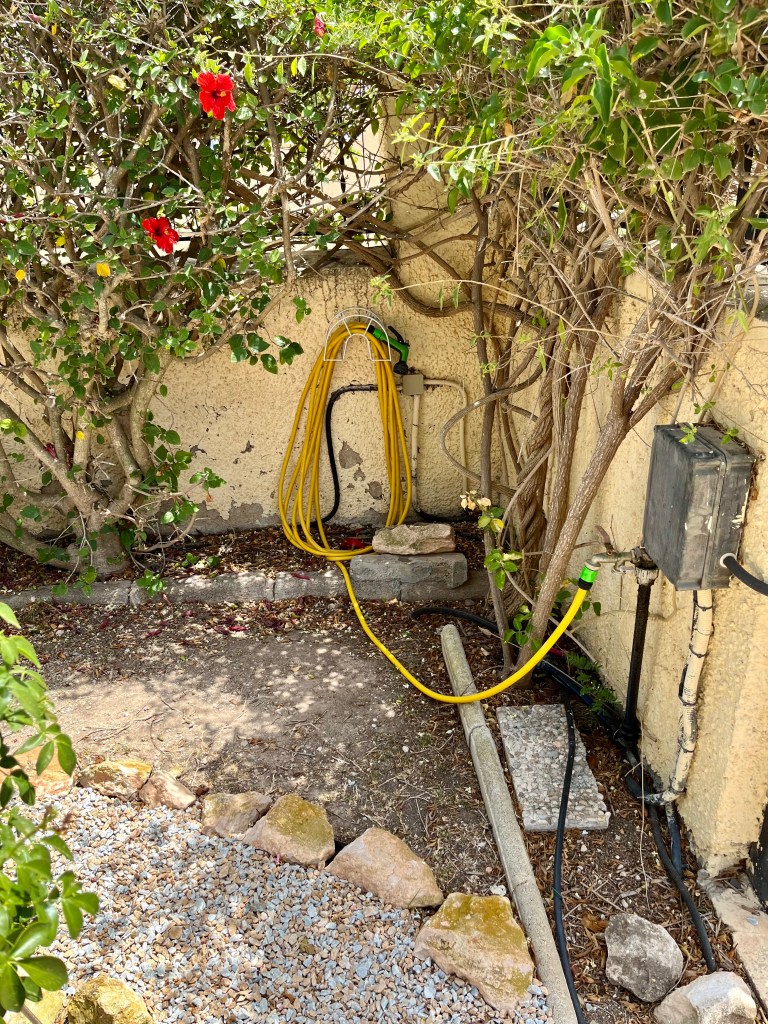
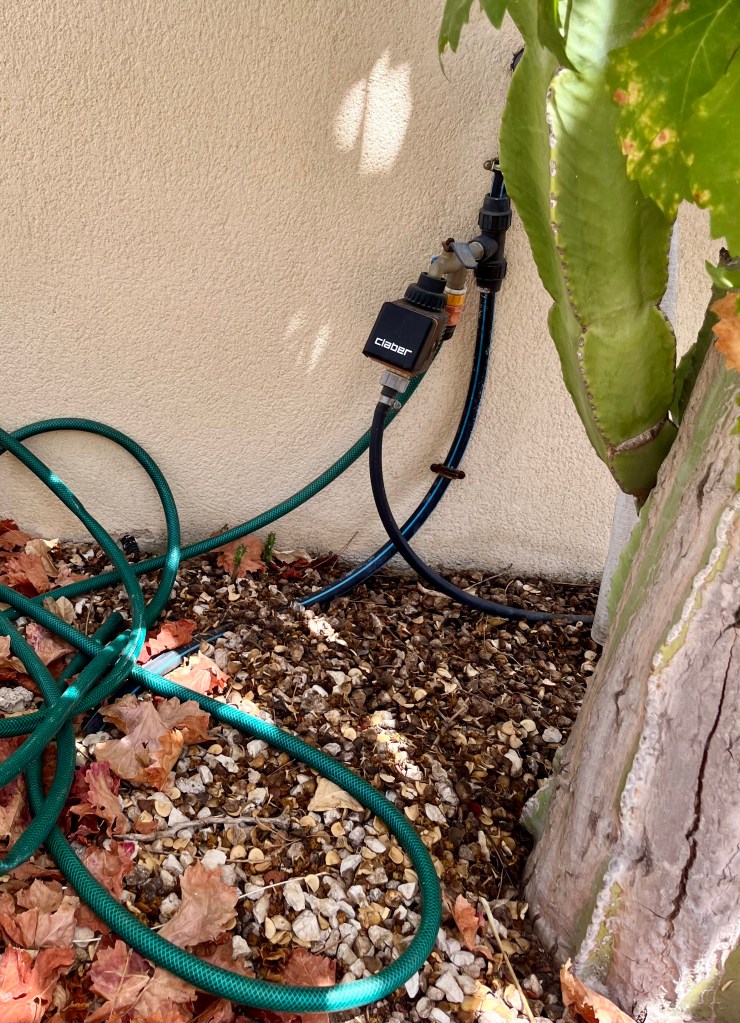
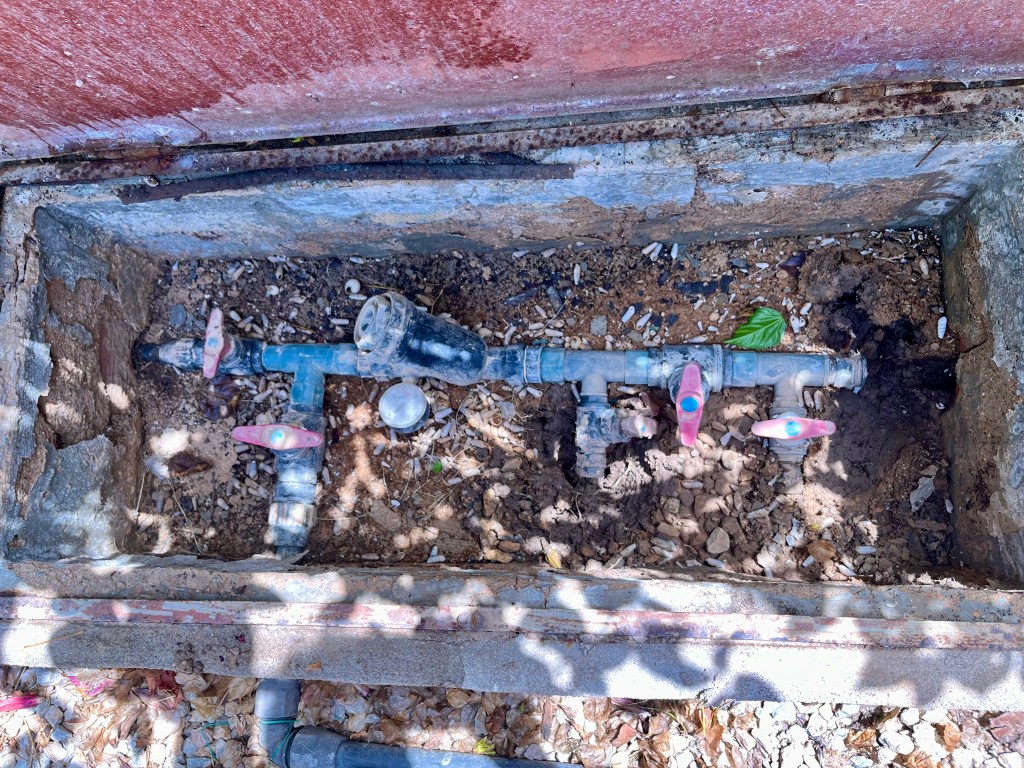
Anyway, you can imagine the state of the garden when I got back. But the worst things was the many leaks that had sprung up all over my various irrigation systems. Our water bills are normally high, but the one that met us on our return was €700? Apart from a mains leak which was creating a new swimming pool for me, the rest were leaks from split irrigation pipes.

I normally keep an eye on all my irrigation pipes, but it just shows you that even a couple of weeks away can make a big difference. Irrigation pipes in Spain become very brittle in the sun and as a consequence are liable to splits. So get outside now and start your checks.

  • turn all your irrigation systems off
  • turn them on one at a time
  • as you turn each system on walk the length of the piping looking for leaks or suspicious area of lush growth
  • once you detect a leak cut out a decent length of the piping as it will usually be weak in other areas close by
  • connect the piping with appropriate connectors ( see below)
  • then check that your repair is not leaking
I possess more piping and irrigation connectors than most hardware stores

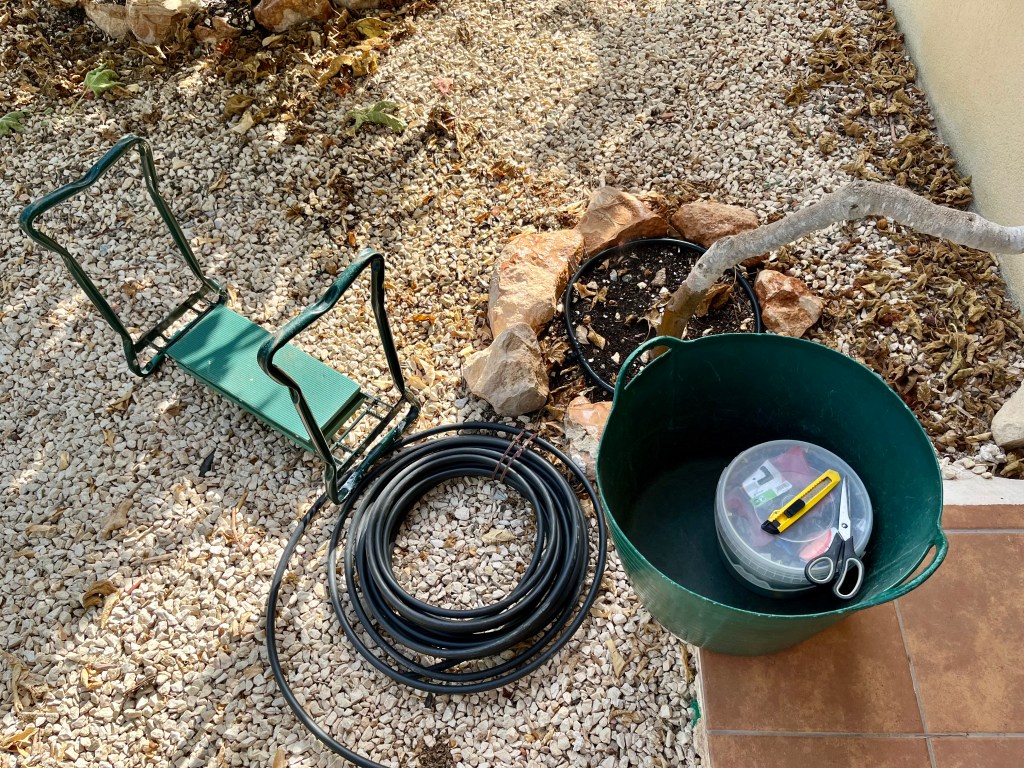
The photo below shows my mobile leak repair tools as I deal with yet another leak.

Just to give you an idea of the scale of the problem I have faced, it has taken two days to track down and repair most of the leaks. The photos below show some of the areas where I am leaking money. Click on each photo for a larger view.
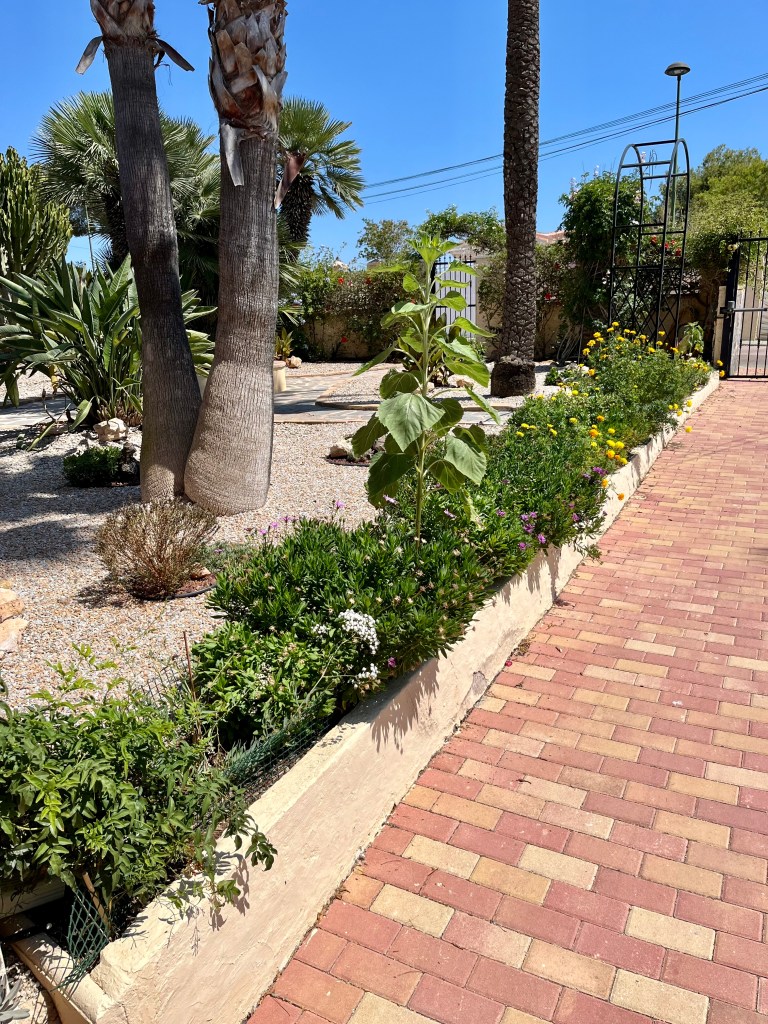
Bringing the borders back under control. By now all of your borders should be in full flower, and ideally you should be deadheading and staking up each day. The photos below show the state of my borders upon my return. Click on each photo for a larger view.

To the superficial eye, these may look fine, (not that I am accusing you of having superficial eyes). But to me there are heads to be deadheaded and stems to be staked. I tend to stake things first and then go round and deadhead. In this way I can see any dead flowers that may be dropping down.
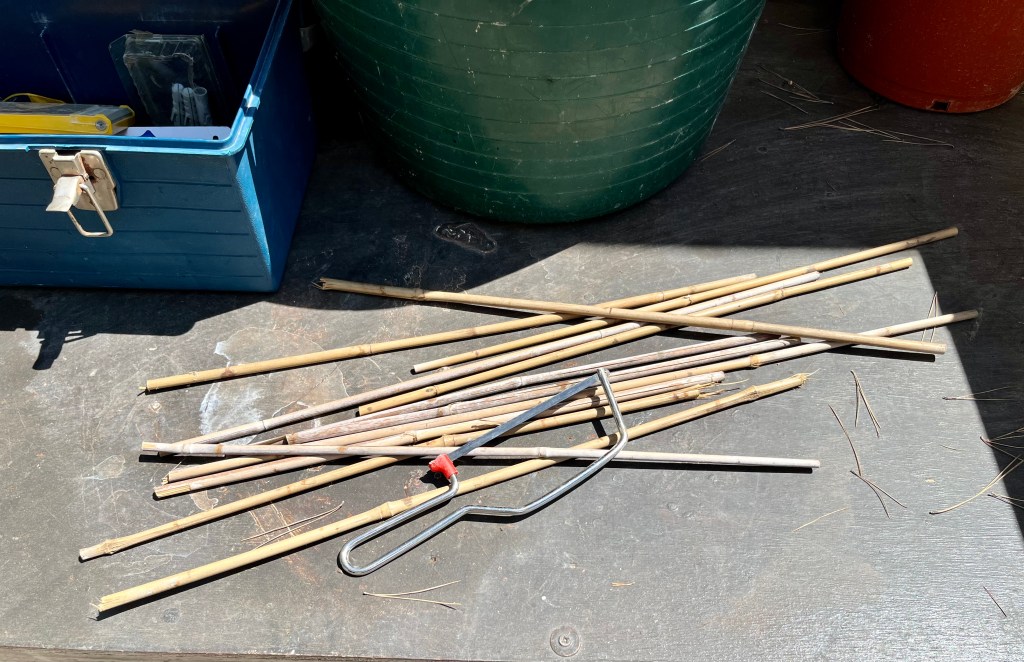
At this time of year the gardeners best friend are canes and twine. The photos below show me getting ready to go. Try not to use very long canes as this is not cost effective, instead cut long canes into four. Not only does this save you money, it will also stop you having expensive eye surgery when you bend down and poke your eye out. Click on each photo for a larger view.

Once you are set to go, wander round looking for drooping and fallen stems. Most plants will stop flowering if there is a kink or break in their stem. You need to get them upright as soon as possible. I know it may sound stupid, but there is a correct way to tie up a plant. Ideally you should form a figure of eight around the cane and the plant stem. You achieve this by first tying your twine around the stake and then forming another loop around the plant stem. The idea is to stop the stem chafing against the stake, thereby causing a wound that may let pathogens in. The photo below shows how well I attended to knot tying in the Scouts.

For some reason Cruella (my wife) is very good at tying knots. I asked her about this one day and she told me it is all about tying down small animals for sacrifice!

Once you have tied everything up, then it is time to go around deadheading. Remember don’t just cut off the flower head, go back to the next leaf node and cut just above there. In this was you will not leave dead stem for infection to enter. Once you have finished deadheading the obvious, take a good look into your borders to see whether anything else interesting is popping up. I cut back my mini sunflowers and discovered some lovely new little blooms at the bottom of their stems, see the photos below. Click on each photo for a larger view.

The last thing I do when I am deadheading is to go round with single handed shears and take off all seed heads from Osteospermums and the Honeysuckle.

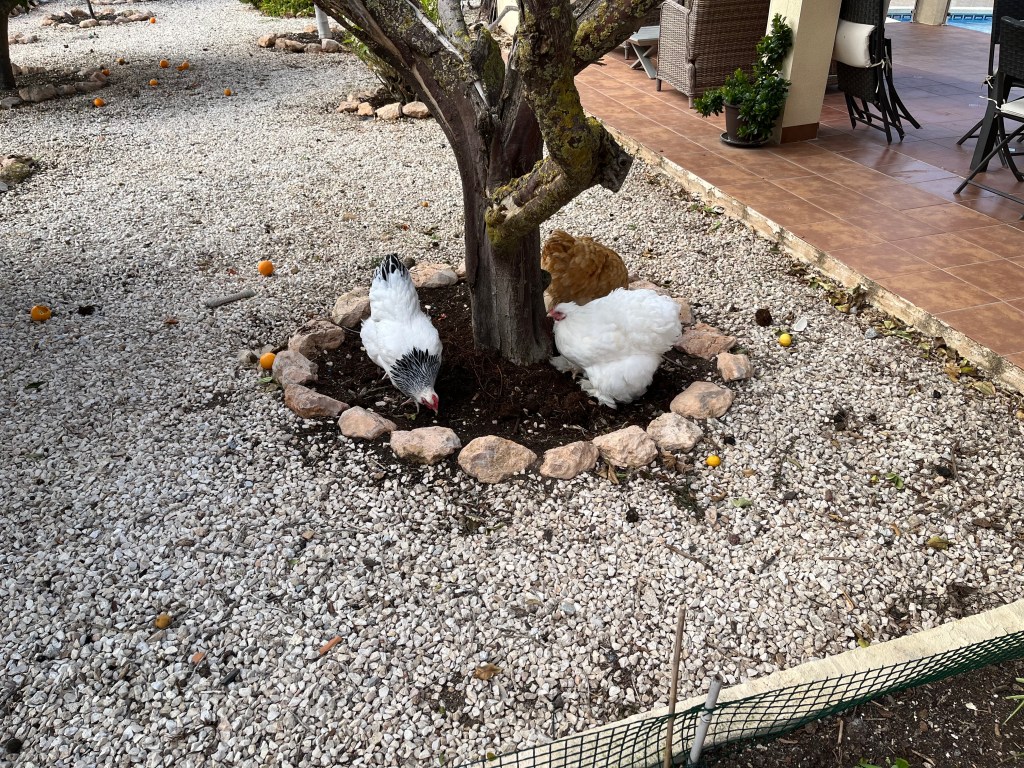
Dealing with the desertification of the lawn. My lawn as I jokingly call it has suffered greatly this dry summer. But to be honest my biggest problem is chickens. In the Spring I could have reseeded areas, and I could even do it this autumn. However, if I put any seed down the chickens would scoff it immediately. I am rethinking the whole lawn thing, but just to give you an idea of the problem of desertification, see the photos below. Any idea or suggestions are welcome. Click on each photo for a larger view.

Celebrating the idiots birthday. Cruella (my wife) insisted that I put a celebratory birthday photo of the idiot son into my blog. I protested that it was a gardening blog and as such nobody would be interested. She threatened me that if I didn’t put a photo in the blog she would set fire to my shed.

Anyway, here it is. Cruella is on the left, you can just see a hint of her tail though she has tried to tuck it away, normally you could see her horns but she is cleverly burying them in the beard of the idiot boy. I am on the right, the idiot is in the middle.

Pruning, trimming, a Blackbird broke my heart and Cruella has entered the chicken Olympics

I have been away, I know I didn’t tell you, but I just slip away and creep back, it is best for the garden. If Cruella (my wife) knows I am away she takes down all my chicken defences and dances around the garden with her girls shouting about freedom and chicken rights. She told me she that she sees her self as a latter day Isadora Duncan whilst being an admirer of Just Stop Oil, chicken division.

When I crept back in after a week away she said “where have you been?”. I told her I had just been down by the compost bins and she nodded ok. She then casually informed me she was preparing for the Olympics; anyway, on with the gardening, more later.

29th June 2024. Things I have been doing lately:

  • Taking fig cuttings
  • Planting out loofahs
  • Trimming back to encourage new growth
  • Trumpet vine and the Blackbird
  • The chicken Olympics

Taking fig cuttings. By now your fig tree should be putting on leaf and fruit at a great pace. This means there will lots of lush green growth which is ideal for taking cuttings. If you fancy a new fig tree for free, or would like to donate one to a friend, then now is the time to take a few cuttings.

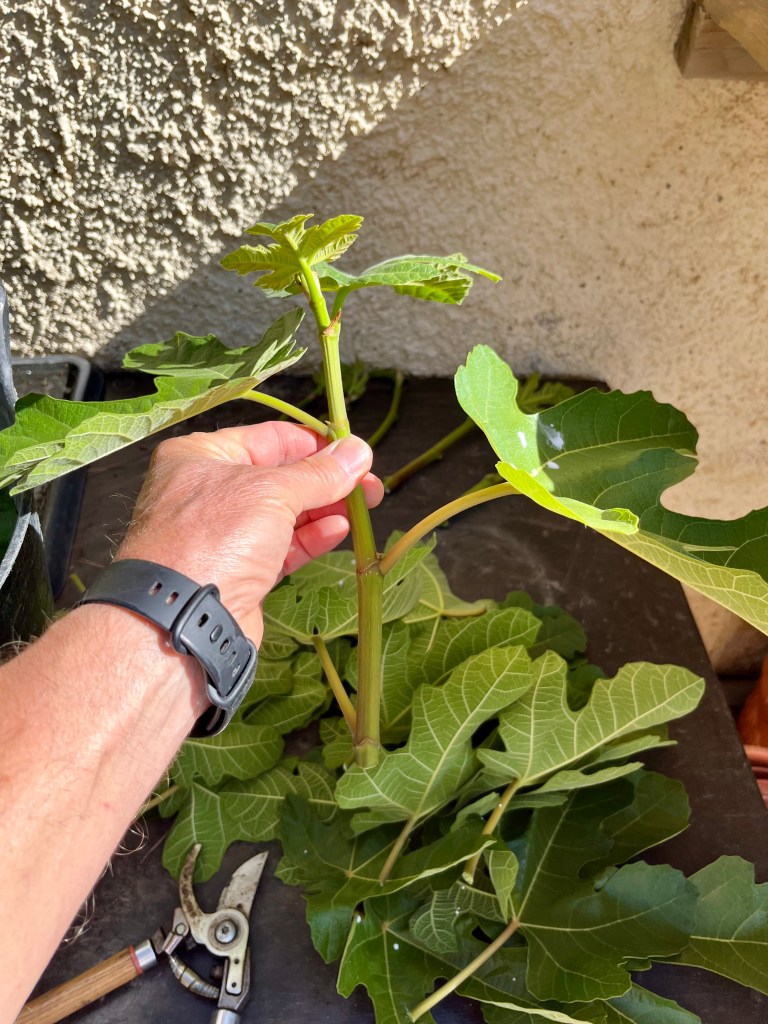
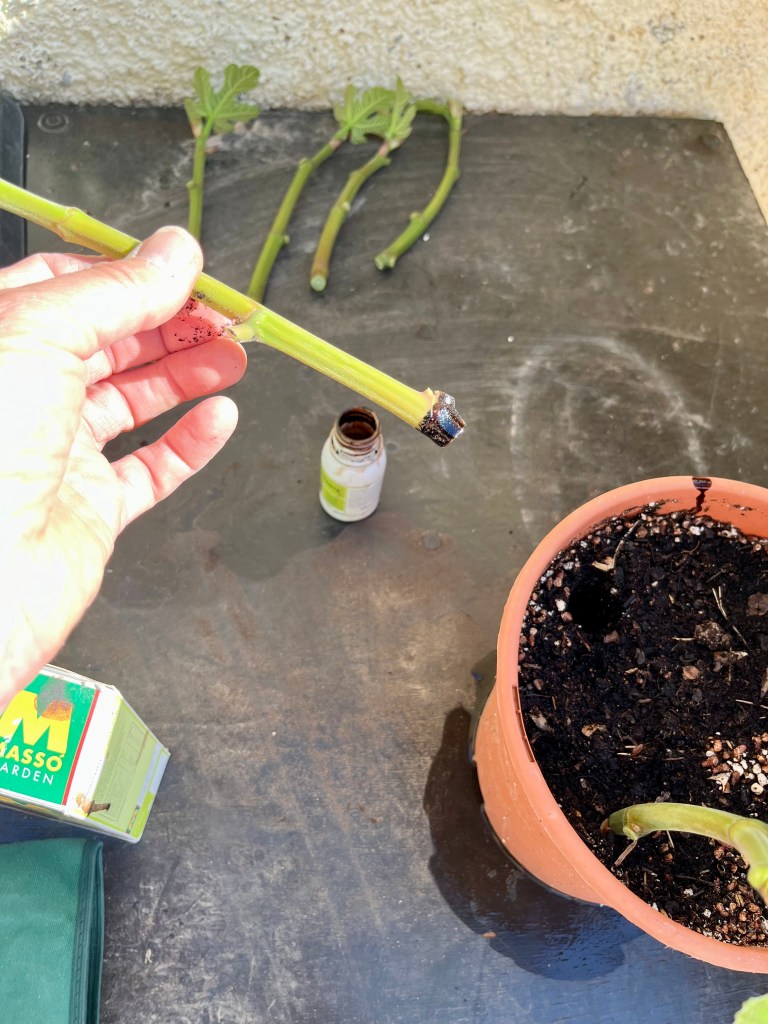
I must warn you that when taking fig cuttings at this time of year you have to be very careful of the white sap that will weep from the cut wound as this will be very caustic and can give you a nasty burn. But taking this into account and dressed accordingly in long sleeved T shirt and wearing gloves, all you need to do is select a lush non fruiting stem and cut just below a leaf node. See photo below.

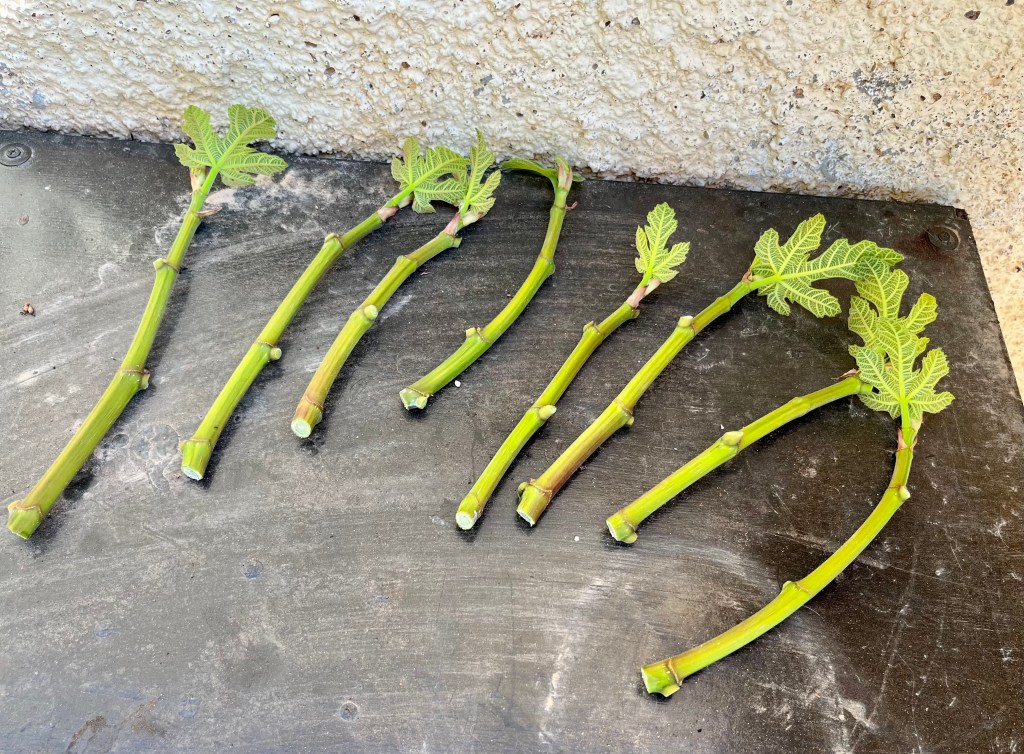
Try and take a number of cuttings as this will give you a better chance of success. Once you have all your cuttings, take them back to your potting bench and remove all the leaves apart from a couple at the end of each stem. See photo below.

Once you have trimmed your cuttings up, leave them for a couple of hours in the shade so that the dripping sap can dry up. Once the sap has dried dip the end of each cutting into hormone rooting powder or liquid (this is not essential, but it helps). Plant each of the cuttings around the edge of a six inch pot, I usually plant four to a pot, but it is up to you. Finally place your potted cuttings in the shade on your potting bench and wait. Most will die, but hopefully some will sprout new leaves and give you a future fig tree. The first photo below shows the stems being dipped in rooting liquid, whilst the second shows the new cuttings in their new home ready to go into shade for a few weeks. Click on each photo for a larger view.

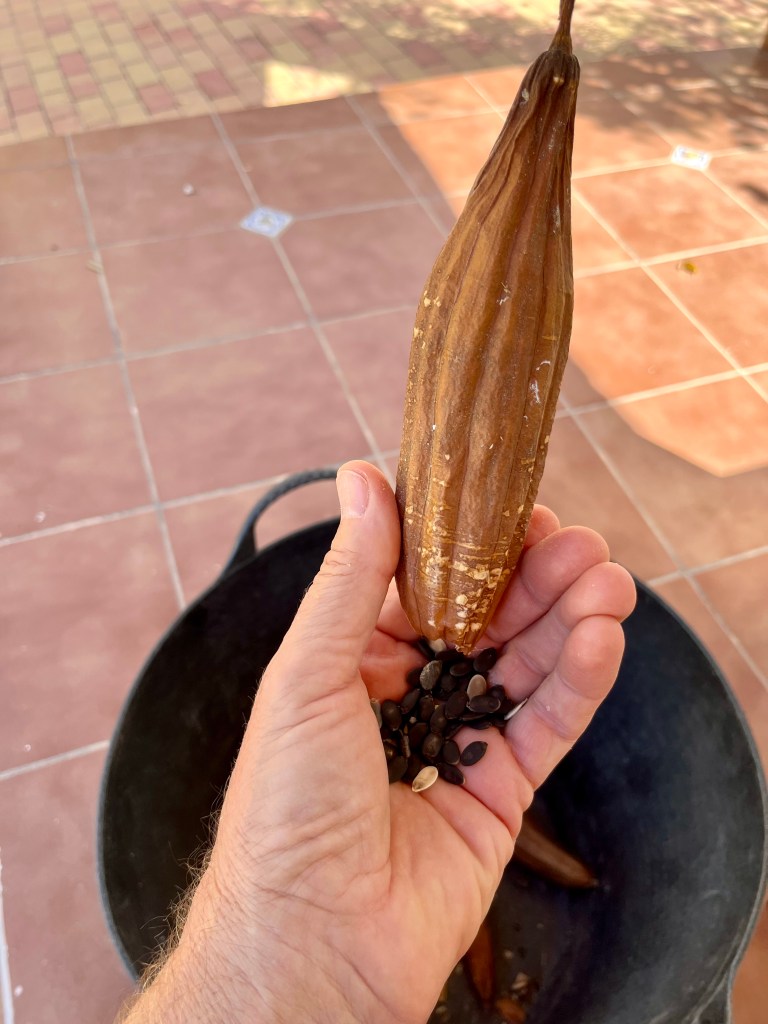
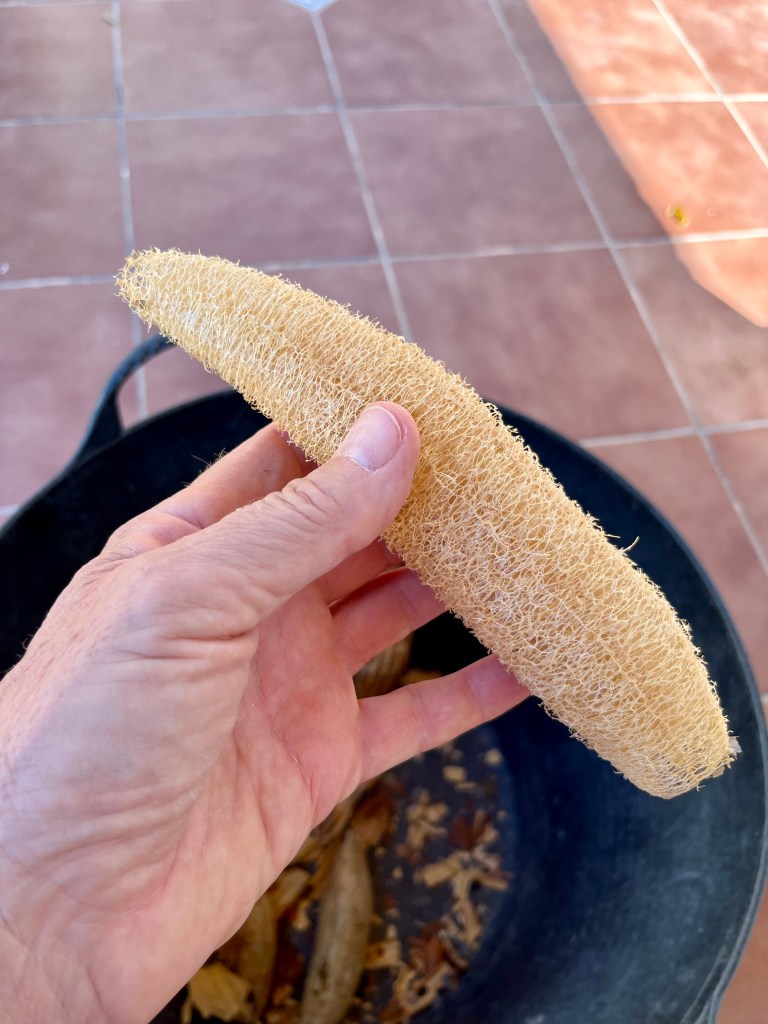
Planting out loofahs. Those of you who came to my open garden day were given some loofah seeds to plant, and hopefully you did? Loofahs are lovely plants, an annual that grows quickly as a climber, has lovely yellow flowers and as an end product you have a loofah to use in your shower as an exfoliant. What is not to like; Cruella’s Coven swears by my loofahs wart removing powers.

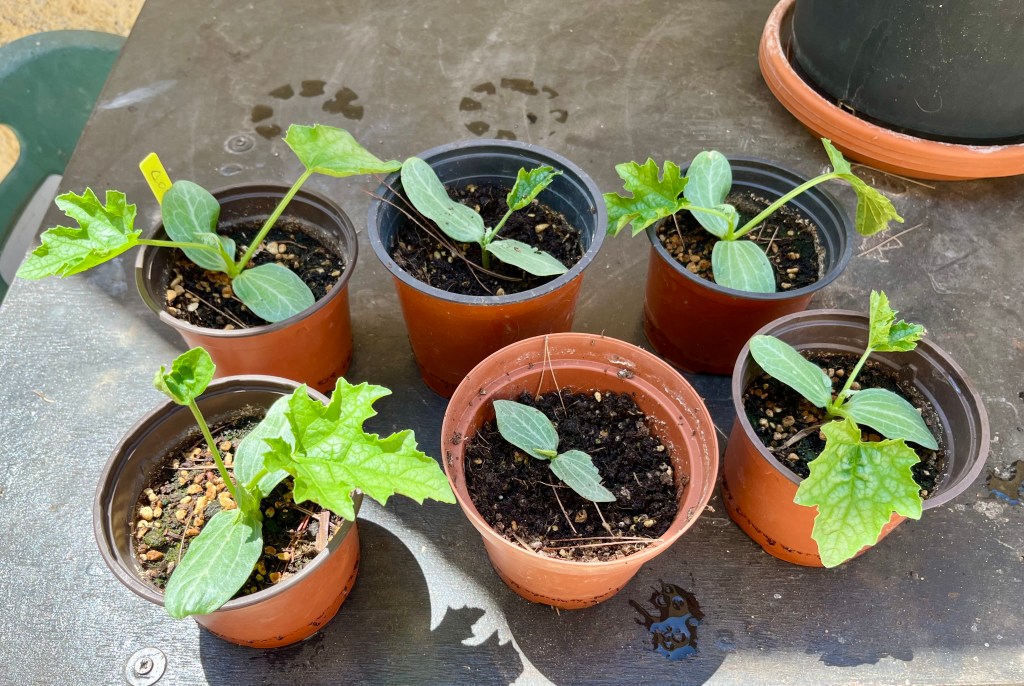
I planted some loofah seeds some time ago and it is now time to pot them on. The photo below shows my little seedlings ready for a new home.

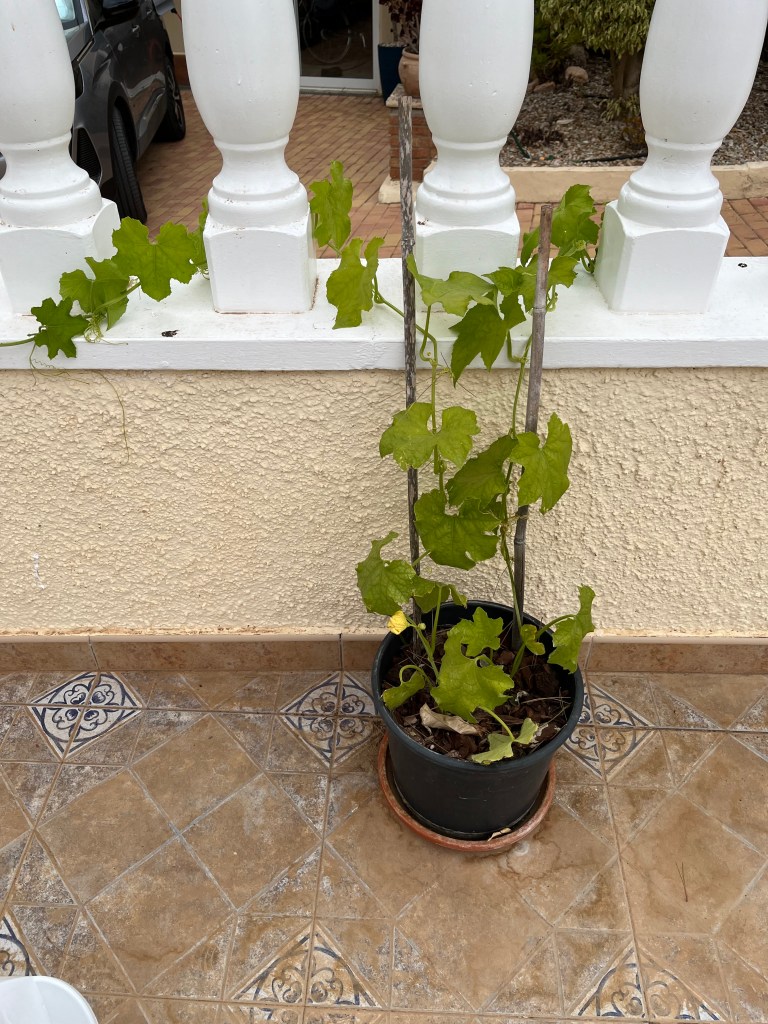
The secret to success when potting on loofahs, is to recognise that they really don’t like their roots to be disturbed. I plant them two to a 9 inch pot, but before planting them I place each of the pots into the new pot and build compost around them, then I gently ease out the loofah beforecarefully slotting it into its newly prepared home. The first photo below shows them being prepared for their new pot, whilst the second shows the strong root growth after only a few weeks. Click on each photo for a larger view.

Finally a couple of photos of their quick growth. Each plant can grow up to 10 to 15ft and give you 8 or more fruits. Click on each photo for a larger view.

Trimming back to encourage new growth. By now most plants will have flowered and will happily go to seed if you let them. But if you want flushes of new flowers all summer, then don’t let them. Both perennials and annuals can benefit from deadheading and trimming.

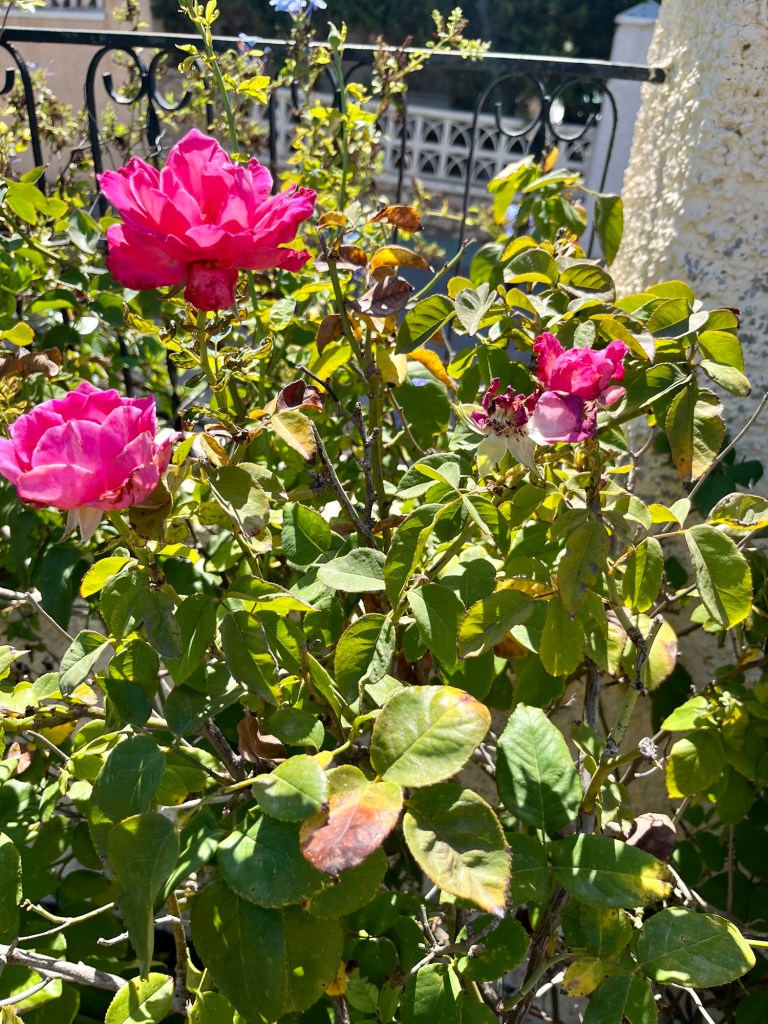
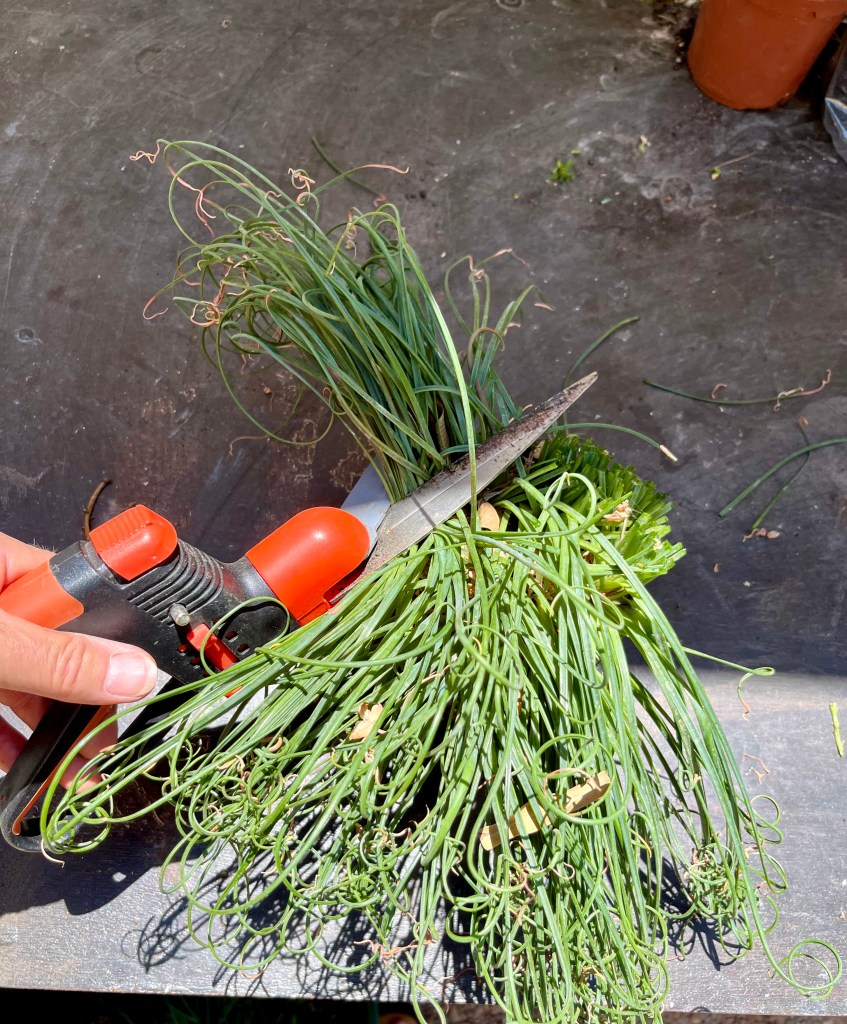
I have been deadheading roses daily for the past couple of months, but as yet have not started on the Marigolds. But look for those perennials that flower in a flush. Don’t bother with secateurs for flowers that all come at once; instead get your shears out and give them a hair cut.

The photos below show some of the plants I have been shearing starting with one of the most unusual “spiral grass”. Click on each photo for a larger view.

If you have multi head sunflowers, then take off the individual heads as they die back. But don’t forget to let the final flower head go to seed for the birds.

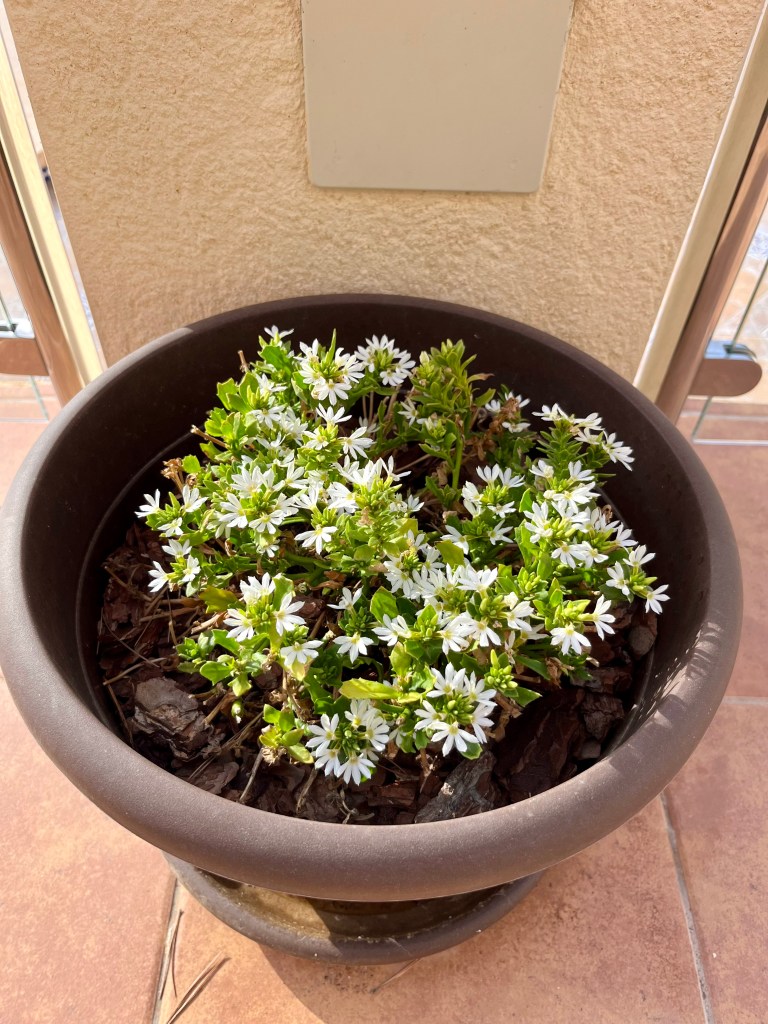
One of my favourites is the lovely Fairy Fan Flower. It flowers all in one rush and after the bloom has gone off trim all the flowers and you will get a second flush. The photos below show the plant after its trim and the successful second flush just coming through. Click on each photo for a larger view.

Gaura is another of those plants that benefit from the complete flush of flowers being taken off. Gaura, like Lavender, does not like you cutting too deep into the wood so just take off the flowers and the first bit of green. The cutback Gaura shown below will soon give me another lovely flush of flower spikes. Click on each photo for a larger view.

Trumpet vine and the Blackbird. Each year I take seeds from my Trumpet Vines and carefully set them aside to grow them in the Spring. Every year to date the seeds have failed; mainly my fault. But this year I eventually managed to get eight through to the seedling stage. When I came to prick them out and pot them on, I bought the best compost, mixed it with Perlite and prepared 4 inch pots for each seedling . This painstaking process can be seen in the photos below. Click on each photo for a larger view.

Once I completed this task I wandered into the house to boast to Cruella about my success. I swear I was in the house no more than 5 minutes before I went back to the potting bench. As I turned the corner to the potting bench I caught a flash of black wing before my eyes fell on the devastation. A blackbird had dug up all my new seedlings and thrown them around.

Crying out with anguish I rushed back into the house to ask Cruella if she knew anything about this. That must be “Shadowstrike” she said, “I told him he could play in the garden”. The devastation left by the stupid bird can be seen in the photo below. To make matters worse he now follows me round the garden smirking.

The chicken Olympics. It appears that whilst I was away Cruella (my wife) became concerned that her girls appear to be getting fat. At first she blamed it on ultra processed foods and has written to the WHO complaining. Then she lighted on the fact that wonder drugs can stop obesity, and tried to order Wegovy and Ozempic. The vet refused to prescribe them as he said she just needs to cut back their food. She stormed out shouting that she would not put up with fat shaming and would be reporting him to Weight Watchers.

Anyway, the end result is that she has started to train the chickens for the Paris Olympics. She has already written to the IOCC (International Olympic Chicken Committee). I told her chickens are not allowed in the Olympics, but she just said I was stupid and should just stick to gardening.

Cruella has bought herself a whistle, megaphone and stop watch and the chickens are now trained every morning. They start with leg stretches, which I entitled the “drumstick roll. This is followed by running around the garden in circles whilst chanting improving slogans in Chickenese. Their coop is plastered with self improvement slogans such as

  • Be best chicken you can be
  • Cluck your best and the rest will follow
  • Feathers high, spirits higher
  • Every day is a chance to spread your wings
  • Beneath every feather beats a strong heart
  • Find your flock, lead with pride

The photos below show you some of their early morning training sessions. Click on each photo for a larger view.

After two weeks of training and exhortation she asked me how I thought they looked. I said “they are still fat”. I’m sleeping in the shed with Tango the lonely blind Labrador and the big rat.

It’s time to sow, I sing to the dying Agave and have a bad Valentine’s Day

It’s warming up, there is a hint of buds and we gardeners are waking from our winter torpor, it’s almost Spring, and you know what Spring means – seeds! Yes, it’s time to start thinking about how you will fill your Summer garden with floriferous beauty, and there is no better way than to grow your own garden from seed. I know that lots of you love to rush off to the Garden Centre and stack your trolley high with all sorts of unsuitable plants. But think how much more fulfilling it will be if you can grow your own garden.

Now I am not being a purist, of course you can buy plants, but why not give seeds a chance (start with a couple of easy to grow packets) once you start it is addictive and may I say a lot cheaper. As you can tell from my enthusiasm I have already got things underway. I was so filled with the joys of gardening that I rushed out and got Cruella (my wife) a Valentines Day gift. Sadly it all went wrong as the chickens deliberately sabotage my efforts. Anyway on with the gardening.

24th February 2024. Things I have been doing lately:

  • Harvesting self sown seedlings
  • Sowing the first seeds
  • Harvesting and sowing Chilli seeds
  • Preparing for the death of Agave Attenuata
  • Regretting my Valentines Day purchase

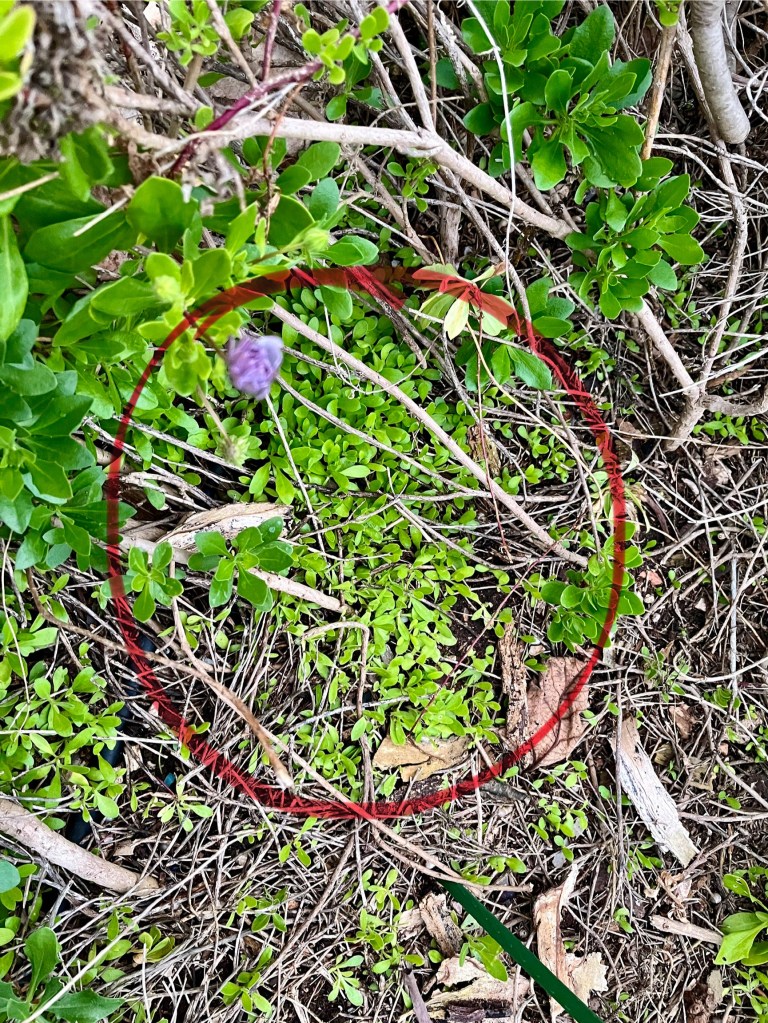
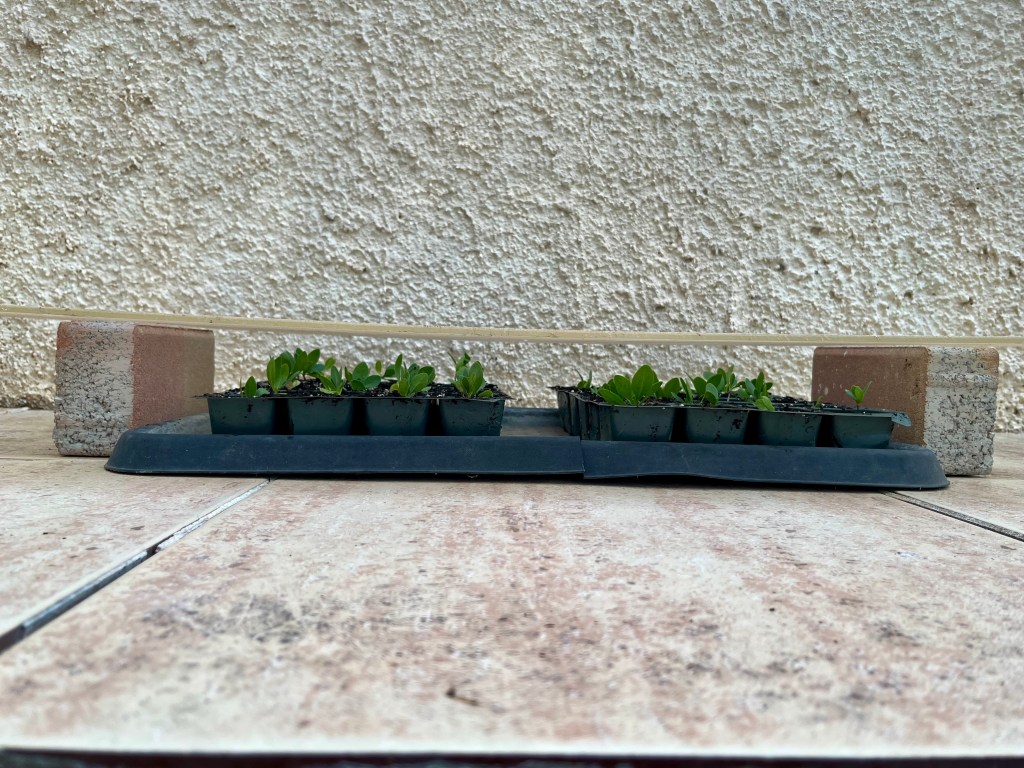
Harvesting self sown seedlings. One of the best way to get your garden going in Spring, is to take a look around your flower beds and check for any self sown seedlings that your summer flowers may have left you as a gift. One of the most prolific self sowers in Spain is the Maragaritte Daisy/Osteospermum. These lovely long flowering Daisies will drop hundreds of seeds which by now will have formed into little seedlings. The photo below shows just one part of my garden with thousands of seedlings.

But the trick is not to leave the seedlings where they have self sown, instead you need to harvest them and pot them up to let them grow on a bit before planting them out where you want them. The photos below show me harvesting the seedlings by gently prising them out of the soil with a trowel before placing each seedling into individual seedling trays. Note the close attention from big Bertha. (she has reverted and is no longer known as Bert, it was something to do with the chest binders that Cruella bought from John Lewis). Click on each photo for a larger view.

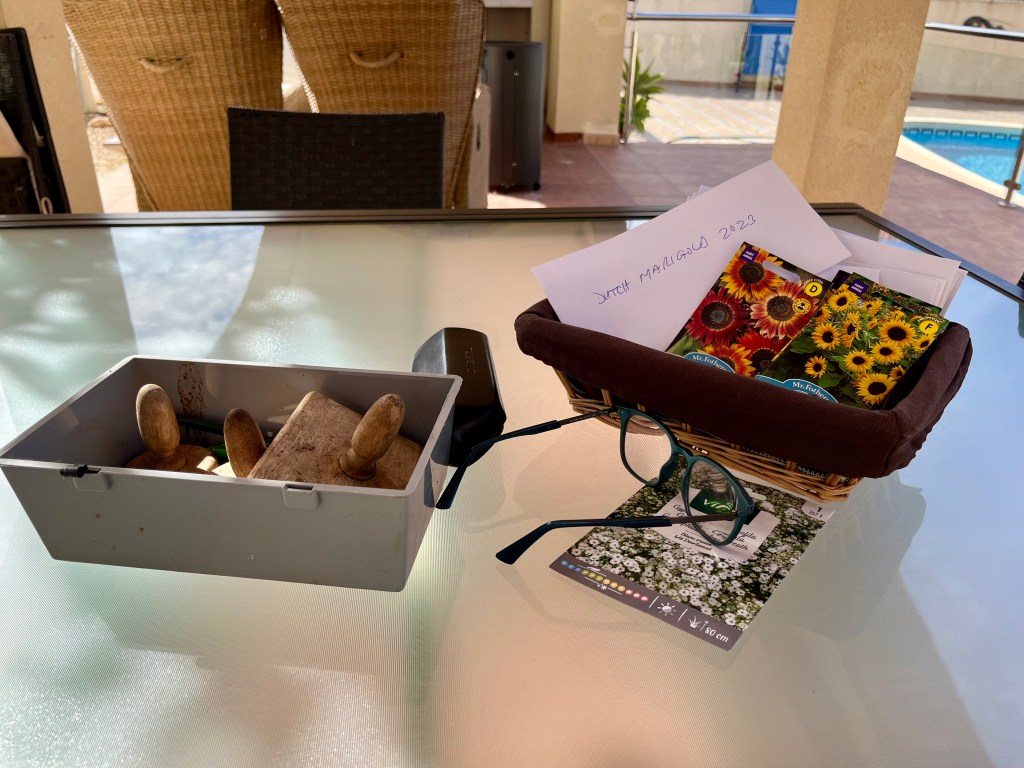
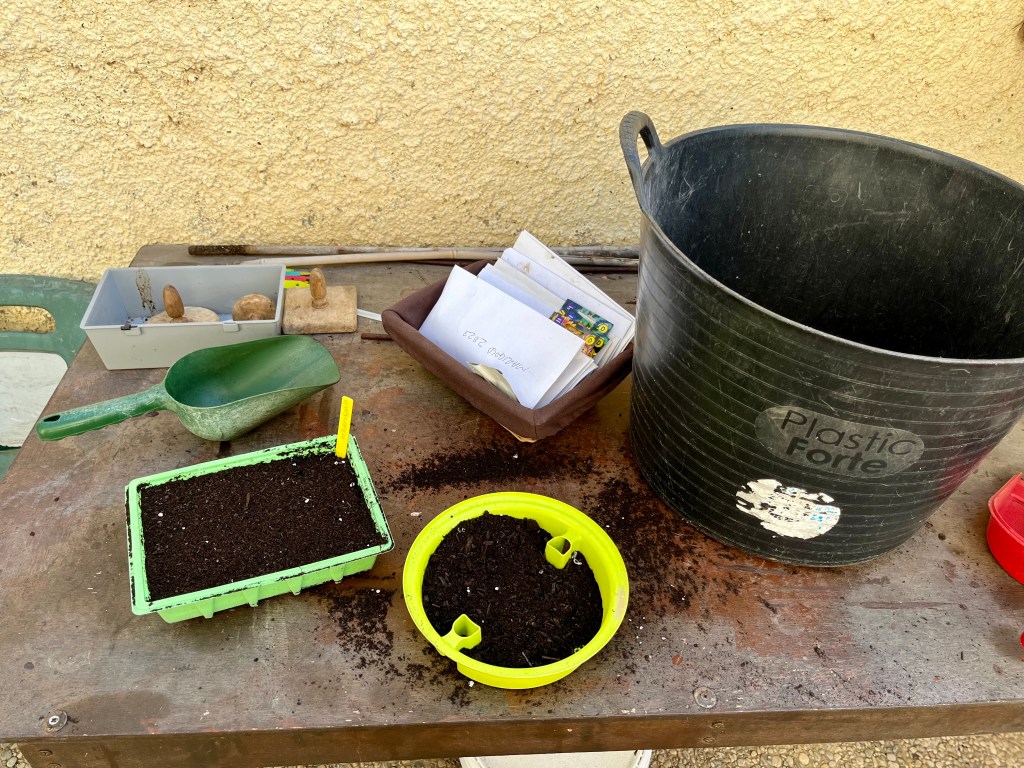
Sowing the first seeds. There is nothing better than contemplating the seeds you harvested from last year and deciding which order you are going to sow them. The photo below shows my preparations and the delight of contemplating things to come. Click on each photo for a larger view.

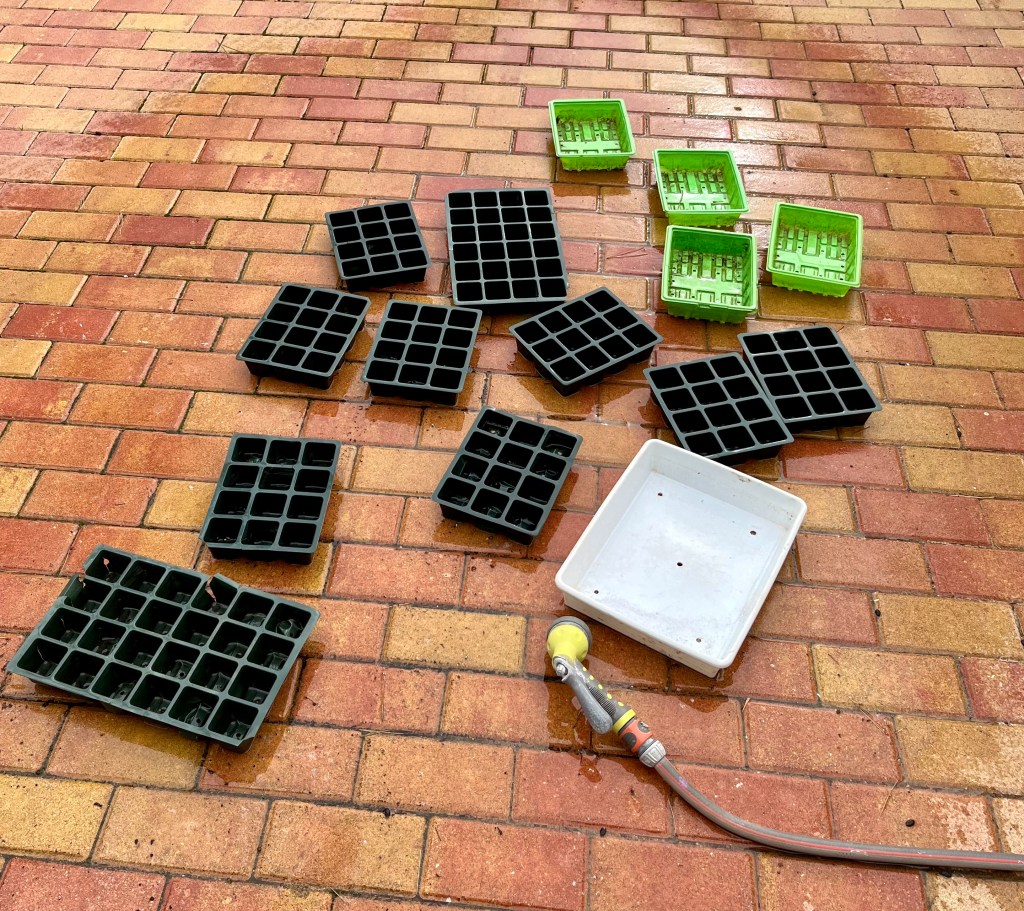
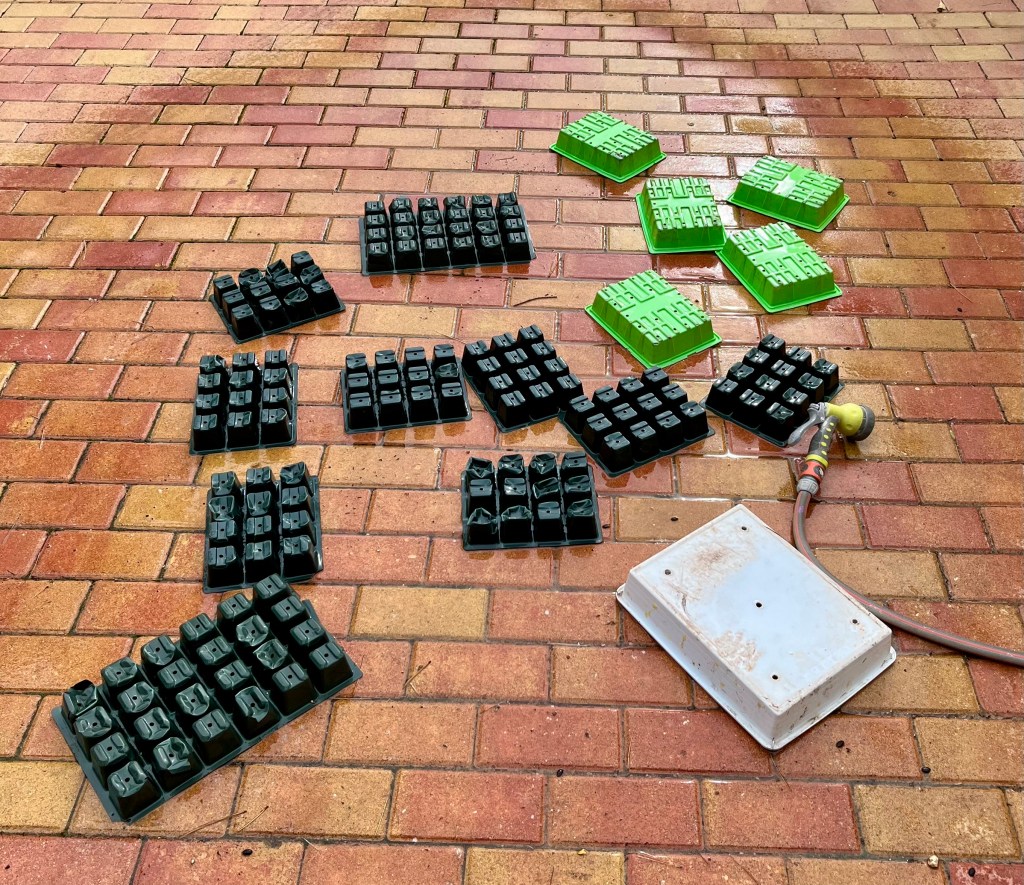
Before you get carried away with sowing seeds there is some basic preparation you need to undertake. If you are sowing into pots or seed trays you have used before, then it is important that you thoroughly wash them inside and outside. The last thing you want to do is carry over viruses and pathogens that are lurking in the residue of last year’s soil. All that is basically required is that you use a powerful hose jet to wash away any soil residue. The photos below show some of my seed trays after their annual ablutions. Click on each photo for a larger view.

Once you are ready to sow your seeds then you need to mix a good compost (not from China shop) together with Perlite to form a nice free draining medium that will not leave your little seeds waterlogged. Most seeds mainly require sprinkling on the surface of your compost then covering with a light sprinkling of compost.

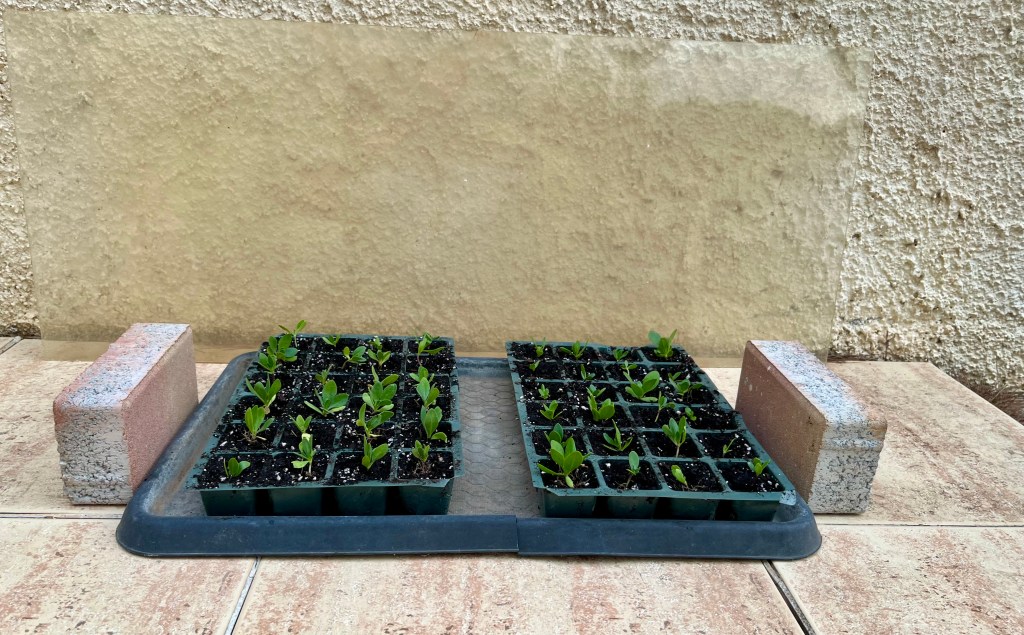
Once you have lightly tamped down the surface to ensure seed and soil contact, then you need to place your seeds trays in a light warm area such as a window sill, or greenhouse. Be careful of fierce sun as this will dry the compost out to quickly. I buy a cheap little mini green house and use it for 2 or three years and then discard and start again. You will only need it for a couple of months at the most. The photos below show my seed sowing activity followed by my seed trays resting in their new home. Click on each photo for a larger view.

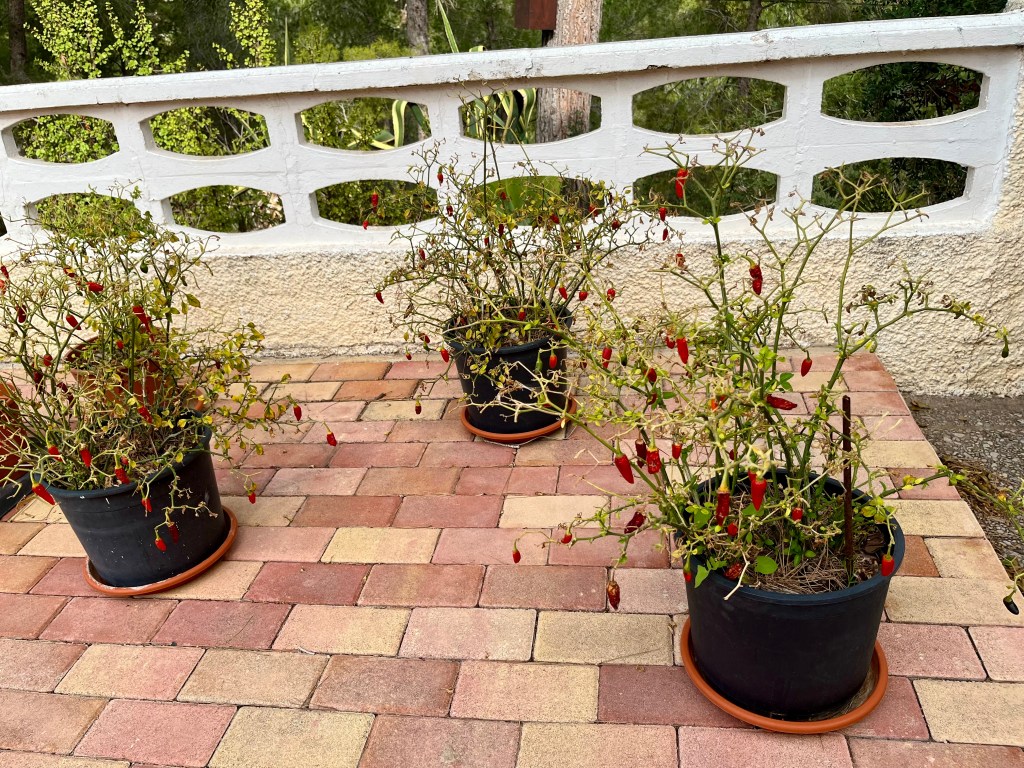
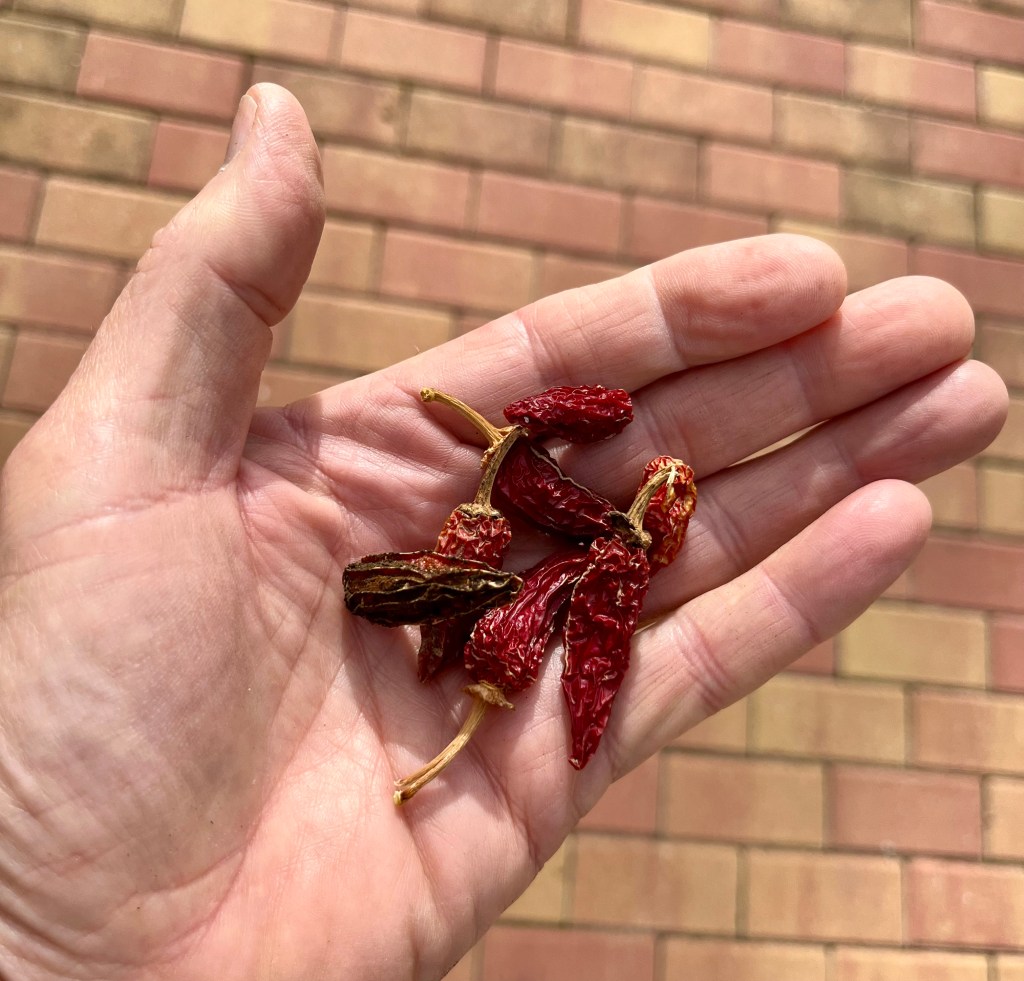
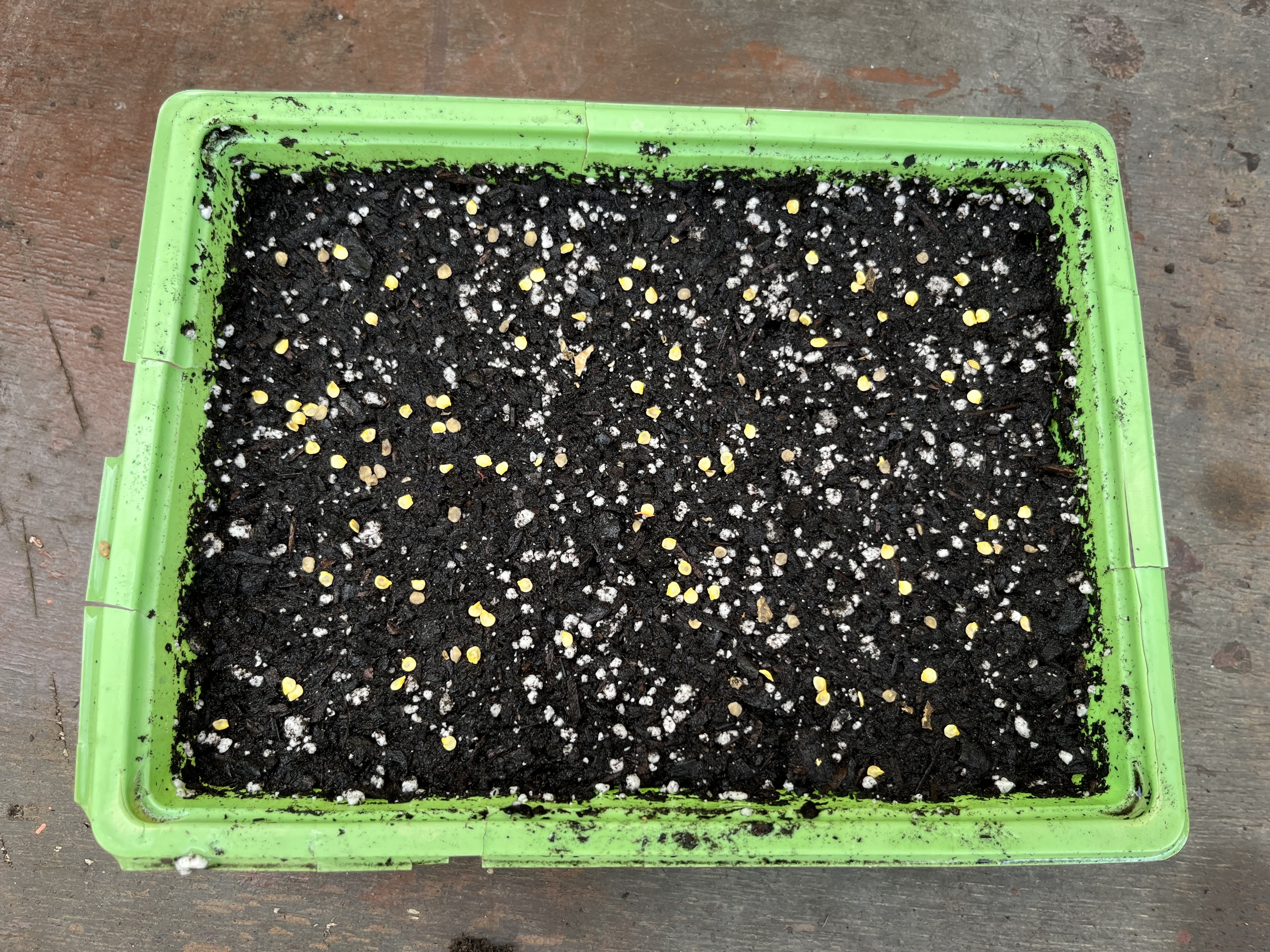
Harvesting and sowing Chilli seeds. Chilli plants are a joy to grow as they are so prolific. I leave my chilli plants to fruit over a two year period with just a chop back at the end of the year. The third year I remove the old plants and sow new seed in lovely fresh compost. By doing this I am getting rid of the old tired compost and creating a whole new generation of plants. The first photo below show my tired old plants heading for the compost heap, followed by the ripe seed pods that I have left on the plants and which will form my next generation.
Click on each photo for a larger view.

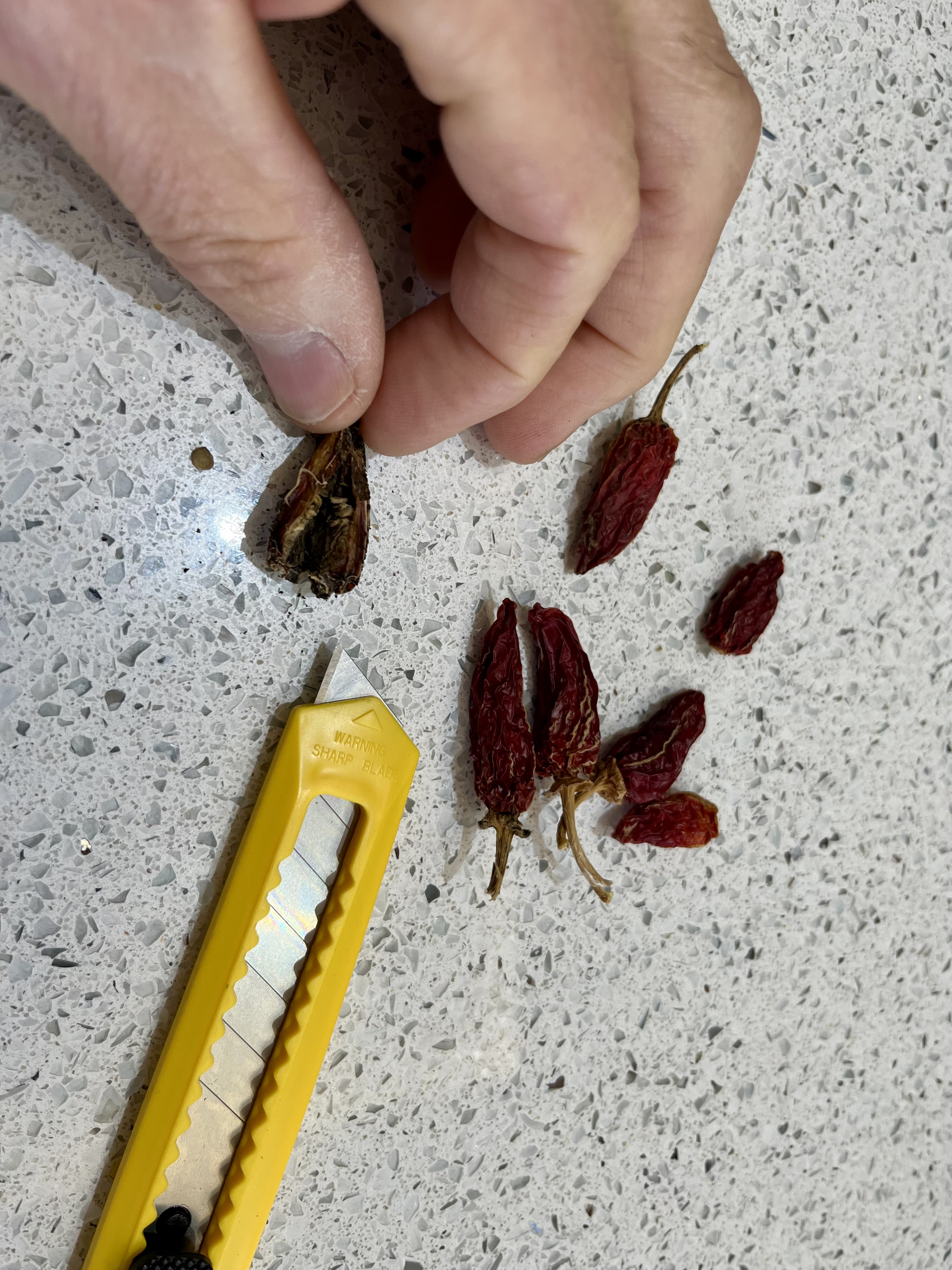
Getting the seeds is very simple. Using a scalpel, or very sharp knife, slice carefully down the side of the dried seed pod and carefully tease out the seeds that will be there waiting for you. The photos below show my scalpel work, together with the gathered seeds. The final photo shows the seeds scattered evenly across a seed tray before being lightly covered with compost. Click on each photo for a larger view.

Preparing for the death of Agave Attenuata. Losing any plant is a dreadful experience for us gardeners. We tend them, nurture them, watch them grow day by day and experience joy when they flower. That makes it all the more poignant when you lose an Agave Attenuata.

These lovely plants are very popular in Spain as they are one of the few “unarmed Agaves”, by this I mean they neither have teeth or spikes so won’t stab or cut you. They also have a charming habit of creating lots of pups which eventually surround them like a loving family. They take a long time to flower (12-20 years) and like lots of Agaves, when they do, they die leaving only their orphaned pups to cope on their own. The photo below shows a family of orphaned pups who lost their Mum about 5 years ago.

Eventually one of the orphans will go on to adopt the role of mother but it can take a long time. I think the one at the back right is shaping up to be Mum.

Regular readers of this blog will know that I have been lucky enough to see a number of my Attenuata flower. It has always been a painful process made much worse by the mockery of Cruella (my wife) who constantly heckles me in my sorrow by shouting “it’s only a plant, get over it”. On one occasion she proposed what she termed “assistant plant dying” and said that both me and the plant should go off to Dignitas!

As always on these occasions I conduct myself with dignity and commit my evenings to sitting by the plant as it flowers. We talk over old times, when it was just a little pup and I reassure her that all her pups will be taken care of when she goes. The photos below show my cherished Agave developing her flower spike. The beauty of the flower spike is marred by the tragedy of her oncoming demise. Click on each photo for a larger view.

As her flower spike gets taller so she gets weaker, and this is when I start to sing. All Agaves have a tendency for classical opera, so I tend to sing arias mainly from Puccini and especially La Bohéme.

We start early on when she has accepted she is going. I hold her flower spike and sing “Che gelida manini”. As we progress she takes on the part of Mimi and I Rodolfo as she coquettishly sings “Sì, mi chiamano Mimì”. We both then finish the day with “O Soave faniculla” the pups act as the chorus and as she finishes on the famous high “C” we are all in tears. I am dreading the future. The photos below show us singing the first act, if you look carefully you can see the pups leaning into the chorus whilst visible signs of decay can now be seen on their mum. We shall sing the famous deathbed scene of Act 4 in a couple of weeks, in the meantime I am giving bereavement classes to the pups. Click on each photo for a larger view.

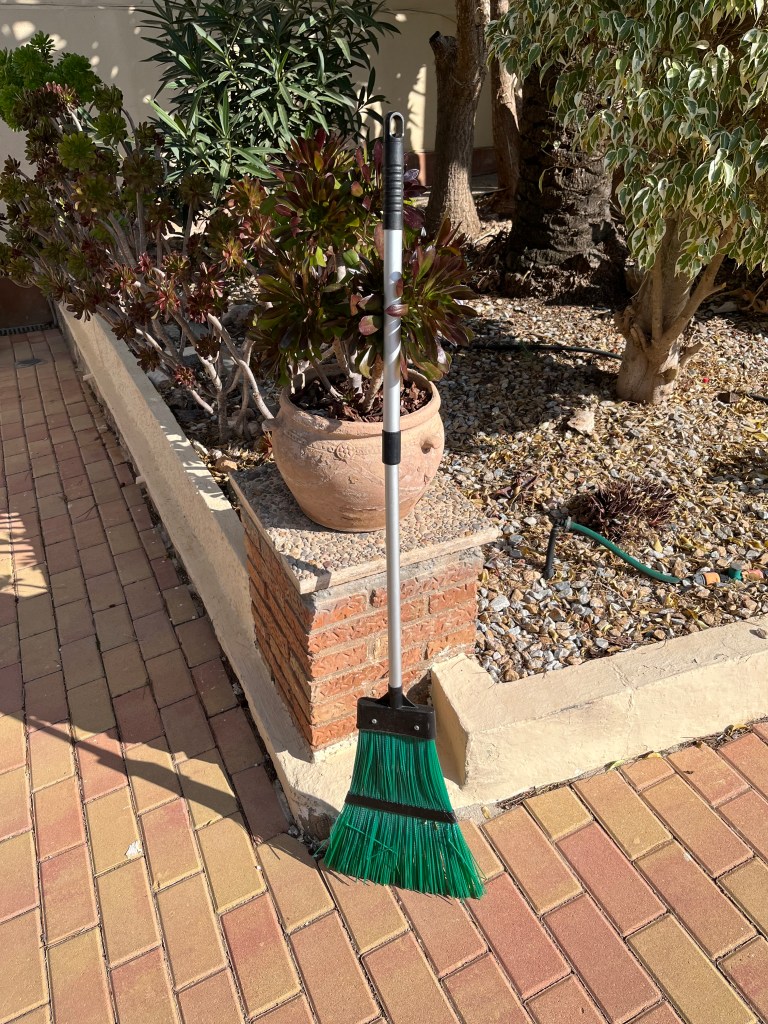
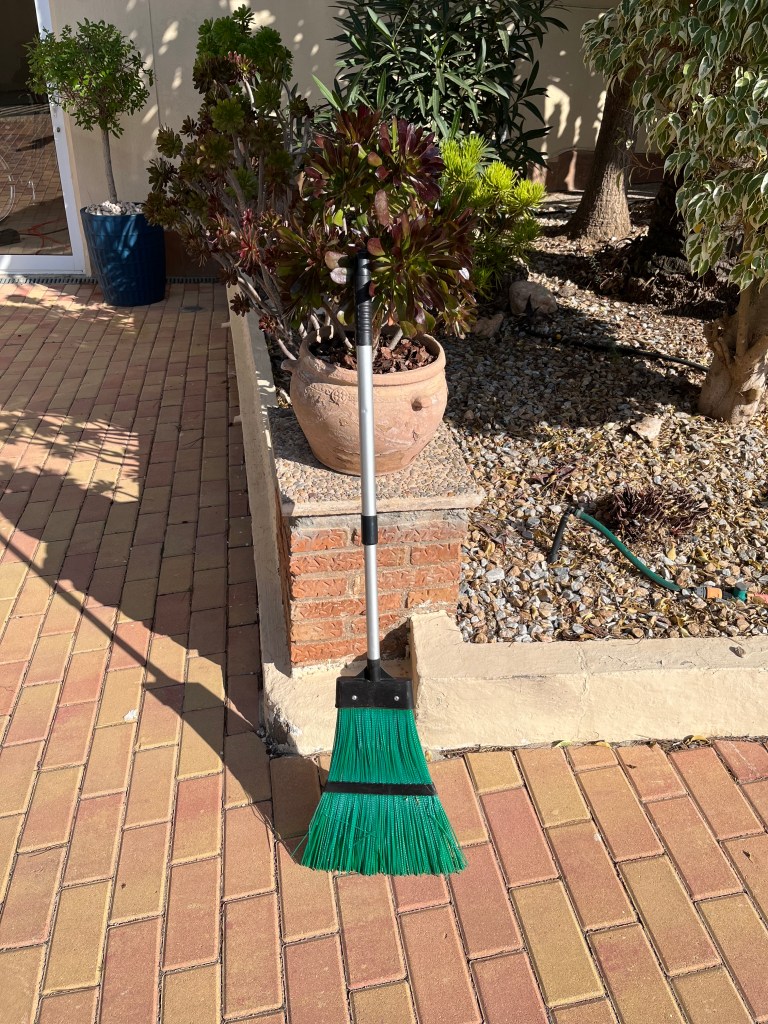
Regretting my Valentines Day purchase. As if things weren’t bad enough with my poor Agave, Cruella (my wife) had demanded that I make an effort for Valentines Day and get her something romantic. I racked my brain for days and eventually came up with the perfect present that was both practical, stylish, and suited to her personality. At great cost I bought her a new titanium based, multi positional short take off and landing broom. The photos below show this wonder of modern technology in both its extended long take off mode and its shortened take off mode.

Given that most of her current brooms are what you would term shoddy, I thought she would be delighted. She took one look at it and proclaimed “I wouldn’t be seen dead on that modern crap”. She stormed off in a huff and spent all of Valentine’s Day with her chickens murmuring darkly in chickenese whilst occasionally giving me black looks. The upside was that I could get on with sowing seeds!

The big winter cutback Part 4: The terror of trees and I am referred to a Tribunal accused of making the sky fall in!

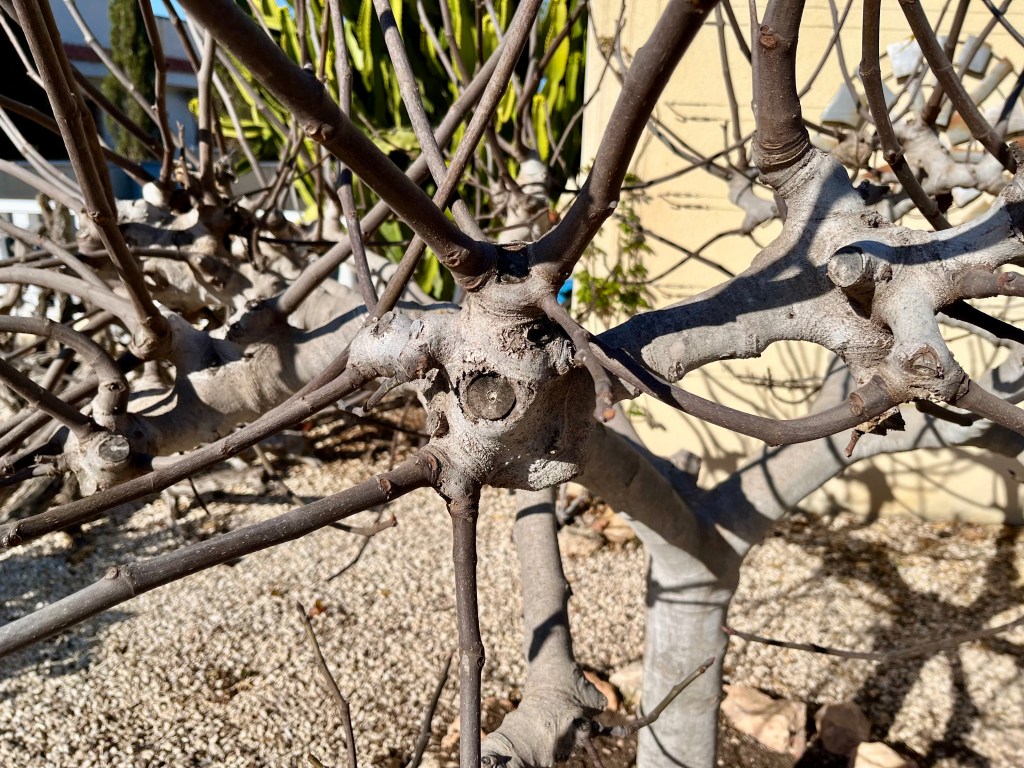
So this is it we have finally reached the end of the big winter cutback. It has taken about a month and I have left the worst till last. Regular readers of this blog will know that I always finish the cutback by tackling my large Ficus tree. I cut out the centre of this tree about 10 years ago to make a pleasing donut shape, but the tree has never forgiven me and takes every opportunity to do me harm. To be honest it comes second only to Cruella (my wife) in threatening my existence. I have fallen out of it, had branches fall on me, it has made me bleed, bashed and concussed me on numerous occasions.

And now you know why I leave this task to the very end. I have to work up my courage through extra physical exercises, primal scream therapy and I channel my inner Robert De Niro every time I look at the tree by shouting loudly “you looking at me…”. But it knows I am afraid despite all my braggadocio, I can see it smirk.

Anyway as if all that wasn’t bad enough Cruella (my wife) confronted me after my struggles with the tree and presented me with what she said was a writ, which she later said was a warrant. Anyway, whatever it was she just flashed this piece of paper in front of me and said it was official. But to be honest all I could see was some gobble-de-gook in her handwriting with a drawing of a chicken in the corner. Hey-ho more later, on with the gardening.

6th February 2004. Things I have been doing lately

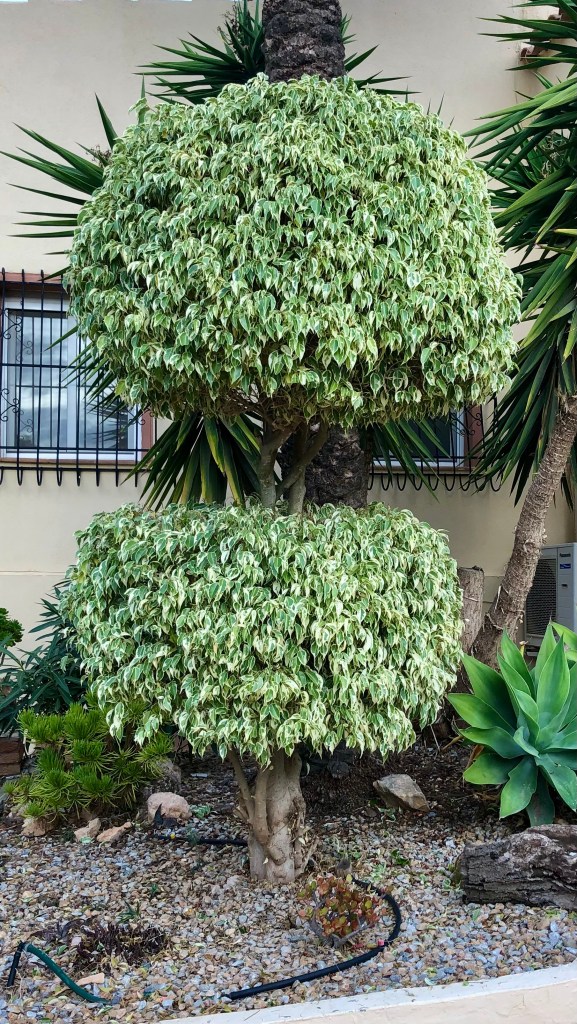
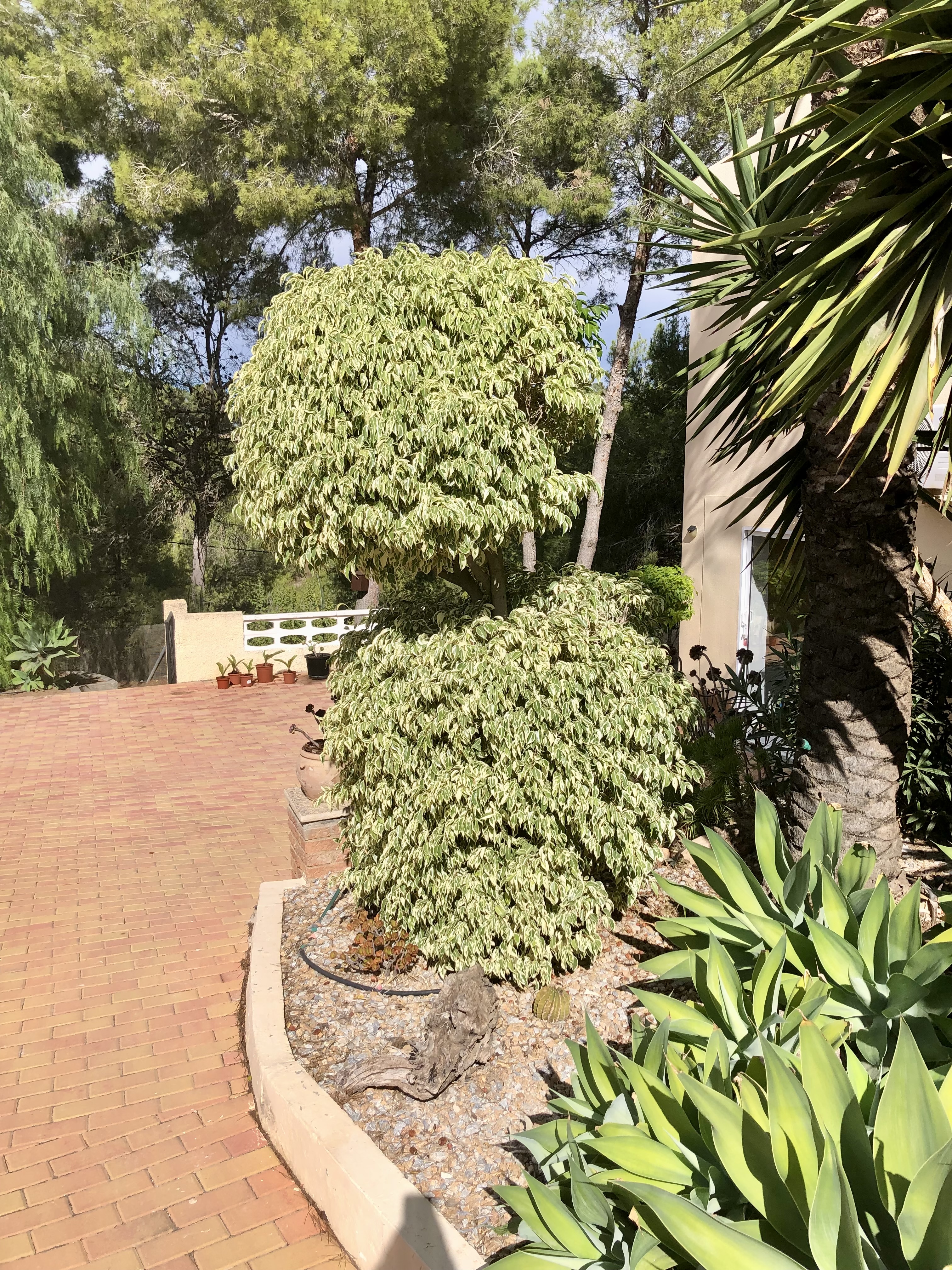
Reshaping the little Weeping Fig. By way of warming up before the battle with the big Ficus, I decided to reshape my little weeping fig tree. Lots of people in Spain have these variegated weeping figs in their garden. They are lovely little trees that give colour and interest to even the smallest garden. However, because they are slow growing they can just sit there and be forgotten about.

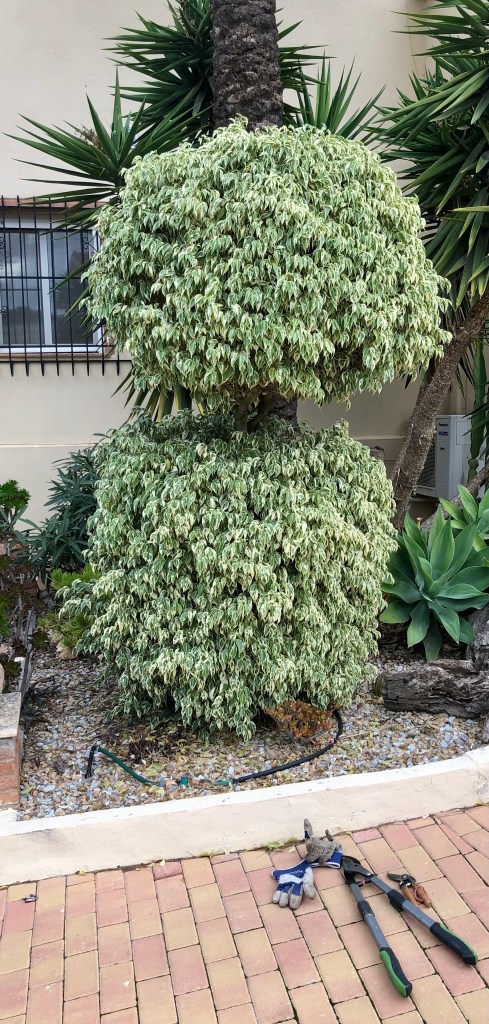
To make them interesting you should consider cloud pruning them in to various shapes. Remembering that they are slow growing so don’t be too drastic and do it over a few years. The photo below shows the little fig with its trunk exposed (which I did a few years ago).

As it was time for its annual prune and I decided to prune back the lower growth with the eventual aim of having two pom poms of leaf with exposed trunk below and in the middle. The photo below shows the end result. I think it is quite fetching.

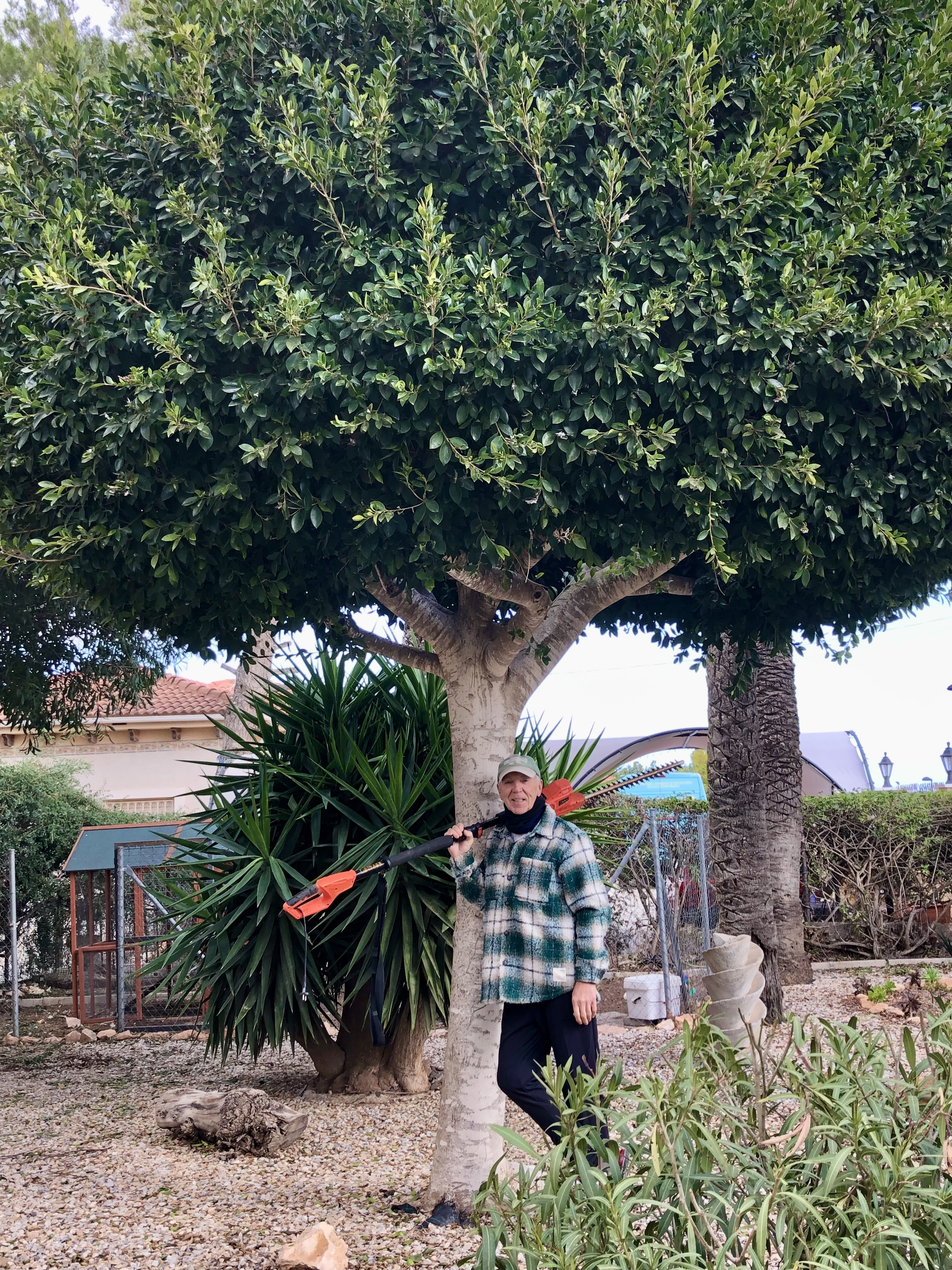
The battle with the big Ficus. The trouble with this annual battle is that I am getting older, smaller and weaker, whilst the tree is similarly getting older, but at the same time getting bigger and stronger. How long I can continue I don’t know, but I do know that if you show fear to rabid dogs or large trees then you are finished.

I always start this task the same way; I get Cruella (my wife) to take various picture of me posing in bravura poses in and around the tree. Then I assemble the various tools that I will need and leave them close to the tree to try and psyche it out. The photos below show the big tree in all its malevolence followed by my efforts at psyching it out. Click on each photo for a larger view.

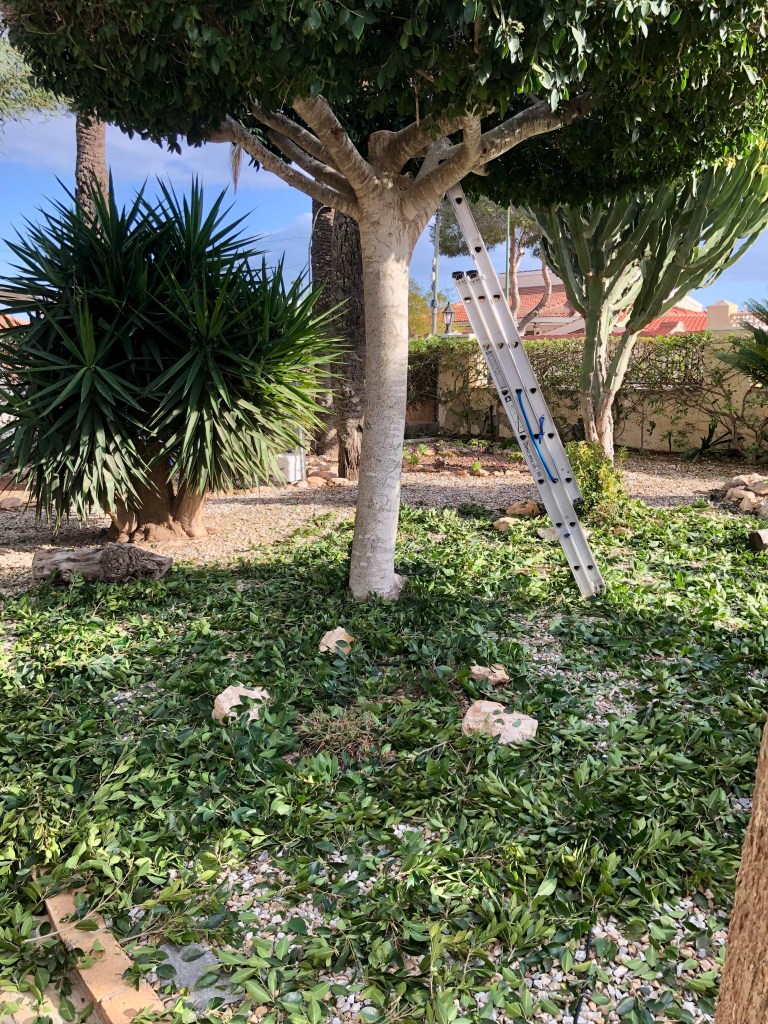
I start the process by using my long reach electric trimmers to walk around the circumference of the tree gradually bringing the sides back into shape. The tree of course responds with ill will by continually dropping things onto my head and into my eyes. I keep my spirits up be singing hymns as I march round and round – onward Christian Soldiers is a favourite. The tree responds by moaning “the trees of the field”. The end of the first phase can be seen in the photos below. Click on each photo for a larger view.

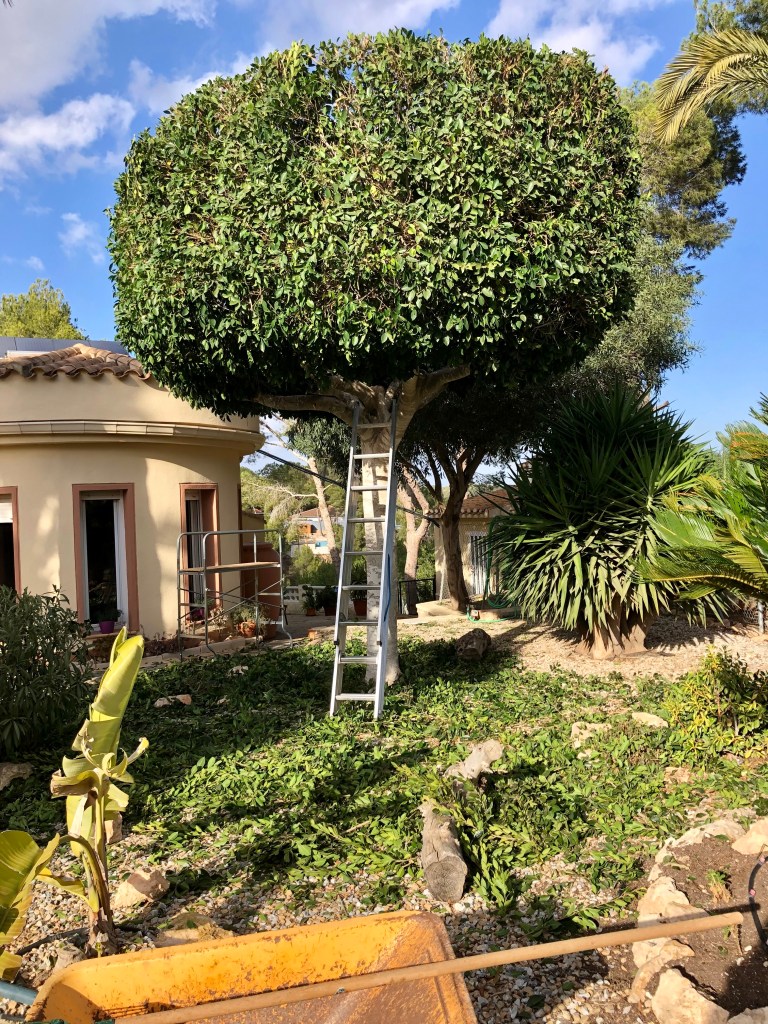
The next, and most dangerous phase, involves climbing up into the tree, pruning the top flat and redefining the central donut. The photos below show me in the tree, this time I’m singing “nearer my God to thee”. The tree was singing “the fall of man how deep and great”. Click on each photo for a larger view.

After it was all over my final act is to place the Cheshire Cat back into the centre of the tree.

The Cheshire Cat smiles for another year.

My appearance before the Tribunal. After all the highs and excitement of conquering the big tree for another year, you can only imagine my disappointment at being confronted by Cruella and her supposed writ/warrant. What it all came down to was that her chickens had complained that my activities in the big tree was making the sky fall in as things kept landing on their heads. To back this up she showed me the photos below as evidence. Click on each photo for a larger view.

When I complained that she had been reading her chickens the bedtime story of Chicken Licken which has exactly the same plot when the sky supposedly falls in on Henny Penny. She drew her self up to her full height thrust her hand out into my face and shouted loudly “always believe the chicken and not the hetro-normative establishment”.

Anyway she insisted there had to be a trial. Her jury consisted of the chickens. I was not allowed to call any witnesses in my own defence. When I tried to call big Bertha her biggest chicken as a witness on my behalf, there was a sudden cacophony of noise from all the chickens (in chickenese of course). Cruella then accused me of dead naming Bertha who now goes by the name Bert. As I looked across at Bertha I knew I had messed up as she was now sporting a waistcoat and smoking a pipe.

Well it was all down hill from there. Cruella called a whole range of witnesses including: Cocky-Locky, Ducky-Lucky, Goosey-Loosey and Turkey-Lurkey all of whom damned me in no uncertain terms. The end result is that I have been found guilty of a hate crime and sent into exile at our English house for a few weeks.

It’s time for winter projects. Cruella gets a cockerel and the chickens get sex lessons

It is that time of year again when you are clearing out the last of the summer flowerers, but is not yet time for the big winter cutback. Gardeners often complain to me that they have little to do during this period, but I scoff at their ennui and lament their lack of enterprise; on the contrary this is the time for enterprise, imagination and gardening brio. Yes, it is time to look around your garden and start working on your winter projects.

No matter how good your garden is, and how well planned, there is always room for improvement. This is especially the case in Spain. Too many gardens are covered in acres of unrelenting gravel and paving, to the extent that they look more like car parks than gardens, what Americans would term “a yard”, no offence to my USA readers. When I ask people why they have gardens like this they always come up with the same two reasons: 1. it was like this when I bought the house. 2. It makes it easy for upkeep. Now if you are happy with that fine, but if not now is the time to take action.

The starting point for winter projects is to stroll around your garden with a critical eye and ask yourself what can I do to change, improve and alter my garden so that it will bring me more joy and be pleasing to the eye. To assist you in your endeavours I have included in this post some ideas from my own garden and ongoing projects.

Unfortunately this blog cannot just be about gardening as Cruella and her chickens are intent on inflicting more damage to my garden and my psyche. But, more about that later, let’s get on with the joy of winter projects.

6th November 2023. Things I have been doing lately:

  • redesigning my little water feature
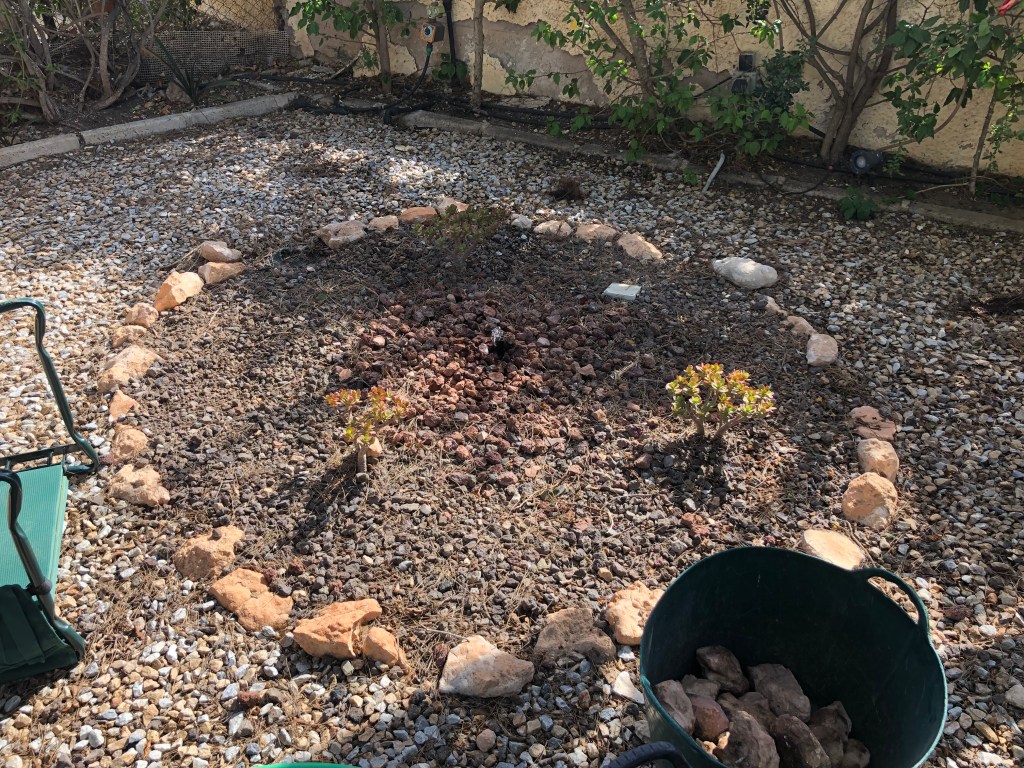
  • constructing planting islands in gravel
  • cloud pruning and making trees interesting
  • chicken sex lessons

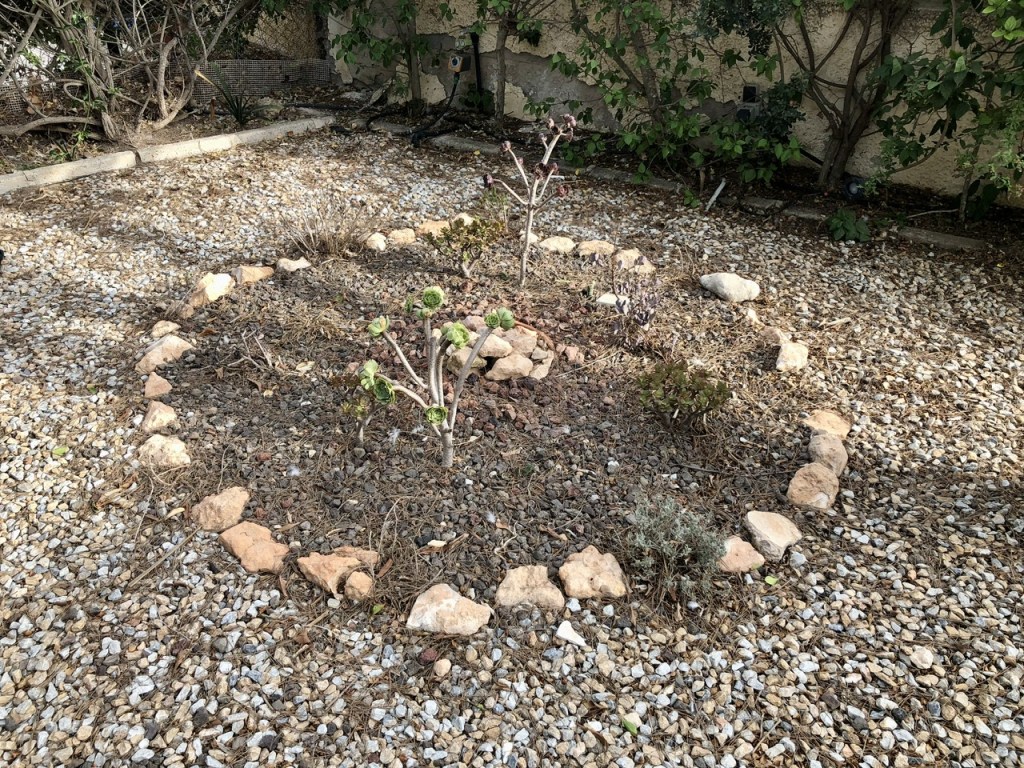
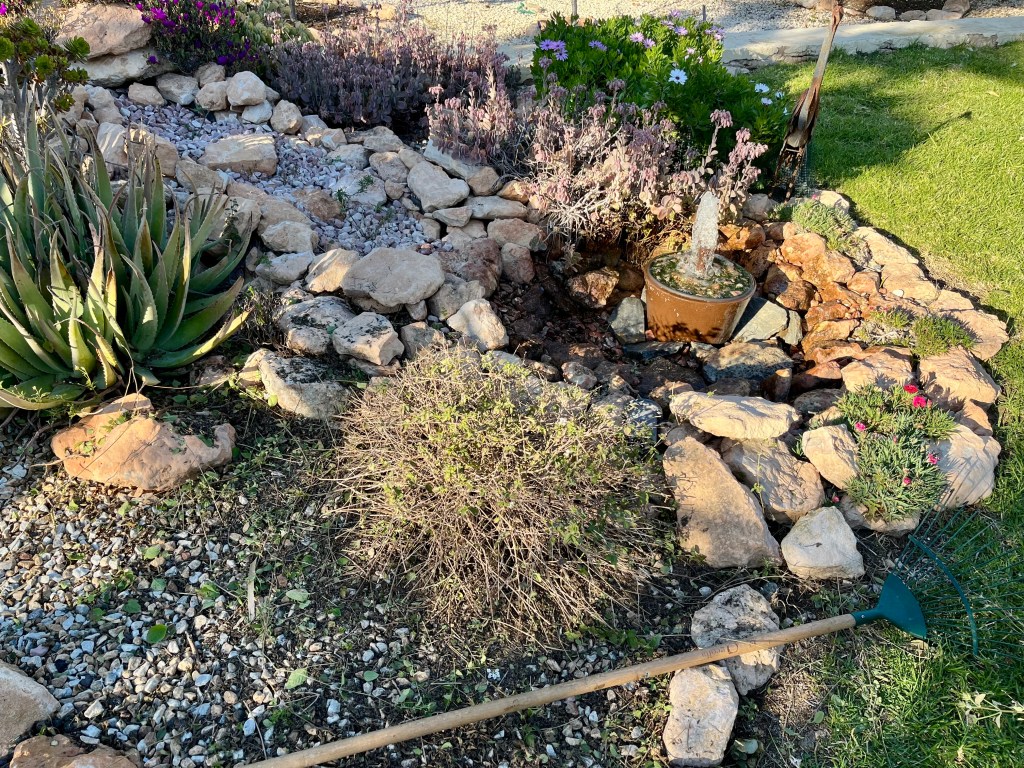
    Redesigning my little water feature. A number of years ago I designed and built a little water feature that would burble away whilst I swung backwards and forwards in my adjacent hammock slung between two palm trees. It also served to alleviate the sameness of gravel, by introducing planting and different colour gravel. Unfortunately, this was BC3 (before chickens). Since then my hammock has been removed a fenced area installed and a chicken coop erected in my previous paradise. This has meant that my little water feature has been neglected, and anyway the previous lavender plants never worked out. The photo below shows the state of neglect.
I know it looks pathetic but the lavender never quite took and pine needles kept getting stuck between the plants.

There were a number of stages in reviving this area. First, I had to take out and bin all the existing plants. Then I decided to rework the water feature element to make it simpler and more pleasing to the eye. I then had to decide on the type of planting I wanted around the water feature. I was looking for long stems that would not trap the pine needles and a no nonsense plant that would add interest without being needy.

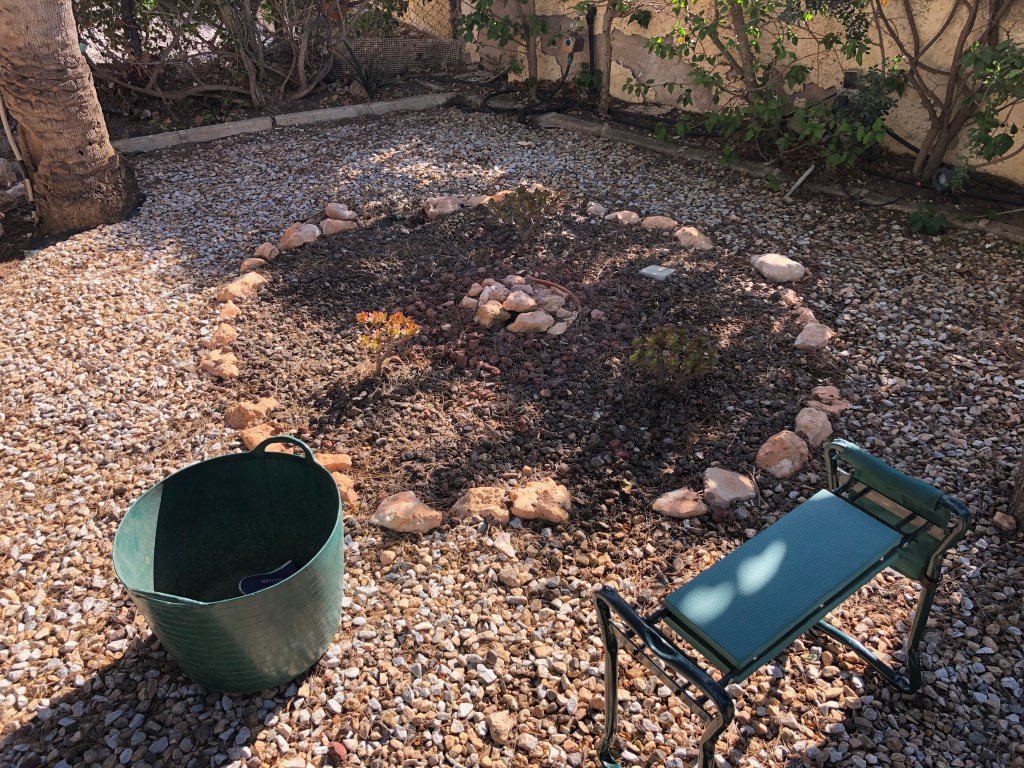
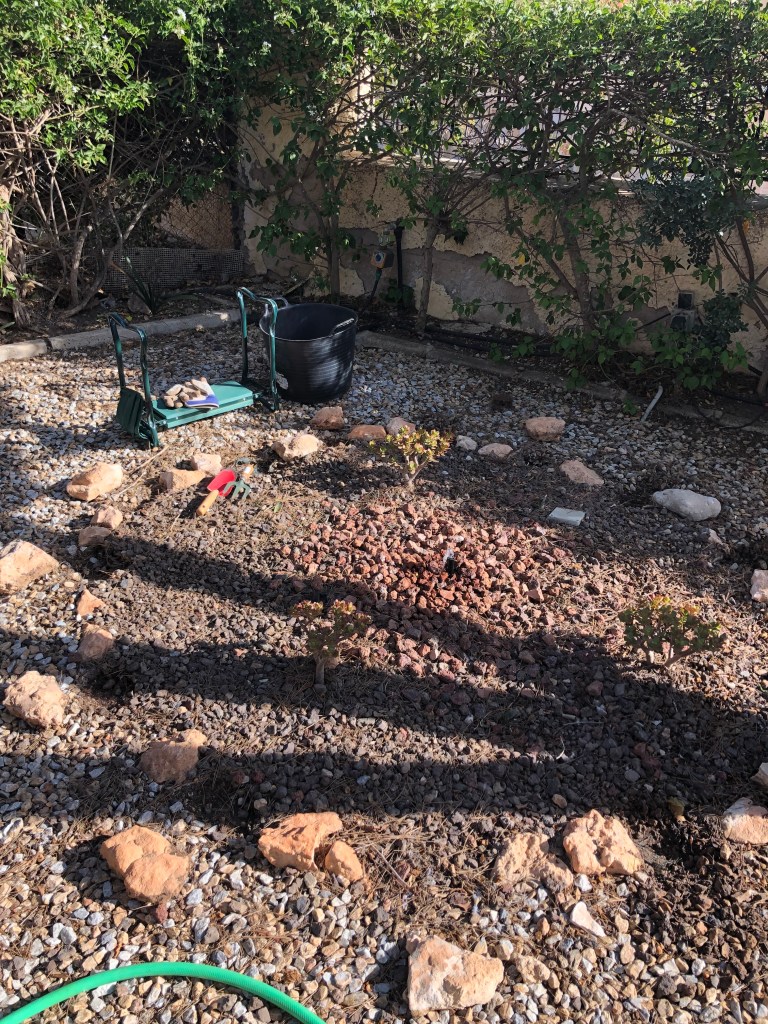
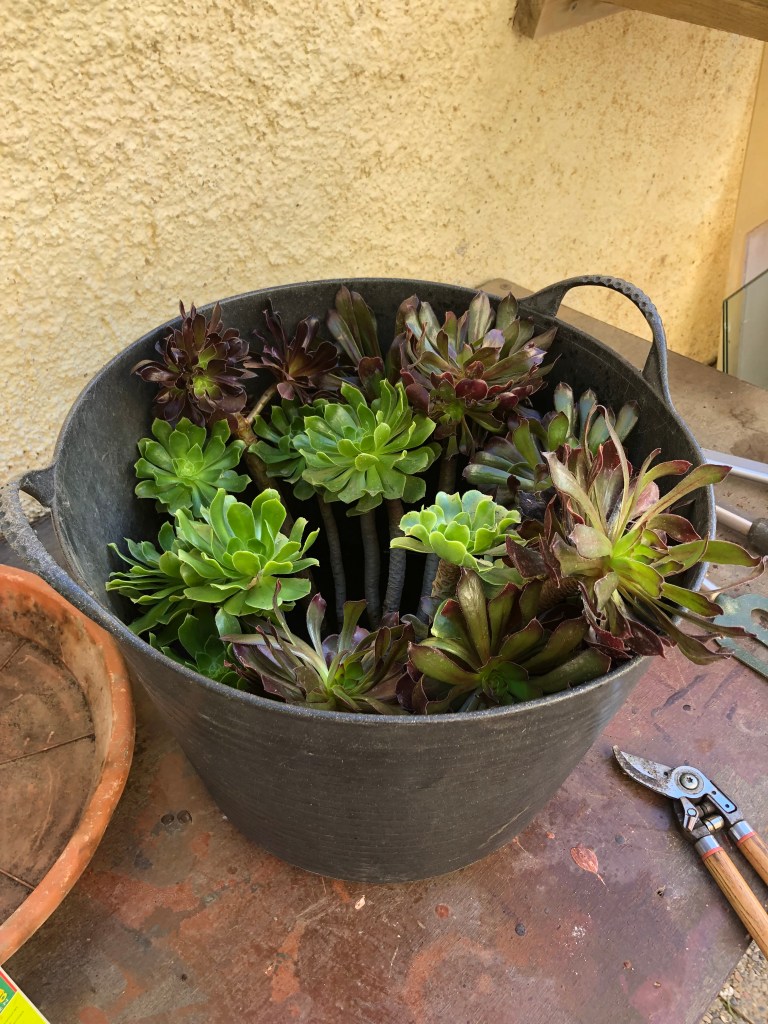
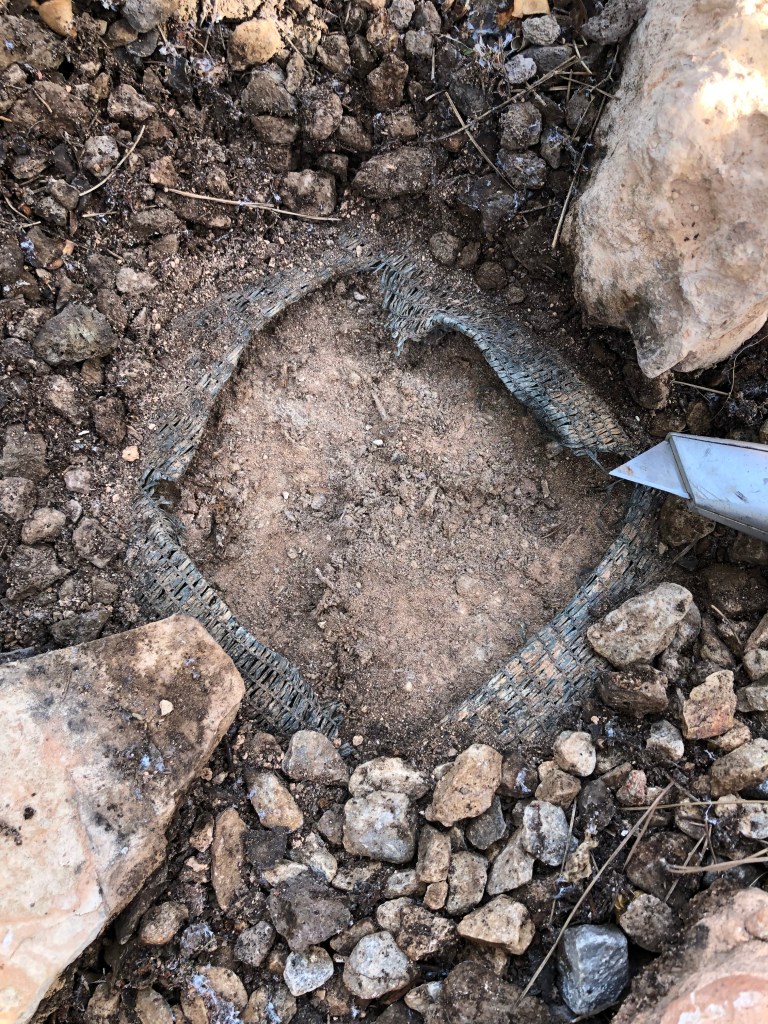
Looking around my garden it had to be Aeonium of which I had plenty from which to take cuttings. The next stage was to cut through the existing membrane to plant, but only after dipping in hormone rooting liquid to give them a better chance of rooting. Finally I planted alternative Aeonium Schwartzkopf (black head) and Verdi the (green head) to give interest. The photos below show the various stages, I will let you know how it develops in future posts. Click on each photo for a larger view.

I think this will look lovely when mature.

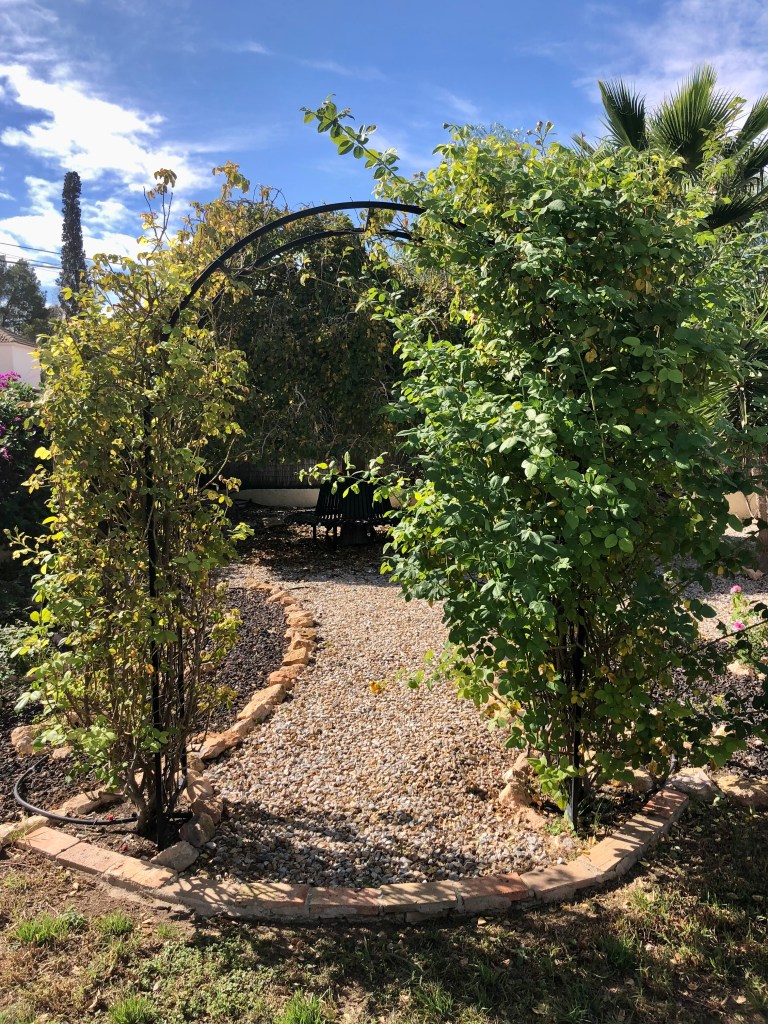
Constructing planting islands in gravel. By introducing some plants and different types/colours of gravel you can begin to alleviate the sameness of acres of gravel and paving. I have followed this strategy over a number of years in areas where grass or similar is unsustainable. The photos below, which are all taken from my garden, show how a bit of island planting can enliven gravelled areas.

The photo below shows my rose beds which are planted in different coloured gravel which ensures differentiation even during winter. Click on each photo for a larger view.

The examples below show other areas of island planting that bring greenery into gravelled areas. Don’t be afraid to follow the same strategy in paved areas. You just need to lift a few paving slabs in strategic areas and you will alter the whole feel of your garden. If you are worried or don’t have the skills just get a builder in and it will take about half an hour. The final photo shows my larger water feature which fulfills the same function of being a focal point in an area of the garden. Click on each photo for a larger view.

From all of the above you can see how little projects done over a longer period of time can begin to bring life to gravelled areas.

Cloud pruning and making trees interesting. Trees like gravelled areas, are aspects of Spanish gardens that are often left as uninteresting lumps punctuating uninteresting gardens. But you don’t have to settle for this. Just because you inherited this behemoth of a tree, or, you just let it get out of control doesn’t mean you have to leave it like that. Cloud pruning and shaping your trees will bring amazing levels of interest to your garden. If you are worried about getting up a ladder then just call in the professionals and tell them your ideas.

The photos below show some examples of my various trees that I have shaped or cloud pruned to bring interest. Click on each photo for a larger view.

Chicken sex lessons.This section of the post could easily degenerate into smuttiness, so it will require everyone to be adult. It all started when Cruella said she thought her girls were growing up and they might have unmet needs. When I asked her what she meant she said she needed a “Cock”!. Putting aside the double entendres that the less educated of you may have reached for, she explained that her girls where no longer girls and where young woman with normal urges.

Anyway, it turns out that she was going to start a programme of sex lessons for her girls to gradually introduce them to the facts of life. Aware of her girls sheltered upbringing, she pointed out that they had never seen a male apart from me and Tango the lonely blind Labrador, he is neutered, and she has often expressed the wish that I was. She said she was going to start gradually and purchased a painting of a Cock – stop it! Using the painting of the Cock she has been holding a series of closed women only sessions in the Chicken coop where she is explaining the “facts of life” in chickenese to her girls. The photo of the Cock is shown below.

I have crept up and listened in a number of times, but obviously I don’t speak chickenese, but the clucks, pucks and shrieks, speak volumes. At the end of the 6th session which covered foreplay and the actual mating, a vote was taken. It turns out they have all voted against the Cockerel and have decided to remain “old maids”. Cruella is overjoyed and says it’s for the best as she feels that as well brought up young ladies her girls should not be sullied by brute male company. However, I have noticed her browsing “adopt a chick” on the internet. The photo below shows the end of the 6th session when all the chickens turned away in horror.

You can’t see the little brown chicken as it is hiding in the coop with its wings over its ears.

I continue the Autumn tidy up and the chickens get a shoe fetish

Cruella (my wife) has been away visiting our idiot son which means I have been able to get on with all the autumnal jobs I need to do in the garden. But it hasn’t been easy, the chickens follow me everywhere and just stand there staring at me. To make matters worse they have developed a shoe fetish and I think they need counselling. Anyway more of this later, on with the gardening:

24th October 2023. Things I have been doing lately.

  • repairing the lawn
  • dealing with the end of the soft fruit season
  • repotting plants
  • tying up Canna and relentlessly deadheading
  • dealing with the chicken shoe fetish

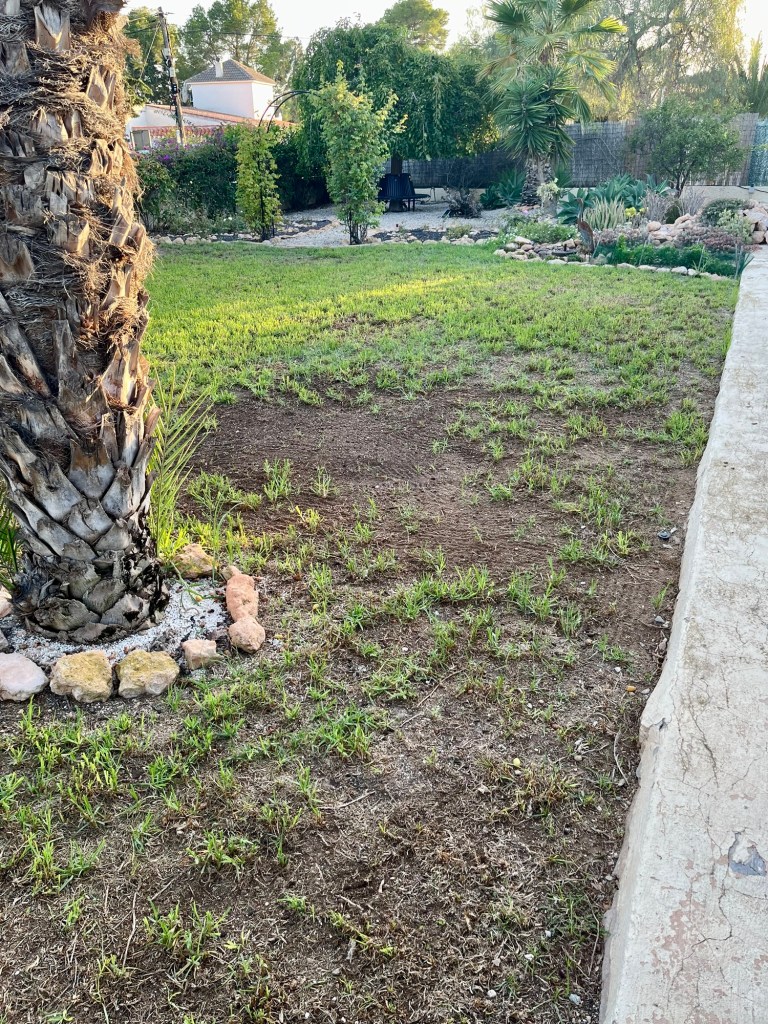
Repairing the lawn. I know that most of you do not have lawns, as only an idiot would have a lawn in Spain – I have to hide from Cruella every time the water bill arrives. Anyway if you have a lawn now is the time to repair it. The heat of the summer has gone, but it is still warm and there is the odd chance of rain to encourage your new seeds.

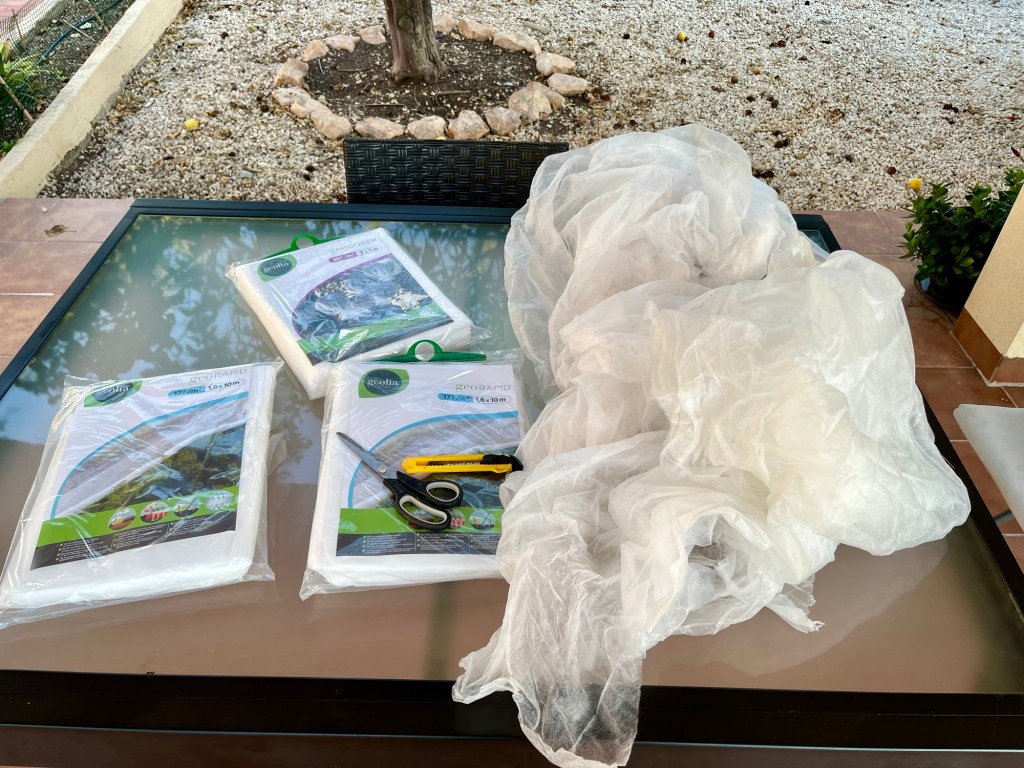
Begin by getting everything together that you will need to successfully complete your lawn repairs. The photo below shows everything you will need all loaded into my wheelbarrow. This includes:

  • sifted compost mixed with soil
  • good quality grass seed
  • garden protective fleece and ground staples
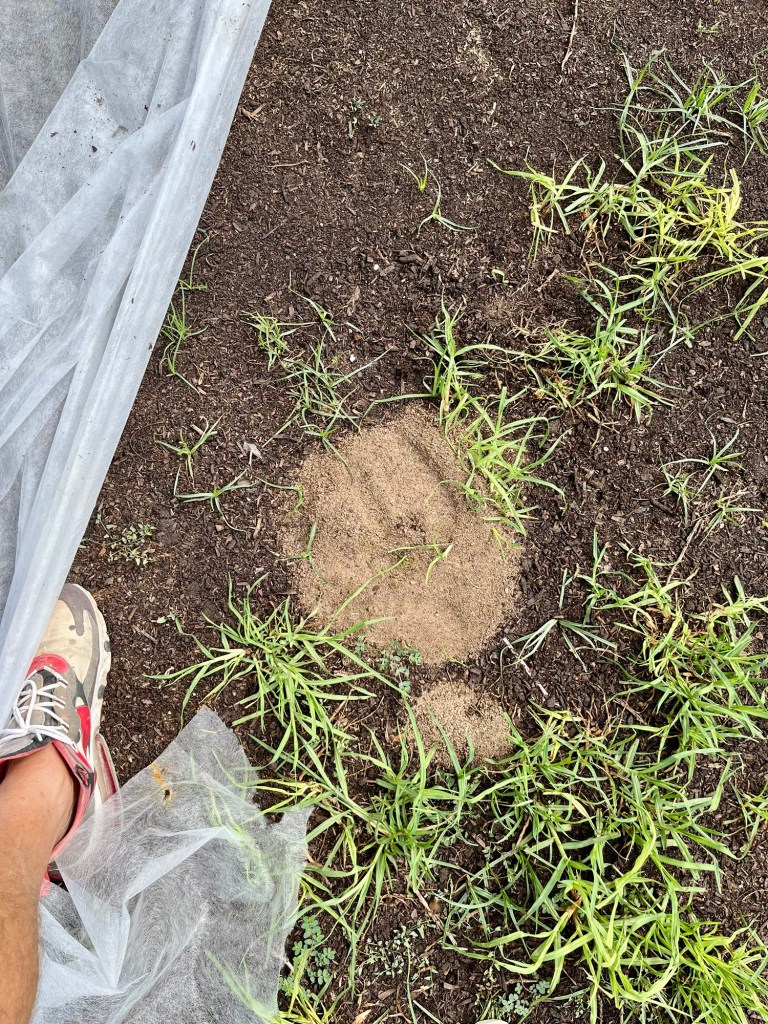
  • antpowder

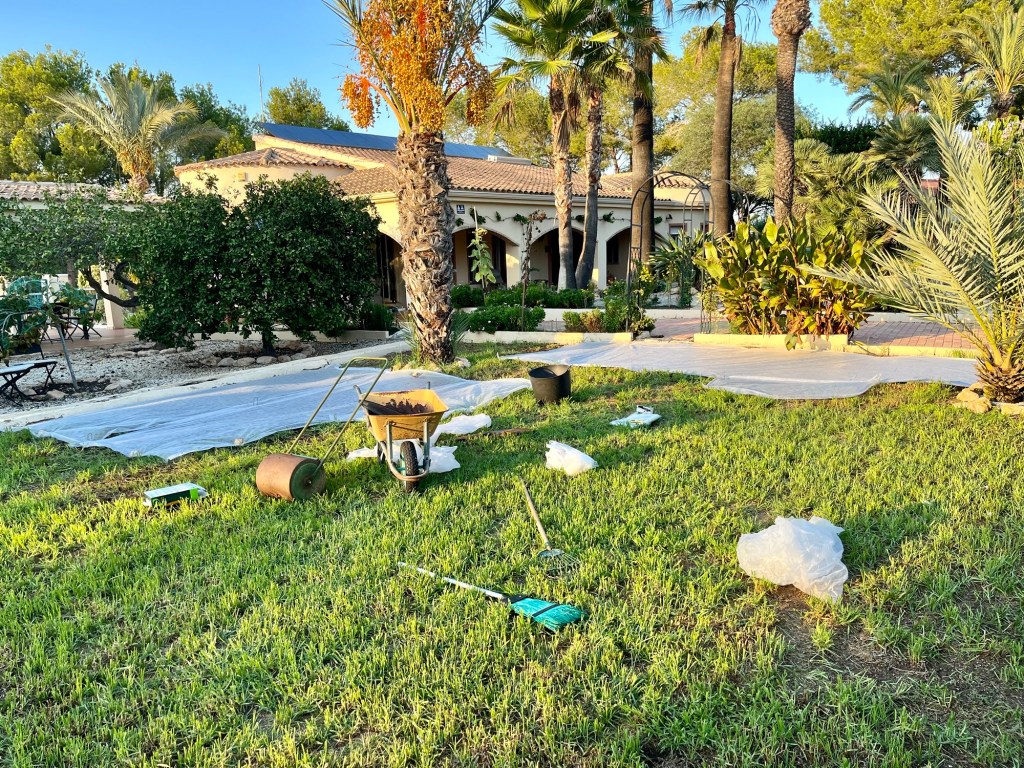
Once you have assembled everything, then you need to cut the lawn quite short and rake over the patches you are going to repair. Once you are happy that you have raked sufficiently to bring the soil to the surface, spread your new mixture of soil and compost in heaps over the repair area. Next you will need to evenly rake your soil over the proposed repair area and roll it to ensure it engages with the surface of the lawn. Once you have rollered you should gently rake the new patch with a garden tined rake. Next sow your new seed by sprinkling left to right and then up and down to give you a nice even spread. Finish the sowing stage by rollering once more to ensure the seed has good contact with the soil and is slightly embedded.

That is it, you are finished; just make sure you never let the seed dry out. And if you left it there, then tomorrow when you come out to inspect your work there would be absolutely no grass seed left – not even a tiny bit. And that is because the birds and the ants are both stocking up for winter and your lovely expensive grass seed is very nutritious. So you have to protect your work. First by covering the seeded area in a garden fleece that will stop the birds, and then by sprinkling ant powder in a continuous line all around the fleece edge – leave one little gap and the ants will be in. The photos below show the whole process in action.

Dealing with the end of the soft fruit season. We are nearly at the end of the soft fruit season and we are about to enter the citrus season. And there are a few final things you need to be doing. Firstly keep picking fruit on a daily basis. Where fruiting has finished then it is time to remove your nets. My advice is not to try and save your nets for next year, you will cause more damage to your plants. Instead just get a pair of scissors and cut your old nets off. Finally, if you have espalier plants then you need to tie them in to ensure the correct growth. The first two photos below show my daily fruit pick. The next photos show my net removal technique and espalier tying in.

Repotting plants. Most of your pot plants should be almost dormant by now, so if necessary, this is the best time to repot those of them that have outgrown their pot. The first thing to do is to select a pot that is just one size up from the existing pot. If you go for a much bigger pot then there is a danger of a virus infecting the empty soil that has yet to be filled by roots. Place your plant into the new pot whilst it is still in its existing pot. Then fill around the old pot, ensuring you tamp the new compost firmly around the old pot. Wiggle the old pot around and then remove, leaving a pot shaped space in the compost for the plant to be replanted into. The photos below show this first stage.

You now need to remove your plant from the old pot. If it is a plastic pot, then you can normally remove the plant safely without damage. However, if it is a terracotta or clay pot, then it is better to give up on the pot and just smash it as this will cause less damage to the roots. The photos below show the journey from old smashed pot to nice new home.

Tying up Canna and relentlessly deadheading. Most flowering plants will have finished by now, though I have to say my Marigolds have been flowering unstoppably since March and are still going strong. The secret to my long flowering Marigolds is daily deadheading, ruthless removal of spent plants and propping up those left. The photos below show the valiant veterans gallantly flowering on into November.

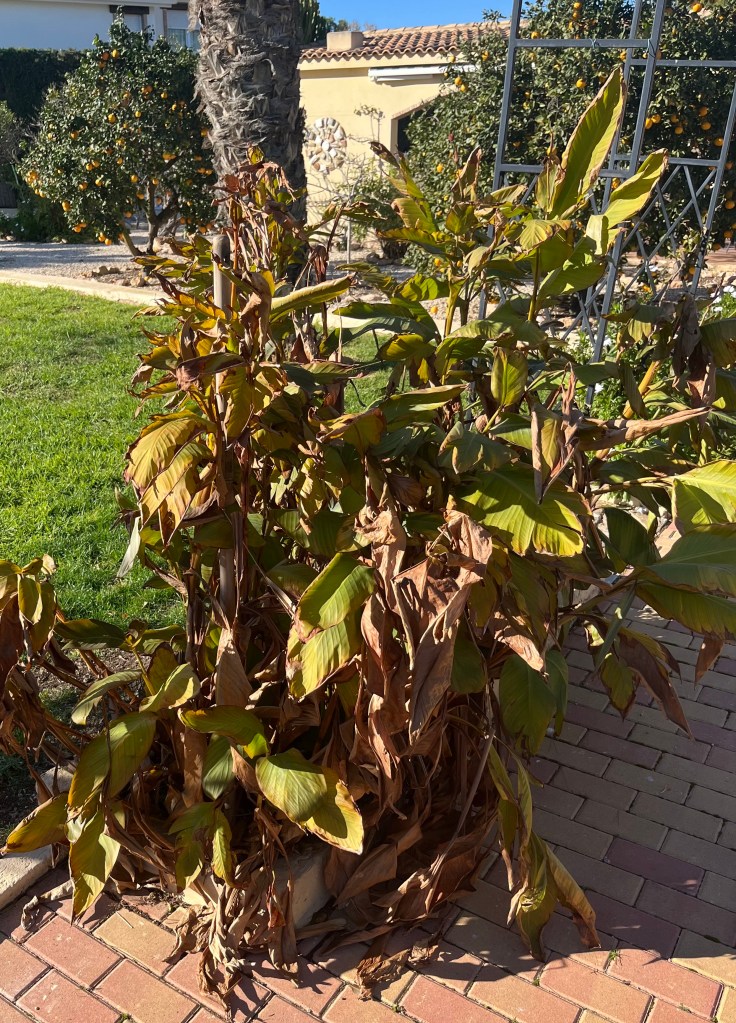
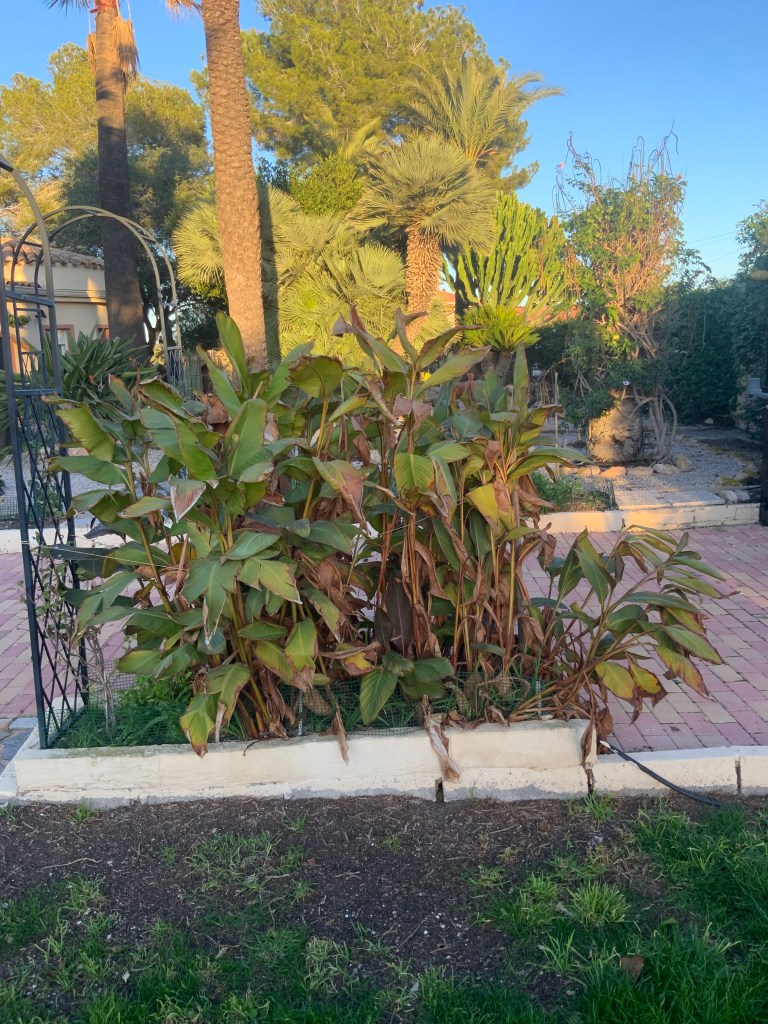
Most bulb based plants can have all their top growth cutback now. However, the big exception is Cannas. Do not cut Cannas back yet, instead tie them up and leave their top growth to die back ungracefully. it doesn’t matter if your plants end up looking like a gang of drunks on a night out. By leaving the top growth to die back all of the goodness will be passed back down into their rhizomes, thereby ensuring powerful growth next Spring. The photo below shows my Cannas dying disgracefully.

Dealing with the chicken shoe fetish. It all started the very day Cruella flew off. I remember it well because she hit the top of the Mulberry tree on take off. No sooner had she vanished over the roof tops than the chickens started following me around. They didn’t actually do anything, they just followed me staring all the time, it was quite intimidating.

I phoned Cruella that night and told her about the problems with the chickens, she instantly said “what did you do to them” she then asked me to put them on the phone. I gave the phone to Big Bertha -their leader – and she squawked away in Chickenese to Cruella. When Cruella came back on the phone she said that her girls were suffering from separation anxiety and needed to be kept calm. She went on to say that she would arrange counselling when she got back!

Anyway when it came to putting them in their coop at night I found them all crowded around the shoes that Cruella wears when she goes out to their coop. I tried to shoo – no pun attended- them into their coop but they refused to move. In the end I had to carry one of Cruella’s shoes and place it in their coop. They all followed me clucking and eventually went up. Things are a lot better now as Cruella has sent me recordings of her singing all their favourite songs in Chickenese. I play these at night and during feeding times. So far it’s working; their favourites are “the ugly duckling” and “the chicken dance”; you should see them dance around to the chicken dance. The photo below shows the start of the shoe fetish.

Cruella kills the garden, I try and rescue it, and the chickens are on the Hollywood Diet

I’ve been away, not for long, but long enough for Cruella (my wife) to try and destroy the garden. Despite the fact that I leave copious instruction notes she still manages to kill things. On top of all that her bloody chickens are now on the worlds most expensive diet. I think it is all becoming too much for me, I may abandon the garden and take up stamp collecting. On with the gardening; for now, including:

  • Repairing the garden
  • Dealing with plant disease before winter
  • Reshaping my olive tree
  • Dealing with fruit issues
  • Coping with Prima Donna chickens

6th October 2023. Things I have been doing lately:

Repairing the garden. When I left for my short absence the garden was in superb condition. However, upon my return there was neglect and decay everywhere. I honestly thought of calling up the RHS helpline to report Cruella and hopefully get her a lifetime ban from ever owning a garden.

One of the main problems was the lawn. Cruella had allowed it to grow feral as she claimed that her girls prefer long grass. The photos below show the lawn before and after I cut it all back.

Perhaps the worst item of neglect was the death of my poor little advocado cutting. I had been growing this on for two years from a stone, and I was thinking of planting it in the ground in the autumn. The photo below shows what is left of it.

Dealing with plant disease before winter. Now is the time to go round and inspect all of your perennial plants before winter. This is an important process before the plants go into hibernation for the winter season. Any disease that your plant is harbouring will go on causing harm when the plant is in hibernation, and in many cases can be fatal. My inspection found me two typical cases that needed dealing with.

The first involved a lovely Dipladenia that had been happily growing up a trellis for a couple of years. It had got itself a severe case of Mealy Bug, which with its sticky honeydew droppings had caused considerable leaf drop. I had sprayed a couple of times to no avail, so now it was time to take drastic action and cut back. Don’t be afraid to cutback plants to near the ground to get rid of pests. In most cases this will invigorate your plant and give it a fresh start. The photos below show the Dipladenia in its diseased state and then with its new start in life.

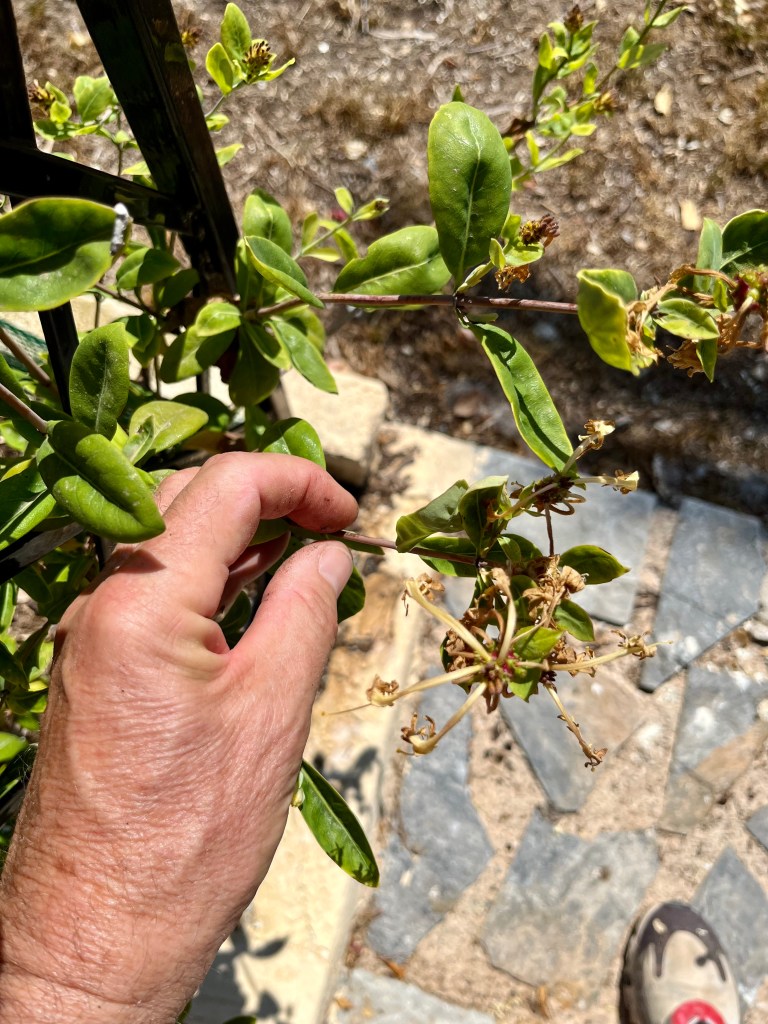
My second disease problem was on a lovely Jasmine which grows up the corner of my house on wires. This stalwart reliable plant got itself a bad case of mildew. Now Jasmine normally die back and look a bit dead this time of year, but in this case the leaves were not dry and crisp, instead they were powdery and limp. This was obviously caused by the high humidity this year, and can normally be cured by spraying, but it was too far gone and too late in the year, so it had to be drastically pruned. If you have to do this don’t worry, Jasmine doesn’t mind being taken back to the ground every few years. The photos below show the Jasmine before and after.

Reshaping my olive tree. Once you have cloud pruned olive trees into the shape you want them, then you need to trim them up about three times a year to keep them sharp. The photos below show my olive tree before and after it’s smartening up.

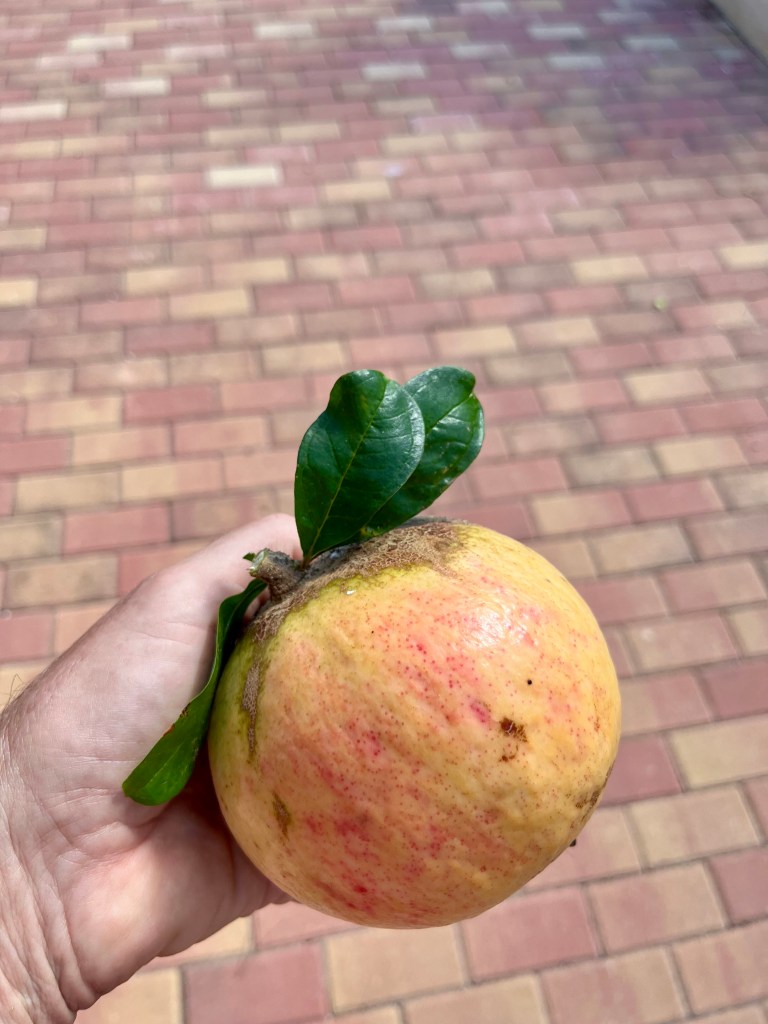
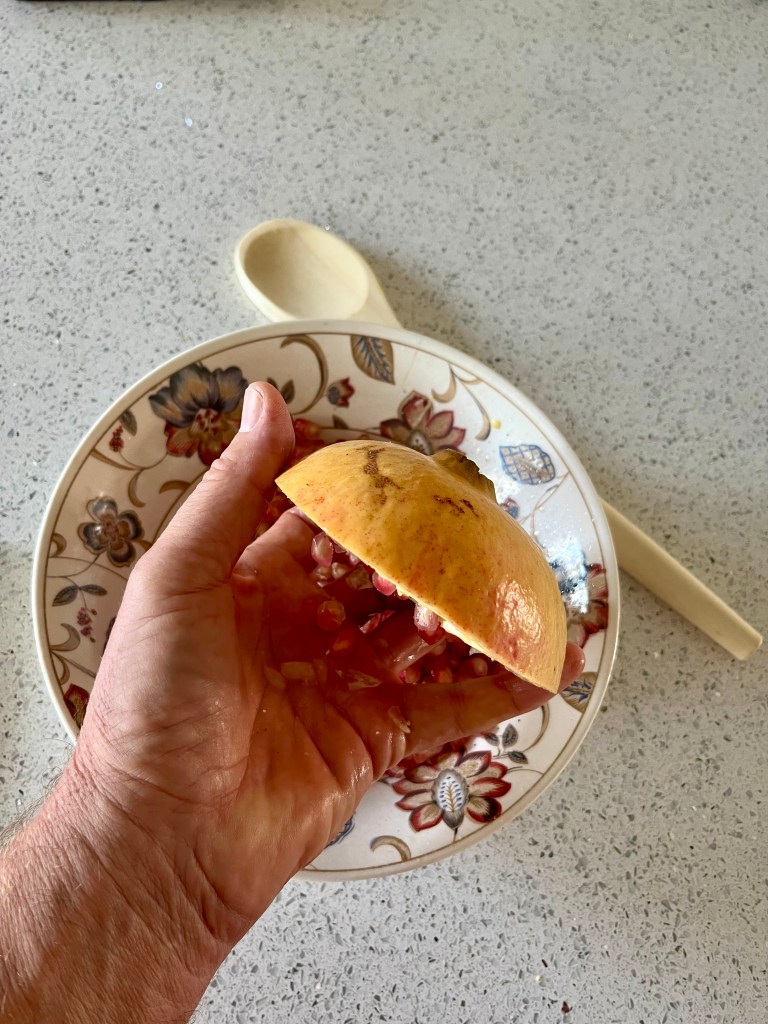
Dealing with fruit issues. This year has been fantastic for fruit, and there is still a bumper crop of oranges and lemons to come. However, in the meantime keep picking and processing fruit on a daily basis. I still have lots of figs and persimmons galore, with pomegranates yet to come. The first photo below shows my daily haul of figs, the second shows my little persimmon tree with its final fruits and lastly my pomegranates waiting to be harvested. Remember, if possible leave your pomegranates till they go red. Don’t worry if they split a bit, as these are one of the few fruits you can still eat after splitting because of their compartmentalisation.

Sadly, I have to report the only fruit I have had a problem with this year is my little white peach tree. I have grown this from a cutting and this would have been it’s first year fruiting. There was an abundance of fruit on the tree and I was looking forward to a bumper harvest. But unfortunately the heavy rain last month caused the fruit to swell and split its skin. The first photo below shows my little tree bursting with fruit, but as you can see in the second photo, all of it split. Oh well that is gardening, there is always next year; God willing.

Coping with Prima Donna chickens. While I was away Cruella (my wife) has become even more indulgent with her chickens. When I returned she explained that her girls were now on a new expensive diet which she said had been recommended by a Hollywood Chicken influencer (I didn’t know there was such a thing). This diet consists of individually roasted insects which come in very expensive little packets. When I queried why I still only got porridge and Tango the lonely blind Labrador is still fed Chappie, she accused me of trying to give her girls food issues.

The new food was only the start, she then confessed that the chickens have been having exercise classes with a personal trainer. She explained it was called Tai Chicken and was a variant of Tai Chi specially for chickens (I didn’t know there was such a thing). When I said that sounded like Thai Chicken she burst into tears. Anyway, the end result is I have no money left and the chickens are strutting around in designer leggings feeding on designer chicken insect caviar. The photo below shows the chickens and their insect buffet; if you look closely you can see their leggings.

I delve into the border lands and Tango gets picked in an identity parade

I hate to tell you this but summer is coming to an end and there is lots you need to do now to get the garden ready for next year. But, even though there is lots to do don’t forget to enjoy the garden through the late summer phase. Just to give you an overview, this post covers the following:

  • thinning out your borders and beds
  • collecting seeds for next year
  • picking fruit
  • Taking care of your roses
  • Kerry’s olive tree is shaping up
  • Tango the lonely blind Labrador gets framed

9th September 2023. Things I have been doing lately:

Thinning out your borders and beds. All of your borders and beds will now be getting past their best. But if you want your plants to keep blooming till the end, then you will need to do a bit of work.

Firstly, you need to keep deadheading every day. The deadheading process stops the plant concentrating on seed production and will ensure that it keeps on flowering. There will come a point where the plant can produce no more flowers, this is usually by the time it has more than 50% dead or dying stems. When this happens, you should let the plant die gracefully but leave it in place for a few weeks to feed the insects.

Secondly, you need to thin out your dead plants after leaving them in place for a few weeks. By eventually removing dead plants you are letting more air and sun get to those remaining. In addition you are exposing the soil so that those plants you want to self seed (in my case Osteospermums) can drop their seed and eventually give you hundred of Autumn seedlings. The photo below shows a typical trug of deadheads and dead plants.

Every bit goes into the compost bin to produce next years compost

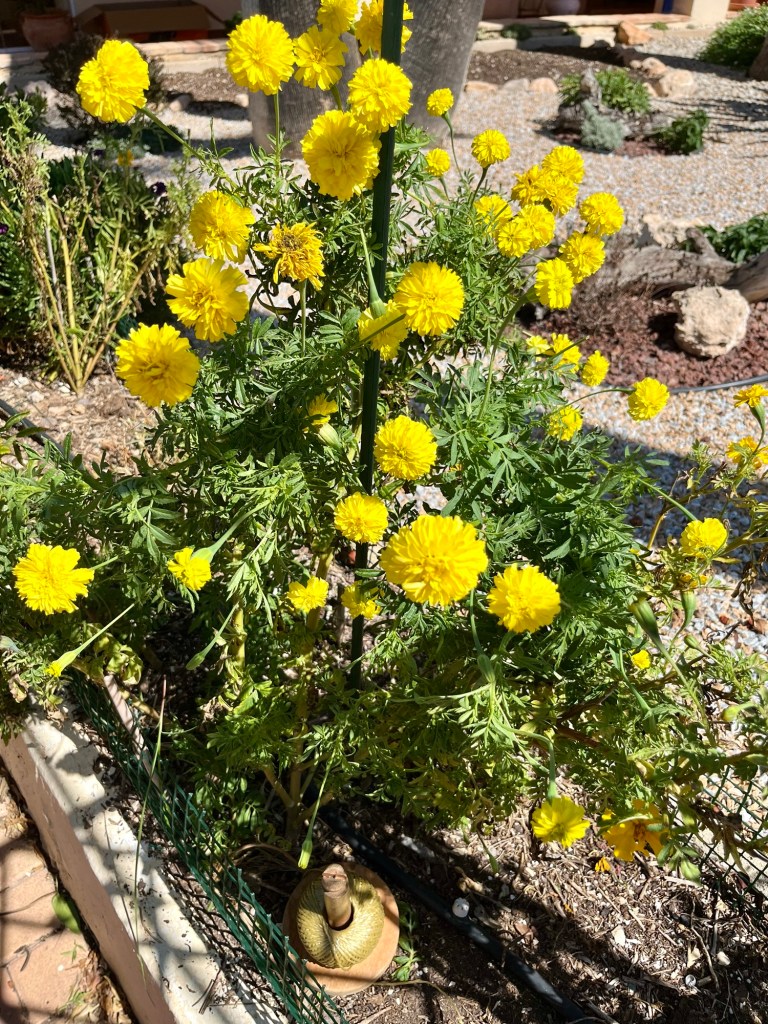
Collecting seeds for next year. If you mark up your best blooms each year and then collect their seed, you begin to build up a range of large, strong super blooming plants that are resistant to disease. The photo below shows me with some of my Marigolds that I have selectively bred over more than 10 years. Note that instead of being 10 inches high, they are over a metre and bursting with flowers.

I apologise for the selfie, I still don’t know where to look, but Cruella refused to take a photo of me with my hat on.

Collecting and storing seeds is easy, so there is no excuse for anyone not trying. I always start by harvesting those flowers that I had marked early in the summer as the best blooms that I may want seed from. The photo below shows some of the many that I marked up. You can see why I mark them when they are in bloom, because you can tell nothing from the dried seed head. The final photo below shows the range of seeds I was collecting. From left to right:

  • Dutch Marigolds
  • Ordinary Marigolds
  • Pink Trumpet Vine
  • Jasminium

The seed collecting process for Marigolds is very simple, you just have to remember to mark up the best blooms early in the summer. There are 5 simple stages shown in the photos below.

  1. select the seed head and snap off the stem
  2. gently rub off the fuzz on top of the seed head
  3. roll the seed head between your finger and thumb whilst gently squeezing
  4. let the seeds fall into your other hand whilst continuing to roll and squeeze
  5. let the seeds fall gently between your hands whilst blowing to remove chaff

The process for Trumpet vine is different. Here the seed develop in long seed cases that can be over a metre long. To access these seeds you need to gently squeeze them till they split and expose the seeds lying in rows within the seed case. I find it is best to release these seeds over a waiting envelope or they inevitably will blow away (which is exactly what they are meant to do in nature). The technique is shown below. Click on each photo for a larger view.

With Jasminium I use a similar technique, but in this case you have to release the seeds directly into the envelope or they just go everywhere. Again the technique is shown below. Click on each photo for a larger view.

Once you have collected your seeds, place them into new white envelopes, label them with the species and year, then store them in a cool dark place till you need them.

Keep picking fruit. By now most of your fruits should be ripe or almost there. The trick to getting the most of your fruit is to beat the birds to it. Hopefully you will have netted most of your fruit, but if you haven’t, the birds will be blessing you. You need to check your fruit every day and pick off anything that is ripe. Don’t try and leave all your fruit on the tree thinking that you will pick it all together when ripe. The birds will beat you to it every time. Birds know exactly when fruit is ripe as they have amazing colour sight far better than human beings. Whilst we only have three colour detecting cones in our eyes, birds have four and can see in ultraviolet so they know exactly by the colour when your fruit is ripe. The photos below show an example of my daily fruit picking. Click on each photo for a larger view.

Taking care of your roses. Roses grow wonderfully well in Spain if they are looked after properly. This means plenty of water and feeding at least three a year. We are now about to see the late September second flowering of roses. For this to be successful you need to give your roses a deep watering (in addition to your normal regime) once a week. Also you need to give them the last feed of the year. If you do both these things now you will be well rewarded. The first photo shows an action packed deep watering in progress, whilst the second shows one type of rose feed you could use. Click on each photo for a larger view.

Kerry’s olive tree. Regular readers of this blog will remember that my friends Kerry and her husband Glynn had inherited a mature olive tree when they moved into their new house. They foolishly accepted my advice that it should be reshaped and cloud pruned to give their garden an interesting focal point. Under my technical direction Kerry and Glynn helped to reshape the tree into what at first looked like a tree blasted by lightning.

Despite Glynn’s threats and Kerry’s tears I assured them that all would be well. The photos below show how the tree is developing nicely and we will be able to reshape it in the next few months. I will keep you abreast of progress; I am just glad they have called off their lawyers. Click on each photo for a larger view.

Tango the lonely blind Labrador has been framed. What happened was this. I came out one morning and one of my large standards in a big pot had been smashed. I knew straight away it was the chickens as I found feathers all around the smashed pot. When I confronted Cruella (my wife), she denied everything and said her girls would never do something like that. But I knew it was just more intimidation as part of their Just Stop Watering (JSW) campaign. The photos below show the smashed pot and the damning feather evidence. Click on each photo for a larger view.

Anyway she insisted that under the UN Chicken Rights Legislation we must follow due process and have an identity parade and a trial. The whole thing was a set up and Tango didn’t stand a chance. The identity parade included Tango and a fat chicken called Bertha (who Cruella said had a protected characteristic and should not be body shamed). Tango was of course picked out.

The whole trial was then conducted in chickenese and Tango was refused legal aid and an interpreter; I tried to help but I only know chickenese for “get out of that bloody flower bed”. The end result was that poor old Tango was sentenced to a weeks solitary confinement in his kennel. When I told him the sentence he was very stoical and accepted his fate. His head did bow and a few tears fell from his translucent milky white eyes.

The first photos below show the judge and the jury, no wonder Tango was fitted up. The final photo shows Tango when I told him of his sentence: brave, stoical and accepting. The only good news is that I spent the week in there with him; I read him “Lassie” stories and we shouted anti chicken slogans till late in the night. We only stopped chanting when Cruella turned off the lights; I sprayed “Tango is innocent” on the chicken coop. Click on each photo for a larger view.

I judge a flower beauty parade and a gipsy helps me net the big fig

By now your garden should be in full bloom and this is probably as good as it gets in Spain. Although July has been hot we know that the heat of August will just knock the garden over the edge and begin the long slow roll into autumn. I know that sounds a bit depressing but it’s not. We gardeners love all seasons and a key part of gardening is constantly thinking and planning ahead for the next season and next year. Having said that don’t forget to enjoy the moment; stroll round your garden every day, talk to your plants, compliment them on how well they are looking and sympathise with the ones that are just losing their bloom.

Anyway, enough of this sentimentality, I think I am becoming the Emily Dickinson of gardening. There are lots of things to be busy with not least picking your best flowers for seed, trimming some key plants back and surprisingly netting the big fig. On with the show.

26th July 2023. Things I have been doing lately:

Judging the best flowers for next years seed. This is the time of year when you should be beginning to think of next years seed. I know a lot of you don’t garden from seed and instead prefer to go out and buy plants, which is fine, but growing from seed is so much more fulfilling as a gardener, and it’s free. Now that your garden is full of blooms, wander round and pick the loveliest with the best shape and the most vibrant colour as potential seed heads.

You now need to mark these blooms or you are in danger of just deadheading them when they die back. I wrap a piece of wide masking tape around my selected blooms which hopefully stops me deadheading them – though mistakes do happen. Later in the summer when the plants has fulfilled all of its potential I will then harvest these seed-heads for my next years crop. The first photo below shows my trusty masking tape ready to fulfil its role. The other photos show some of my chosen blooms in situ. Click on each photo for a larger view.

Propping up plants. Most annuals will need some propping up during their short but floriferous life. If you just let them flop over, then stems get broken, flowers get squashed and it all looks a bit messy. I tend to prop up plants in two stages. When they first begin to “lean”, then I will use canes to hold back individual plants. If you have closely packed your flower beds then usually one propped up plant will hold a number of others in place. Later, as they progressively need more propping I will tie them in bunches around a line of canes. But let’s not get ahead of our selves, at the moment just use canes to prop up plants. The photos below show my propping activity. Click on each photo for a larger view.

Making Dame de Noche flower again. Many of you will have Dame de Noche (night flowering Jasmine) as part of your summer garden. Although this plant is not what you would term good looking, its value is in its exotic night scent which would put to shame the best perfumeries of Paris. Located next to your summer dining out areas, the Dame de Noche will astound your friends with its heady, exotic scent that comes in pulsing waves throughout the evening. The reason for this exotic night scent is that it is pollinated by a tiny little moth.

However, your Dame de Noche will have finished flowering, so if you want that scent back for the rest of the Summer then you need to act now. To get the plant to flower again you need to cut it back by one third. The important thing is the one third bit. Cut back by one third, the plant (which is growing strongly) will know it has lost its seeds, but think it has time to flower and make more seeds this season. If you cut back by more than one third then the plant will know it doesn’t have enough time to make more seeds this season and instead will draw everything back to its roots.

Once cut back, the plant will come into flower again and quite profusely. This will give you that lovely night scent all the way from the end of August right through till October which is exactly when you want it. The photos below show my Dame de Noche before and after its little trim. Click on each photo for a larger view.

Netting the big fig. Regular readers of this blog will know that the last fruit plant I net each summer is my big fig (to be honest it’s not that big) but it needs a team of at least three or four to net it. Normally this has been an international event with previous years including teams from: Scotland, Northern Ireland, England, France and last years winners from “Wigan”. Anyway I had hoped that my idiot son and Cruella (my wife) would assist me but both refused claiming that as they were chicken royalty it was beneath them. I did try and net it myself, but I kept getting tangled up and falling over wrapped in net; much to the hilarity of the chickens.

Just at my moment of greatest despair my luck changed with a ring at my doorbell and there was my saviour, an itinerant Gypsy lady, Cathy Rose Lee who had camped locally and was now looking for casual work whilst her husband Ronnie was setting up his boxing booth. Cathy agreed to help me net the fig but first she insisted on telling my fortune in tea leaves. The photo below shows Cathy mid fortune telling; it turns out she predicted my drive needs tarmacing.

Once Cathy had read my fortune and I had crossed her palm with silver, it was straight to the fig netting. By this time Cruella had agreed to lend a hand as Cathy had convinced her that good fortune would follow for her and the chickens. If you have never netted a tree then there are five stages:

  • Unrolling and halving the net
  • Stretching the net
  • Joining the two halves of the net
  • Raising the net
  • Tying down

We started very well with Gipsy Cathy and Cruella working in perfect harmony as a team. The first photo shows them both enjoying the net unrolling stage. The second photo shows that they broke into a little dance as they moved to the halving process. Click on each photo for a larger view.

By the time we got to the next stage of stretching the net they were both singing harmoniously an old net stretching work song; Cathy was singing in Romani whilst Cruella harmonised in Chickenese – it was strangely haunting whilst at the same time scary. Click on each photo for a larger view.

Joining the two halves of the net is always a tricky exercise even with an experienced team, so you can imagine I was a bit apprehensive about the next stage and envisaged lots of torn areas of net. However, surprisingly they did extremely well and injected lots of fun into the process and even indulged in some “twerking” dance moves as the first photo below shows. From the final photo you can see the air of satisfaction they both feel at a net well joined. Click on each photo for a larger view.

The next stage is raising the net and this normally requires a team of five; one in each corner of the net with me in the middle with the net raising stick. The importance of this stage cannot be over stated, one slip, and you have a tangled torn net stuck high up the tree. From the photos below you can see we started off rather badly and there was lots of shouting and swearing as both Cruella and Gipsy Cathy kept getting caught up in the net. But finally we raised the net with a mighty cheer. Click on each photo for a larger view.

Gipsy Cathy was so pleased with this stage that she insisted on having a series of triumphal photos that she promised to display beside her best Capodimonte collection in her caravan. Click on each photo for a larger view.

I am pleased to say that the tying down stage went off without any problems, which was a relief after all the drama of the raising the net. This stage merely involves pulling the net down tightly over the whole tree and then tying it down with string every yard or so to the lower branches. Although the whole tree isn’t covered right to the ground, it is usually enough to put off the birds.

From the photos below you can see that the mood is much more relaxed with Cruella prefering an upright stance for tying down whilst Gipsy Cathy preferred to sit on the ground. When I asked if she was ok down there she said “don’t mind me luv, I gave birth to all my kids under a tree at hop picking, so I’m used to it”. The final photo shows the triumph of a job well done. Click on each photo for a larger view.

Deadhead, net your fruit, and the return of Chicken Boy

It is the height of summer and we are all really busy in our gardens, the work is endless, the heat relentless, the days long; as if it couldn’t get any worse, the idiot son has returned as “Chicken Boy”. I am too weary to explain now, let’s get on with the gardening and I will explain later.

18th July 2023. Things I have been doing lately:

Deadheading. The glory of summer is to see your borders and flower beds packed with flowering waving annuals, especially if you have grown them all from seed. I know I have said it before, but if you haven’t grown from seed, then try it, it will give you a whole new perspective on gardening. However, if you want to maintain that lovely packed flowering look all summer then you need to go round your garden and deadhead on a daily basis. The photo below shows one of my borders packed with flowers waiting for their daily prune.

All flowering plants need to be deadheaded otherwise they will produce one or two flowers and go straight into seed production. By deadheading you are removing the viable seed which forces the plant to produce more flowers and hence more seed. To deadhead flowers, don’t just chop off the flower head, if you do you will leave a useless piece of stem that will invite disease. Instead grasp the flowerhead in your hand and then with your other hand run your secateurs down the stem until you meet a lower group of leaves, and cut here. This will encourage the plant to throw another side shoot and flower from this point. Another deadheading technique you can use with multi flowering plants such as Osteospermums is to use hand held side shears to crop off the old flowers. Both techniques are shown in the photos below. For a larger view click on each photo.

Finally, don’t forget to prop up and stake plants that are beginning to flop. I will be covering this in future posts, but below you can see my mini sunflower already propped up with a broom handle.

I know the lawn looks terrible, please concentrate on the Sunflower.

Thinning fruit crops. If you have a heavy crop of fruit on a tree then you need to make a decision about thinning the crop. Thinning is simply removing a number of fruits to ensure that the tree does not begin to drop the fruit itself because it is in distress at a heavy crop. Another good reason for thinning is to ensure better size fruit. I always think it is better to have a slightly smaller crop with larger fruits, than a large crop with smaller fruits. I tend only to thin my persimmons and probably peach. I do not bother with figs as I tend to crop them on a daily basis. The first photo below shows me reluctantly pruning out healthy persimmons, whilst the second shows them on their way to the compost heap. For a larger view click on each photo.

Netting fruit. If you have soft fruit trees, and you want to retain the fruit as opposed to fattening the birds, then now is the time to net. I have a range of trees and plants that require netting. The photo below shows: fig, persimmons, and peach all prime bird fatteners. For a larger view click on each photo.

People often ask me when is the correct time to net their fruit? and the answer is simple, before it ripens. If you leave your fruit till it is ripe then the birds will undoubtedly beat you to it. Birds know the instant that fruit is ripe and they can easily strip a tree of all soft fruit in a day. If you are going to net your fruit then make sure you use a small mesh net as this is more bird friendly. Remember the key is to keep them out not trap them in your net. If you use a wide mesh net then birds will try and get through, and every morning you will be met by the sight of fat angry birds hanging upside down from your nets. The photo below shows the correct mesh size. Followed by a photo of a fig attacked by an enterprising bird even after I had netted. For a larger view click on each photo.

Keeping compost wet. It will soon be time for my annual “big compost special” post. And I know that you are all waiting with bated breath. But, in the meantime, it is important that you keep your compost wet in this very hot weather, otherwise you will find it full of ants and they can disrupt the composting process.. Every week, check your compost for ants and put your hand in to feel how dry it is. The idea is to use a watering can or hosepipe to keep the compost constantly damp, but not soaked. If you have two compost bins, one live and one resting then you still need to keep them both moist or the ants will just move to the other one. The action packed photos below show me watering both compost bins. For a larger view click on each photo.

Repotting plants. If you have plants that have become too big for their pot, or, if you have cuttings that have grown strongly and need a bigger pot, then now is the time to repot. There are two basic windows when you can repot plants. One is in January when everything is dormant and you can’t do much damage. The other is now when everything is growing strongly and the plant should take well to its new pot. Whilst both repotting windows are fine, I prefer now if possible as there is always the danger of overwatering in January when the plant has no growth and it’s roots will just sit and rot in the wet.

I have a little avocado tree that I have grown from a stone that now needs to be potted on to give it a bit more room. Eventually it will end up in the soil, but not just yet. If you decide it is time to pot on then ideally you want to disturb the plants roots as little as possible. This means preparing the right compost in advance and having the larger pot ready. When you are ready half fill the new pot with your compost. Then place your plant in its old pot into the centre of the new pot. Carefully fill around the old pot and tamp down the new compost so that it is firm but not compacted. Then holding the old pot twist it around and around to create a pot shaped space in the new compost. Once you have achieved this, carefully tap out the plant from its old pot and place it into the ready made hole in the new compost. If possible slightly tease out the roots before replanting. When finished water well and place in the shade for a few days. The first photo shows my little avocado about to occupy its new space. The second shows it resting in its new home in the shade. For a larger view click on each photo.

The return of Chicken Boy. Cruella (my wife) was beside herself with excitement as our idiot son was coming to visit for a week. Her normal excitement had been heightened by the fact that she had declared him her successor where chickens are concerned and expects him to inherit all her chickens. To this end she has declared him “Prince of all Chickens”, she gets upset when I call him Chicken Boy.

Anyway, they have both spent most of the week in the chicken coop conversing with the chickens in chickenese, as she and the chickens inaugurated him into the mysteries of chickendom. There was lots of chanting, squawking, smoke and some drumbeats (I didn’t even know chickens could play the drums). The end result was he emerged with a whole new set of pronouns, some chicken poo smeared on his face and a feather sticking out of his hair. From then on the whole holiday was spent with him showing off his chicken wrangling skills. The photos below show him in action. For a larger view click on each photo.

All good things come to an end and Chicken Boy had to go back to London to ruin the financial system of the City. Cruella meanwhile has sunk into the usual pit of despair that accompanies his leaving. For three days she has been sleeping in his bed and refusing to eat; declaring loudly that she will probably never eat again – I keep finding Mars bar wrappers under the bed! The photo below shows Cruella in the pit of despair. If you look carefully, those lumps in the bed is where she has sneaked chickens in.

In addition to the chickens hiding in the bed, all the rest are wearing black armbands and the chicken coop flag is at half mast.