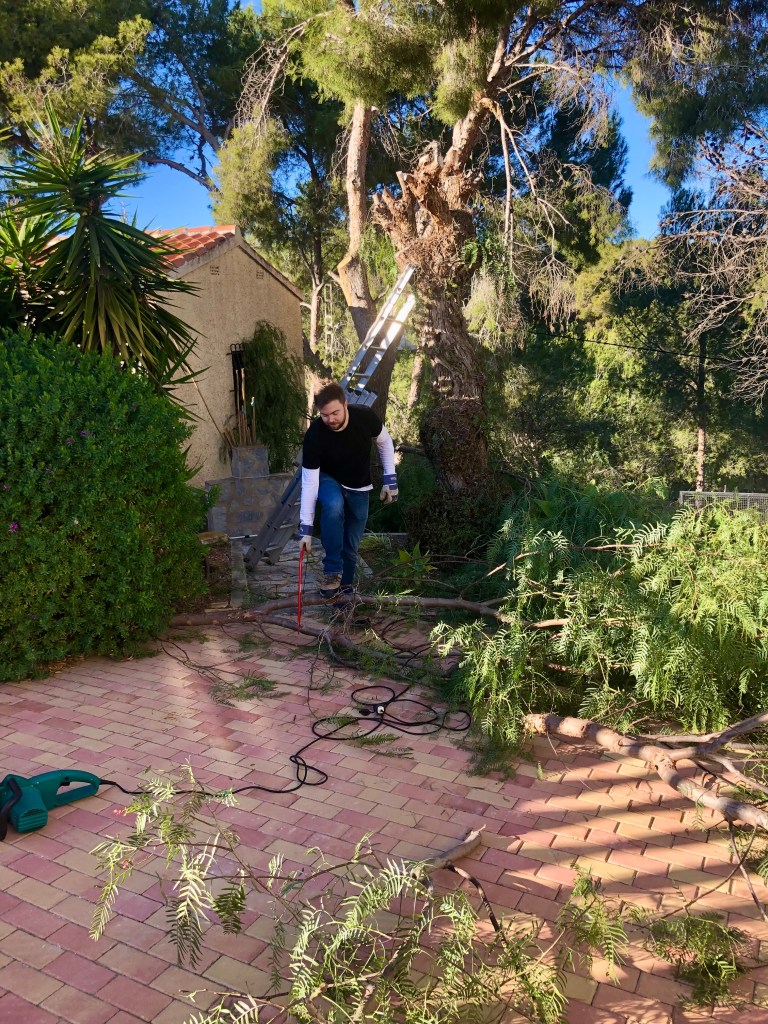
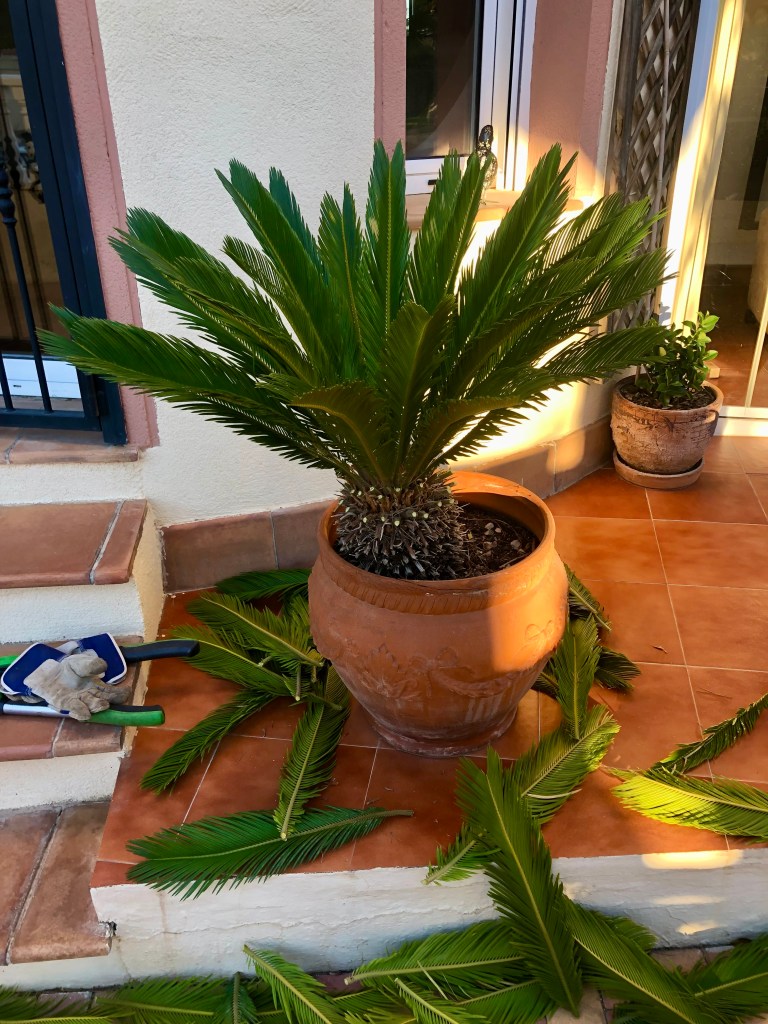
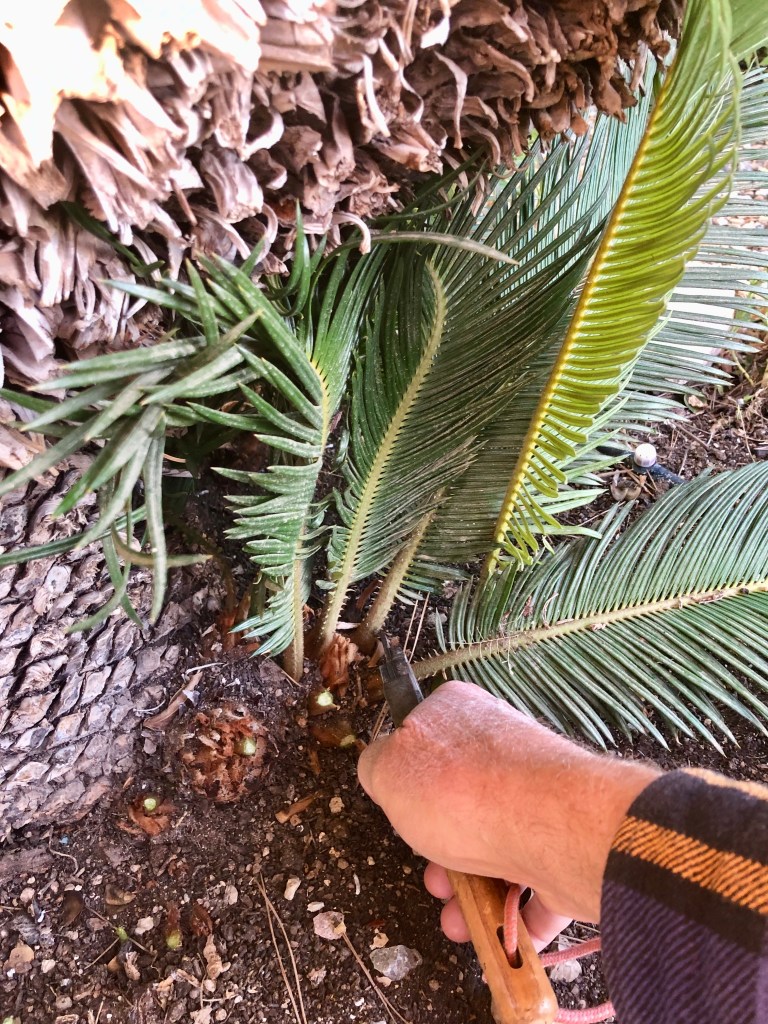
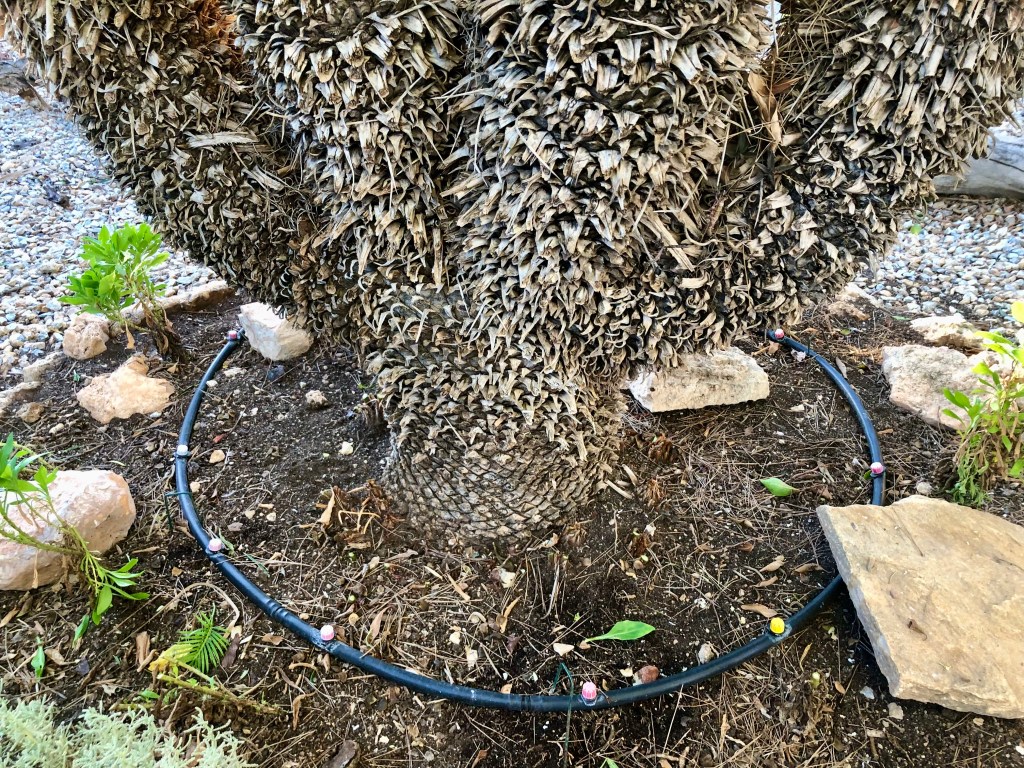
A Christmas greeting to all gardeners

It’s time to make your beds, and Cruella invents a chicken heroine

Yes, it’s that time of year again when you begin the work to build your garden for next year. The idea is that over the next couple of months we bring the garden back into shape ready for next year’s growth. Remember this is a staged process so don’t rush out now and chop everything down. Let nature take its course, let leaves fall, stems wilt and sap descend to roots. Cut back too soon and you damage the potential for next years growth. The starting point is always your flower beds. All the annuals should have more or less died back and the perennials are in need of a trim. Needless to say I have been doing all this under a continuous state of siege as I am harried by chickens at every turn. More of this later; on with the gardening.

2nd December 2023. Things I have been doing lately:

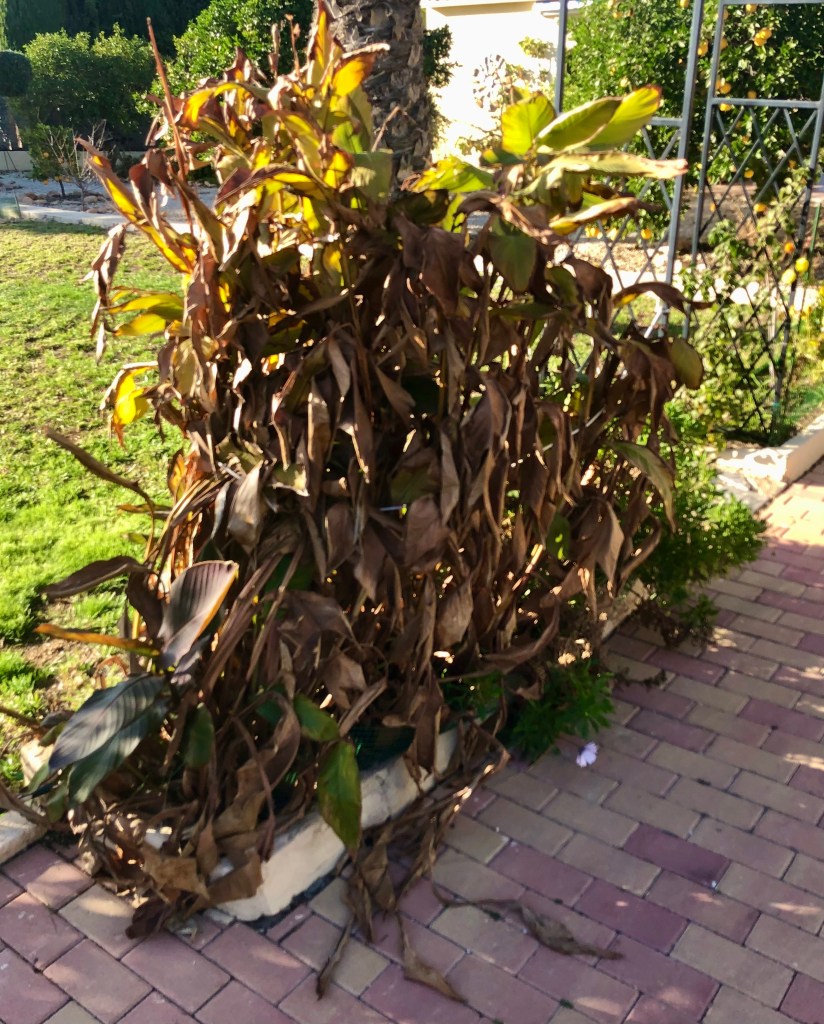
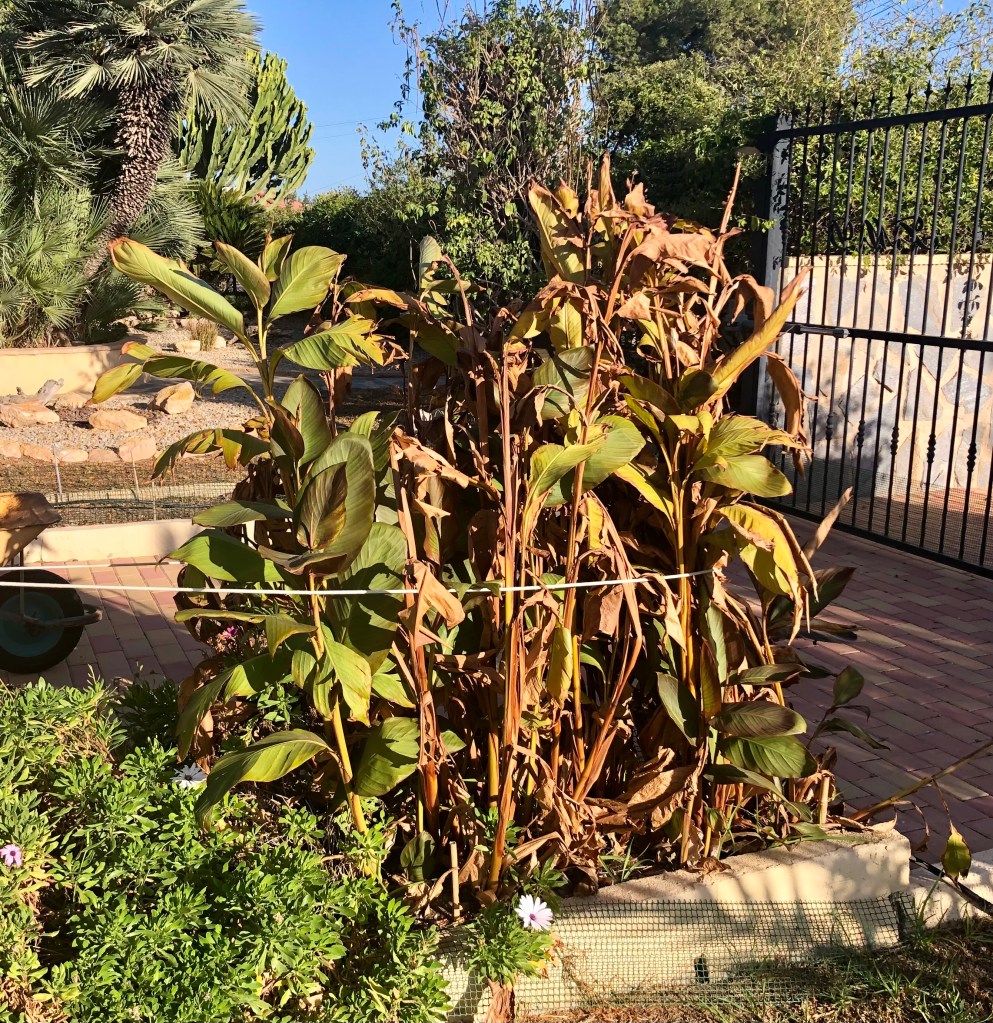
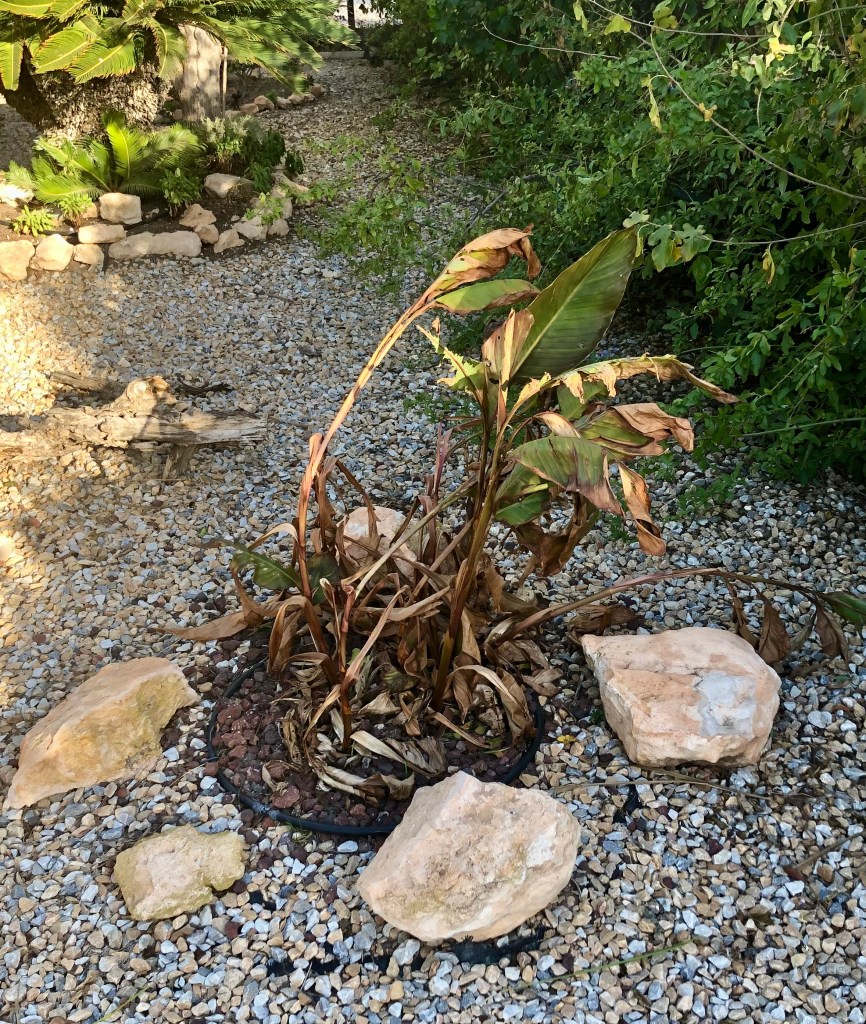
Cutting back Canna. If you have followed my instructions – and I am sure you have – you will have left your Canna to wilt and wither to ensure that all the sunshine can be gathered from the dying stems and taken back into the rhizomes (ugly bulbs). The photos below show a selection of my dead and dying cannas. Click on each photo for a larger view.
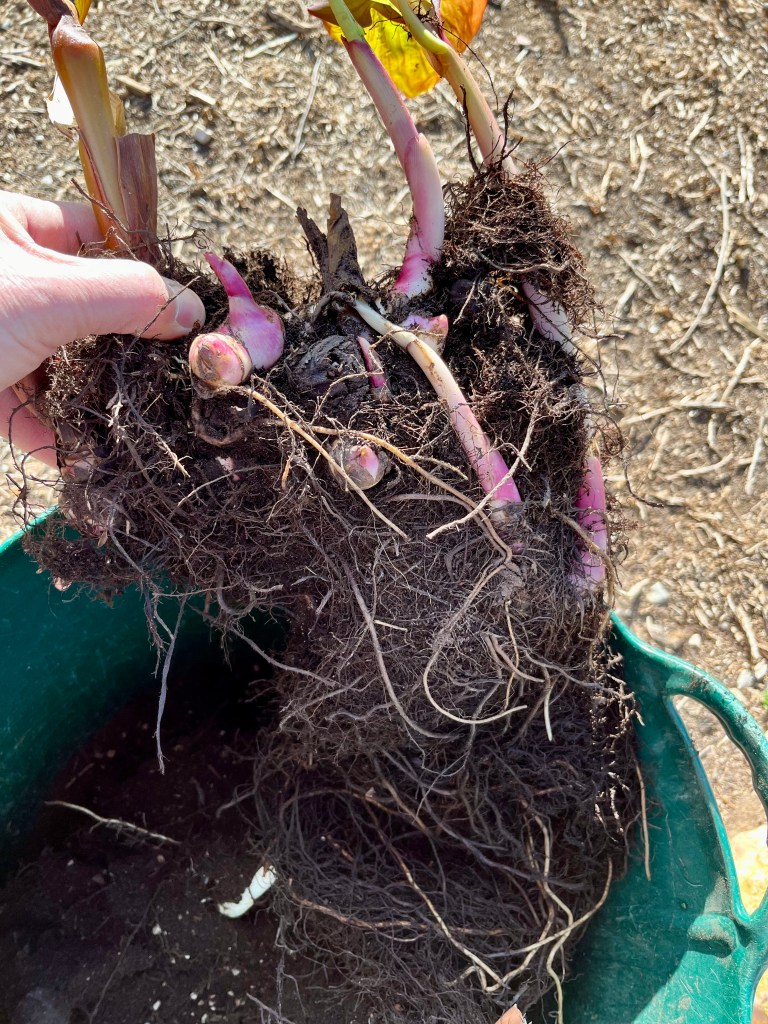
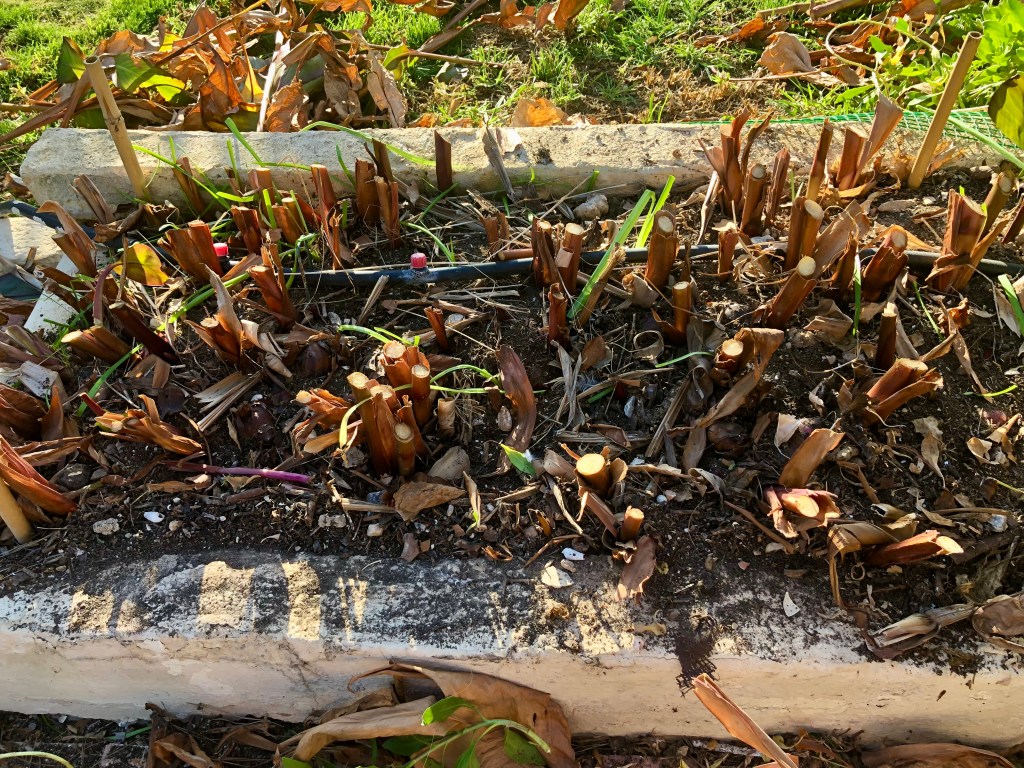
To be honest it has not been a good year for Cannas they suffered from the lack of rain, so by cutting back now we can hopefully have a better flowering next year. The secret to cutting back Cannas is not to cut them right to the ground. If you do, then you are in danger of letting water and eventually rot get down into the rhizome. Instead cut the stem about 3 to 5 inches from the ground and just leave them. The cut stems will mainly dry off and can be plucked out next year, whilst new stems will grow from other “eyes” in the rhizome. The photos below show some of my cannas cutback. Click on each photo for a larger view.

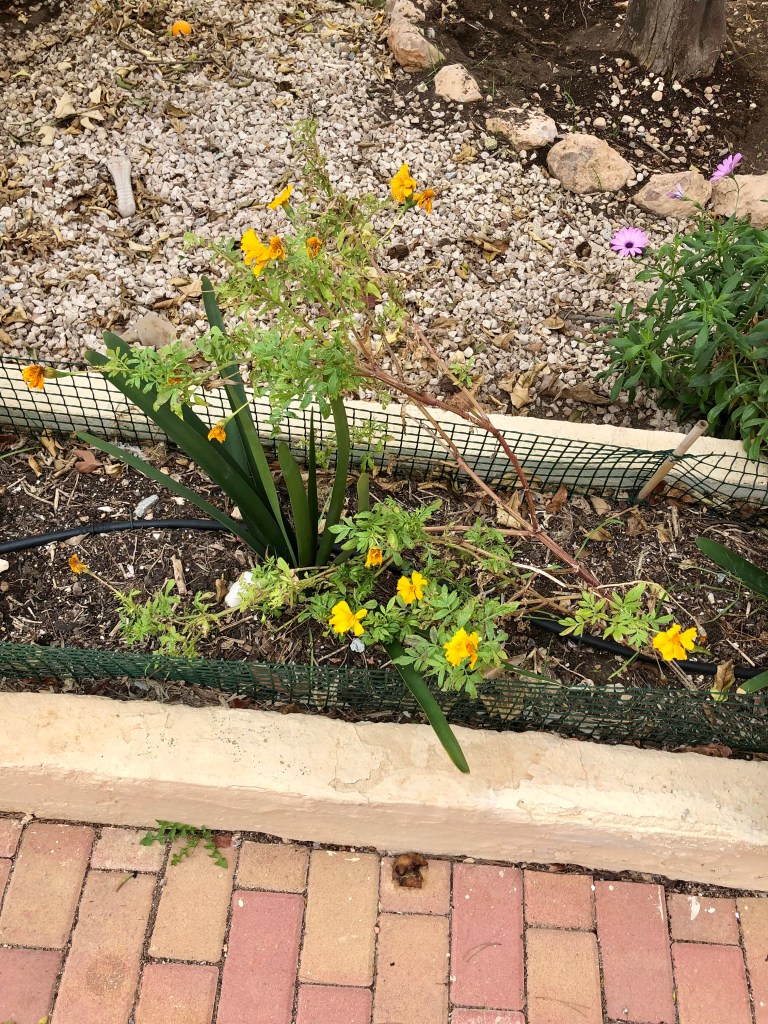
Clearing Marigolds. By now most of your beds will have been cleared as you will have deadheaded and removed spent plants throughout the summer. You should just be left with stubborn annuals and perennials. I have been selectively saving Marigold seeds over a period of about 10 years so consequently I can have quite large Marigolds flowering all the way from March to December. But now is the time to take out the survivors. The photos below show my by now deshabille Marigolds. But I love them and we always say a prayer of goodbye when it is time for them to go. Click on each photo for a larger view.

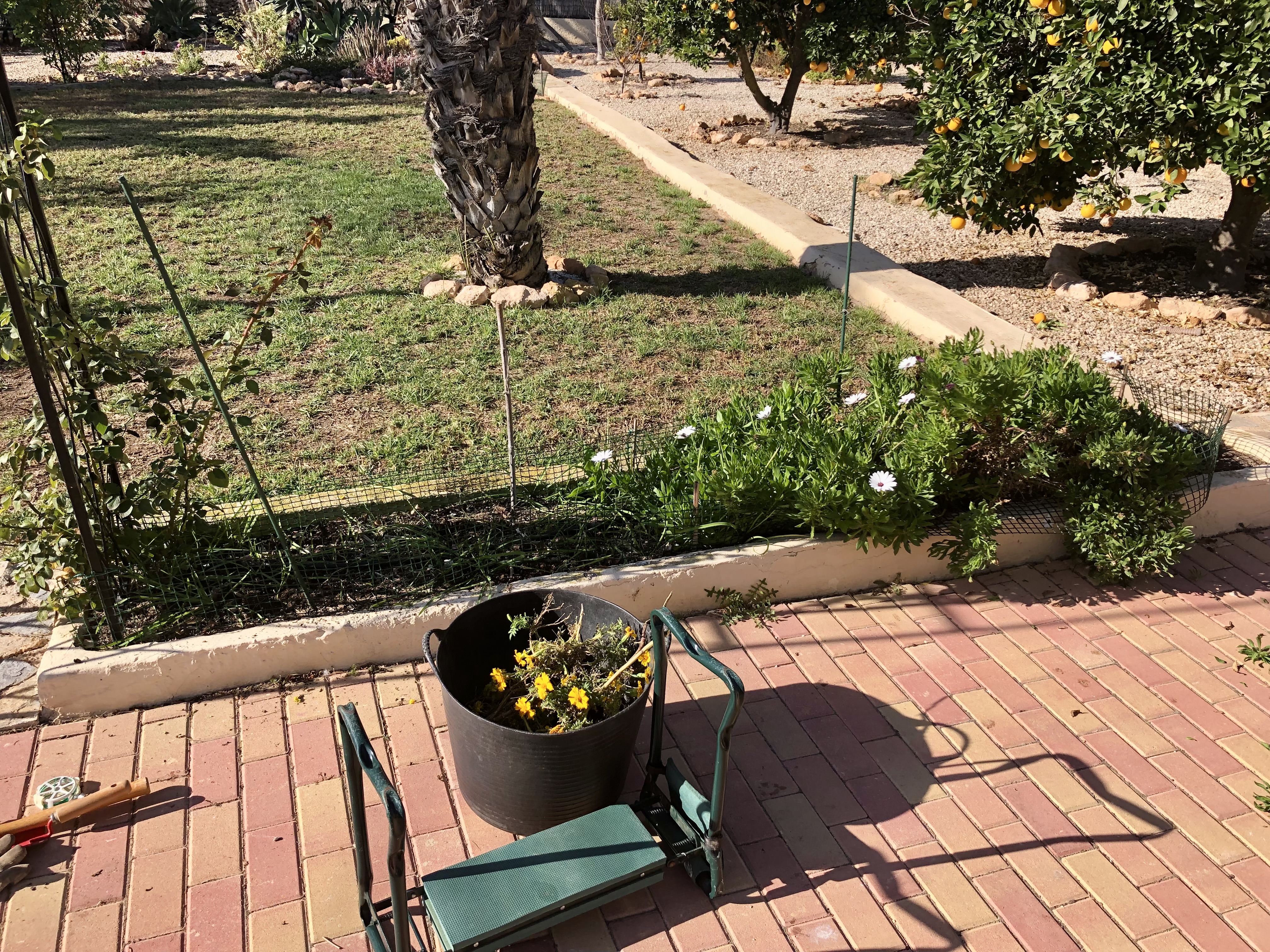
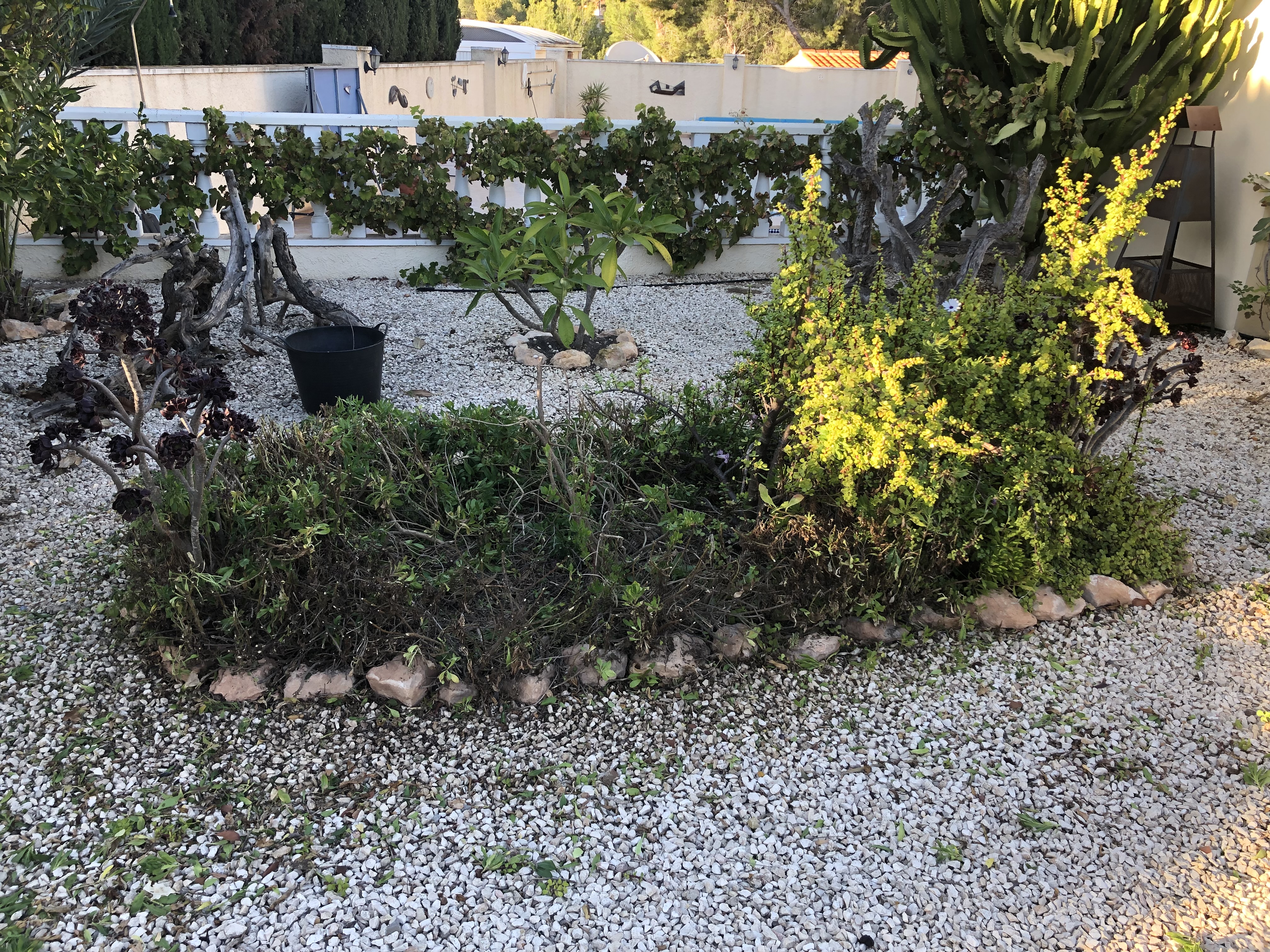
Reshaping Osteospermums. These daisy type plants are real garden troopers. They will flower all summer and then put up with the harshest of cutbacks at the end of the season. I generally cut back to new leaf growth at about between 3 to 5 inches using secateurs. But where I have massed plants I quite happily get my garden hedge trimmer out and go at them with a will. The photos below show my overgrown Osteospermums before and after their drastic trim. Click on each photo for a larger view.

The main benefit of cutting back Osteospermums now is that they are prolific self seeders. By cutting back you are letting air and light get to the soil and this will encourage the hundreds of seeds under the plants to begin to come to life. I will begin to see tiny seedlings spring up over the next month or so. I then remove these and pot them up in seed trays ready to plant out in February. In this way I get all the benefits of the self seeding plant, but, I get to put them where I want them.

Weeding around emerging bulbs. Another important reason for clearing your flower beds is that if you have lots of bulbs then you might begin to see the early flowerers beginning to emerge. If you are not a knowledgeable gardener (and I don’t mean you of course), then there is always a danger of cutting off new bulb growth in the mistaken belief they are weeds. To stop this happening you need to get back to old fashioned gardening, get on your knees and hand weed.

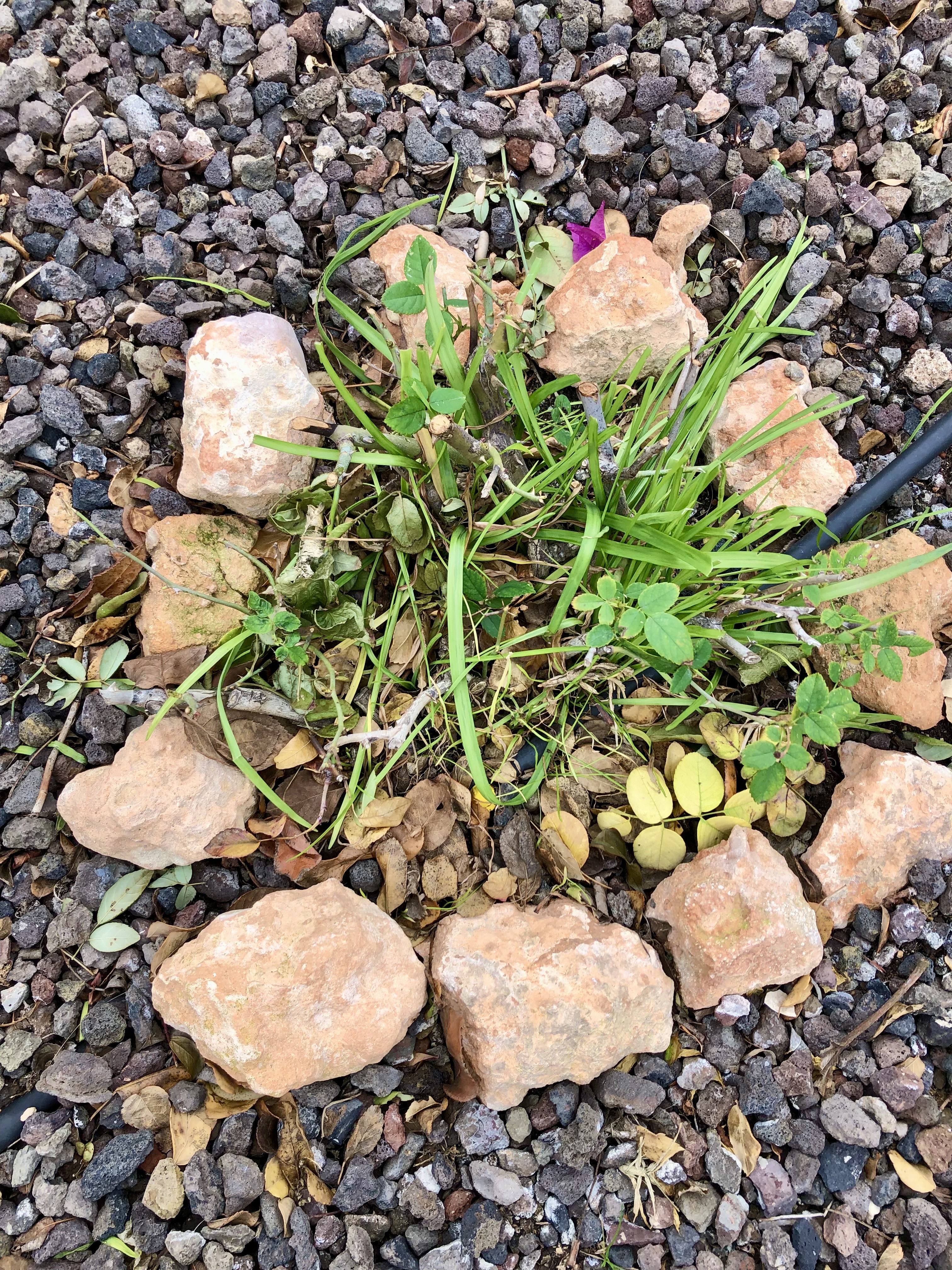
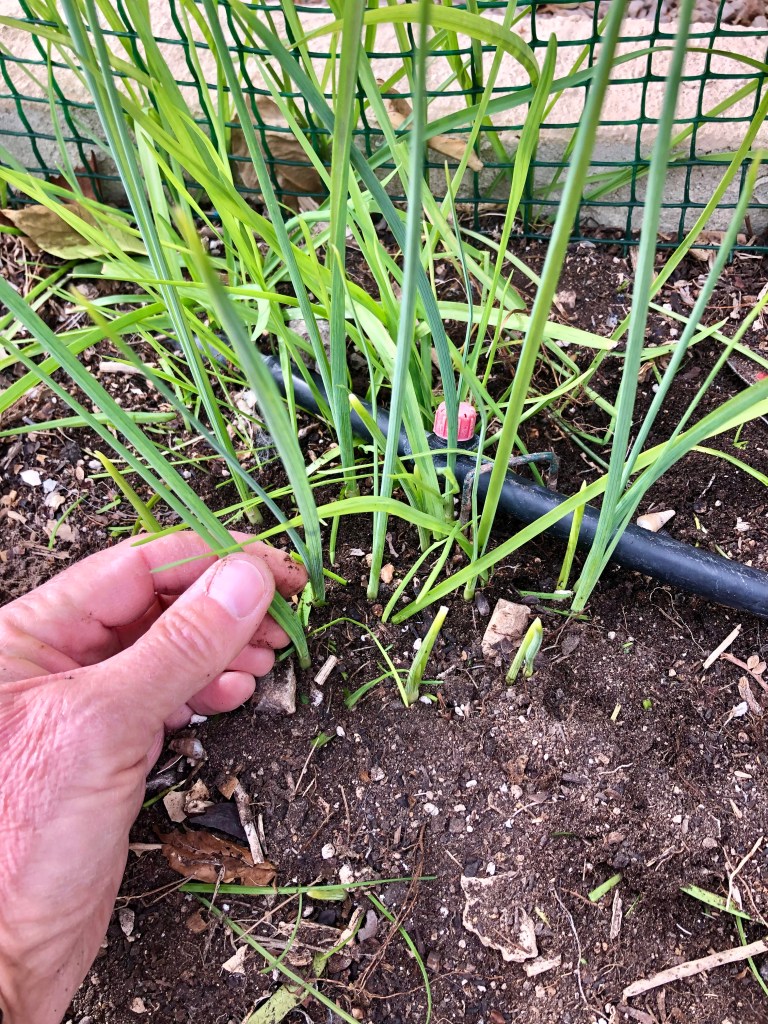
New bulbs will often emerge surrounded by grass and other weeds. To differentiate the bulb stems from weeds you just need to take off your gardening gloves and feel the stems. Bulbs stems will be rounded, whilst grass will be in thin flat blades. If the grass is too close to the bulb stem to remove it with your trowel, then just pluck out the blade of grass. Do this weekly and it will eventually kill off the grass, or at least keep it at bay until the bulb growth can shade it out. The photos below show my poor bulbs surrounded by grass, then how to differentiate between the two, and finally the resulting weeded area. Click on each photo for a larger view.

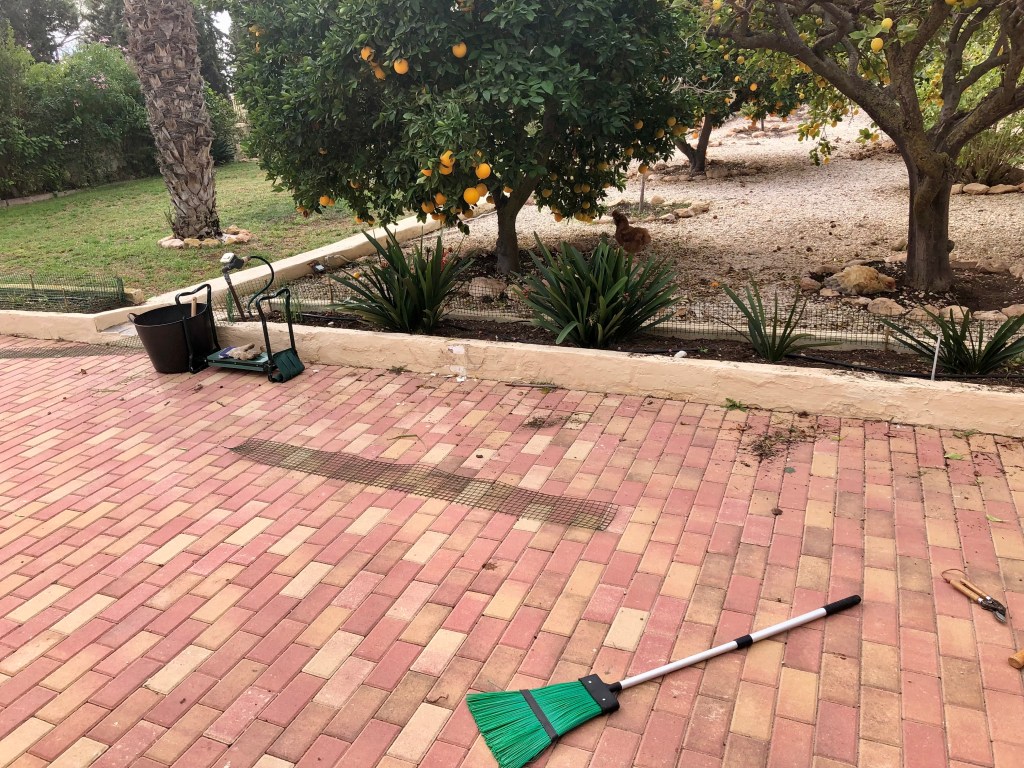
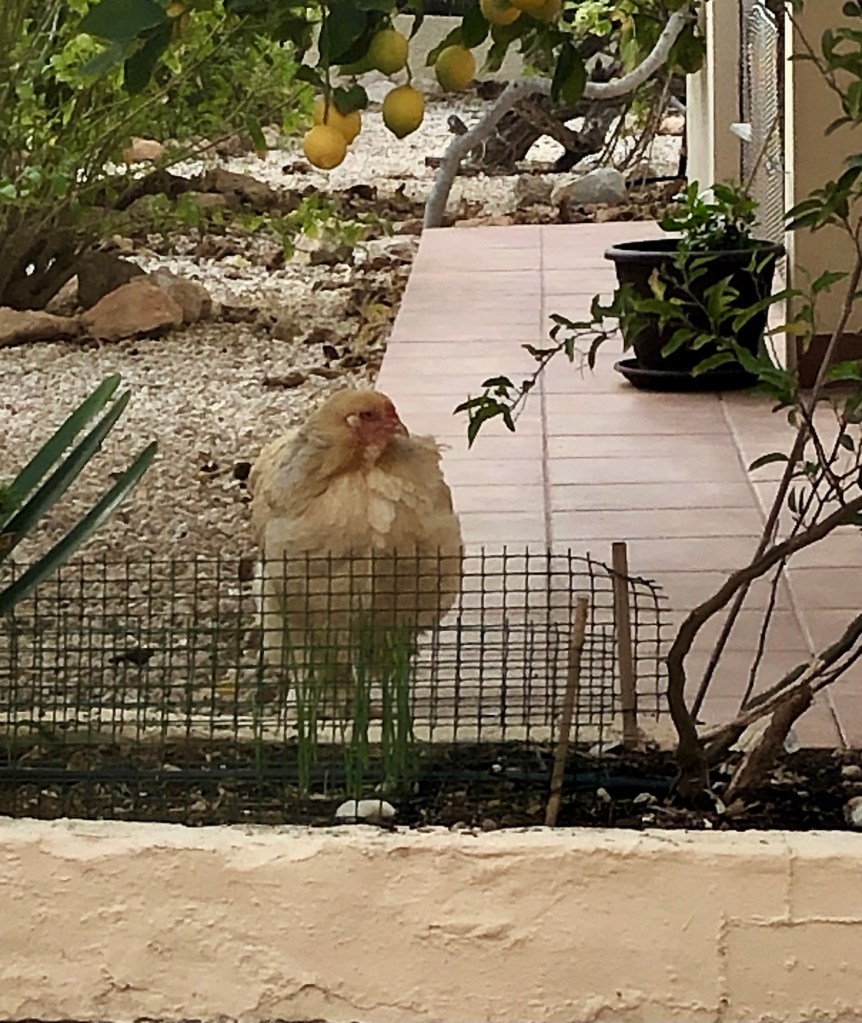
Keeping my chicken defences up. Regular readers will know that I have had to erect small mesh fences around my flower beds to stop Cruella’s (my wife) chickens from marauding through them and digging up plants. I will be honest with you it has been very stressful working on the flower beds. It is like being a dying man watched by vultures. They have hung around me, watching and waiting for any gap in my defences. The photos below show my finished flower beds and the problems I have faced. If you look carefully in the photos you can see lurking chickens. The last photo shows Big Bertha brazenly eyeing up the newly weeded flower beds. When I protested to Cruella she said “what’s the matter with you she’s only looking”. Click on each photo for a larger view.
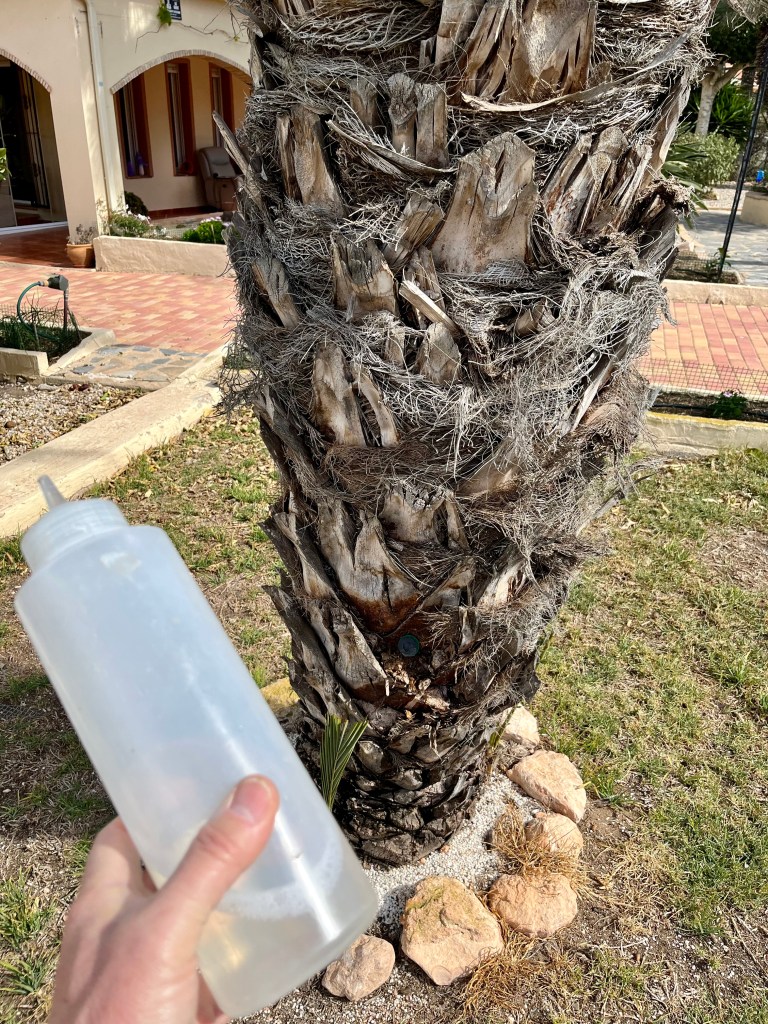
Cruella invents a chicken heroine. The whole flower bed issue was so stressful that I complained to Cruella that her chickens should be kept in their coop and not allowed the run of the garden. Cruella flew into a rage denouncing me and the Patriarchy saying that I have male privilege and that she and her girls are oppressed. She stormed off shouting that “the counter culture fight back starts here”.

Anyway, the outcome is that she has invented a chicken heroine and is writing a self help “chicken power manifesto” along with a positively reinforcing novel for her girls. The heroine in her novel is called “Clara Cluckles” who although born in a lowly chicken coop, eventually rises up against the patriarchy , becomes a super heroine and performs a series of vengeful liberating acts against male privilege using her super powers. It appears that the arch villain in the novel is an evil gardener called ““Malevelo”. When I complained to Cruella. That this was demonising gardeners and smacked of cultural appropriation, she called me a privileged Prat and swore at me in chickenese (at least I think she did).

Since Cruella issued her Chicken Manifesto things have moved very fast. She has made herself a Clara Cluckles costume so that her girls can visualise the struggle. She has written to Disney floating the idea of a film to be called “The Eggventures of Clara Cluckles”. She has also suggested a Theme Park ride to be the main attraction in “Cluckles World”. She is making all her girls Clara costumes for Christmas and reads them the Eggventures of Clara Cluckles every night before bed. Unfortunately you won’t be able to buy it in the shops yet as the first edition is only in Chickenese. The photos below show Cruella in her Clara costume and the chickens lining up for their evening story. Click on each photo for a larger view.

It’s time for winter projects. Cruella gets a cockerel and the chickens get sex lessons

It is that time of year again when you are clearing out the last of the summer flowerers, but is not yet time for the big winter cutback. Gardeners often complain to me that they have little to do during this period, but I scoff at their ennui and lament their lack of enterprise; on the contrary this is the time for enterprise, imagination and gardening brio. Yes, it is time to look around your garden and start working on your winter projects.

No matter how good your garden is, and how well planned, there is always room for improvement. This is especially the case in Spain. Too many gardens are covered in acres of unrelenting gravel and paving, to the extent that they look more like car parks than gardens, what Americans would term “a yard”, no offence to my USA readers. When I ask people why they have gardens like this they always come up with the same two reasons: 1. it was like this when I bought the house. 2. It makes it easy for upkeep. Now if you are happy with that fine, but if not now is the time to take action.

The starting point for winter projects is to stroll around your garden with a critical eye and ask yourself what can I do to change, improve and alter my garden so that it will bring me more joy and be pleasing to the eye. To assist you in your endeavours I have included in this post some ideas from my own garden and ongoing projects.

Unfortunately this blog cannot just be about gardening as Cruella and her chickens are intent on inflicting more damage to my garden and my psyche. But, more about that later, let’s get on with the joy of winter projects.

6th November 2023. Things I have been doing lately:

  • redesigning my little water feature
  • constructing planting islands in gravel
  • cloud pruning and making trees interesting
  • chicken sex lessons

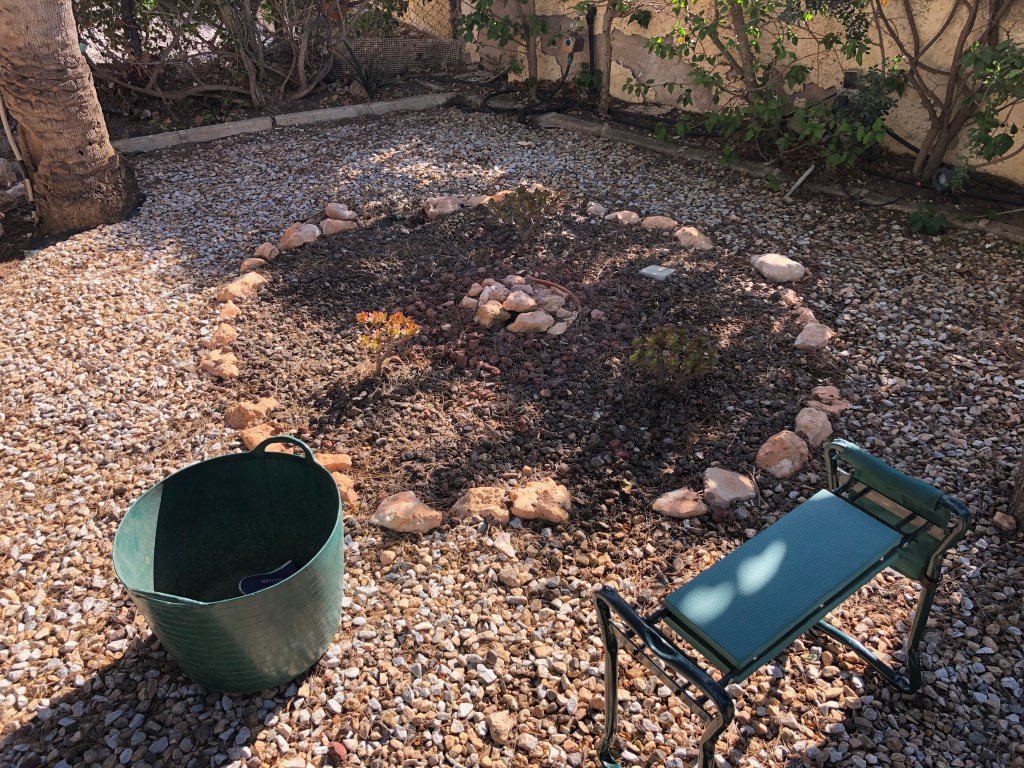
    Redesigning my little water feature. A number of years ago I designed and built a little water feature that would burble away whilst I swung backwards and forwards in my adjacent hammock slung between two palm trees. It also served to alleviate the sameness of gravel, by introducing planting and different colour gravel. Unfortunately, this was BC3 (before chickens). Since then my hammock has been removed a fenced area installed and a chicken coop erected in my previous paradise. This has meant that my little water feature has been neglected, and anyway the previous lavender plants never worked out. The photo below shows the state of neglect.
I know it looks pathetic but the lavender never quite took and pine needles kept getting stuck between the plants.

There were a number of stages in reviving this area. First, I had to take out and bin all the existing plants. Then I decided to rework the water feature element to make it simpler and more pleasing to the eye. I then had to decide on the type of planting I wanted around the water feature. I was looking for long stems that would not trap the pine needles and a no nonsense plant that would add interest without being needy.

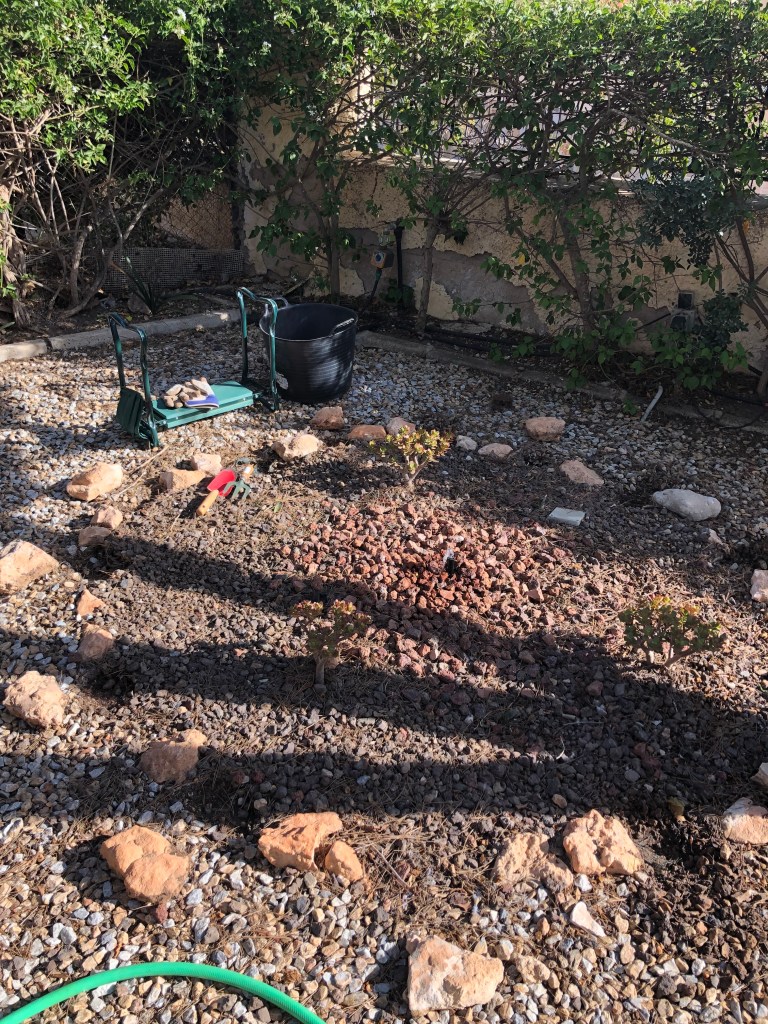
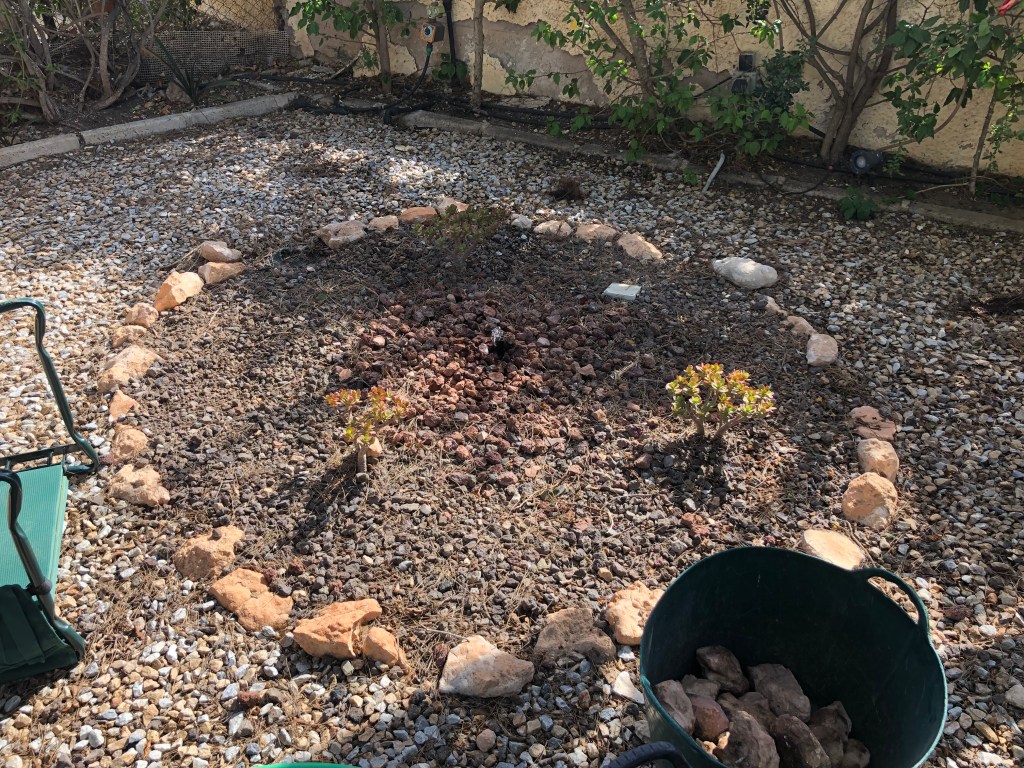
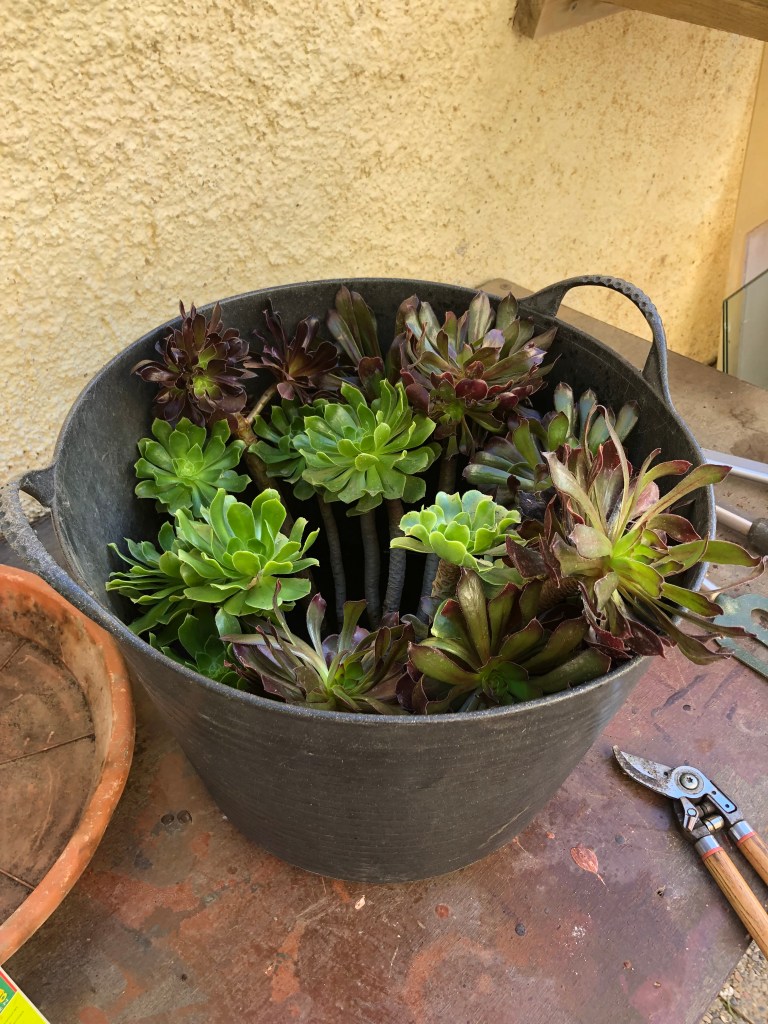
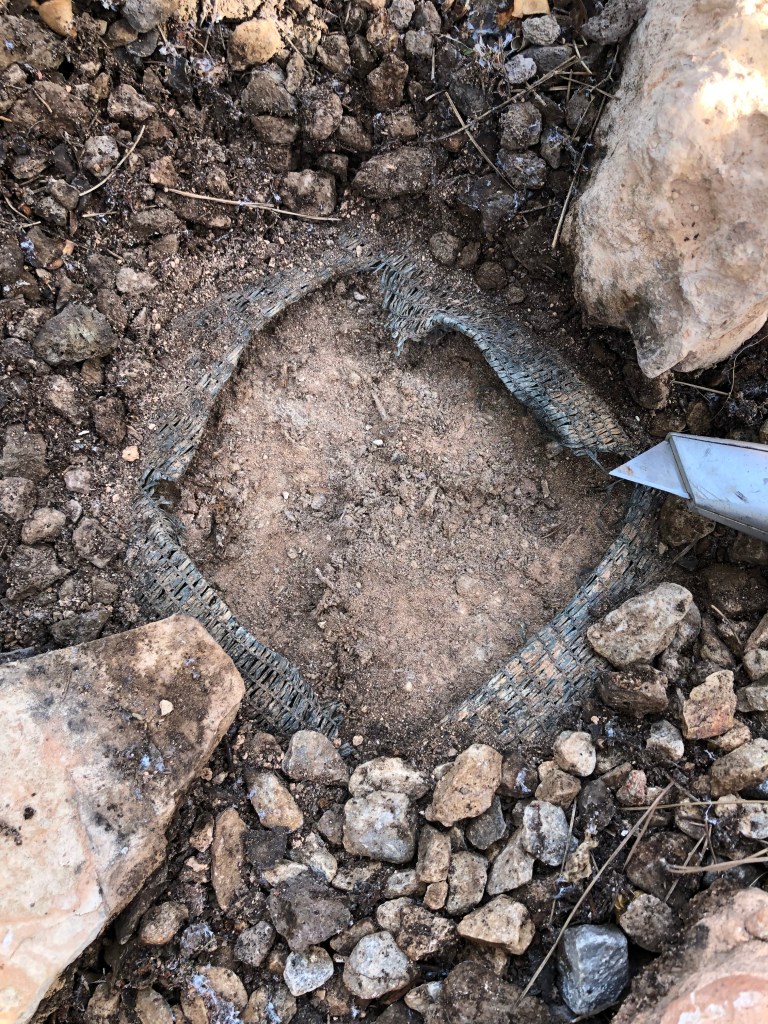
Looking around my garden it had to be Aeonium of which I had plenty from which to take cuttings. The next stage was to cut through the existing membrane to plant, but only after dipping in hormone rooting liquid to give them a better chance of rooting. Finally I planted alternative Aeonium Schwartzkopf (black head) and Verdi the (green head) to give interest. The photos below show the various stages, I will let you know how it develops in future posts. Click on each photo for a larger view.

I think this will look lovely when mature.

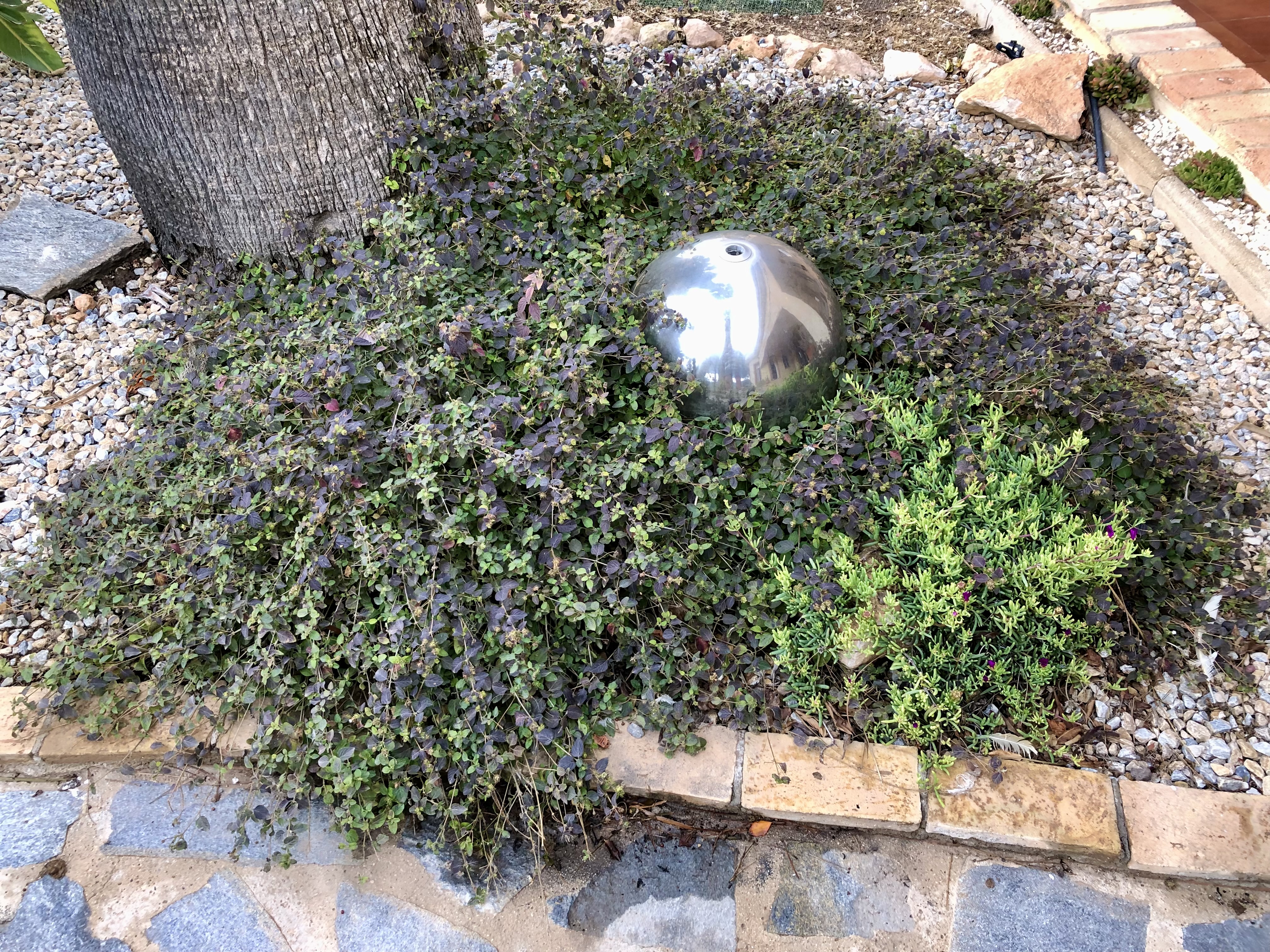
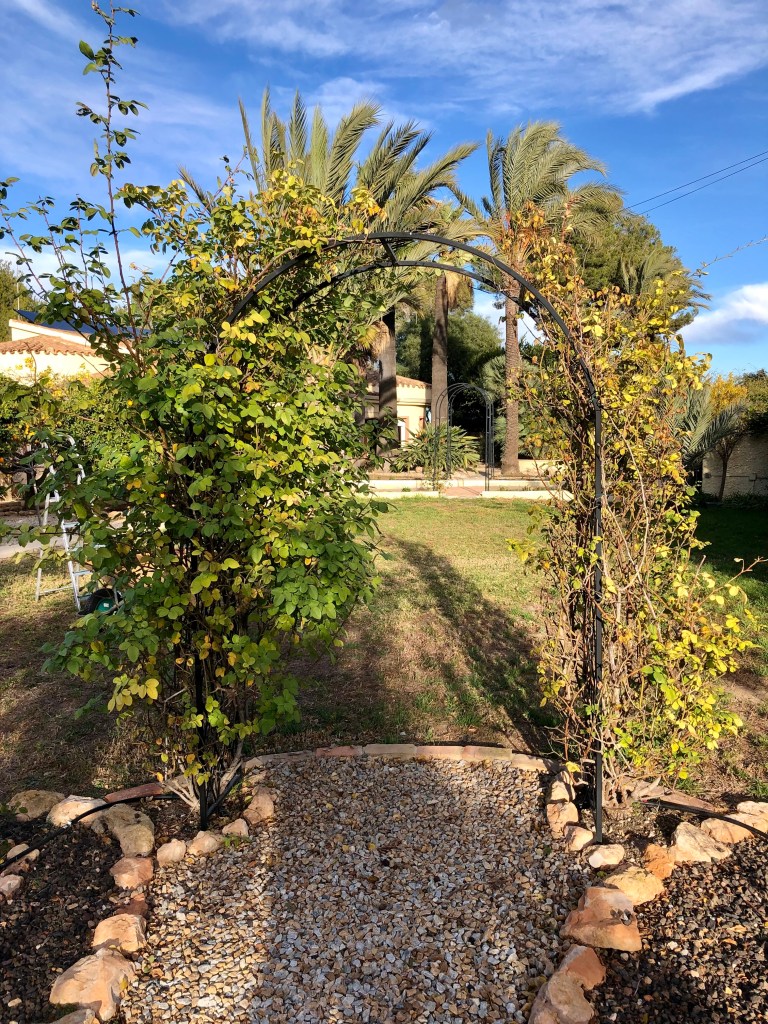
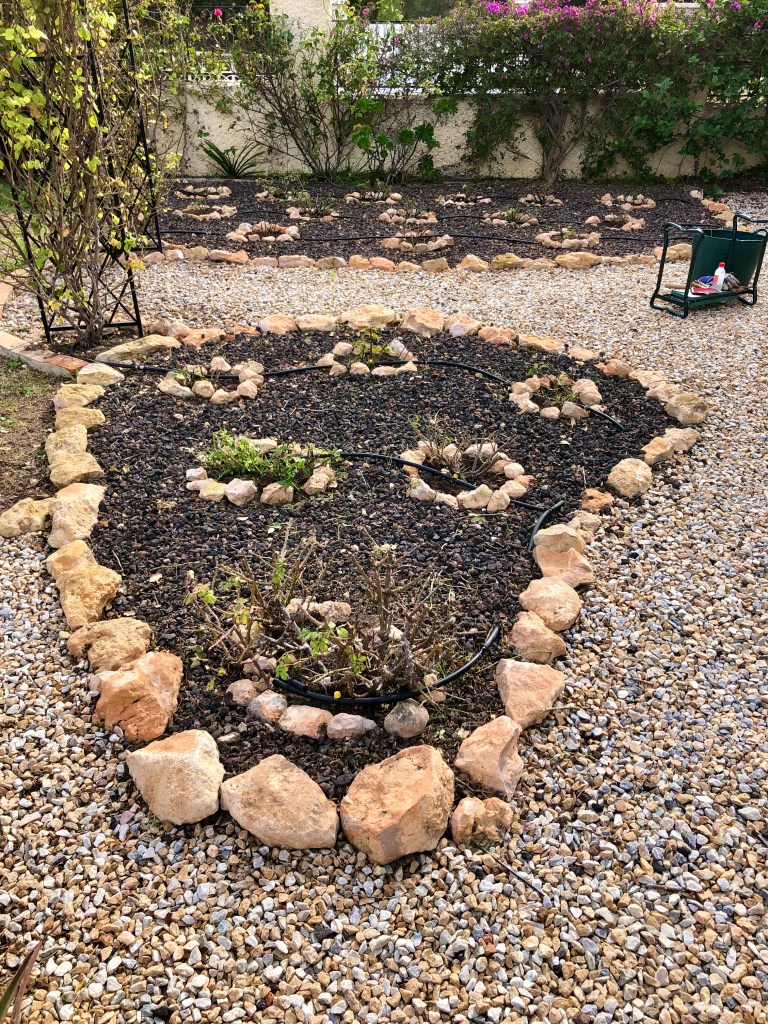
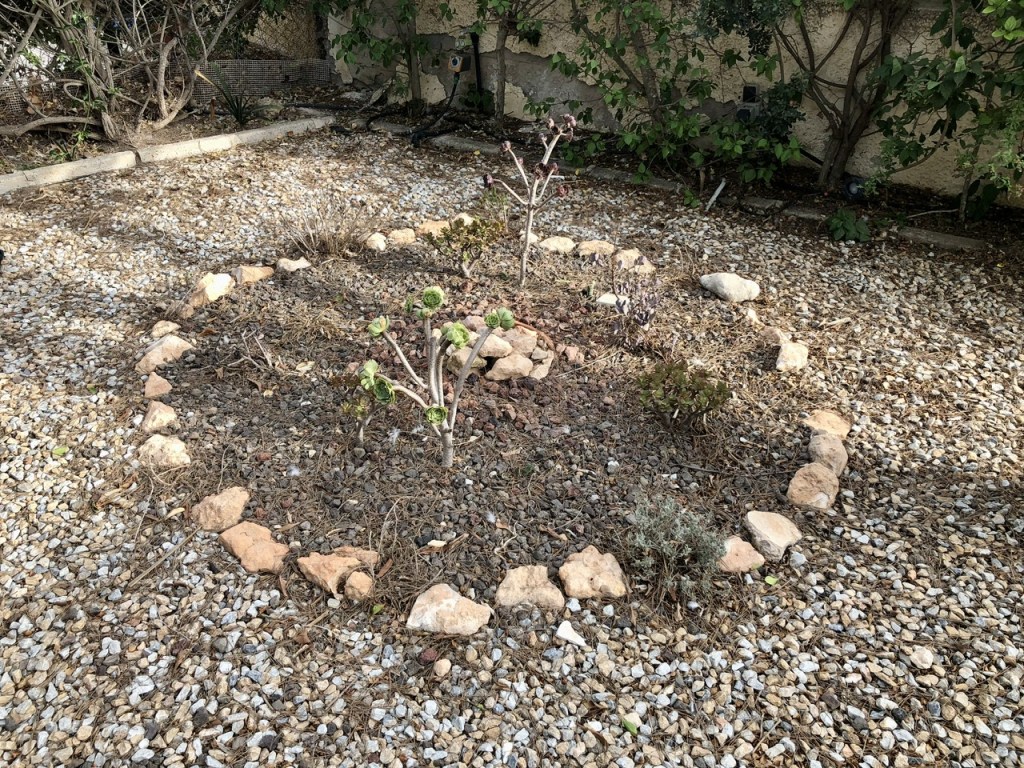
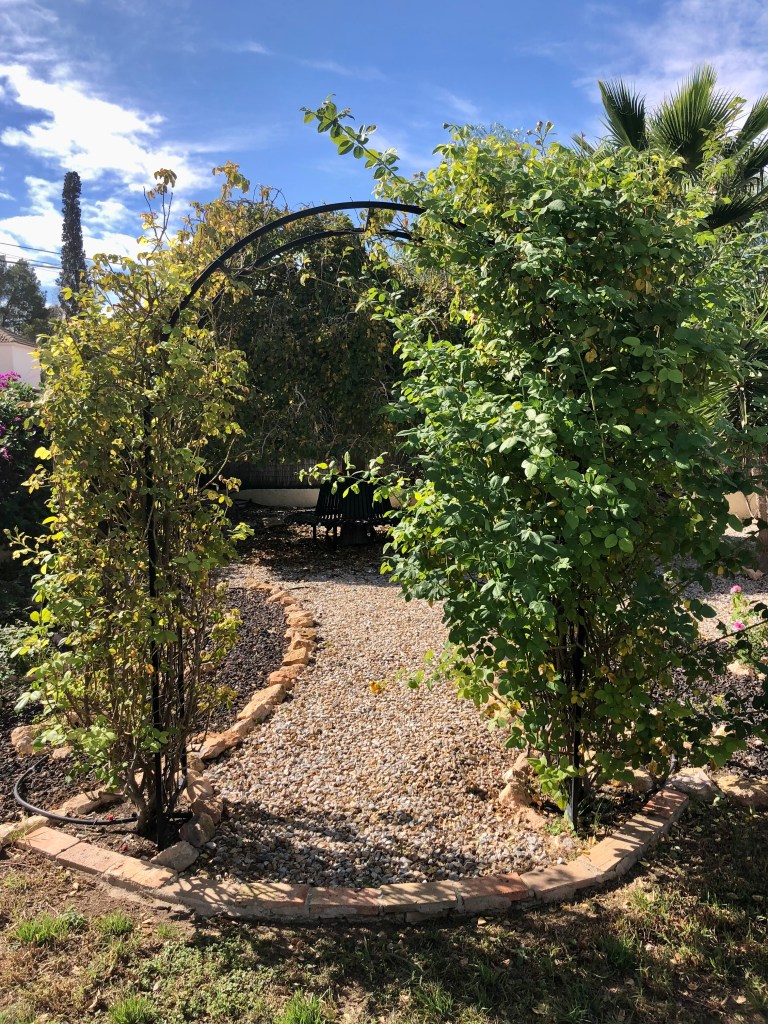
Constructing planting islands in gravel. By introducing some plants and different types/colours of gravel you can begin to alleviate the sameness of acres of gravel and paving. I have followed this strategy over a number of years in areas where grass or similar is unsustainable. The photos below, which are all taken from my garden, show how a bit of island planting can enliven gravelled areas.

The photo below shows my rose beds which are planted in different coloured gravel which ensures differentiation even during winter. Click on each photo for a larger view.

The examples below show other areas of island planting that bring greenery into gravelled areas. Don’t be afraid to follow the same strategy in paved areas. You just need to lift a few paving slabs in strategic areas and you will alter the whole feel of your garden. If you are worried or don’t have the skills just get a builder in and it will take about half an hour. The final photo shows my larger water feature which fulfills the same function of being a focal point in an area of the garden. Click on each photo for a larger view.

From all of the above you can see how little projects done over a longer period of time can begin to bring life to gravelled areas.

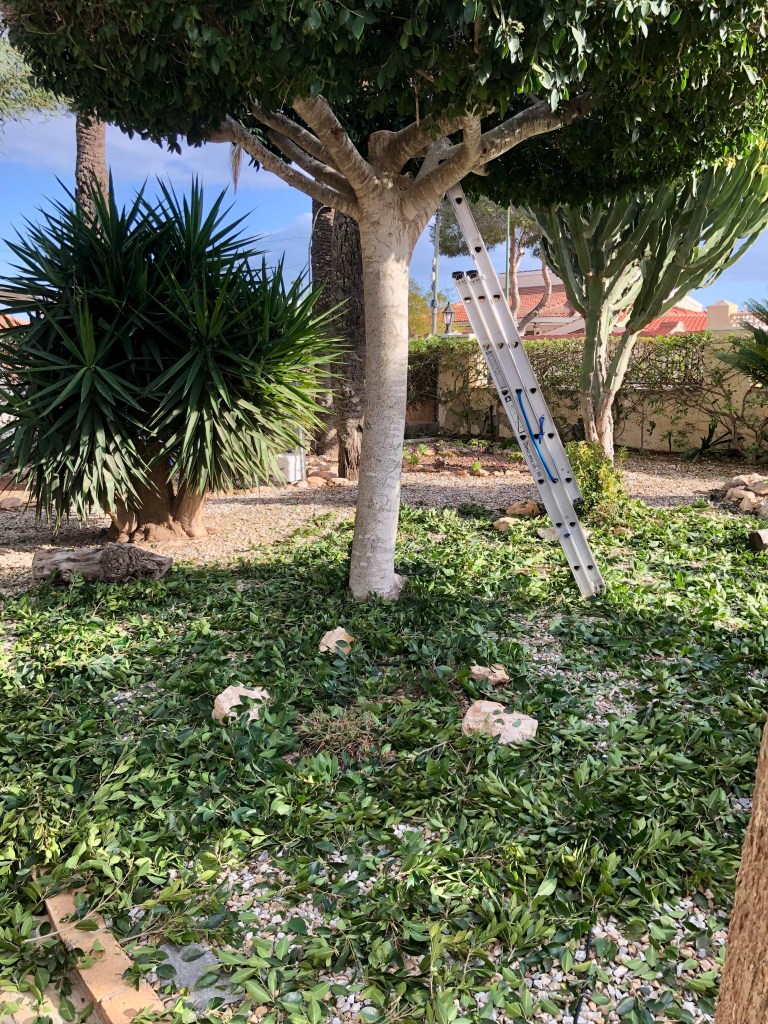
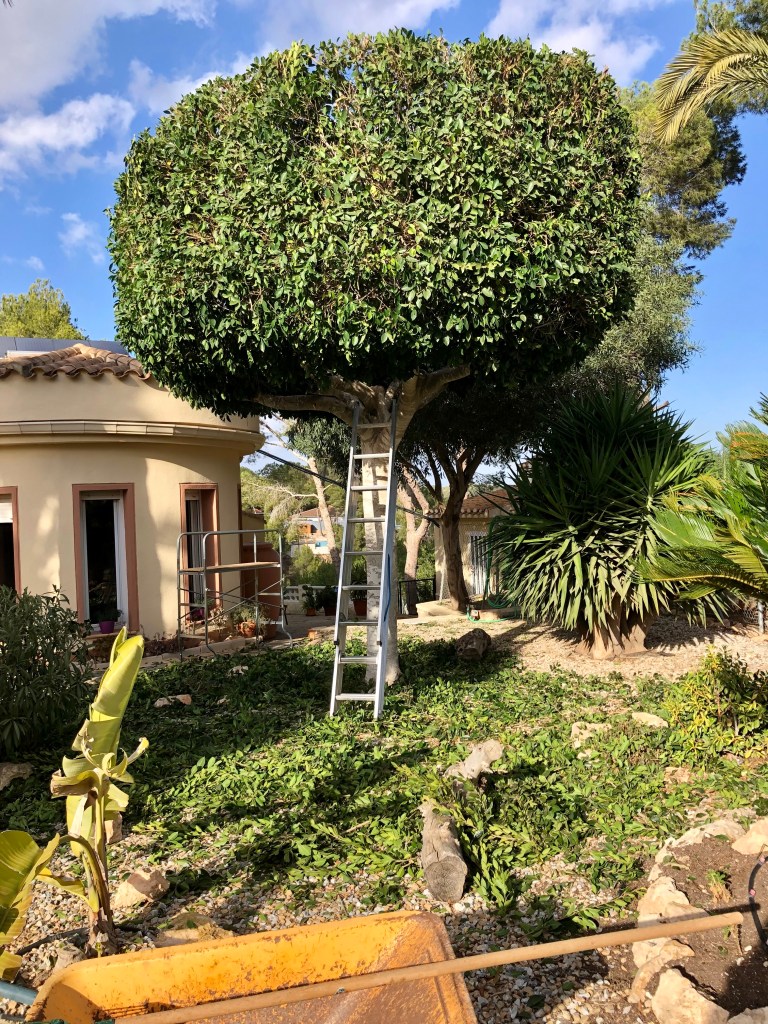
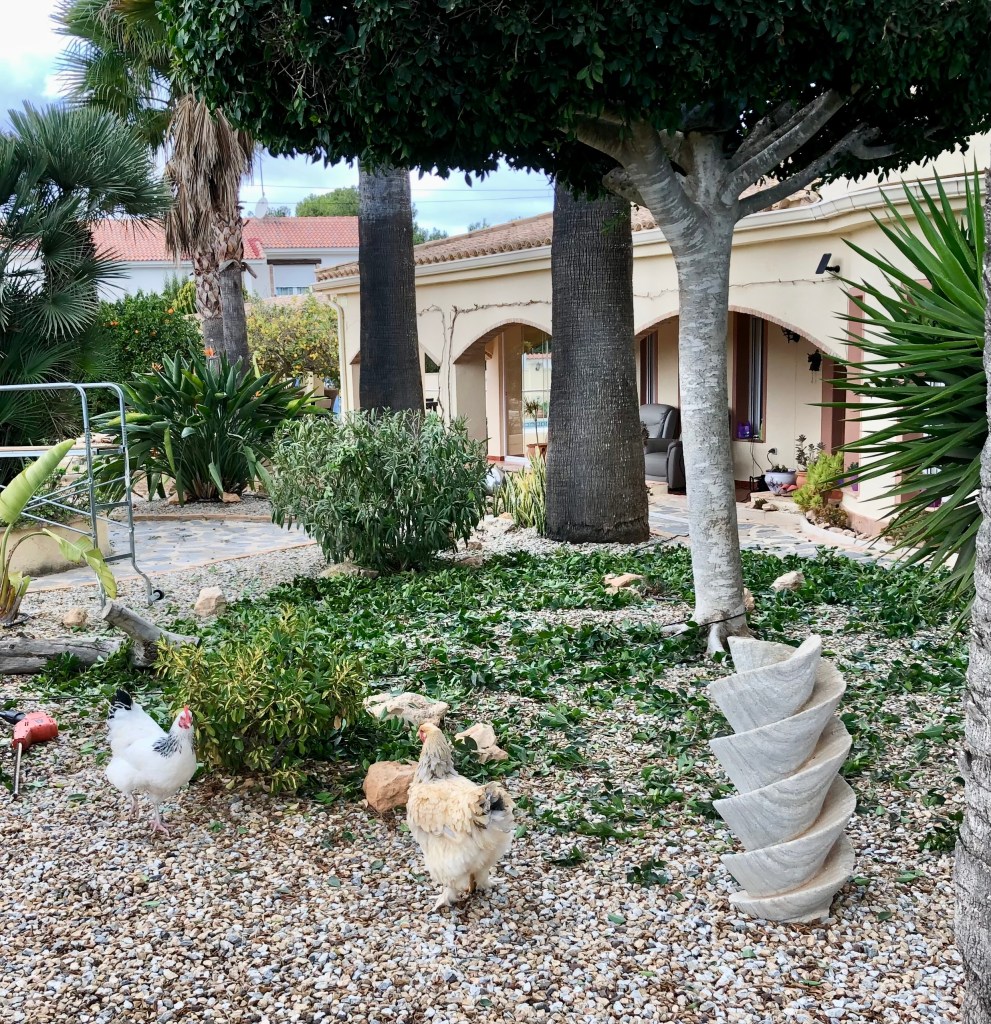
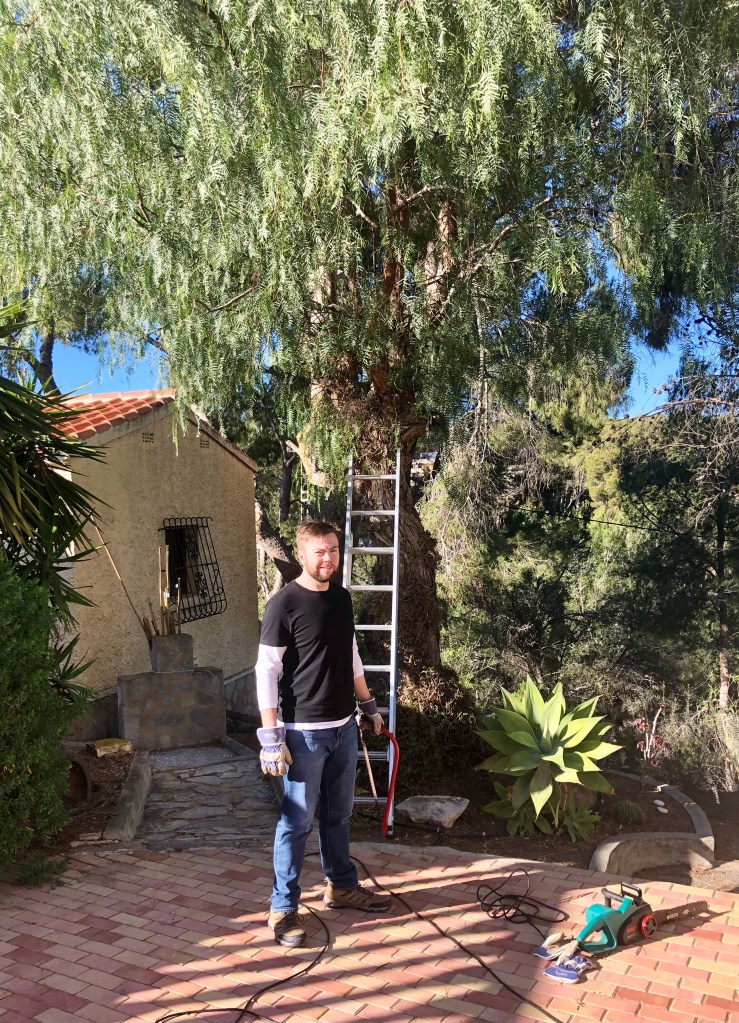
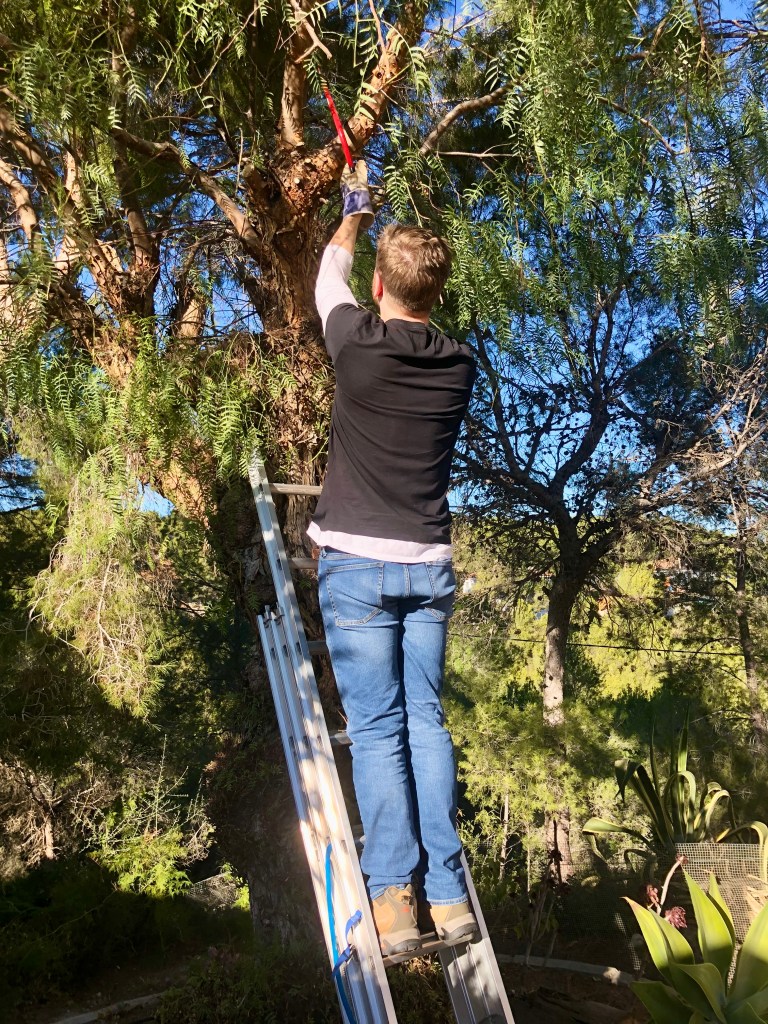
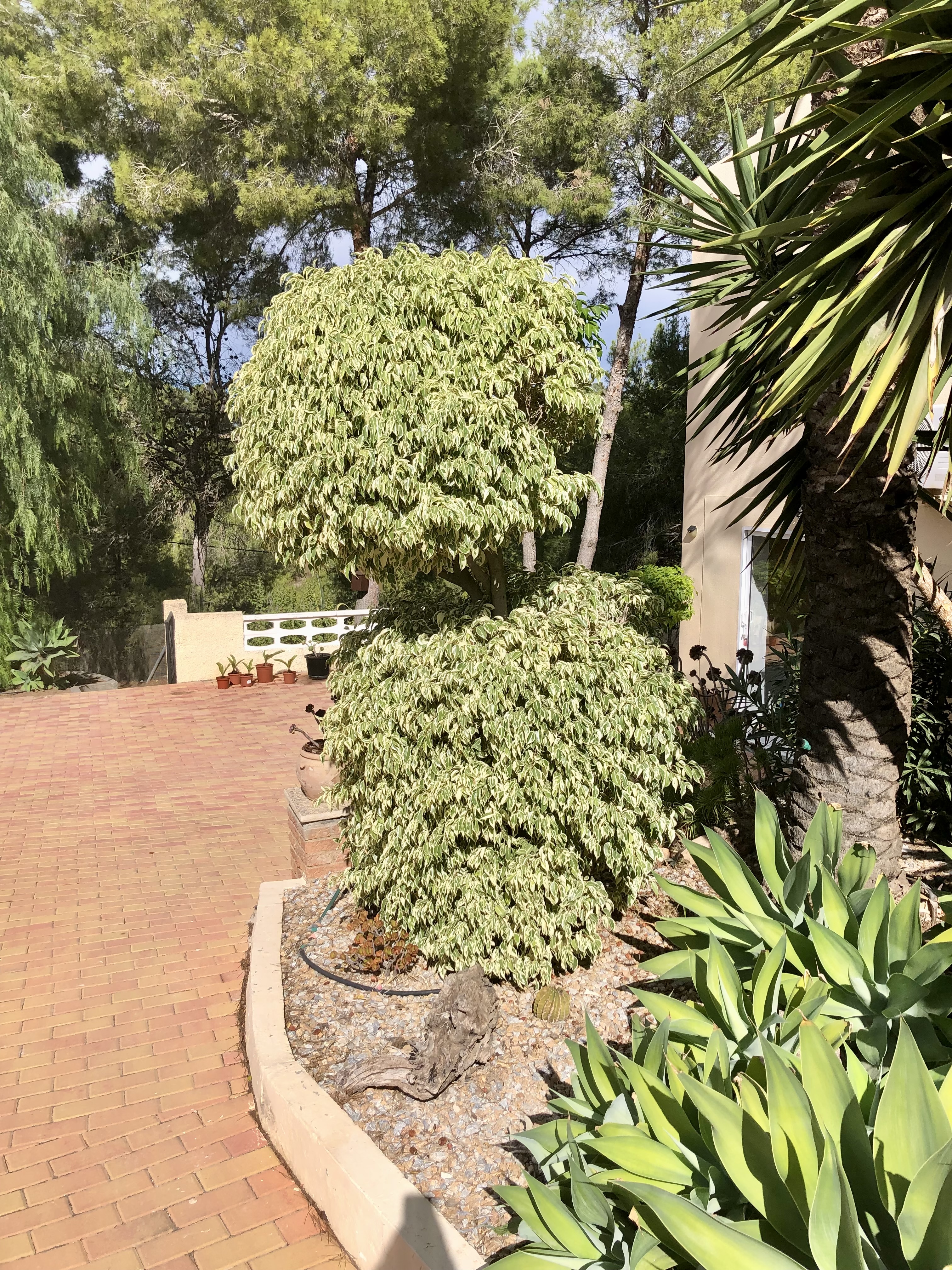
Cloud pruning and making trees interesting. Trees like gravelled areas, are aspects of Spanish gardens that are often left as uninteresting lumps punctuating uninteresting gardens. But you don’t have to settle for this. Just because you inherited this behemoth of a tree, or, you just let it get out of control doesn’t mean you have to leave it like that. Cloud pruning and shaping your trees will bring amazing levels of interest to your garden. If you are worried about getting up a ladder then just call in the professionals and tell them your ideas.

The photos below show some examples of my various trees that I have shaped or cloud pruned to bring interest. Click on each photo for a larger view.

Chicken sex lessons.This section of the post could easily degenerate into smuttiness, so it will require everyone to be adult. It all started when Cruella said she thought her girls were growing up and they might have unmet needs. When I asked her what she meant she said she needed a “Cock”!. Putting aside the double entendres that the less educated of you may have reached for, she explained that her girls where no longer girls and where young woman with normal urges.

Anyway, it turns out that she was going to start a programme of sex lessons for her girls to gradually introduce them to the facts of life. Aware of her girls sheltered upbringing, she pointed out that they had never seen a male apart from me and Tango the lonely blind Labrador, he is neutered, and she has often expressed the wish that I was. She said she was going to start gradually and purchased a painting of a Cock – stop it! Using the painting of the Cock she has been holding a series of closed women only sessions in the Chicken coop where she is explaining the “facts of life” in chickenese to her girls. The photo of the Cock is shown below.

I have crept up and listened in a number of times, but obviously I don’t speak chickenese, but the clucks, pucks and shrieks, speak volumes. At the end of the 6th session which covered foreplay and the actual mating, a vote was taken. It turns out they have all voted against the Cockerel and have decided to remain “old maids”. Cruella is overjoyed and says it’s for the best as she feels that as well brought up young ladies her girls should not be sullied by brute male company. However, I have noticed her browsing “adopt a chick” on the internet. The photo below shows the end of the 6th session when all the chickens turned away in horror.

You can’t see the little brown chicken as it is hiding in the coop with its wings over its ears.

I continue the Autumn tidy up and the chickens get a shoe fetish

Cruella (my wife) has been away visiting our idiot son which means I have been able to get on with all the autumnal jobs I need to do in the garden. But it hasn’t been easy, the chickens follow me everywhere and just stand there staring at me. To make matters worse they have developed a shoe fetish and I think they need counselling. Anyway more of this later, on with the gardening:

24th October 2023. Things I have been doing lately.

  • repairing the lawn
  • dealing with the end of the soft fruit season
  • repotting plants
  • tying up Canna and relentlessly deadheading
  • dealing with the chicken shoe fetish

Repairing the lawn. I know that most of you do not have lawns, as only an idiot would have a lawn in Spain – I have to hide from Cruella every time the water bill arrives. Anyway if you have a lawn now is the time to repair it. The heat of the summer has gone, but it is still warm and there is the odd chance of rain to encourage your new seeds.

Begin by getting everything together that you will need to successfully complete your lawn repairs. The photo below shows everything you will need all loaded into my wheelbarrow. This includes:

  • sifted compost mixed with soil
  • good quality grass seed
  • garden protective fleece and ground staples
  • antpowder

Once you have assembled everything, then you need to cut the lawn quite short and rake over the patches you are going to repair. Once you are happy that you have raked sufficiently to bring the soil to the surface, spread your new mixture of soil and compost in heaps over the repair area. Next you will need to evenly rake your soil over the proposed repair area and roll it to ensure it engages with the surface of the lawn. Once you have rollered you should gently rake the new patch with a garden tined rake. Next sow your new seed by sprinkling left to right and then up and down to give you a nice even spread. Finish the sowing stage by rollering once more to ensure the seed has good contact with the soil and is slightly embedded.

That is it, you are finished; just make sure you never let the seed dry out. And if you left it there, then tomorrow when you come out to inspect your work there would be absolutely no grass seed left – not even a tiny bit. And that is because the birds and the ants are both stocking up for winter and your lovely expensive grass seed is very nutritious. So you have to protect your work. First by covering the seeded area in a garden fleece that will stop the birds, and then by sprinkling ant powder in a continuous line all around the fleece edge – leave one little gap and the ants will be in. The photos below show the whole process in action.

Dealing with the end of the soft fruit season. We are nearly at the end of the soft fruit season and we are about to enter the citrus season. And there are a few final things you need to be doing. Firstly keep picking fruit on a daily basis. Where fruiting has finished then it is time to remove your nets. My advice is not to try and save your nets for next year, you will cause more damage to your plants. Instead just get a pair of scissors and cut your old nets off. Finally, if you have espalier plants then you need to tie them in to ensure the correct growth. The first two photos below show my daily fruit pick. The next photos show my net removal technique and espalier tying in.

Repotting plants. Most of your pot plants should be almost dormant by now, so if necessary, this is the best time to repot those of them that have outgrown their pot. The first thing to do is to select a pot that is just one size up from the existing pot. If you go for a much bigger pot then there is a danger of a virus infecting the empty soil that has yet to be filled by roots. Place your plant into the new pot whilst it is still in its existing pot. Then fill around the old pot, ensuring you tamp the new compost firmly around the old pot. Wiggle the old pot around and then remove, leaving a pot shaped space in the compost for the plant to be replanted into. The photos below show this first stage.

You now need to remove your plant from the old pot. If it is a plastic pot, then you can normally remove the plant safely without damage. However, if it is a terracotta or clay pot, then it is better to give up on the pot and just smash it as this will cause less damage to the roots. The photos below show the journey from old smashed pot to nice new home.

Tying up Canna and relentlessly deadheading. Most flowering plants will have finished by now, though I have to say my Marigolds have been flowering unstoppably since March and are still going strong. The secret to my long flowering Marigolds is daily deadheading, ruthless removal of spent plants and propping up those left. The photos below show the valiant veterans gallantly flowering on into November.

Most bulb based plants can have all their top growth cutback now. However, the big exception is Cannas. Do not cut Cannas back yet, instead tie them up and leave their top growth to die back ungracefully. it doesn’t matter if your plants end up looking like a gang of drunks on a night out. By leaving the top growth to die back all of the goodness will be passed back down into their rhizomes, thereby ensuring powerful growth next Spring. The photo below shows my Cannas dying disgracefully.

Dealing with the chicken shoe fetish. It all started the very day Cruella flew off. I remember it well because she hit the top of the Mulberry tree on take off. No sooner had she vanished over the roof tops than the chickens started following me around. They didn’t actually do anything, they just followed me staring all the time, it was quite intimidating.

I phoned Cruella that night and told her about the problems with the chickens, she instantly said “what did you do to them” she then asked me to put them on the phone. I gave the phone to Big Bertha -their leader – and she squawked away in Chickenese to Cruella. When Cruella came back on the phone she said that her girls were suffering from separation anxiety and needed to be kept calm. She went on to say that she would arrange counselling when she got back!

Anyway when it came to putting them in their coop at night I found them all crowded around the shoes that Cruella wears when she goes out to their coop. I tried to shoo – no pun attended- them into their coop but they refused to move. In the end I had to carry one of Cruella’s shoes and place it in their coop. They all followed me clucking and eventually went up. Things are a lot better now as Cruella has sent me recordings of her singing all their favourite songs in Chickenese. I play these at night and during feeding times. So far it’s working; their favourites are “the ugly duckling” and “the chicken dance”; you should see them dance around to the chicken dance. The photo below shows the start of the shoe fetish.

Cruella kills the garden, I try and rescue it, and the chickens are on the Hollywood Diet

I’ve been away, not for long, but long enough for Cruella (my wife) to try and destroy the garden. Despite the fact that I leave copious instruction notes she still manages to kill things. On top of all that her bloody chickens are now on the worlds most expensive diet. I think it is all becoming too much for me, I may abandon the garden and take up stamp collecting. On with the gardening; for now, including:

  • Repairing the garden
  • Dealing with plant disease before winter
  • Reshaping my olive tree
  • Dealing with fruit issues
  • Coping with Prima Donna chickens

6th October 2023. Things I have been doing lately:

Repairing the garden. When I left for my short absence the garden was in superb condition. However, upon my return there was neglect and decay everywhere. I honestly thought of calling up the RHS helpline to report Cruella and hopefully get her a lifetime ban from ever owning a garden.

One of the main problems was the lawn. Cruella had allowed it to grow feral as she claimed that her girls prefer long grass. The photos below show the lawn before and after I cut it all back.

Perhaps the worst item of neglect was the death of my poor little advocado cutting. I had been growing this on for two years from a stone, and I was thinking of planting it in the ground in the autumn. The photo below shows what is left of it.

Dealing with plant disease before winter. Now is the time to go round and inspect all of your perennial plants before winter. This is an important process before the plants go into hibernation for the winter season. Any disease that your plant is harbouring will go on causing harm when the plant is in hibernation, and in many cases can be fatal. My inspection found me two typical cases that needed dealing with.

The first involved a lovely Dipladenia that had been happily growing up a trellis for a couple of years. It had got itself a severe case of Mealy Bug, which with its sticky honeydew droppings had caused considerable leaf drop. I had sprayed a couple of times to no avail, so now it was time to take drastic action and cut back. Don’t be afraid to cutback plants to near the ground to get rid of pests. In most cases this will invigorate your plant and give it a fresh start. The photos below show the Dipladenia in its diseased state and then with its new start in life.

My second disease problem was on a lovely Jasmine which grows up the corner of my house on wires. This stalwart reliable plant got itself a bad case of mildew. Now Jasmine normally die back and look a bit dead this time of year, but in this case the leaves were not dry and crisp, instead they were powdery and limp. This was obviously caused by the high humidity this year, and can normally be cured by spraying, but it was too far gone and too late in the year, so it had to be drastically pruned. If you have to do this don’t worry, Jasmine doesn’t mind being taken back to the ground every few years. The photos below show the Jasmine before and after.

Reshaping my olive tree. Once you have cloud pruned olive trees into the shape you want them, then you need to trim them up about three times a year to keep them sharp. The photos below show my olive tree before and after it’s smartening up.

Dealing with fruit issues. This year has been fantastic for fruit, and there is still a bumper crop of oranges and lemons to come. However, in the meantime keep picking and processing fruit on a daily basis. I still have lots of figs and persimmons galore, with pomegranates yet to come. The first photo below shows my daily haul of figs, the second shows my little persimmon tree with its final fruits and lastly my pomegranates waiting to be harvested. Remember, if possible leave your pomegranates till they go red. Don’t worry if they split a bit, as these are one of the few fruits you can still eat after splitting because of their compartmentalisation.

Sadly, I have to report the only fruit I have had a problem with this year is my little white peach tree. I have grown this from a cutting and this would have been it’s first year fruiting. There was an abundance of fruit on the tree and I was looking forward to a bumper harvest. But unfortunately the heavy rain last month caused the fruit to swell and split its skin. The first photo below shows my little tree bursting with fruit, but as you can see in the second photo, all of it split. Oh well that is gardening, there is always next year; God willing.

Coping with Prima Donna chickens. While I was away Cruella (my wife) has become even more indulgent with her chickens. When I returned she explained that her girls were now on a new expensive diet which she said had been recommended by a Hollywood Chicken influencer (I didn’t know there was such a thing). This diet consists of individually roasted insects which come in very expensive little packets. When I queried why I still only got porridge and Tango the lonely blind Labrador is still fed Chappie, she accused me of trying to give her girls food issues.

The new food was only the start, she then confessed that the chickens have been having exercise classes with a personal trainer. She explained it was called Tai Chicken and was a variant of Tai Chi specially for chickens (I didn’t know there was such a thing). When I said that sounded like Thai Chicken she burst into tears. Anyway, the end result is I have no money left and the chickens are strutting around in designer leggings feeding on designer chicken insect caviar. The photo below shows the chickens and their insect buffet; if you look closely you can see their leggings.

I delve into the border lands and Tango gets picked in an identity parade

I hate to tell you this but summer is coming to an end and there is lots you need to do now to get the garden ready for next year. But, even though there is lots to do don’t forget to enjoy the garden through the late summer phase. Just to give you an overview, this post covers the following:

  • thinning out your borders and beds
  • collecting seeds for next year
  • picking fruit
  • Taking care of your roses
  • Kerry’s olive tree is shaping up
  • Tango the lonely blind Labrador gets framed

9th September 2023. Things I have been doing lately:

Thinning out your borders and beds. All of your borders and beds will now be getting past their best. But if you want your plants to keep blooming till the end, then you will need to do a bit of work.

Firstly, you need to keep deadheading every day. The deadheading process stops the plant concentrating on seed production and will ensure that it keeps on flowering. There will come a point where the plant can produce no more flowers, this is usually by the time it has more than 50% dead or dying stems. When this happens, you should let the plant die gracefully but leave it in place for a few weeks to feed the insects.

Secondly, you need to thin out your dead plants after leaving them in place for a few weeks. By eventually removing dead plants you are letting more air and sun get to those remaining. In addition you are exposing the soil so that those plants you want to self seed (in my case Osteospermums) can drop their seed and eventually give you hundred of Autumn seedlings. The photo below shows a typical trug of deadheads and dead plants.

Every bit goes into the compost bin to produce next years compost

Collecting seeds for next year. If you mark up your best blooms each year and then collect their seed, you begin to build up a range of large, strong super blooming plants that are resistant to disease. The photo below shows me with some of my Marigolds that I have selectively bred over more than 10 years. Note that instead of being 10 inches high, they are over a metre and bursting with flowers.

I apologise for the selfie, I still don’t know where to look, but Cruella refused to take a photo of me with my hat on.

Collecting and storing seeds is easy, so there is no excuse for anyone not trying. I always start by harvesting those flowers that I had marked early in the summer as the best blooms that I may want seed from. The photo below shows some of the many that I marked up. You can see why I mark them when they are in bloom, because you can tell nothing from the dried seed head. The final photo below shows the range of seeds I was collecting. From left to right:

  • Dutch Marigolds
  • Ordinary Marigolds
  • Pink Trumpet Vine
  • Jasminium

The seed collecting process for Marigolds is very simple, you just have to remember to mark up the best blooms early in the summer. There are 5 simple stages shown in the photos below.

  1. select the seed head and snap off the stem
  2. gently rub off the fuzz on top of the seed head
  3. roll the seed head between your finger and thumb whilst gently squeezing
  4. let the seeds fall into your other hand whilst continuing to roll and squeeze
  5. let the seeds fall gently between your hands whilst blowing to remove chaff

The process for Trumpet vine is different. Here the seed develop in long seed cases that can be over a metre long. To access these seeds you need to gently squeeze them till they split and expose the seeds lying in rows within the seed case. I find it is best to release these seeds over a waiting envelope or they inevitably will blow away (which is exactly what they are meant to do in nature). The technique is shown below. Click on each photo for a larger view.

With Jasminium I use a similar technique, but in this case you have to release the seeds directly into the envelope or they just go everywhere. Again the technique is shown below. Click on each photo for a larger view.
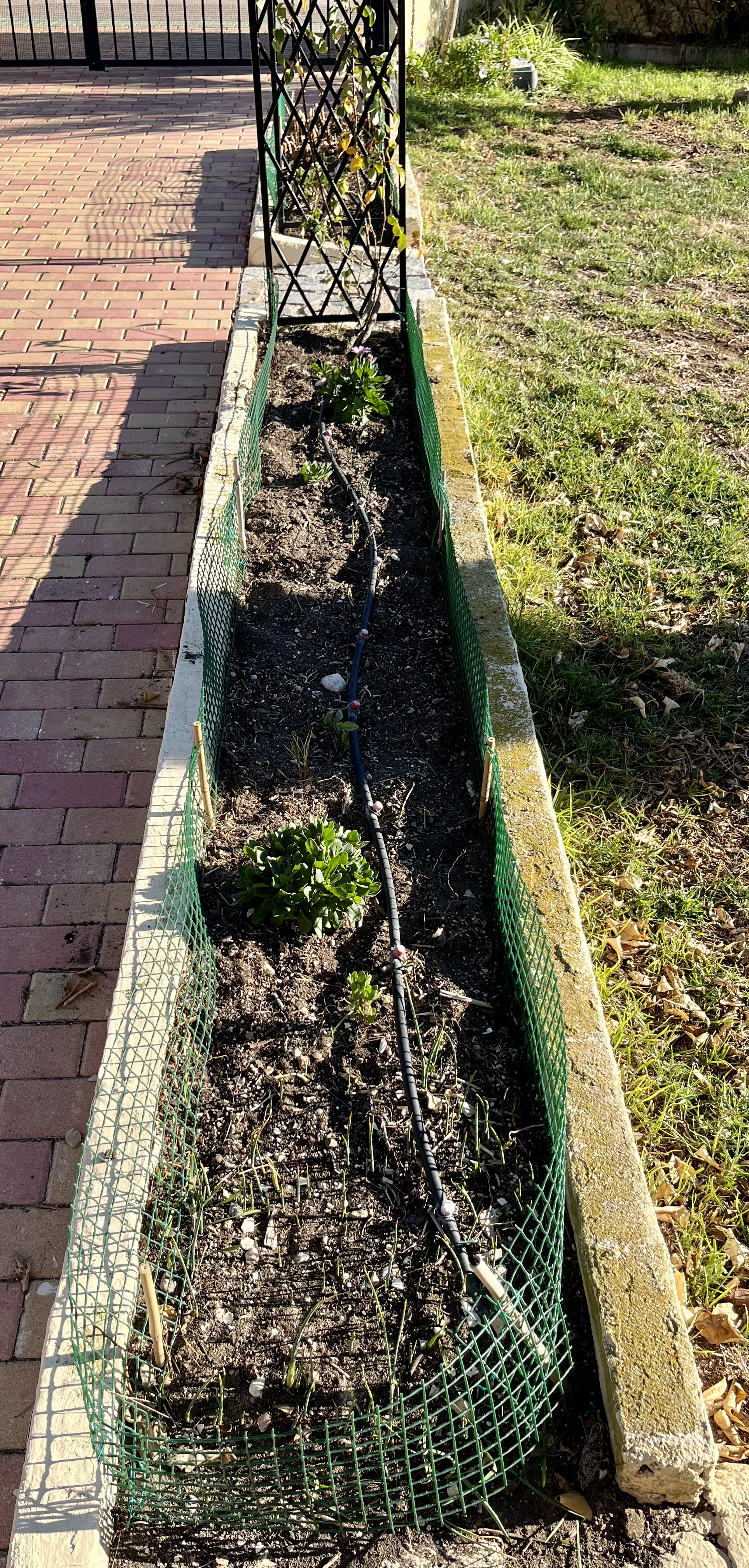
Once you have collected your seeds, place them into new white envelopes, label them with the species and year, then store them in a cool dark place till you need them.

Keep picking fruit. By now most of your fruits should be ripe or almost there. The trick to getting the most of your fruit is to beat the birds to it. Hopefully you will have netted most of your fruit, but if you haven’t, the birds will be blessing you. You need to check your fruit every day and pick off anything that is ripe. Don’t try and leave all your fruit on the tree thinking that you will pick it all together when ripe. The birds will beat you to it every time. Birds know exactly when fruit is ripe as they have amazing colour sight far better than human beings. Whilst we only have three colour detecting cones in our eyes, birds have four and can see in ultraviolet so they know exactly by the colour when your fruit is ripe. The photos below show an example of my daily fruit picking. Click on each photo for a larger view.

Taking care of your roses. Roses grow wonderfully well in Spain if they are looked after properly. This means plenty of water and feeding at least three a year. We are now about to see the late September second flowering of roses. For this to be successful you need to give your roses a deep watering (in addition to your normal regime) once a week. Also you need to give them the last feed of the year. If you do both these things now you will be well rewarded. The first photo shows an action packed deep watering in progress, whilst the second shows one type of rose feed you could use. Click on each photo for a larger view.

Kerry’s olive tree. Regular readers of this blog will remember that my friends Kerry and her husband Glynn had inherited a mature olive tree when they moved into their new house. They foolishly accepted my advice that it should be reshaped and cloud pruned to give their garden an interesting focal point. Under my technical direction Kerry and Glynn helped to reshape the tree into what at first looked like a tree blasted by lightning.

Despite Glynn’s threats and Kerry’s tears I assured them that all would be well. The photos below show how the tree is developing nicely and we will be able to reshape it in the next few months. I will keep you abreast of progress; I am just glad they have called off their lawyers. Click on each photo for a larger view.

Tango the lonely blind Labrador has been framed. What happened was this. I came out one morning and one of my large standards in a big pot had been smashed. I knew straight away it was the chickens as I found feathers all around the smashed pot. When I confronted Cruella (my wife), she denied everything and said her girls would never do something like that. But I knew it was just more intimidation as part of their Just Stop Watering (JSW) campaign. The photos below show the smashed pot and the damning feather evidence. Click on each photo for a larger view.

Anyway she insisted that under the UN Chicken Rights Legislation we must follow due process and have an identity parade and a trial. The whole thing was a set up and Tango didn’t stand a chance. The identity parade included Tango and a fat chicken called Bertha (who Cruella said had a protected characteristic and should not be body shamed). Tango was of course picked out.

The whole trial was then conducted in chickenese and Tango was refused legal aid and an interpreter; I tried to help but I only know chickenese for “get out of that bloody flower bed”. The end result was that poor old Tango was sentenced to a weeks solitary confinement in his kennel. When I told him the sentence he was very stoical and accepted his fate. His head did bow and a few tears fell from his translucent milky white eyes.

The first photos below show the judge and the jury, no wonder Tango was fitted up. The final photo shows Tango when I told him of his sentence: brave, stoical and accepting. The only good news is that I spent the week in there with him; I read him “Lassie” stories and we shouted anti chicken slogans till late in the night. We only stopped chanting when Cruella turned off the lights; I sprayed “Tango is innocent” on the chicken coop. Click on each photo for a larger view.
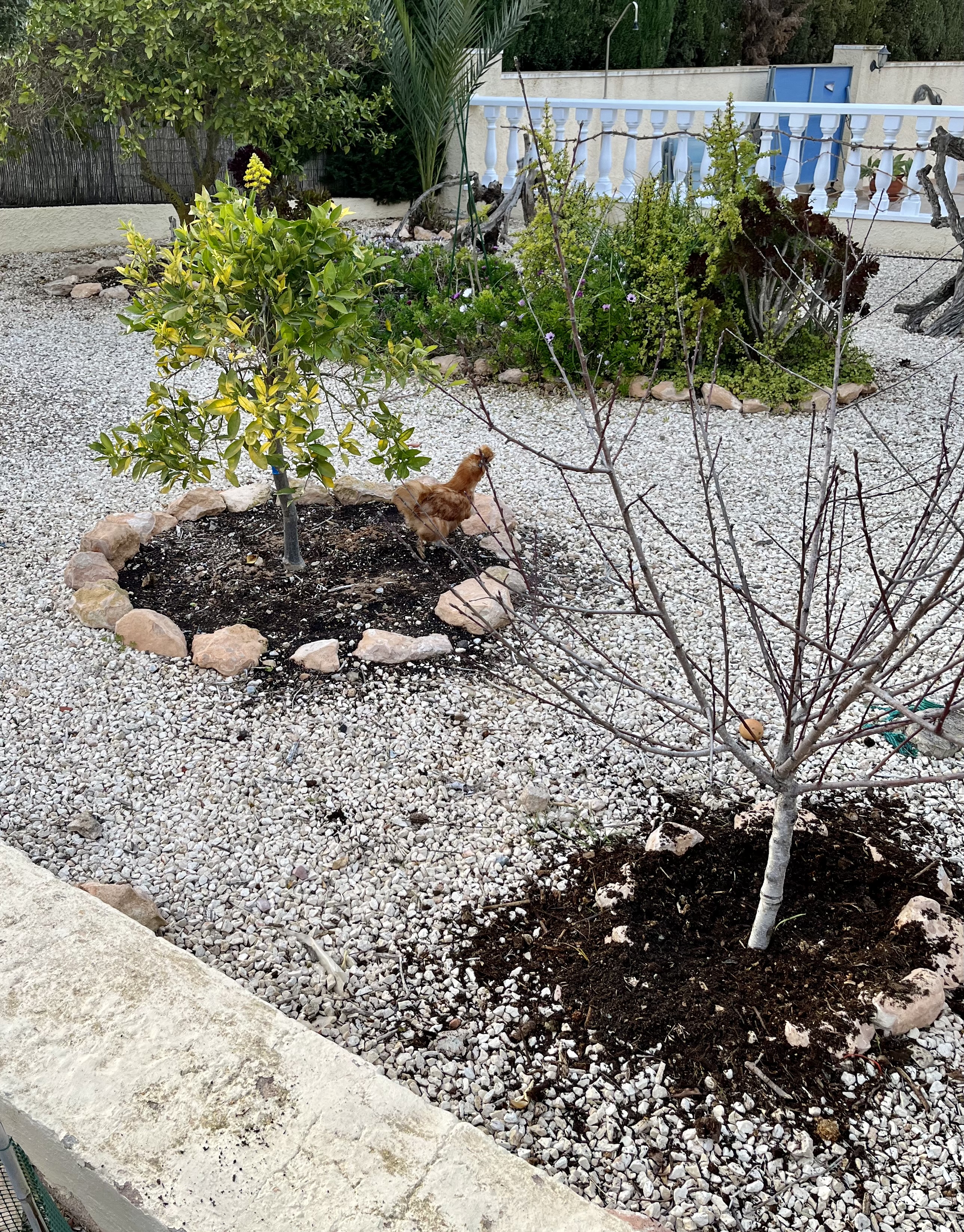
Kerry gets a new tree, I do a little propping and cutting whilst the chickens have started JSW as a protest

I know the above heading is long, but there is so much going on it is difficult getting everything in, but just to give you an overview, this post covers the following:

  • Reshaping an olive tree
  • Tying back annuals in your flower beds
  • Lightly trimming back your hedges
  • How to use figs from this years bumper crop
  • The chickens take direct action to thwart me watering the lawn

9th August 2023. Things I have been doing lately:

Reshaping Kerry’s Olive tree. Olive trees are ubiquitous throughout Spain. Most of them are in agricultural production where they produce both olives and olive oil for Spain and much of the world. However, a casual stroll around any Spanish village will find hundreds of great hulking, misshapen behemoths of trees crowding out gardens and lowering over walls and fences and effectively stopping sun getting to other plants.

These trees of course produce olives that fall to the ground and rot making a terrible mess. Whenever I ask people whether they process the olives or use them in anyway? the answer is invariably no! So why have these trees? The Olive is not a particularly pretty tree, and it can be very messy. The answer people normally give me is that it was there already and they don’t know what to do with it. So how about cloud pruning the tree to make it an interesting feature in your garden.

My friend Kerry and her husband Glynn have moved to a house in my village where they inherited the inevitable olive tree. Kerry decided she would like the tree reshaped and I agreed that I would happily start the process and assist her and Glynn. Hopefully we can make this an occasional feature in this blog as we follow the development and reshaping of the tree. The photo below shows Kerry, Glynn and the tree at the start of the process.

You can see they both look a bit apprehensive

The first job was to look at the branches from underneath the tree and select those that were going to form the structure of the reshaped tree. Here we are looking for nicely spaced branches at different levels that would provide for an open canopy ideal for pruning into shapes. The photos below show the early probings. Click on each photo for a larger view.
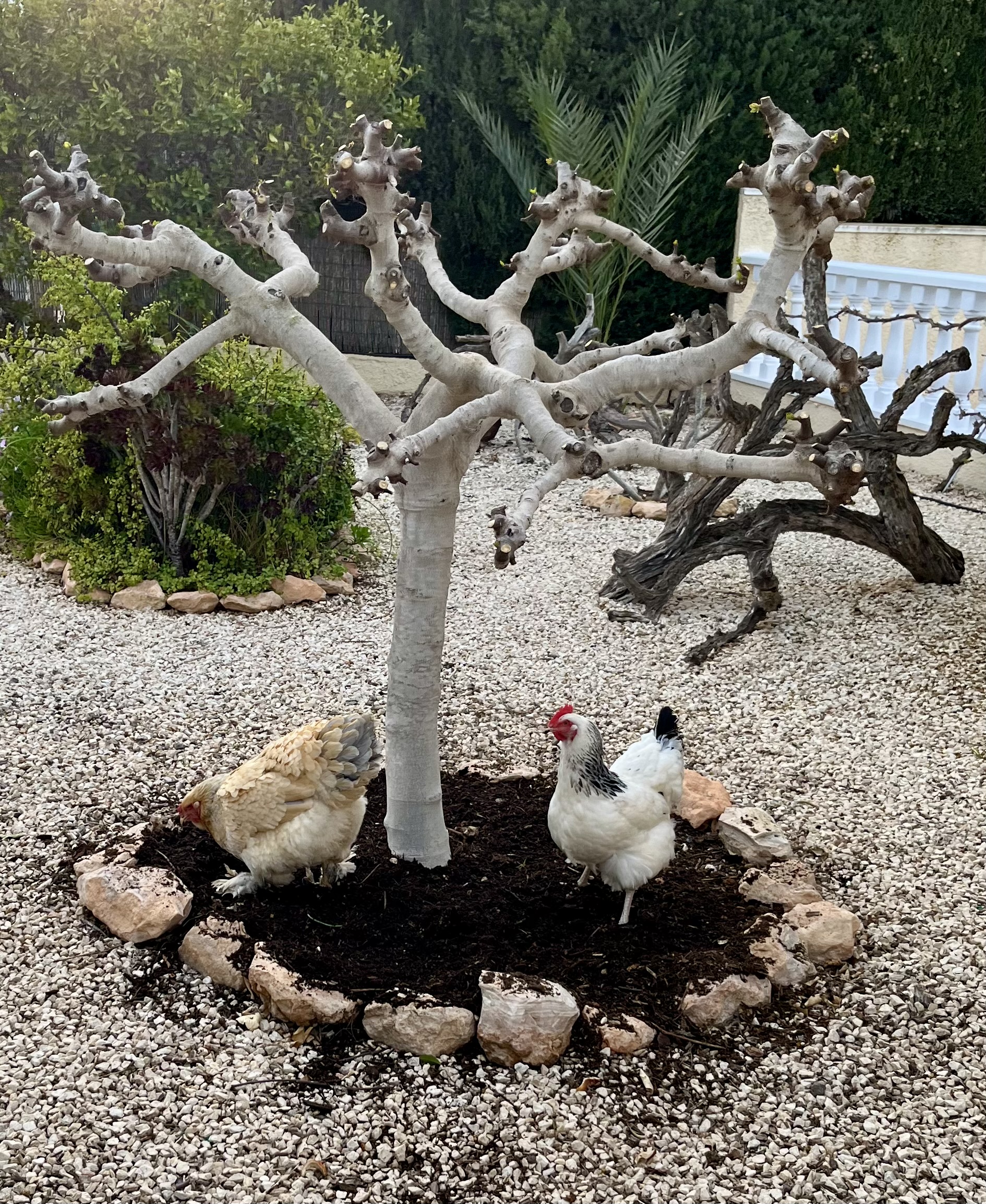
When you are cutting back a tree it is important to remember that although the branches and foliage don’t look too much when they are on the tree, on the ground they present a real back breaking task to clean up. The photos below show Kerry and Glynn hard at work; as Technical Director I of course couldn’t get involved. Click on each photo for a larger view.

In the end of course it will all be worth it as the tree will eventually be a beautifully shaped and interesting tree that will be a real talking point in the garden. The final photo shows Kerry and Glynn surveying my handiwork. If you look closely you will see that Glynn is saying “whose idea was it to let that demented idiot near our tree”. Updates will follow.

Are you sure he knows what he is doing?

Propping up annuals in your flower beds. By now all of your annuals should be flowering like crazy, and I am sure you are deadheading daily. In a previous post I talked about staking up individual plants to keep them upright, but now you need to begin tying back the whole borders. Failure to do this will mean that plants will fall into each other and gradually make the whole bed a green mess of dying plants. The simplest way to do this is to drive canes into the edge of your flower borders (back and front if necessary) and then tightly pull string between the canes to hold the whole mass of plants back. The photos below show my tying back activity. Click on each photo for a larger view.
Trimming back your hedges. If you have hedges then now is the time to trim them back lightly. We do it now for two reasons. Firstly, all the birds will have nested and the chicks will have flown. Secondly, the hedges may start to flop over other plants or your grass, and effectively kill them off. You don’t need to take much off, this is not the big cutback which should be done in January. The photos below show some of my hedges before and after their trim. Click on each photo for a larger view.
How to use figs from this years bumper crop. It has been a fantastic year for figs, I have had so many from my two trees that I have had difficulty keeping up with the harvesting and eating, but I am trying my best. When you have a bumper crop like this year, you have two options: either give them away, or find ways to preserve them for later. This year I have decided on the latter and I am both drying my figs in the sun and creating fig chutney.

To dry figs in the sun, you first have to design a method to defeat your two big enemies: ants and birds. I have developed my own method which you can of course copy. Simply halve a load of figs and place them onto a mesh tray. Place the tray on a table in full sun for at least two days till the figs shrivel significantly. To protect the figs from the enemies, I stand the legs of the table in cut back plastic bottles filled with water. You need to ensure that the legs of the table do not touch the side of the plastic bottles or you will find ants will happily bridge this to get at your figs. Secondly you need to place a mesh cover over the top of your tray to stop the birds swooping down and feasting on your crop. The mesh needs to be held down with clothes pegs to stop the wind blowing it off and robust birds knocking it off. The photos below show my daily crop and my defences. Click on each photo for a larger view.

To make fig chutney or jam just get yourself an easy to follow recipe from the internet. If I can do it any one can. The photos below show my efforts. I am thinking of starting a cooking blog! Click on each photo for a larger view.

The chickens have stopped me watering the lawn. As if there is not enough trouble in the world with Just Stop Oil and Extinction Rebellion etc, Cruella’s chickens have started a campaign to stop me watering the lawn. Just Stop Watering or JSW as Cruella calls it, started when I complained that her chickens were continually digging holes in the lawn. Cruella sarcastically replied that they were “free range” chickens and that was exactly what they were meant to do.

Initially I said nothing, but secretly I was formulating my revenge. I continued to laboriously repair the lawn, filling in the holes and placing wire mesh over the top to stop the chickens coming back to undo my repairs. If you ever have to repair your lawn, then the simplest thing is to sift some compost from your compost heap and tread it firmly into place, then water well. The photos below show my sifting and repair methodology. Click on each photo for a larger view.

My revenge involved turning on the lawn sprinkler system every time the chickens went near my repairs. At first this proved very effective and led to the chickens fleeing soaking wet. Cruella complained bitterly and said that her girls could get pneumonia and that she would report me to the World Health Organisation chicken division. But, I am certain there is no such thing, although she does keep sending me copies of the emails she has sent.

My tactics were working fine till the other day. As soon as the chickens started moving towards the lawn I went to turn on the sprinkler system when Cruella let out a loud warning cry in chickenese and all the chickens rushed to cover my sprinklers with their bodies. At first it wasn’t a problem as I would pick them up one at a time and remove them. But no sooner were they released than they would rush back and sit on the sprinklers again. This was obviously a tactic that Cruella had been practising in her Chicken Civil Disobedience workshops.

Since the first day of protest it has gradually got worse. They now have T-shirts with JSW on them and they have started glueing themselves to the sprinklers. It has now escalated beyond a joke; my shed has had orange glitter thrown all over the inside and the compost bins have been sprayed with JSW slogans. To be honest I am at my wits end. The photos below show the start of their protests. Click on each photo for a larger view.

I judge a flower beauty parade and a gipsy helps me net the big fig

By now your garden should be in full bloom and this is probably as good as it gets in Spain. Although July has been hot we know that the heat of August will just knock the garden over the edge and begin the long slow roll into autumn. I know that sounds a bit depressing but it’s not. We gardeners love all seasons and a key part of gardening is constantly thinking and planning ahead for the next season and next year. Having said that don’t forget to enjoy the moment; stroll round your garden every day, talk to your plants, compliment them on how well they are looking and sympathise with the ones that are just losing their bloom.

Anyway, enough of this sentimentality, I think I am becoming the Emily Dickinson of gardening. There are lots of things to be busy with not least picking your best flowers for seed, trimming some key plants back and surprisingly netting the big fig. On with the show.

26th July 2023. Things I have been doing lately:

Judging the best flowers for next years seed. This is the time of year when you should be beginning to think of next years seed. I know a lot of you don’t garden from seed and instead prefer to go out and buy plants, which is fine, but growing from seed is so much more fulfilling as a gardener, and it’s free. Now that your garden is full of blooms, wander round and pick the loveliest with the best shape and the most vibrant colour as potential seed heads.

You now need to mark these blooms or you are in danger of just deadheading them when they die back. I wrap a piece of wide masking tape around my selected blooms which hopefully stops me deadheading them – though mistakes do happen. Later in the summer when the plants has fulfilled all of its potential I will then harvest these seed-heads for my next years crop. The first photo below shows my trusty masking tape ready to fulfil its role. The other photos show some of my chosen blooms in situ. Click on each photo for a larger view.

Propping up plants. Most annuals will need some propping up during their short but floriferous life. If you just let them flop over, then stems get broken, flowers get squashed and it all looks a bit messy. I tend to prop up plants in two stages. When they first begin to “lean”, then I will use canes to hold back individual plants. If you have closely packed your flower beds then usually one propped up plant will hold a number of others in place. Later, as they progressively need more propping I will tie them in bunches around a line of canes. But let’s not get ahead of our selves, at the moment just use canes to prop up plants. The photos below show my propping activity. Click on each photo for a larger view.
Making Dame de Noche flower again. Many of you will have Dame de Noche (night flowering Jasmine) as part of your summer garden. Although this plant is not what you would term good looking, its value is in its exotic night scent which would put to shame the best perfumeries of Paris. Located next to your summer dining out areas, the Dame de Noche will astound your friends with its heady, exotic scent that comes in pulsing waves throughout the evening. The reason for this exotic night scent is that it is pollinated by a tiny little moth.

However, your Dame de Noche will have finished flowering, so if you want that scent back for the rest of the Summer then you need to act now. To get the plant to flower again you need to cut it back by one third. The important thing is the one third bit. Cut back by one third, the plant (which is growing strongly) will know it has lost its seeds, but think it has time to flower and make more seeds this season. If you cut back by more than one third then the plant will know it doesn’t have enough time to make more seeds this season and instead will draw everything back to its roots.

Once cut back, the plant will come into flower again and quite profusely. This will give you that lovely night scent all the way from the end of August right through till October which is exactly when you want it. The photos below show my Dame de Noche before and after its little trim. Click on each photo for a larger view.
Netting the big fig. Regular readers of this blog will know that the last fruit plant I net each summer is my big fig (to be honest it’s not that big) but it needs a team of at least three or four to net it. Normally this has been an international event with previous years including teams from: Scotland, Northern Ireland, England, France and last years winners from “Wigan”. Anyway I had hoped that my idiot son and Cruella (my wife) would assist me but both refused claiming that as they were chicken royalty it was beneath them. I did try and net it myself, but I kept getting tangled up and falling over wrapped in net; much to the hilarity of the chickens.

Just at my moment of greatest despair my luck changed with a ring at my doorbell and there was my saviour, an itinerant Gypsy lady, Cathy Rose Lee who had camped locally and was now looking for casual work whilst her husband Ronnie was setting up his boxing booth. Cathy agreed to help me net the fig but first she insisted on telling my fortune in tea leaves. The photo below shows Cathy mid fortune telling; it turns out she predicted my drive needs tarmacing.

Once Cathy had read my fortune and I had crossed her palm with silver, it was straight to the fig netting. By this time Cruella had agreed to lend a hand as Cathy had convinced her that good fortune would follow for her and the chickens. If you have never netted a tree then there are five stages:

  • Unrolling and halving the net
  • Stretching the net
  • Joining the two halves of the net
  • Raising the net
  • Tying down

We started very well with Gipsy Cathy and Cruella working in perfect harmony as a team. The first photo shows them both enjoying the net unrolling stage. The second photo shows that they broke into a little dance as they moved to the halving process. Click on each photo for a larger view.

By the time we got to the next stage of stretching the net they were both singing harmoniously an old net stretching work song; Cathy was singing in Romani whilst Cruella harmonised in Chickenese – it was strangely haunting whilst at the same time scary. Click on each photo for a larger view.

Joining the two halves of the net is always a tricky exercise even with an experienced team, so you can imagine I was a bit apprehensive about the next stage and envisaged lots of torn areas of net. However, surprisingly they did extremely well and injected lots of fun into the process and even indulged in some “twerking” dance moves as the first photo below shows. From the final photo you can see the air of satisfaction they both feel at a net well joined. Click on each photo for a larger view.
The next stage is raising the net and this normally requires a team of five; one in each corner of the net with me in the middle with the net raising stick. The importance of this stage cannot be over stated, one slip, and you have a tangled torn net stuck high up the tree. From the photos below you can see we started off rather badly and there was lots of shouting and swearing as both Cruella and Gipsy Cathy kept getting caught up in the net. But finally we raised the net with a mighty cheer. Click on each photo for a larger view.
Gipsy Cathy was so pleased with this stage that she insisted on having a series of triumphal photos that she promised to display beside her best Capodimonte collection in her caravan. Click on each photo for a larger view.
I am pleased to say that the tying down stage went off without any problems, which was a relief after all the drama of the raising the net. This stage merely involves pulling the net down tightly over the whole tree and then tying it down with string every yard or so to the lower branches. Although the whole tree isn’t covered right to the ground, it is usually enough to put off the birds.

From the photos below you can see that the mood is much more relaxed with Cruella prefering an upright stance for tying down whilst Gipsy Cathy preferred to sit on the ground. When I asked if she was ok down there she said “don’t mind me luv, I gave birth to all my kids under a tree at hop picking, so I’m used to it”. The final photo shows the triumph of a job well done. Click on each photo for a larger view.

Deadhead, net your fruit, and the return of Chicken Boy

It is the height of summer and we are all really busy in our gardens, the work is endless, the heat relentless, the days long; as if it couldn’t get any worse, the idiot son has returned as “Chicken Boy”. I am too weary to explain now, let’s get on with the gardening and I will explain later.

18th July 2023. Things I have been doing lately:

Deadheading. The glory of summer is to see your borders and flower beds packed with flowering waving annuals, especially if you have grown them all from seed. I know I have said it before, but if you haven’t grown from seed, then try it, it will give you a whole new perspective on gardening. However, if you want to maintain that lovely packed flowering look all summer then you need to go round your garden and deadhead on a daily basis. The photo below shows one of my borders packed with flowers waiting for their daily prune.

All flowering plants need to be deadheaded otherwise they will produce one or two flowers and go straight into seed production. By deadheading you are removing the viable seed which forces the plant to produce more flowers and hence more seed. To deadhead flowers, don’t just chop off the flower head, if you do you will leave a useless piece of stem that will invite disease. Instead grasp the flowerhead in your hand and then with your other hand run your secateurs down the stem until you meet a lower group of leaves, and cut here. This will encourage the plant to throw another side shoot and flower from this point. Another deadheading technique you can use with multi flowering plants such as Osteospermums is to use hand held side shears to crop off the old flowers. Both techniques are shown in the photos below. For a larger view click on each photo.

Finally, don’t forget to prop up and stake plants that are beginning to flop. I will be covering this in future posts, but below you can see my mini sunflower already propped up with a broom handle.

I know the lawn looks terrible, please concentrate on the Sunflower.

Thinning fruit crops. If you have a heavy crop of fruit on a tree then you need to make a decision about thinning the crop. Thinning is simply removing a number of fruits to ensure that the tree does not begin to drop the fruit itself because it is in distress at a heavy crop. Another good reason for thinning is to ensure better size fruit. I always think it is better to have a slightly smaller crop with larger fruits, than a large crop with smaller fruits. I tend only to thin my persimmons and probably peach. I do not bother with figs as I tend to crop them on a daily basis. The first photo below shows me reluctantly pruning out healthy persimmons, whilst the second shows them on their way to the compost heap. For a larger view click on each photo.

Netting fruit. If you have soft fruit trees, and you want to retain the fruit as opposed to fattening the birds, then now is the time to net. I have a range of trees and plants that require netting. The photo below shows: fig, persimmons, and peach all prime bird fatteners. For a larger view click on each photo.

People often ask me when is the correct time to net their fruit? and the answer is simple, before it ripens. If you leave your fruit till it is ripe then the birds will undoubtedly beat you to it. Birds know the instant that fruit is ripe and they can easily strip a tree of all soft fruit in a day. If you are going to net your fruit then make sure you use a small mesh net as this is more bird friendly. Remember the key is to keep them out not trap them in your net. If you use a wide mesh net then birds will try and get through, and every morning you will be met by the sight of fat angry birds hanging upside down from your nets. The photo below shows the correct mesh size. Followed by a photo of a fig attacked by an enterprising bird even after I had netted. For a larger view click on each photo.

Keeping compost wet. It will soon be time for my annual “big compost special” post. And I know that you are all waiting with bated breath. But, in the meantime, it is important that you keep your compost wet in this very hot weather, otherwise you will find it full of ants and they can disrupt the composting process.. Every week, check your compost for ants and put your hand in to feel how dry it is. The idea is to use a watering can or hosepipe to keep the compost constantly damp, but not soaked. If you have two compost bins, one live and one resting then you still need to keep them both moist or the ants will just move to the other one. The action packed photos below show me watering both compost bins. For a larger view click on each photo.

Repotting plants. If you have plants that have become too big for their pot, or, if you have cuttings that have grown strongly and need a bigger pot, then now is the time to repot. There are two basic windows when you can repot plants. One is in January when everything is dormant and you can’t do much damage. The other is now when everything is growing strongly and the plant should take well to its new pot. Whilst both repotting windows are fine, I prefer now if possible as there is always the danger of overwatering in January when the plant has no growth and it’s roots will just sit and rot in the wet.

I have a little avocado tree that I have grown from a stone that now needs to be potted on to give it a bit more room. Eventually it will end up in the soil, but not just yet. If you decide it is time to pot on then ideally you want to disturb the plants roots as little as possible. This means preparing the right compost in advance and having the larger pot ready. When you are ready half fill the new pot with your compost. Then place your plant in its old pot into the centre of the new pot. Carefully fill around the old pot and tamp down the new compost so that it is firm but not compacted. Then holding the old pot twist it around and around to create a pot shaped space in the new compost. Once you have achieved this, carefully tap out the plant from its old pot and place it into the ready made hole in the new compost. If possible slightly tease out the roots before replanting. When finished water well and place in the shade for a few days. The first photo shows my little avocado about to occupy its new space. The second shows it resting in its new home in the shade. For a larger view click on each photo.

The return of Chicken Boy. Cruella (my wife) was beside herself with excitement as our idiot son was coming to visit for a week. Her normal excitement had been heightened by the fact that she had declared him her successor where chickens are concerned and expects him to inherit all her chickens. To this end she has declared him “Prince of all Chickens”, she gets upset when I call him Chicken Boy.

Anyway, they have both spent most of the week in the chicken coop conversing with the chickens in chickenese, as she and the chickens inaugurated him into the mysteries of chickendom. There was lots of chanting, squawking, smoke and some drumbeats (I didn’t even know chickens could play the drums). The end result was he emerged with a whole new set of pronouns, some chicken poo smeared on his face and a feather sticking out of his hair. From then on the whole holiday was spent with him showing off his chicken wrangling skills. The photos below show him in action. For a larger view click on each photo.

All good things come to an end and Chicken Boy had to go back to London to ruin the financial system of the City. Cruella meanwhile has sunk into the usual pit of despair that accompanies his leaving. For three days she has been sleeping in his bed and refusing to eat; declaring loudly that she will probably never eat again – I keep finding Mars bar wrappers under the bed! The photo below shows Cruella in the pit of despair. If you look carefully, those lumps in the bed is where she has sneaked chickens in.

In addition to the chickens hiding in the bed, all the rest are wearing black armbands and the chicken coop flag is at half mast.

Mulch, mulch, and mulch again. Meanwhile I disband the chicken football team

I want to get straight into the gardening in this post as I feel I have been wasting my time on too many chicken based activities. So it’s the height of summer the garden is blooming, let’s get busy.

3rd July 2023. Things I have been doing lately:

Mulching my plants. Mulching is such a wonderful word with tremendous onomatopoeic qualities – everything you need to know is in the name. But at the height of summer mulching comes into its own. At its simplest mulching is covering the soil to retain moisture. Plants are constantly losing moisture through a process called transpiration, whereby they lose moisture through their leaves and stem. This can be partially alleviated by using different types of mulch including: membrane, bark, stone and of course compost. The sun is baking the soil and plants find it difficult to get and retain moisture. By mulching around the plants you stop the sun reaching the soil and stop the plant roots from being baked when they come up looking for water.

If you buy new plants from the garden centre and plant them out now, in most cases you are wasting your time and money. The sun will bake the plants before they can establish themselves. Your only hope is to mulch as you plant. By far and away the best mulch is compost from your own bin, failing this buy some cheap bags of compost from a China shop, these will be ok as you are not using them as a planting medium but as ground cover.

The benefit of having a compost bin is that you will always have compost for planting, and in this case mulching. The photos below show the black gold that comes from my compost bins. Click on each photo for a larger view.
Mulching is very simple:

  • Thoroughly water the soil under and around your plants.
  • Apply the mulch to about two inches thick around the stems and immediate vecinity of your plant.
  • Where you have closely planted borders just spread the mulch lightly, but generously over the top of the plants.
  • Finish by once more watering the plants thoroughly and rinsing the mulch through the planted borders.

The first photo below shows me beginning to mulch directly around individual plants. The second shows the process of spreading mulch over closely planted beds before watering in. Finally some of this years sunflowers mulched up. Click on each photo for a larger view.
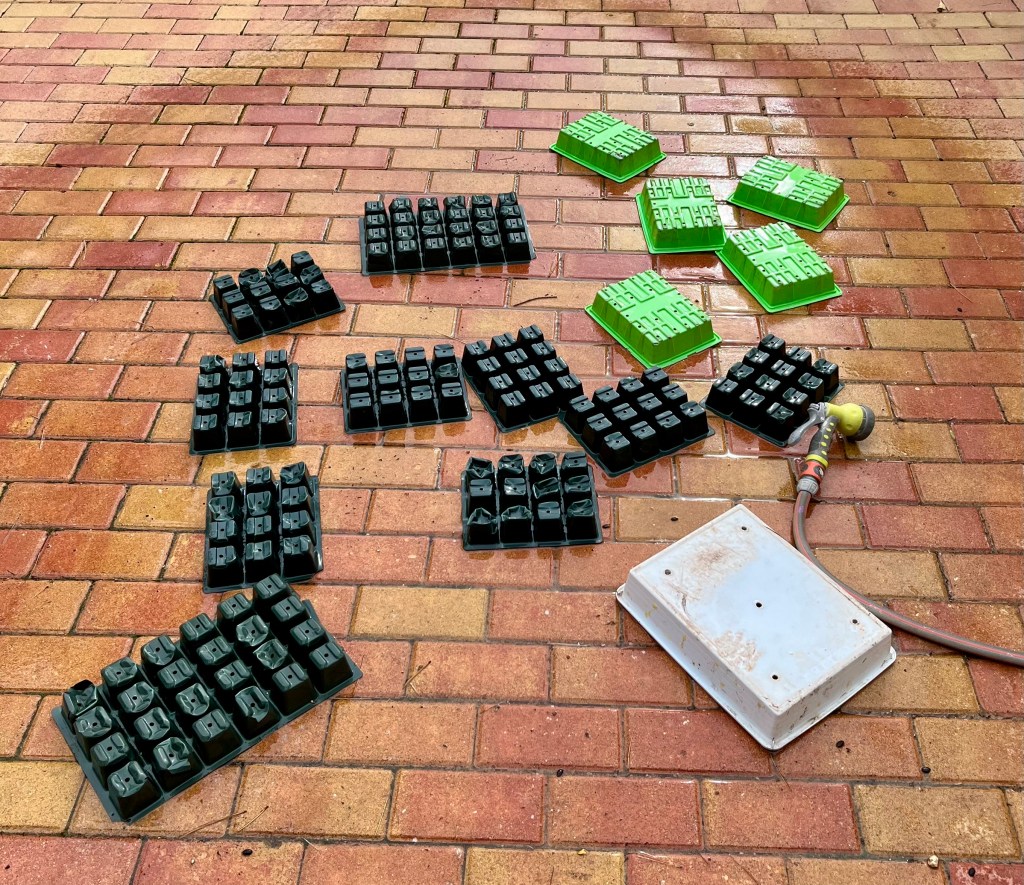
Success with Sago Palm pups. Regular readers of this blog will remember that some months ago I showed you how to remove and plant up Sago Palm pups. Removing and potting up pups is important for two reasons. Firstly, by removing the pups you restore the symmetry of your plant so that it retains its single stem clarity. Secondly, you get free plants from what is a very expensive plant to buy. Remember this process takes quite a long time – anything up to 6 months. I have great hopes that all my pups will eventually come to life. The photo below shows my pups bursting into life.

I have marked the little ones up so that you can see growth, the big ones are obvious.

Extracting Stephanotis seeds. Together with my Sago plant pup triumph, I am also very proud of being able to extract Stephanotis seeds from a pod. I am telling you these plant triumphs to inspire you. If you just buy plants from a garden centre you are “a shopper”, but if you grow them yourself, you are “a gardener” and the creative joy of gardening will always beat the sugar rush you get from buying instant plants – and it’s all free. Anyway enough of the preaching, let’s talk about the Stephanotis seeds.

I was visiting a neighbours garden in our village in Spain, when they showed me a large pod that had sprung from their Stephanotis. They asked me if I would like to have it, to which I of course said yes. I assumed that the pod was immature, but could eventually yield seeds. To ripen it I placed it on my potting bench in full sun for part of the day and shade when too hot. I turned the pod every other day to ensure it got even heat coverage. The pod began to shrink and dry in the sun, and at one point I thought it was just rotting. But instead nature was working its wonders. The heat and drying process was maturing the seeds in the pod and the pod would eventually start to split. The photos below show the pod starting to split, and the seeds beginning to form. Click on each photo for a larger view.
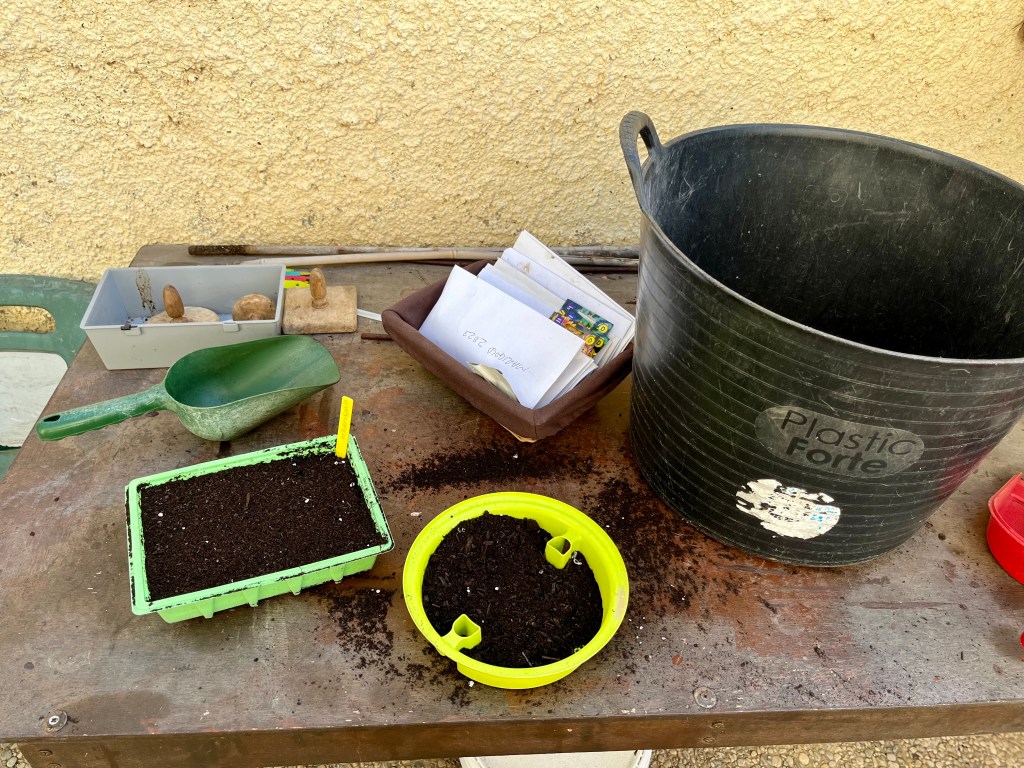
Once I had deemed the seeds were mature, I placed the whole pod into a plastic bag and took them into my kitchen (out of the wind) and began to extract the seeds. It was lovely as each seed came with its own little gossamer parachute to carry it on the wind. After, extracting each of the seeds I placed them into an envelope ready to plant next year. Unfortunately, I had left the kitchen window open and all the fluffy little parachutes blew all over the house. When Cruella (my wife) complained at the mess I said it must be Tango the lonely blind Labrador who is moulting. The photos below show the seed extracting process and my fall guy, Tango. Click on each photo for a larger view.

At least he got brushed.

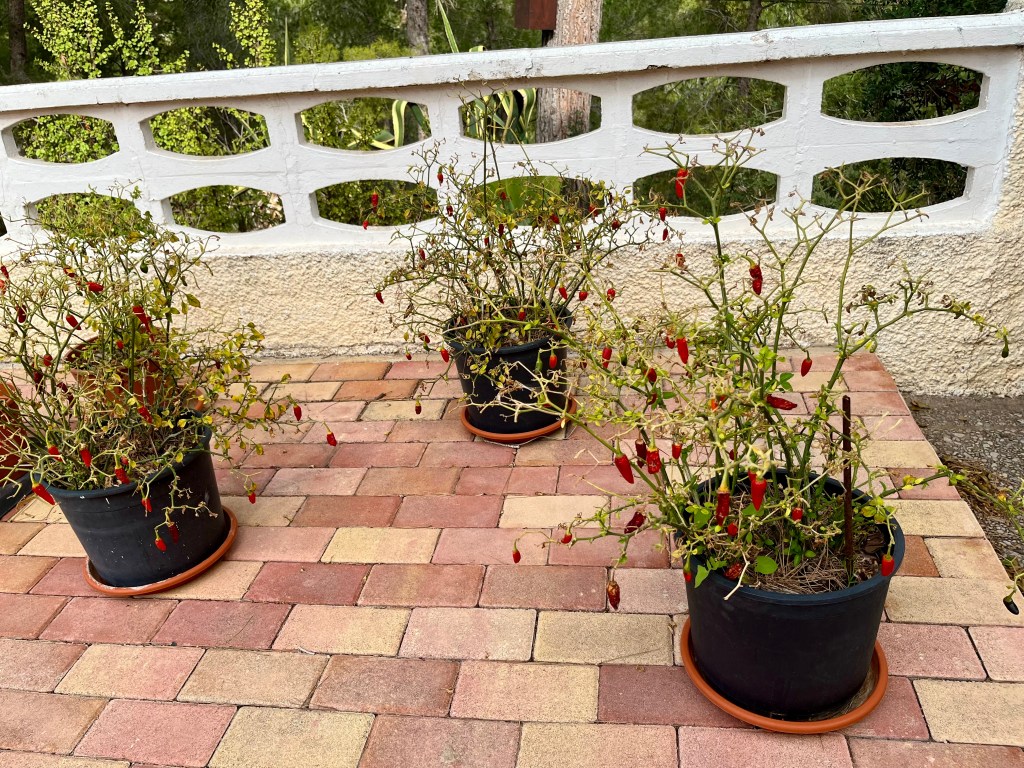
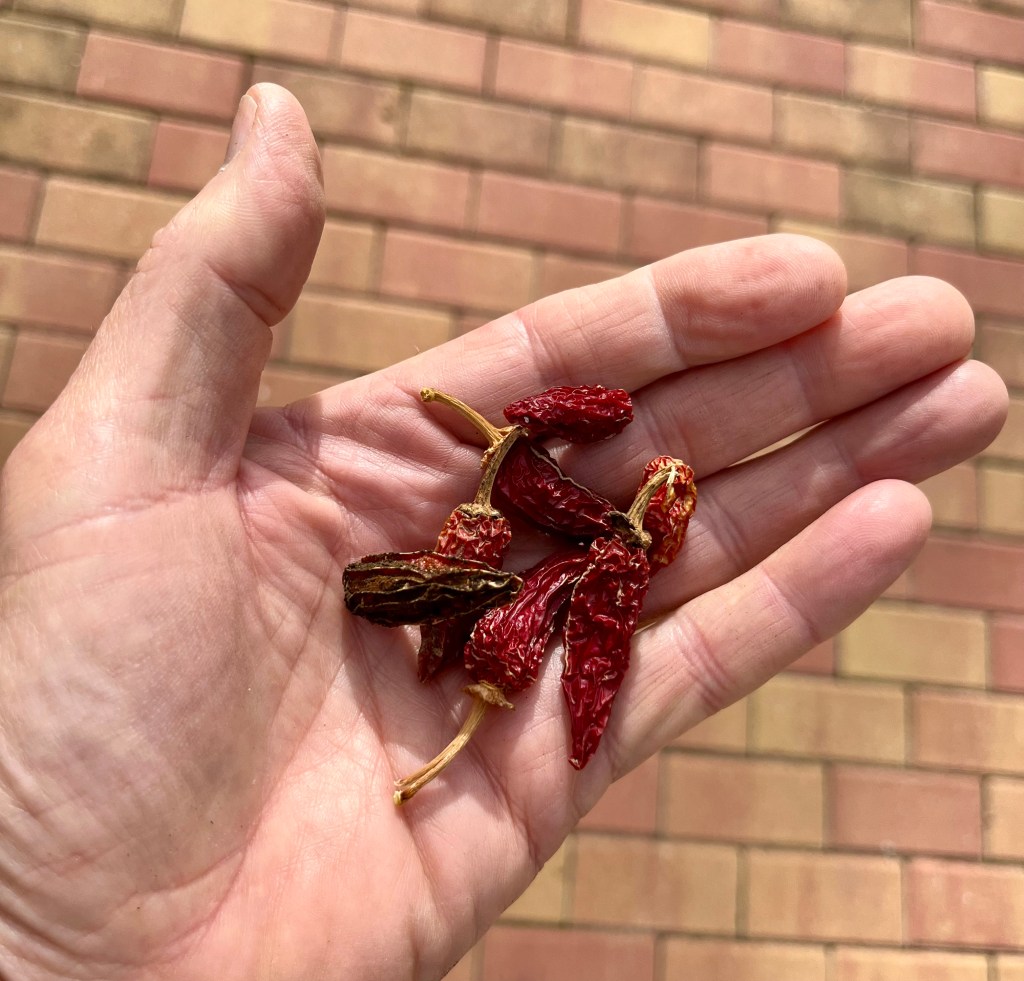
Harvesting Chillis. If you have grown Chillis then you need to harvest them almost on a daily basis as the pods turn fully bright red. By harvesting them in this way you convince the plant it needs to keep flowering and thereby encourage more chilli pods. To harvest chillis you just snip off each pod but leave a small bit of stem to stop any rot starting. Freshly harvested chillis can be placed in a plastic bag in the freezer and will last all year. Whenever, you need a fresh chilli just take one out of your plastic bag and chop it up frozen and add it to your cooking. The photos below show the daily chilli harvest. Click on each photo for a larger view.
I disband the chicken football team. To be honestI didn’t want to disband the chicken football team, but they just wouldn’t do the training. I blame it on Cruella (my wife), she has pampered them, overfed them and encouraged a bad attitude. The rot set in when they refused to do the morning training runs. Each morning I would get them out of their coop early ready for training. We would start with some stretching exercises, which to be honest they only did half heartedly. They would languidly stretch out alternate wings whilst yawning, but the most embarrassing part was when they tried to pull one leg up behind them to stretch; they are all so fat they just kept falling over.

After the stretching we would go for a training run around the lawn, or at least Tango the lonely blind Labrador and I ran, the chickens just puffed along behind complaining, stopping to peck, some even tried to get out of training saying they had ladies problems and had to go lay an egg. The end result was I was met one morning at the front door by a delegation demanding to see Cruella and insisting they would no longer train. The photo below shows the delegation.

Despite Cruella’s intervention I insisted that it would be good for them and training must go on. However, they resorted to guerrilla tactics and in an act of wanton vandalism they just dug up the pitch. Needless to say the team is now disbanded. Nevertheless, Tango the lonely blind Labrador and I still go for early morning training runs past their coop. They sit there sullen eyed, watching us as we puff past laughing away in chickenese as poor old Tango crashes into yet another tree. The photos below show the damage to the lawn (pitch) and the extensive repairs I had to make. Click on each photo for a larger view.
Cruella is coming back and I have started a chicken football team

I know that the above heading may confuse you and get you wondering what all this has to do with gardening, but bear with me. Cruella (my wife) is coming back soon from her visit to our idiot son – I only know this as the chickens won’t go to bed at night and spend all day looking up to the sky. Anyway, every time she comes back she always asks me what I have been doing whilst she has been away. My normal reply is “gardening” at which point she berates me with all the things I should have been doing “instead of wasting my time”. So, my big idea is that I will distract her by telling her that I have spent my time forming her chickens into a football team! But, more of this later, on with the gardening.

20th June 2023. Things I have been doing lately:

Dealing with all things Marigolds. Marigolds are a wonderful plant to grow in Spain. They germinate very easily from seed, and they fill the summer border with lovely flowers right through till Autumn. I save the best seeds from last years flowers, germinate them in trays and then plant them out in mid May in all my borders. To get the best from Marigolds you need to nip out the early flowers to encourage a profusely flowering well rounded plant.

When your plants start to show their first bud you need to nip this out ideally between your thumb and forefinger, if you leave this bud then you will get just a single flower. After a few days the plant will then throw out two side buds. Again you need to nip these out. You can then leave the plant to get on with it as it will begin to throw a huge number of buds as it will believe it is under attack from a grazing animal. The first photo below shows the first bud, followed by the two side buds and then my world famous nipping out technique. Note my specially grown long thumbnails for this task. Click on each photo for a larger view.

Cuttings back lower Sunflower leaves. If you are growing Sunflowers in your borders, then you have to be careful that they do not shade out other plants growing beneath them. This is only important in the early stages of growth as they will soon outpace the lower growth. But in the early stages they can setback other plants quite significantly. To overcome this you have to be brave. When Sunflowers get to about half a metre high you can safely remove some of their lower growth to let light into the area beneath them. The first photo below shows one of my Sunflowers shading out the underplanted Marigolds. The second shows the Sunflower with just the right amount of lower leaves removed. Click on each photo for a larger view.
If you are taking part in our Campoverde Sunflower Challenge, then I don’t want you to panic if your Sunflower doesn’t look like this. This is a different type of seed from this year’s challenge seed. The photo below shows four of this years Sunflowers that I am growing as trial plants to catch any cheats.

As you can see there is a slight difference.

Reaping the benefits of early spraying for greenflies. Last year I failed to see the plague of greenfly that blighted some of my favourite plants. The main cause of this was not wearing my glasses caused by not remembering where I had left them. I remedied that this year by buying one of those cord things that attach to your glasses, now I wander round gardening with my glasses dangling on my cord catching early signs of Greenfly. Cruella (my wife) thinks it makes me look ridiculous and old, but I don’t care, the photos below show the benefits to my lovely plants. The Solanum, Oleander and Dame de Noche were severely hit by Greenflies last year, but early spraying allowed them to reach their full potential this year. Click on each photo for a larger view.

Some things you should be doing now. Before I get on to the excitement of my chicken football team, Here are some things you should be doing now in your Spanish garden:

  • Take suckers off your fruit trees. This is the bright green little shoots that you will see sprouting from your tree trunks. Pull these off by gently tugging downwards, they will suck the energy from your trees.
  • Feed your lawn. I know not many of you have lawns (which is sensible). But, if you are an idiot like me, now is the time for the second feed of your grass.
  • Feed your plants. You need to start feeding all your plants regularly every week. This is especially important if you mainly have pots as the plants in pots can’t send their roots down to look for food. Click on each photo for a larger view.
A varied banquet for hungry plants

Starting a chicken football team. The village I live in has a champion walking football team. It is so good it is not only top of the league and champions, but it also now has a women’s team and some of our men’s team have been picked to play for Spain. So you can see where I got the idea from. If I started a chicken team, this would not only ingratiate me with Cruella, but I would be surfing the zeitgeist of my village.

The idea was one thing, but putting it into practice was another. And you have to remember what I am working with. Firstly, Cruella’s chickens are unruly bolsheviks who won’t follow orders. Secondly, they are fat! She feeds them exotic foods and when I complain she says I am body shaming her girls. Things are so bad one of them declared the other day that she was trans and identified as a Turkey!

I started my team development by buying a plastic football that comes in two parts. I also purchased some freeze dried crickets to put into the ball. The idea is that you fill the ball with crickets, roll it towards the chickens they see it and begin to peck the ball and move it around. The photo below shows my training equipment and in case you wanted to see them some carcasses of dried crickets. Click on each photo for a larger view.

That was the theory, the reality was me running round and round the lawn throwing dried crickets behind me, whilst the fat chickens looked on bemused. The photo below shows an early training session. The chickens just sat in the middle of the lawn and watched me running round and round and then when I collapsed with exhaustion they just ambled over and gobbled up all the dried crickets on the lawn.

The only exercise they got was when they fell over dizzy after watching me run round

Things got better when I involved Tango the lonely blind Labrador as the team goalkeeper. I recognise there is a problem having a blind goalkeeper but I didn’t want to be ableist and also I wanted to build up the teams confidence. Well from then on we began to come together as a team. The photos below can only convey some of the excitement; I can’t wait to show Cruella. Click on each photo for a larger view.

The high score was mainly because Tango fell asleep

Cruella flys off, I get revenge on the chickens, and I do a little bit of gardening

Cruella (my wife) left for our English house the other day she flew off after our Open Garden Day to see our idiot son and left me with strict instructions on how to take care of the chickens. She left early on the Monday morning but it was raining and she slipped twice on the lawn as she was taking off. Eventually all went well and she soared off into the lowering clouds leaving only a small band of bedraggled and soaked chickens standing in the middle of the lawn waving their little homemade Russian flags. I didn’t even know chickens could knit! Anyway, on with the gardening.

3rd June 2023. Things I have been doing lately:

June is a funny month; yes it is summer, but not quite the real hot summer. You will need to be cutting back some things whilst at the same time planting and sowing.

Cutback and reshaping. There are a number of plants you will need to trim up now or they will become shapeless over the summer.

Jasmine. By now your Jasmine should have had its first flowering. Now that this is over you will need to trim your plant back in two ways. Firstly, if it is growing up a trellis or wires then make sure it is not flopping over at the top and shading all the growth underneath. What may look to you like a nice green plant may in fact be totally brown underneath. Just hold the plant up and shear off the top excess growth. Secondly, put on your gardening gloves and run your hand up and down the plant taking out all the dead brown growth. This will easily come away, do not try to trim this with secateurs as you will only cut off long stems and ruin the shape of the plant. The photo below shows me holding up and cutting off the top growth.

Trim shaped trees. If you have cloud pruned or just shaped some of your trees, then now is the time to give them a light trim to bring them back into shape. Any major pruning should be left until January. The photos below show my various trees after their summer trim. These include:

  • Mulberry trimmed back to keep its umbrella shape to provide shade.
  • Olive cloud pruned into balls; to keep this pleasing shape you need to trim three times a year.
  • Variegated Ficus cloud pruned (amorphously) to allow sight lines into my dry garden.
  • The big ficus given a gentle trim so that the Cheshire Cat can smile down upon me.
  • Californian False Pepper and a Myrtle-leaf Milkwort shaped to both give a sense of presence at the end of my drive. Click on each photo for a larger view.

Cutback suckers on Palms. lots of people in Spain have lovely stately Palm trees but unfortunately leave ugly secondary suckers growing from the bottom of the trunk. You may think you are growing a new Palm tree but you are not, you are just allowing suckers to take away from the overall strength of your tree. The best thing to do is get out your bow saw and trim these off as neatly as you can. They will probably grow back a couple of times, but just keep at it. The tree will look much neater and you won’t get spiked every time you pass by. The photos below show my various palm protuberances and the solution. Click on each photo for a larger view.

Time to take last years lemons off your tree. Most lemon trees will now have both last years lemons (yellow and a bit squishy) and this years (green and the size of a table tennis ball). This results in the tree being in a bit of a quandary. It needs to get rid of the old lemons as they are hindering it feeding the new crop, hence they are dropping off every day. But you think that your lemons may get bigger and then you will pick them. I hate to tell you this, but they won’t, the tree doesn’t want to know them, they are so last year. It is time to pick off as many of the old lemons as possible and use them how you will:

  • Make lemon drizzle cakes
  • Get drunk on Limoncello
  • Make lemon curd

There are many ways to use your lemons, but all of them require vast quantities of sugar, which you know isn’t good for you. So, why not do what I do? Take all the lemons off your tree, juice them and store them in plastic orange juice bottles or milk bottles (wash the bottles of course). Then put them in the freezer and bring them out one at a time as you use them throughout the year. I put lemon juice in every glass of water I drink, whilst Cruella consumes it in pints of Gin. It is up to you, but look at Cruella, compared to me, you know what makes sense. The photos below show the process which starts by removing chickens. Click on each photo for a larger view.

They tried to stop me picking the lemons, they have been watching the “just stop oil” tactics

Taking care of the chickens. As I mentioned earlier, Cruella has left me precise written instructions on how to take care of the chickens. Two copies, one for me and the chickens have one. Every morning I am met by a delegation of chickens demanding their rights and quoting the various sub sections of Cruella’s instructions. But I don’t speak chickenese so I just shrug my shoulders and make random clucking noises, which infuriates them. After half an hour of chicken ranting that falls upon my deaf ears, they all turn in one choreographed move and show me their rears in a sign of chicken contempt. I get my own back though as I refuse to feed them the expensive fried insects that Cruella gives them. I leave their little bowl just outside their reach. I know it’s cruel, but you don’t know what those chickens have put me through. Click on each photo for a larger view.
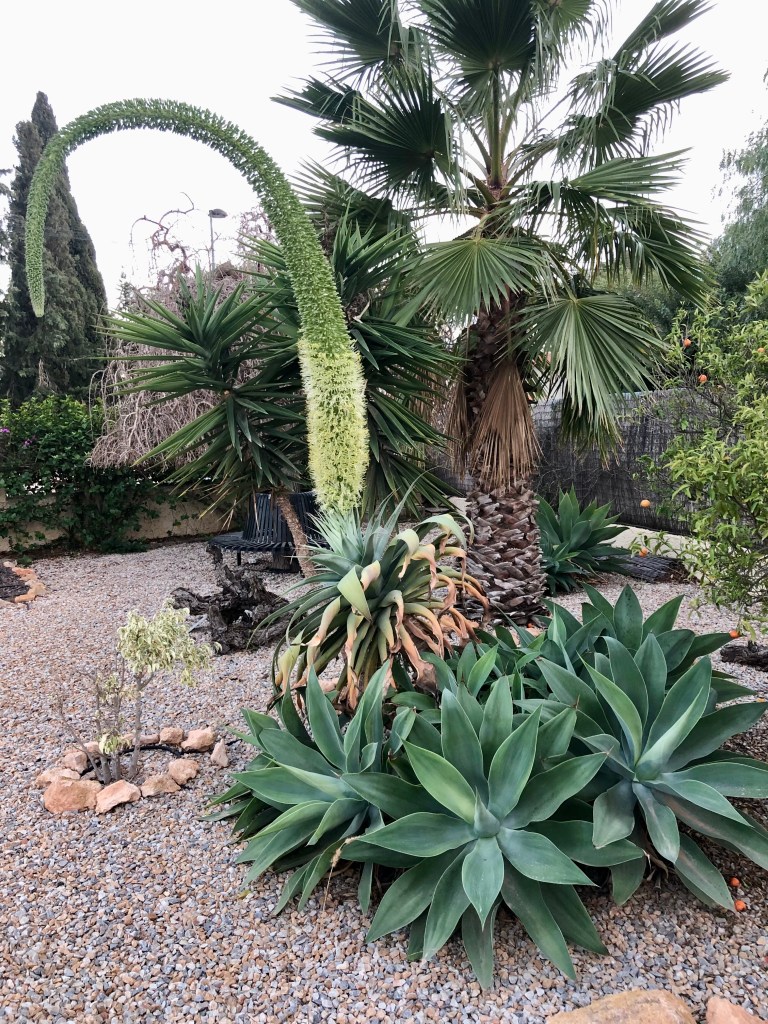
Sometimes I would pretend to move it closer then snatch it back. They are not so big now Cruellas not around to protect them

My garden has been destroyed and I have reported Cruella to the Garden Crimes Tribunal

I’m back, but to be honest I wish I hadn’t gone away. Despite my leaving detailed care instructions, (Cruella my wife), has systematically neglected my garden. She has neither watered, weeded, sprayed or basically just loved the garden. She knew that I was preparing for this years Campoverde Open Garden Day on 27th May between 11 and 4. When she saw me crying at the devastation she just stood there laughing surrounded by her chickens saying “what, what, what’s the matter”. The worst thing is I now know chickens can smirk. I have been working night and day to try and save what is left of the summer garden.

Anyway I have reported her to The Royal Horticultural Society (RHS) Garden Crimes Tribunal. This meets in The Hague, next door to the War Crimes Tribunal. I am busy preparing my case against her and I am hoping for a hearing in the Autumn. Anyway, let’s dry our tears and get on with the gardening.

13th May 2023. Things I have been doing lately:

Saving my Roses and other plants. There are a number of pests that will infest Roses and other plants this time of year, so it important that you stay on top of them. Inspect your plants every day and deadhead frequently for succession flowering. Failure to do this will leave you with diseased plants that will not repeat flower. The photos below show the damage to my roses, oleander and Dipladenia all caused by Cruella’s neglect. The first photos show the damage from greenfly and wooly aphids the second shows wild garlic allowed to grow through the roses. Click on each photo for a larger view.

The answer to all of these problems is to spray the plants weekly with your favourite spray. I know that some of you like to be organic, but personally I use the spray below. For wild garlic, pluck the flowers out at the bottom of the stem and do this daily. The photos below show my spray and my wild garlic plucking in action. Finally, and very importantly feed your roses and other plants, it is essential for healthy floriferous plants in Spain. Click on each photo for a larger view.
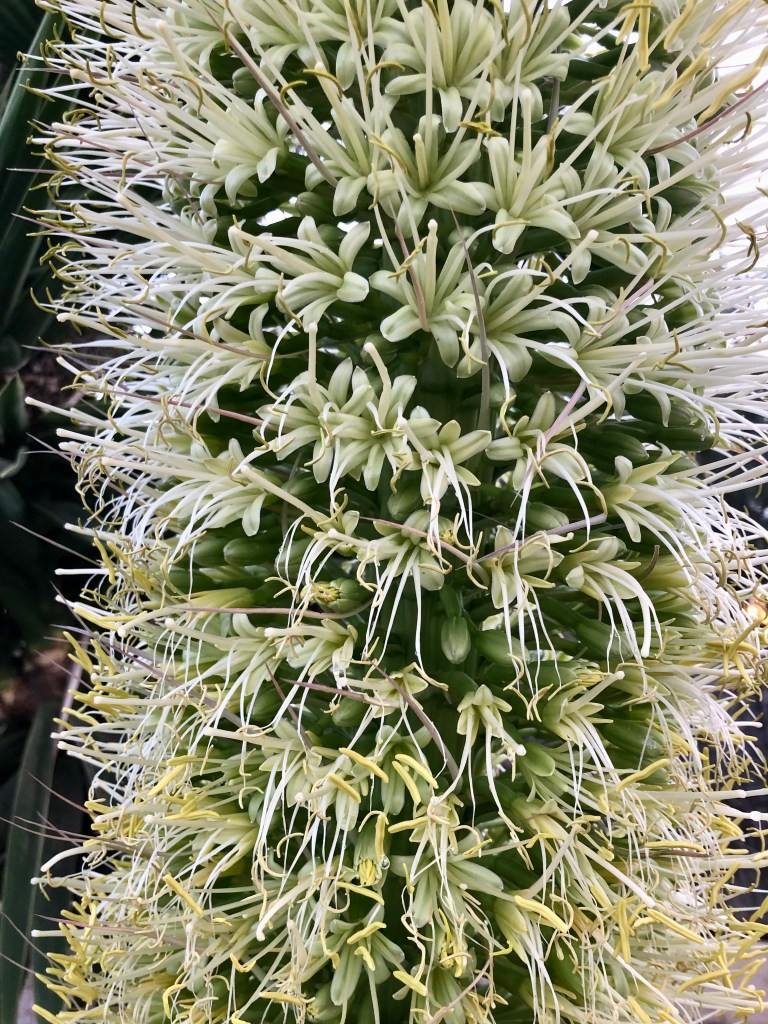
Lawn care. I know not many of you have lawns in Spain, because it is stupid to have one. But Hey Ho, I love my lawn, and this is where Cruella (my wife) has been at her cruelest. My lawn has been turned into the equivalent of the Gobi Desert. The grass has not been watered, chickens have been allowed to dig and there are bare patches as if beasts with cloven hooves have been pawing the ground. And that is how I know that Cruella has had her coven round for a party.

Anyway, if your lawn is looking terrible you need to do the following. First cut it on the highest setting possible. Then give the lawn its first feed of the year. Once you have spread your fertiliser, water profusely but only in the evening and after the earth has cooled. The first photo below shows the state of my lawn. The second shows me after mowing the lawn. What you can’t see in this photo is that I am completely covered in dust – it was like mowing in a sandstorm. The final photo shows the lawn food I prefer. Ideally your lawn should have three feeds over the summer growing season. Click on each photo for a larger view.
Saving my seedlings. If you have been growing plants from seed then now is the time to “prick out your seedlings”. Basically this involves teasing out each of your new little plants and replanting them in a separate tray or pots to let them grow on before planting out into the soil. Start by assembling everything you need, including:

  • Good compost
  • Perlite to mix into the compost to make it free draining
  • Seed trays or pots for your little seedlings
  • A dibber to make holes for your new plants and a pencil to tease them out with

The photos below show my assembly and the process. Make sure that as you gently tease our your new seedlings you hold them by their leaves and never by the stem. If you hold by the stem then you can easily damage their capillary system in the stem. Finally, place your new seedlings on your potting bench and leave them for two weeks to harden off before planting them out. Whatever you do don’t let them dry out. Click on each photo for a larger view.

Put drip trays under your pots. I don’t normally think of myself as a gardener with pots, but in fact I have some 30 or so plants in pots. Anyway, as I stood idly watering my pots the other day I noticed the precious water running out from the bottom of each pot. I instantly punched myself in the head for being an idiot and immediately rushed off to buy drip trays to place under each pot.

The benefit of drip trays for plants in Spain is twofold. Firstly they stop water run off. Secondly they aid hydration as the water from the drip trays evaporates and keeps the plants misted. The photos below show my drip tray strategy in action. Click on each photo for a larger view.
Campoverde Open Garden Day 2023. Finally, if you want to come and see what is left of my garden, meet Cruella and her chickens and see Tango the lonely blind Labrador then come along and make a day of it. Just to cheer you up there are four other lovely gardens you can see if you don’t want to come and see my waste land. Details below:

I am away and Cruella has taken my seedlings hostage

I am at our English house with the forlorn hope of trying to inculcate some culture into our idiot son; he prefers beer and football. Anyway, Cruella (my wife) has decided to take advantage of my absence by threatening terrorist attacks on my seedlings. To put this into a gardening context. I left Cruella with precise instructions how to deal with the garden and particular the seedlings during my short absence. All gardeners know that failure to successfully prick out and pot on your seedlings can ruin the whole garden year.

Cruella has recognised my vulnerability and I have been receiving a stream of videos where balaclava clad supposed terrorists threaten my seedlings and potting bench with destruction unless I fulfil certain demands. But I know it is her because chickens look ridiculous in balaclavas and all the demands are chicken related. They have even taken to threatening Tango the lonely blind Labrador and have been sending hostage videos showing chickens looming over him whilst he looks distressed. I have informed the police.

The first photos below show my vulnerable seedlings and potting bench whilst the final one shows Tango in a hostage situation. Click on each photo for a larger view.
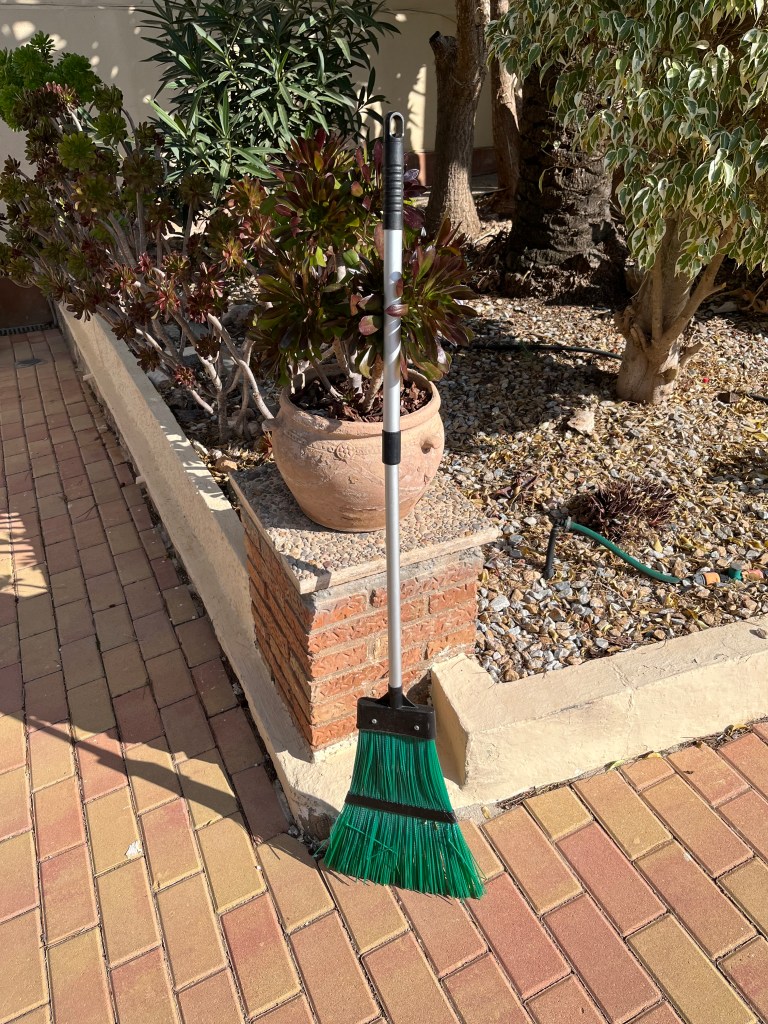
Note the look of terror on Tango’s little face. They also send me notes signed with his paw prints

26th April 2023. Things I have been doing lately:

Deadhead Iris. By now all your Flag Iris should be ready for deadheading. It is such a pity that they have so short a flowering season as I love to see them in huge clumps waving in the wind. But once the flowers are fully spent then it is time to deadhead them so that the bulbs can plump up for next year. All bulbs should be deadheaded, but never cut off the stem; these should be left to fully die back so that they can enrich and feed the bulb.

With Iris you don’t cut just below the flower, but instead go a little further down the stem to below the flower head where there is a large swelling in the stem. You cut just below this swelling and then leave it alone till all the stems die back. For tidiness you can tie the dying stems together if you wish. The first photo shows one of my stands of Iris waiting for their cut back. The second photo shows where to cut. Click on each photo for a larger view.
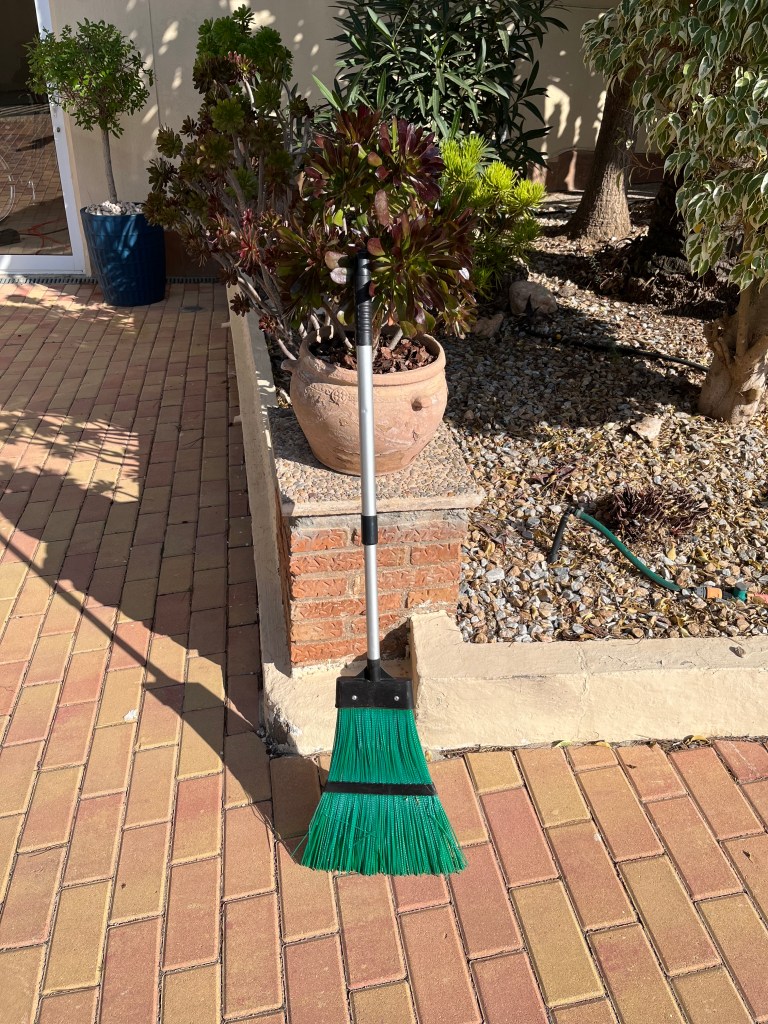
Dealing with wild garlic. Every so often there is a weed that proliferates strongly and you need to take some remedial action. For the last few years this has been wild garlic. Objectively wild garlic can be quite pretty with its long stem and flush of little white flowers. But it can spread very quickly as it is a prolific self seeder. Left alone it will quickly overwhelm flower beds and lawns within two or three seasons.

I have found that attempting to fully remove wild garlic fully is far too laborious as you would have to dig up every little bulblet, and this can take a long time. Instead, my strategy has been twofold. Firstly, to out compete the garlic in flower beds you need to continually pluck off all flower stems as they appear including taking as many leaves as possible; go as low on the stem as you can. Secondly, where they appear on lawns, mow before the stems have flowers.

Although the plant will attempt to throw up subsequent flower heads, these will become shorter and shorter as you are continually depleting the strength of the plant. If you keep this up over a couple of years you will eradicate or at least severely deplete its ability to reseed. The photo below shows the culprit growing through my Roses.

Spider plants relieve the gloom. If you have a heavily shaded part of your garden where nothing seems to grow, then why not try the ubiquitous spider plant (Chlorophytum comosum). This denizen of the British bathroom is often written off as an untidy house plant that can be happily neglected. But placed in a shady (and slightly damp) area, it can really light up the gloom with its variegated leaves. It will happily proliferate with lots of little spiderlets and become a bit of a shady showstopper. The photo below shows the shady area beside my front gate where I can’t get anything to grow, now happily populated by a growing family of Spider plants.

Plant Loofah seeds. When I told Cruella (my wife) that it was time to plant Loofah seeds her eyes lit up (all of them). The main reason for this is that my Loofahs provide her with a profitable sideline in selling loofahs to her various friends as a means of removing nose warts; a perennial problem in what she terms her community.

Loofahs are a lovely annual climber with beautiful and prolific yellow flowers that turn into, well loofahs! Loofahs are those long abrasive tubes that hang in bathroom showers and are often mistaken for some sort of sponge. But, no, they are plants and more importantly they are excellent for skin defoliation and improving blood flow. Anyway, if you want to grow loofahs then now is the time to plant seeds.

You simply need to soak your loofah seeds in a bowl of warm water for at least 24 hours; just leave a bowl by the sink and keep topping it up with warm, but not boiling water. This process swells the seed and makes them easier to germinate. Once they have been soaked for 24 hours then prepare four inch pots filled with good compost and thoroughly watered. Place one seed at the centre in each pot and then poke it down into the soil by about a finger nail length. These will be ready in about 2 to 3 weeks for planting out. If you would like some Loofah seeds then I have plenty, just let me know.

The photos below are an action based photo montage of the loofah planting process. I have aspirations to become a Hollywood director of action films and these photos now form part of my portfolio that I am sending to studios. Click on each photo for a larger view.
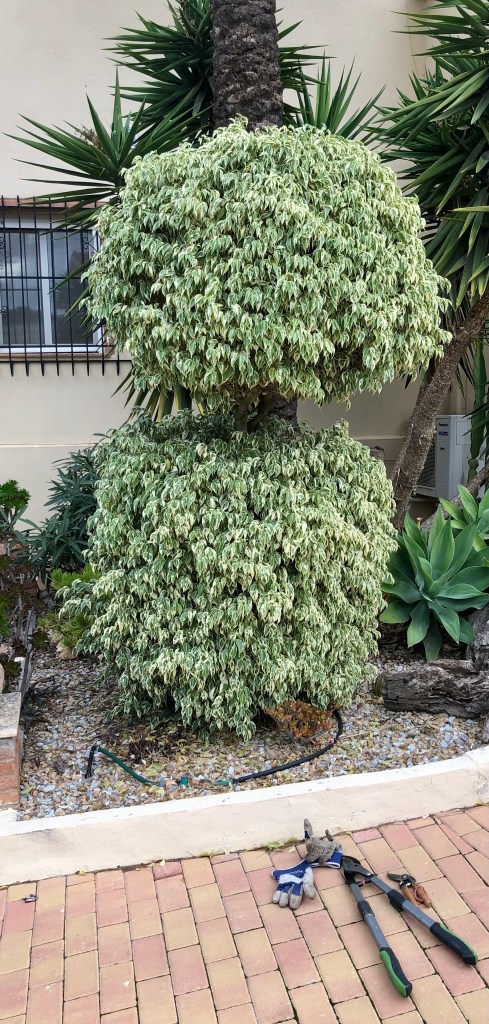
The above photo is available as a slow motion video

The big rat. By the way, If you are interested, the big rat is no more. Needless to say it was a struggle, but I prevailed.

Cruella is back, and so is the big rat!

Cruella (my wife) arrived back the other day. I didn’t know she was coming but I got a bit of a clue when the chickens started fussing around with their feathers and grooming each other. Anyway, the sky went dark, there were low threatening clouds and a hint of lightning. The chickens trooped out of their coop and formed a circle on the lawn waving little flags they had made (don’t ask). Cruella spiralled down out of the biggest dark cloud and made a perfect landing in their circle whilst waving enthusiastically at the chickens who all clucked appreciatively in chickenese; I hid in the shed.

As if all of that wasn’t bad enough the big rat is back in the compost heap. Whilst not meaning to conflate Cruella’s return and the appearance of the rat – I am sure it is not just coincidence. Anyway, I knew he was back as I saw his tail disappear into the compost when I opened the bin lid. Of course it is not the same big rat, as his predecessor was duly dealt with as he will be eventually. But don’t let this put you off composting. Ratty’s appearances are very rare, especially if you never compost cooked food. But more about ratty later, on with the gardening.

9th April 2023. Things I have been doing lately:

Pruning back Ice Plants. Ice plants are popular in Spain for their early spring flowers and the fact that they don’t mind a bit of neglect. By now your Ice plants should be flowering profusely, but as you know they soon die back unless you deadhead vigorously. If you want more flowers then try and deadhead them every couple of days. The easiest way to do this is to use a pair of hand scissor shears. The new flowers will start arriving at a level just below the spent flower stems. This gives you an ideal opportunity to shear off the longer spent stems leaving the new flowering stems to grow. If you wait too long then the new stems will be as long as the old stems meaning you will have to prune each stem individually which is very time consuming.

The first photo below shows one of my Ice plants with new and old flowers and ripe for shearing. The second photo shows my shearing technique. With a bit of luck the plant will produce more flowers for a few weeks yet. Click on each photo for a larger view.
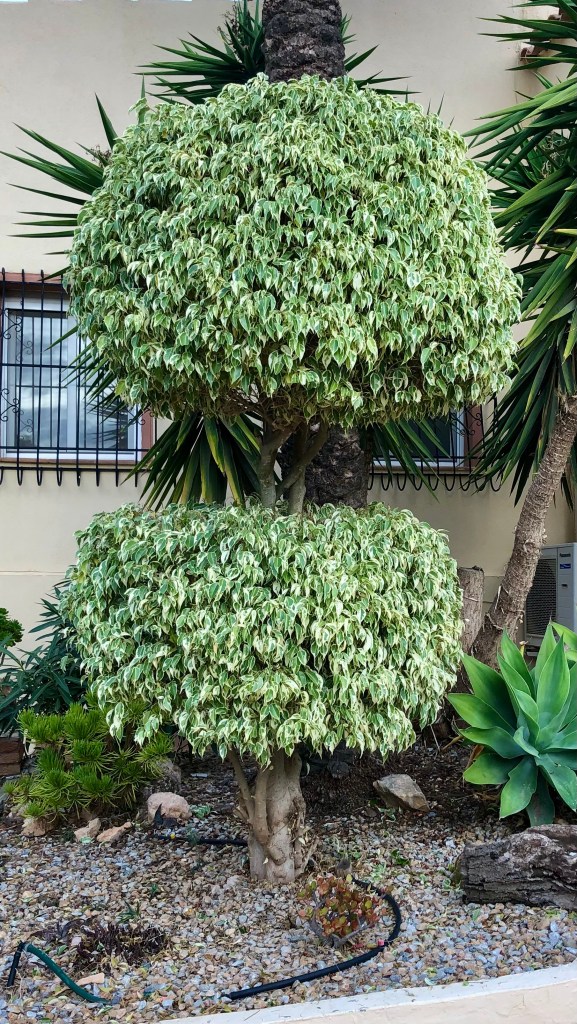
Time to take early cuttings. If you see vigorous new growth on your plants then why not try taking some cuttings. The obvious benefit of taking cuttings for your own garden is that you get free plants from something that has already proved itself in your garden.

Taking cuttings is simple. Just go to a vigorously growing non flowering stem and then using a knife (never secateurs as they crush stems) cut just below a leaf node and pop your cutting into a plastic bag to keep it fresh. The photos below show that I have been taking cuttings from Swedish Ivy (creeping Charlie) and Dianthus. You don’t really need to cut Dianthus or carnations, just pull hard on the stem you want and it will come away. Click on each photo for a larger view.

After you have taken a few cuttings you need to prepare a 4 inch pot with either seed compost or your own sifted compost. Now I am a bit fussy with compost for cuttings so I tend to use my own compost and then sift it to get a fine mix that I then add Perlite to for added drainage. The photos below show my patented sifting methods. Click on each photo for a larger view.

Fill your 4 inch pots and then gently tamp down to remove any pockets of air. Take each cuttings and remove all the leaves apart from a few at the top; this will stop the cutting losing too much water. If you have rooting hormone powder or liquid, then dip each of your stems into this before placing four of them equally spaced out around the side of the pot very close to the edge. The first photo below shows the pots ready to receive their cuttings after dipping in hormone liquid. The next photo shows the little cuttings under shelter in the shade for a few weeks. Click on each photo for a larger view.

Sowing seeds. If you intend to grow plants from seed this year – and you should. Then you better get on with it. If your garden is based on succession planting; as mine is, then it is important to have a conveyor belt of plants coming through ready to plant out. It is very hot at the moment during the day so it is important to get seedlings underway or they will just fry by the time you come to planting out.

I collect seeds from all my various plants in the Autumn and always have envelopes full ready to sow. In addition I will occasionally buy a packet of seeds as an experiment. This year it is Lupins which I will sow now to hopefully flower next year, but we will see. One innovation I am trying this year is to use all the various plastic containers that I get from the supermarket containing strawberries, blueberries, grapes etc. These are ideal for sowing seeds as they are handily perforated both in the bottom and the top which is good for seeds allowing drainage and good air circulation. So far I have sown the following:

  • Mini sunflowers
  • Dutch Marigolds
  • Marigolds
  • Trumpet vine
  • Jasminium
  • Lupins

Usually I buy a little plastic mini greenhouse each year for seeds, but this year I am just sticking them under a sheet of plastic and using the supermarket containers. The results of my early sowing can be seen in the photos below, we will see how it all develops. Click on each photo for a larger view.

Get ready to feed your plants. Now is the time to stock up on the various plant foods you will need for summer. It is important to use the right food for the right plant. Yes, of course a general purpose feed is ok, but you will get more out of your plants if you feed them with an appropriate targeted food. The photo below shows the array of feeds that I use.

From left to right, they include:

  • Ericaceous plant food. This is used for acid loving plants who dislike a lime soil. My soil is not acidic but sometimes I have things in pots that need this type of feed. We are very lucky where I live as it is in the middle of a Pine wood so pine needles are good for ericaceous plants.
  • Iron mixture. Not really a food but enables plants to take up food more efficiently. You can buy packets of Fe in a powder form that you can mix yourself. I remix this to the colour of a Rosé wine and add a Glug to every watering can feed. “Glug” is a precise measure defined as more than a drip, but less than a pour.
  • General purpose feed. This can be used on more or less any plant and will do some good but definitely no harm.
  • Orchid feed. I only have one orchid but this is a must if you have orchids.
  • General purpose granular feed. This is a good general purpose feed that can be sprinkled around between packed plants in the summer. When watered in this will feed for about a month. It says 3 months on the packet but this is an exaggeration.
  • Grass food. I know that not many of you have lawns in Spain, but if you do, then you must feed them at least 3 times a year starting at the end of April through to about October.
  • Citrus feed. This is for all you citrus trees and you should have been feeding this for at least the last month or so. This is essential before and during blossom time to ensure a good crop.
  • Special food for fruiting plants. This encourages healthy and abundant fruit for crops like figs, persimmons, plums, peach, apple, pear, grapes etc.
  • Geranium feed. I don’t know why I bother as the Geranium moth destroys all my plants before they get the benefit of it. But I have hopefully been developing one that is more or less moth proof. All it has to do is get through this year and it should be immune.

Well there you have it. A lot of plant food, that can be expensive, but most of it will last more than one season. Also it is important that you read the instructions on the bottle. If you enthusiastically overfeed, you won’t necessarily get more flowers or fruit. You are more than likely to get lots of bright green soft growth.

The big rat. I was going to finish with a finale about my battles with the big rat. But I was relying on Tango the lonely blind Labrador to accompany me and show his killer instincts, but, sadly those days are gone. From the photo below you can see that he prefers to sleep in the shade. He dreams of past battles in the bright colours he will never see again. God bless him, the rat can wait.

Dream on puppy, there is always another day.

The Yucca Lull and I get a nose piercing

Cruella (my wife) is still away I haven’t really heard from her yet but she FaceTimes the chickens on a daily basis and they tell her how I am getting on. They pass on her orders, but I just ignore them as they are in Chickenese and I refuse to learn it. Mainly I am just getting ready to gear up for the Summer. I have decided to name the period in gardening between Spring and Summer the Yucca Lull.

The Yucca Lull is that period when nothing has really started growing to any great extent, and you are looking round for things to do. This is the ideal time to look at those plants and areas of your garden that you tend to overlook as you are concentrating on the other prettier and more interesting areas. Yuccas are a prime example of a plant that is a structural staple throughout Spain, but in most cases is left to become a tangled dangerous mess. Anyway, on with the gardening.

27th March 2023. Things I have been doing lately:

Tidying up Yuccas. A tidy open Yucca provides architectural structure in a garden and allow other plants to be shown at their best. However, left to their own devices they will become a huge tangled, dark mess of interlocking blades that can easily take out an eye. Why not use this period to get out there and reshape your Yuccas so that they are better integrated into your garden. I have a number of Yuccas throughout the garden from medium sized to very big. The two photos below show the worst examples of my untidy Yuccas. Click on each photo for a larger view.

From these photos you can see that there are two main problems. Firstly, I have left the dead leaves on the plants for a number of years and they have died, dried and gone brown giving a horrible look to the plant. Secondly, you can see lots of over crowding where stems have grown willy nilly (to my US readers this is an old English saying for higgledy piggledy; I believe in plain language!). The first thing you need to do before tackling your Yucca, is to get protected. Yuccas can be very vicious, so you will need a hat, gloves and eye protection. The photo below shows me ready for action.

Tom Cruises applied for this role but I just pipped him; I think I won on height.

Start by peeling back all the dead leaves. As these grow in a rotational pattern you need to start at the bottom of the stem and work up systematically peeling each leaf off in turn by pulling it sharply downwards. The photo below shows the action, followed by a photo of one of the over 20 trugs I filled. Click on each photo for a larger view.

Once you have cleared the stems of dead leaves, then it is time to cut out unwanted branches. You are aiming for an open structure you can see through with the removal of all cross branches. The best tool for this is a simple bow saw as this soon rips through the Yucca stems. The photo below shows my trusty saw ready for action followed by the results of vigorous thinning out. Click on each photo for a larger view.

Finally here are some photos of my new freshly reinvigorated Yuccas once more being a source of pride within the garden. Click on each photo for a larger view.

I am afraid to say that despite my best efforts at self protection the vicious Yuccas gave me a painful nose piercing. When I telephoned Cruella (my wife) to tell her about this disaster she suggested I put a ring through it and make myself look modern. However, I refused as I suspect she would try and lead me around with it. The photo below shows the damage.

I did get a quote from a plastic surgeon, but they insisted I needed my whole head doing.

Sago pups, Cruella flys off and I receive a chicken delegation

I know the above heading is a lot to take in, but there is a lot going on. Firstly, Cruella (my wife) flew back to the UK (the usual way, holding tight to the broom handle, head down with chin straps on her hat and black gown flowing menacingly behind). She was rushing back to welcome the idiot son home from Japan. She was so excited at his arrival that she wanted to fly out and meet his plane. I advised against it and reminded her that they shoot down white balloons, so God knows what they would make of a fast moving black streak.

Anyway, the minute she flew off all the chickens went into a huff, mainly because I refused to give them all the treats that Cruella stuffs them with. Every morning I received a delegation standing and staring at me in silent disdain as I drank my morning tea. Eventually I relented and let them have a FaceTime call with Cruella. They all jabbered away in chickenese and I heard my name come up a few times followed by Cruella shouting “he did what”. The outcome is that they negotiated all their treats back and I have been instructed to give them extra when Tango the lonely blind Labrador is fed. I feel that Tango is incensed and he has taken to howling the blues hit “is there anybody lonely”. The photos below show the pressure I was under. Click on each photo for a larger view.

Tango being fed and humiliated as the fat chickens look on expectantly

Anyway on with the gardening.

10th March 2023. Things I have been doing lately:

Potting up my Sago Palm pups. If you are following this blog closely, and I know you are, then you will remember that in my last post I removed pups from below my Sago Palm and left them for the cut scar to dry off. Well round about a week should do it, so if you cut some off now is the time to plant them up. The first thing you need to check is that the scar where you cut the pup off is completely dry. If it is then you are good to go. The photos below show the nicely dry scar and the pups excitedly waiting on the potting bench. Click on each photo for a larger view.

Like most Spanish plants, Sago Palms need a good free draining compost and this is especially the case when you are starting the pups off. In the past I have used a mixture of sand and compost with variable results, so this time I am using Perlite to make the compost nicely free draining. Mix up about 25% Perlite to 75% good compost (not China shop compost). If you have some of your own well rotted compost then chuck a bit of that in as well. Mix it really well till the Perlite is fully integrated into the compost. The photos below show my mixing processes. Click on each photo for a larger view.

It is important when potting up too chose the right size pot for the pup. Don’t pick too big a pot as this will leave too much soil that can become a bit rancid and attract pathogens. Instead keep them nice and tight. Firstly put a layer of compost at the bottom of the pot. Then gently place your pup on top pushing it down firmly to ensure good contact with the compost mix. Next fill around the sides of the pup firming down as you go. Don’t bury the pup just take the soil up to about three quarters of the pup and leave the rest sticking out. Finally water well and leave to stand in the shade. From on then let the pup dry out a bit between watering. Do not be tempted to take the pups out into the sun until they are well established. In a month or two you should see growth. The first photo below shows the planting process whilst the second shows the pups proudly in their right size pots. Click on each photo for a larger view.

Pruning my orange trees. Now is the time to prune orange trees before the blossom arrives. I do this in three linked stages. First, I cut back any branches that are crossing, diseased or growing vertically. Second, I cut out a space at the centre of the tree that allows light to penetrate right to the heart of the tree. This is often likened to creating a wine glass shaped tree with the bowl of the glass represented by the space at the centre of the tree. Third, and last, using long reach lopers I cut back any branches that are too high to be practicable to pick fruit. If you undertake this process annually, it should take you no more than about 15 minutes per tree.

The work should begin with a quick survey of your trees so that you know what you are facing. I have 5 orange trees all of which require a customised approach. The photos below give an overview of some of my trees. Click on each photo for a larger view.

Next you need to move on to cutting out the centre of the tree to let light in. For this you will need lopers, secateurs, and possibly a saw. The photos below shows some of my trees with the cut out centre branches lying at the foot of the tree. The final photo shows the space at the centre you should be aiming for. Click on each photo for a larger view.

Finally using long reach lopers cut off the highest unreachable branches. If you don’t have long reach lopers then get the step ladder out and go through the centre of the tree. The photos below show my final trimming. Click on each photo for a larger view.

Repotting Agave Attenuata. These Agaves are quite popular in Spain as they are easy growing and tend to take care of themselves. I have a number of them in large groups around my garden with a few odd ones planted in pots. They have an endearing habit, in that over time they will bend towards the dominant position of the Sun. This is fine when they are planted in the ground, but in a pot it renders them unstable and liable to be blown over by the wind resulting in leaf damage.

To overcome this setback you can rotate the pot occasionally but eventually you will need to repot the plant into an upright position. However, let me pass on my secret of years of repotting them. Don’t attempt to dig the plant out of its pot roots and all. Instead, take a sharp saw and cut through the stem as close as possible to the soil. Throw away the old root and refill the pot with fresh free draining compost. Then peel off a few layers of the lower leaves, and if possible coat the stem with rooting hormone liquid (not absolutely necessary so don’t panic). When you are ready just pop the cut stem into its fresh compost in an upright position and you have a smart new upright Agave.

The first photo below shows the Agave had begun to lean so badly I had to prop it against a wall. The second shows the cut stem ready for replanting. The next shows the cut coated with hormone rooting liquid. And finally, the newly planted and refreshed plant. Click on each photo for a larger view.

The Wild Wood, chicken pickets and things to do now

Well I’m back! I know I didn’t tell you I was going but it is best if I just slip away and come back when needed. I am trying to cultivate an air of mystery around my gardening, a bit like the Lone Ranger but with secateurs. Anyway I have been at our English house dealing with our garden there and inculcating culture into our idiot son; unfortunately he is inclined to beer and football. But now that I am back it has taken me a while to assess the damage caused by Cruella (my wife) and her marauding chickens. Needless to say there have been tears, mainly mine. Anyway on with the gardening as there are a few jobs you need to get completed before the warm weather gets here.

27th February 2023. Things I have been doing lately:

Cutting back the Wild Wood. Regular readers of this blog will know that part of my garden is dedicated to my Wild Wood area. I try to leave this area as natural as possible without letting it become overgrown or unmanageable. To achieve this I have a local contractor come in once a year to strim and cut back with the aim of achieving the feel and look of a wood land glade.

Once again this has been a tremendous success as I instruct the contractor where to cut back and how much to strim. This has allowed a number of wild flowers to come through and thrive including lovely wild orchids which are spreading throughout the wood. The photos below show various areas of the wood and conclude with the lovely orchids. Click on each photo for a larger view.

When I showed Cruella (my wife) the newly tidied wood she immediately got excited and declared it would make a perfect chicken sanctuary. I told her this would be impossible as they would eat the orchids. She immediately flew into a rage and accused me of having no heart and threatened to contact David Attenborough and other chicken experts. I suggested perhaps Colonel Sanders may have a view, this did not end well. The result is that my front door is under a continuous picket by her girls who immediately rush at me every time I try to go out. I am reduced to using the back door. Even then the whole garden echoes to Cruella and her girls chanting in Chickenese “…what do we want, a chicken sanctuary, when do we want it, now”. The photo below shows the militants in action.

At night Cruella lights a little brazier for them and they stop any visitors coming to see me. I call them the non-flying pickets.

Removing the last of the orange crop. We have been juicing oranges since early December and now it is time to remove the last of the crop. The reason for removing the crop is twofold. Firstly, the blossom will be coming soon and you don’t want the tree to waste its energy on last years crop (the fruit will not get any bigger). Secondly, you will need to prune and open up the tree before the blossom arrives.

In addition to removing the remnants of the old crop it is time to begin feeding your trees ready for the blossom. I feed in two ways, for about a month I feed weekly with a liquid feed which gives a good burst of energy to the tree. Then from about the end of March I add a long lasting granular feed that should keep the tree going for about 3-5 months. The photos below show the last of the old crop and finally my liquid feed. Click on each photo for a larger view.

Time to prune palm trees. Lots of people ask me when is the right time to prune palms. And the answer is right now whilst the sap is not rising and the Palm Weevil is not flying. If you prune later in the year there is a danger of pathogens and disease getting into weeping cuts and that the cuts will in turn attract the Palm Weevil. Where possible I would use professional Palmistas for large trees as anything over about 10 foot can be dangerous.  In addition a professional Palmistas will notice any problems with your trees and will be able to advise accordingly.

Don’t they look lovely. Sorry about the lawn, I blame the chickens

Cutting out Sago Palm Pups. Many people in Spain have Sago Palms, and they can be a lovely exotic addition to any garden. Sago Palms are very slow growing and for this reason they are exceptionally expensive to buy. But you don’t need to buy one because in most cases your Sago Palm will produce nice little pups (plantlets) from their base. The photo below shows one of my sago palms with a few pups emerging from the base.

It is about like assisting in a birth, but obviously with different tools

To remove the pups you will need a trowel, an axe and a sharp spade. The first thing to do is to dig around the pup to expose what looks like a wooden coconut still attached to the mother plant. Once you have exposed the pup then using your axe cut sharply down between the pup and its mother plant. This will probably take 2 or 3 whacks, but will still not completely separate the pup. Using your spade work between the pup and its mother to lever the pup out. Usually this will come out with a sudden pop, so be careful you don’t overbalance.

The photos below show the process in action followed by a successfully delivered pup. Finally, you can see that from this one plant I have retrieved 10 potential new plants. I now need to leave these for a week for the cut scar to heal over. I will show you how to plant them up in my next post. Click on each photo for a larger view.

I don’t know about you, but I think they take after their Mum

The big cutback part 4: The titanic struggle with the big ficus and I invoke help from Wigan!

The last thing I tackle in my winter cutback is my attempts to prune back my big ficus tree. This sits majestically in a gravelled area on part of my front garden. The pruning is a mammoth task mainly because the ficus gets bigger year by year whilst I get smaller over the same time frame. Those of you who regularly follow this blog will remember that I pruned this tree back to a donut effect over 12 years ago by cutting out the central trunk to create a hole in the middle into which I inserted a statue of the Cheshire Cat from Alice’s Adventure in Wonderland.

The big ficus has always seen this reshaping as an affront to its dignity, and as such has sought to punish me over the years by various means including:

  • Becoming infested with wooly aphids and many other creatures
  • Deliberately dropping its leaves to make the gravel area untidy
  • Tripping me up in its roots
  • Throwing me off my ladder when I am entering the centre of the tree

Anyway let’s get on with this.

2nd February 2023. Things I have been doing lately:

Pre-fight psyching out with the big ficus. An important part of my pre-pruning ritual is to build up my courage by pre-prune psyching out. This is a bit like boxers at the weigh in. We stare at each other, I strike postures around the tree and issue a series of blood curdling threats. For its part the tree just waits silently knowing it’s time is coming. The photos below show the big ficus before the fight, followed by the early stages with me striking postures with the tree. The final photo shows my new gardening jacket bought from the sales- I didn’t get a choice of colour. Click on each photo for a larger view.

Big moody and emanating menace
I think I look quite handsome in my new gardening jacket. Note the intimidating power pose I am striking

Day one of the fight. This is the most difficult day as I start by pruning round the sides using my long reach trimmers. But standing on my little platform and wielding the heavy trimmers began to take its toll as the day wore on. The first photo below shows that I wasn’t making much progress. Even with the Cheshire Cat looking on it was very heavy going. Click on each photo for a larger view.

Day 2 I call for assistance. At the end of day 1 I searched the internet for some source of help, and by chance discovered it in the most unlikely of places – Wigan! I didn’t realise that Wigan had a flourishing Pruners and Pie Eaters Guild. Evidently this ancient and honourable society exist solely to assist gardeners in distress and requires no payment other than plentiful pies with lashings of gravy.

The Brother Pruner they sent – which is what they are called in the Guild -insisted that his calling forbade him from revealing his identity, so the only photos I took he insisted that I did not show his face. Anyway, it was fascinating he started the day with what I can only describe as a Haka similar to the New Zealand rugby team, but involving pies. He then liberally smeared himself with gravy and after a few ritual bows to the tree he ascended his scaffolding and began his work attired only in his fading grey cowl. Those of you who are interested in the study of folklore may be interested to know that he sang a series of ancient songs as he worked. To be honest I couldn’t make it out as most words started with th. The series of photos below show him at work. Click on each photo for a larger view.

Upon completion of his work he left without a word or seeking any form of payment, leaving only the faint smell of pies and a few puddles of gravy.

The big clean up. An important part of the big cutback is to make sure you clean up any debris, as if left this will attract snails and slugs. The photos below show the big clean up in progress. The final photo shows Cruella’s (my wife) chickens moving in to hunt down snails and slugs. Click on each photo for a larger view.

And finally, it is all over for another year and the Cheshire Cat is where it belongs back in the centre of the tree.

Note the enigmatic smile

The big cutback part 3: and Cruella becomes a “feeder”

I am now heading for the final push on the big winter cutback, ideally everything should be cut back in your garden before the end of January. If you leaving cutting back much later then you are likely to be cutting off this years growth. This last bit is always heavy going for me as I leave the big heavy stuff to the last so that I can build up my courage and stamina. The very last thing I do is reshape my big Ficus tree which is a bloody painful experience each year.

As if dealing with the most stressful part of the big cutback was not enough, I spend most of my evenings preparing my defence against the summons served on me by the Chief Diversity and Inclusion Officer of the National Chicken Council on account of my alleged slander of calling Cruella (my wife) chickens fat. Anyway more of this later, on with the big cutback part 3.

27th January 2023. Things I have been doing lately:

Cutting back my tower of flowers. Regular readers of this blog will know that years ago I cut back a palm that had fallen victim to the Palm Weevil. Instead of completely taking the Palm out I instead wrapped it’s shortened trunk in mesh and have happily grown a variety of climbers up the truncated trunk. This provides me with a lovely tower of flowers all summer, but needs to be cut back every winter to encourage new growth.

In case you are interested the plants I used to clamber up the trunk include:

  • Pink Trumpet Vine
  • Solanum
  • Jasmine
  • Stephanotis

All of the above flourish beautifully. The first photo below shows the flowering tower at the end of Summer. The next two photos show the tower before and after it’s annual cutback. Click on each photo for a larger view.

Pruning a variegated ficus. I have two variegated ficus one is quite small, whilst the other is larger and I have subjected it to cloud pruning. The secret with any variegated plant is to make sure that the moment you see a fully green leaf you instantly pluck it out. You can quite easily lose variegation as the green leaves can prove very dominant and will soon take over. Spain’s gardens are full of variegated ficus that have lost their variegation and are now common or garden old ficus – you have been warned, don’t come crying to me.

Ficus are relatively slow growing and are very forgiving if you prune them a little badly. My poor old ficus can be seen in the photos below before and after being subjected to my artistic pruning. My aim is to produce an inchoate, but interesting shape whilst exposing the stark white of the bark – good eh! Click on each photo for a larger view.

Maintaining the sight lines for my European Fan Palms. If you read my last post, and I am sure that you did, then you will remember that I wrote about the importance of sight lines in your garden. Sight lines are views or vistas in your garden that perform the function of providing a special view or focal point integral to a particular part of your garden. My European fan palms perform a dual function they give a privacy from my front gate and present a dramatic entrance for guests, whilst at the same time presenting a stunning sight line from the house.

These palms are lovely, but they grow like crazy and happily self seed around themselves. This means that get very top heavy with abundant new fronds whilst at the same time becoming overcrowded at the base. The first photo below shows the unpruned plant viewed from the gate towards the house and secondly from the house to the gate. From these photos you can see the problem. Click on each photo for a larger view.
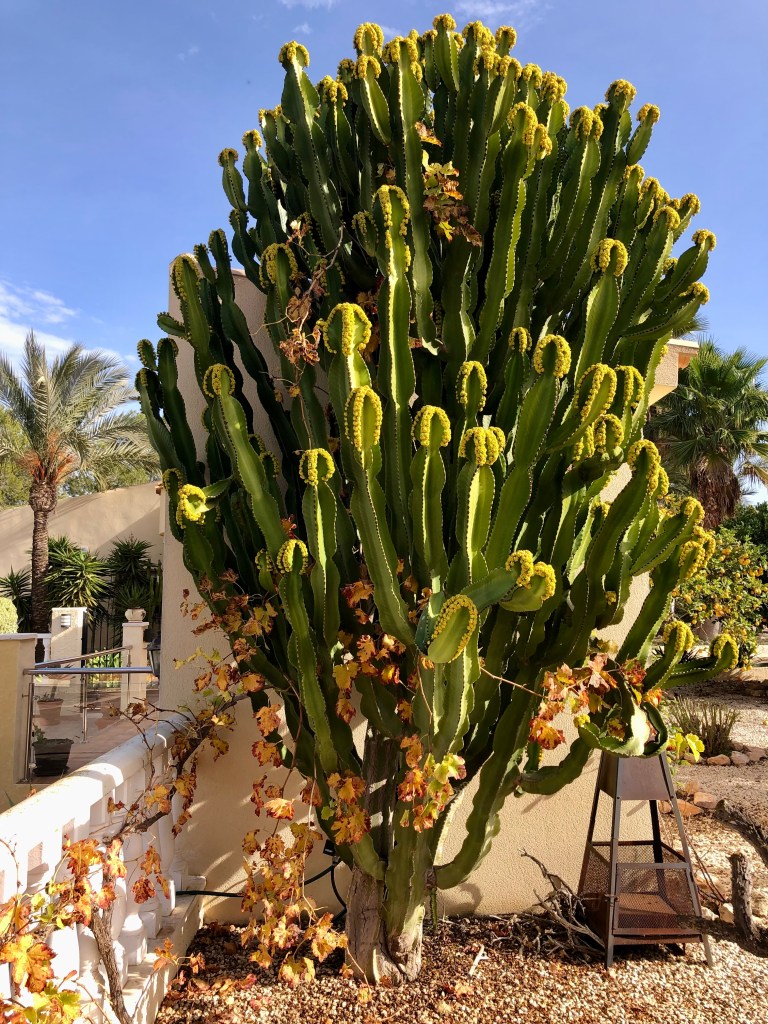
After much vigorous pruning shown in the two photos below, the sight line can be seen fully restored in the final photo. It is important to note that when pruning any large palm you must wear eye protection or you can easily be damaged by their spiked stems. It is bad enough that they shred your clothes without losing an eye. Click on each photo for a larger view.

Pruning Sago Palms. Sago palms are one of the most popular plants in Spanish gardens. They can be found planted in the ground or happily growing in pots as their slow growing nature ensures they are happy in pots. To be honest these plants do not need that much pruning especially if you grow them in the way that I do with an exposed trunk. I think that exposing the trunk gets you the best out of the plant; you see the ruggedness of the trunk whilst at the same time appreciating the architectural shape of the fronds. To achieve this look, just get out your lopers and take off all the circles of fronds just leaving the top two circles. This is important as if you ever lose one circle to disease or damage, then you have a reserve. The photo below shows my multi-stem sago palm before and after its trim. Click on each photo for a larger view.
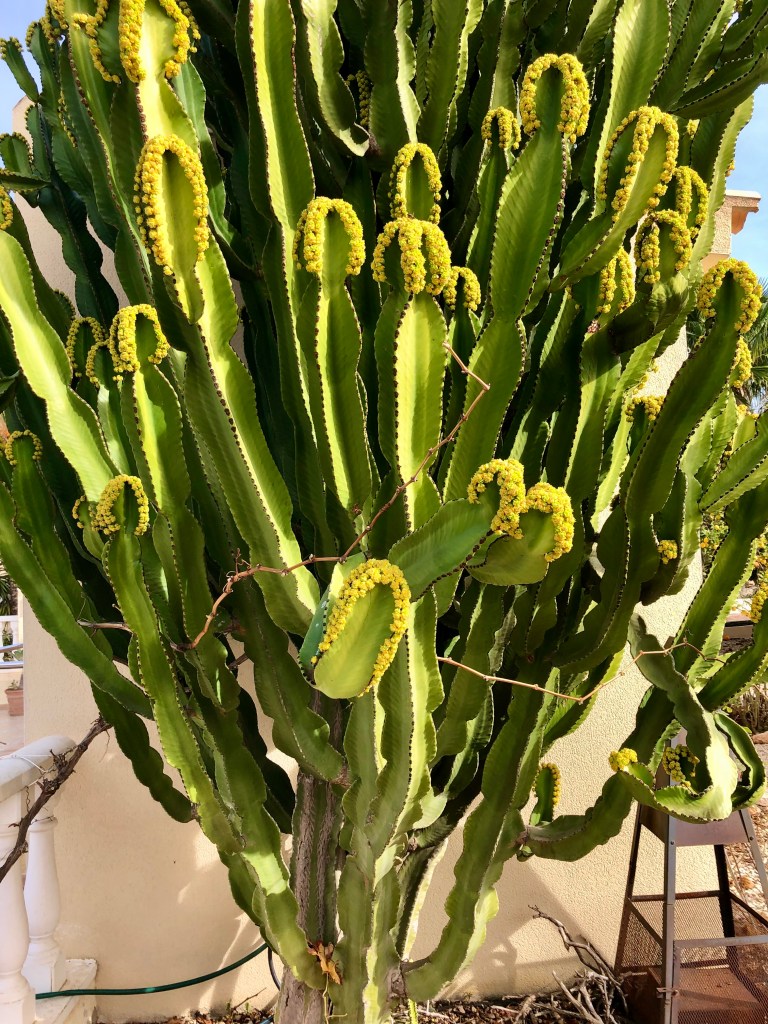
An interesting and rewarding part of sago palms is that they will throw off “pups” at their base. These in effect are mini sago palms that can be removed and cultivated. I am not doing this at the moment as I am too busy, but this is the process if you fancy having a go.

  • Clear the earth away from the pup to expose a hard coco nut shaped growth
  • You need to separate this growth from the trunk by cutting down with a sharp spade or similar
  • Once you have removed the pup cut off all the fronds attached to it
  • Place the now frondless pup in a shaded dry area for two weeks to allow the scar where you have cut time to scale over
  • After two weeks place the pup in a compost mixture of 60/40 compost to sand and place it into a very tight pot and place in bright but not full sun
  • Water once then leave it till the soil is completely dry and then water sparingly
  • If you are lucky, in about a month you should see some growth

The photos below show some photos of my ready to harvest pups. I have cut one side of the fronds off so you can get a better look. Click on each photo for a larger view.
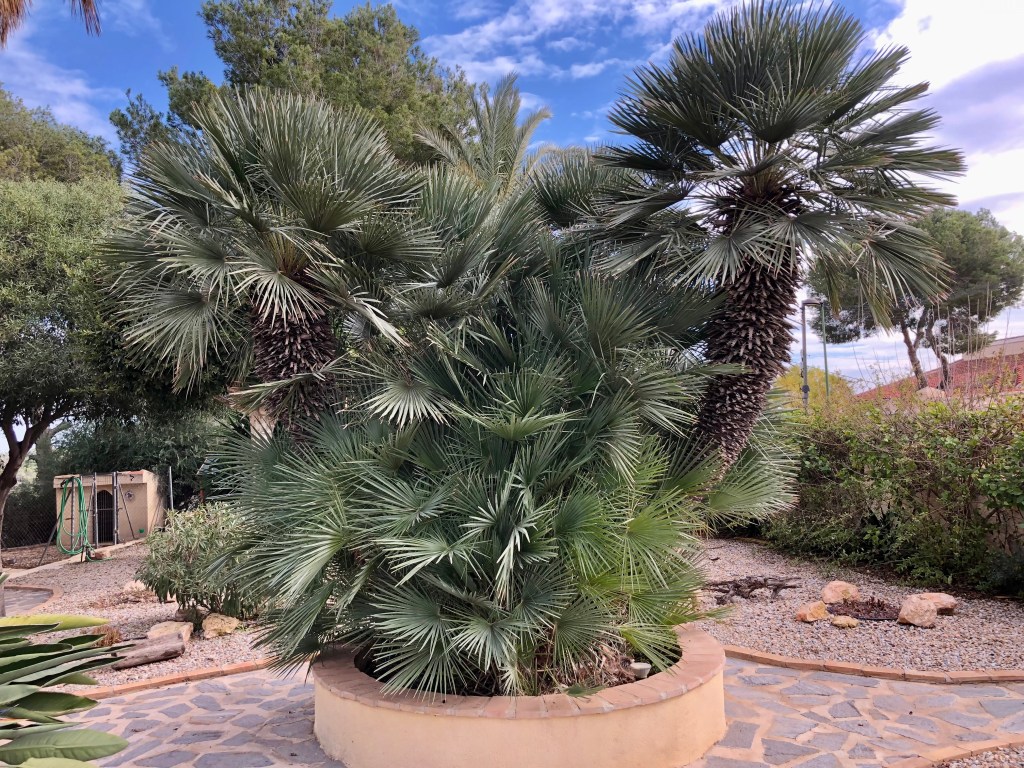
Cutting back hedges. I consider a good mixed hedge to be one of the delights of living in Spain. Far too many people surround their property with high sterile walls that stop any meaningful growth in their shade. Planted correctly hedges can give you all the security of a wall, but at the same time can delight you with different foliage and flowers not to mention abundant wild life.

I have a rather unorthodox approach to hedge planting. I have over two hundred metres of a variety of mixed hedges all of which are planted closer than normally recommended so that they eventually form a thick impenetrable wall of living colour with each hedge flowering like crazy as it fights for its space. This means that all I have to do is get my hedge trimmers out and trim it all back to the desired height each year and leave it to get on with it again.

When I say all I have to do, to be honest it is like a military operation assembling all the ladders, platforms and tools needed to do this job. The first picture below shows me beginning to gear up for the task in hand. Whilst the subsequent three pictures show parts of the actual task in hand. Click on each photo for a larger view.
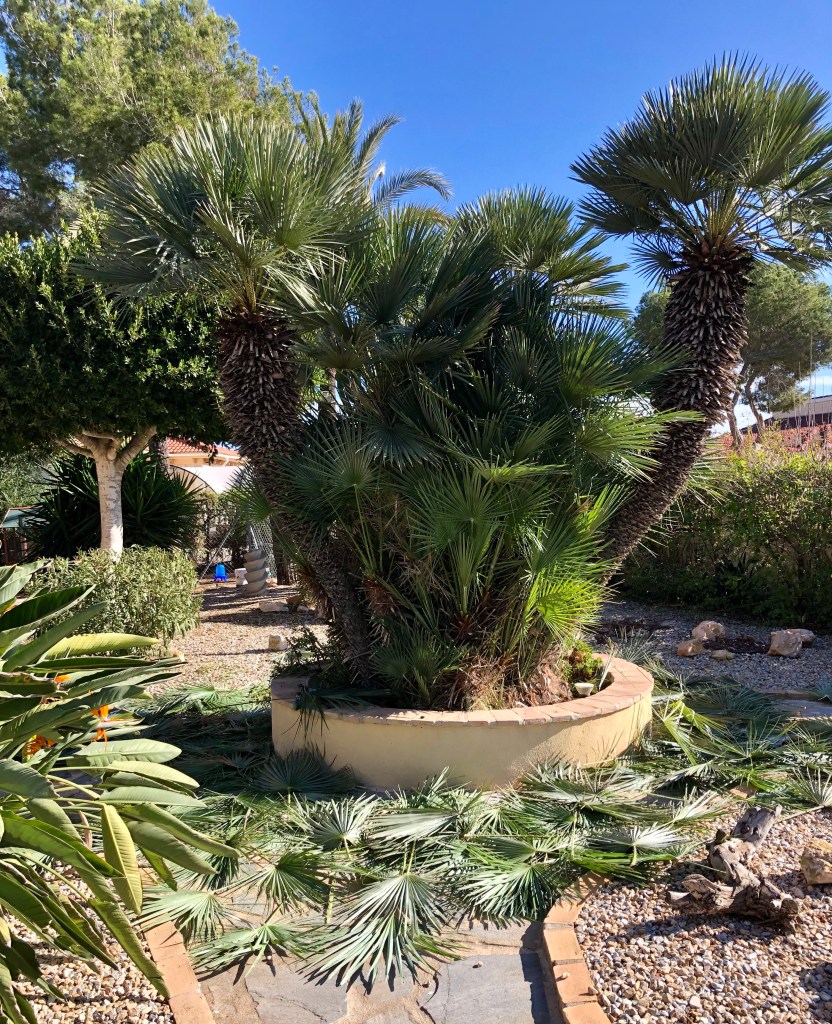
Finally below you can see the finished hedges in all their glory.

Preparing my defence. Unfortunately, as I mentioned earlier I have to spend most of my evenings locked in my room preparing my defence against the summons served on me by the Chief Diversity and Inclusion Officer of the National Chicken Council on account of my alleged slander of calling Cruella (my wife’s) chickens fat. The nub of Cruella’s case rest on the fact that she has sworn an affidavit saying that her chickens are only fed normal chicken food and therefore cannot be deemed fat.

I on the other hand have mounted a defence that no ordinary chickens could be as fat as these unless they were getting extra food. To assist my defence I have been secretly monitoring Cruella and her chicken feeding habits. The first thing I noticed was that some of the chickens gather inside Tango the blind Labradors old kennel every time he is fed (10am and 3pm). The photo below shows the assembly starting. This spot is just beside where Tango’s food is kept and where he is fed.

The assembly of the fatsos

By mounting a hidden camera I now have proof that Cruella is illicitly feeding her chickens with high calorie insect treats that obviously encourage obesity in chickens. The photos below are legal dynamite as they not only show excess feeding taking place, but I have also included a photo of the illicit feed. Click on each photo for a larger view.

Obesity in a bag

Confronted by my portfolio of evidence Cruella has admitted that she may have acted hastily and has subsequently written to the Chief Diversity and Inclusion Officer of the National Chicken Council withdrawing all allegations against me. Unfortunately, all of this has drained me and I am not currently up to battling with the big Ficus tree so there will be a Part 4 of the big cutback.