The big winter cutback Part 1. Cruella hails the idiot son as the Chicken Prince

Well it has finally arrived, it is time for the big winter cutback. Depending where you are in Spain you have a maximum of two months (January and February) to get you garden in shape and to guarantee a healthy floriferous garden this summer.

The basic idea of cutting back is that you take out all last summers old growth, you take the opportunity to reshape plants that have become ungainly and you allow light to get into plants that have become congested. If you don’t cutback then you will not get the best out of your plants and your garden can end up as a brown messy jungle with no definition and few flowers.

But don’t worry, even if you don’t quite know what you are doing, as most plants apart from spring bulbs are dormant and you can’t do too much damage. So get out there, take your time, do it in weeks rather than days your reward will come in Summer.

13th January 2025. Things I have been doing lately:

  • Reshaping Yucca
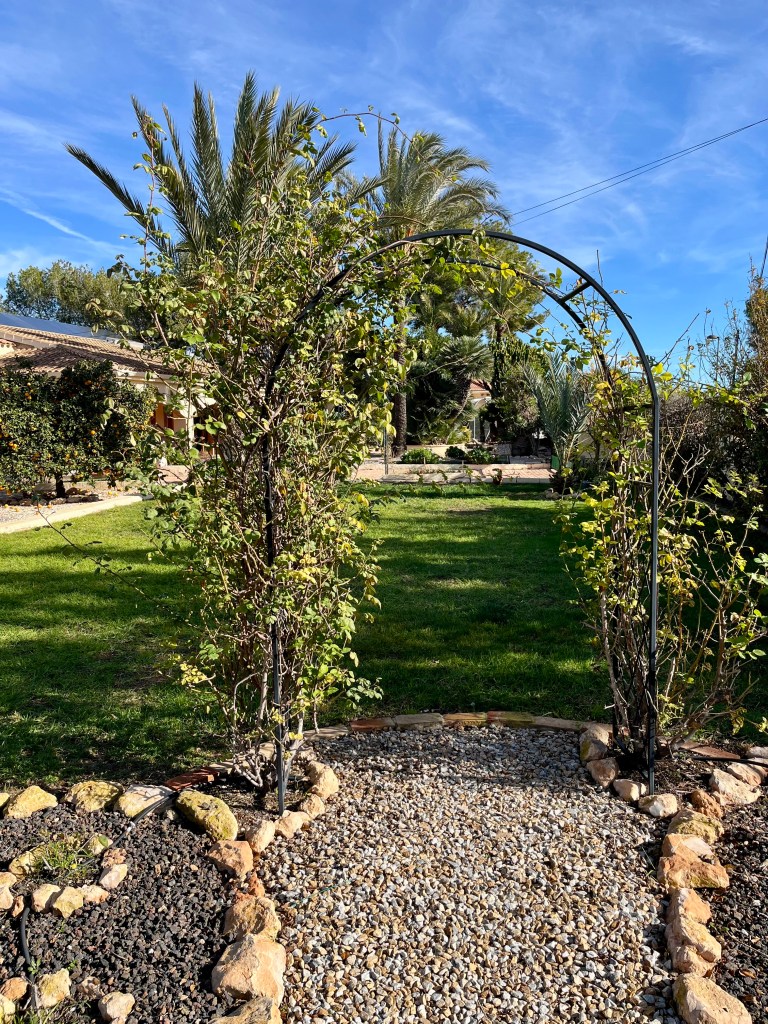
  • Bringing climbing plants back into shape
  • Cutting back Canna
  • Pruning Dame de Noche
  • Trimming grasses
  • Dealing with the Chicken Prince

Reshaping Yucca. You may remember in my last post I talked about the need to bring Yuccas under control and cut back to a size where you can appreciate the flower spikes. I have now taken a month or so to look at my yucca and decide where I want to cut. So aided by the idiot son I set out to resize all my yucca.

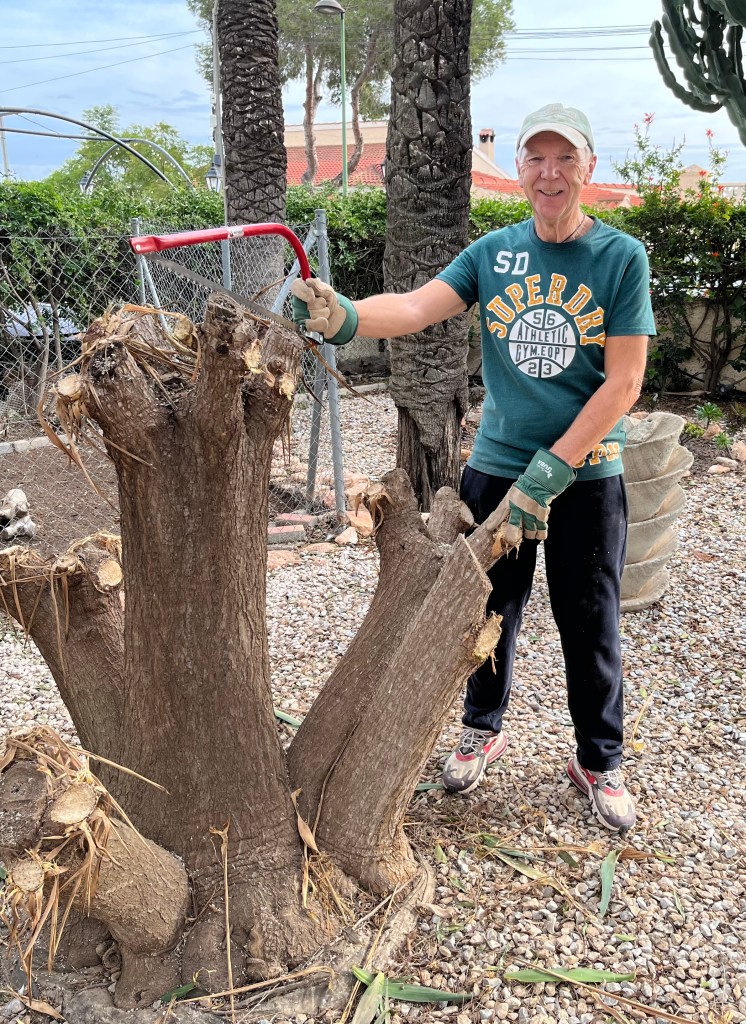
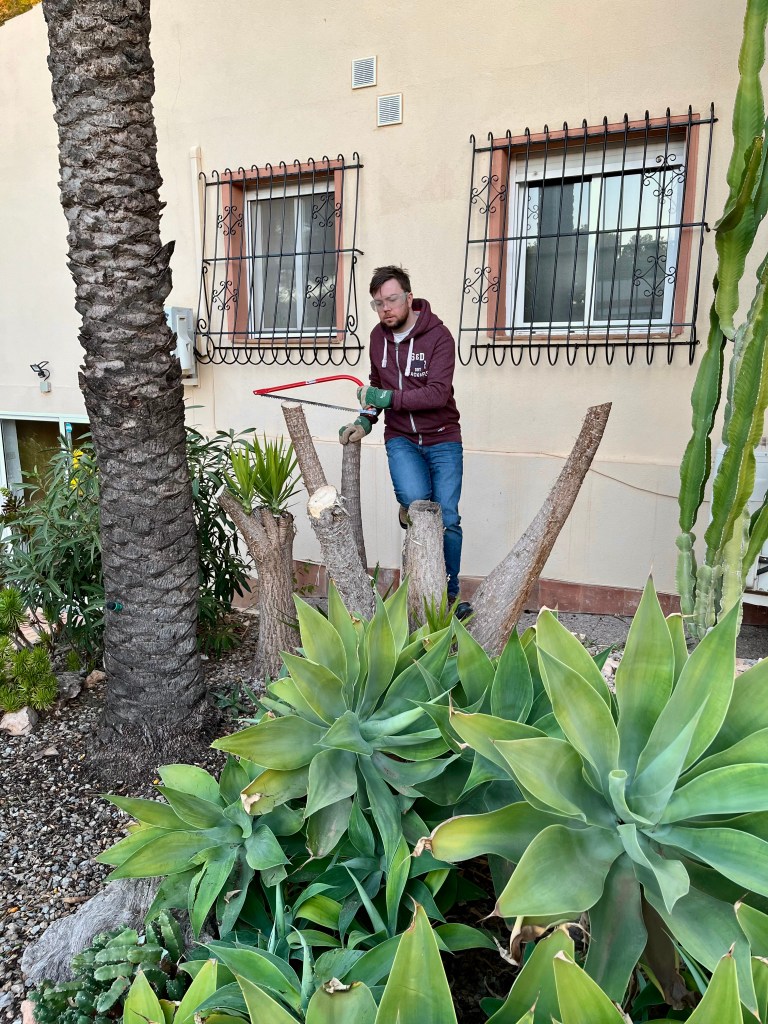
Yucca are a cane and not a tree as they are sometimes mistakenly called. In effect this means that you can cut the trunk back to almost any point, and the plant will regrow from there. You can use either a chainsaw, or more flexibly, a bow saw. Most plants will cut relatively easily, but you must wear eye protection and gloves or you will get a nasty spiking. In addition large yuccas will be very heavy, and just because they look light and spindly in the air, they are extremely heavy and will cause you serious damage if they fall on you. The photos below show my yuccas before their prune. Click on each photo for a larger view.
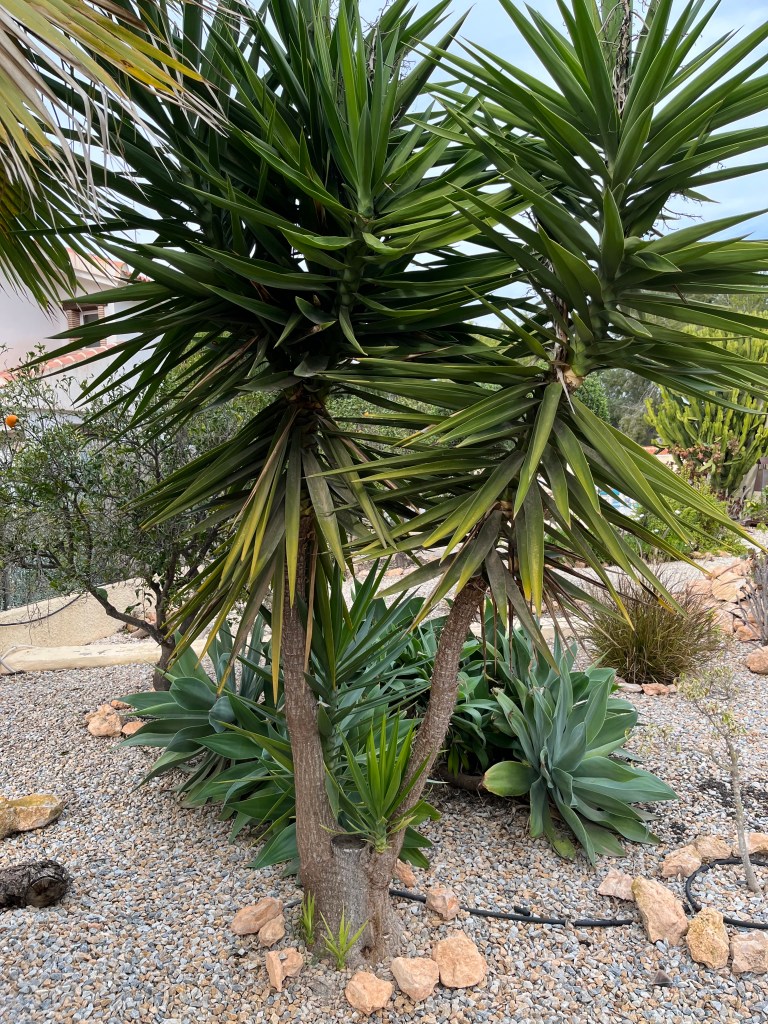
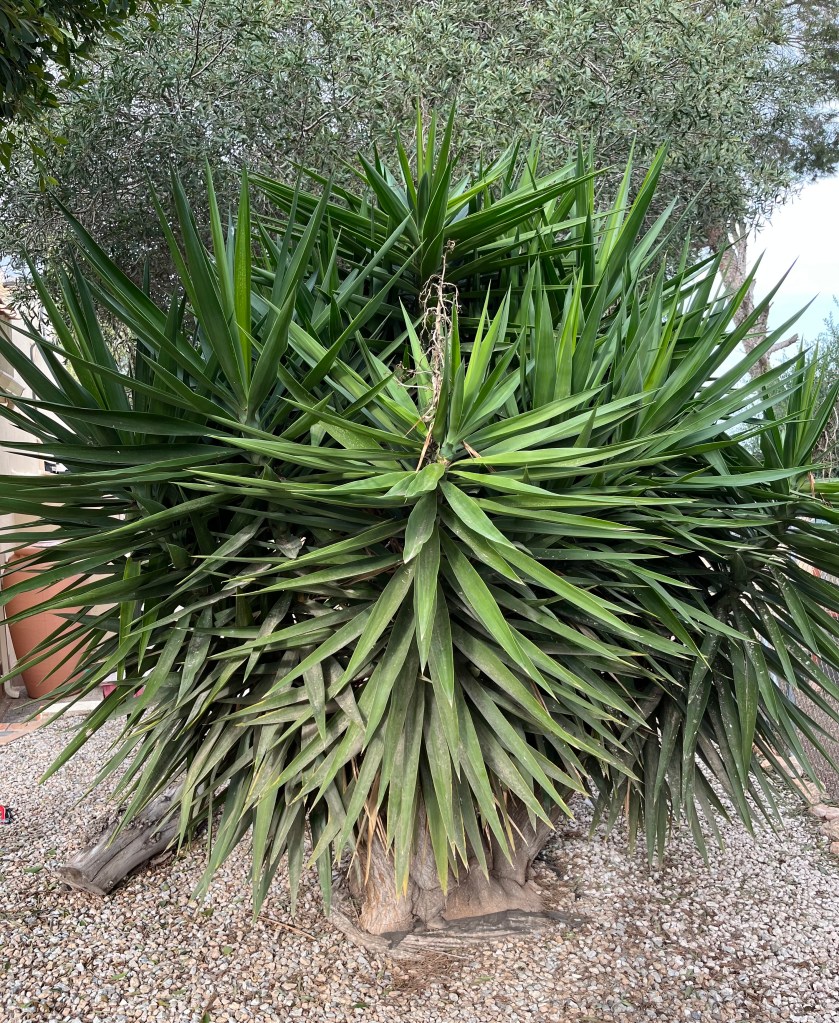
The photos below show the pruned yucca in the same order as above with the addition of the head gardener and idiot assistant.


Bringing climbing plants back into shape. Most climbing plants will climb for two basic reasons:

1. To escape competition at ground level from other plants.
2. To out compete other plants for sun by throwing out flowering side shoots.

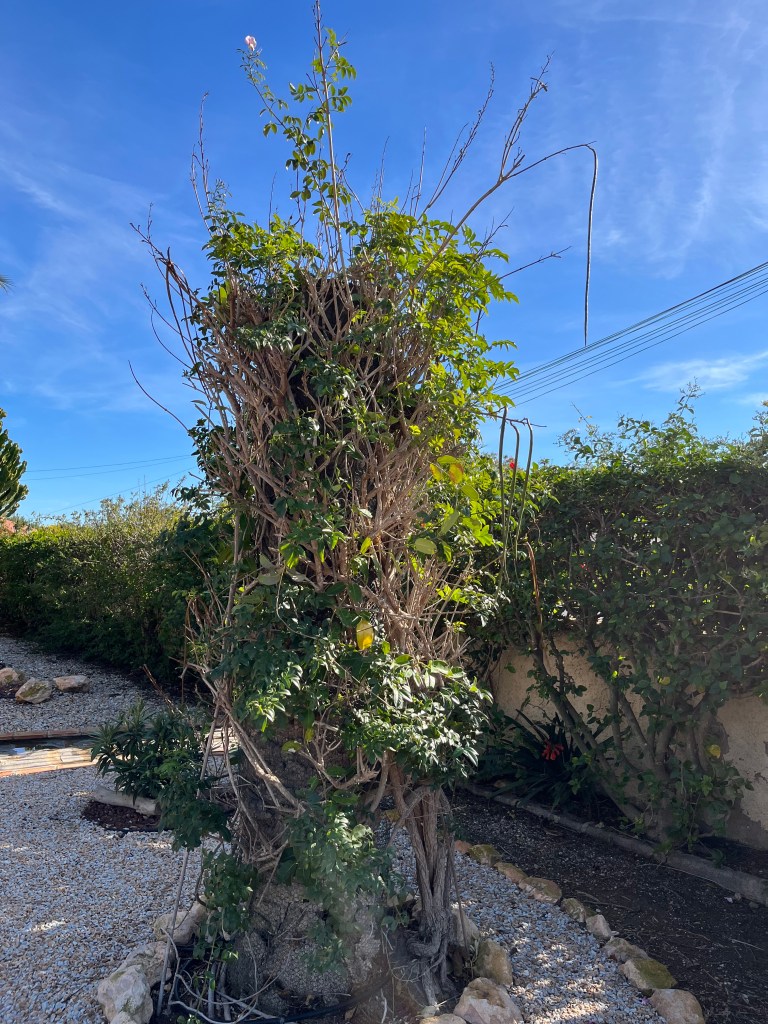
Because of this growing habit most climbing plants will require pruning at the end of every summer. Failure to do this will result in the plant becoming congested and normally flopping over itself and thereby killing off the growth underneath. The simplest and easiest way to prune most climbers is just take a hedge trimmer or shears and skim up the face up the plant shearing off last summers extended side shoots. This will keep your plants tidy and ready for next summer. The photos below show examples of climbers I have started to cutback. Click on each photo for a larger view.
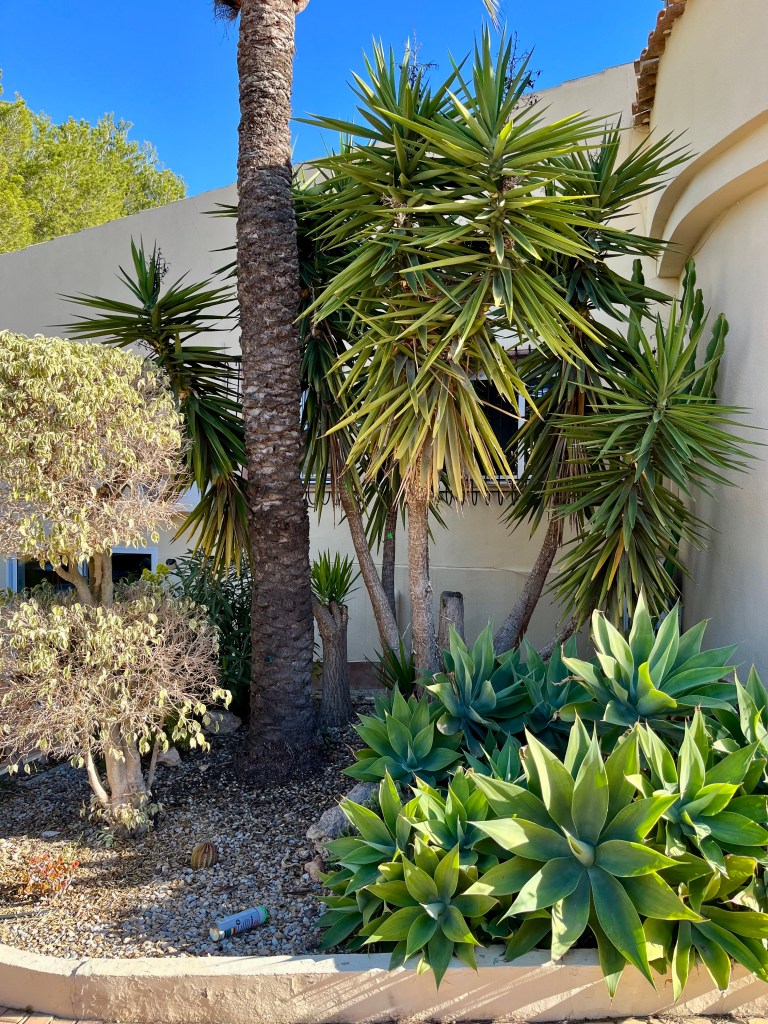
The photos below show an old palm tree trunk with various climbers growing up it. This includes: Trumpet Vine, Jasmine, Stephanotis and Bower Vine. I just run the hedge trimmers over it to tidy it up and it is ready for another year. The photos below show you before and after.

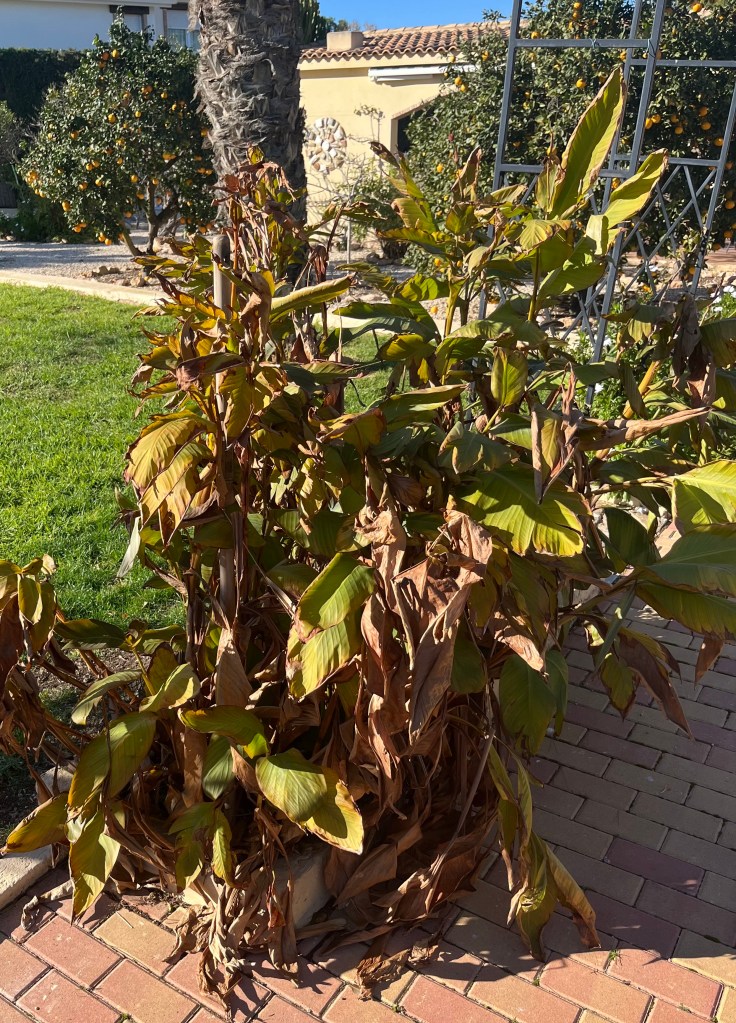
Cutting back Canna. Normally Canna are beautiful showy plants with exotic foliage and stunning flower spikes. However, this year has been a bit of a disaster. Because of a lack of early rain the rhizomes did not swell enough and most plants were half size.

I have left my plants to die right back before cutting them down to just about 3 or 4 inches from the ground. By cutting back to this level you are telling the plant that there is no point trying to regrow this year and it might as well wait till the spring. Also, by leaving a small stalk you will stop rain water seeping into the rhizome and rotting it. The photos below show some of my disappointing cannas, followed by the correct level of stalk to leave. Click on each photo for a larger view.
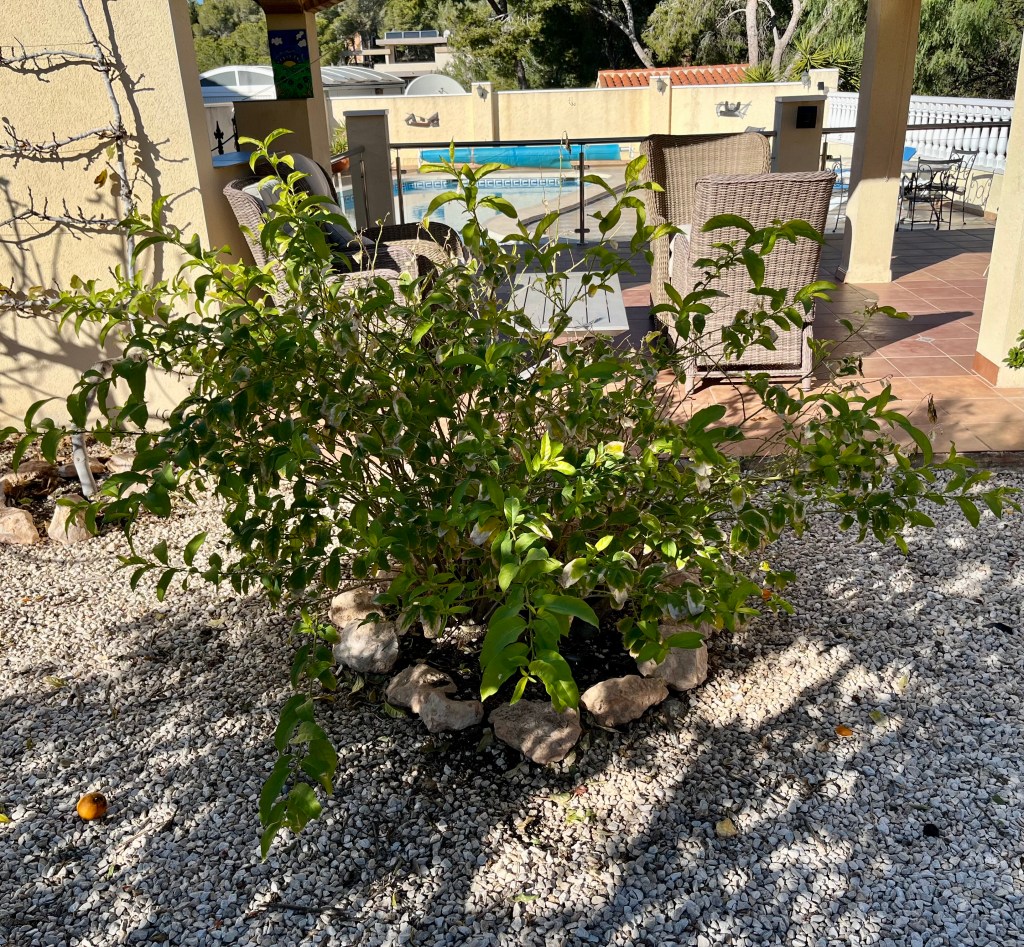
Pruning Dame de Noche. Now is the time to give your Dame de Noche their big winter cutback. If your plant is more than three years old then you can drastically cut back if you wish. Last year was not a great year for my plant so instead of taking it right back to 50cm or so, I am going to leave it a little bigger so that it gets a jump start in the Spring. The simplest way to prune Dame de Noche is by running hedge trimmers over them and shaping them into a mound. The photos below show my plant before and after its trim. Click on each photo for a larger view.

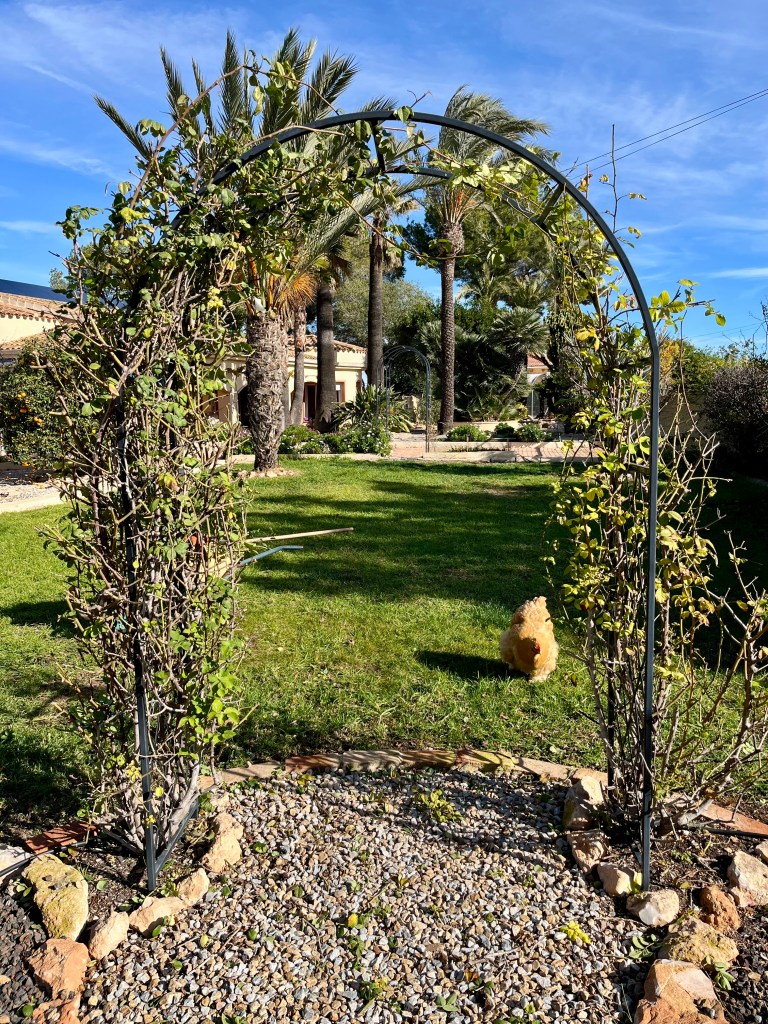
Dealing with the Chicken Prince. The idiot son duly arrived for Christmas and Cruella (my wife) immediately went into a frenzy of mothering. In many ways this suited me as I could start the big winter cutback without interruption. But it only lasted a day or two before she confronted me with a wide eyed manic look declaring “he is the one”, I knew the answer, but I had to ask who? “It’s him”she declared our son is the Chicken Prince.

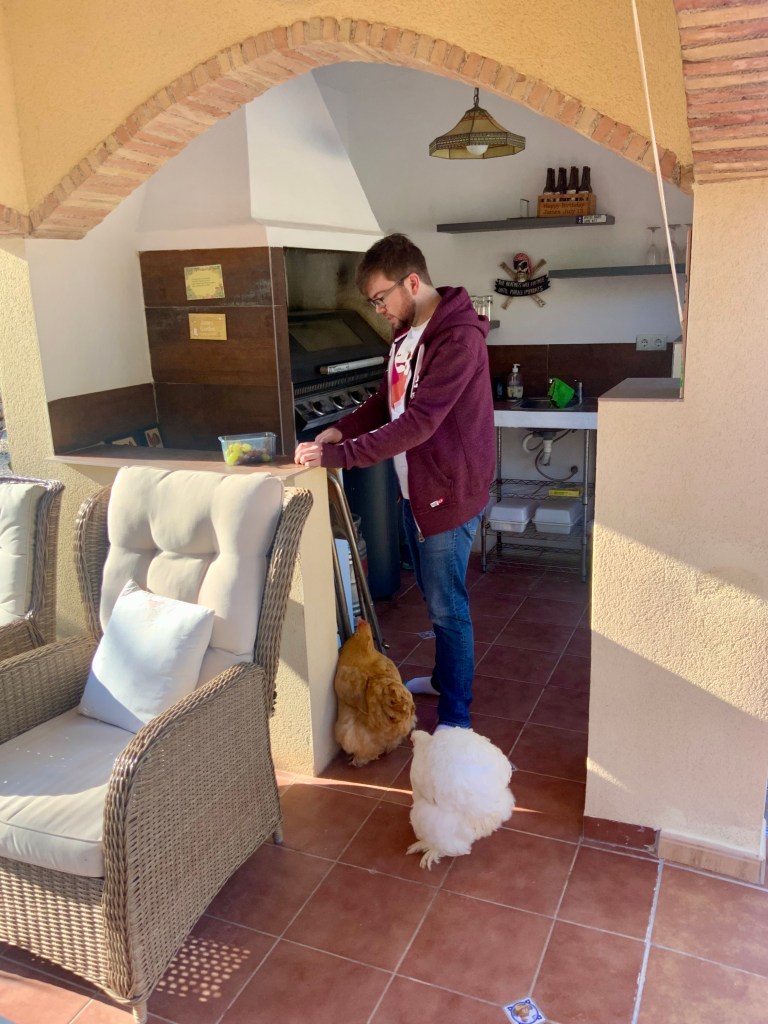
Anyway it turned out that she had decided that the idiot was a natural with chickens and therefore was now her rightful heir to the chickens. She hoped I wouldn’t be too upset at being usurped, but to be honest I didn’t know what she was on about. She then proceeded to regale me with tales of his expert chicken handling; as seen in the photos below. Click on each photo for a larger view.
I explained if he fed me bloody grapes every day (see first photo) then I would sit on his knee. She ignored my protestations at the price of grapes and informed me he was now on an advanced course of Chickenese and grooming. As far as I know this involves lessons every day where they sit in a circle on the lawn and chat away in Chickenese. I think he is still at an early stage but it sounds a bit like this:

“Cluck!” “Cluck-cluck!” “Ba-kawk!” “Squawk!” “Brrr-cluck!”“Bawk-bawk!”

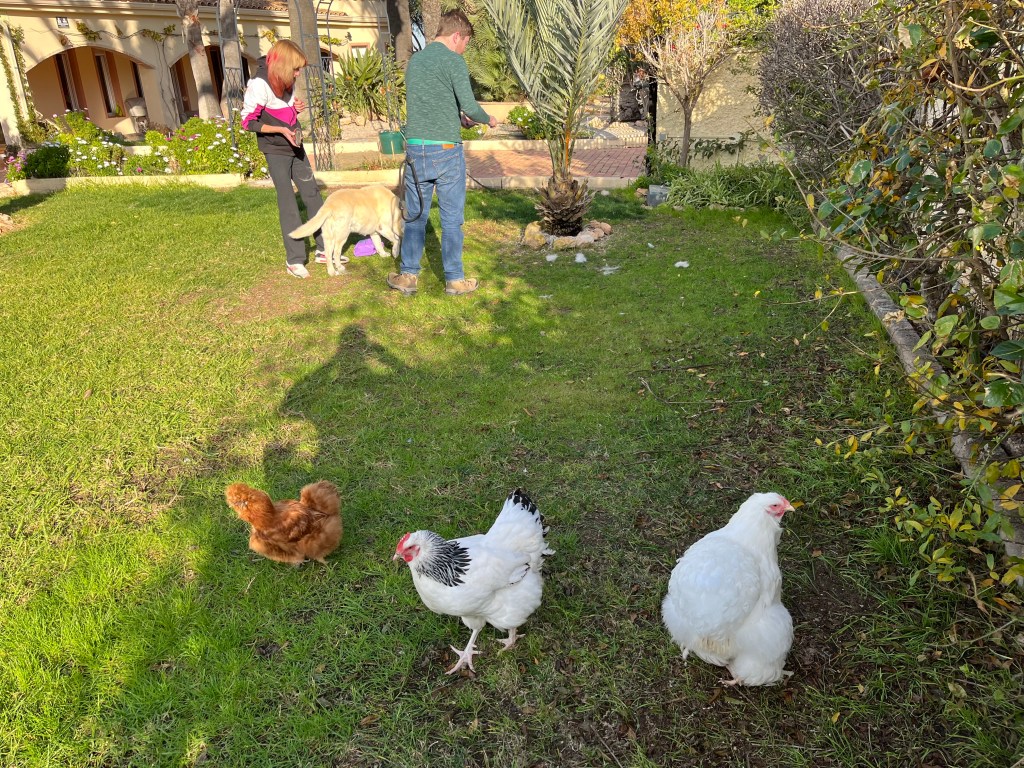
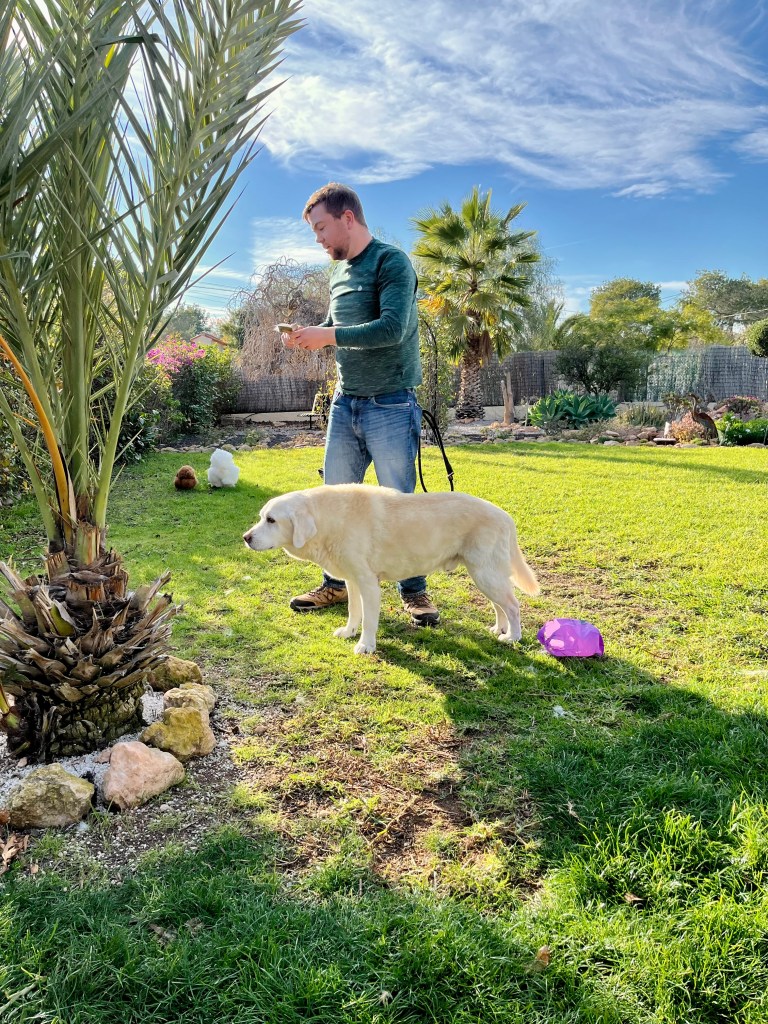
I insisted that if the chickens were to be groomed, then Tango the lonely blind Labrador should be involved. After much arguing she agreed. The photos below show them all lined up on the lawn for grooming. I insisted that Tango should be first.

They tried to rush Tango through but I insisted that as he was “special needs” they needed to spend extra time on him. The photos below show Tango being pampered. The sad thing was he gave little squeaks when they brushed him on his many bruises from bumping into things.

They spent twice as long on the chickens as they did on Tango, and to make matters worse they awarded a prize to Helga as the best groomed animal. The photos below show shows the awards ceremony.

Tango and I boycotted the ceremony and sat in the shed. I held a mirror up to him – even though he can’t see -and assured him how lovely he looked, but tears still fell from his little milky eyes. I didn’t tell him he came fifth!

Gathering seeds, composting leaves, cleaning up and the chickens go to the Ball

Now that is what you call a title, no messing around or euphemisms, you know exactly what you are getting in this blog post. It is the last real post before we begin the big winter cutback, so there is still lots to do. Added to this I have had the problem of Cruella (my wife) preparing the chickens for a Ball. Anyway on with the gardening.

12th December 2024. Things I have been doing lately:

  • Gathering seeds
  • Composting leaves
  • Last minute clean up jobs you need to do
  • Planting out cuttings
  • Cruella prepares the chickens for a Ball

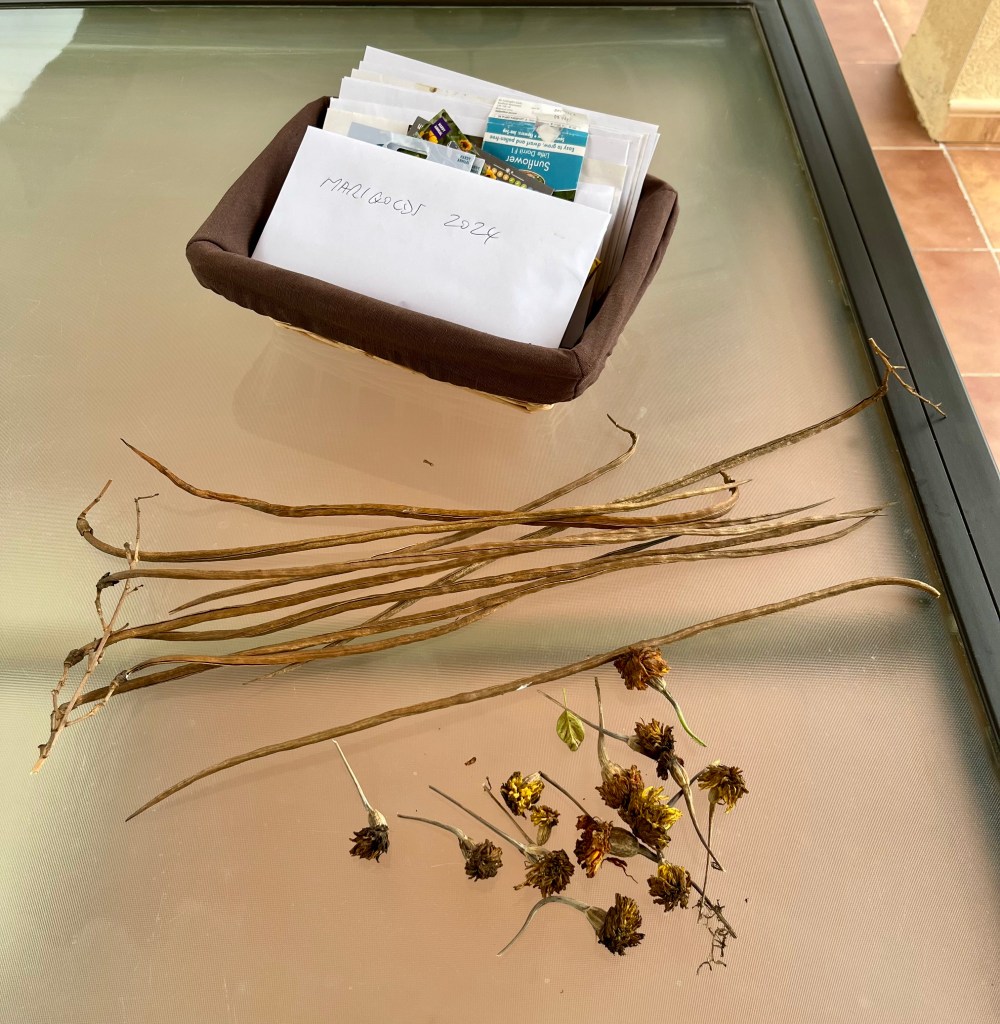
Gathering seeds. Take a look around your garden at this time of year and you will find lots of seed heads and pods ripe for picking. If you pick them off now, store them to dry, and plant them next Spring, then you will have lots of lovely new plants for free. But what’s more you will be on your way to being a gardener rather than a shopper for plants.

You will have lots of different seed heads in your garden of all different types, just waiting for you to harvest them. To process the seeds is very simple.

  • Wait until your seed heads have completed their cycle, the flowers have died and fallen off and the seed pod that is left has gone fully dry and brown.
  • Cut the seed head off with your secateurs and if possible leave a little bit of stem.
  • Place the seed heads into a plain white envelopes, one for each type of seed, until you are ready to process them.
  • Depending on the type of seed pod, the process is more or less the same; carefully remove all the outer casing of the seed pod till you expose the seed. Pour this into the palm of your hand.
  • Gently blow across the seeds as you transfer them between your palms, this just removes any chaff.
  • Place the seeds in plain white envelopes by type with the name and year clearly written on the envelope and store them in a cool dark place (a drawer is fine).

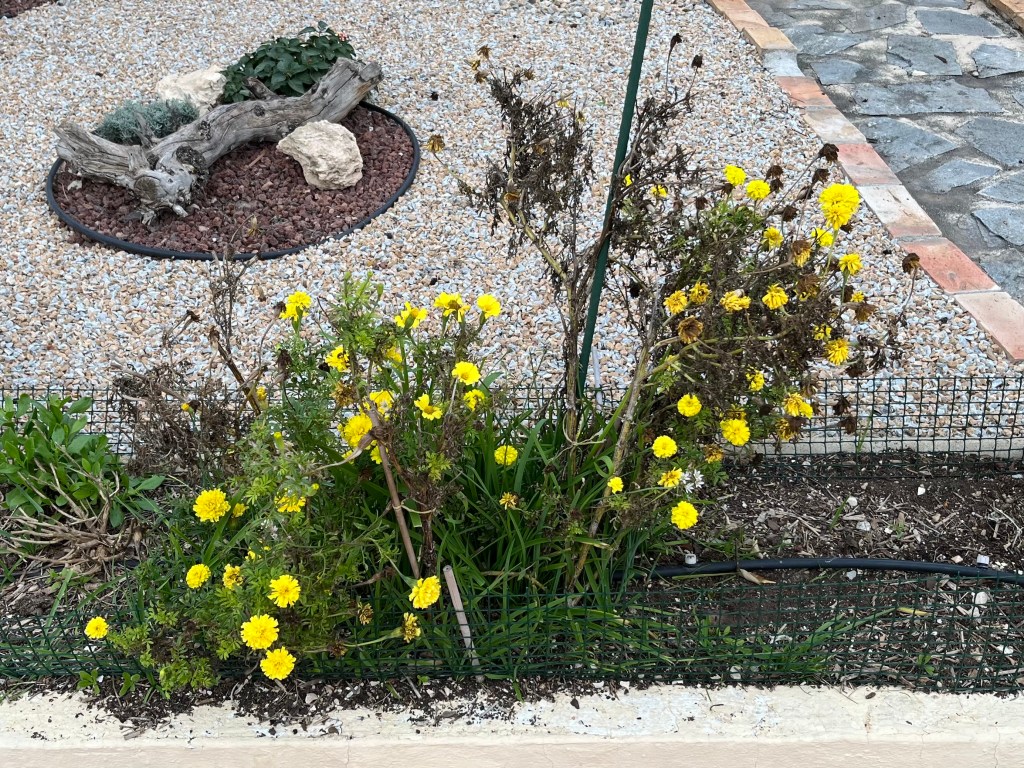
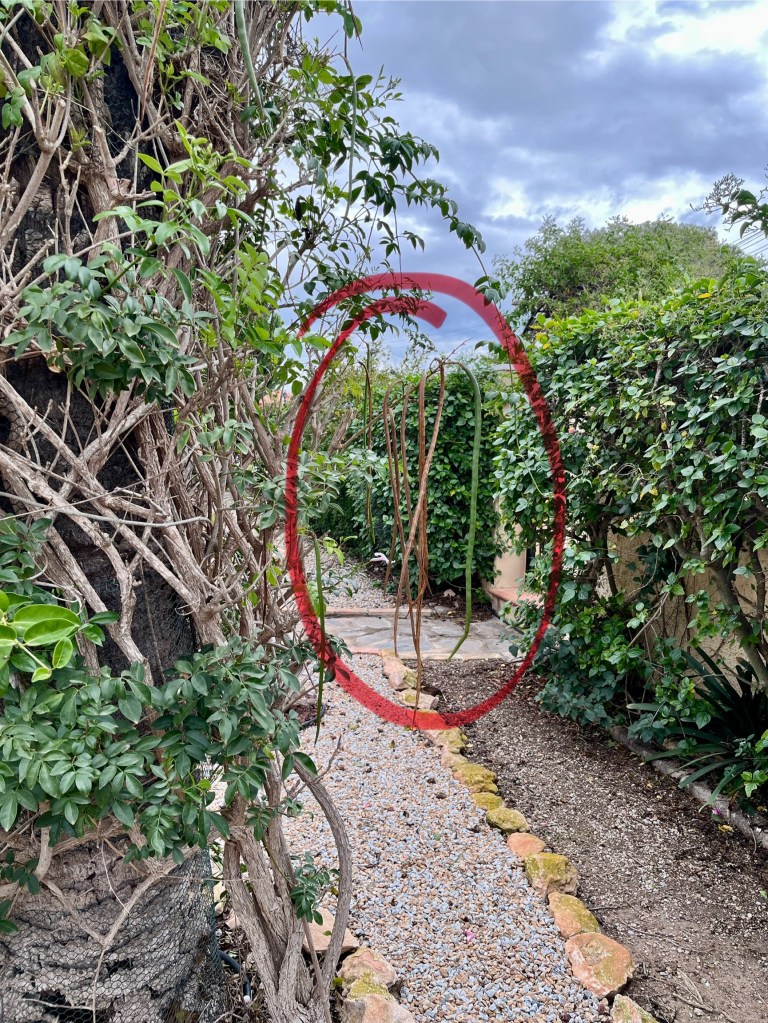
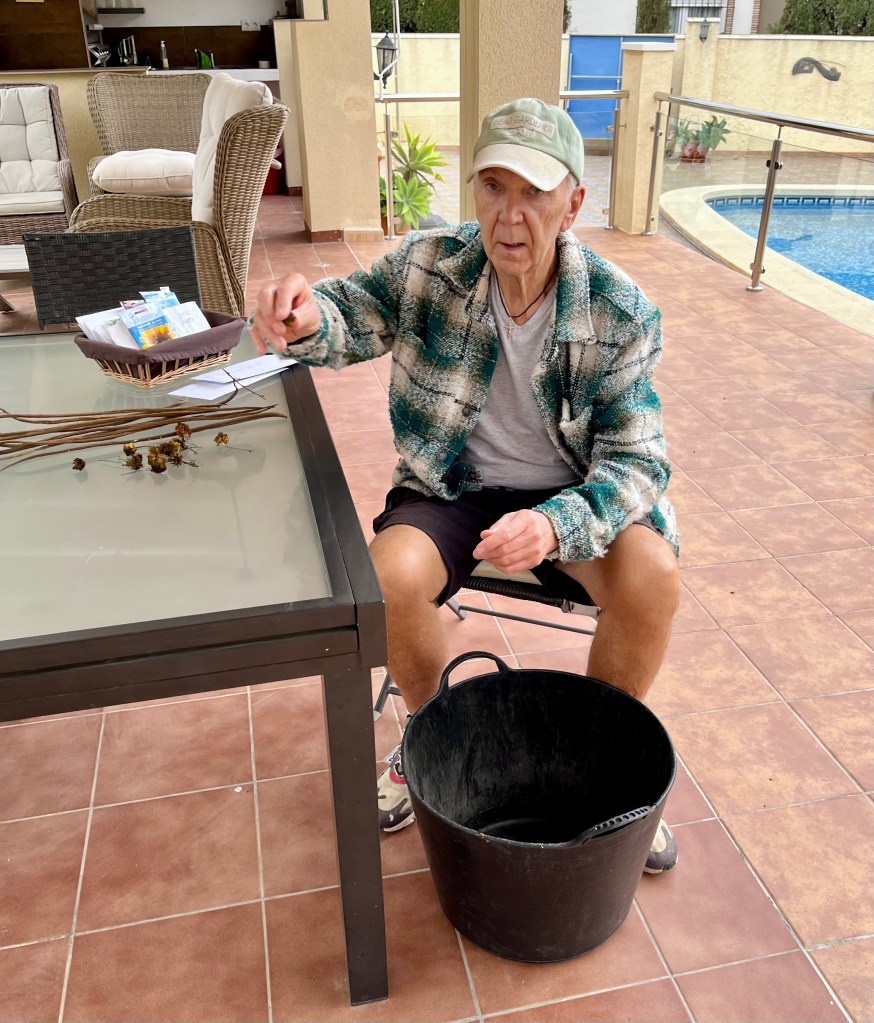
The process is shown for Marigolds and Trumpet Vine in the photos below. Click on each photo for a larger view.
Composting leaves. Most gardens have a tree or two, and as we all know deciduous trees shed their leaves every Autumn. Now you can either see these fallen leaves as a mess that needs to be cleaned up, or, you can see the leaves as compost gold.

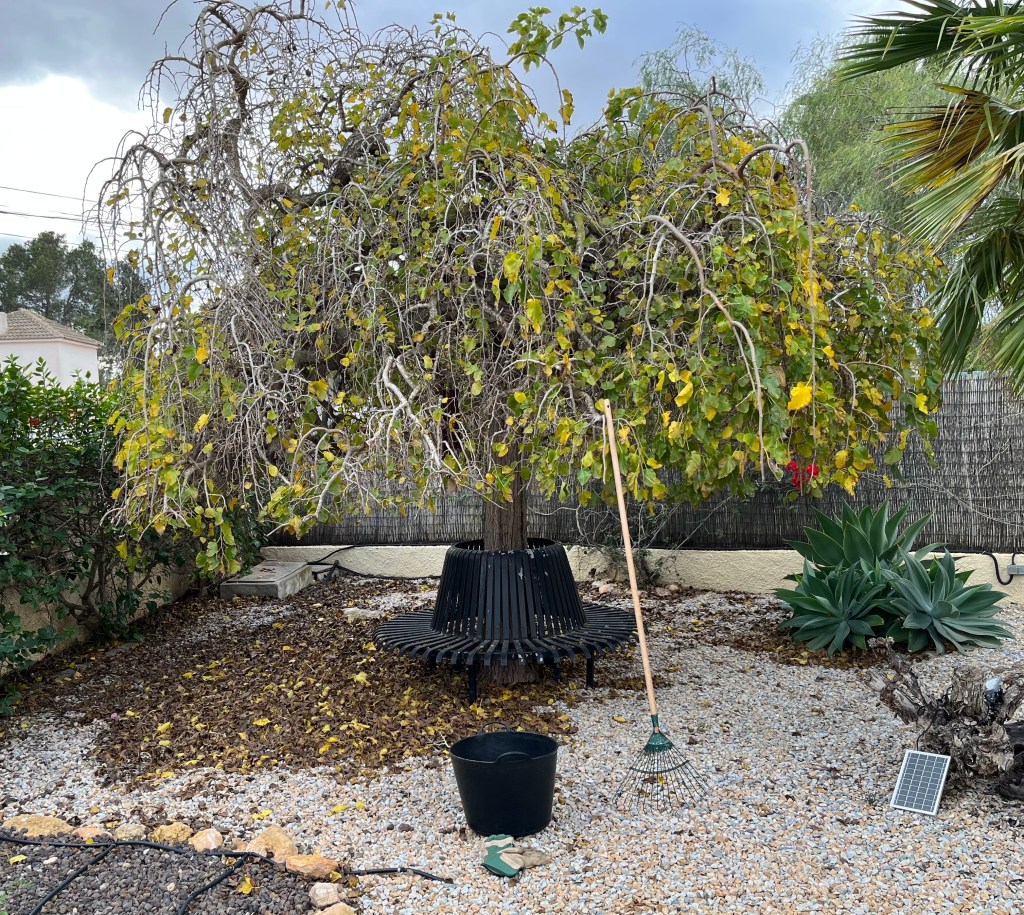
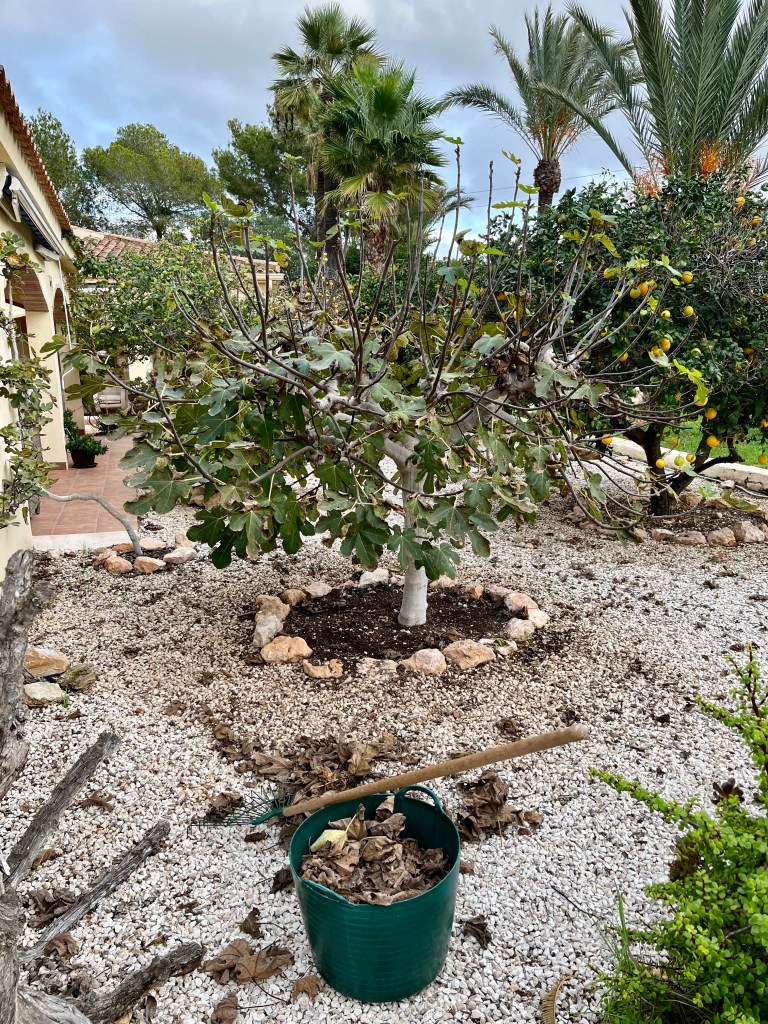
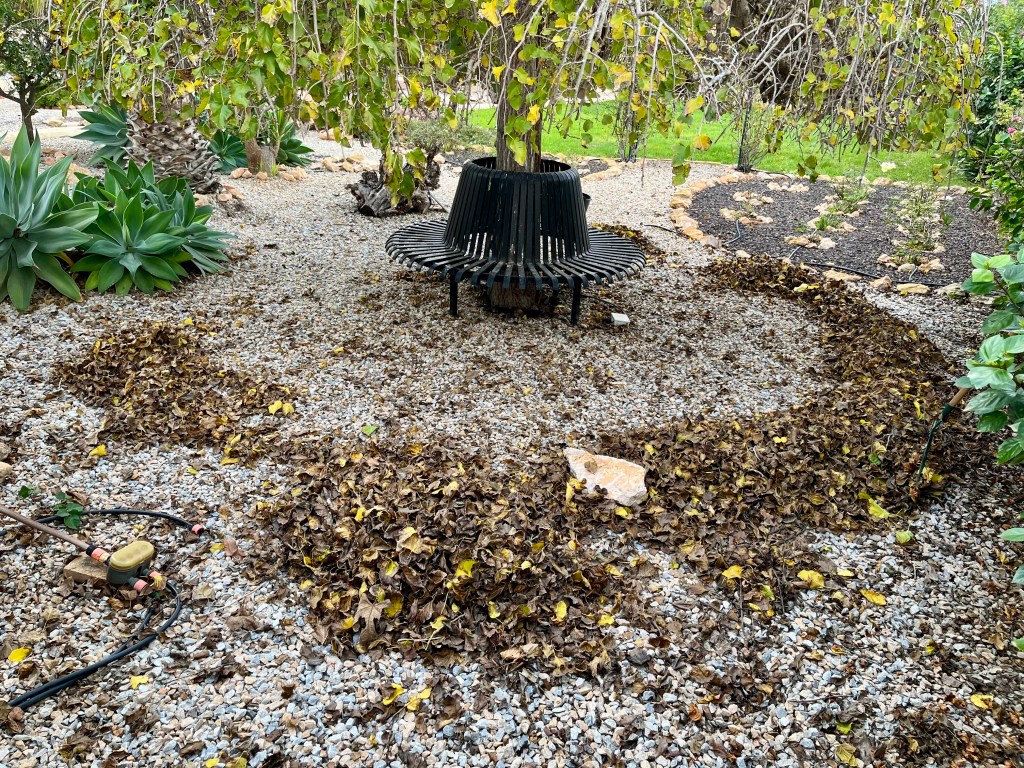
I have lots of pine trees, but their leaves whilst perfectly compostable over time, tend to produce an acid compost. So if you have lots of pine trees it is ok to add pine needles to your compost bin, but no more than 10% of each layer. However, if you have a deciduous tree, like my large Mulberry or even better a Fig with its large leaves then you are lucky. The photo below shows my Mulberry and one of my figs shedding their leaves. Click on each photo for a larger view.
You don’t have to wait till all the leaves are off your trees. Instead get into the habit of clearing the leaves once every two weeks. Just rake the leaves up into piles and then store them in plastic garden sacks. See photos below.

Leaves compost in a different way to normal compost, so don’t just add them to your compost bin. Store them in plastic sacks, but before you store them prick the sack with a fork in a number of places to allow for air circulation. You will need to store your sacks somewhere in your garden where they won’t be unsightly and where they do not get sun. See photos.

Your leaf compost will be ready in about a year, roughly the same time as you will be harvesting the next lot. You can cheat if you want. After about six months just pour the sack into your normal compost. It won’t be fully composted, but when you get to my age you go for quick wins.

Last minute clean up jobs you need to do. There is still a few little jobs you need to do before next month’s big cut back.

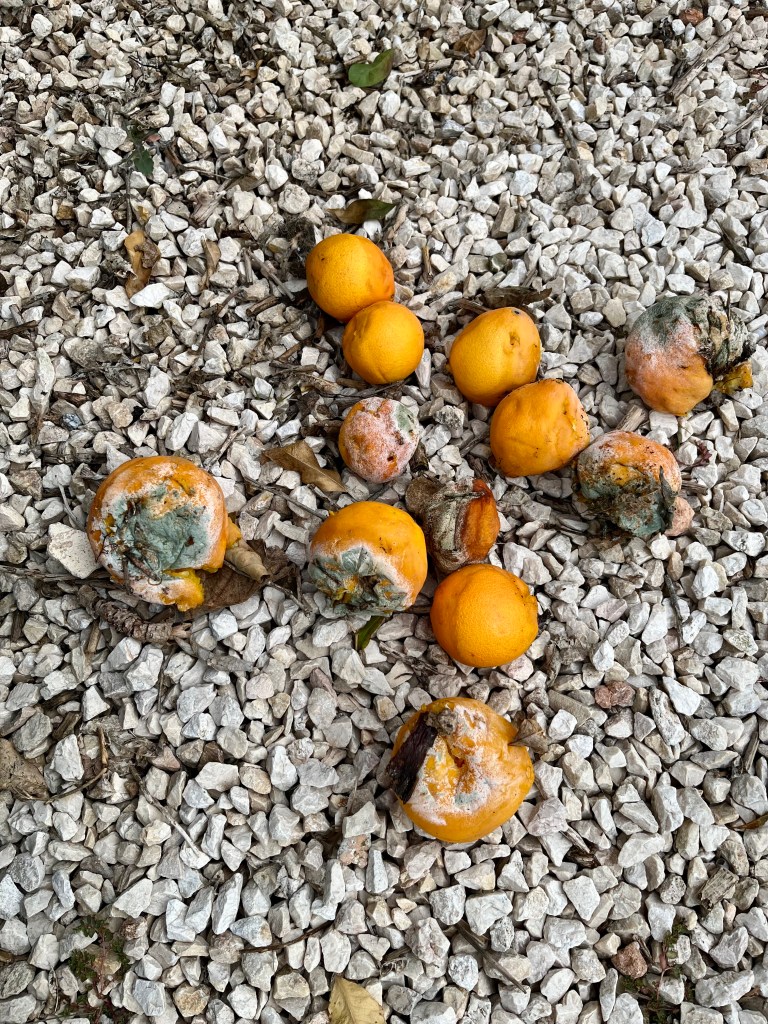
You can start by cleaning up fallen citrus fruit such as oranges and lemons. The recent high winds here in the Costa Blanca has meant we have lots of fallen fruit. If you leave this fruit on the ground for any length of time then you will get an active green mould growing on it. Left to itself this will release spores which are not very healthy for other plants or us. My efforts to stop a future plague are shown below. Click on each photo for a larger view.

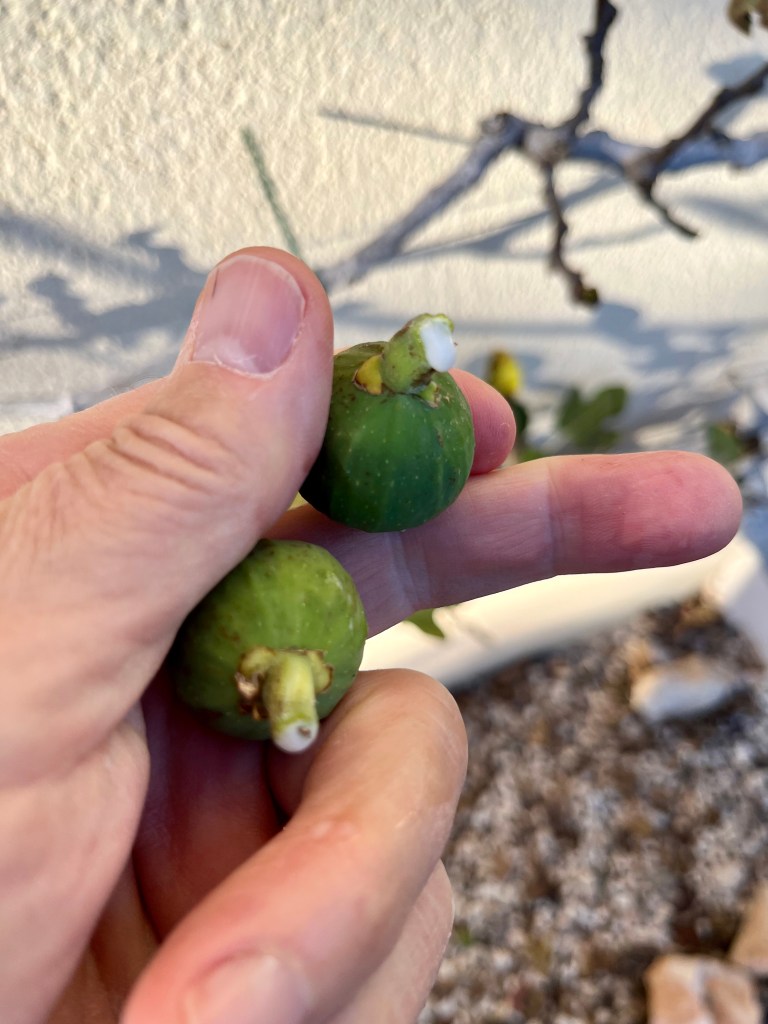
If you have Fig trees that still have residual fruit, just take them off. Any fruit left on your trees will never mature and will only take strength away from the tree. With figs the sap will not yet have been drawn back into the roots so be careful you don’t get a sap burn.

Planting out cuttings. If you have any cuttings you have grown out, then now is a good time to get them in the ground. There is still warmth and moisture in the ground so it will not be a great shock.

I have grown a number of cuttings over the Spring and Summer. During the Summer I mostly just dot these around the garden in pots, just to see how they get on. By now I will have either put them into larger pots or if they have really performed then they go into the ground.

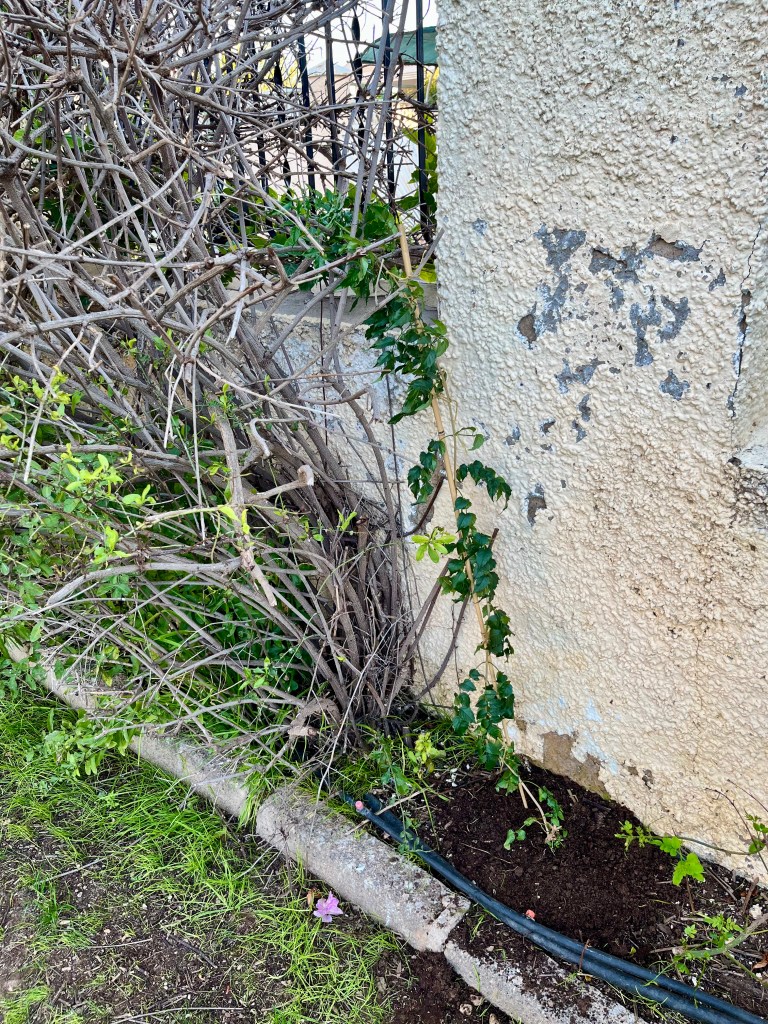
I have a problem area in one of my hedges where a Jasmine cutting is being very slow to grow to fill the gap left by a dead Hibiscus. The photo below shows the problem. From the photo you can see that there is Plumbago to its left and Pink Trumpet Vine to its right. The idea was that the Jasmine would grow and provide colour variety between these two.

In order to deal with this problem I have been growing a Trumpet Vine to add to my hedge. I like to keep hedges over planted and competing for space and light thereby guaranteeing more flowers. The Trumpet Vine has grown strongly during the Summer and now needs to go into the ground. The Jasmine has had its chance, now for some competition. The photo below shows the new gap filling contender.

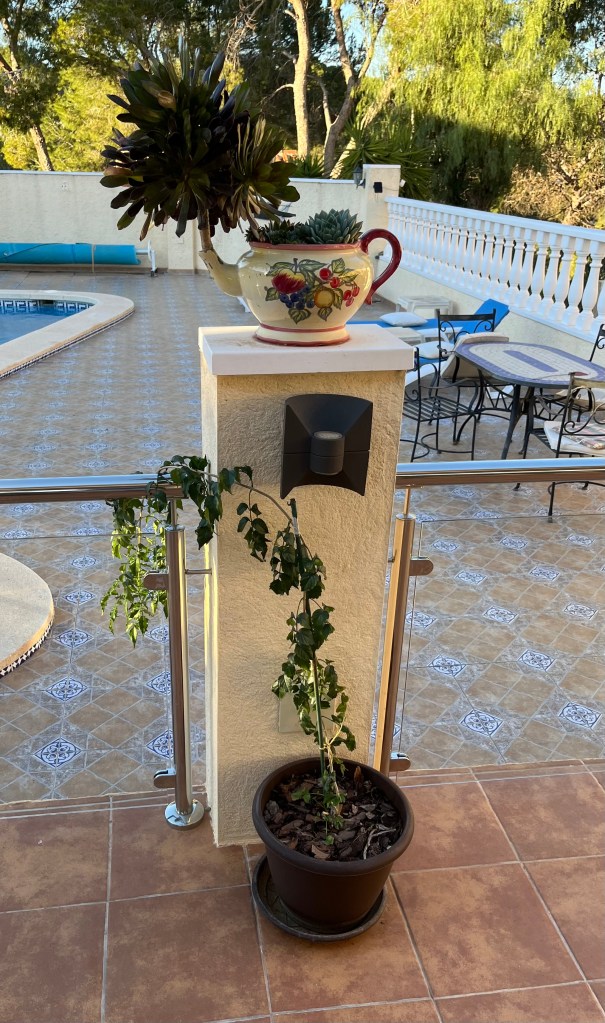
I have trimmed it back ready for its transplantation. On a sad note, my lovely teapot confection on the pillar was blown over and smashed in the recent storm; Cruella is devastated.

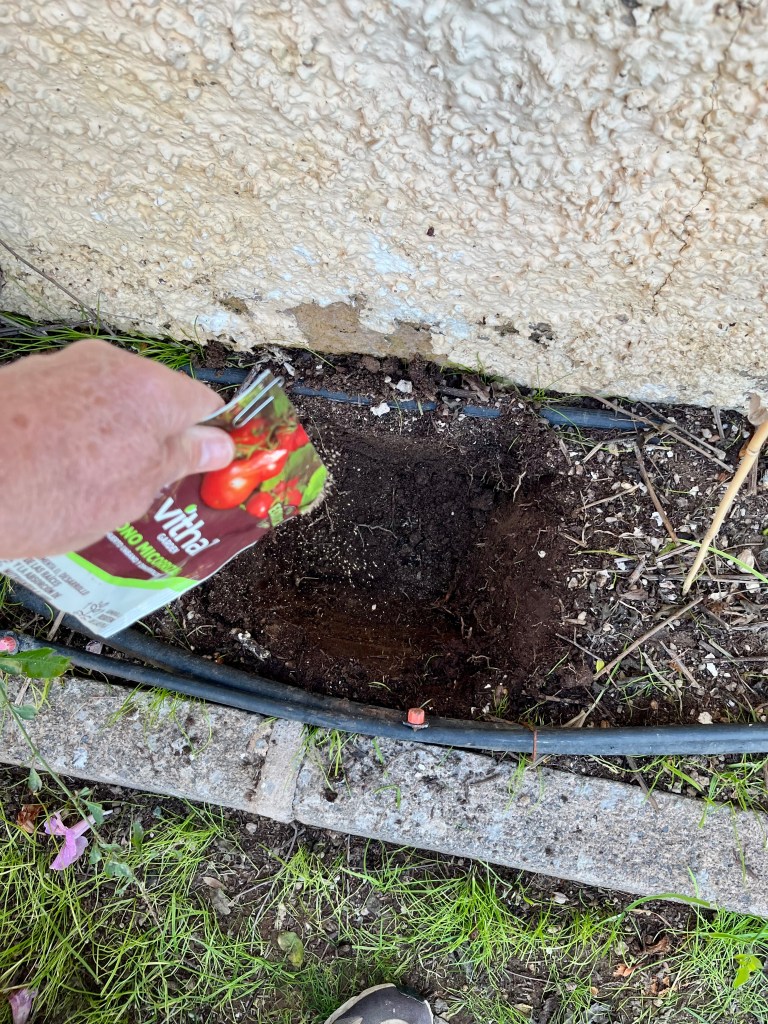
When planting out make sure you do all the usual stuff like clear the area of any weeds or stones then dig a planting hole big enough not to cramp the roots. When you take the plant out of its pot make sure to tease out the roots so that they can be encouraged to reach into their new soil. Also, if possible sprinkle some Mycorrizhal rooting powder into the planting hole and onto the roots as this will definitely aid early root growth. The photos below show the process. Click on each photo for a larger view.

Cruella prepares her chickens for a Ball. It all started when Cruella (my wife) read a magazine article about Queen Charlottes Ball where debutantes are presented and come out into society. She breathlessly told me that this was just the sort of opportunity her girls needed, and if they could only come out formally she would be the happiest mother alive – I have given up explaining that she is not their mother.

Despite my explaining that Queen Charlotte’s Ball was not for chickens, she refused to accept this and began looking up Finishing Schools in Switzerland. I only averted her flying to Switzerland by persuading her that it would be far better if she prepared the girls for “finishing” at home.

It has been almost a month now and every day has been filled with Cruella schooling her girls in all sorts of arcane skills and manners. They start most mornings with “dining etiquette”, this involves politely pecking at their food, not pecking each other and definitely no eating worms. This is followed by “elocution”, to be honest as it is all in chickenese, I have no real idea what they are saying. They all cluck away as Cruella nods enthusiastically, but it does sound a bit like “how now brown cow” but in chickenese.

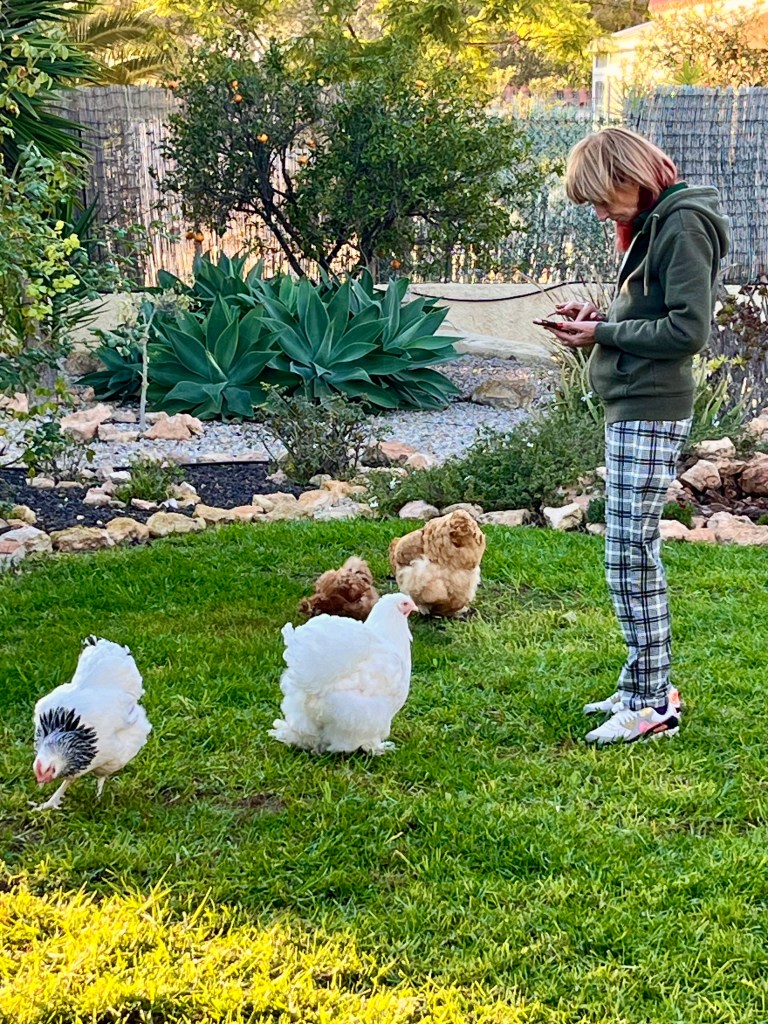
The afternoons are spent in “deportment, dance and formal bowing”. It is quite fascinating, especially if you have never seen a chicken walk up and down with a book on its head. Dance is my favourite as Cruella stands in the middle of the lawn playing Mozart on her phone whilst shouting out the timings. Despite her best efforts the chickens gyrate wildly in a figure of eight in front of her and all end up colliding and fighting.

I am involved in the formal bowing part. I have to sit on a chair pretending to be the King whilst Cruella acting as a Herald formally calls each of her girls forward and introduces them to me. Each bird has a new sash in soft pink silk and they formally approach me and bow. From my perspective though the whole effect is ruined by them poohing on my shoes. The photo below shows a dancing lesson in action.

The music was Mozart – Ascanio in Alba, the dancing was appalling