It’s time to sow, I sing to the dying Agave and have a bad Valentine’s Day

It’s warming up, there is a hint of buds and we gardeners are waking from our winter torpor, it’s almost Spring, and you know what Spring means – seeds! Yes, it’s time to start thinking about how you will fill your Summer garden with floriferous beauty, and there is no better way than to grow your own garden from seed. I know that lots of you love to rush off to the Garden Centre and stack your trolley high with all sorts of unsuitable plants. But think how much more fulfilling it will be if you can grow your own garden.

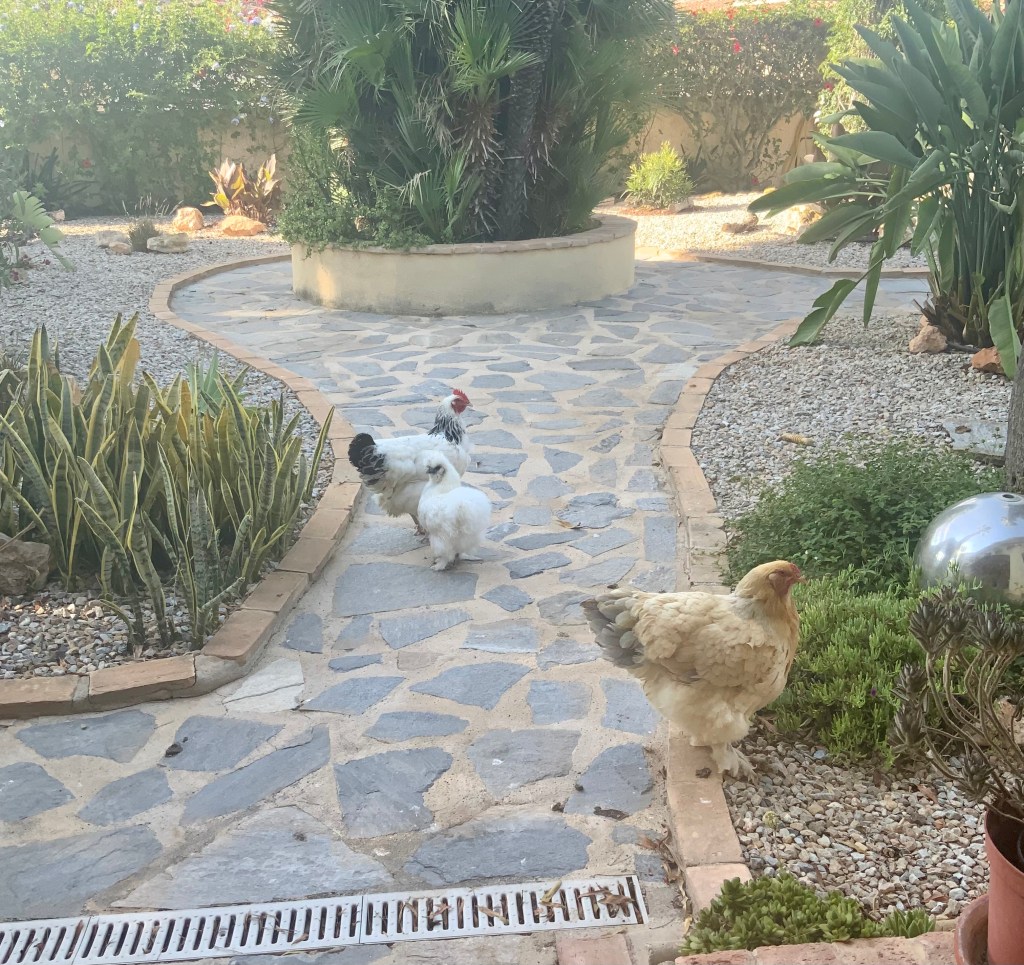
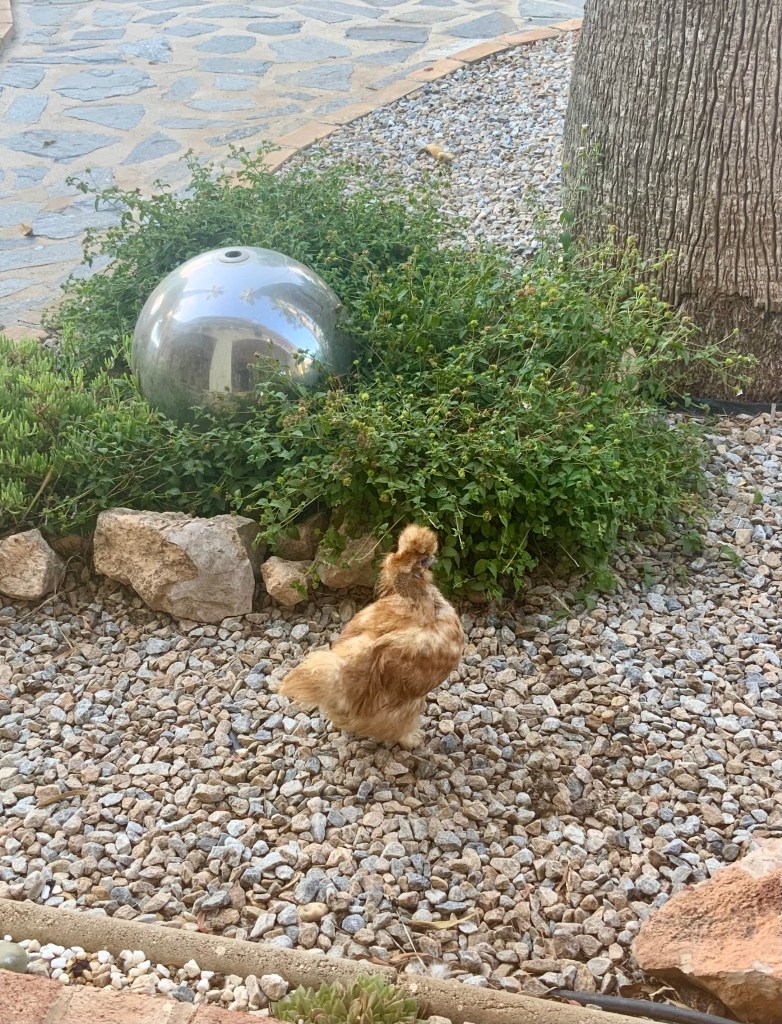
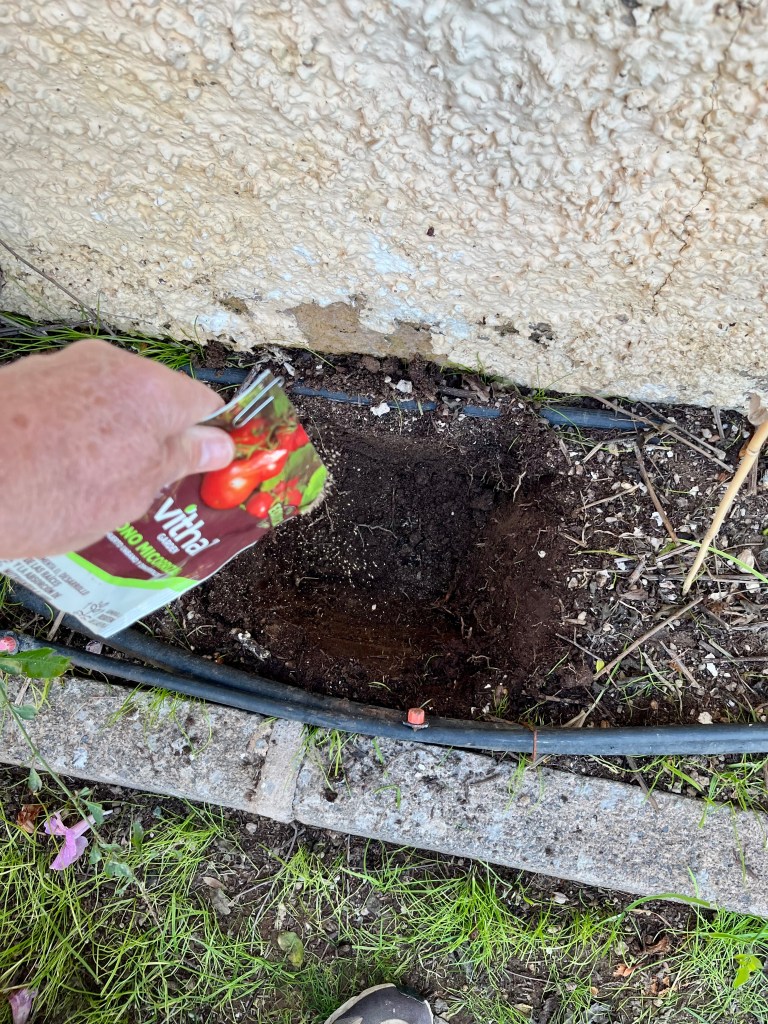
Now I am not being a purist, of course you can buy plants, but why not give seeds a chance (start with a couple of easy to grow packets) once you start it is addictive and may I say a lot cheaper. As you can tell from my enthusiasm I have already got things underway. I was so filled with the joys of gardening that I rushed out and got Cruella (my wife) a Valentines Day gift. Sadly it all went wrong as the chickens deliberately sabotage my efforts. Anyway on with the gardening.

24th February 2024. Things I have been doing lately:

  • Harvesting self sown seedlings
  • Sowing the first seeds
  • Harvesting and sowing Chilli seeds
  • Preparing for the death of Agave Attenuata
  • Regretting my Valentines Day purchase

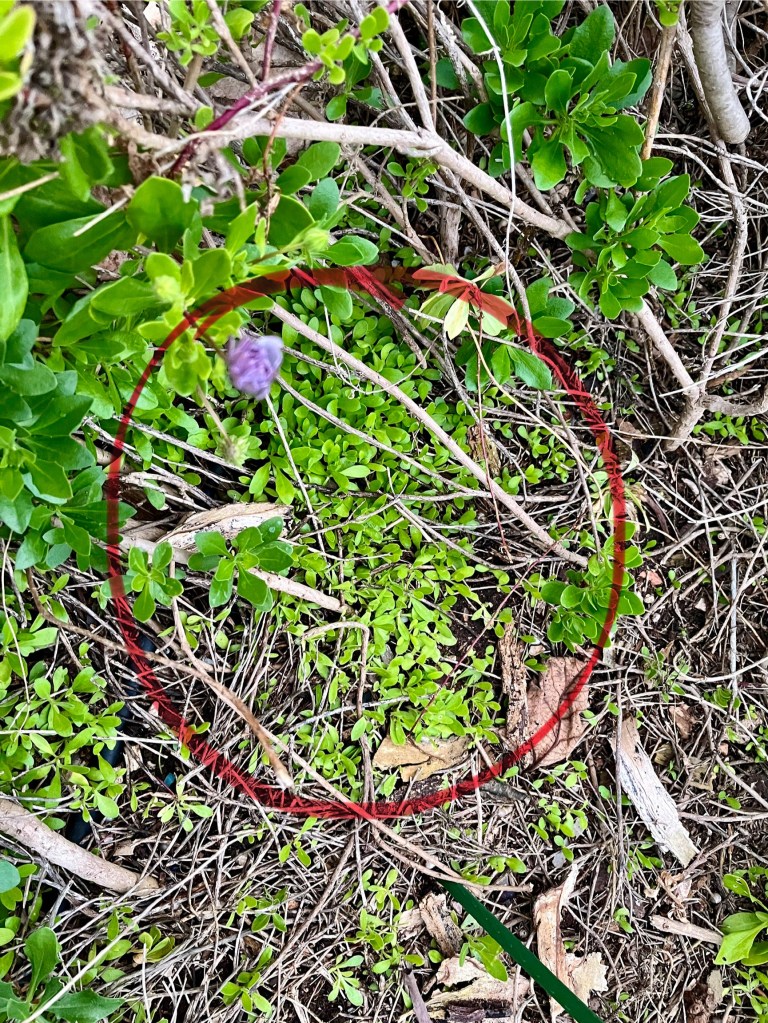
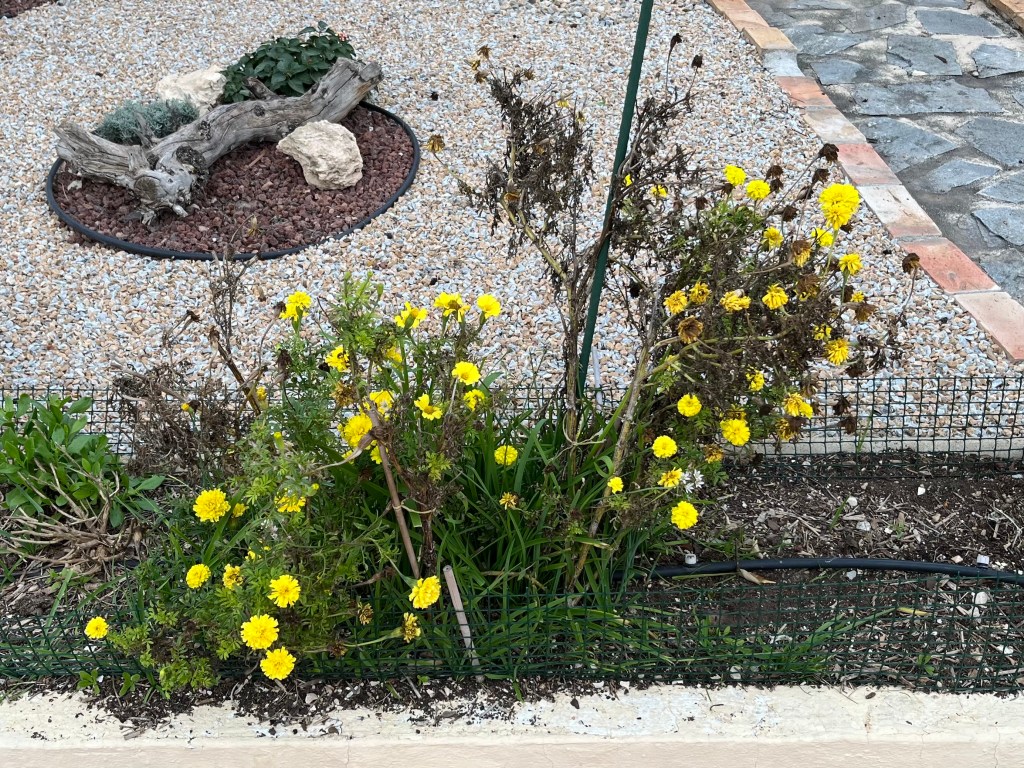
Harvesting self sown seedlings. One of the best way to get your garden going in Spring, is to take a look around your flower beds and check for any self sown seedlings that your summer flowers may have left you as a gift. One of the most prolific self sowers in Spain is the Maragaritte Daisy/Osteospermum. These lovely long flowering Daisies will drop hundreds of seeds which by now will have formed into little seedlings. The photo below shows just one part of my garden with thousands of seedlings.

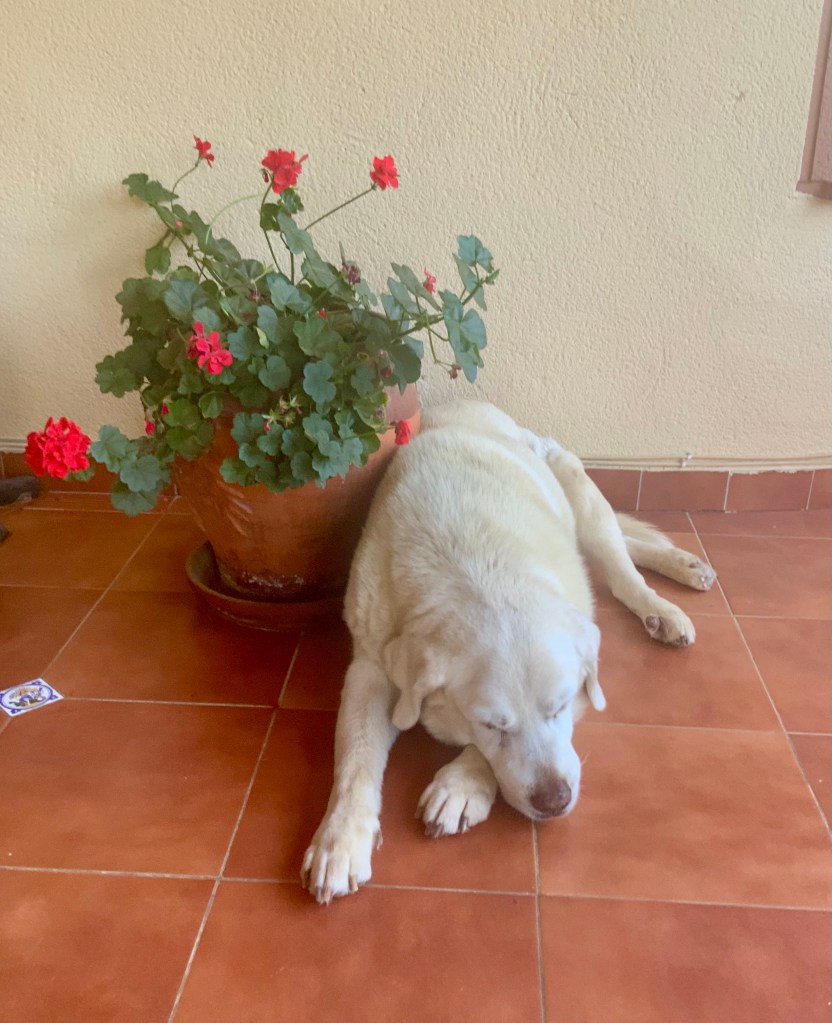
But the trick is not to leave the seedlings where they have self sown, instead you need to harvest them and pot them up to let them grow on a bit before planting them out where you want them. The photos below show me harvesting the seedlings by gently prising them out of the soil with a trowel before placing each seedling into individual seedling trays. Note the close attention from big Bertha. (she has reverted and is no longer known as Bert, it was something to do with the chest binders that Cruella bought from John Lewis). Click on each photo for a larger view.
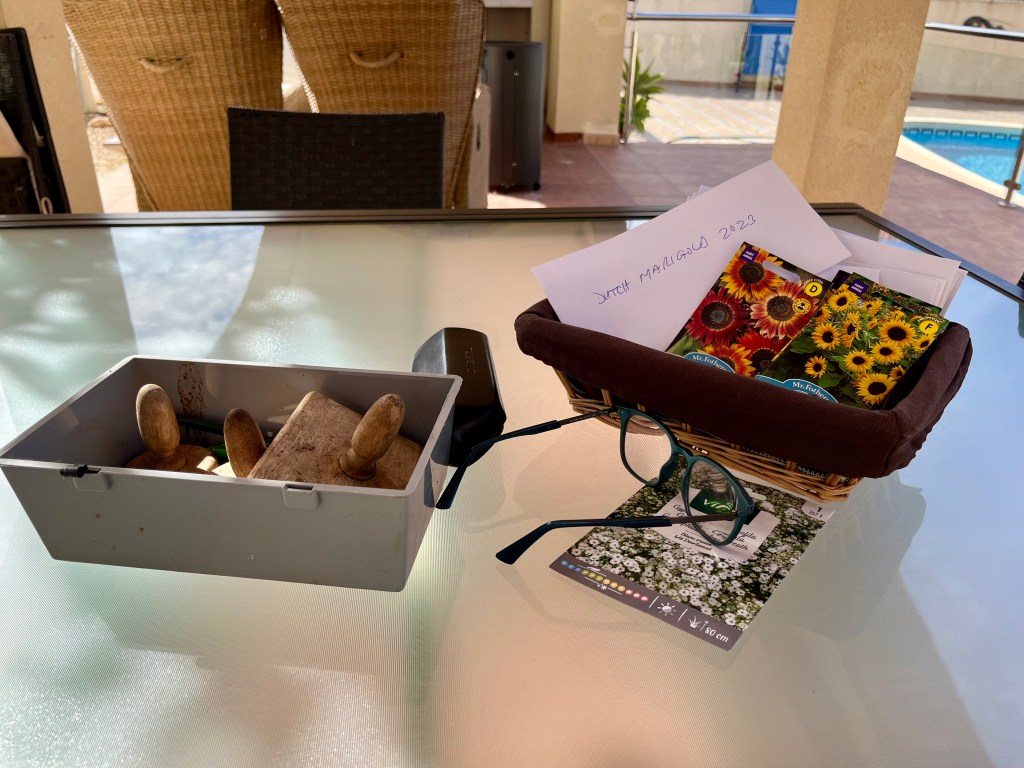
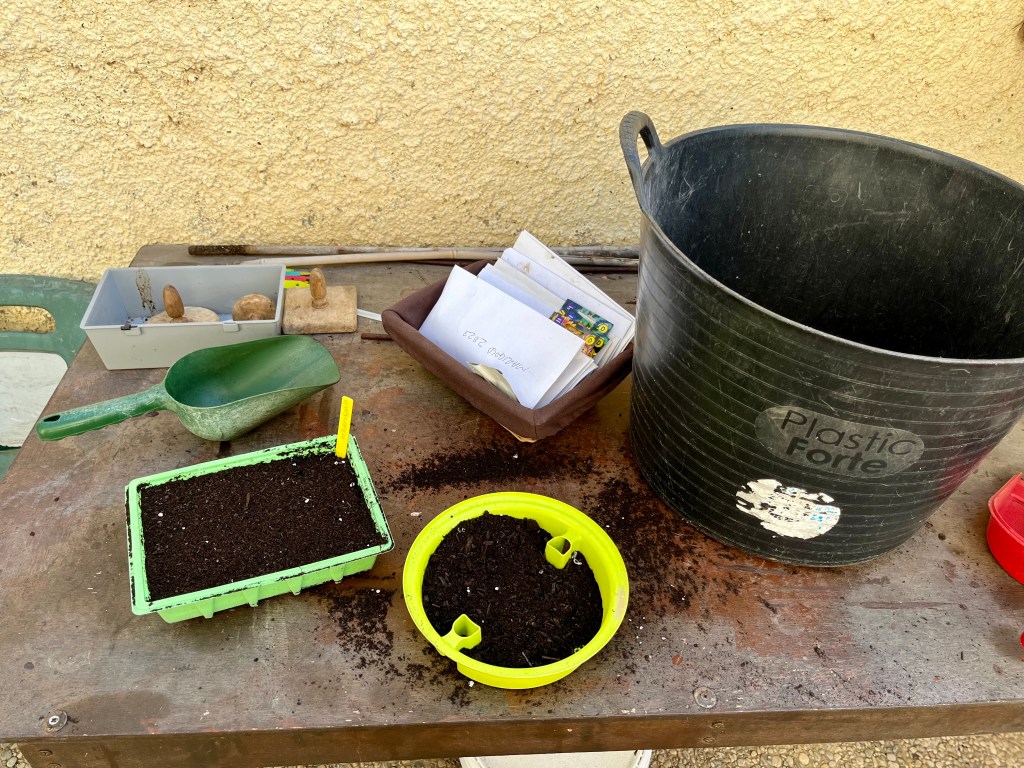
Sowing the first seeds. There is nothing better than contemplating the seeds you harvested from last year and deciding which order you are going to sow them. The photo below shows my preparations and the delight of contemplating things to come. Click on each photo for a larger view.
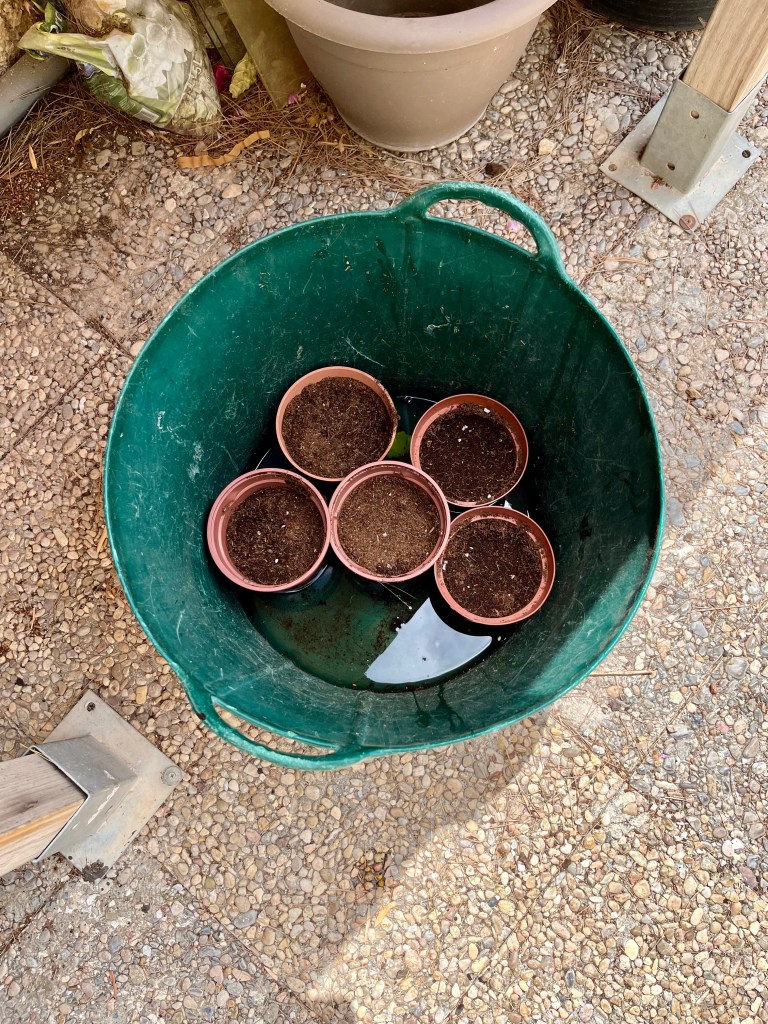
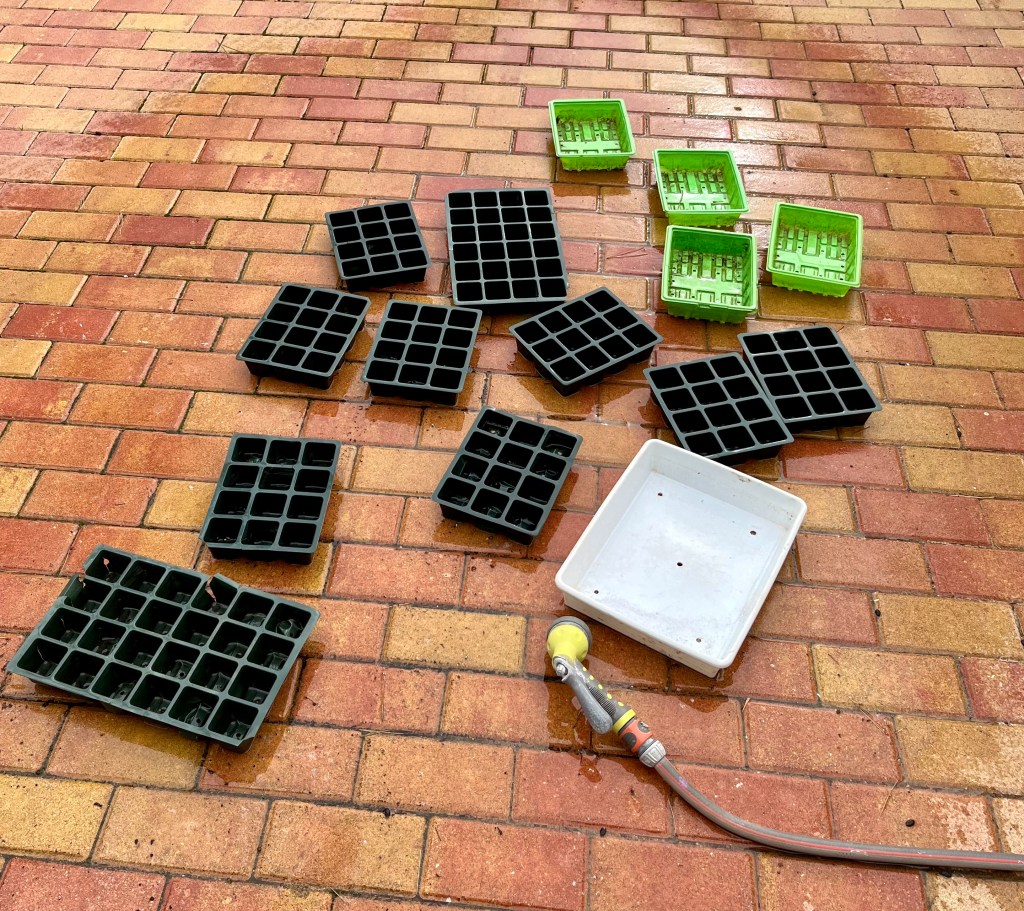
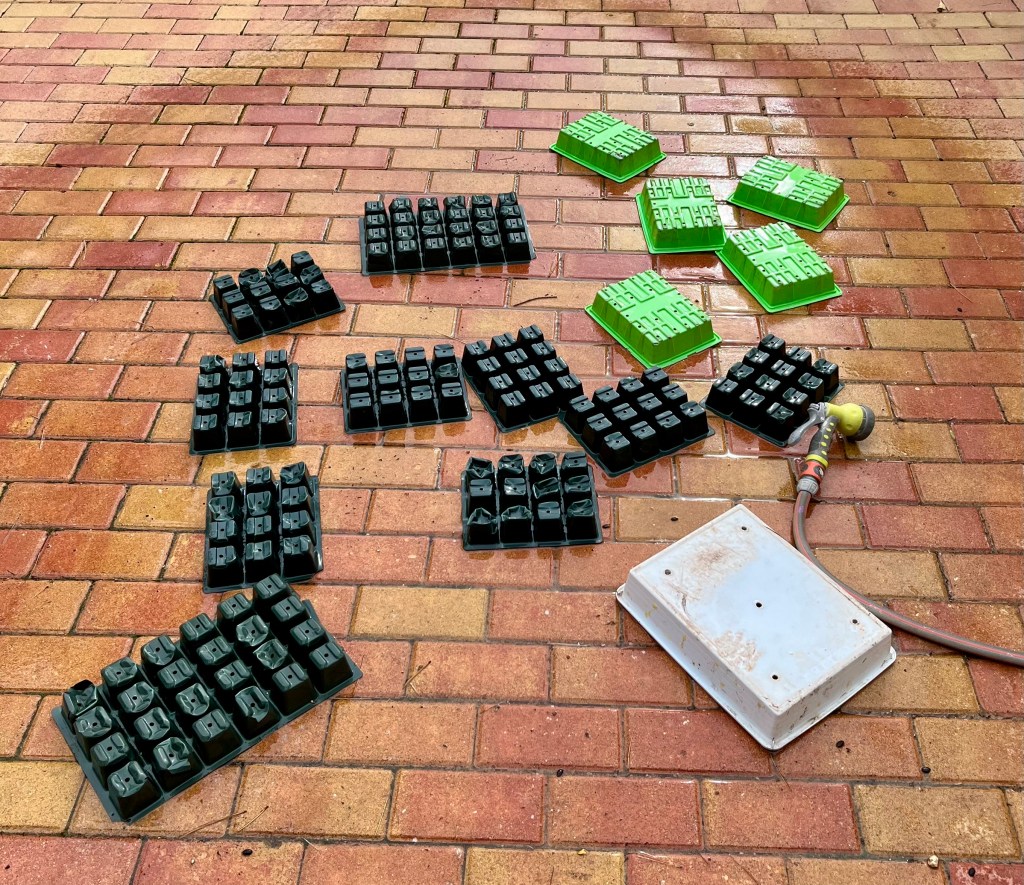
Before you get carried away with sowing seeds there is some basic preparation you need to undertake. If you are sowing into pots or seed trays you have used before, then it is important that you thoroughly wash them inside and outside. The last thing you want to do is carry over viruses and pathogens that are lurking in the residue of last year’s soil. All that is basically required is that you use a powerful hose jet to wash away any soil residue. The photos below show some of my seed trays after their annual ablutions. Click on each photo for a larger view.

Once you are ready to sow your seeds then you need to mix a good compost (not from China shop) together with Perlite to form a nice free draining medium that will not leave your little seeds waterlogged. Most seeds mainly require sprinkling on the surface of your compost then covering with a light sprinkling of compost.

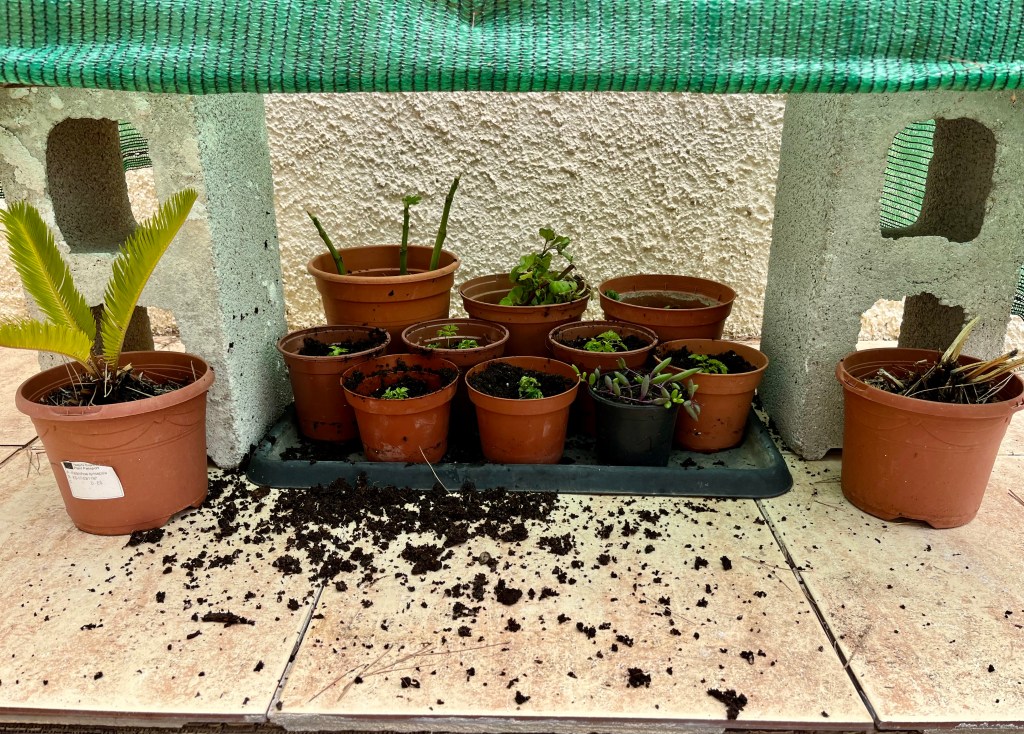
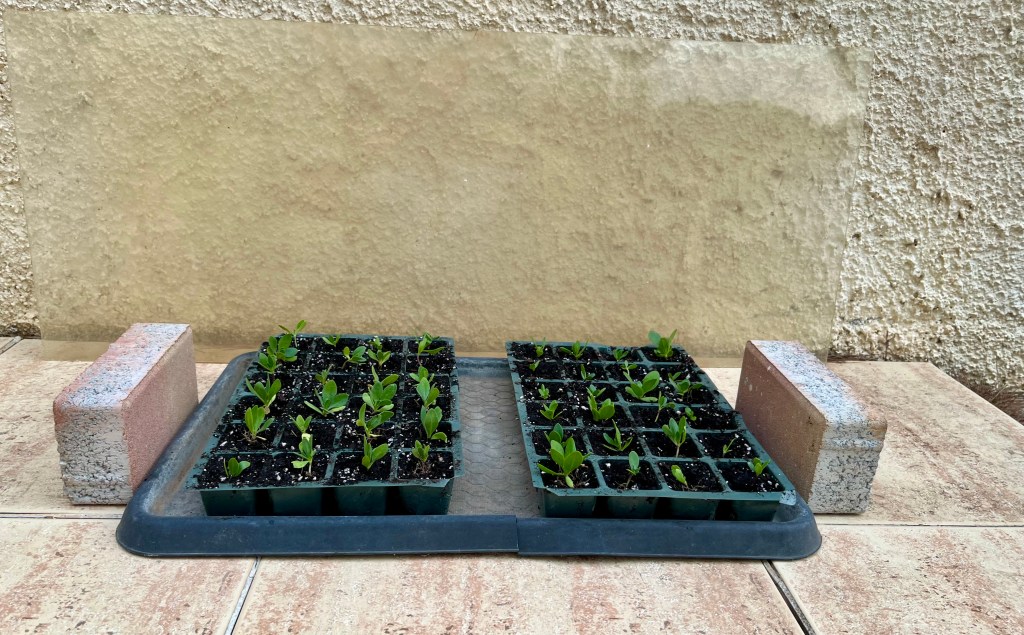
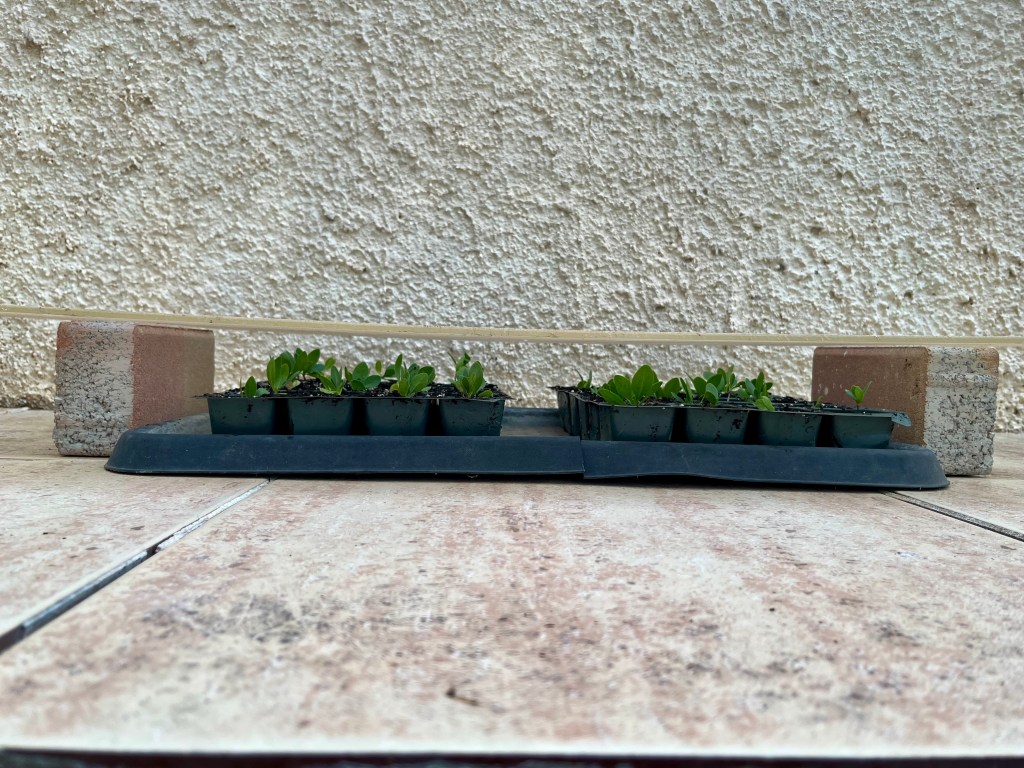
Once you have lightly tamped down the surface to ensure seed and soil contact, then you need to place your seeds trays in a light warm area such as a window sill, or greenhouse. Be careful of fierce sun as this will dry the compost out to quickly. I buy a cheap little mini green house and use it for 2 or three years and then discard and start again. You will only need it for a couple of months at the most. The photos below show my seed sowing activity followed by my seed trays resting in their new home. Click on each photo for a larger view.
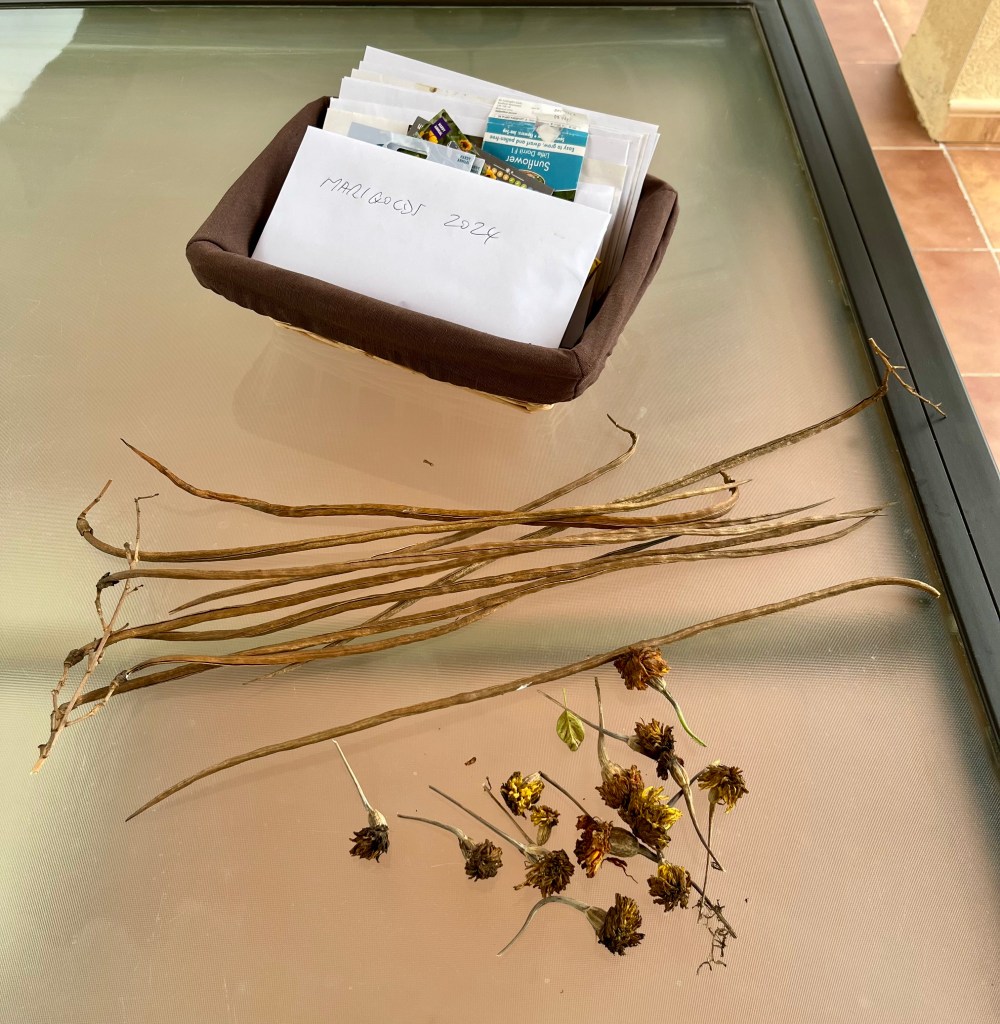
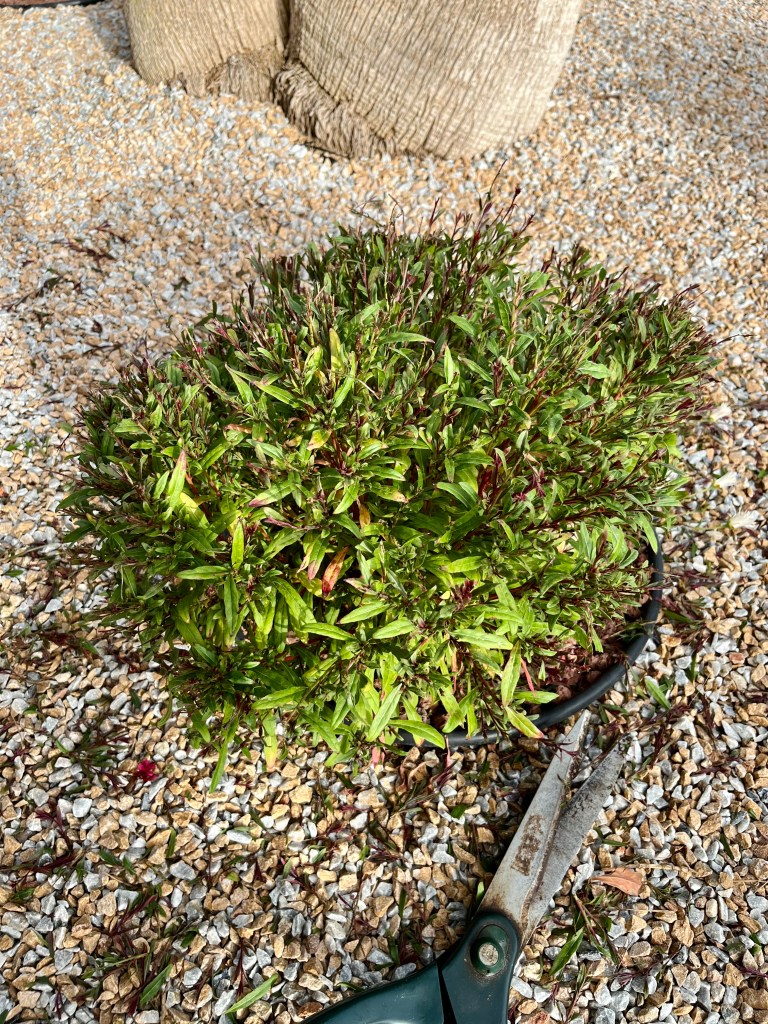
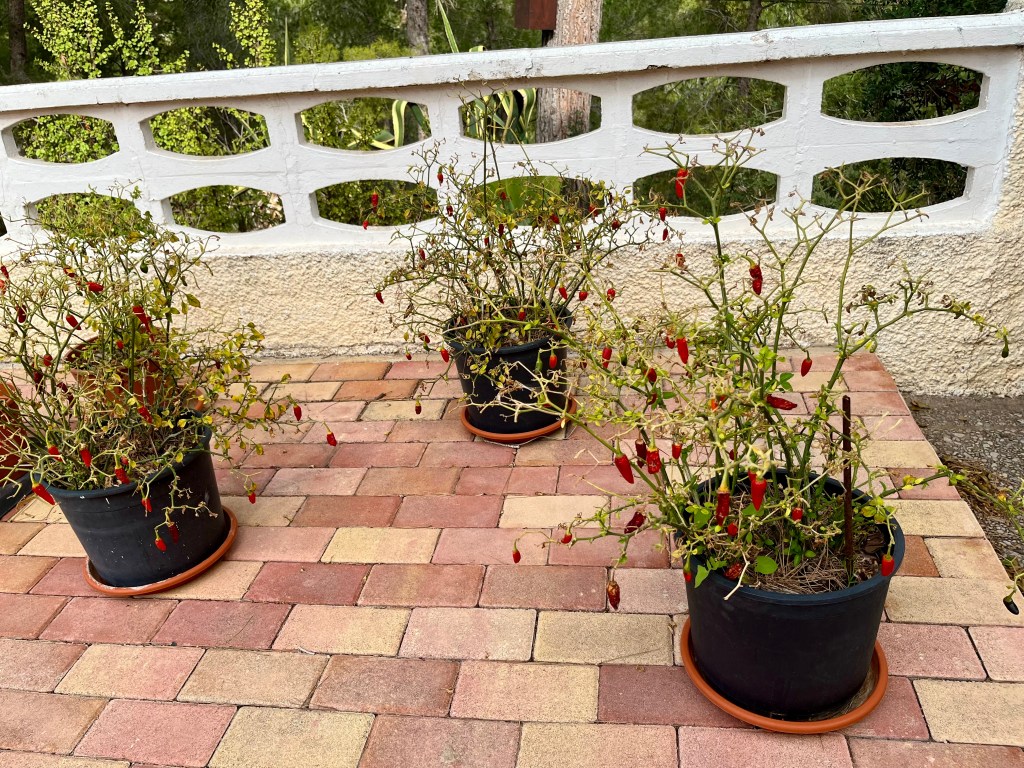
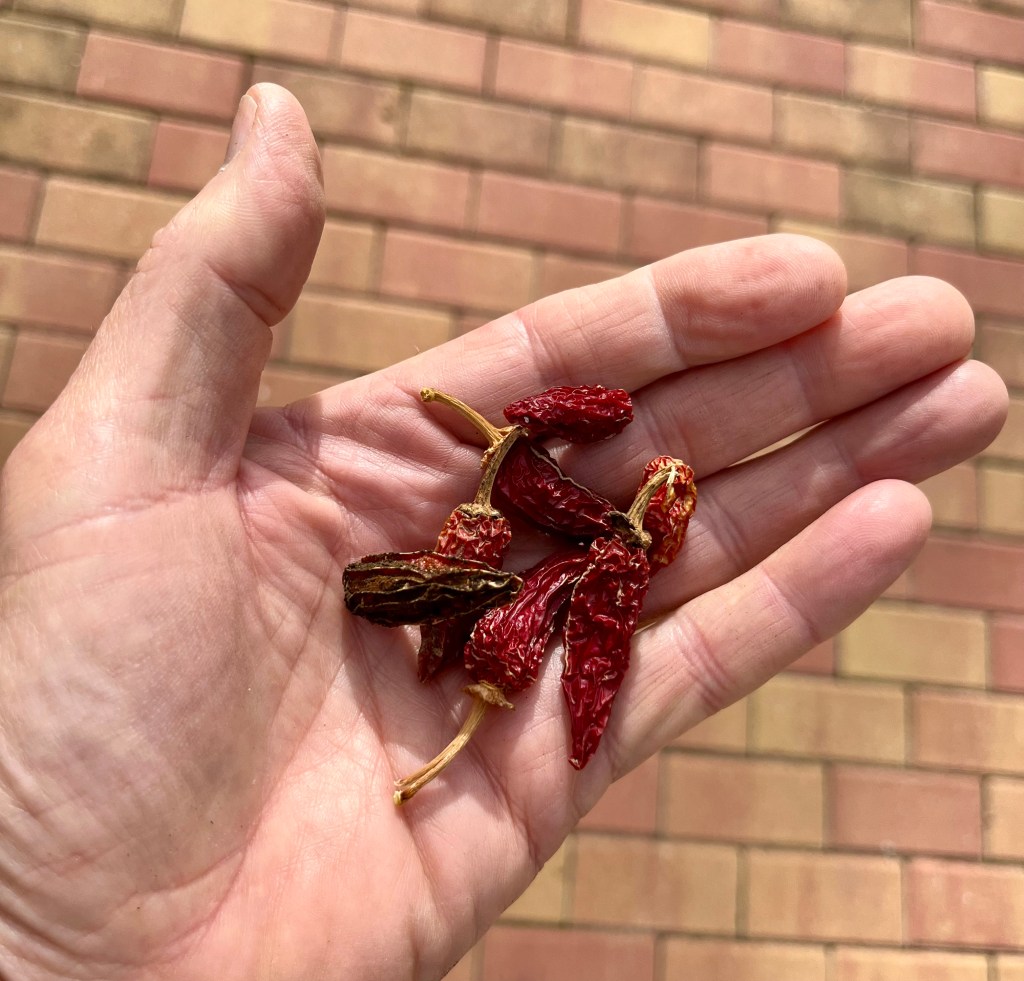
Harvesting and sowing Chilli seeds. Chilli plants are a joy to grow as they are so prolific. I leave my chilli plants to fruit over a two year period with just a chop back at the end of the year. The third year I remove the old plants and sow new seed in lovely fresh compost. By doing this I am getting rid of the old tired compost and creating a whole new generation of plants. The first photo below show my tired old plants heading for the compost heap, followed by the ripe seed pods that I have left on the plants and which will form my next generation.
Click on each photo for a larger view.
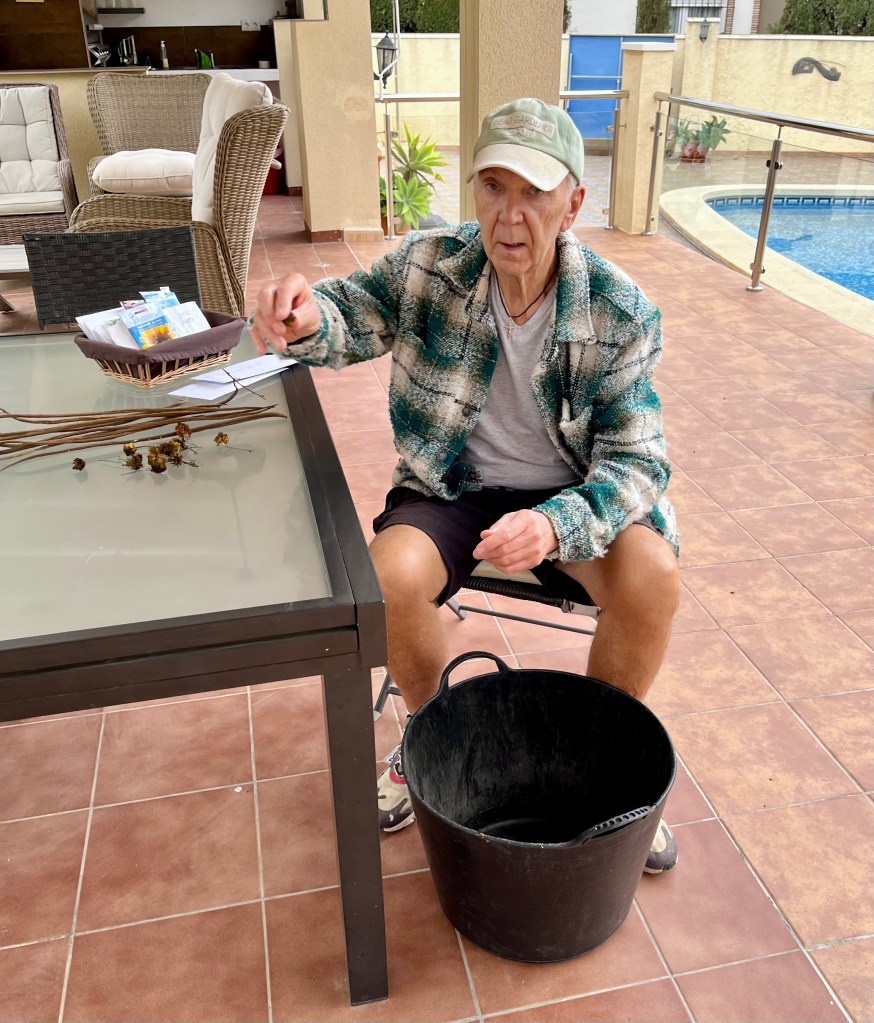
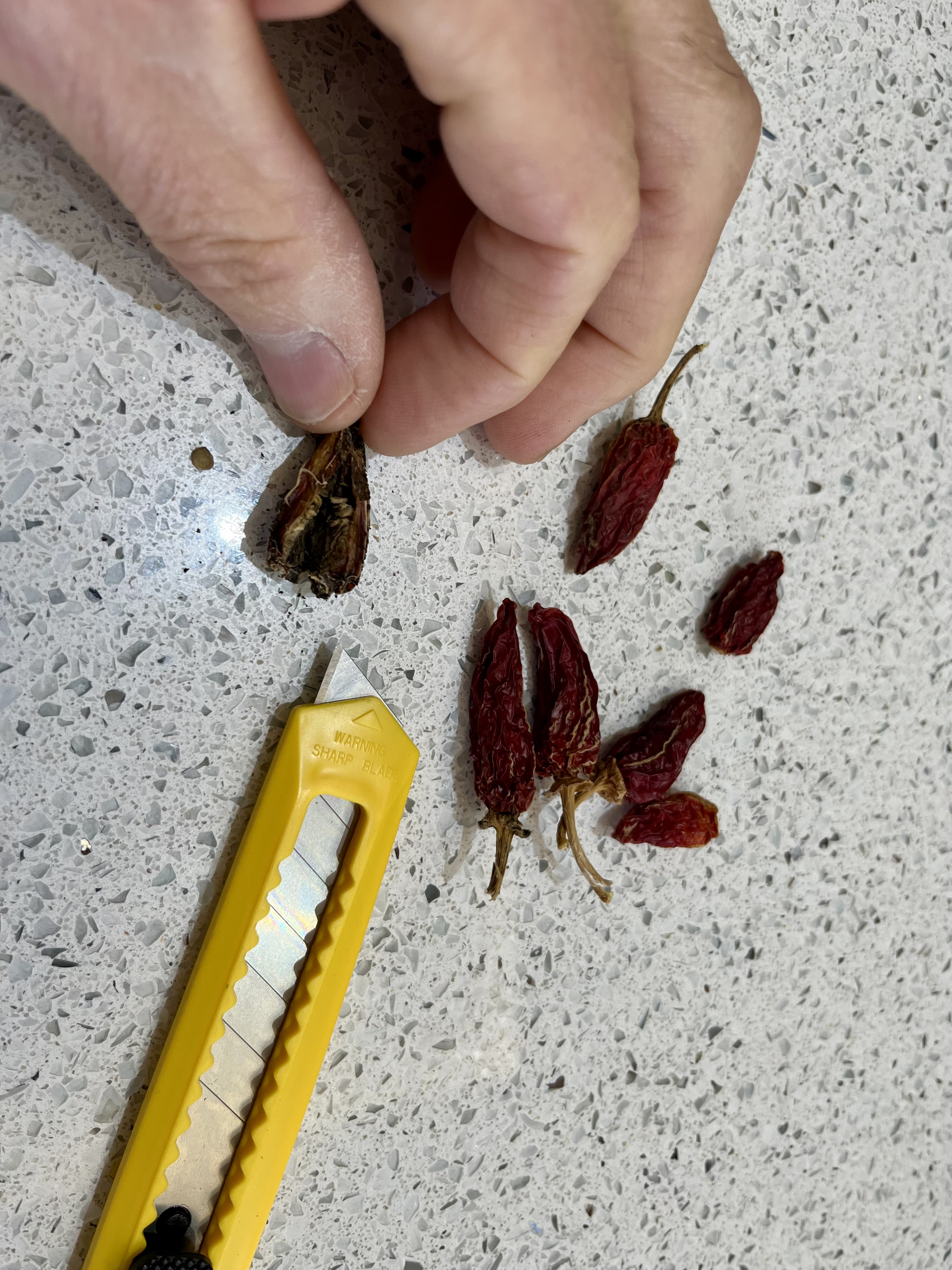
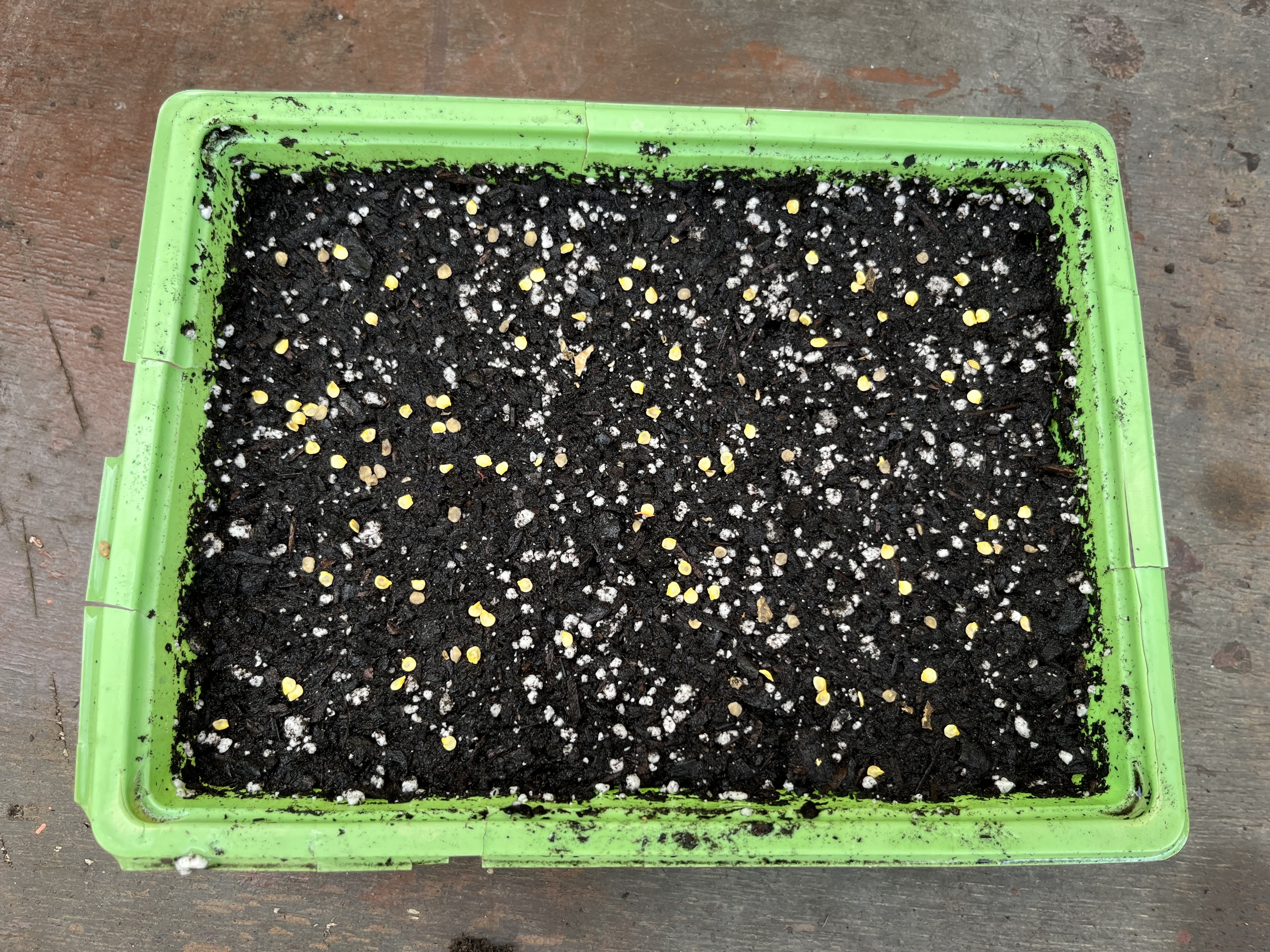
Getting the seeds is very simple. Using a scalpel, or very sharp knife, slice carefully down the side of the dried seed pod and carefully tease out the seeds that will be there waiting for you. The photos below show my scalpel work, together with the gathered seeds. The final photo shows the seeds scattered evenly across a seed tray before being lightly covered with compost. Click on each photo for a larger view.

Preparing for the death of Agave Attenuata. Losing any plant is a dreadful experience for us gardeners. We tend them, nurture them, watch them grow day by day and experience joy when they flower. That makes it all the more poignant when you lose an Agave Attenuata.

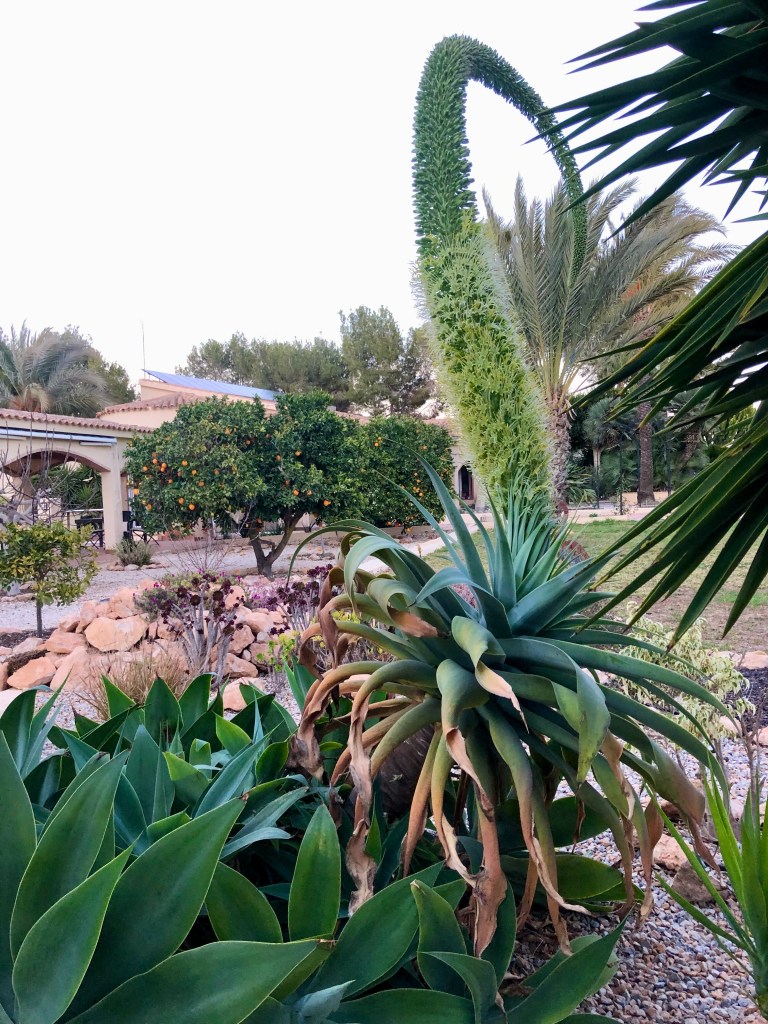
These lovely plants are very popular in Spain as they are one of the few “unarmed Agaves”, by this I mean they neither have teeth or spikes so won’t stab or cut you. They also have a charming habit of creating lots of pups which eventually surround them like a loving family. They take a long time to flower (12-20 years) and like lots of Agaves, when they do, they die leaving only their orphaned pups to cope on their own. The photo below shows a family of orphaned pups who lost their Mum about 5 years ago.

Eventually one of the orphans will go on to adopt the role of mother but it can take a long time. I think the one at the back right is shaping up to be Mum.

Regular readers of this blog will know that I have been lucky enough to see a number of my Attenuata flower. It has always been a painful process made much worse by the mockery of Cruella (my wife) who constantly heckles me in my sorrow by shouting “it’s only a plant, get over it”. On one occasion she proposed what she termed “assistant plant dying” and said that both me and the plant should go off to Dignitas!

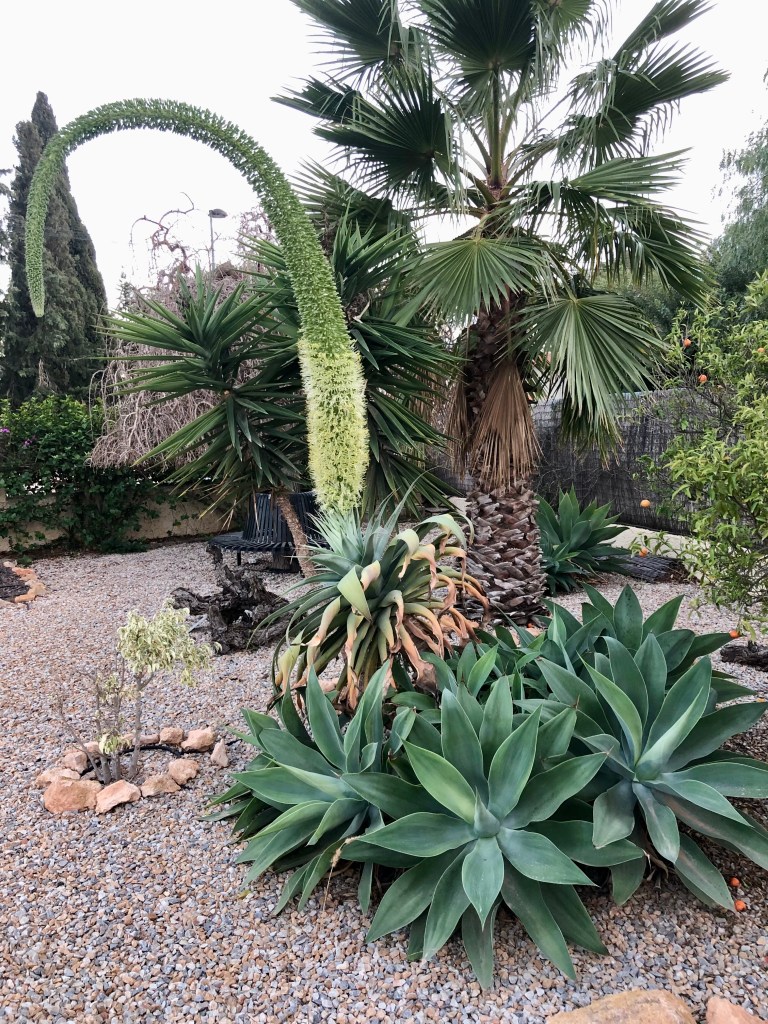
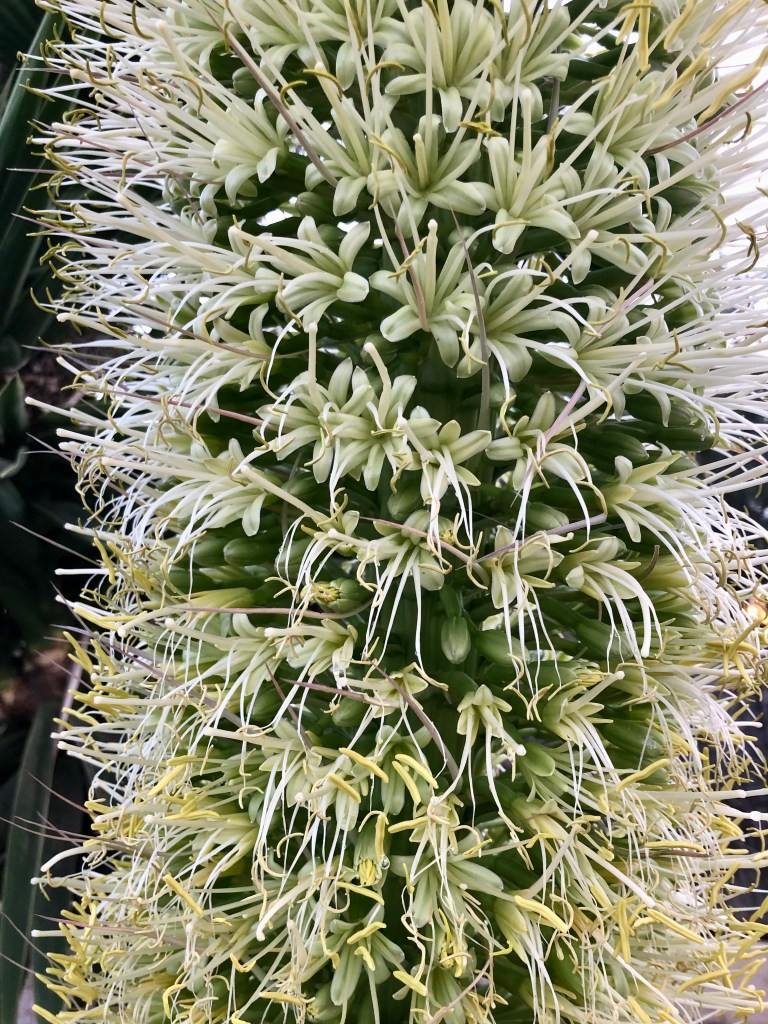
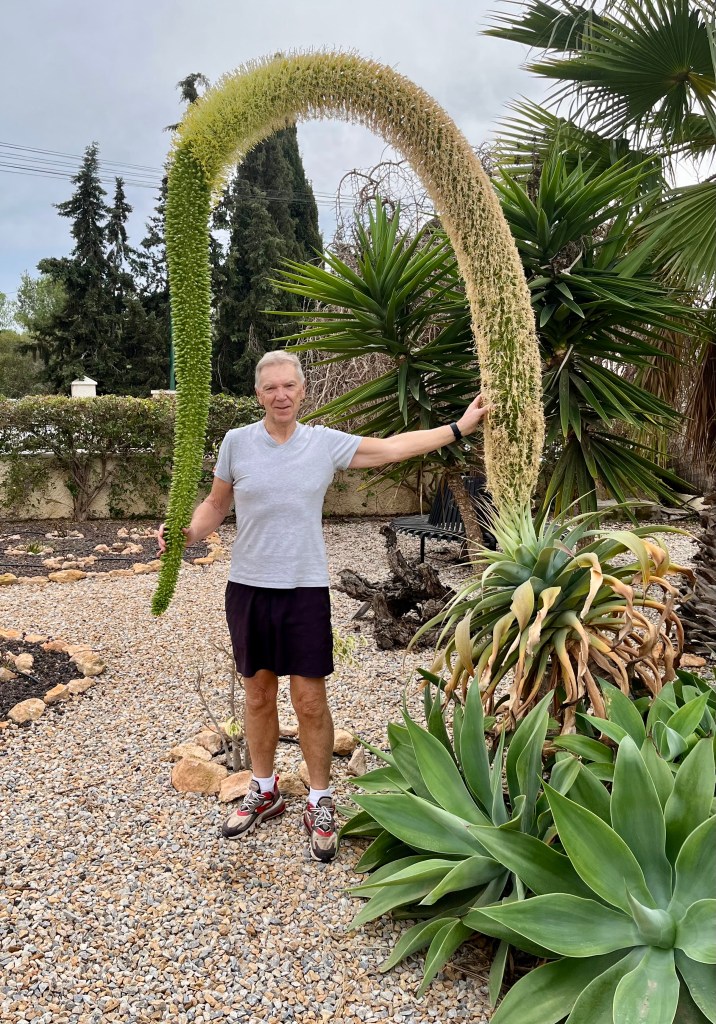
As always on these occasions I conduct myself with dignity and commit my evenings to sitting by the plant as it flowers. We talk over old times, when it was just a little pup and I reassure her that all her pups will be taken care of when she goes. The photos below show my cherished Agave developing her flower spike. The beauty of the flower spike is marred by the tragedy of her oncoming demise. Click on each photo for a larger view.

As her flower spike gets taller so she gets weaker, and this is when I start to sing. All Agaves have a tendency for classical opera, so I tend to sing arias mainly from Puccini and especially La Bohéme.

We start early on when she has accepted she is going. I hold her flower spike and sing “Che gelida manini”. As we progress she takes on the part of Mimi and I Rodolfo as she coquettishly sings “Sì, mi chiamano Mimì”. We both then finish the day with “O Soave faniculla” the pups act as the chorus and as she finishes on the famous high “C” we are all in tears. I am dreading the future. The photos below show us singing the first act, if you look carefully you can see the pups leaning into the chorus whilst visible signs of decay can now be seen on their mum. We shall sing the famous deathbed scene of Act 4 in a couple of weeks, in the meantime I am giving bereavement classes to the pups. Click on each photo for a larger view.

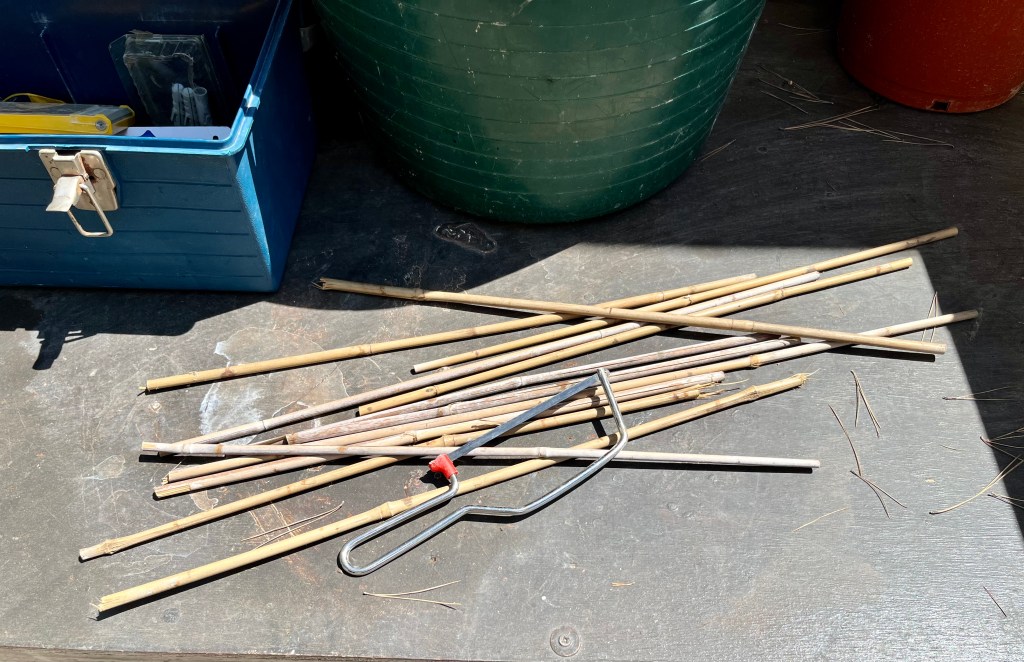
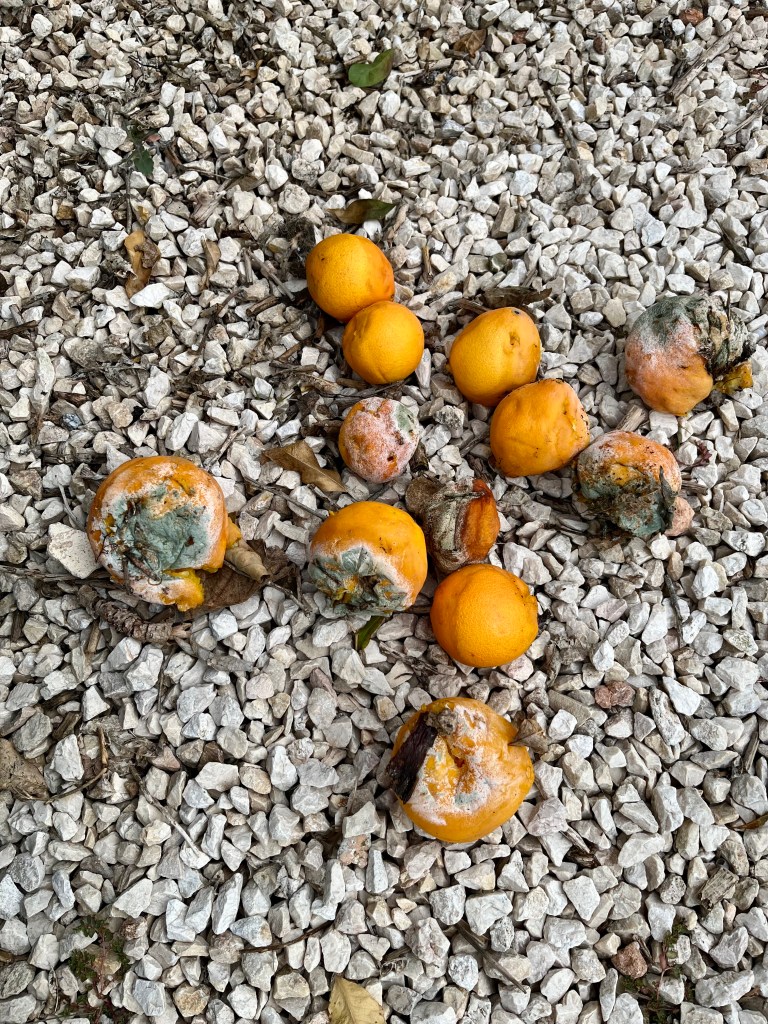
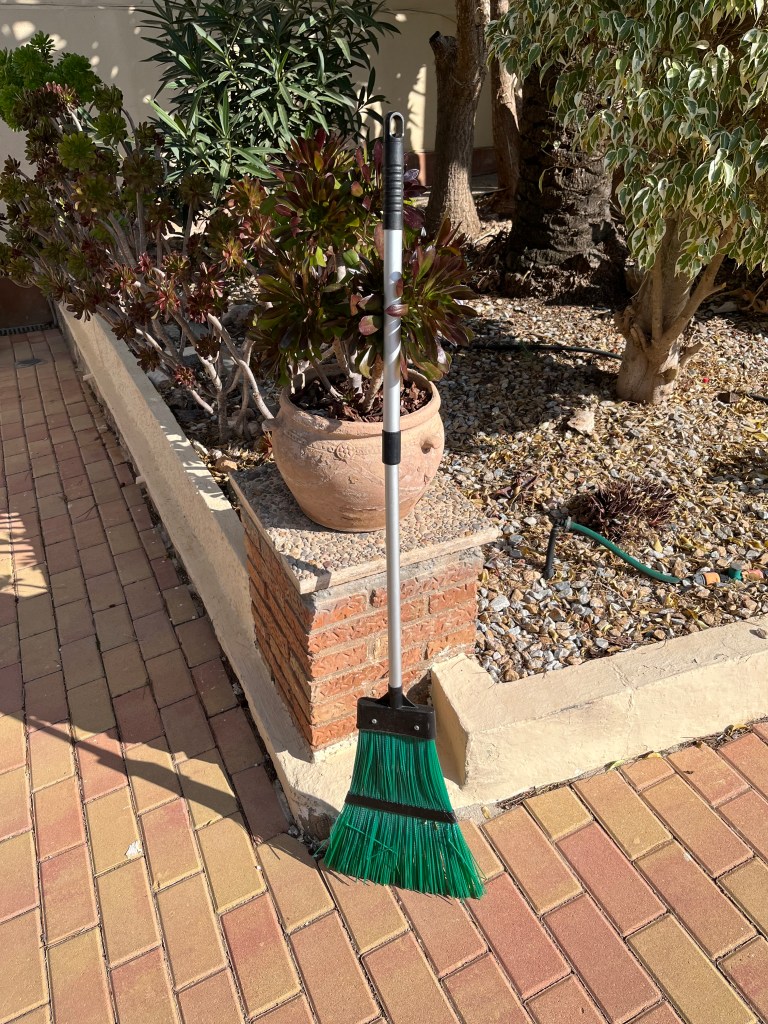
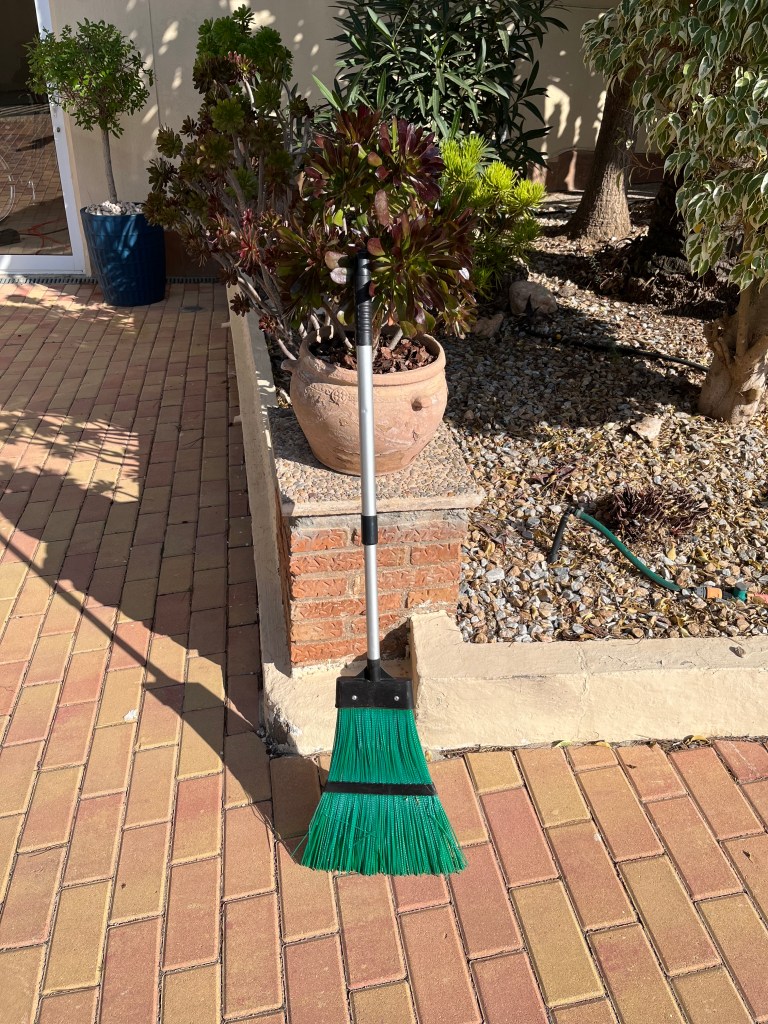
Regretting my Valentines Day purchase. As if things weren’t bad enough with my poor Agave, Cruella (my wife) had demanded that I make an effort for Valentines Day and get her something romantic. I racked my brain for days and eventually came up with the perfect present that was both practical, stylish, and suited to her personality. At great cost I bought her a new titanium based, multi positional short take off and landing broom. The photos below show this wonder of modern technology in both its extended long take off mode and its shortened take off mode.

Given that most of her current brooms are what you would term shoddy, I thought she would be delighted. She took one look at it and proclaimed “I wouldn’t be seen dead on that modern crap”. She stormed off in a huff and spent all of Valentine’s Day with her chickens murmuring darkly in chickenese whilst occasionally giving me black looks. The upside was that I could get on with sowing seeds!

The big winter cutback Part 3: and I am referred to a Tribunal accused of making the sky fall in!

Well by now most of you should have just about completed your big winter cutback and this is my penultimate instalment of my marathon effort. This of course only applies to those of us who don’t have frosts, some of you might not even have started yet – good luck.

This post covers the following areas and plants of my garden:

  • cutting back trailing lantana
  • pruning grape vines
  • cutting palms
  • bringing hedges back into shape

31st January 2024. Things I have been doing lately:

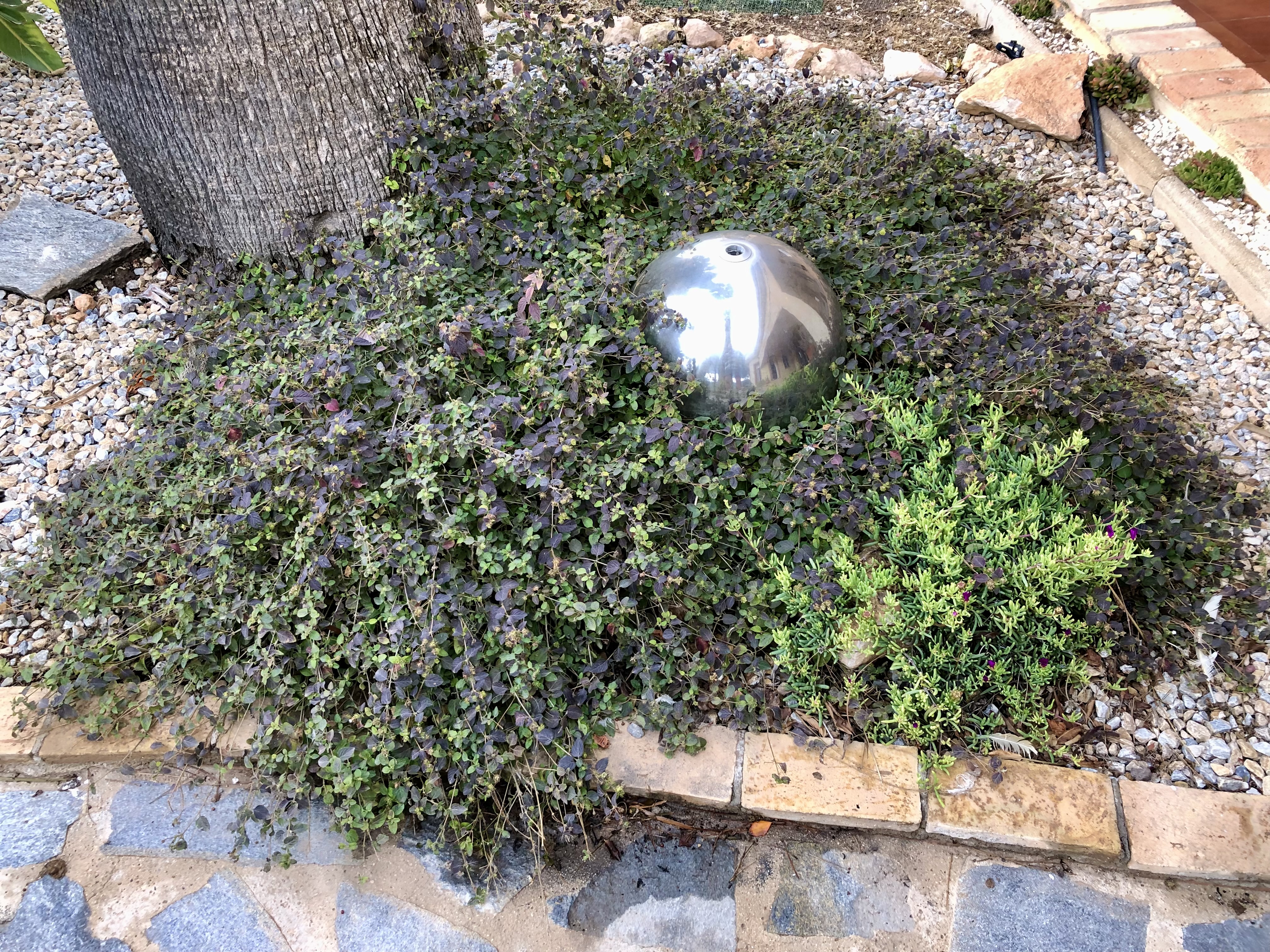
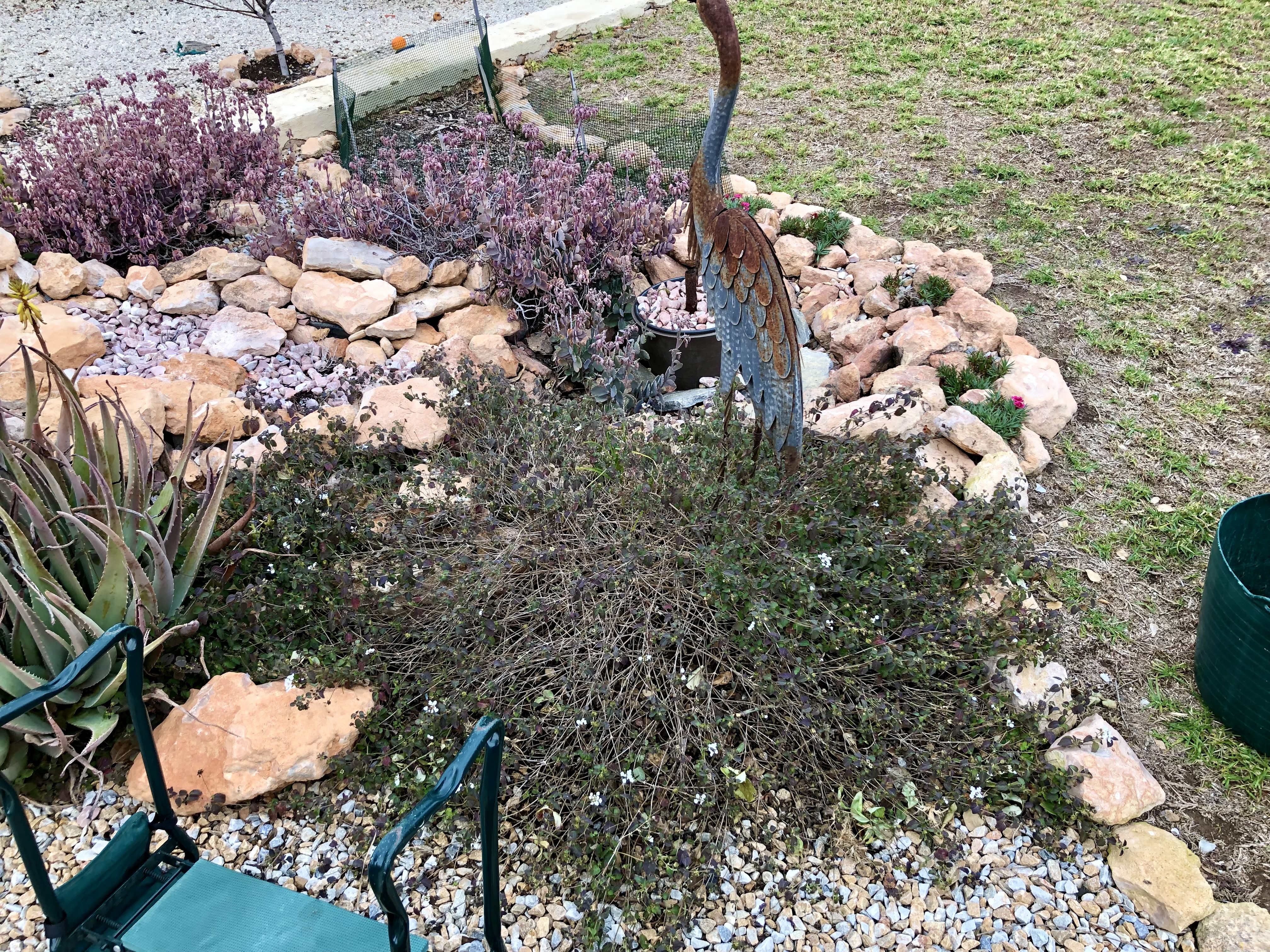
Cutting back trailing lantana. I use trailing lantana and other trailing plants in many areas of my garden as part of island planting which I use to break up and add interest to areas of stones and gravel. The photos below show some of my lantana islands. Click on each photo for a larger view.

When cutting back lantana it pays to be brave. Using your secateurs cut back hard to just above a leaf juncture. By taking it back this far you will be removing most of the old wood and encouraging strong new foliage in just a few weeks. When you do this the plant itself will actually get larger each year as you are cutting it back on much larger root stock.

When cutting back low growth plants at this time of year be sure to wear your garden gloves. Snakes and all sorts can be happily hibernating under your plants and they don’t like being disturbed. The photos below show my lantana happily cutback together with a large toad sleeping away. Click on each photo for a larger view.

Pruning back grape vines. When pruning grape vines you are looking to just take off the side shoots to leave a small stump for the new fruit growth. Do not cut the main stem! the aim is to leave this to thicken and lengthen over the years to act as a superhighway for the sap for the whole vine. The photo below shows the best place to cut.

Don’t be tempted to cut right to the stem as you will lose the fruit.

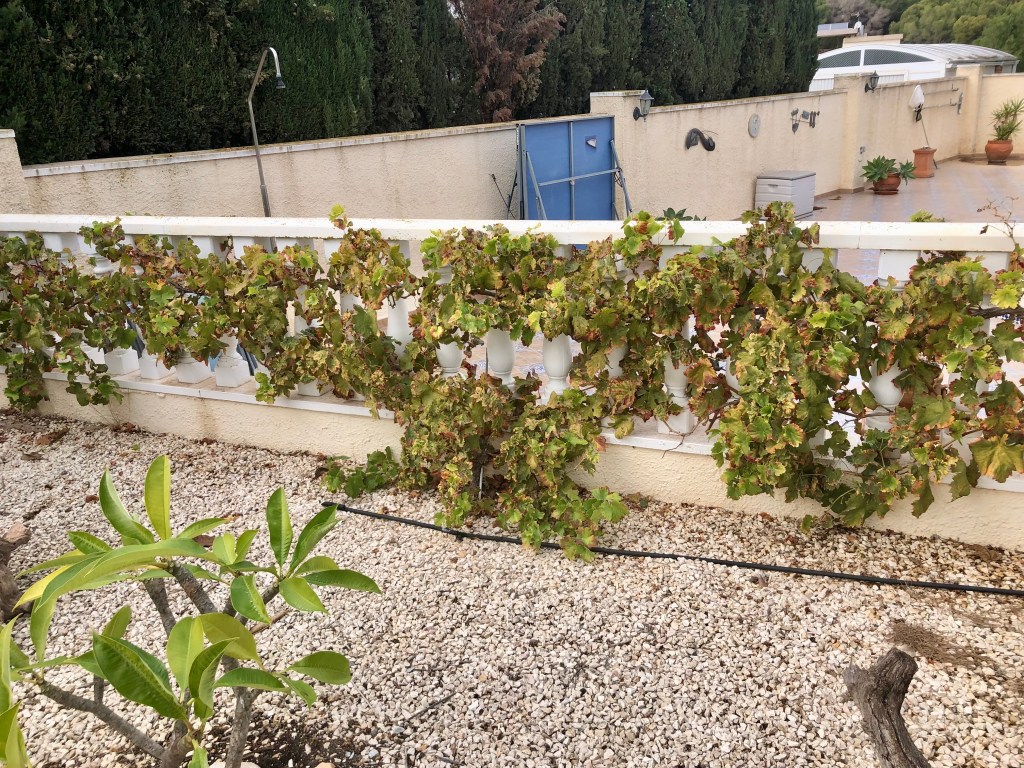
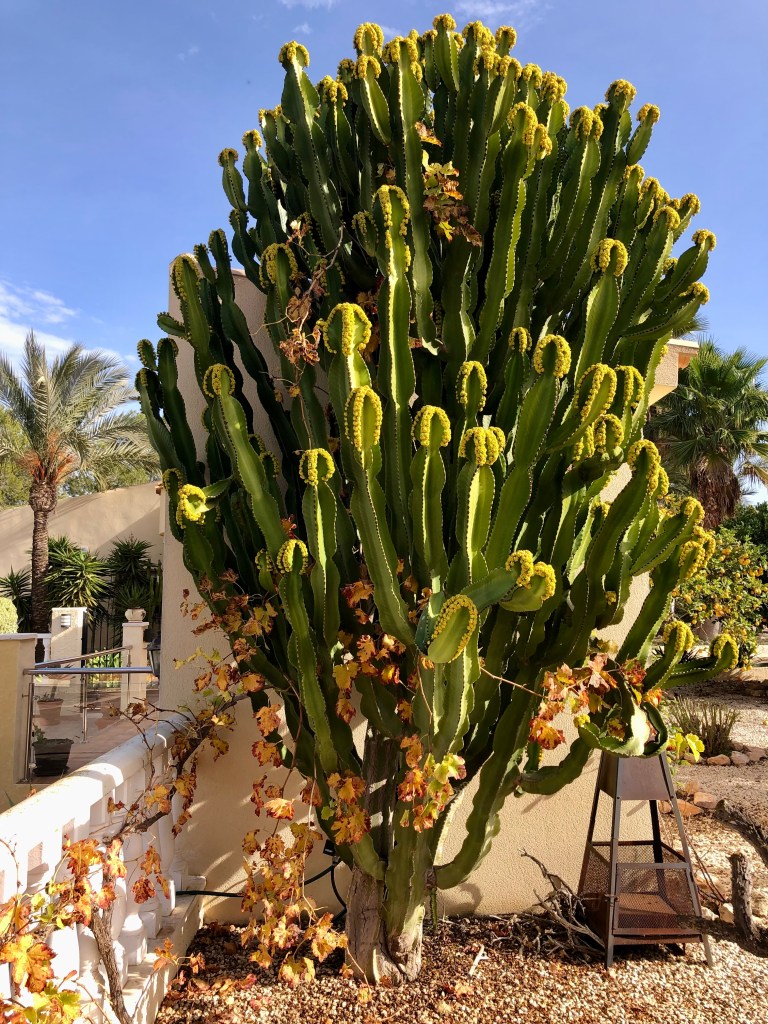
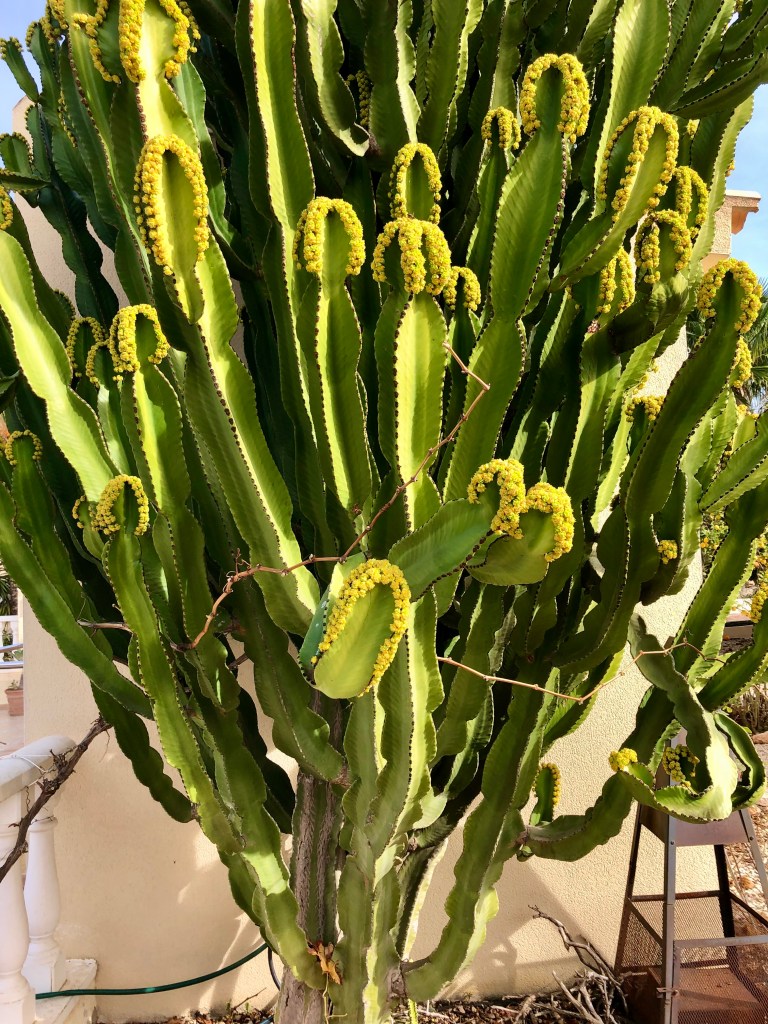
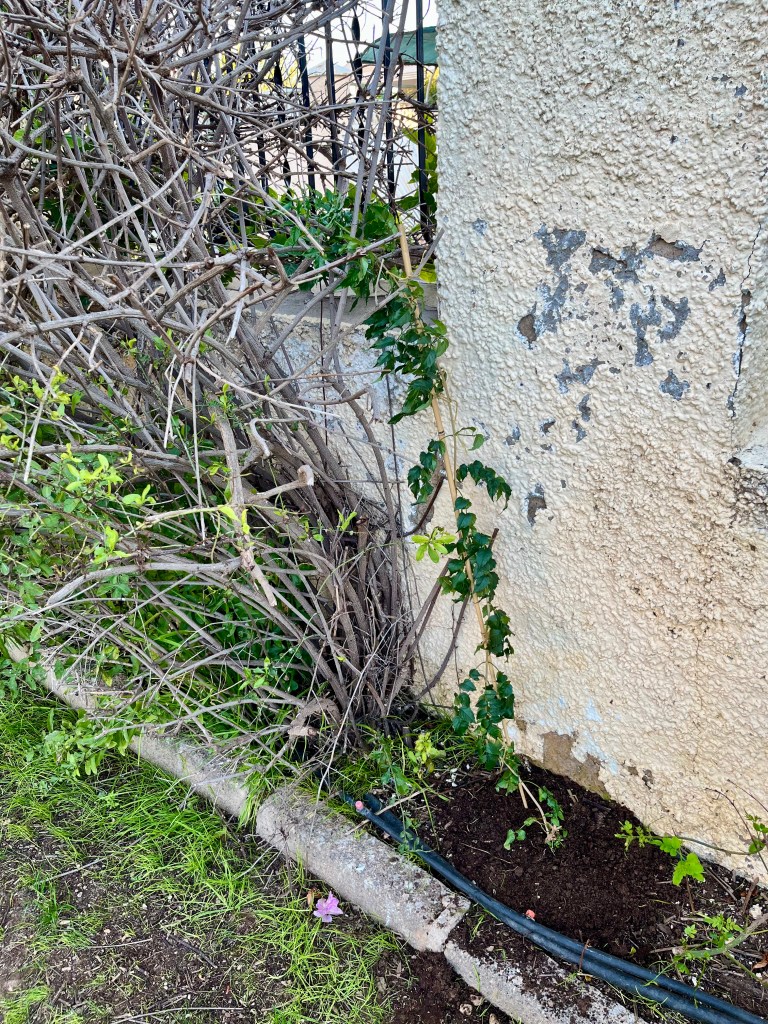
I have three grapevines: one runs along the front of the house and two grow through balustrade at the side of my pool. The photos below show my grapevines prior to pruning, you can also see that I have encouraged one of my vines to grow up and through a Euphorbia. Click on each photo for a larger view.
Finally some of my handiwork. These vines will start sprouting within a month and off we go again. With correct pruning the vine will get stronger each year and eventually before you know it you will be making your own wine. Click on each photo for a larger view.
Cutting palms. Now is the time to prune and tidy up your palms as the sap will be down, the palm weevil will not be flying and most viruses will be dormant. However, do not be tempted to climb large palms and hack at them. You will probably fall off the ladder or cut yourself and bleed profusely. Leave it to the professionals.

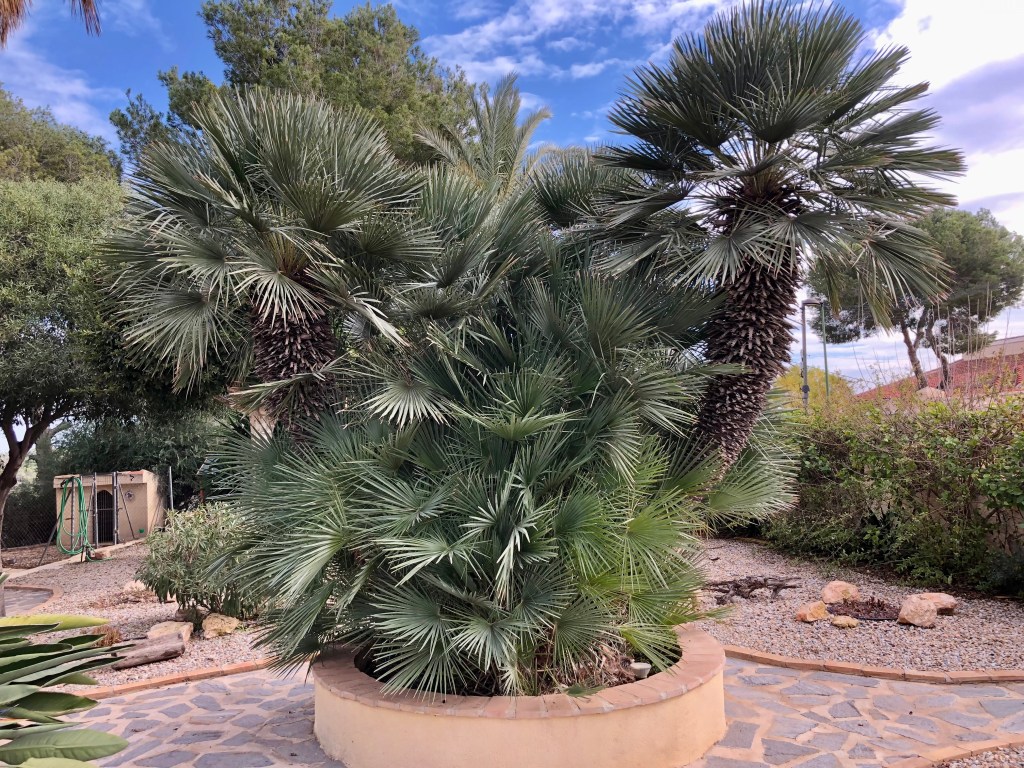
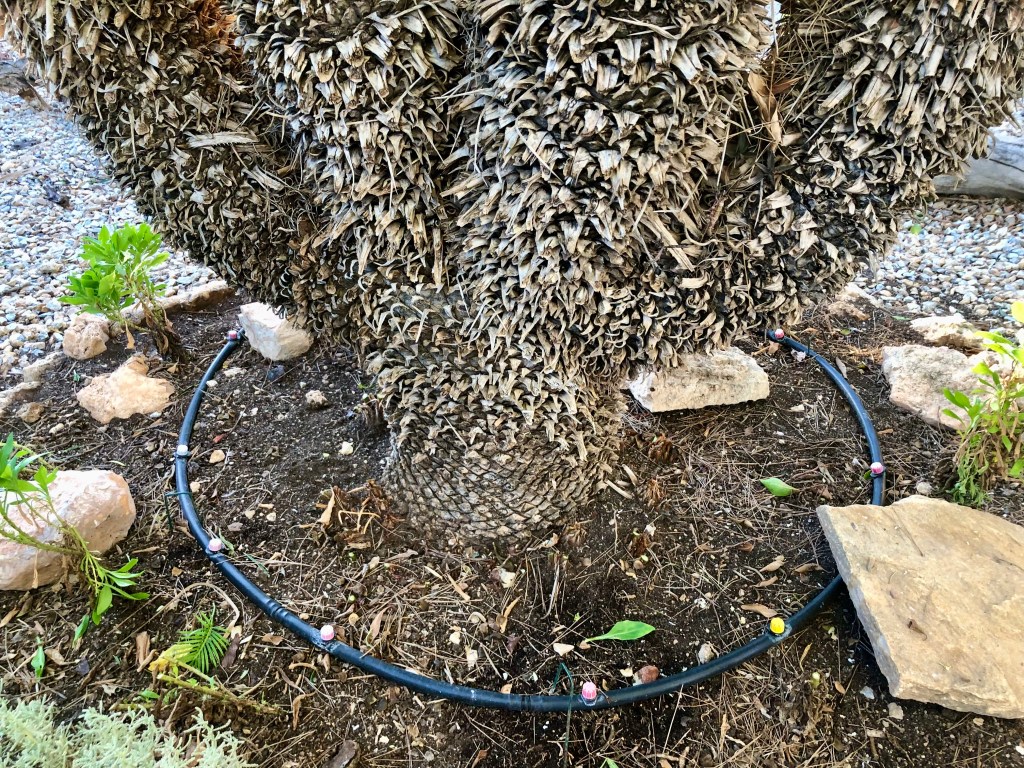
The only palms I cut myself are Sago Palms and European Fan Palms, both of which I can reach from the ground with long lopers. I dealt with cutting sago palms earlier in the big cutback so I was left with my stand of fan palms. These consist of four main palms and their multitude of pups which grow in a small redonda we have created in a pathway. The photo below shows the palms prior to their cutback.

From the photo you can see that it is becoming an important feature of the garden. To stop it dominating and overwhelming this part of the garden it is necessary to thin it, reshape it and lift the crown of each palm.

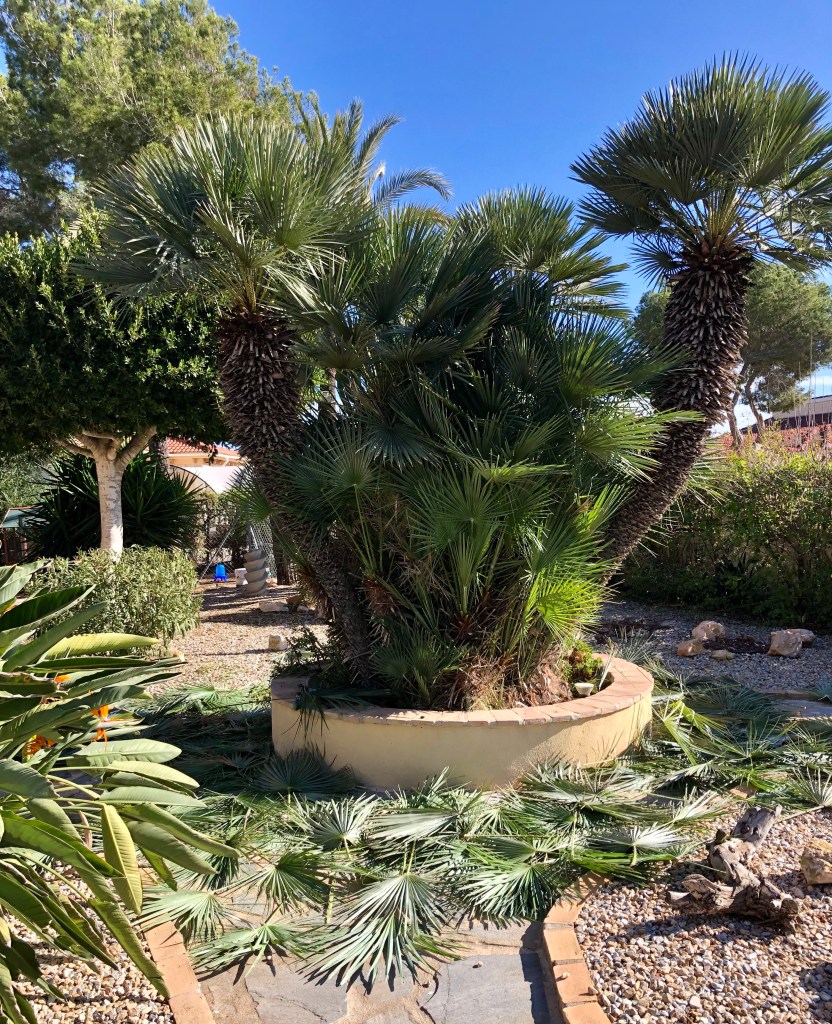
Using long lopers I first go round the edges of the palms cutting out wayward fronds that are ruining the round shape. For the bottom growth I am not so worried about keeping the symmetry of the palm I am more interested in keeping the lower growth within the redonda.

Once I am happy with the lower shape I then use very long extended lopers to take the top growth of each palm back to just two rows of fronds. The two row bit is important as I will always have a spare if something happens to one of them. The photos below show the resultant frond massacre. Click on each photo for a larger view.
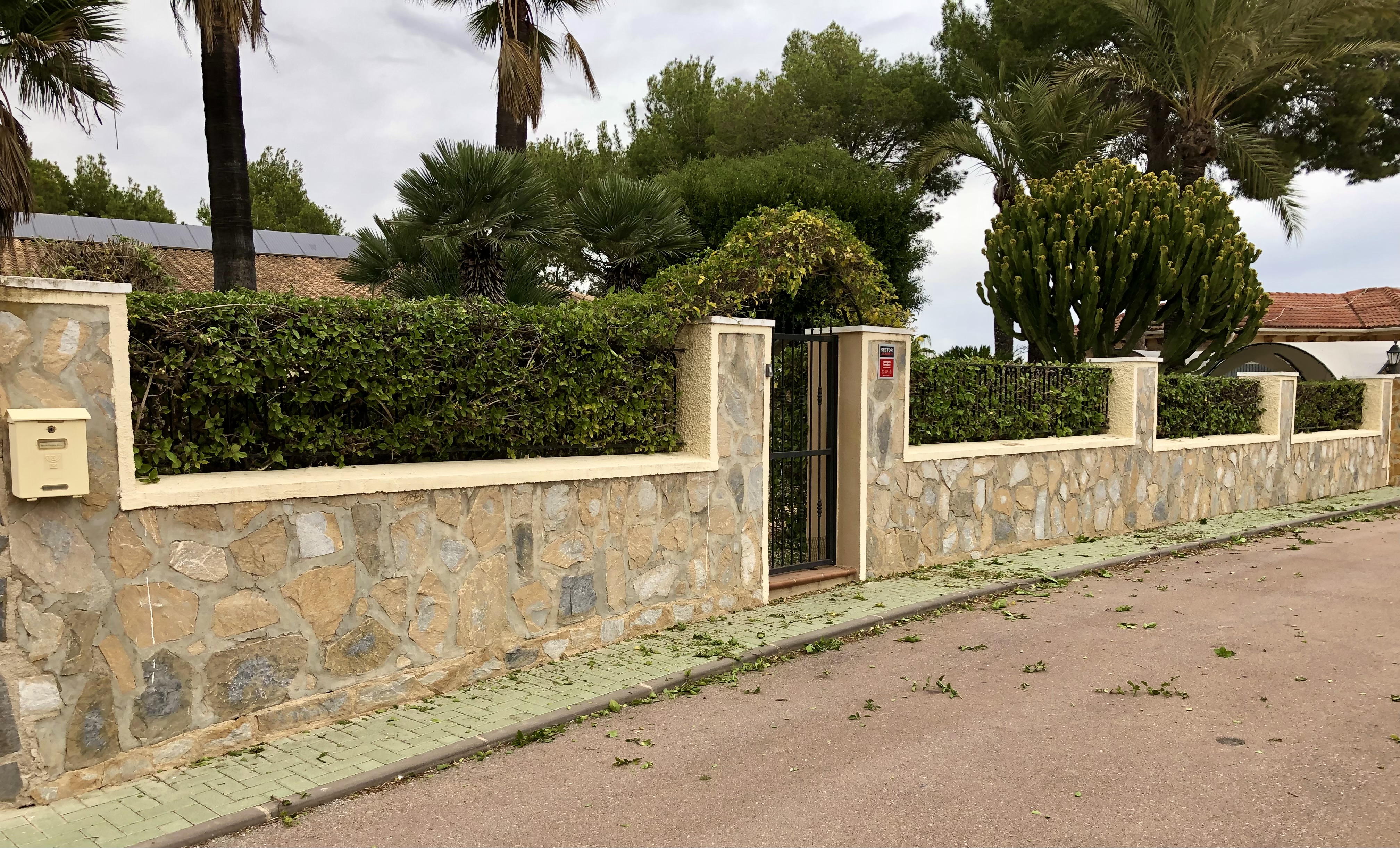
Bringing hedges back into shape. Hedges are an important part of my garden as they mark boundaries so much better than fences, and they flower, which fences never do. I have about 200 metres or more of hedges all tightly packed and encouraged to fight to earn the right to flower. These include:

  • Bignonia
  • Plumbago
  • Trumpet vine
  • Jasmine
  • Roses
  • Bower vine
  • Bougainvillea
  • Hibiscus

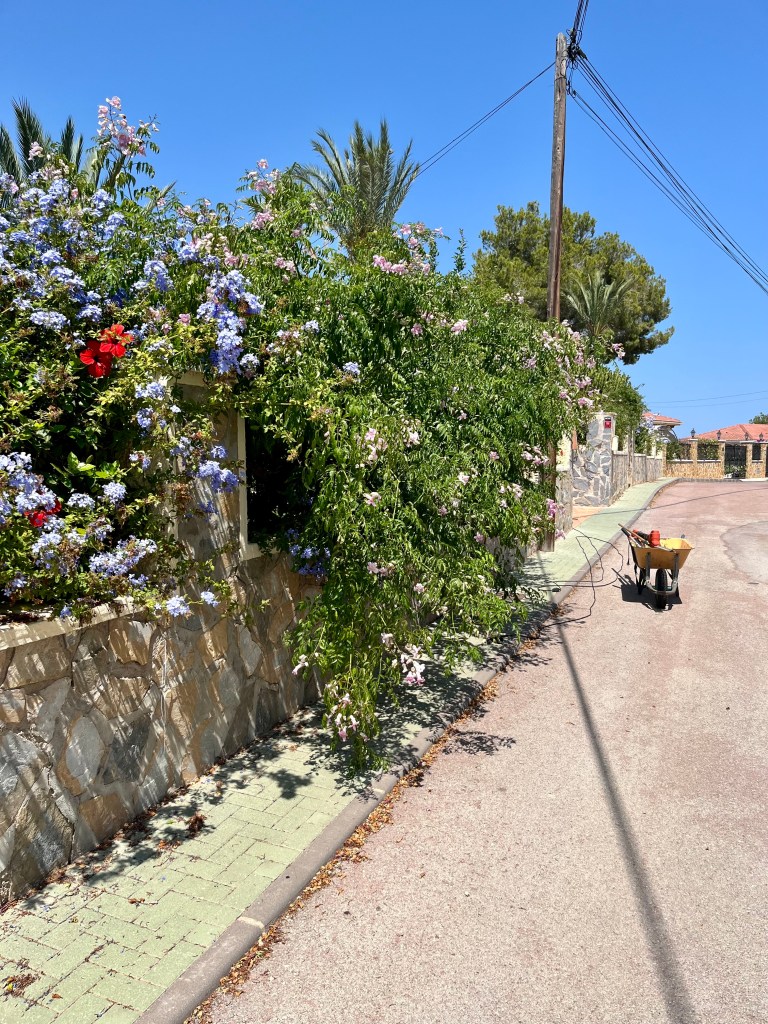
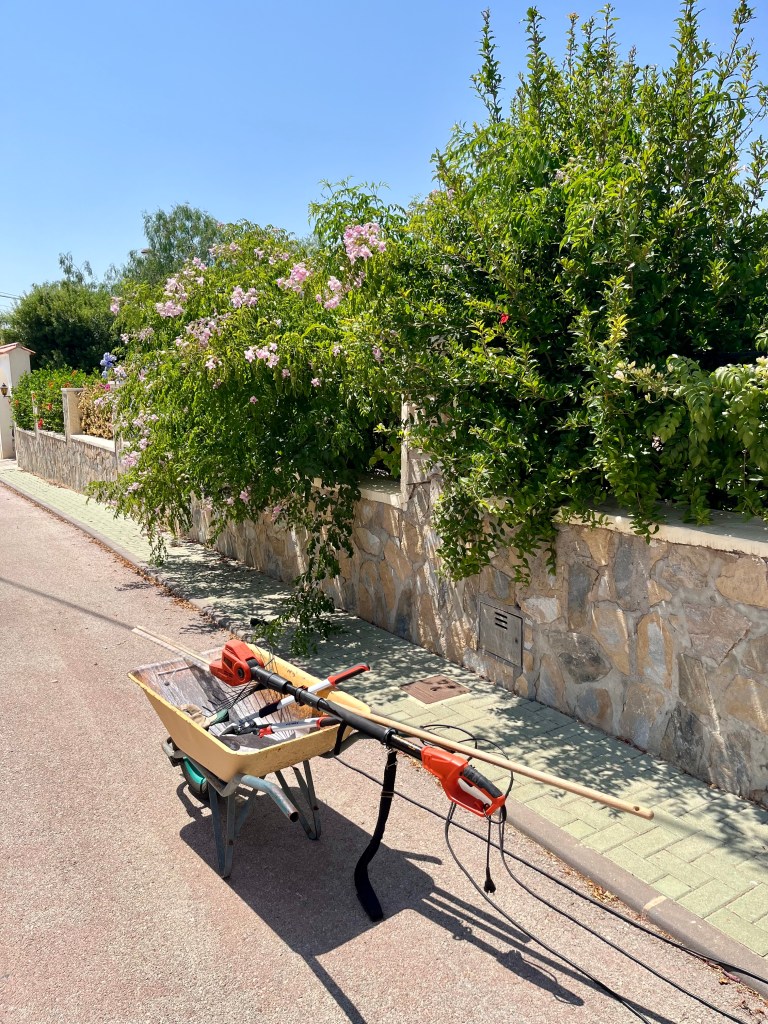
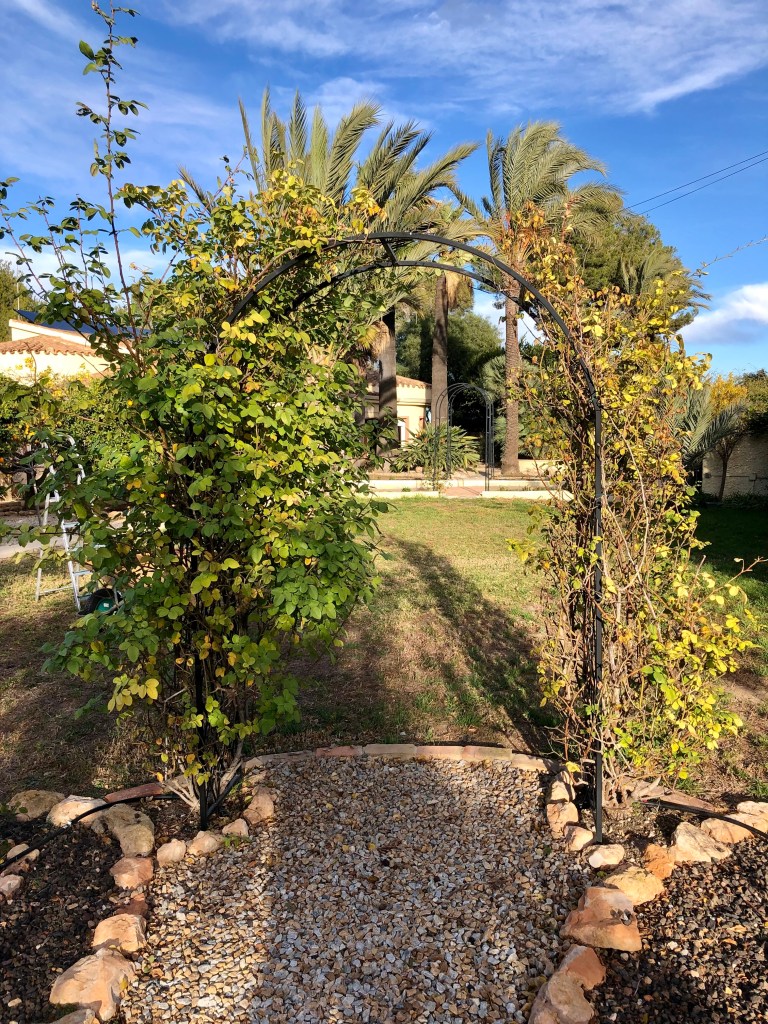
In addition to all of the above I have two self seeded trees that have found their way in: a white maple and pomegranate both of which add a bit of contrast in height. The rule with hedges is very simple; everything is cut back drastically to the same height, with the edges taken back straight to encourage light into other areas. The photos below show my hedges before, during and after their prune. Click on each photo for a larger view.

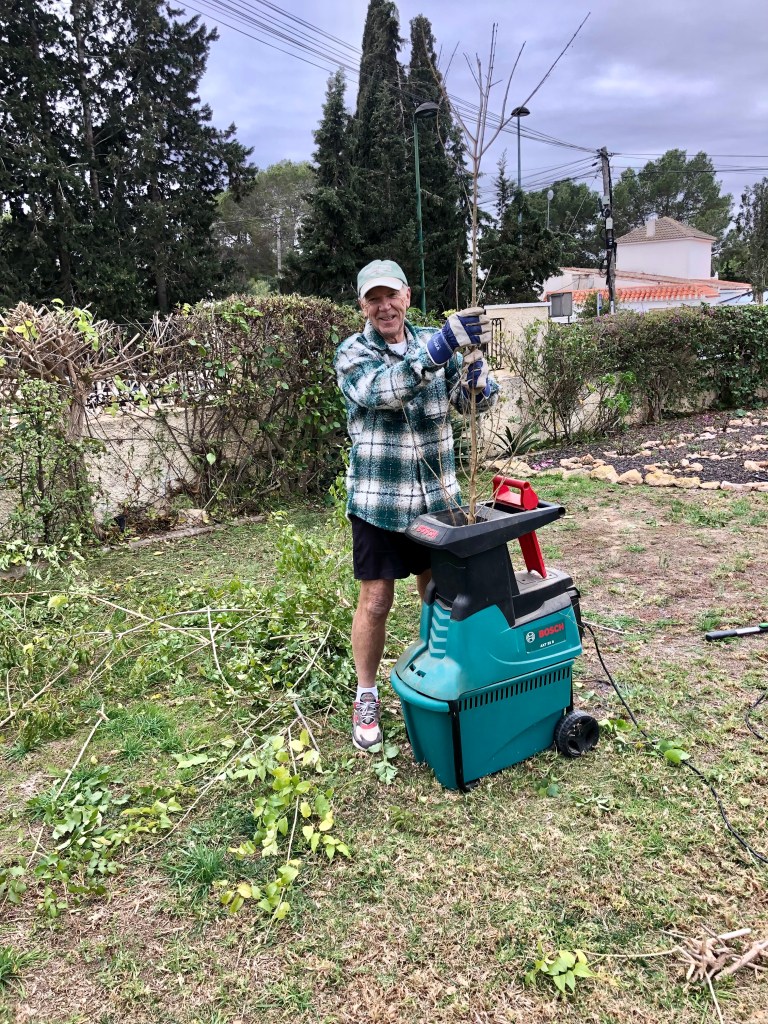
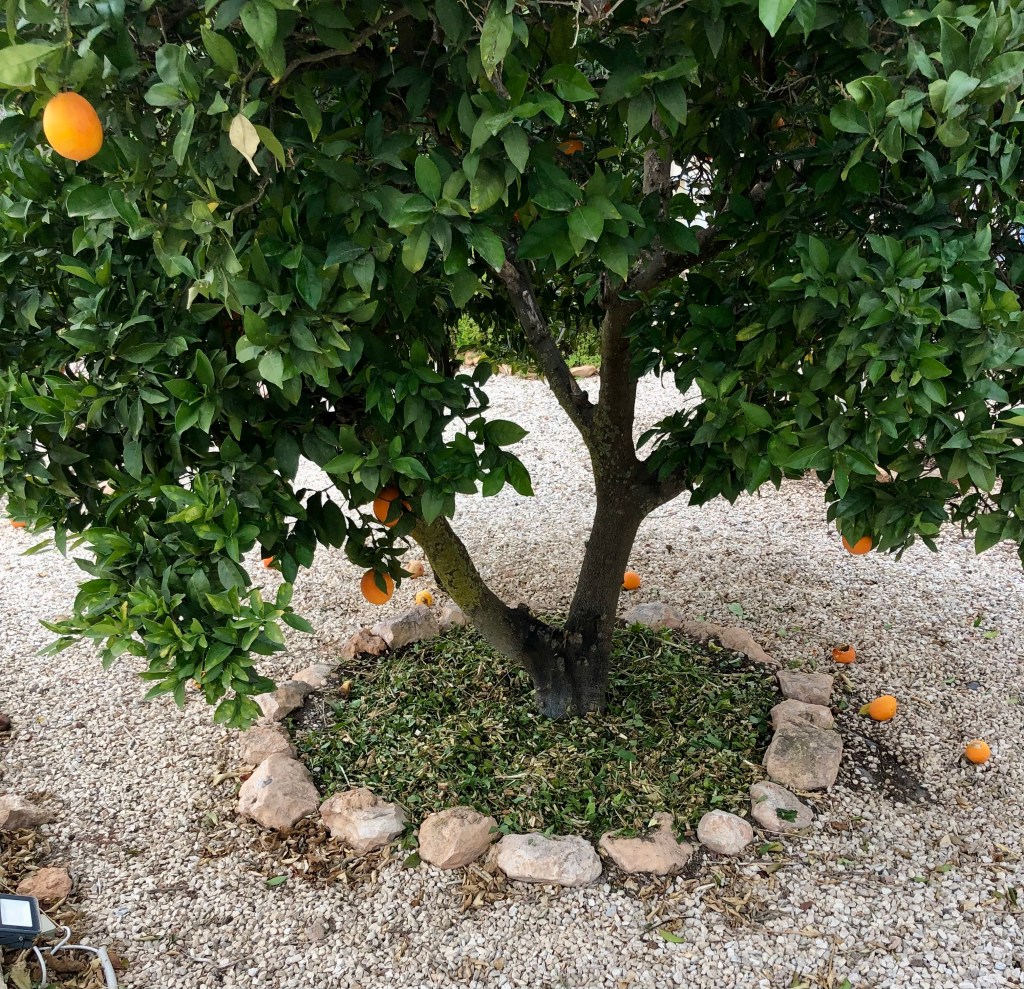
The final act of hedge pruning is to shred the thicker stems from the maple and the pomegranate and use them as mulch under other trees. Click on each photo for a larger view.

I am referred to a Tribunal. I am too upset to cover this item in this post, and also I have to prepare my defence against accusations of making the sky fall in. Hopefully, I will be able to talk about it in my next post.

The big winter cutback Part 2: Figs and Roses + Grass

Who knew that gardening could be so Rock and Roll; I always thought Guns and Roses was a stupid name anyway. If you have roses and figs, then now is the time to get them pruned back. Add a little bit of grass for you old hippies and we are really rocking. To think that Cruella (my wife) thinks that gardening is boring. Without further ado, let’s get on with the big cutback .

17th January. Things I have been doing lately:

Pruning Roses. People sometimes make out that there is a lot of mystique about the timing and methods of pruning back roses. But roses are very hardy and can take quite a lot of rough handling. The photos below show some of my roses ready for their annual prune. Click on each photo for a larger view.
It is important to remember that climbing roses are pruned differently to bush roses. With climbing roses I recommend running hedge trimmers lightly up the length of the plant just removing excess side growth without cutting the upward stems. In this way you will maintain height but get rid of bulk. The photos below show my climbing roses before and after their trim. Click on each photo for a larger view.
Now if like me you have lots of roses (I have 30) then pruning can be quite a time consuming process, so I recommend that you do it in two linked stages. First, be brave and get out your hedge trimmer or shears and just prune back all your roses to the required height – I recommend taking off at least two thirds of the height.

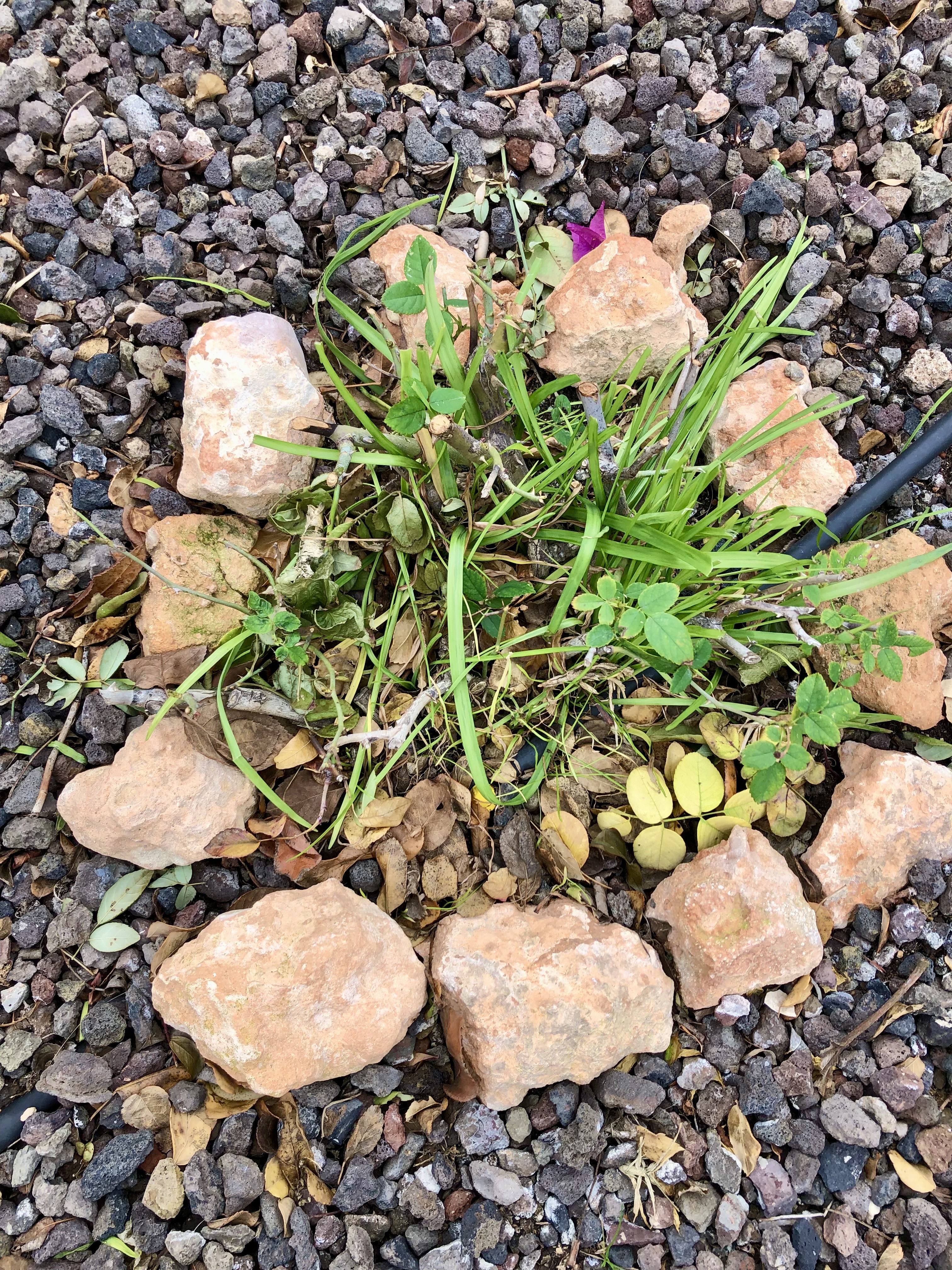
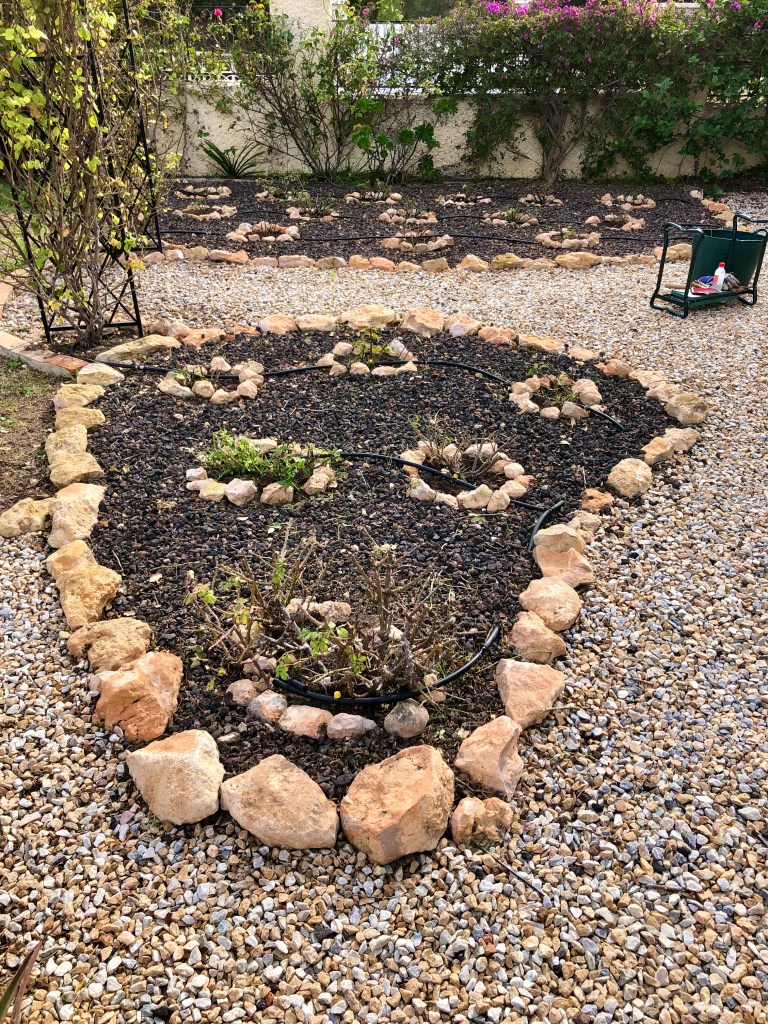
Second, get on your knees and prune each individual plant as follows. With bush roses the simplest method is to prune back by about two thirds to the nearest outward facing bud joint. As part of this process take out any crossing or diseased stems to leave a nice open centre to the plant a bit like a wine glass. The photos below show my roses pruned. Click on each photo for a larger view.

The more perceptive amongst you will note that the final photograph shows that you can barely see the pruned rose from the leaf debris and grasses growing through. I am sorry to tell you that this is when it gets difficult and when the real hard work starts. Oh and unfortunately you will lose a lot of blood. Using a pointed trowel you need to get under each rose and remove all the leaf debris and dig out the weeds and grasses. The rose thorns will get you no matter how good your gardening gloves and you will bleed quite a lot.

This is the important part so please pay attention. Sepsis though rare affects a number of gardeners each year. If you cut yourself – and you will – then it is important that at the end of your pruning blood bath you wash your hands and then bathe your cuts with an alcohol solution to ward off infection. The photos below show my lovely rose beds all restored and ready for this year’s growth. The final photo shows the all important alcohol to sterilise your many cuts. Click on each photo for a larger view.

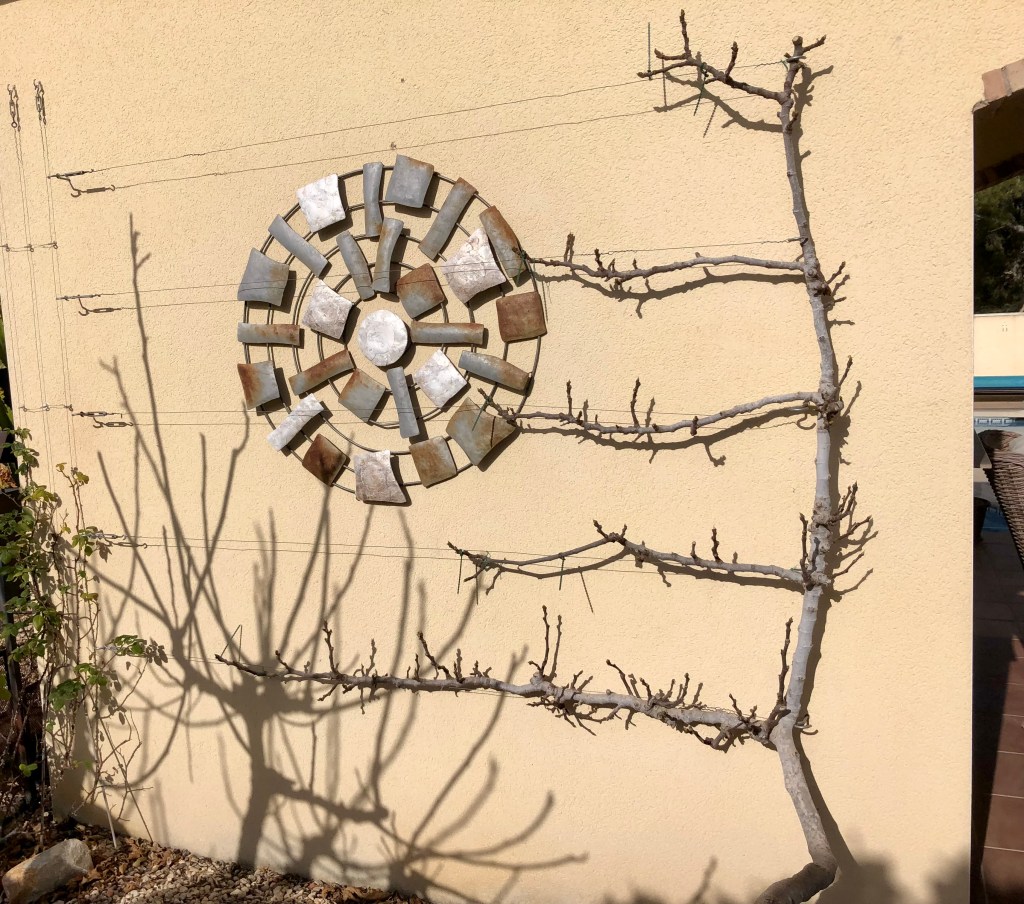
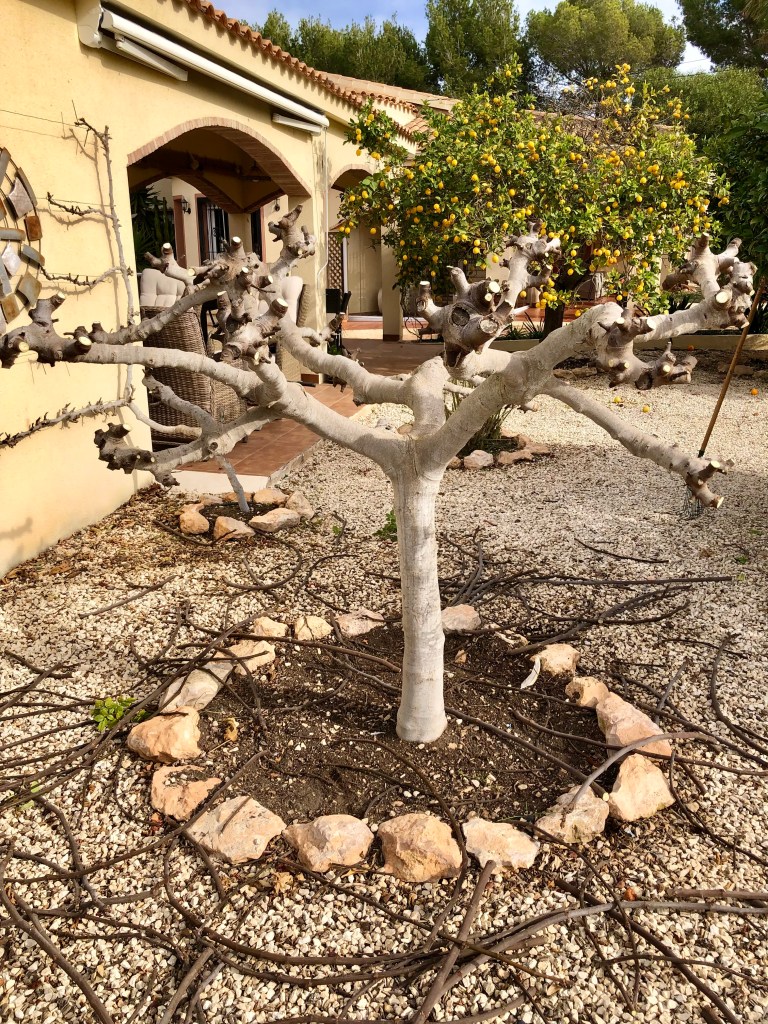
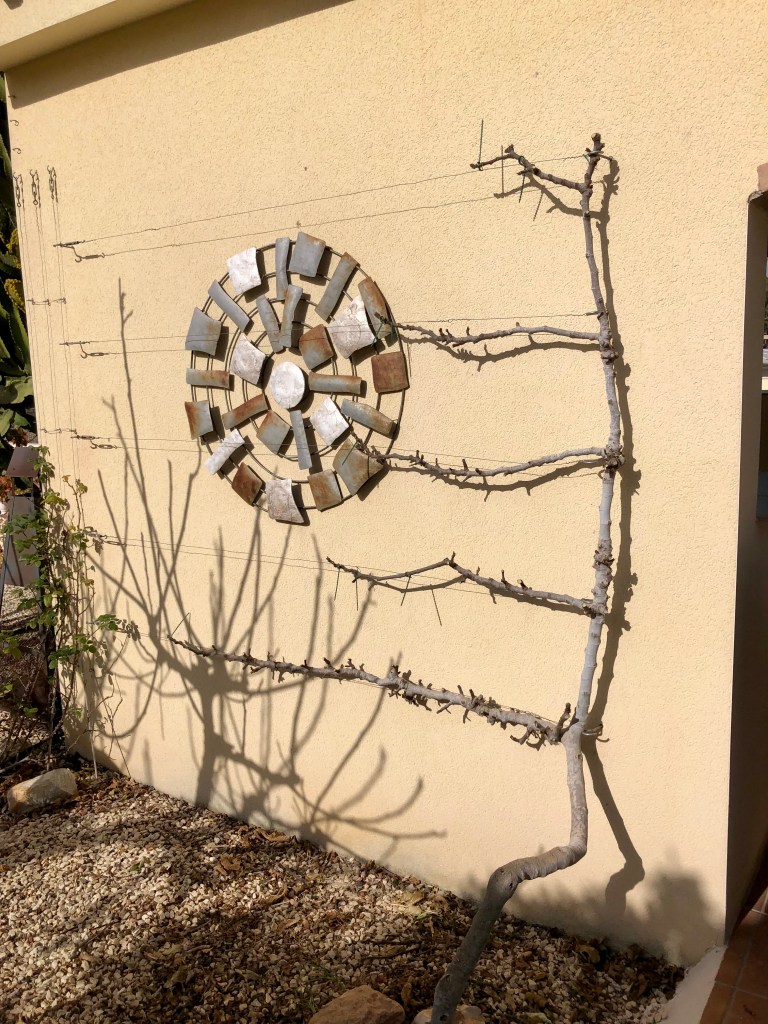
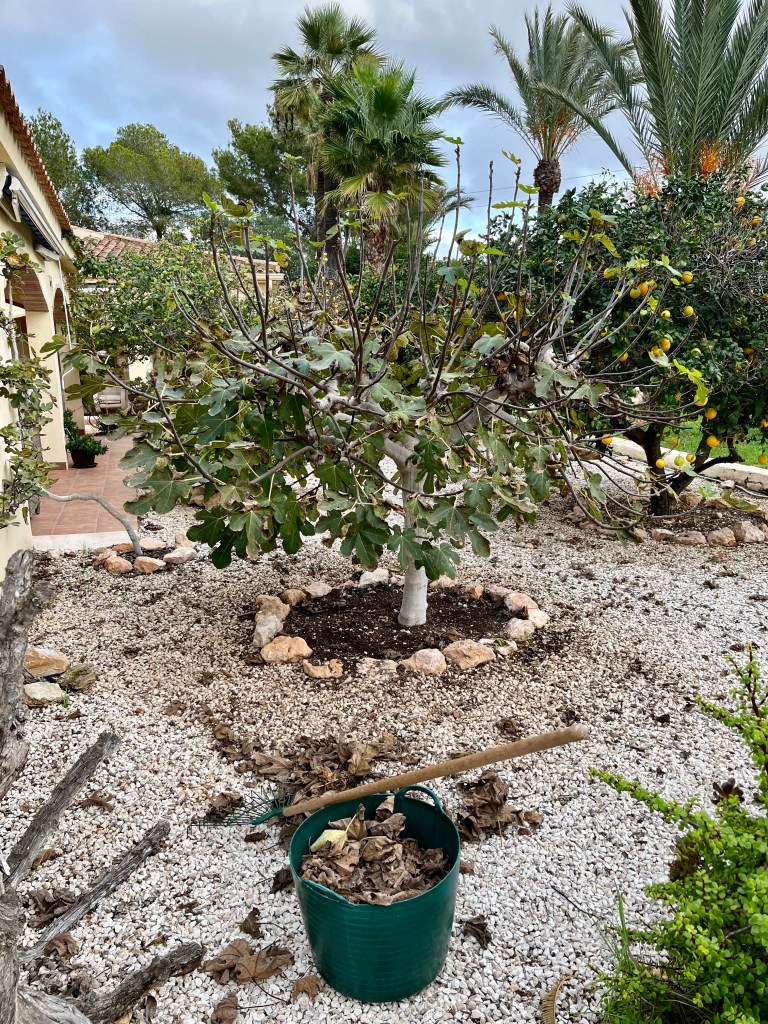
Pruning fig trees. Most fig trees in Spain are allowed to grow into giant behemoths sprawling over gardens like something conjured up by Gandalf. Their fruit is often too high to harvest and they shade out other plants nearby. I have two fig trees: an espalier and a free standing tree. As a lover of figs both of my trees are cosseted. They are fed, netted and pruned at exactly the correct time, and in return they provide me with abundant fruit. My trees are shown below in their unpruned state. Click on each photo for a larger view.

You should only prune figs when you are sure the sap has returned to the roots as figs have a caustic sap which can inflict quite severe burns if you foolishly cut any branches during the growing season. There are many ways to prune figs, but whatever your chosen method there are two key elements.First, ensure that you have trained your tree so that you can easily reach the fruit at the height of the growing season. Second, prune to achieve an open aspect at the centre of the tree to let in maximum light and air.

The pruning method I have chosen for my free standing tree is to pollard it back to six main branches each of which have numerous stems during the growing season. For the espalier fig, I just remove perpendicular side shoots to encourage lateral growth along wires. The photos below show you both trees after their prune. Click on each photo for a larger view.
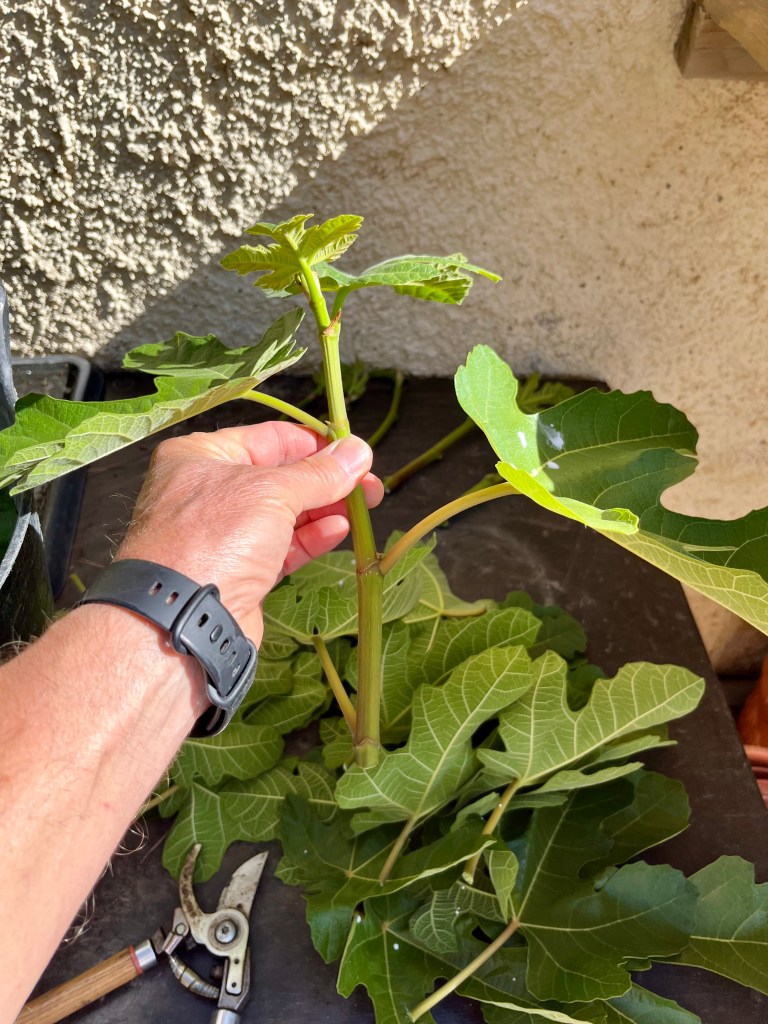
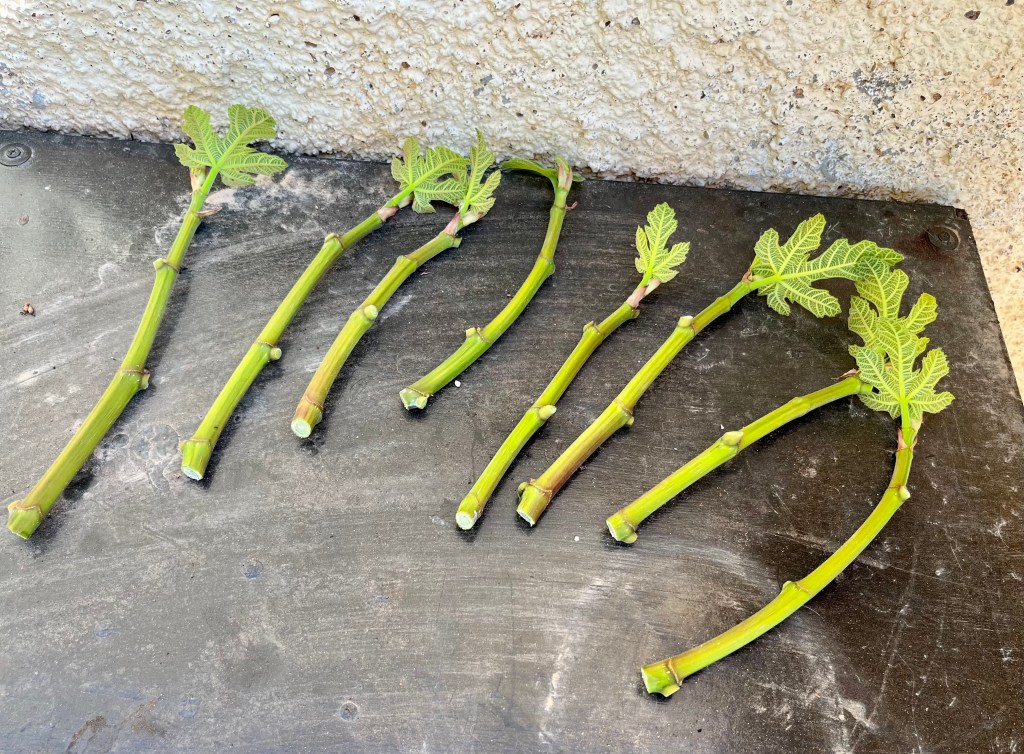
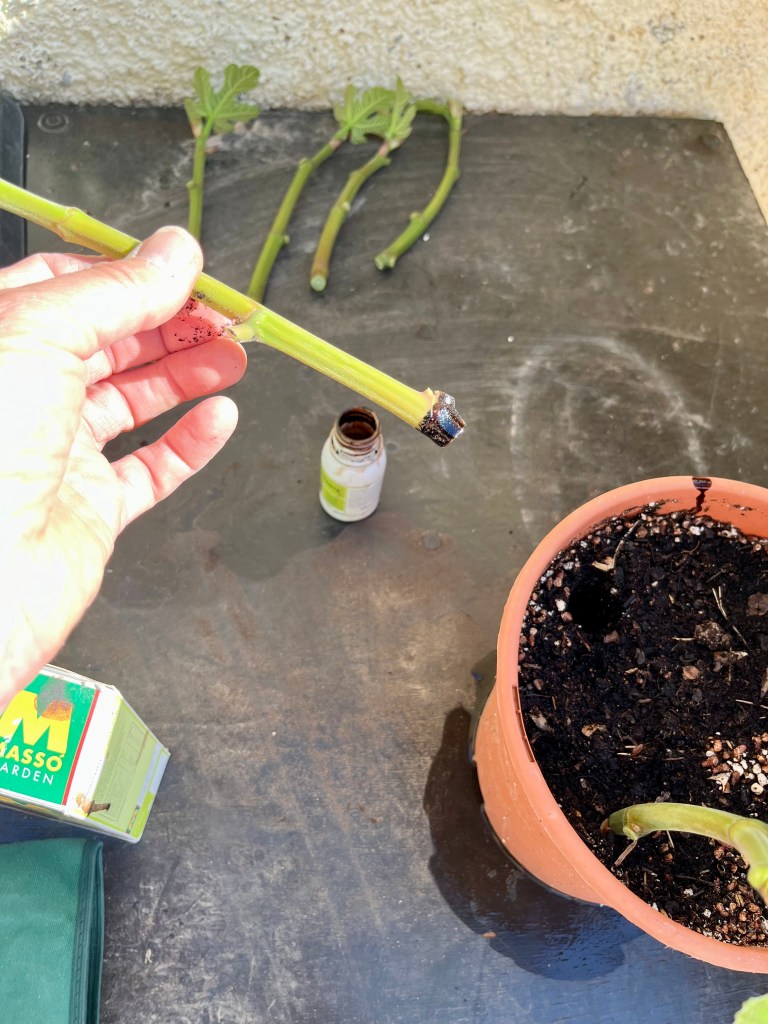
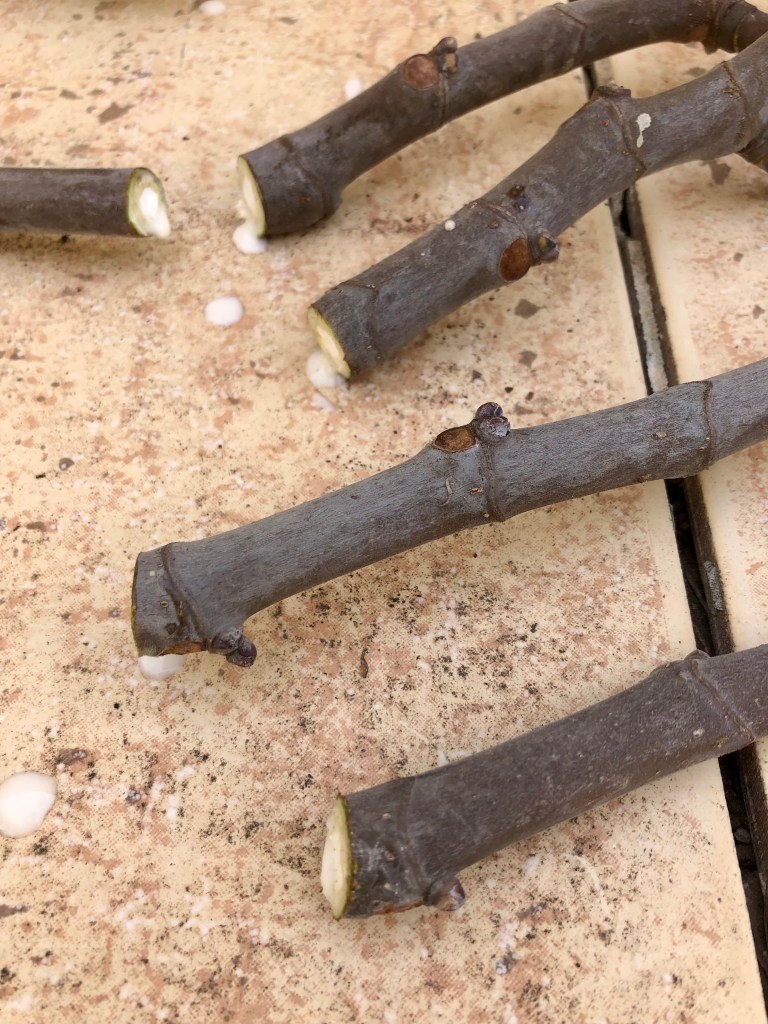
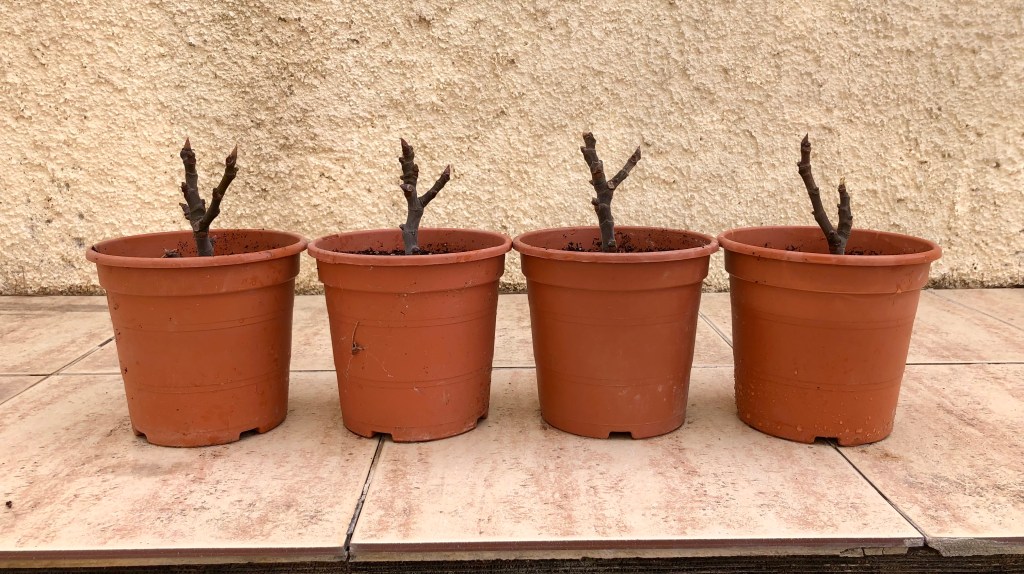
If you want to propagate your trees either to have more, or to give to friends, then this is the ideal time. Many of the branches you have pruned off will have buds just waiting to spring into growth. Choose some of the best of these; I always look for healthy strong branches with multiple buds at the end. Cut them back to about 30cm just below a growth node then dip the ends into growth rooting hormone (don’t worry if you don’t have this it probably will still work). Pot them up in free draining compost and leave them in the winter sun. With a bit of luck you will have some new trees in the late springtime.
The first photo below shows my choice of potential cuttings. This is followed by an indication of where to cut. Then the process of dipping into hormone rooting liquid. My free draining mixture one part compost to four parts soil is shown as an action photo of a trug. Finally my little cuttings ready to get going. Click on each photo for a larger view.

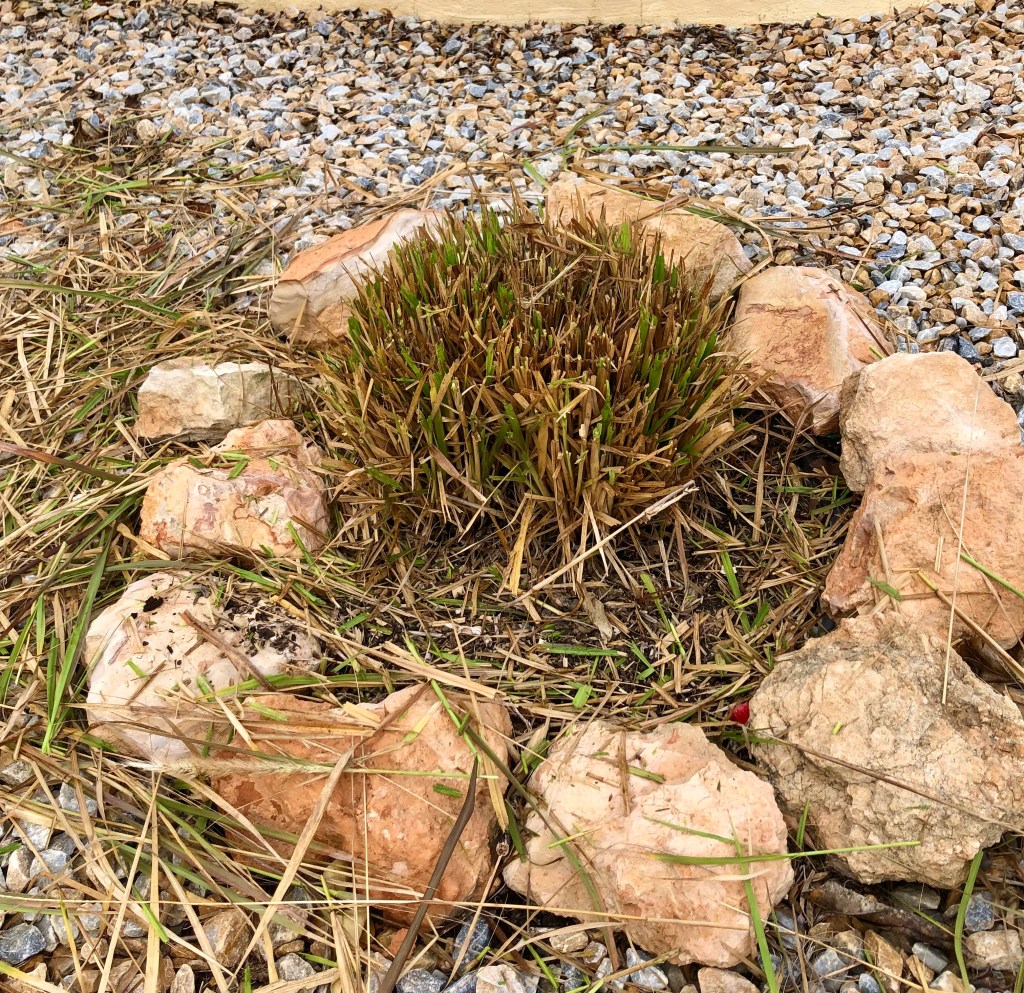
Cutting back Fountain grass. I have one large Fountain grass which unfortunately had died in the middle as most grasses will do over time. I split it just over a year ago and replanted 3 into my own garden and gave some to my friend Camilla who is making a new wonderful garden. Anyway, now is the time to cut back grasses. The simplest way to cut back grasses is just to use your hedge trimmers to gently trim around the plant to make a small mound shape. Do not be tempted to square the grass off (as Ayuntamientos have a habit of doing) this guarantees a short life before the centre dies back. By creating a mound you maximise the light and air to the plant.

The photos below show my little transplants before their cut back and finally how it should look after cutting. Each mound will get bigger each year until eventually the splitting process takes place again. Click on each photo for a larger view.

It’s time for the big winter cutback Part 1, and the chicken whisperer returns

Yes, it is that time of year when we gardeners have to get out there and cut everything back. Failure to take action now will mean that your garden will not fulfil its potential this Summer. Over the next few weeks I will be pruning, cutting back and generally getting my garden into shape for the coming summer. I will be working with the types of plants you have in your Spanish gardens, so just follow what I do over the next few posts and we can guarantee a lovely garden this summer.

Unlike most of you I have certain hindrances whilst doing my garden, namely: Cruella (my wife), her brood of chickens from hell, and as a special treat the idiot son has come home for a holiday and Cruella has declared him a chicken whisperer. Anyway, let’s get on with the gardening.

10th January 2024. Things I have been doing lately:

Over the next few posts I will keep you up to date with the big winter cutback, but this particular post will cover the following:

  • Pollarding Peruvian False Pepper trees
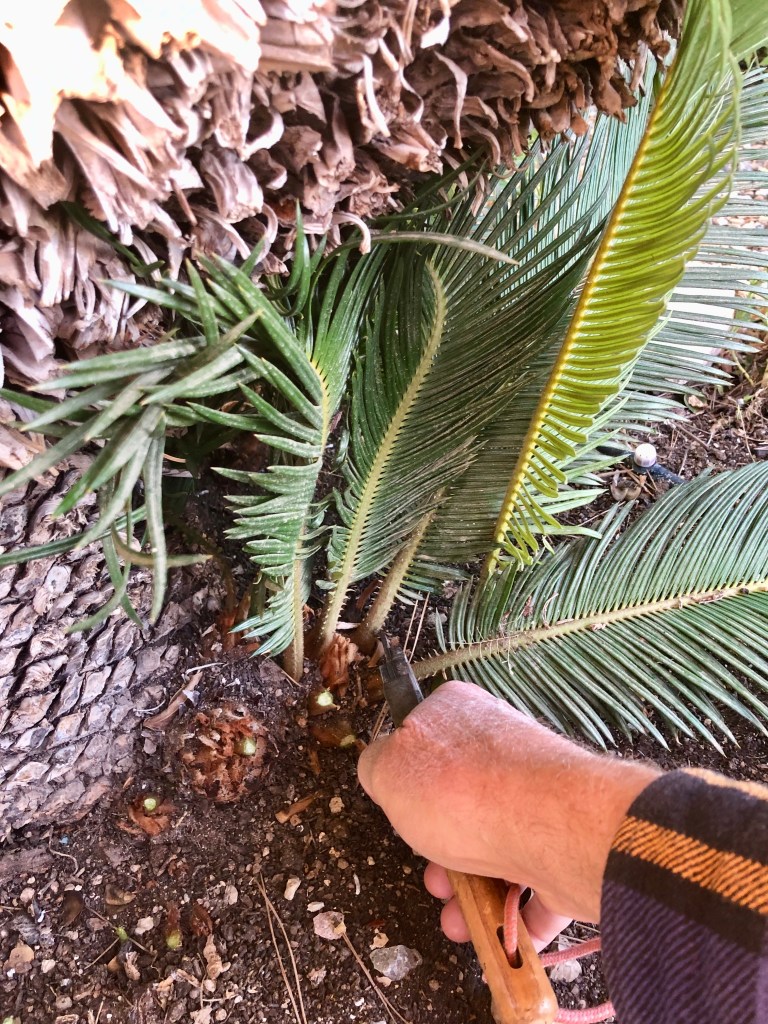
  • Pruning Sago Palms
  • Cutting back Dame de Noche
  • Pruning climbers
  • Dealing with the chicken whisperer

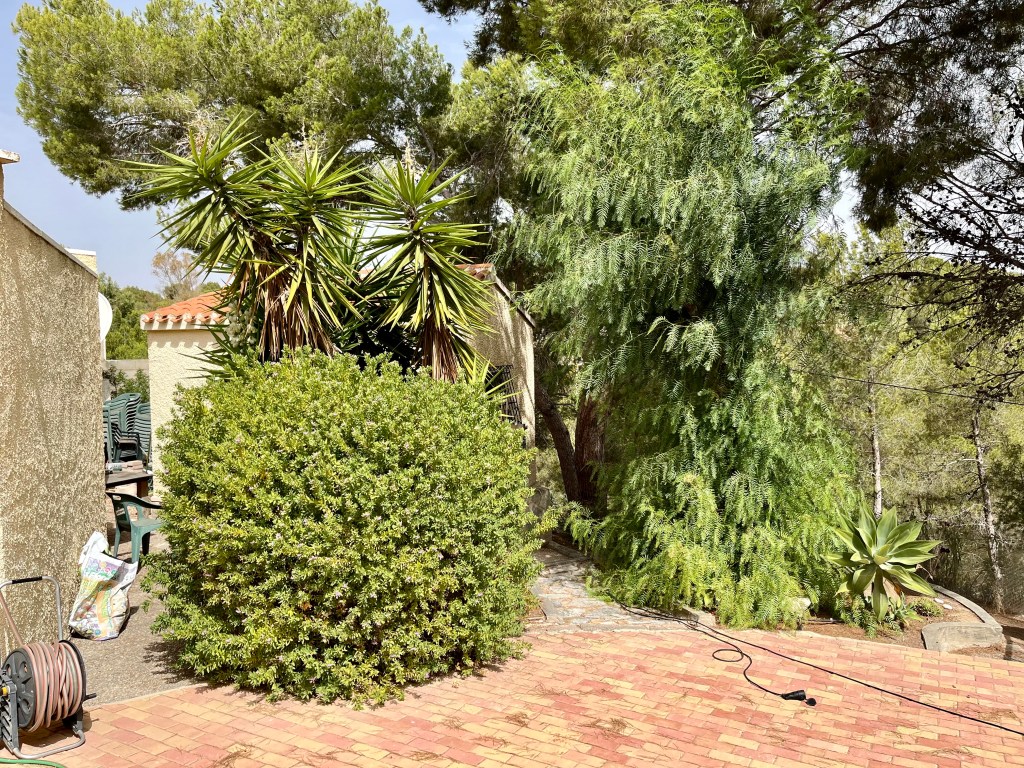
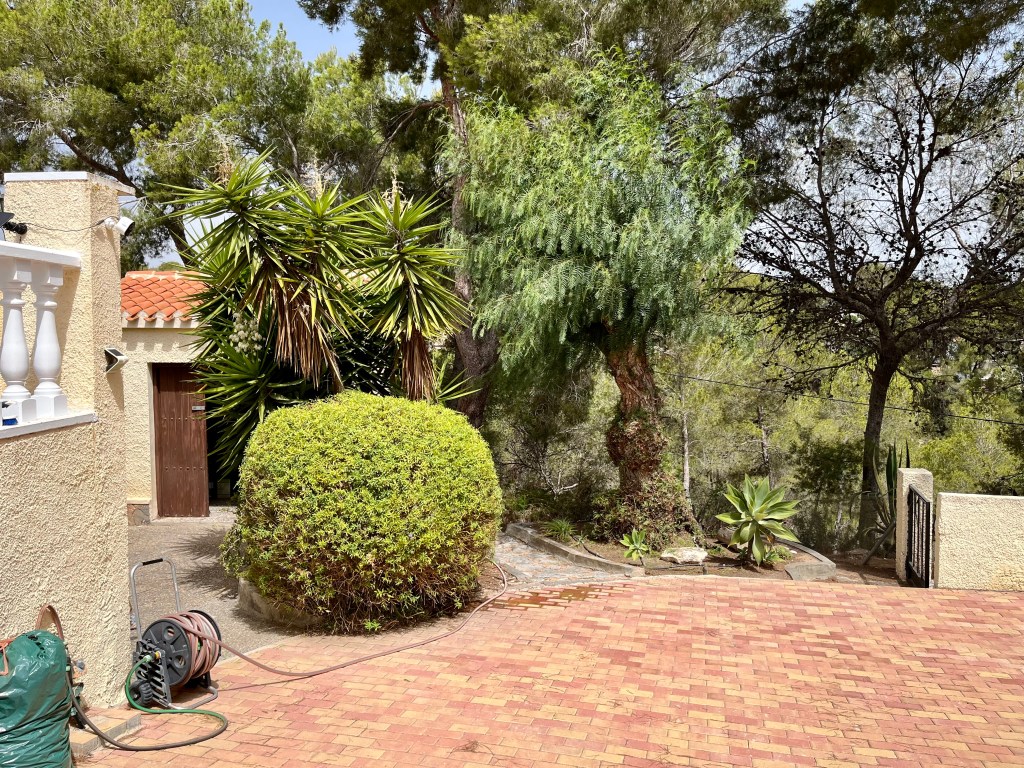
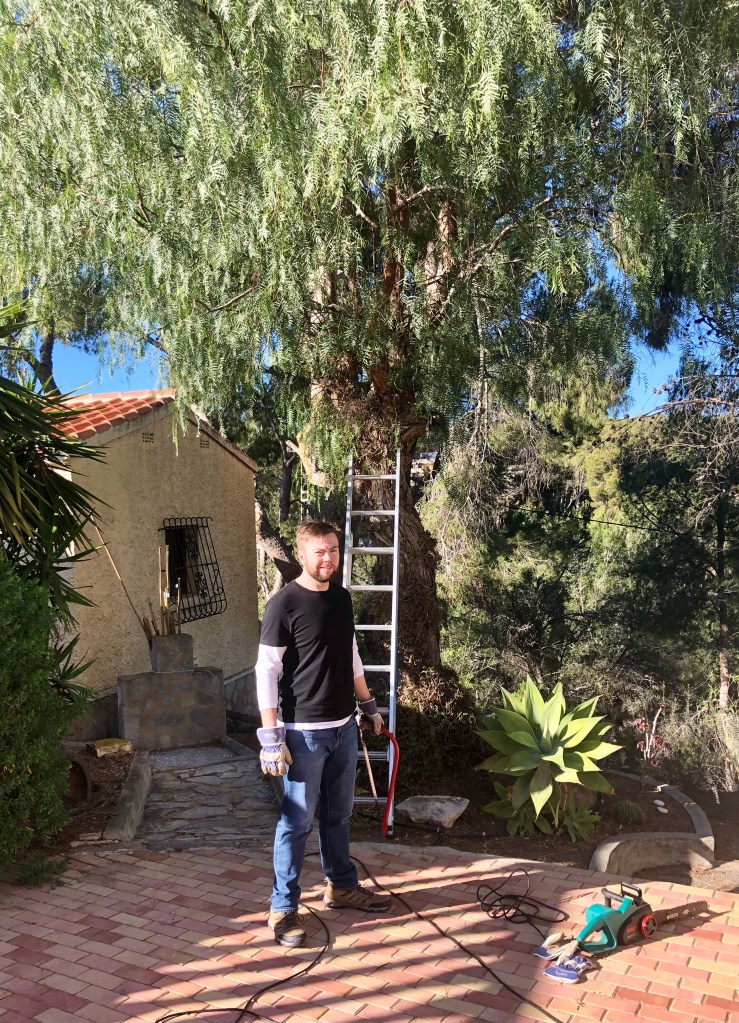
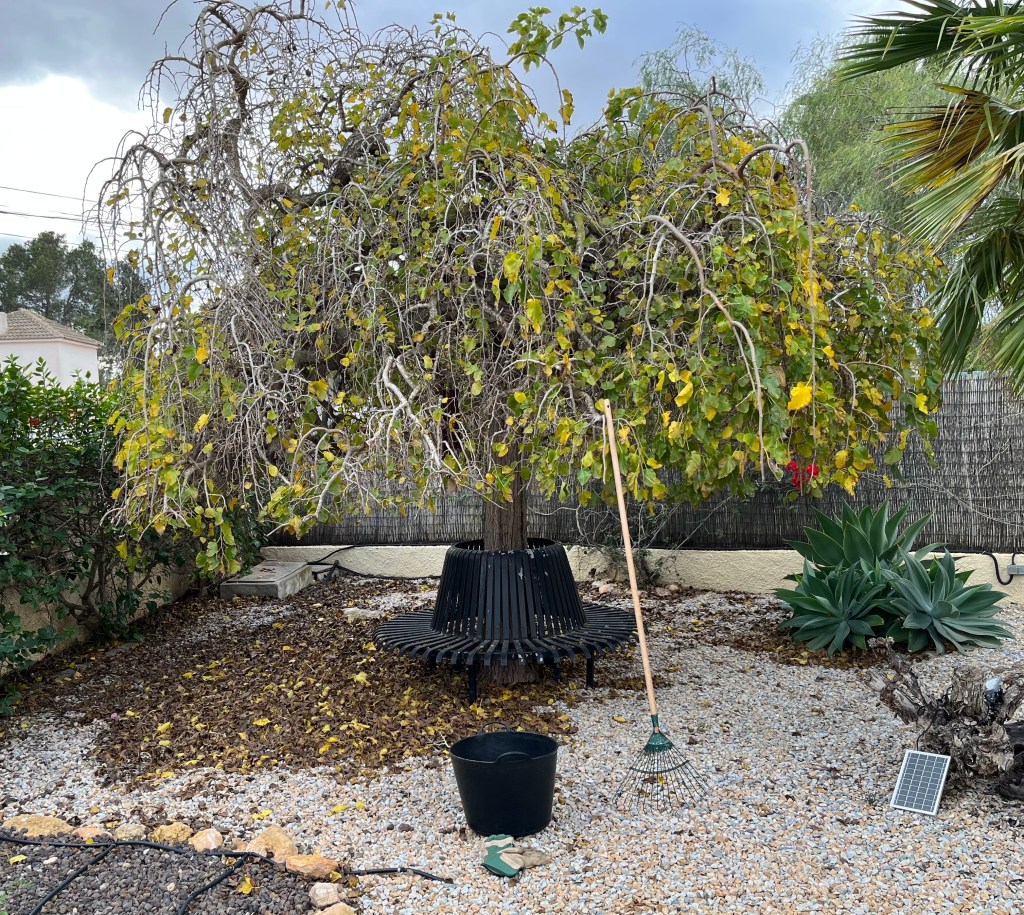
Pollarding Peruvian False Pepper trees: This tree can be found in many Spanish gardens. Its weeping willow type foliage and lovely little red peppercorn fruits provide an attractive tree that can grow up to 15 metres tall. However, too often the false pepper is allowed to grow into a huge behemoth that whips around in the wind and covers you terraces in discarded foliage and blocks your swimming pool skimmers. The photo below shows my tree before pollarding.

Left to grow this tree canopy would double in size over the next few years.

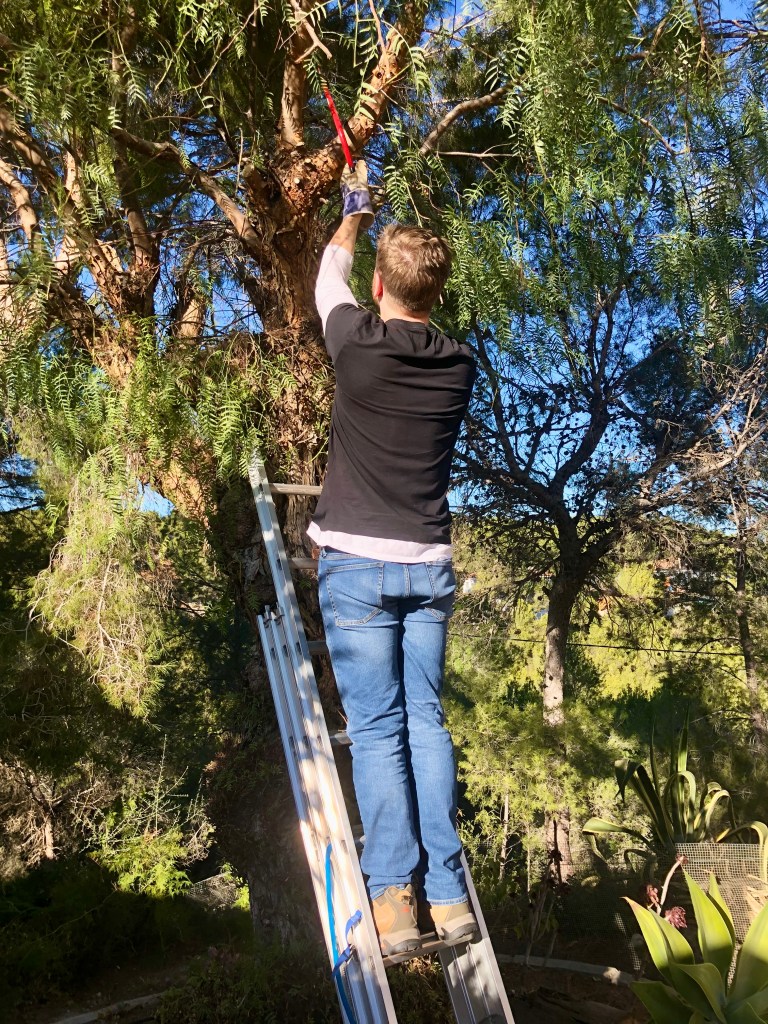
The secret to keeping the false pepper as a useful part of your garden landscape is to ensure that you pollard it every 5 years or so. Pollarding involves radically pruning back the main branches which reshapes the tree and encourages secondary growth that will stay manageable for a few years. When pollarding you need to use a chain saw or bow saw to cut each of the main branches about 6 inches from the base of the branch. By keeping the correct distance from the base of the branch you will not damage the branch “collar” which contains the growth instructions for the branch.

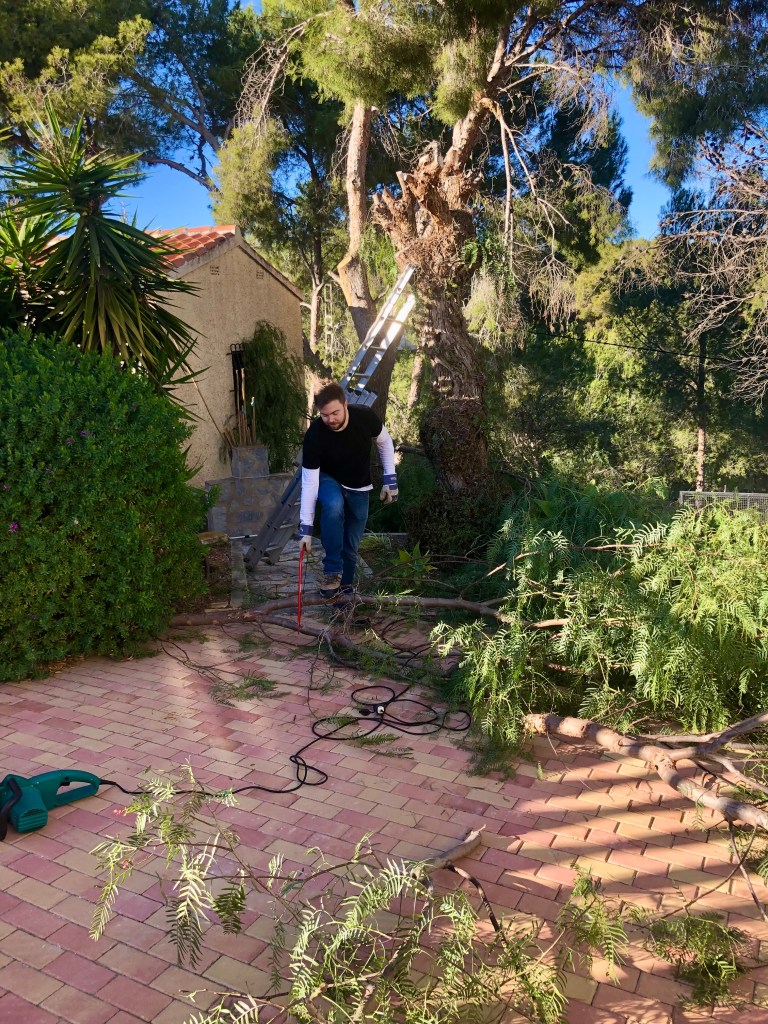
Luckily the idiot son was visiting so I persuaded him to help me pollard the tree. I had to promise him copious quantities of beer and Cruella insisted that I held the bottom of the ladder at all times. The photos below show the idiot in action with the final photo showing the finished pollard. Click on each photo for a larger view.

The final pollard will last at least five years

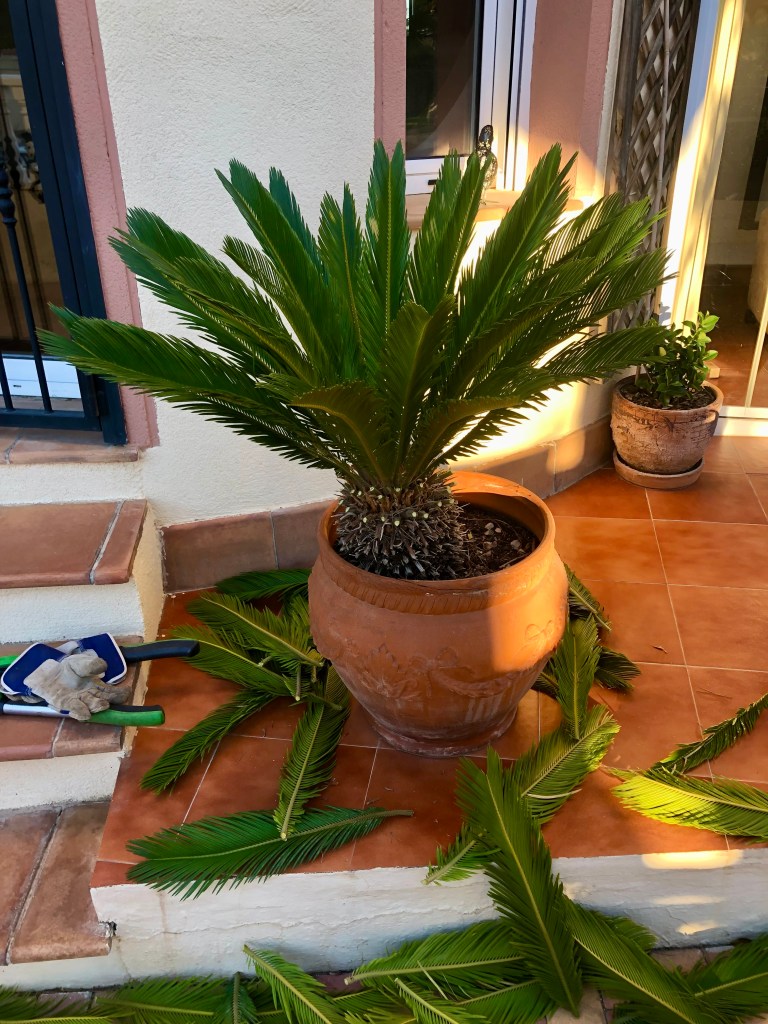
Pruning Sago Palms: The slow growing sago palm is another perrenial favourite in most Spanish gardens. These can be majestic if pruned correctly, but if just left to their own devices, they are just another green lump in your garden. There are two schools of thought on pruning sago palms. The first says that you must leave the fading yellowing fronds on the plant as they provide nutrients. The other says keep it pruned and tidy and if necessary give it a feed. I support the latter process and always prune mine back to two rows of fronds from the top. Two rows is important as if you left just one row and then these became diseased then you could lose the plant. I have two main sago palms; one is in the ground and the other in a pot. Both are shown below. Click on each photo for a larger view.

From the photos above you can see that both are due a trim. Using long handled lopers I gradually move round the trunks taking off rows of fronds until I am left with just two rows on each stem. The photos below show my handiwork.

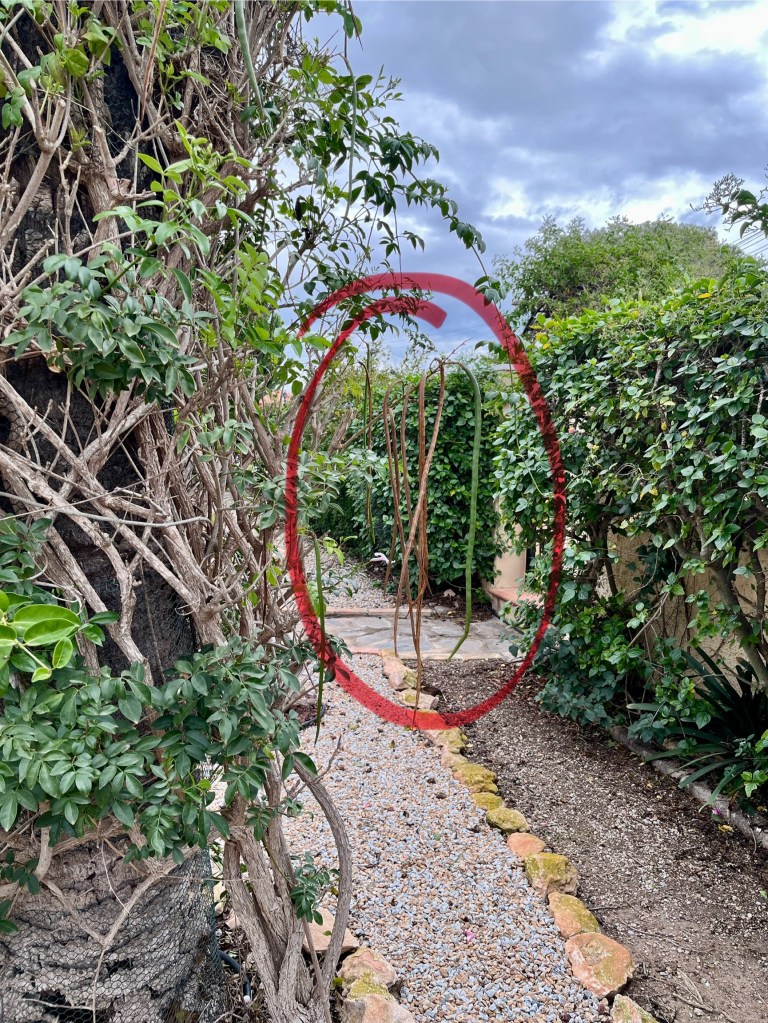
The final stage in pruning the sago palm is to remove any pups it has thrown from the base of its trunk. These look like mini sago palms that are emerging, and you can pot these up, but that is for another days post. Today we just need to take them off to tidy up the plant. The first photo below indicates the pups circled in red. You just need to remove these with your secateurs or lopers and then the plant is left nice and tidy for the summer.

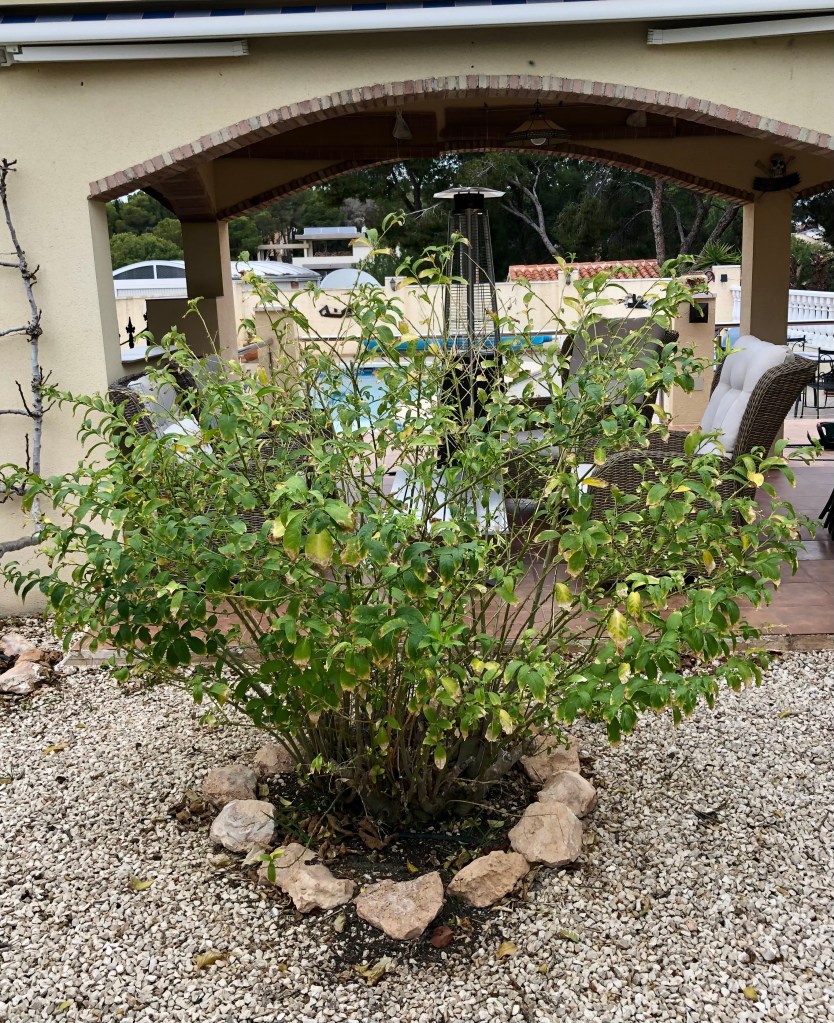
Cutting back Dame de Noche. The lady of the night which is a night scented Jasmine needs to have its final cut back now if you are to enjoy its lovely scent in the summer. You should have already cut the plant back by a third after its first flowering to allow a second flush of flowers. This final cutback can be quite drastic to encourage a healthy shapely growth. Depending on the age of your plant you can take it back to 6 inches.

The first two photos below show my dame de Noche looking straggly and ready for its cutback. Notice that I have planted my dame de Noche close to our outside seating and eating area so that we can benefit from the beautiful night scent. Click on each photo for a larger view.

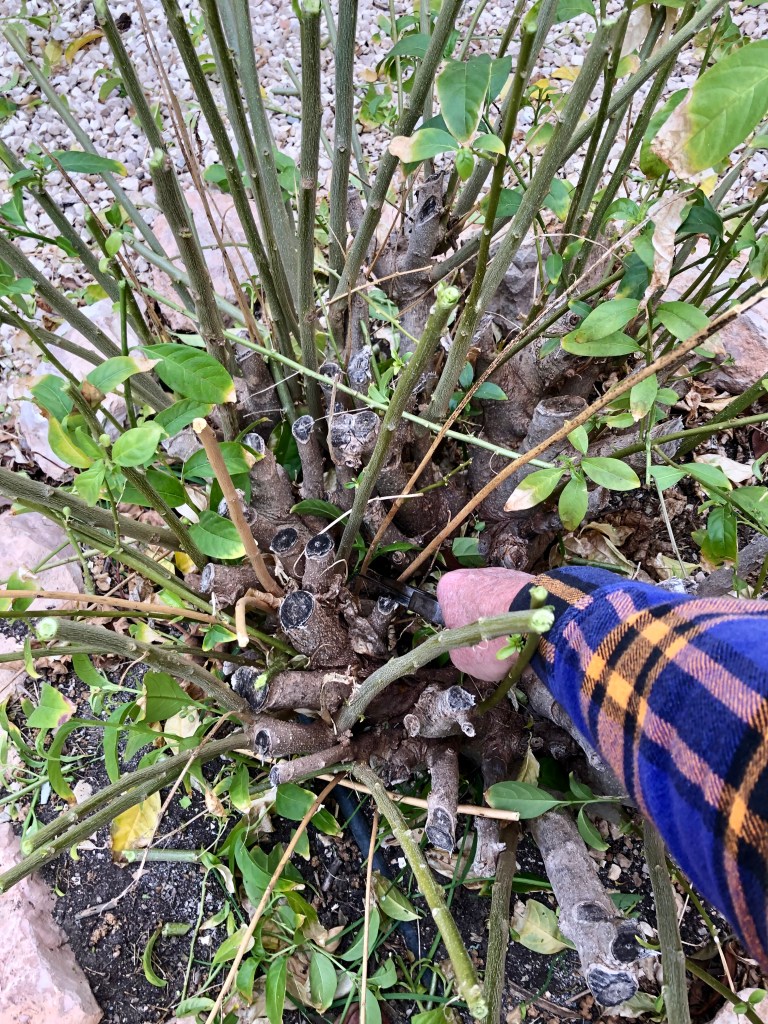
The next photos show the plant cutback and ready for its final pruning. To finish the prune use your secateurs to open up the centre of the plant to take out crossing stems and let light and air in.

Pruning climbers: The trick with pruning climbers is that you do not want to lose height but you do want to reduce bulk so that you can let light into the plant. So in effect what you need to do is remove side shoots. The simplest way to do this is to run your electric hedge trimmers up the front of the plant aiming to stay away from the upward growth. Lacking hedge trimmers just use garden shears to achieve the same effect.

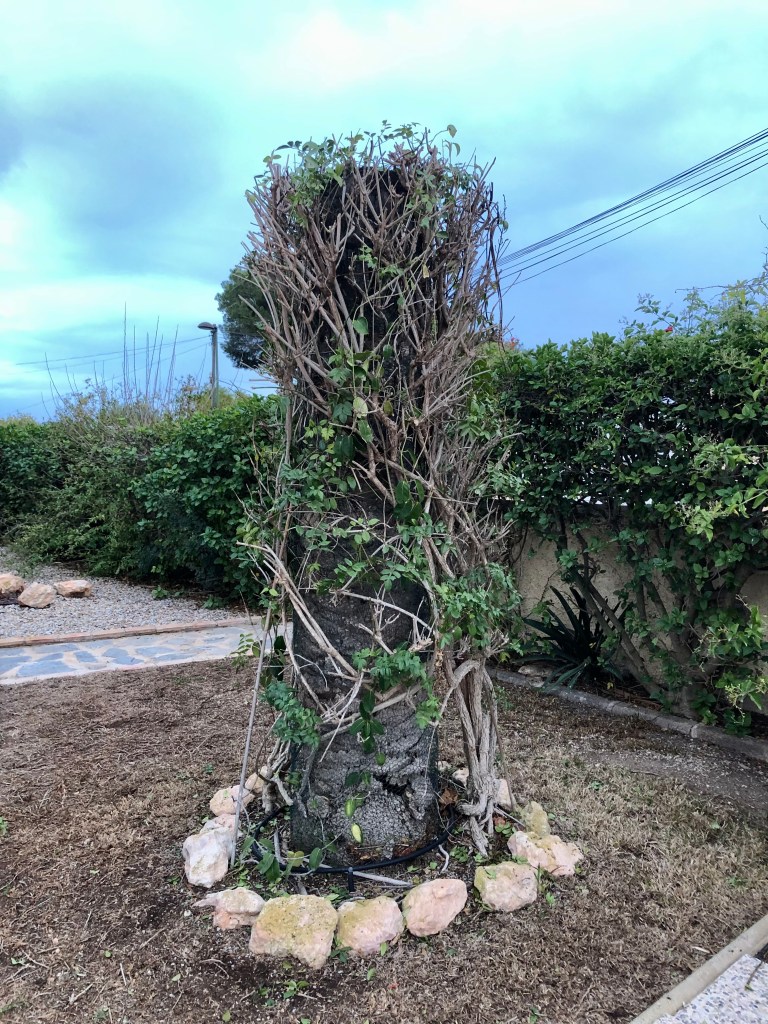
So far I have cut back the Solanum that grows up the side of my outside kitchen and dining area and also my column of plants that I trained up a palm trunk. The photos below show that all that is needed is to just take away bulk and bring back shape. Click on each photo for a larger view.

Finally, don’t be tempted to feed or overwater the plants you have pruned. Wait a couple of months till you see new leaf growth and then give a light feed.

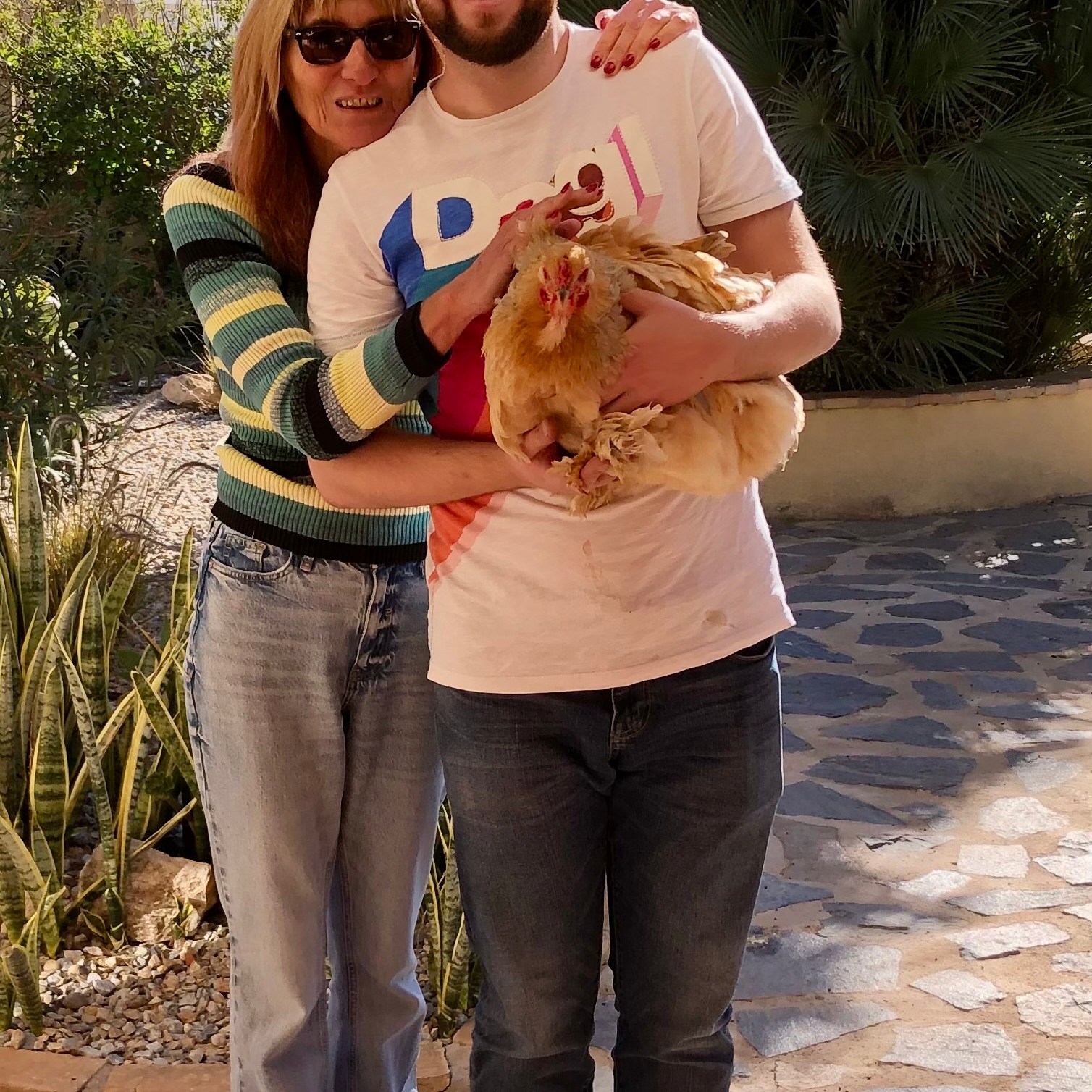
Dealing with the chicken whisperer. Whilst I have been dealing with the start of the big Winter cutback, Cruella (my wife) has been training the idiot son in the art of chicken whispering. She is trying to convince him to leave the world of Finance and become her rightful heir, or as she calls him “Prince of Chickens”. So far he is holding out, but she is making him follow a strict curriculum of chicken studies. This includes lessons in Chickenese every morning followed by hands on work with the chickens in the afternoon. Early evening is spent in the so called art of chicken whispering. The later evening is spent in the rites and mysteries of putting the chickens to bed, but I can’t tell you anything about this as I am not allowed to see what goes on.

The photos below give you an idea of what they get up to, I did have some others but Cruella made me delete them! I am only allowed to show you these ones as Cruella is using them in his graduation album. Click on each photo for a larger view.