I delve into the border lands and Tango gets picked in an identity parade

I hate to tell you this but summer is coming to an end and there is lots you need to do now to get the garden ready for next year. But, even though there is lots to do don’t forget to enjoy the garden through the late summer phase. Just to give you an overview, this post covers the following:

  • thinning out your borders and beds
  • collecting seeds for next year
  • picking fruit
  • Taking care of your roses
  • Kerry’s olive tree is shaping up
  • Tango the lonely blind Labrador gets framed

9th September 2023. Things I have been doing lately:

Thinning out your borders and beds. All of your borders and beds will now be getting past their best. But if you want your plants to keep blooming till the end, then you will need to do a bit of work.

Firstly, you need to keep deadheading every day. The deadheading process stops the plant concentrating on seed production and will ensure that it keeps on flowering. There will come a point where the plant can produce no more flowers, this is usually by the time it has more than 50% dead or dying stems. When this happens, you should let the plant die gracefully but leave it in place for a few weeks to feed the insects.

Secondly, you need to thin out your dead plants after leaving them in place for a few weeks. By eventually removing dead plants you are letting more air and sun get to those remaining. In addition you are exposing the soil so that those plants you want to self seed (in my case Osteospermums) can drop their seed and eventually give you hundred of Autumn seedlings. The photo below shows a typical trug of deadheads and dead plants.

Every bit goes into the compost bin to produce next years compost

Collecting seeds for next year. If you mark up your best blooms each year and then collect their seed, you begin to build up a range of large, strong super blooming plants that are resistant to disease. The photo below shows me with some of my Marigolds that I have selectively bred over more than 10 years. Note that instead of being 10 inches high, they are over a metre and bursting with flowers.

I apologise for the selfie, I still don’t know where to look, but Cruella refused to take a photo of me with my hat on.

Collecting and storing seeds is easy, so there is no excuse for anyone not trying. I always start by harvesting those flowers that I had marked early in the summer as the best blooms that I may want seed from. The photo below shows some of the many that I marked up. You can see why I mark them when they are in bloom, because you can tell nothing from the dried seed head. The final photo below shows the range of seeds I was collecting. From left to right:

  • Dutch Marigolds
  • Ordinary Marigolds
  • Pink Trumpet Vine
  • Jasminium

The seed collecting process for Marigolds is very simple, you just have to remember to mark up the best blooms early in the summer. There are 5 simple stages shown in the photos below.

  1. select the seed head and snap off the stem
  2. gently rub off the fuzz on top of the seed head
  3. roll the seed head between your finger and thumb whilst gently squeezing
  4. let the seeds fall into your other hand whilst continuing to roll and squeeze
  5. let the seeds fall gently between your hands whilst blowing to remove chaff

The process for Trumpet vine is different. Here the seed develop in long seed cases that can be over a metre long. To access these seeds you need to gently squeeze them till they split and expose the seeds lying in rows within the seed case. I find it is best to release these seeds over a waiting envelope or they inevitably will blow away (which is exactly what they are meant to do in nature). The technique is shown below. Click on each photo for a larger view.
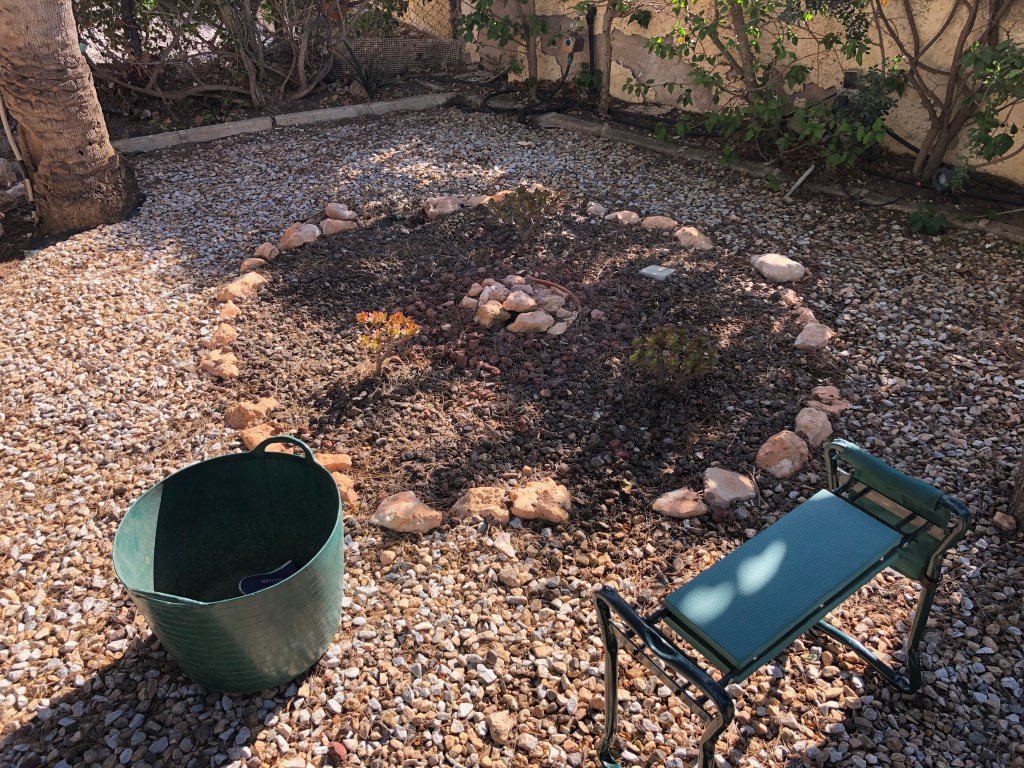
With Jasminium I use a similar technique, but in this case you have to release the seeds directly into the envelope or they just go everywhere. Again the technique is shown below. Click on each photo for a larger view.
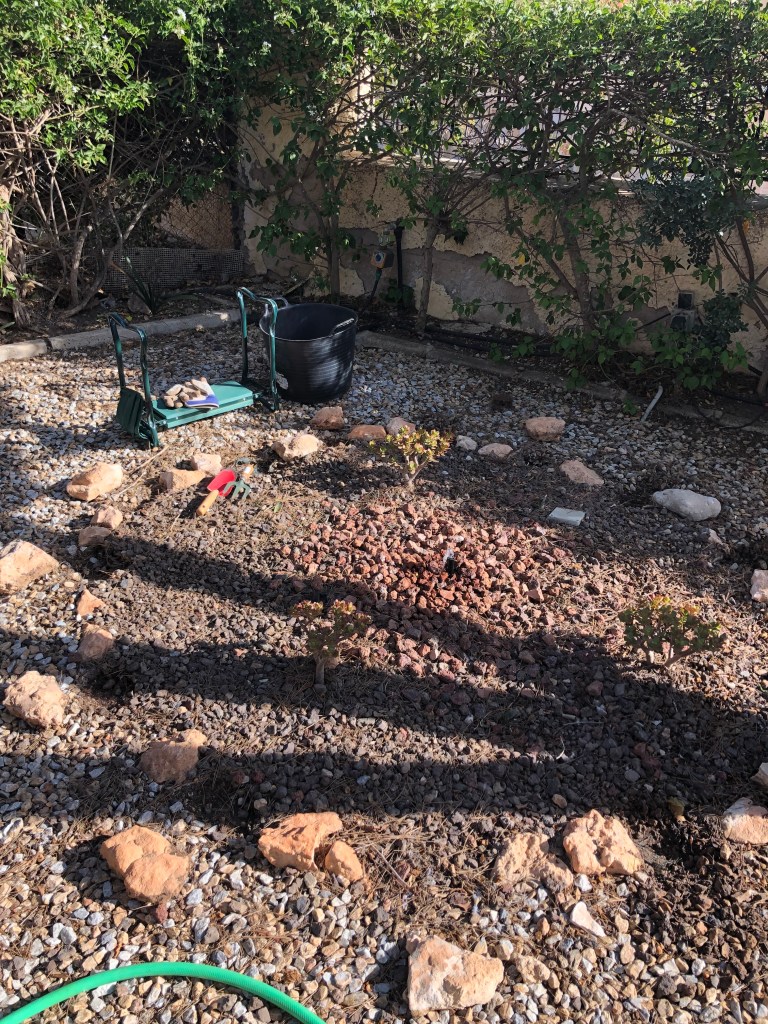
Once you have collected your seeds, place them into new white envelopes, label them with the species and year, then store them in a cool dark place till you need them.

Keep picking fruit. By now most of your fruits should be ripe or almost there. The trick to getting the most of your fruit is to beat the birds to it. Hopefully you will have netted most of your fruit, but if you haven’t, the birds will be blessing you. You need to check your fruit every day and pick off anything that is ripe. Don’t try and leave all your fruit on the tree thinking that you will pick it all together when ripe. The birds will beat you to it every time. Birds know exactly when fruit is ripe as they have amazing colour sight far better than human beings. Whilst we only have three colour detecting cones in our eyes, birds have four and can see in ultraviolet so they know exactly by the colour when your fruit is ripe. The photos below show an example of my daily fruit picking. Click on each photo for a larger view.
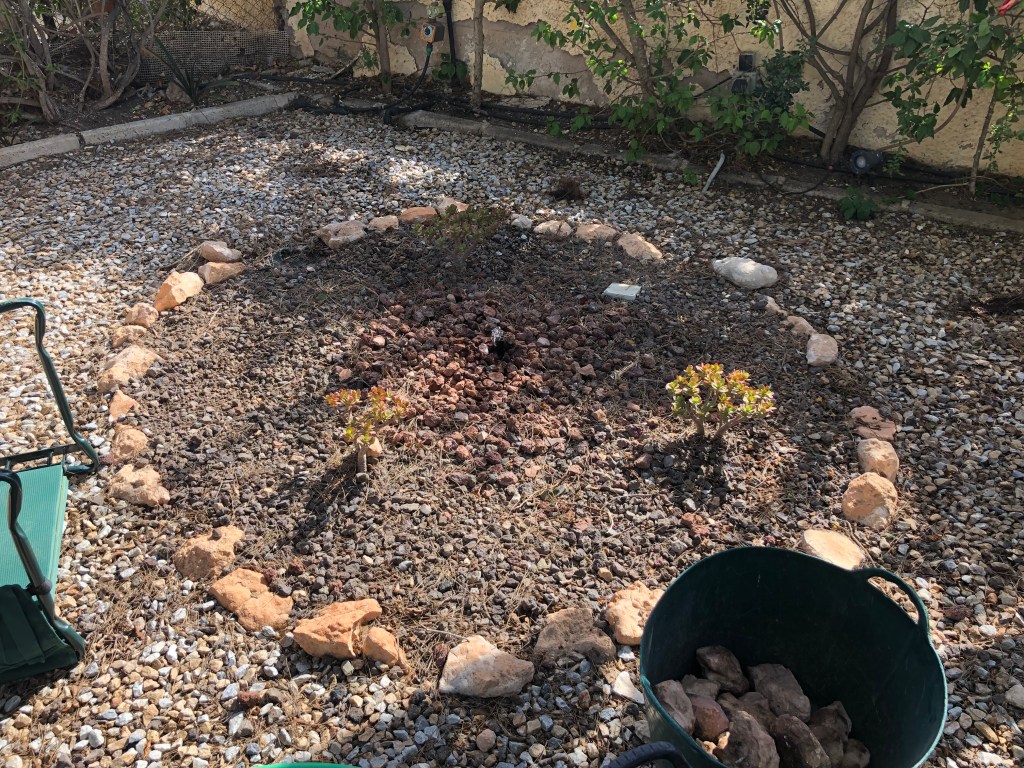
Taking care of your roses. Roses grow wonderfully well in Spain if they are looked after properly. This means plenty of water and feeding at least three a year. We are now about to see the late September second flowering of roses. For this to be successful you need to give your roses a deep watering (in addition to your normal regime) once a week. Also you need to give them the last feed of the year. If you do both these things now you will be well rewarded. The first photo shows an action packed deep watering in progress, whilst the second shows one type of rose feed you could use. Click on each photo for a larger view.
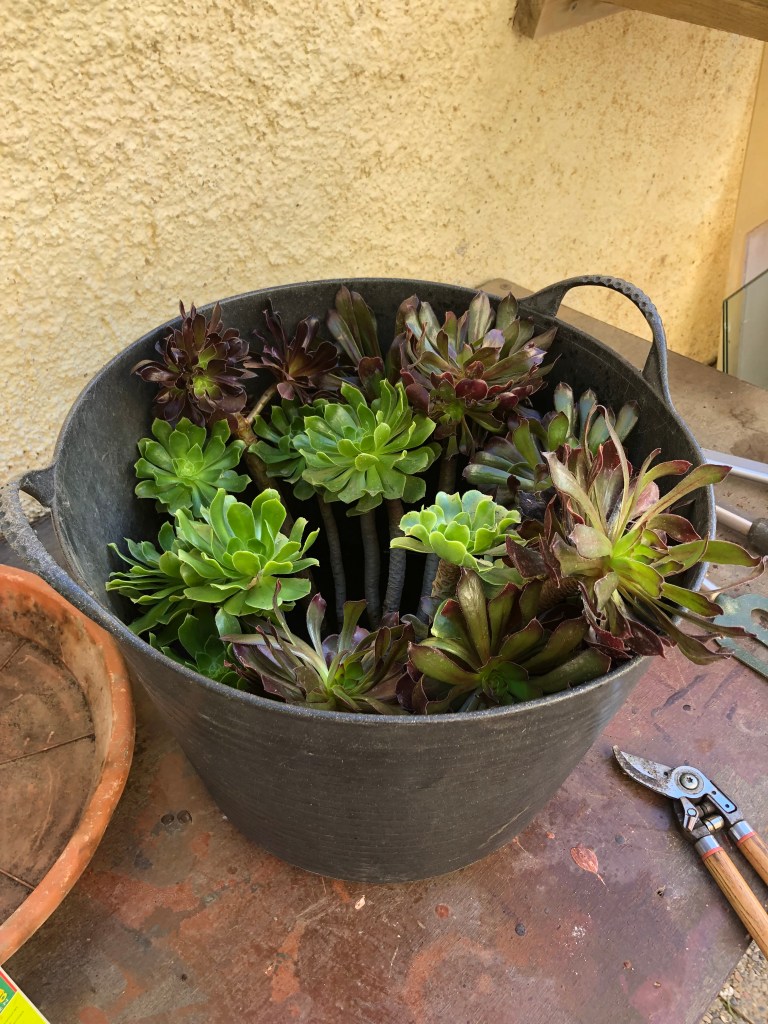
Kerry’s olive tree. Regular readers of this blog will remember that my friends Kerry and her husband Glynn had inherited a mature olive tree when they moved into their new house. They foolishly accepted my advice that it should be reshaped and cloud pruned to give their garden an interesting focal point. Under my technical direction Kerry and Glynn helped to reshape the tree into what at first looked like a tree blasted by lightning.

Despite Glynn’s threats and Kerry’s tears I assured them that all would be well. The photos below show how the tree is developing nicely and we will be able to reshape it in the next few months. I will keep you abreast of progress; I am just glad they have called off their lawyers. Click on each photo for a larger view.

Tango the lonely blind Labrador has been framed. What happened was this. I came out one morning and one of my large standards in a big pot had been smashed. I knew straight away it was the chickens as I found feathers all around the smashed pot. When I confronted Cruella (my wife), she denied everything and said her girls would never do something like that. But I knew it was just more intimidation as part of their Just Stop Watering (JSW) campaign. The photos below show the smashed pot and the damning feather evidence. Click on each photo for a larger view.
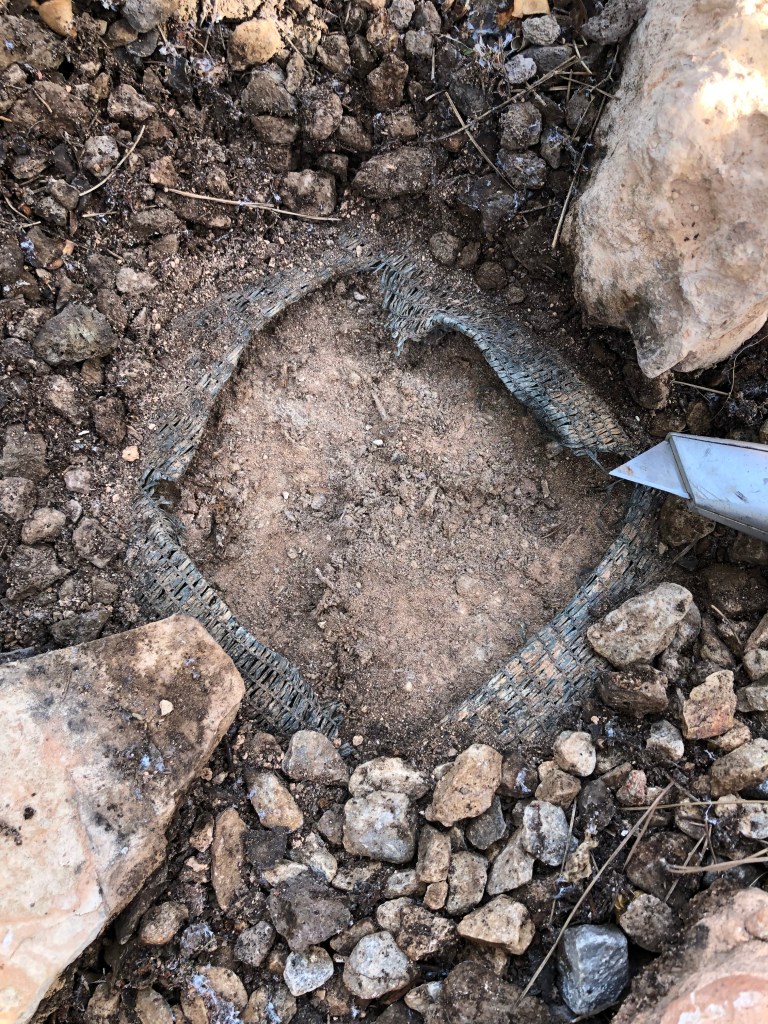
Anyway she insisted that under the UN Chicken Rights Legislation we must follow due process and have an identity parade and a trial. The whole thing was a set up and Tango didn’t stand a chance. The identity parade included Tango and a fat chicken called Bertha (who Cruella said had a protected characteristic and should not be body shamed). Tango was of course picked out.

The whole trial was then conducted in chickenese and Tango was refused legal aid and an interpreter; I tried to help but I only know chickenese for “get out of that bloody flower bed”. The end result was that poor old Tango was sentenced to a weeks solitary confinement in his kennel. When I told him the sentence he was very stoical and accepted his fate. His head did bow and a few tears fell from his translucent milky white eyes.

The first photos below show the judge and the jury, no wonder Tango was fitted up. The final photo shows Tango when I told him of his sentence: brave, stoical and accepting. The only good news is that I spent the week in there with him; I read him “Lassie” stories and we shouted anti chicken slogans till late in the night. We only stopped chanting when Cruella turned off the lights; I sprayed “Tango is innocent” on the chicken coop. Click on each photo for a larger view.

I judge a flower beauty parade and a gipsy helps me net the big fig

By now your garden should be in full bloom and this is probably as good as it gets in Spain. Although July has been hot we know that the heat of August will just knock the garden over the edge and begin the long slow roll into autumn. I know that sounds a bit depressing but it’s not. We gardeners love all seasons and a key part of gardening is constantly thinking and planning ahead for the next season and next year. Having said that don’t forget to enjoy the moment; stroll round your garden every day, talk to your plants, compliment them on how well they are looking and sympathise with the ones that are just losing their bloom.

Anyway, enough of this sentimentality, I think I am becoming the Emily Dickinson of gardening. There are lots of things to be busy with not least picking your best flowers for seed, trimming some key plants back and surprisingly netting the big fig. On with the show.

26th July 2023. Things I have been doing lately:

Judging the best flowers for next years seed. This is the time of year when you should be beginning to think of next years seed. I know a lot of you don’t garden from seed and instead prefer to go out and buy plants, which is fine, but growing from seed is so much more fulfilling as a gardener, and it’s free. Now that your garden is full of blooms, wander round and pick the loveliest with the best shape and the most vibrant colour as potential seed heads.

You now need to mark these blooms or you are in danger of just deadheading them when they die back. I wrap a piece of wide masking tape around my selected blooms which hopefully stops me deadheading them – though mistakes do happen. Later in the summer when the plants has fulfilled all of its potential I will then harvest these seed-heads for my next years crop. The first photo below shows my trusty masking tape ready to fulfil its role. The other photos show some of my chosen blooms in situ. Click on each photo for a larger view.

Propping up plants. Most annuals will need some propping up during their short but floriferous life. If you just let them flop over, then stems get broken, flowers get squashed and it all looks a bit messy. I tend to prop up plants in two stages. When they first begin to “lean”, then I will use canes to hold back individual plants. If you have closely packed your flower beds then usually one propped up plant will hold a number of others in place. Later, as they progressively need more propping I will tie them in bunches around a line of canes. But let’s not get ahead of our selves, at the moment just use canes to prop up plants. The photos below show my propping activity. Click on each photo for a larger view.

Making Dame de Noche flower again. Many of you will have Dame de Noche (night flowering Jasmine) as part of your summer garden. Although this plant is not what you would term good looking, its value is in its exotic night scent which would put to shame the best perfumeries of Paris. Located next to your summer dining out areas, the Dame de Noche will astound your friends with its heady, exotic scent that comes in pulsing waves throughout the evening. The reason for this exotic night scent is that it is pollinated by a tiny little moth.

However, your Dame de Noche will have finished flowering, so if you want that scent back for the rest of the Summer then you need to act now. To get the plant to flower again you need to cut it back by one third. The important thing is the one third bit. Cut back by one third, the plant (which is growing strongly) will know it has lost its seeds, but think it has time to flower and make more seeds this season. If you cut back by more than one third then the plant will know it doesn’t have enough time to make more seeds this season and instead will draw everything back to its roots.

Once cut back, the plant will come into flower again and quite profusely. This will give you that lovely night scent all the way from the end of August right through till October which is exactly when you want it. The photos below show my Dame de Noche before and after its little trim. Click on each photo for a larger view.

Netting the big fig. Regular readers of this blog will know that the last fruit plant I net each summer is my big fig (to be honest it’s not that big) but it needs a team of at least three or four to net it. Normally this has been an international event with previous years including teams from: Scotland, Northern Ireland, England, France and last years winners from “Wigan”. Anyway I had hoped that my idiot son and Cruella (my wife) would assist me but both refused claiming that as they were chicken royalty it was beneath them. I did try and net it myself, but I kept getting tangled up and falling over wrapped in net; much to the hilarity of the chickens.

Just at my moment of greatest despair my luck changed with a ring at my doorbell and there was my saviour, an itinerant Gypsy lady, Cathy Rose Lee who had camped locally and was now looking for casual work whilst her husband Ronnie was setting up his boxing booth. Cathy agreed to help me net the fig but first she insisted on telling my fortune in tea leaves. The photo below shows Cathy mid fortune telling; it turns out she predicted my drive needs tarmacing.

Once Cathy had read my fortune and I had crossed her palm with silver, it was straight to the fig netting. By this time Cruella had agreed to lend a hand as Cathy had convinced her that good fortune would follow for her and the chickens. If you have never netted a tree then there are five stages:

  • Unrolling and halving the net
  • Stretching the net
  • Joining the two halves of the net
  • Raising the net
  • Tying down

We started very well with Gipsy Cathy and Cruella working in perfect harmony as a team. The first photo shows them both enjoying the net unrolling stage. The second photo shows that they broke into a little dance as they moved to the halving process. Click on each photo for a larger view.
By the time we got to the next stage of stretching the net they were both singing harmoniously an old net stretching work song; Cathy was singing in Romani whilst Cruella harmonised in Chickenese – it was strangely haunting whilst at the same time scary. Click on each photo for a larger view.

Joining the two halves of the net is always a tricky exercise even with an experienced team, so you can imagine I was a bit apprehensive about the next stage and envisaged lots of torn areas of net. However, surprisingly they did extremely well and injected lots of fun into the process and even indulged in some “twerking” dance moves as the first photo below shows. From the final photo you can see the air of satisfaction they both feel at a net well joined. Click on each photo for a larger view.

The next stage is raising the net and this normally requires a team of five; one in each corner of the net with me in the middle with the net raising stick. The importance of this stage cannot be over stated, one slip, and you have a tangled torn net stuck high up the tree. From the photos below you can see we started off rather badly and there was lots of shouting and swearing as both Cruella and Gipsy Cathy kept getting caught up in the net. But finally we raised the net with a mighty cheer. Click on each photo for a larger view.

Gipsy Cathy was so pleased with this stage that she insisted on having a series of triumphal photos that she promised to display beside her best Capodimonte collection in her caravan. Click on each photo for a larger view.

I am pleased to say that the tying down stage went off without any problems, which was a relief after all the drama of the raising the net. This stage merely involves pulling the net down tightly over the whole tree and then tying it down with string every yard or so to the lower branches. Although the whole tree isn’t covered right to the ground, it is usually enough to put off the birds.

From the photos below you can see that the mood is much more relaxed with Cruella prefering an upright stance for tying down whilst Gipsy Cathy preferred to sit on the ground. When I asked if she was ok down there she said “don’t mind me luv, I gave birth to all my kids under a tree at hop picking, so I’m used to it”. The final photo shows the triumph of a job well done. Click on each photo for a larger view.

Deadhead, net your fruit, and the return of Chicken Boy

It is the height of summer and we are all really busy in our gardens, the work is endless, the heat relentless, the days long; as if it couldn’t get any worse, the idiot son has returned as “Chicken Boy”. I am too weary to explain now, let’s get on with the gardening and I will explain later.

18th July 2023. Things I have been doing lately:

Deadheading. The glory of summer is to see your borders and flower beds packed with flowering waving annuals, especially if you have grown them all from seed. I know I have said it before, but if you haven’t grown from seed, then try it, it will give you a whole new perspective on gardening. However, if you want to maintain that lovely packed flowering look all summer then you need to go round your garden and deadhead on a daily basis. The photo below shows one of my borders packed with flowers waiting for their daily prune.

All flowering plants need to be deadheaded otherwise they will produce one or two flowers and go straight into seed production. By deadheading you are removing the viable seed which forces the plant to produce more flowers and hence more seed. To deadhead flowers, don’t just chop off the flower head, if you do you will leave a useless piece of stem that will invite disease. Instead grasp the flowerhead in your hand and then with your other hand run your secateurs down the stem until you meet a lower group of leaves, and cut here. This will encourage the plant to throw another side shoot and flower from this point. Another deadheading technique you can use with multi flowering plants such as Osteospermums is to use hand held side shears to crop off the old flowers. Both techniques are shown in the photos below. For a larger view click on each photo.

Finally, don’t forget to prop up and stake plants that are beginning to flop. I will be covering this in future posts, but below you can see my mini sunflower already propped up with a broom handle.

I know the lawn looks terrible, please concentrate on the Sunflower.

Thinning fruit crops. If you have a heavy crop of fruit on a tree then you need to make a decision about thinning the crop. Thinning is simply removing a number of fruits to ensure that the tree does not begin to drop the fruit itself because it is in distress at a heavy crop. Another good reason for thinning is to ensure better size fruit. I always think it is better to have a slightly smaller crop with larger fruits, than a large crop with smaller fruits. I tend only to thin my persimmons and probably peach. I do not bother with figs as I tend to crop them on a daily basis. The first photo below shows me reluctantly pruning out healthy persimmons, whilst the second shows them on their way to the compost heap. For a larger view click on each photo.

Netting fruit. If you have soft fruit trees, and you want to retain the fruit as opposed to fattening the birds, then now is the time to net. I have a range of trees and plants that require netting. The photo below shows: fig, persimmons, and peach all prime bird fatteners. For a larger view click on each photo.

People often ask me when is the correct time to net their fruit? and the answer is simple, before it ripens. If you leave your fruit till it is ripe then the birds will undoubtedly beat you to it. Birds know the instant that fruit is ripe and they can easily strip a tree of all soft fruit in a day. If you are going to net your fruit then make sure you use a small mesh net as this is more bird friendly. Remember the key is to keep them out not trap them in your net. If you use a wide mesh net then birds will try and get through, and every morning you will be met by the sight of fat angry birds hanging upside down from your nets. The photo below shows the correct mesh size. Followed by a photo of a fig attacked by an enterprising bird even after I had netted. For a larger view click on each photo.

Keeping compost wet. It will soon be time for my annual “big compost special” post. And I know that you are all waiting with bated breath. But, in the meantime, it is important that you keep your compost wet in this very hot weather, otherwise you will find it full of ants and they can disrupt the composting process.. Every week, check your compost for ants and put your hand in to feel how dry it is. The idea is to use a watering can or hosepipe to keep the compost constantly damp, but not soaked. If you have two compost bins, one live and one resting then you still need to keep them both moist or the ants will just move to the other one. The action packed photos below show me watering both compost bins. For a larger view click on each photo.

Repotting plants. If you have plants that have become too big for their pot, or, if you have cuttings that have grown strongly and need a bigger pot, then now is the time to repot. There are two basic windows when you can repot plants. One is in January when everything is dormant and you can’t do much damage. The other is now when everything is growing strongly and the plant should take well to its new pot. Whilst both repotting windows are fine, I prefer now if possible as there is always the danger of overwatering in January when the plant has no growth and it’s roots will just sit and rot in the wet.

I have a little avocado tree that I have grown from a stone that now needs to be potted on to give it a bit more room. Eventually it will end up in the soil, but not just yet. If you decide it is time to pot on then ideally you want to disturb the plants roots as little as possible. This means preparing the right compost in advance and having the larger pot ready. When you are ready half fill the new pot with your compost. Then place your plant in its old pot into the centre of the new pot. Carefully fill around the old pot and tamp down the new compost so that it is firm but not compacted. Then holding the old pot twist it around and around to create a pot shaped space in the new compost. Once you have achieved this, carefully tap out the plant from its old pot and place it into the ready made hole in the new compost. If possible slightly tease out the roots before replanting. When finished water well and place in the shade for a few days. The first photo shows my little avocado about to occupy its new space. The second shows it resting in its new home in the shade. For a larger view click on each photo.

The return of Chicken Boy. Cruella (my wife) was beside herself with excitement as our idiot son was coming to visit for a week. Her normal excitement had been heightened by the fact that she had declared him her successor where chickens are concerned and expects him to inherit all her chickens. To this end she has declared him “Prince of all Chickens”, she gets upset when I call him Chicken Boy.

Anyway, they have both spent most of the week in the chicken coop conversing with the chickens in chickenese, as she and the chickens inaugurated him into the mysteries of chickendom. There was lots of chanting, squawking, smoke and some drumbeats (I didn’t even know chickens could play the drums). The end result was he emerged with a whole new set of pronouns, some chicken poo smeared on his face and a feather sticking out of his hair. From then on the whole holiday was spent with him showing off his chicken wrangling skills. The photos below show him in action. For a larger view click on each photo.

All good things come to an end and Chicken Boy had to go back to London to ruin the financial system of the City. Cruella meanwhile has sunk into the usual pit of despair that accompanies his leaving. For three days she has been sleeping in his bed and refusing to eat; declaring loudly that she will probably never eat again – I keep finding Mars bar wrappers under the bed! The photo below shows Cruella in the pit of despair. If you look carefully, those lumps in the bed is where she has sneaked chickens in.

In addition to the chickens hiding in the bed, all the rest are wearing black armbands and the chicken coop flag is at half mast.