I grow my thumb nails long and the chickens get air conditioning

It’s hot, so very hot most plants in the Costa Blanca are turning light green, not because they need iron, but because they are suffering from heat stress. I am spending so much time wandering round the garden dealing with various disasters that I have barely had time to write blog posts.

This is a catch up post dealing with some of the jobs you should now be doing in your garden. Hopefully your gardening is more peaceful than mine, I have had to deal with chicken related demands and the Idiot Son has been here for his birthday. Anyway, this is some of what I have been up to:

27th July 2026. Things I have been doing lately.

  • Dealing with Sunflowers
  • Deadheading and debudding
  • Trimming Dame de Noche
  • Harvesting Chillis
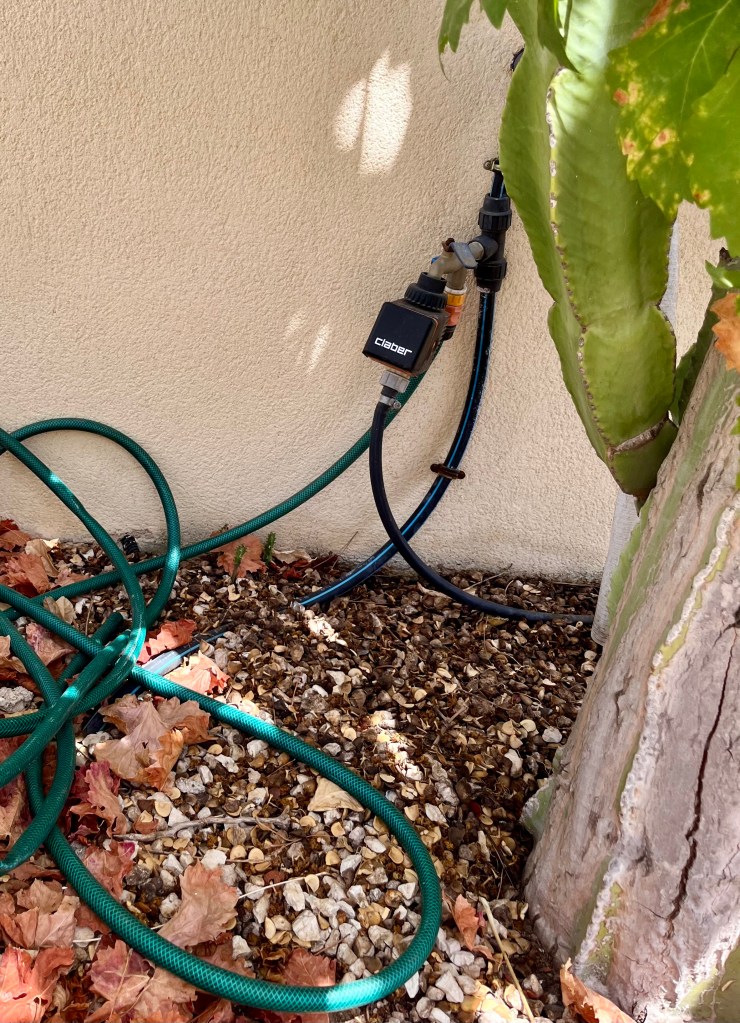
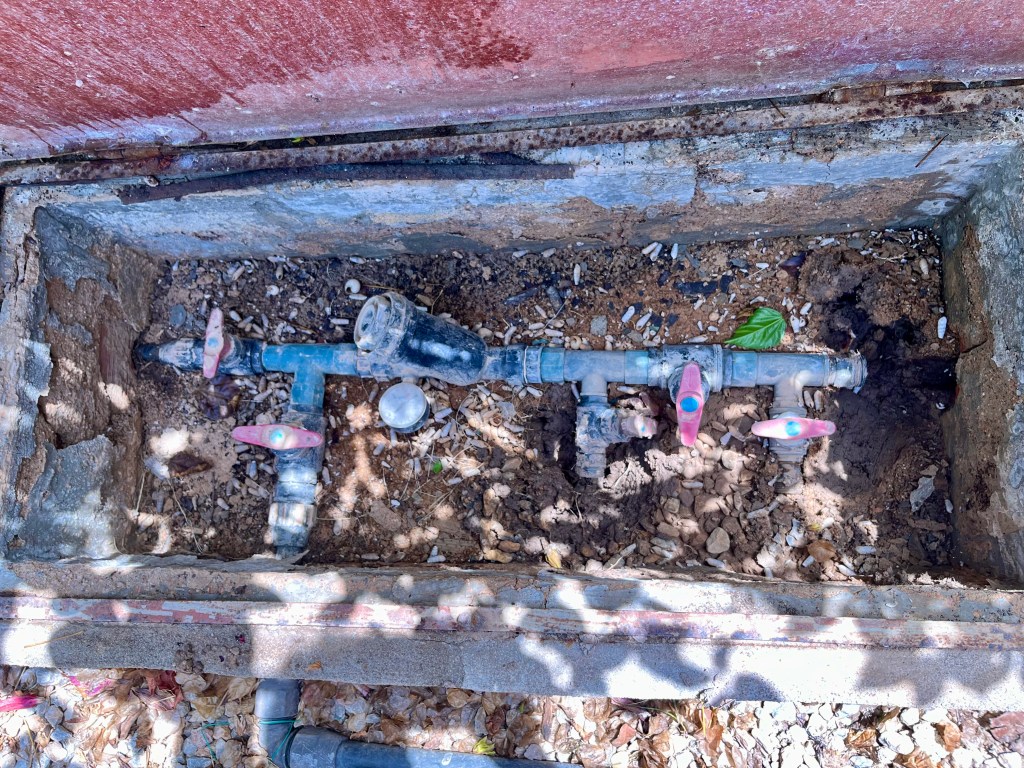
  • Repairing irrigation
  • The chickens get air conditioning

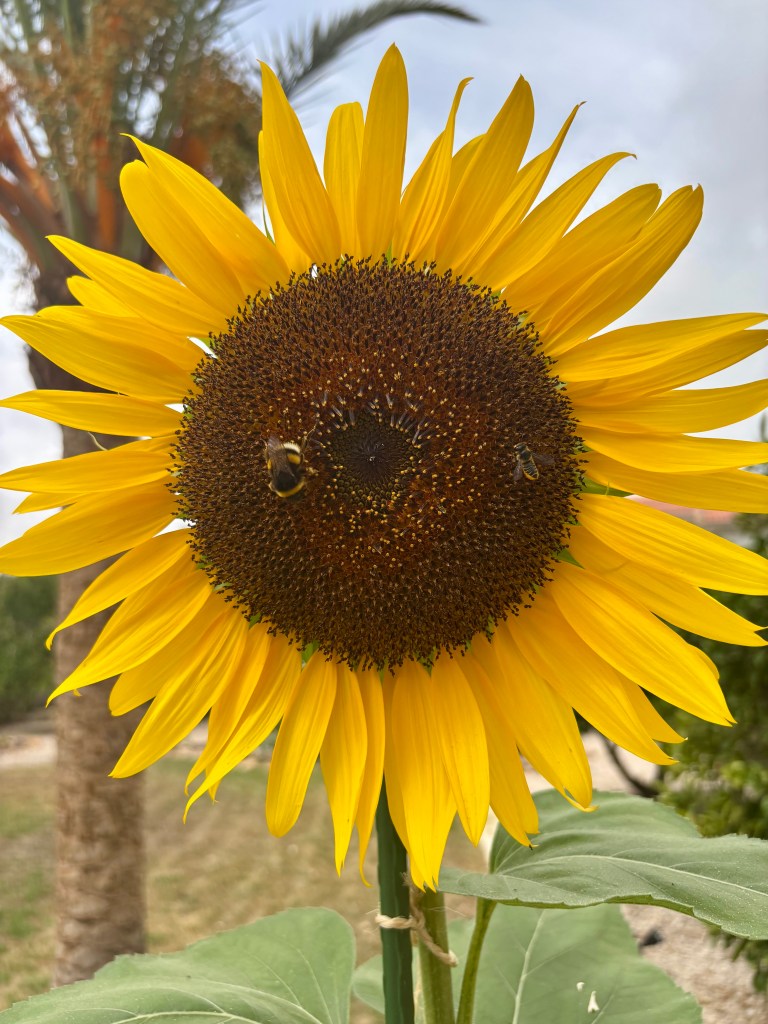
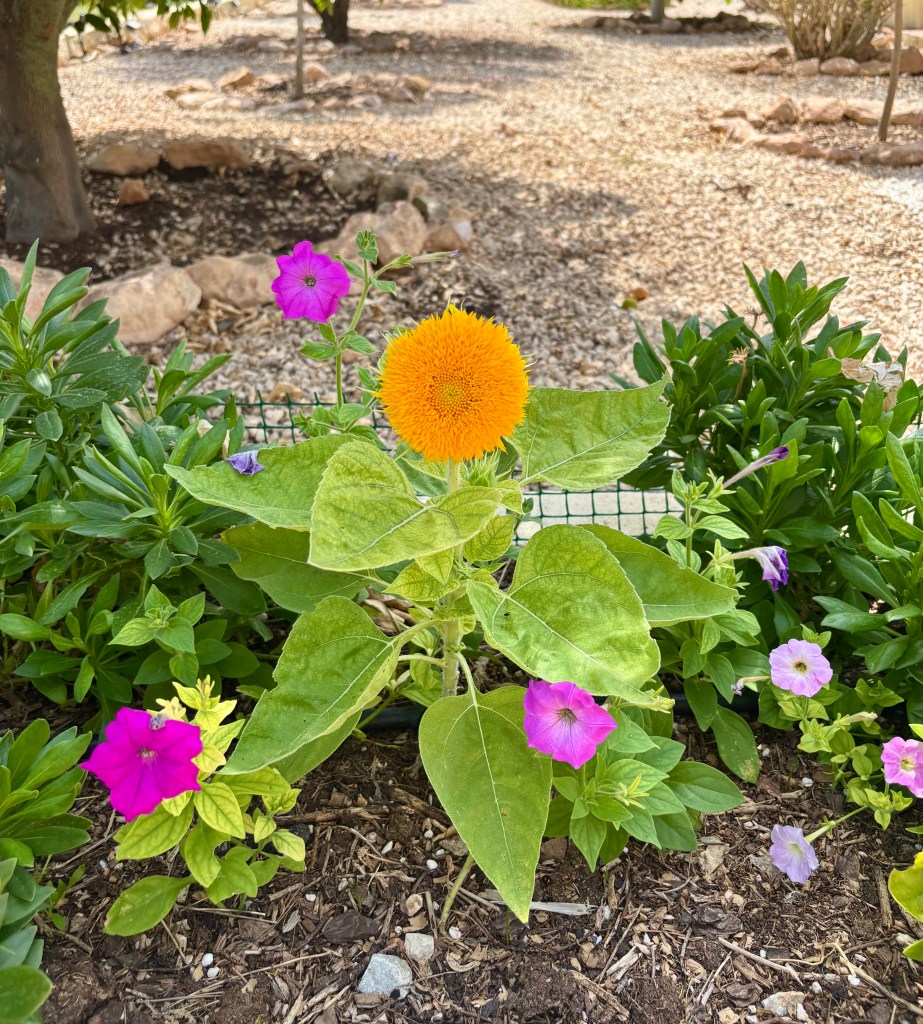
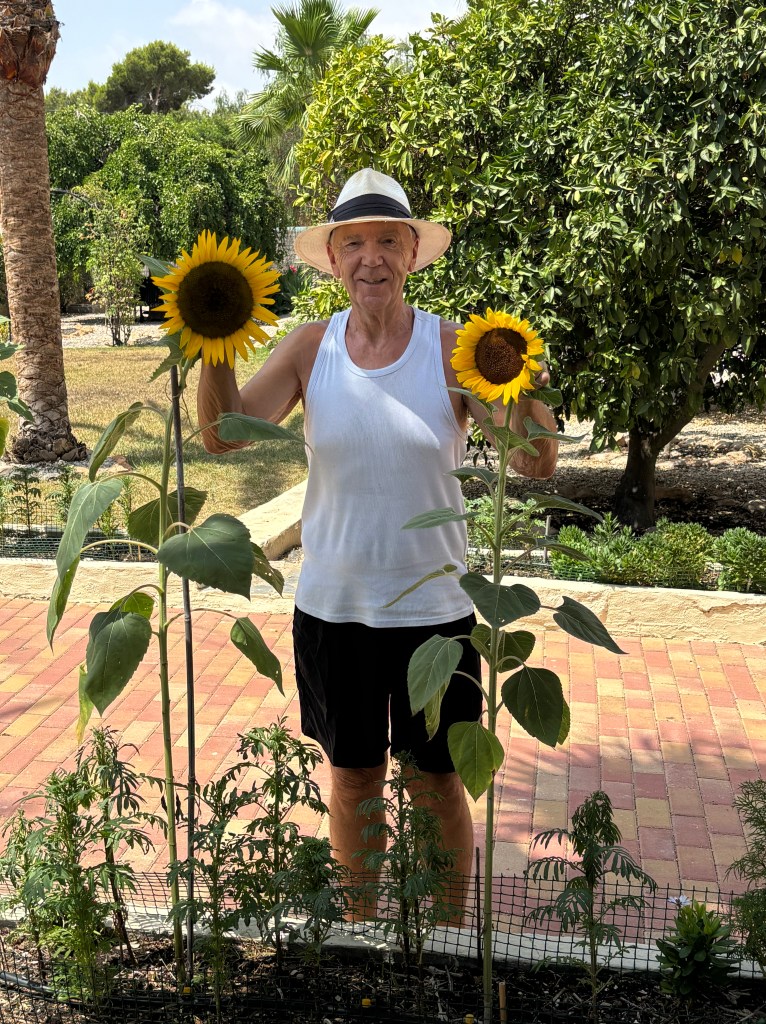
Dealing with Sunflowers. At this time of year I run an annual Sunflower Challenge in my village to see who can grow the tallest sunflower. The competition helps raise funds for our Church annual Kids Club which is run during August.

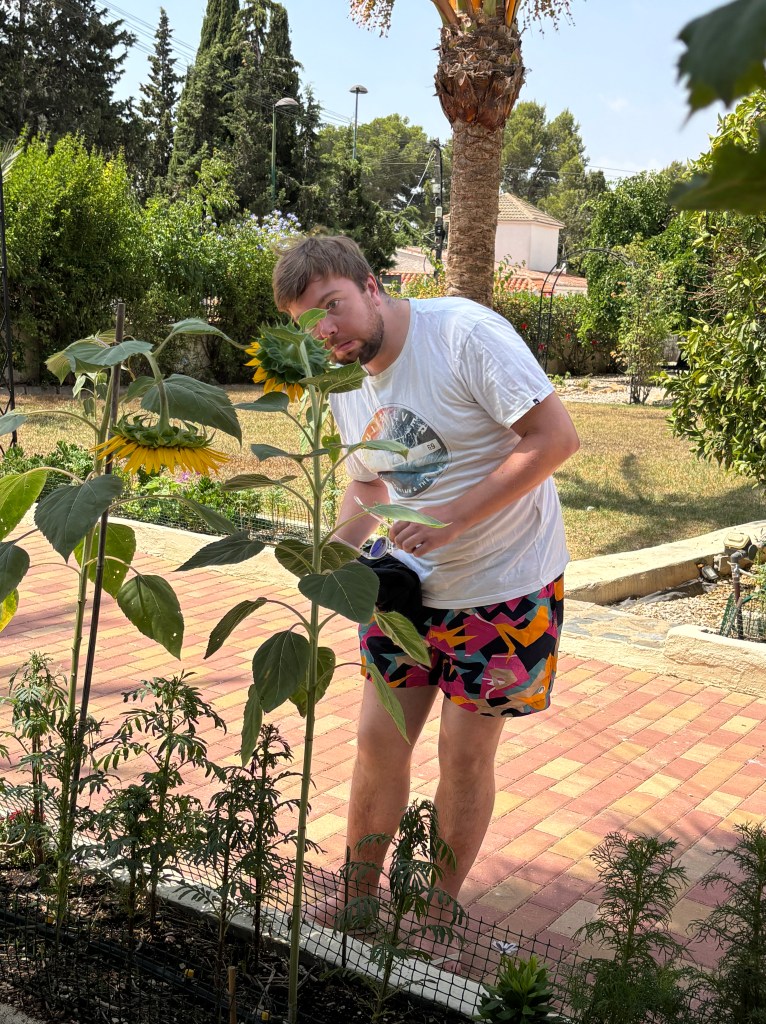
As part of my ensuring nobody cheats I grow some test plants and this year they have been great fun. The sunflowers are enjoying the heat but they have grown so quickly I will probably have to bring the measuring date forward. The photos below show some of the fun of growing sunflowers, and it’s not too late to stick a few seeds in.
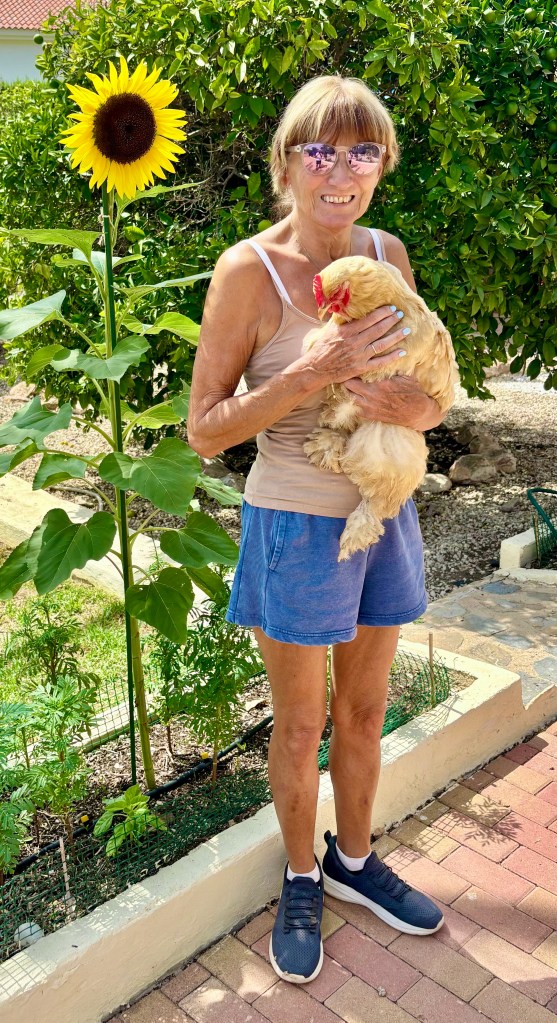
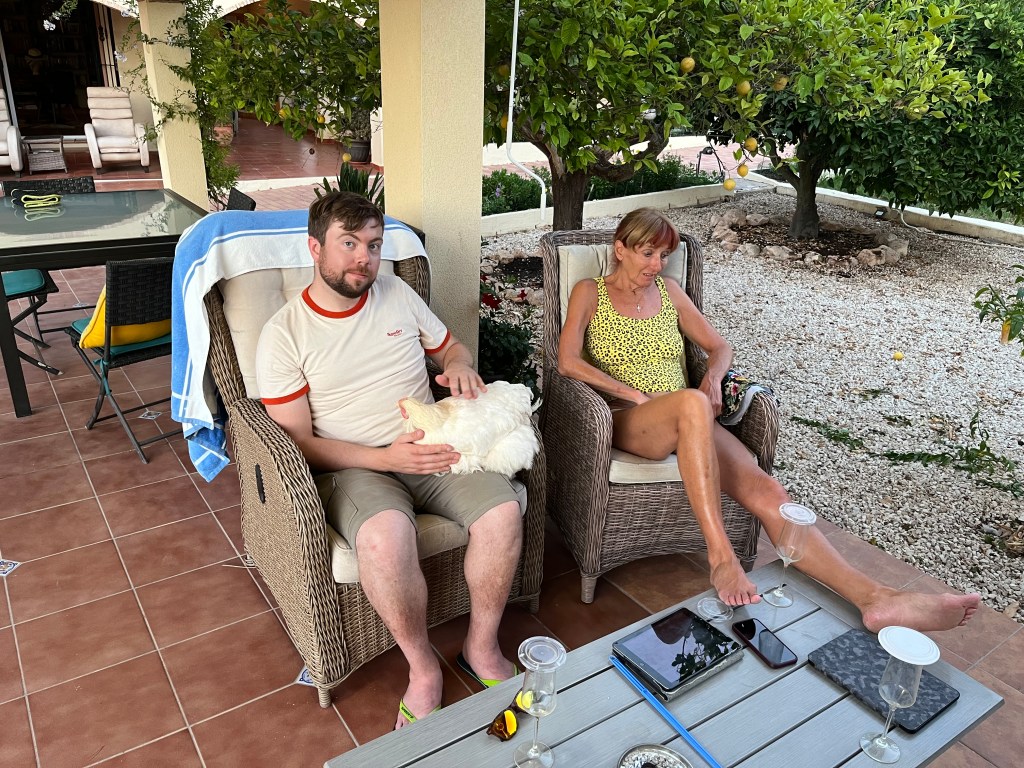
Cruella (my wife) with Helga, she insisted I take this as she is entering it for Mum and Chick of the month competition in Poultry World.

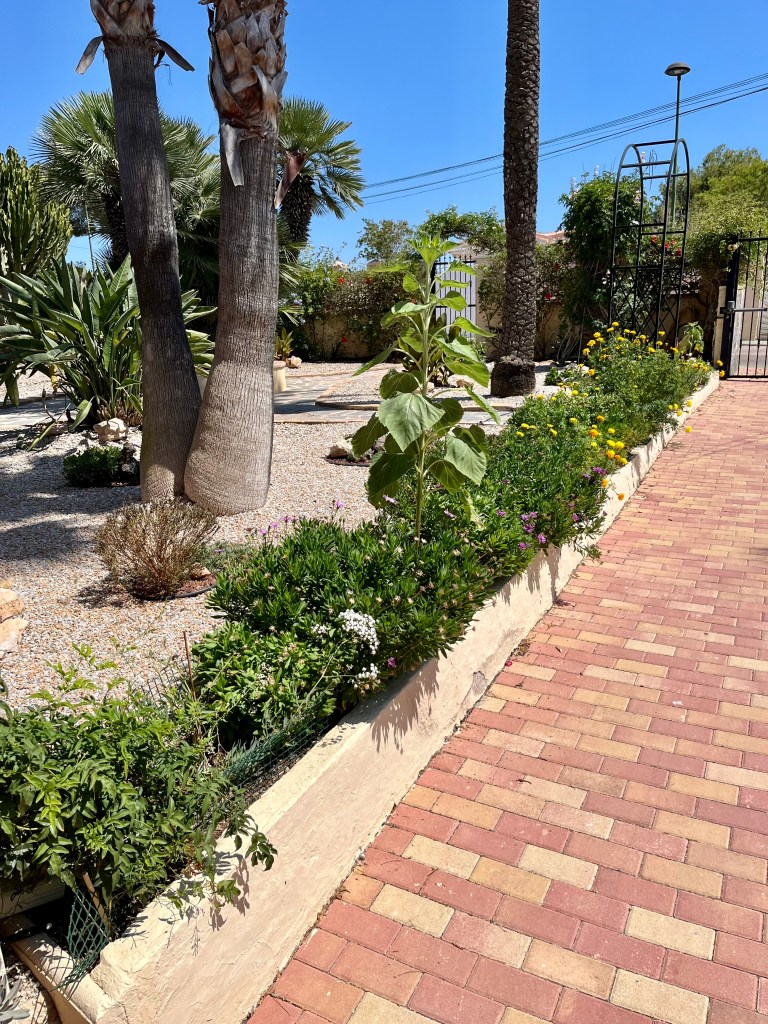
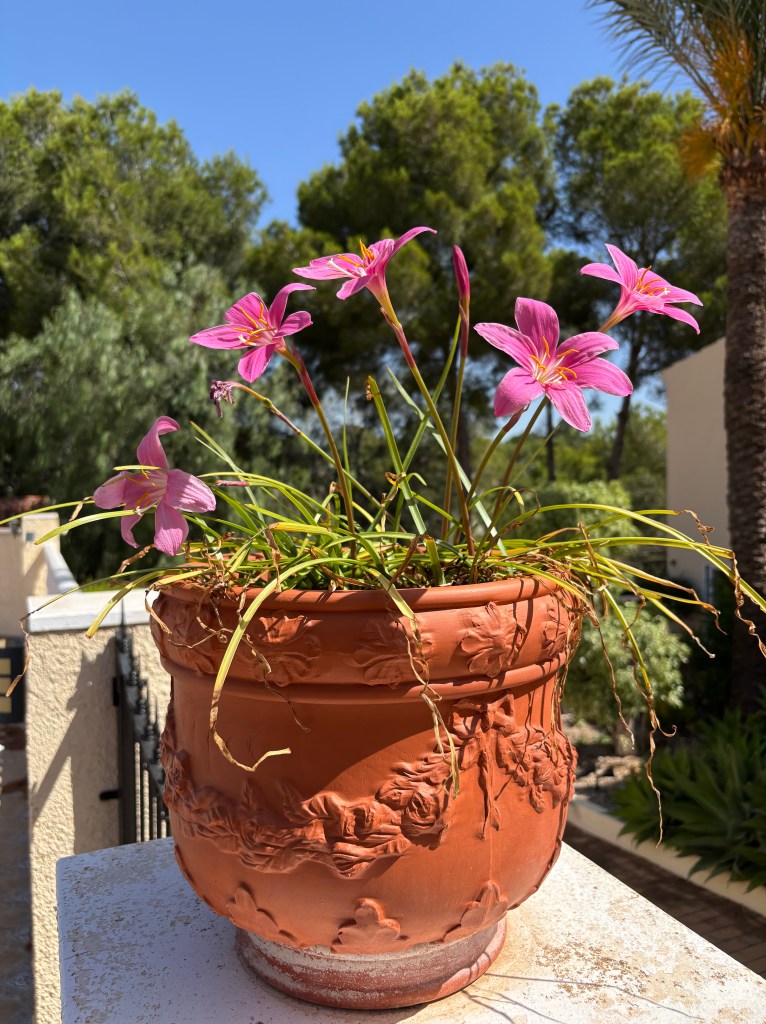
Deadheading and debudding. Away from the frippery of sunflowers, there is serious work to be done in your flowerbeds. Although we are not yet at peak deadheading, you should make sure to be deadheading Petunias and Rain Lilly’s on a daily basis. If you fail to deadhead the plant will just stop flowering. Removing spent flowers stimulates the plant into producing more flowers.
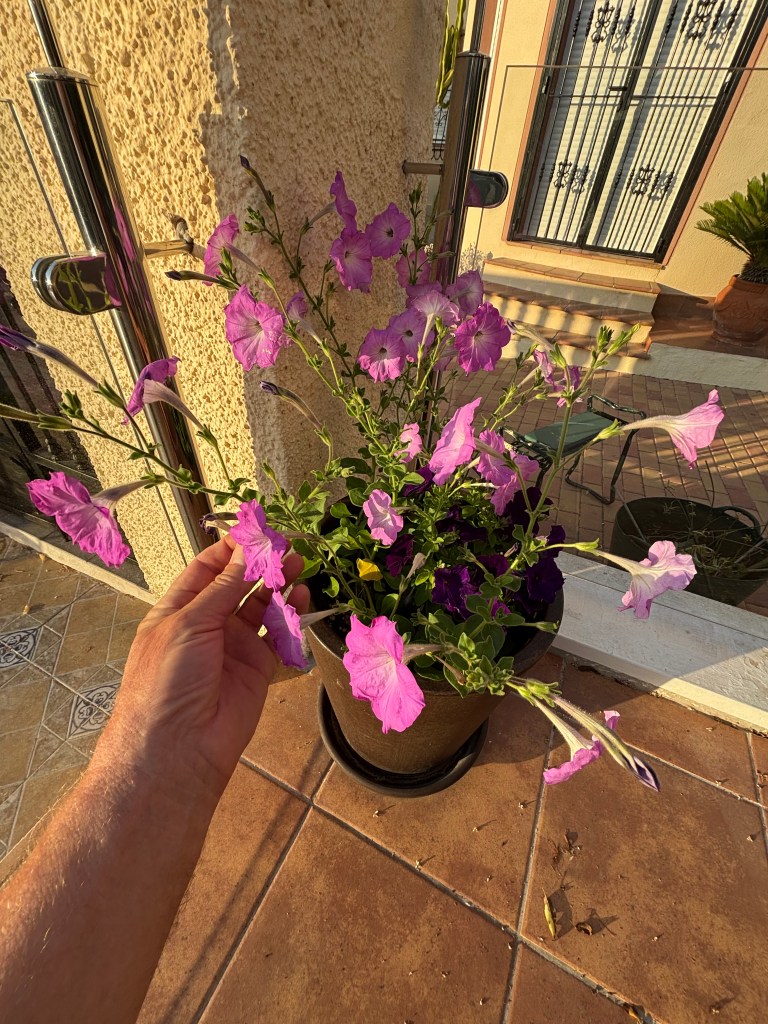
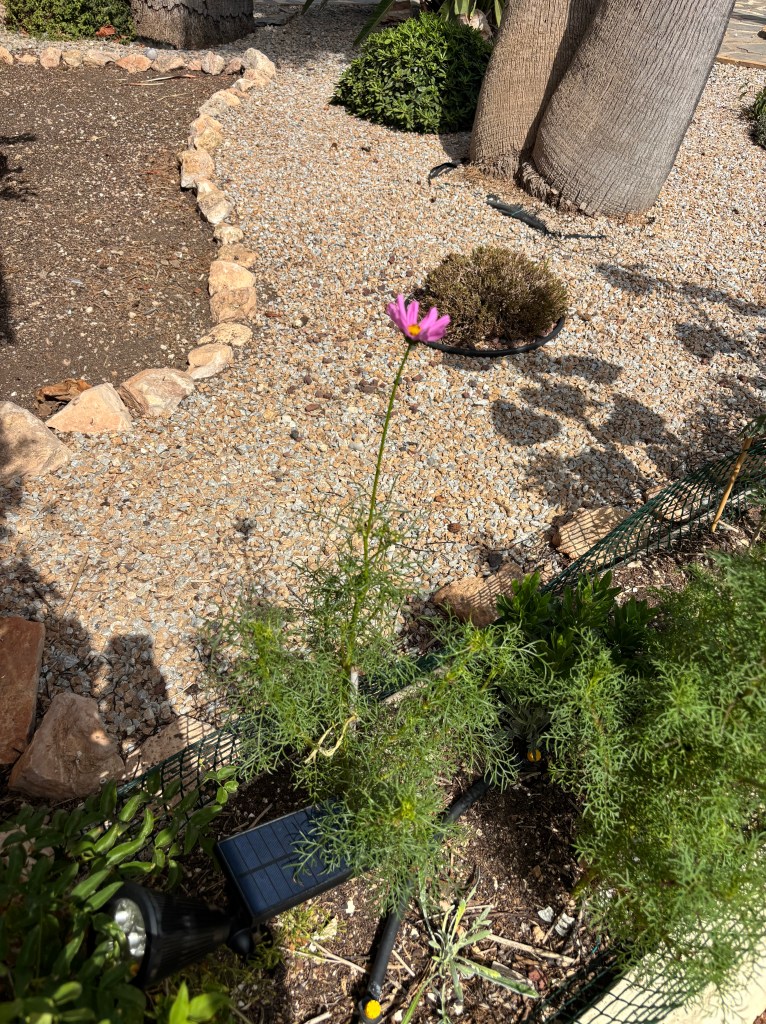
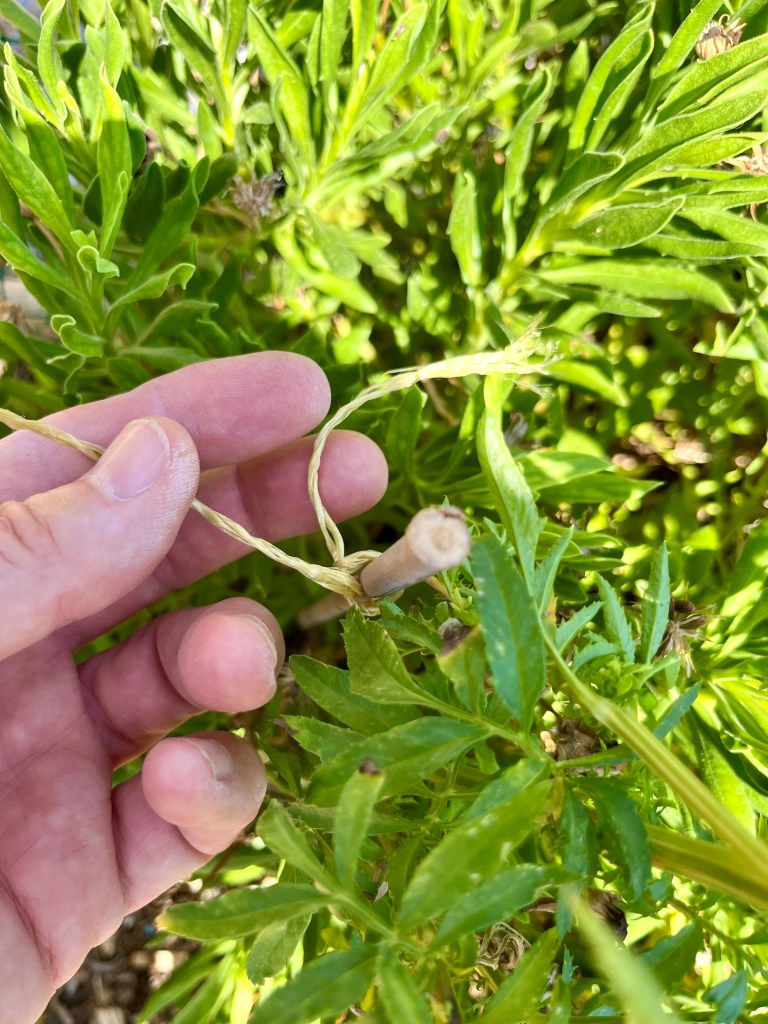
In addition to deadheading you need to begin a programme of debudding to stimulate profuse flower growth. Debudding involves pinching out the central flowers on some plants to encourage side growth. In the main I do this on Marigolds and Cosmos. The photos below show debudding in progress.
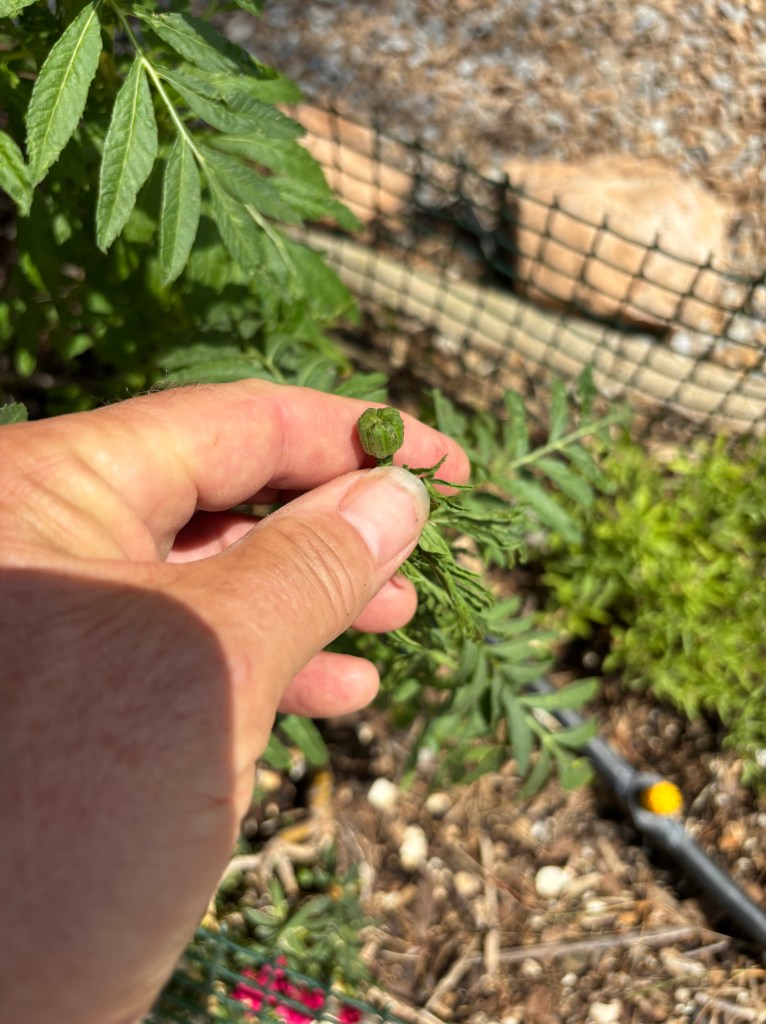
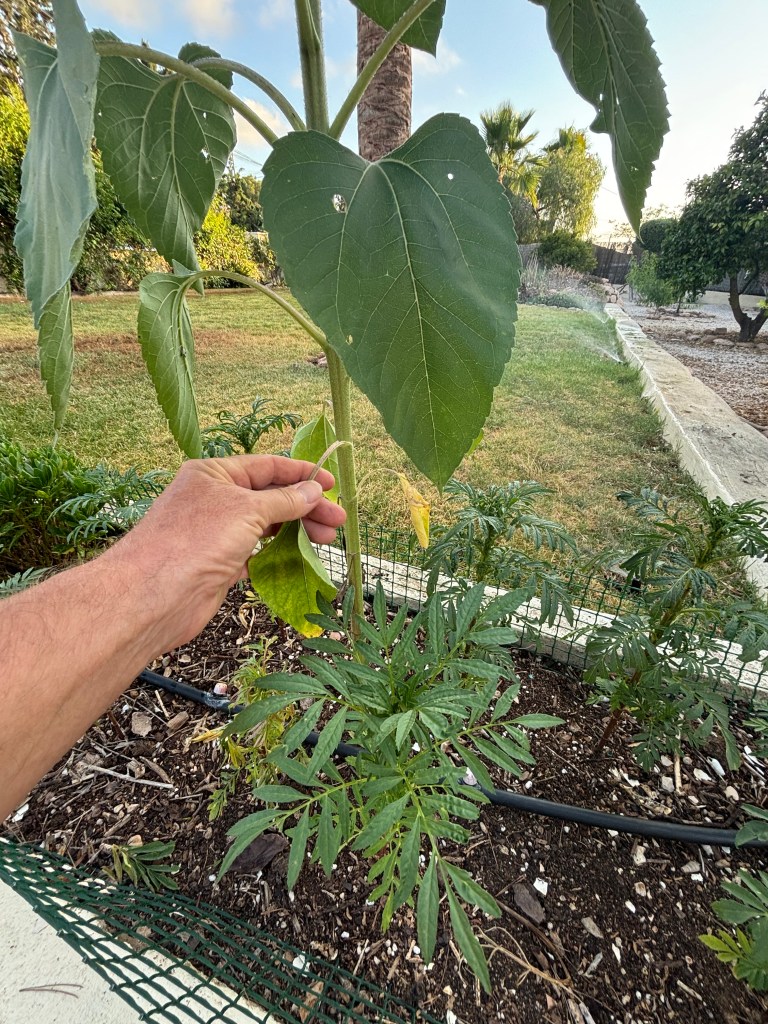
An essential aid to deadheading and debudding at this time of the year is to grow your thumbnails long. In this way you can stroll around the garden deadheading by pinching spent flowers between your thumbnail and forefinger without having to run to your shed to get your secateurs (not roses obviously). The photos below show below shows my human secateurs.
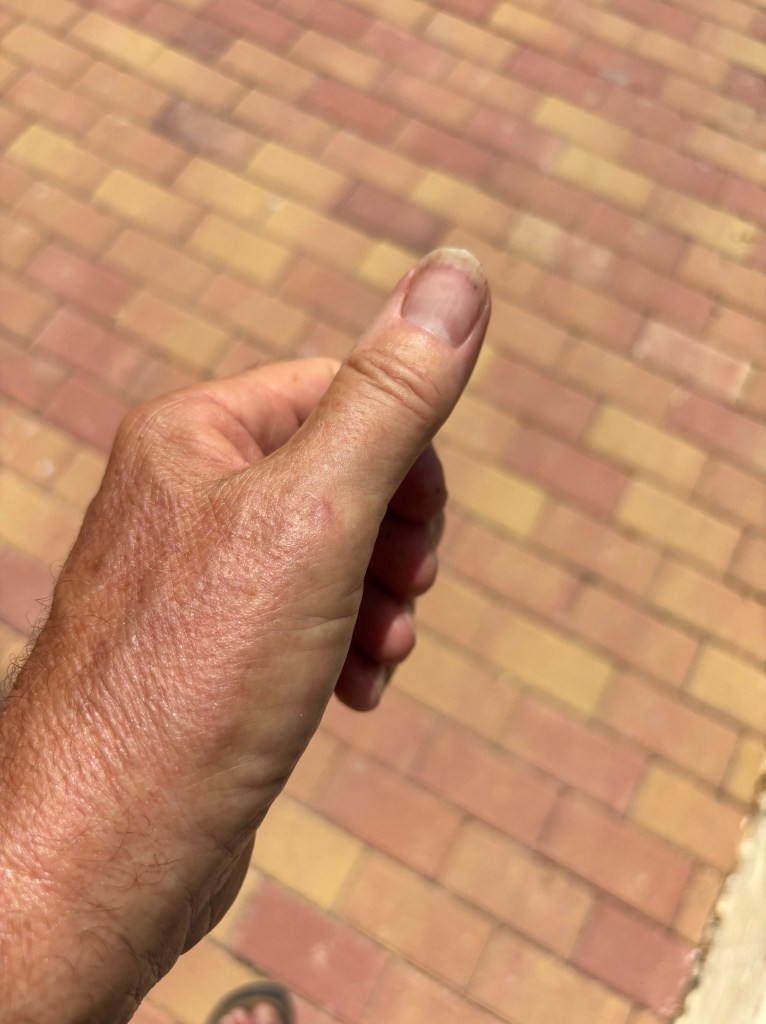
Far more cost effective than new secateurs

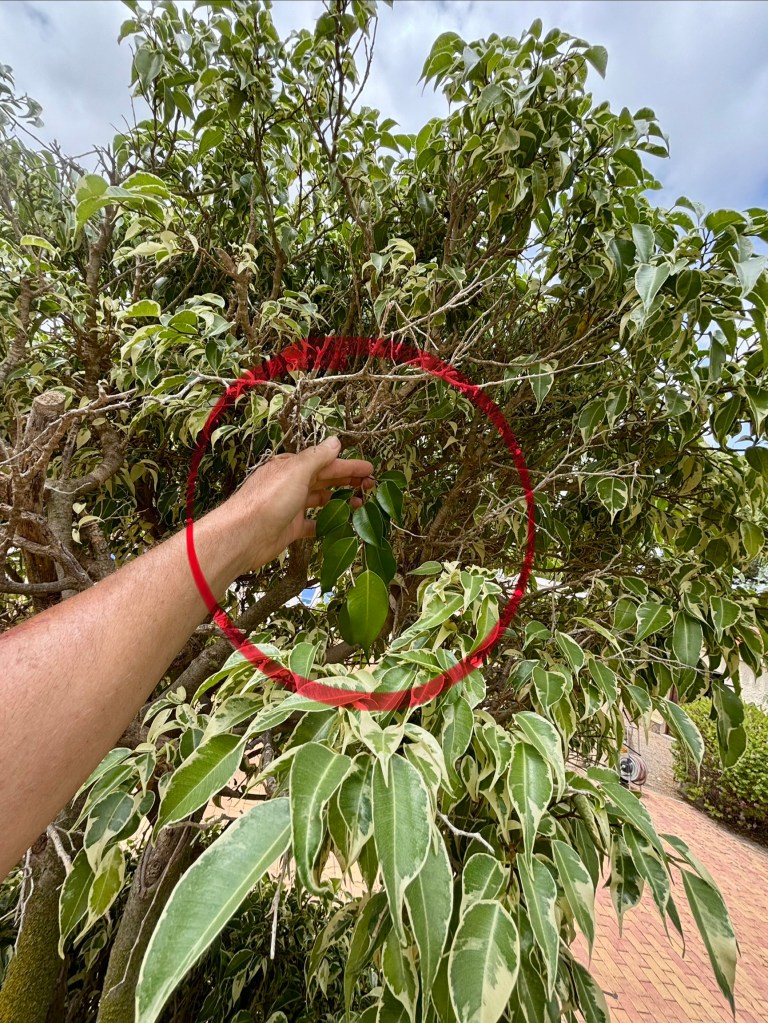
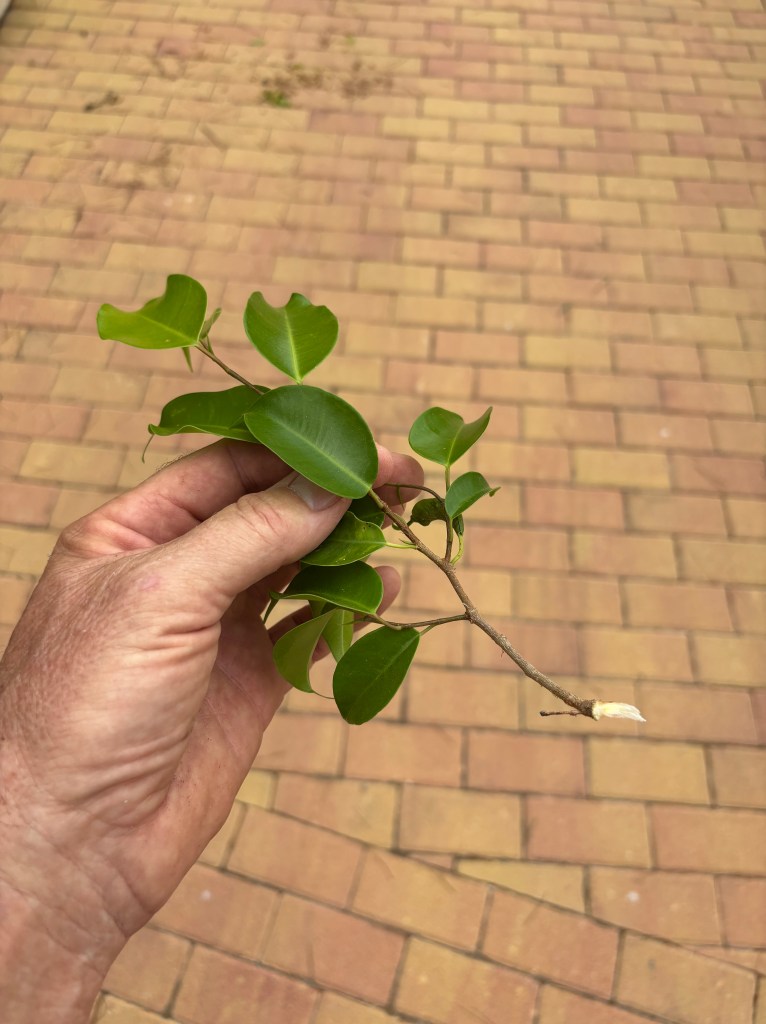
Finally, on the deadheading front. Watch out for fully green growth on your variegated leaf plants. Left alone fully green growth will eventually takeover and remove the variegation from your plants. I keep a keen eye out for any green growth on a nice variegated weeping ficus that I cloud prune each year. The photos below show a sneaky green growth on the back of the plant. You must take these off and the best way is to remove them by tugging then you remove the branch heel which will hinder regrowth.
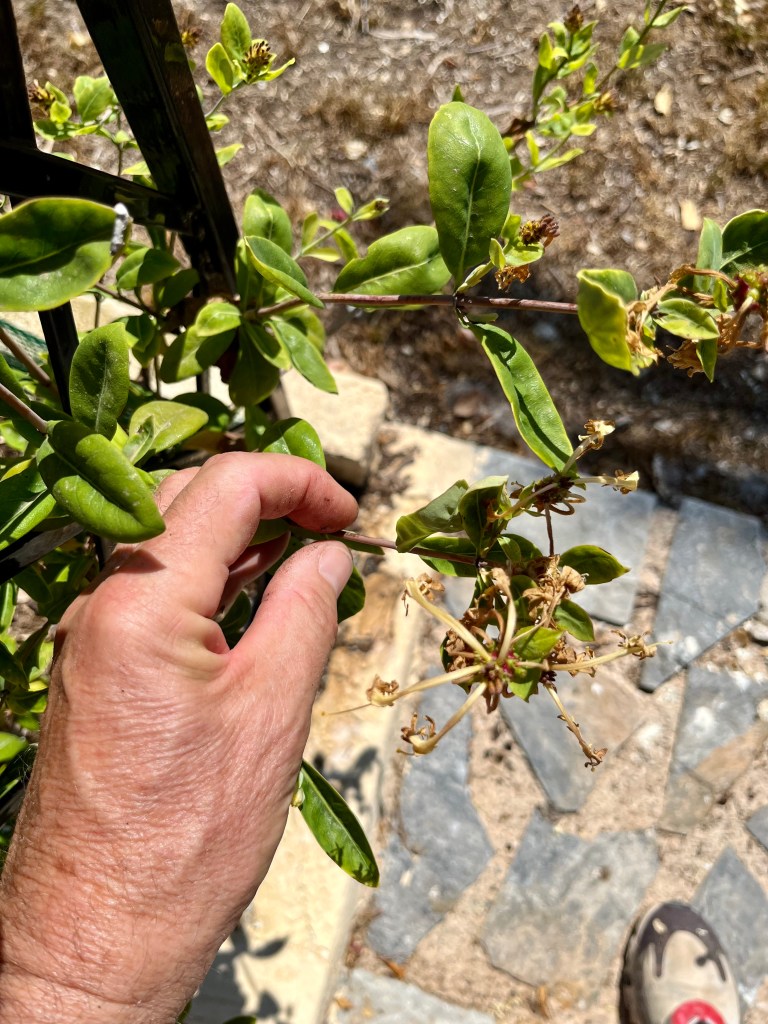
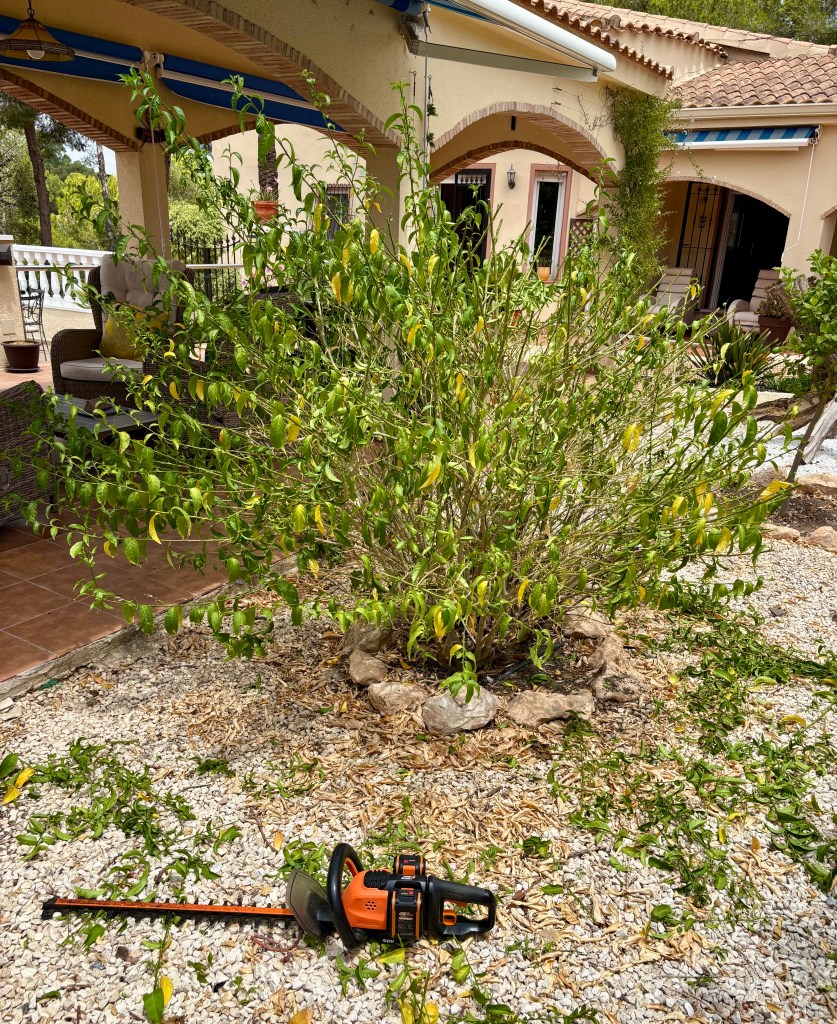
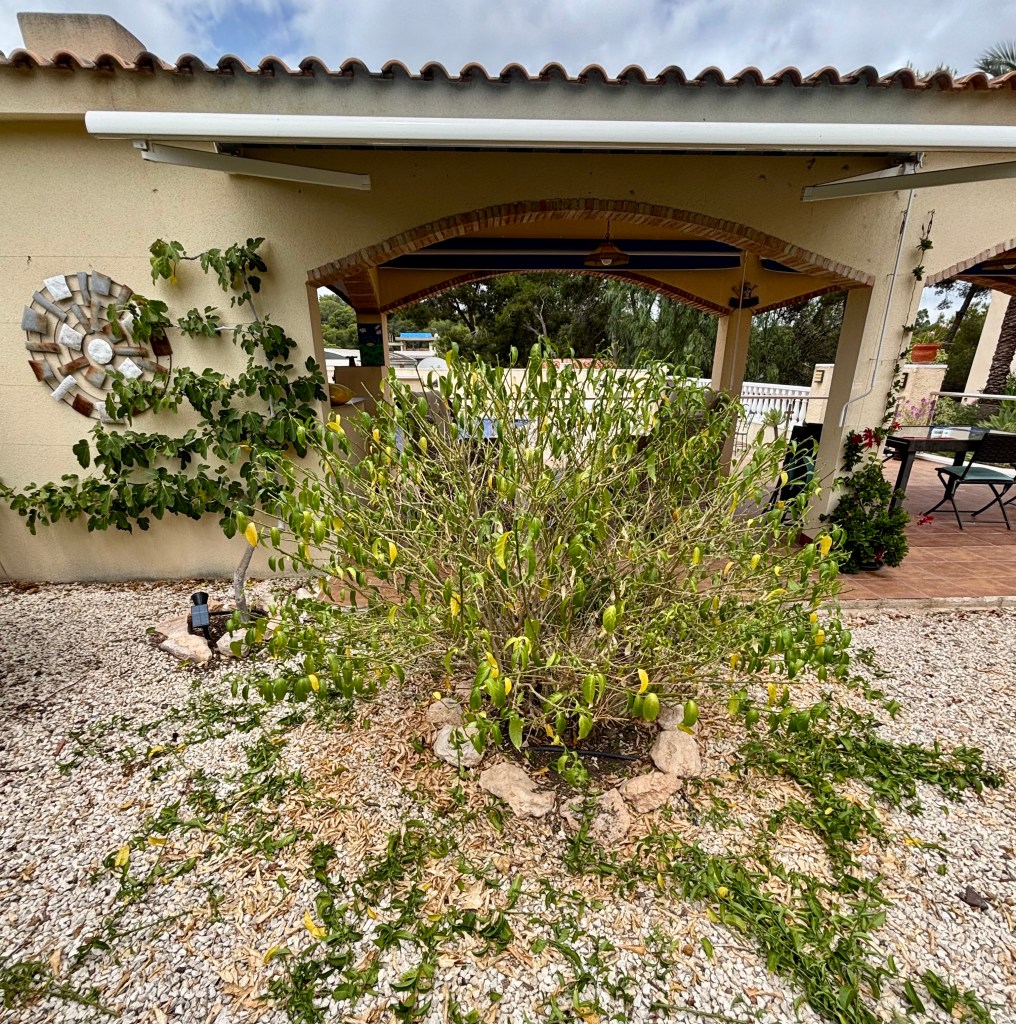
Trimming Dame de Noche. This has been a terrible year for my Dame de Noche. This night scenting Jasmine would normally had its first flush of flowers by now and filled the evening air with its exotic scent. Unfortunately, it has looked pathetic, flowered meagrely and released absolutely no scent.

I have now cut it back by one third which normally ensures a late flowering and scent through September and October. I am not very hopeful, but no matter what your Dame de Noche looks like cut it back by a third now and you should be ok. The photos below show my poor plant before and after its trim. I may even give it some general purpose food, something that I have never done before.
Harvesting Chillis. Regular readers of this blog will remember that I completely cut back my Chilli plants, root pruned them and planted them in small pots to over winter. I then replanted them in larger pots with fresh compost, and lo and behold they have rewarded me with an abundance of Chillis.

Chillis are very easy to grow once you get the hang of it, and they reward you with abundant fruit. The key to harvesting chillis is twofold. Firstly make sure that the fruits are a deep uniform colour before harvesting. Secondly, when you harvest always leave a small portion of stem attached to the fruit to ensure nothing can enter the harvested chilli.
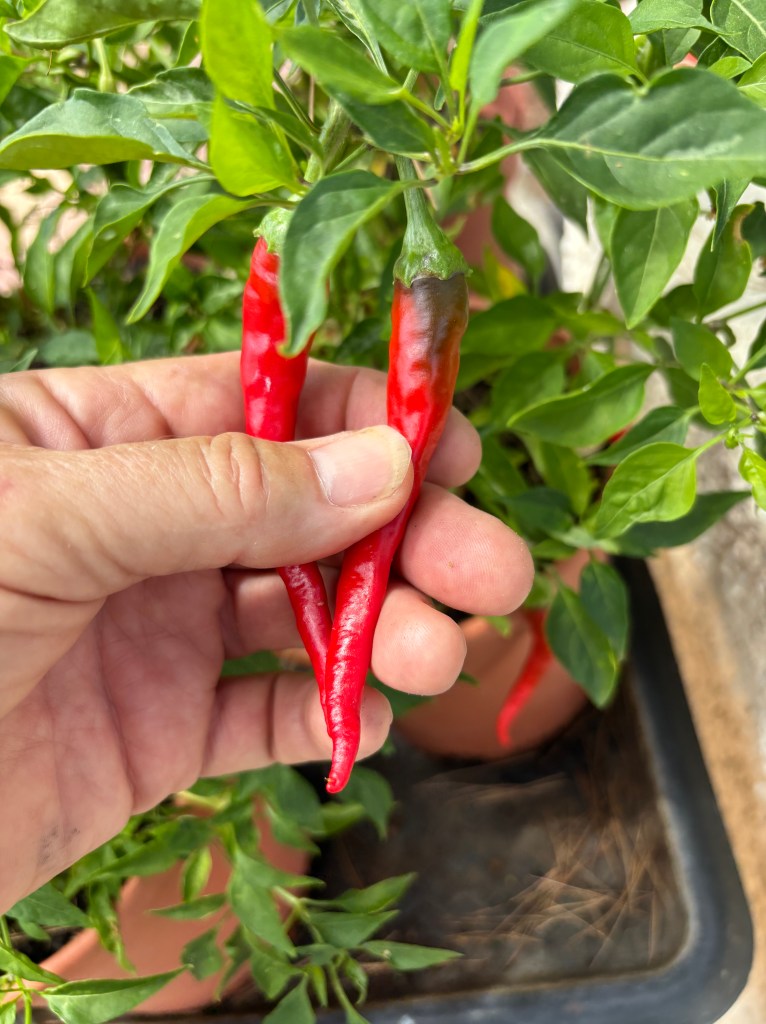
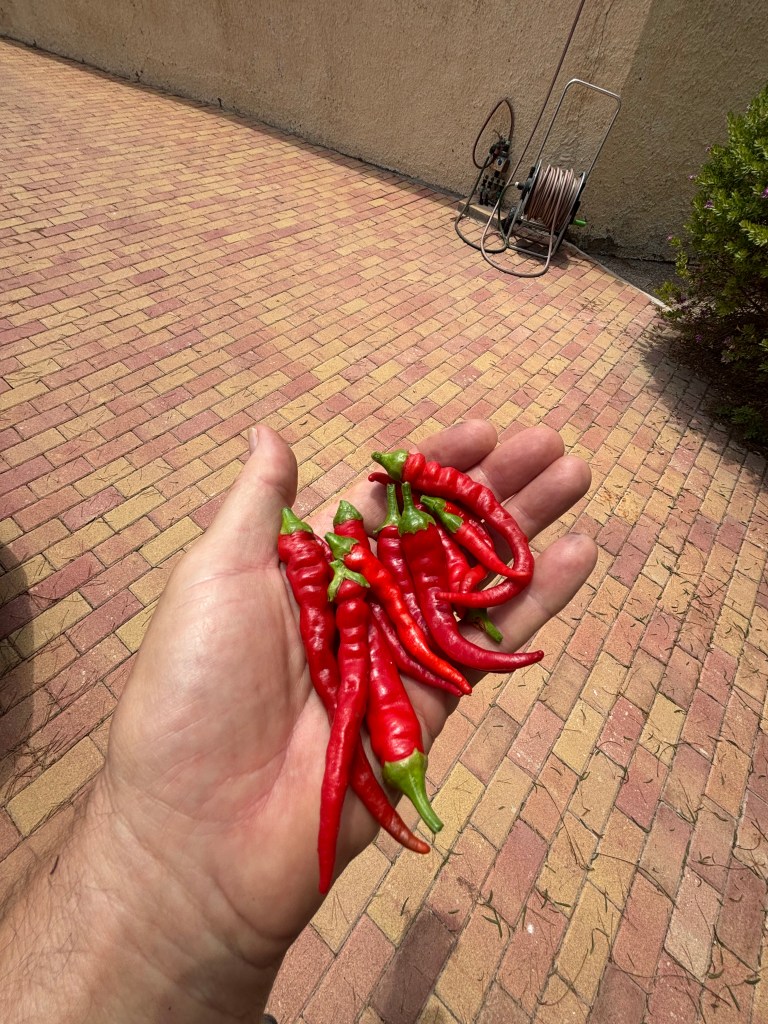
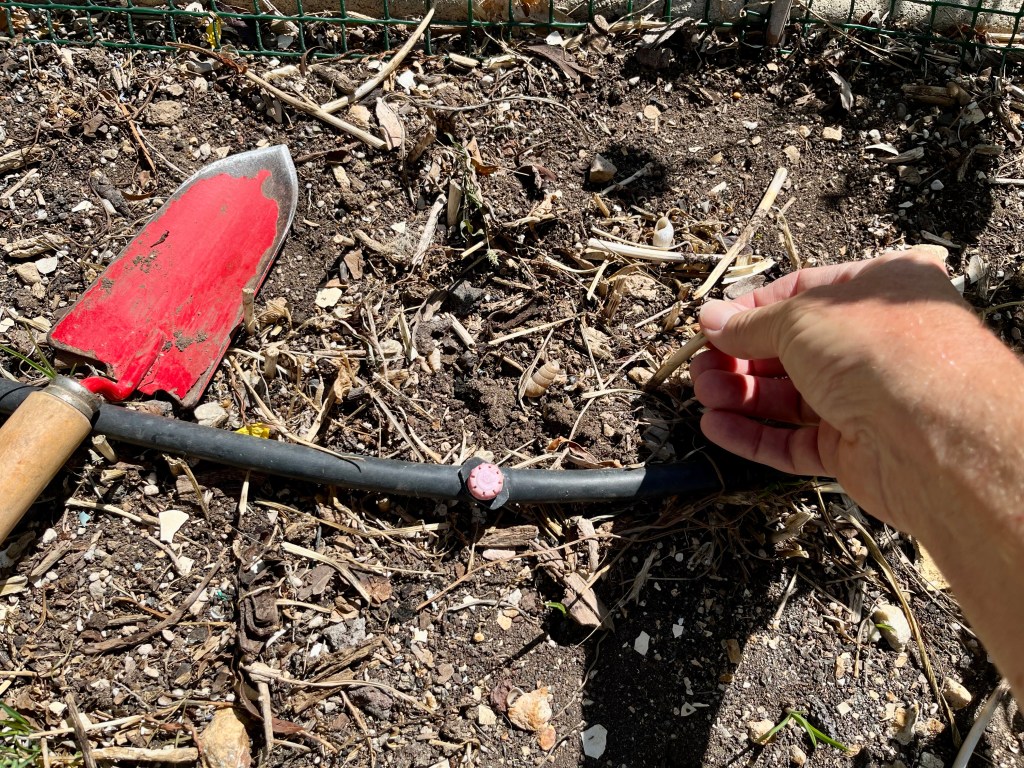
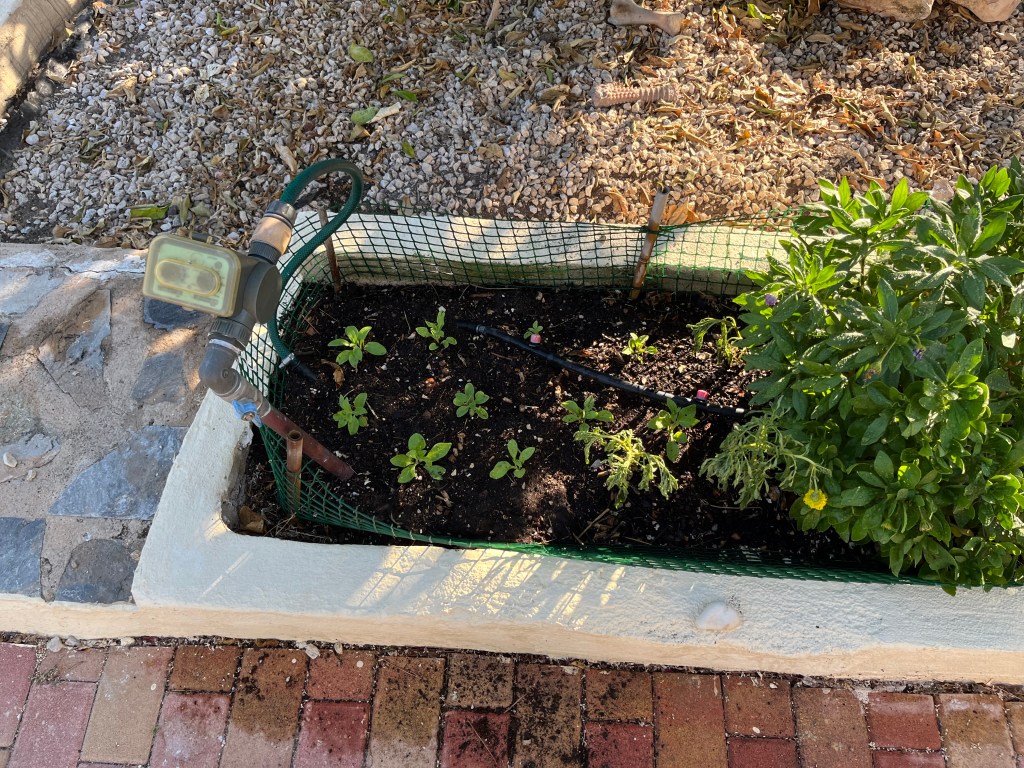
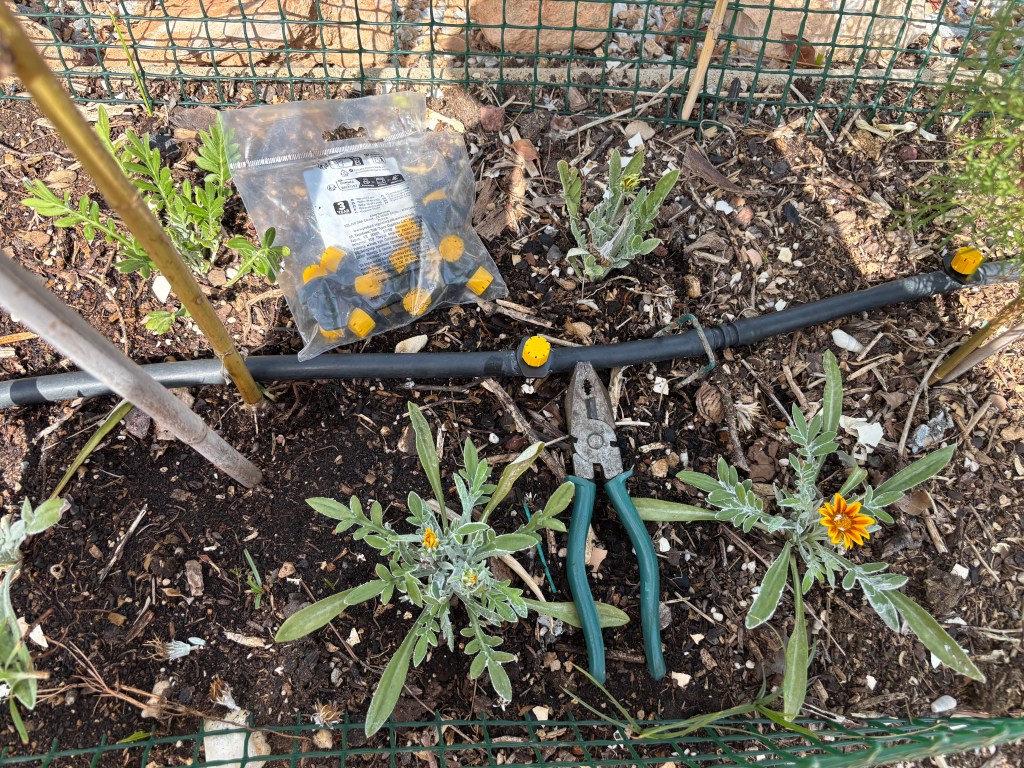
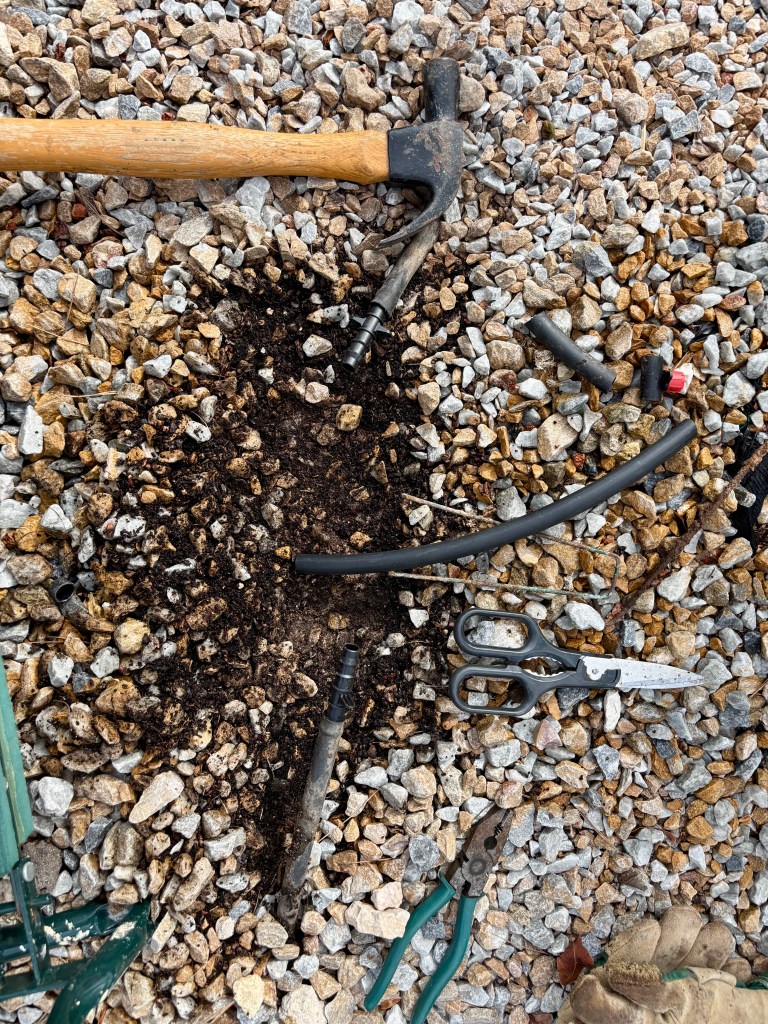
Repairing irrigation. This is one of those jobs that is essential in the current heat I have hundreds of drip irrigation nodes in my garden which you just assume will last for ever, but they don’t. The sun exacts a terrible toll on irrigation pipes and nodes here in the Costa Blanca. Although I tend to keep an eye out for bursts and leaks, sometimes I am just too busy.

It wasn’t until Cruella (my wife) remarked to me one day “why are all the plants dying” that I began to urgently address the problem. My main flower beds irrigation nodes were corroded and their were pipe bursts under gravelled areas. It is good practice to replace all your irrigation nodes every two to three years. Use a different colour node to the old one so that you can see which is the new and which the old. In addition keep a reasonable supply of pipe joints for all occasions.

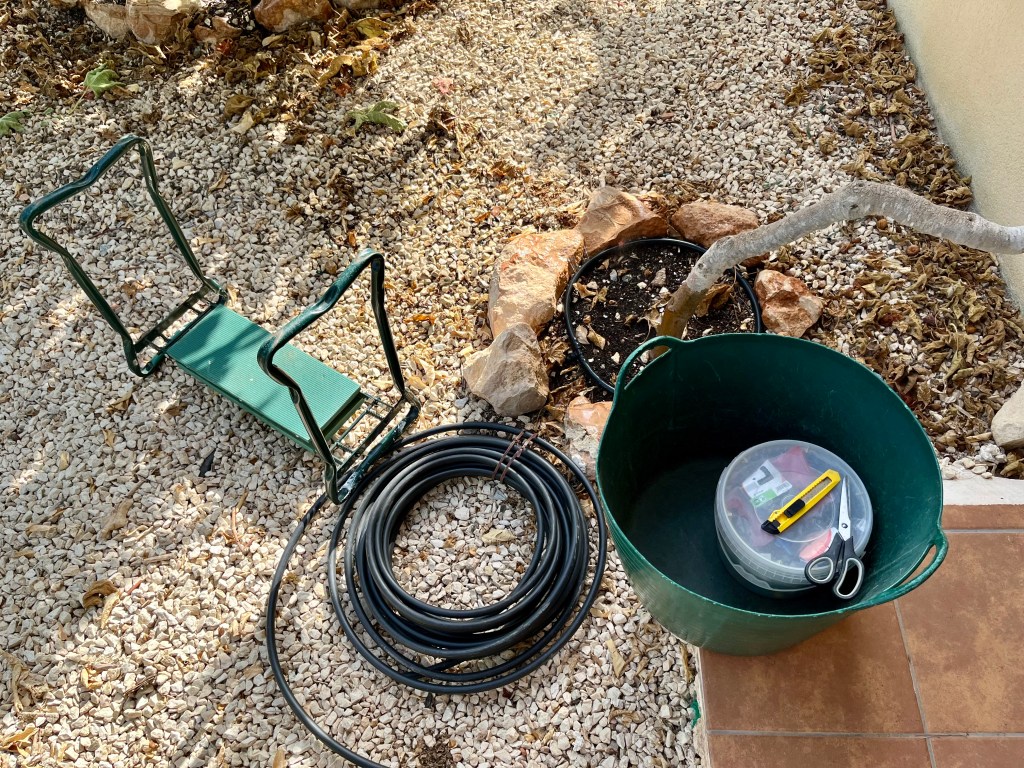
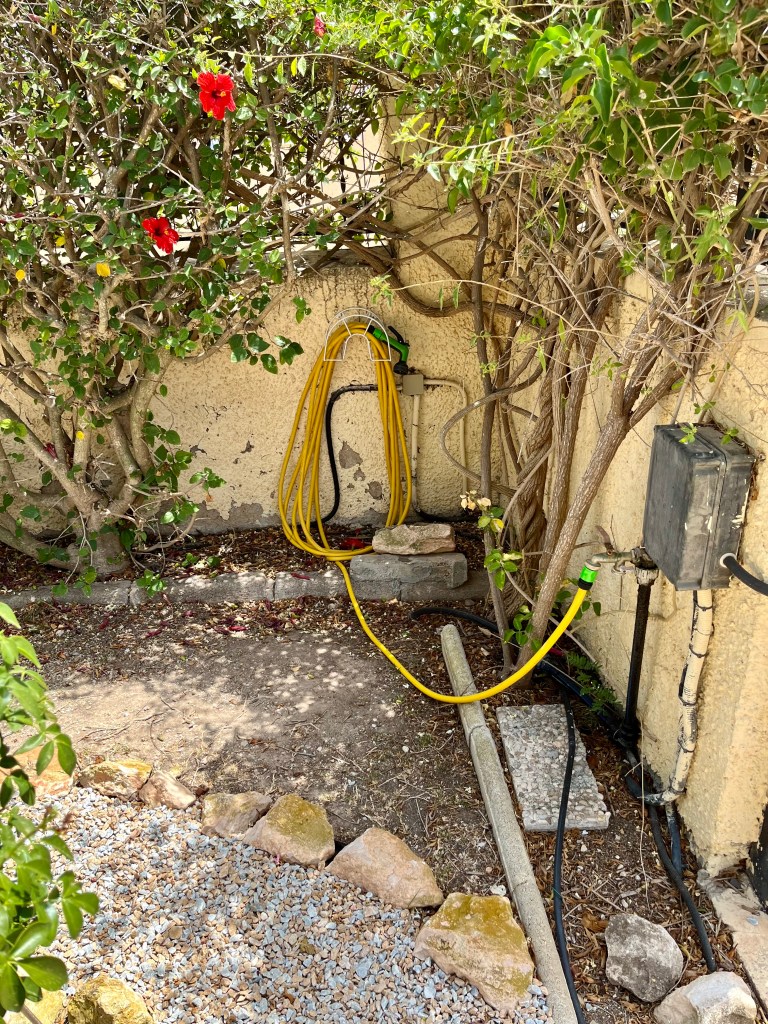
The photos below show some of my efforts in repairing my irrigation; I lost about half a stone and dehydrated whilst doing this.
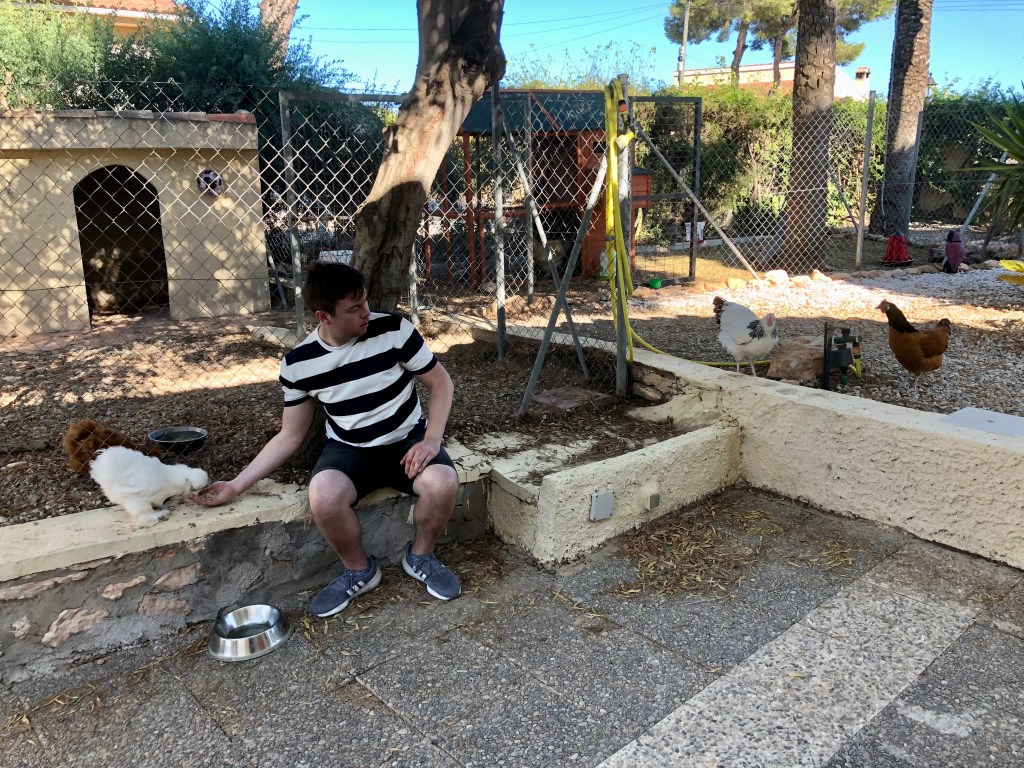
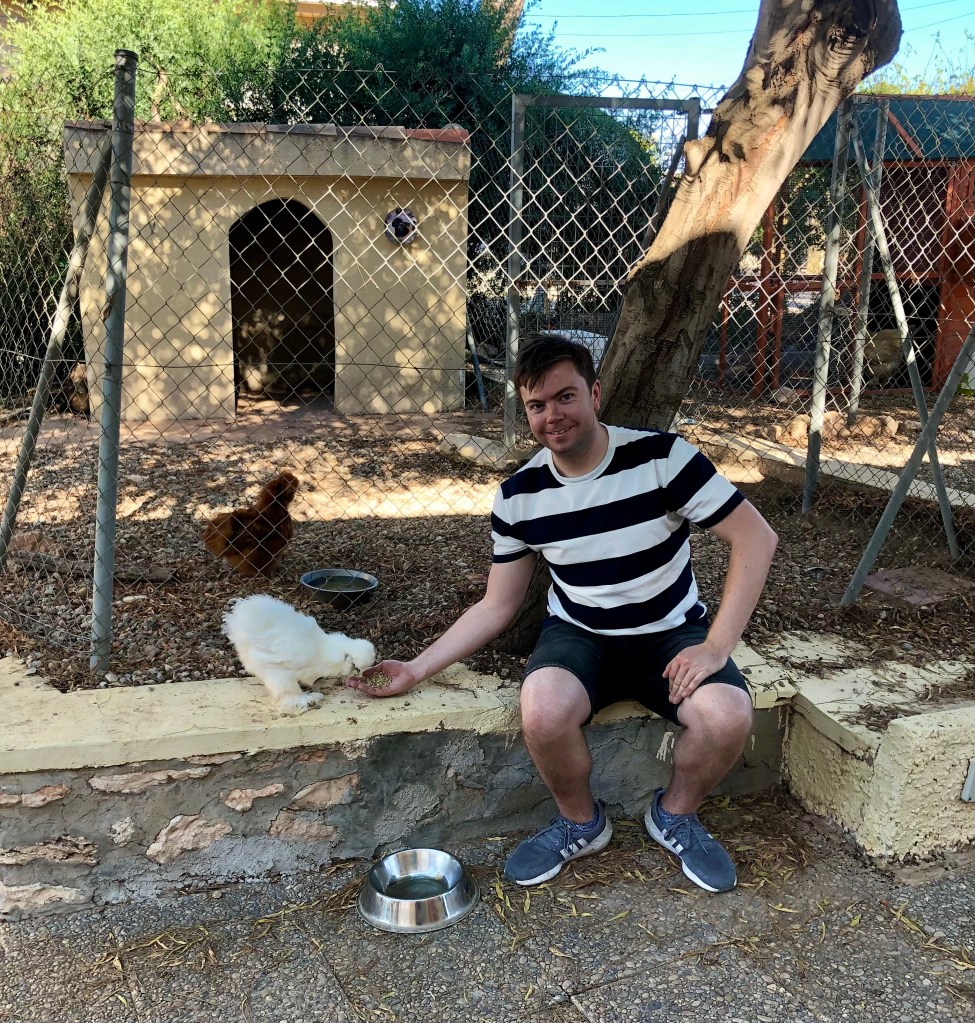
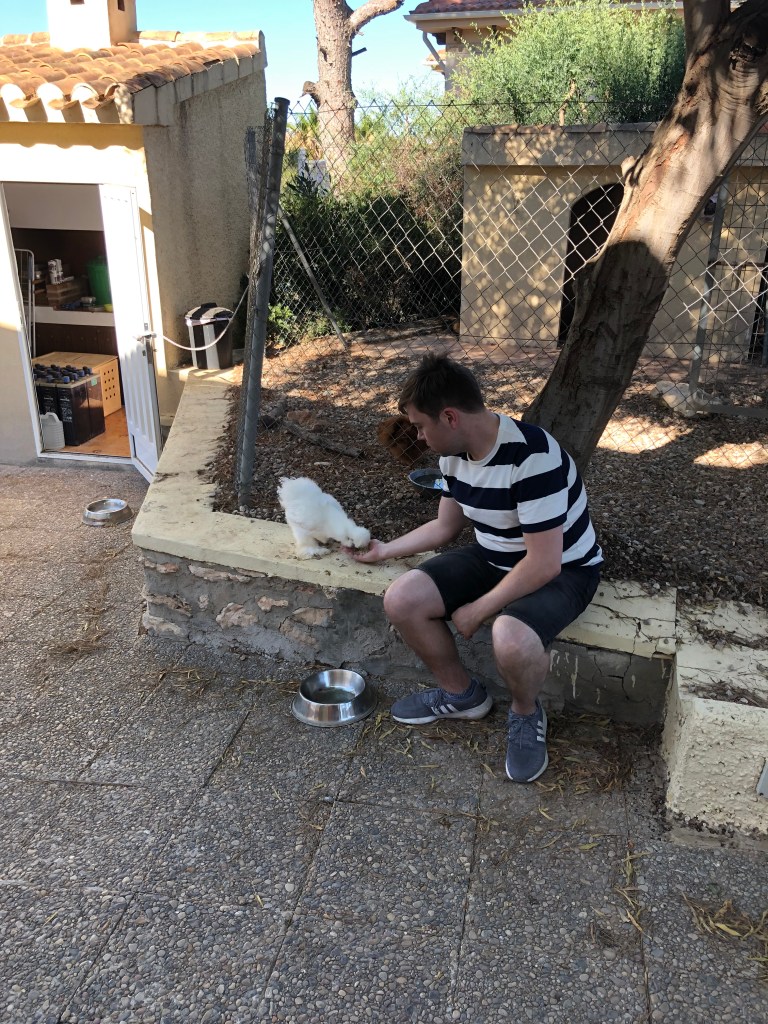
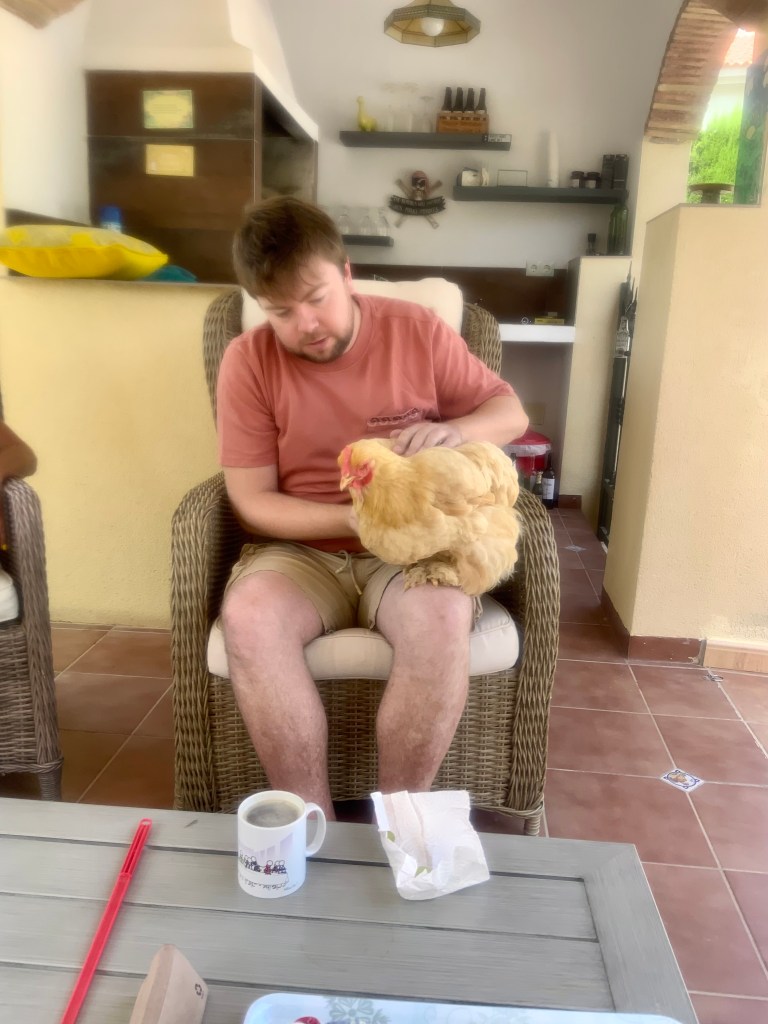
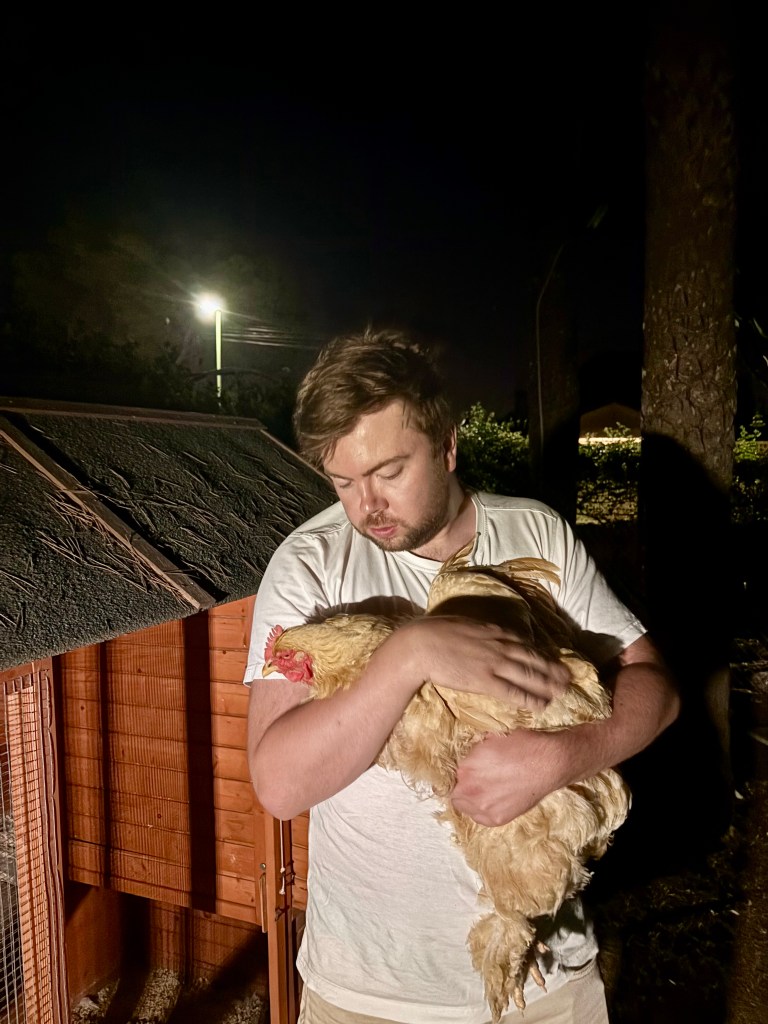
The chickens get air conditioning. The idiot son has been here for his annual holiday, or Chicken Fest as Cruella (my wife) calls it. In the main this consists of Cruella giving him Chickenese language classes and advanced chicken handling techniques including putting the chickens to bed at night. The photos below give you the idea.
All was going well as far was I was concerned as I blithely carried on gardening and left them to get on with it. I was in the middle of cutting back the Dame de Noche when there was a loud scream and Cruella (my wife) came hurtling across the garden carrying Elsa one of her girls who she claimed had passed out in the heat. I offered to hose her down (and the chicken) which she did not appreciate, but instead demanded air conditioning in the chicken coop. I refused.

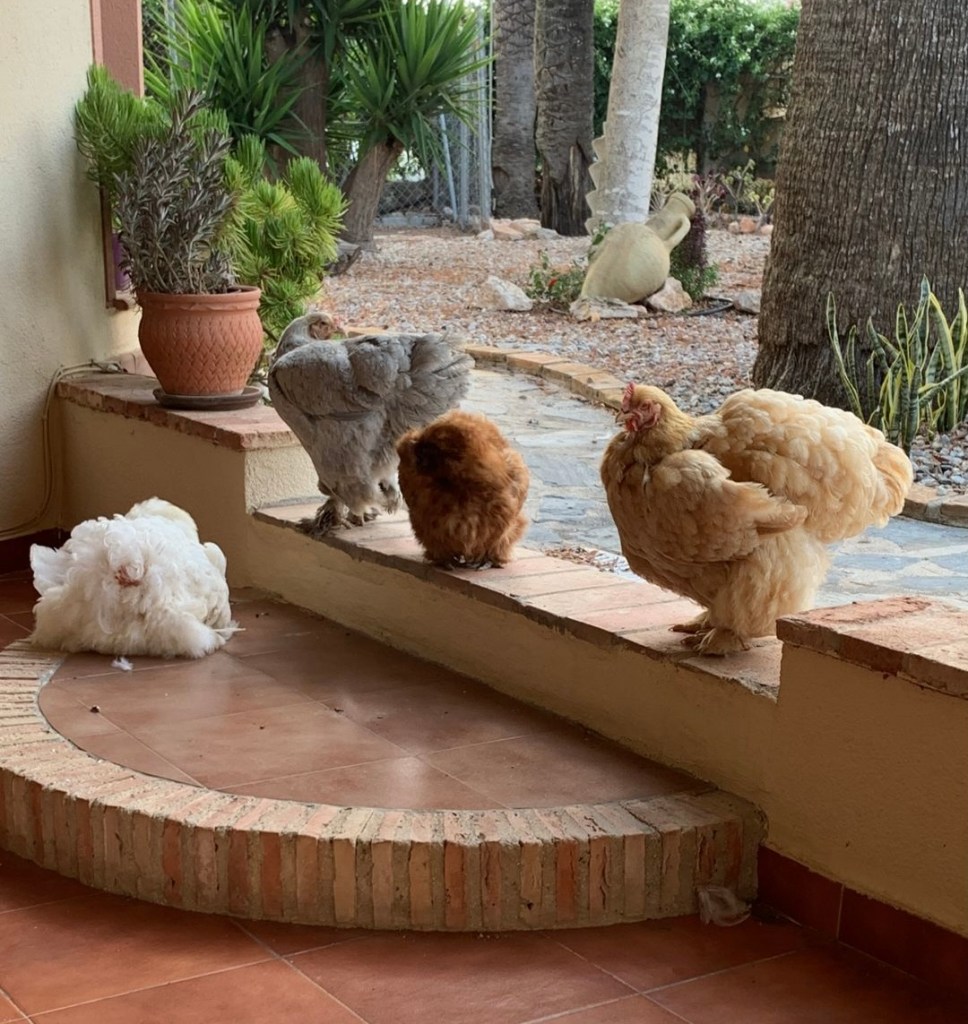
Since then there have been daily chicken protests on the Naya with Elsa flopping around in performative faints whilst the others chant away in Chickenese. When I asked Cruella what they were chanting she said it’s “I can’t breathe” which she said is the slogan of her Chickens Lives Matter movement.

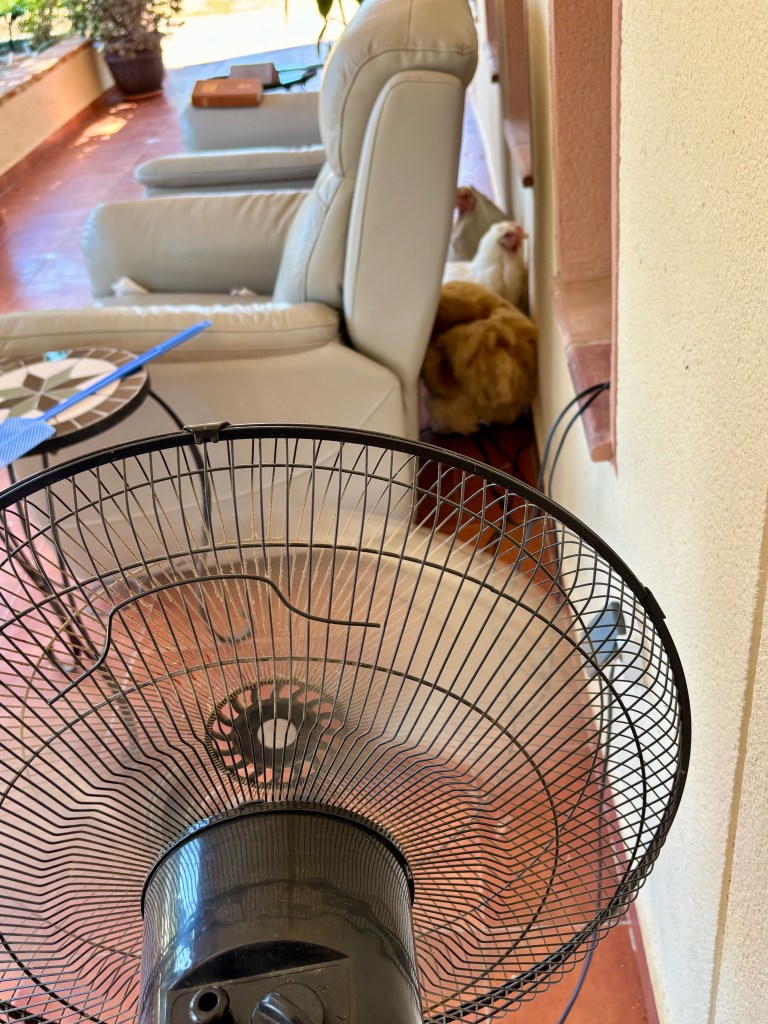
Eventually I rigged up a cost effective solution to not having air conditioning. I was quite pleased with this, but then again I am currently forced to sleep in the shed. The photos below show the protests and my solution.
The idiot returns, chickens net figs, I style Yuccas and sing to orphans

All of the above is true, and in that order. I know we are stretching it a bit as a gardening blog, but all I really want to do is garden, but other things keep interfering.

Our idiot son returned for his birthday weekend. Cruella (my wife) and her chickens had spent days preparing. There were banners, a specially commissioned song in Chickenese and a Haiku poem as he likes Japan.

Welcome, dearest one

The house wakes to your presence

Sunlight fills the rooms.

When Cruella told me that her girls were going to perform a special Haiku, I thought she meant Haka that the New Zealand rugby players do; I was looking forward to seeing chickens dancing and sticking out their tongues, you can imagine my disappointment. Anyway, on with the gardening.

19th July 2025. Things I have been doing lately:

  • Netting figs
  • Styling Yuccas
  • Singing to orphans as I clear the potting bench

Netting Figs
If you have fig trees then now is the time to net them. Even though your figs are probably not quite ripe, don’t postpone this necessary task as the birds can easily strip a fig tree of ripe fruit overnight.

If you are going to net your figs or other fruits, then it is important that you use the correct small gauge mesh netting. If you use a larger open mesh then this will become invisible to the birds, they will fly into it and get caught. When you come out in the morning to inspect your figs you will find a flock of fat birds hanging upside down and flapping. The photo below shows the netting I use.

I have two fig trees, one of which I have espaliered along a wall. My normal approach is to invite different friends around to assist with this task. But Cruella insisted that it would be a good bonding activity for her girls and their brother (the idiot son). Despite my protests that chickens could not net, she insisted her girls had been raised to do anything a man could do.

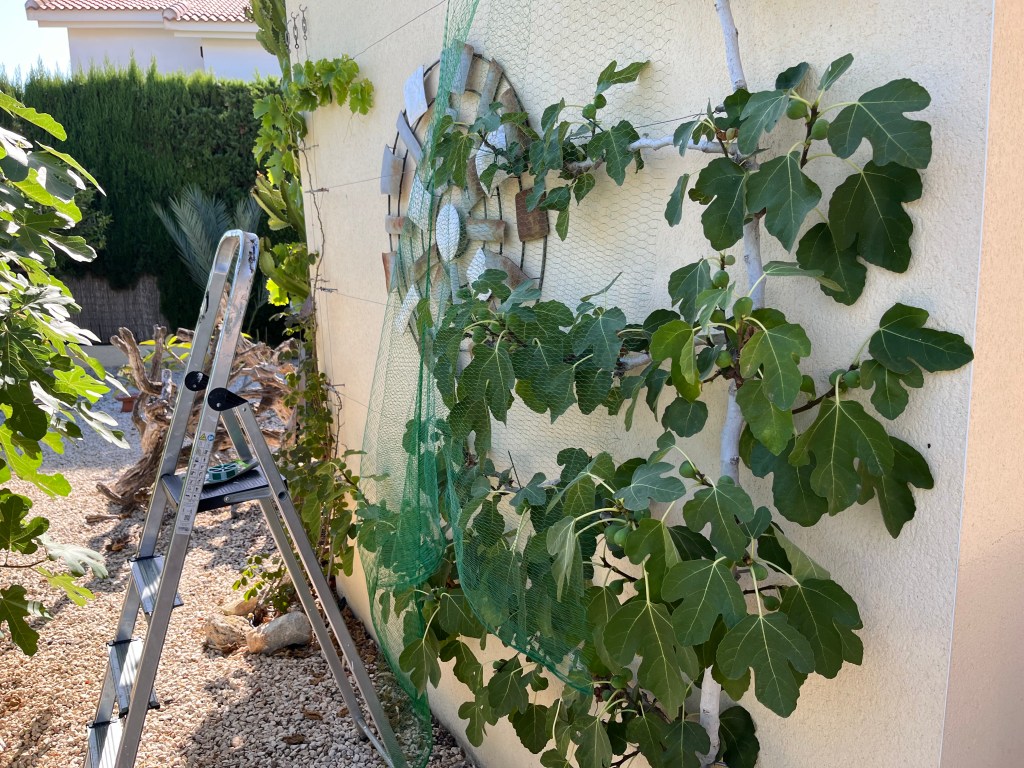
I netted the espalier fig myself and would have gone on to try and net the big fig myself, but Cruella saw me and insisted I was denying her girls a “learning experience”. Anyway the photos below show the espalier being netted.

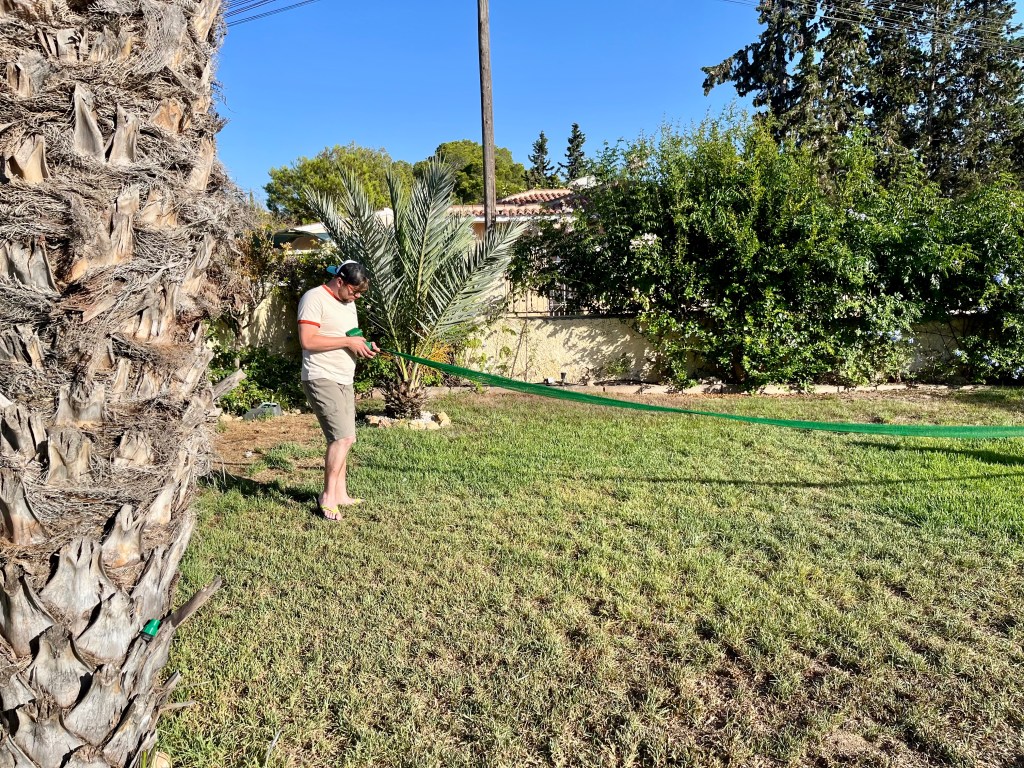
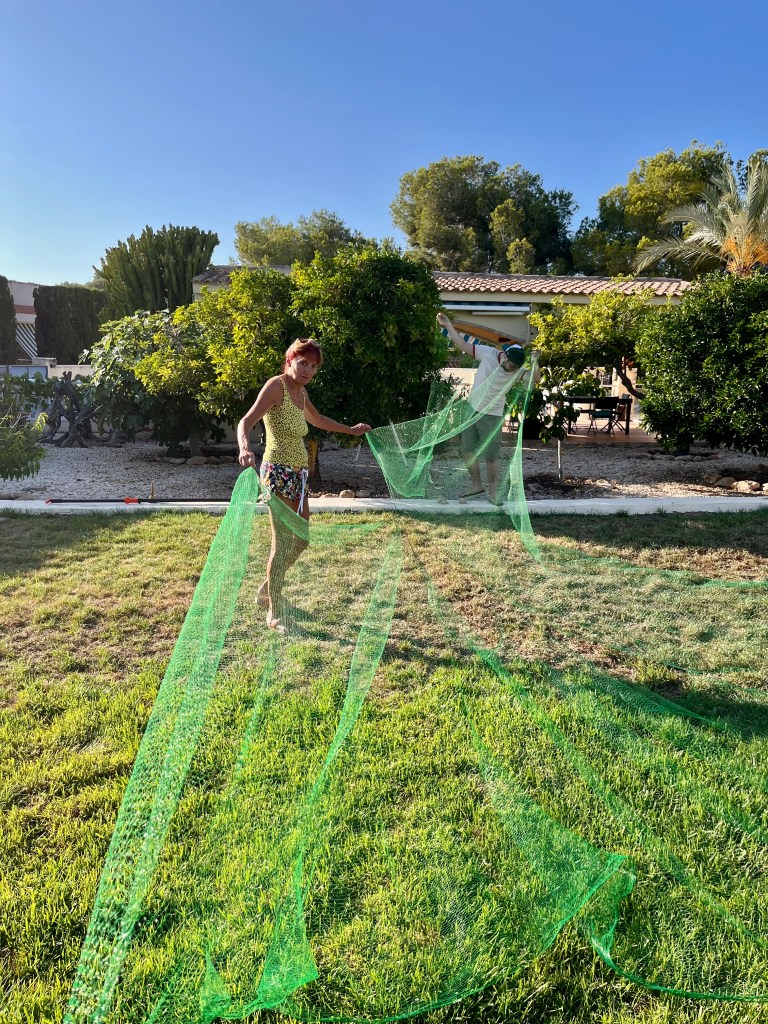
The first part of netting the big fig is to measure out and cut the amount of net needed. Once this is done you need to join together the two halves of the net as most nets are never wide enough to completely cover the tree. The photos below show Cruella and the idiot boy in action. I was in charge of strategy and Cruella decided it was too hot for the chickens and they should remain in the shade.

Cruella had already smothered them in sun screen

The photos below show the measuring out stage followed by the joining together stage.

The next stage is hauling your net over the top of the tree without it becoming ensnared into the branches at the top. I have developed a technique over the years that requires two people to manoeuvre the net down the side of the tree whilst I hoist the middle of the net up using an extendable pole. The photos below show this process in action.
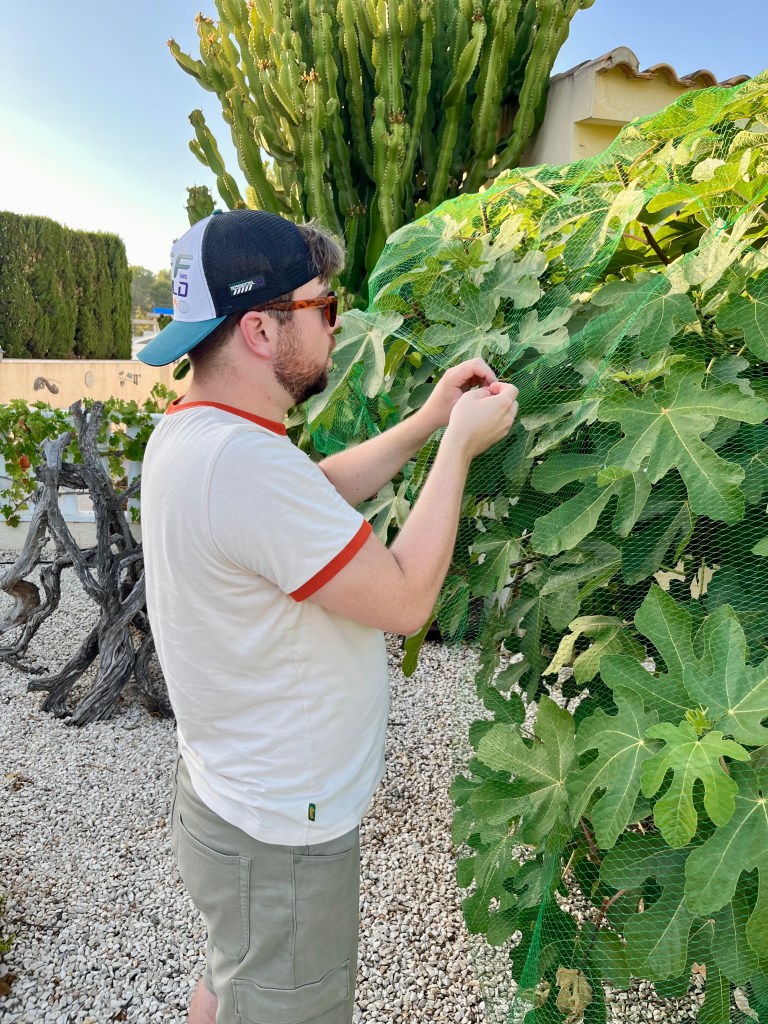
The final stage is tieing your net down around the tree to lower branches. The photos below shows the idiot son in action tying in, followed by a triumphant photo of me.

None of this would have been possible without my technical,expertise

When we had finally netted and tied down the tree, Cruella insisted that we should have a party to celebrate her girls first time netting; I pointed out that they hadn’t done anything but she accused me of nitpicking or possibly a “hate crime”. Anyway the party photos are below.


Styling Yuccas
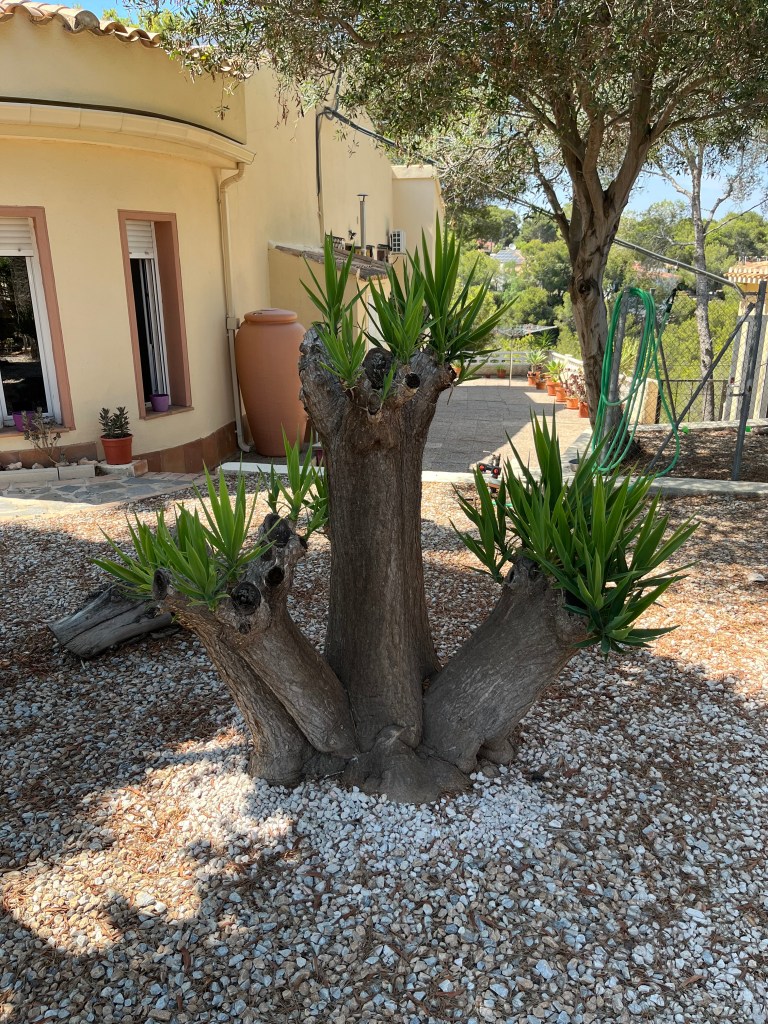
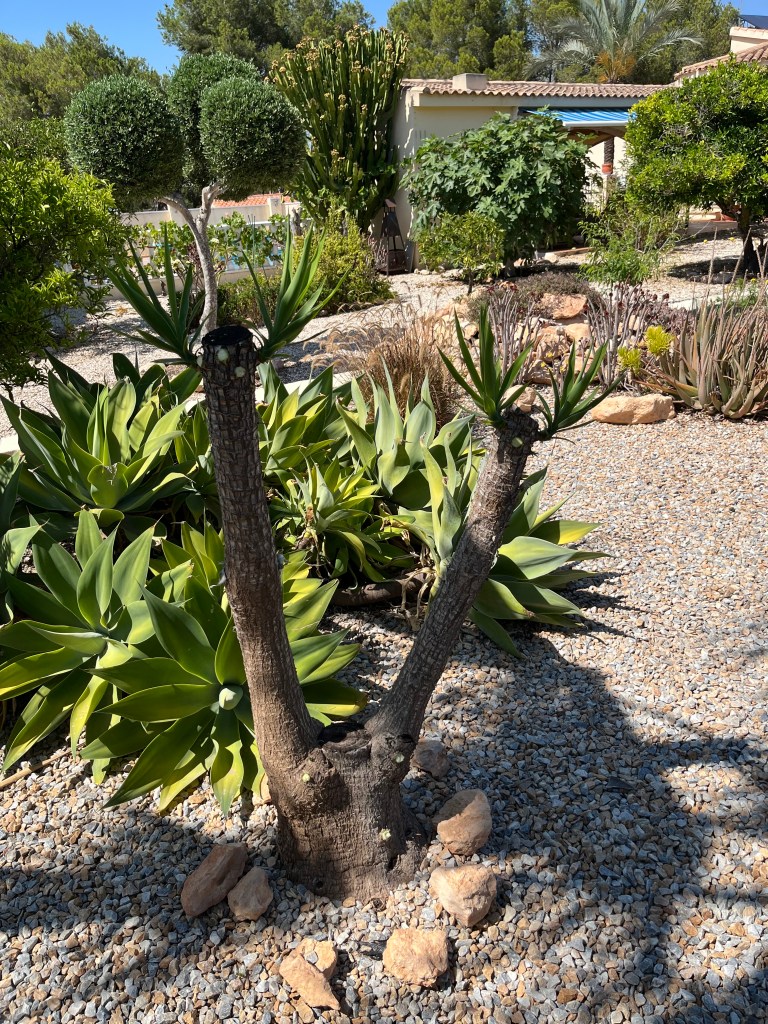
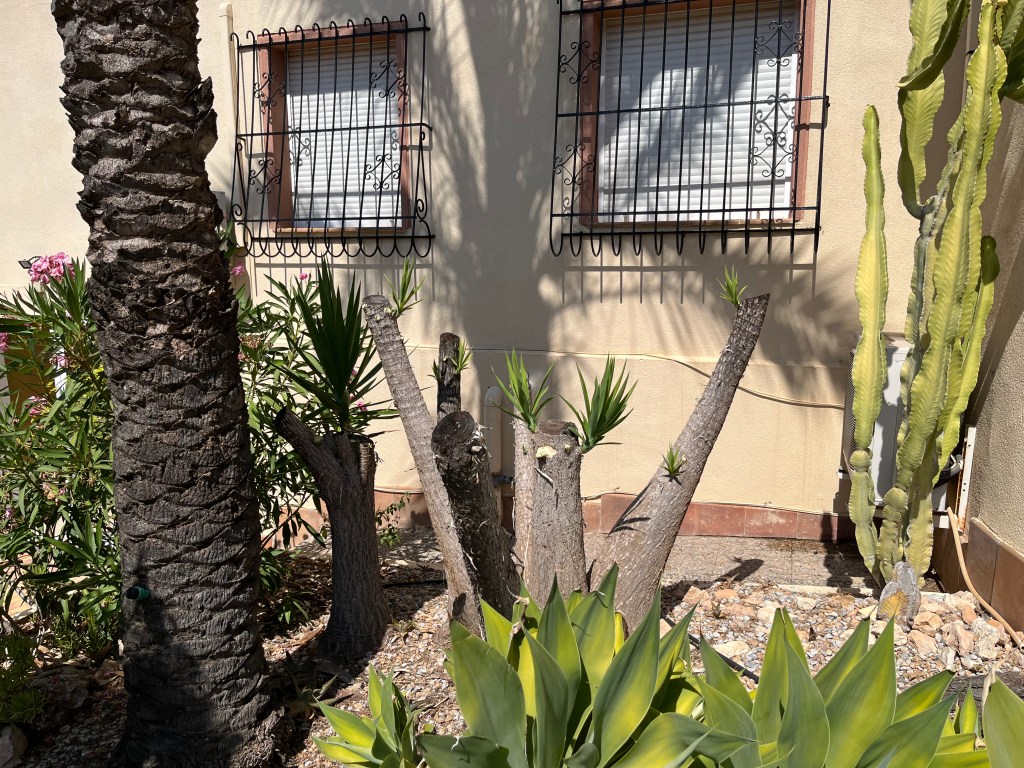
Those of you with Yuccas – and this means everyone in Spain – know that these can be useful, hardy, statuesque plants that can add height and interest to your garden. However once Yuccas get too tall or messy then they detract from your garden and end up looking like extras from those bad 1960’s westerns. It needn’t be this way. As Yuccas are canes they can be cut back and shaped to your desire and they will normally regrow from around your cut area.

Every 5 years or so I chop all my yuccas back to a manageable and interesting height. I then leave the cut plants for about 3 months or so till I start seeing regrowth. Usually there will be far more sprouting shoots than you require and some will be in the wrong place. All you need to do, is take your gardening knife, wander round the plant and choose the shoots that you wish to retain, those you don’t want just cut back cleanly where they join the trunk.

The photos below show where to prune and my various yuccas before and after their restyling. Click on each photo for a larger view.


Singing to orphans as I clear the potting bench

One of my saddest jobs as a gardeners is telling the plants that remain on the potting bench that unfortunately they won’t be going out in the garden. These are the orphans who have failed to be chosen, either because they are just not pretty enough or are just too immature. Now with the hot weather they won’t be able to be planted out.

I always start the talk the same way; I tell them they are “special”, and just because they haven’t been chosen doesn’t mean they can’t be happy. I talk about all their friends who are now growing in the garden and how they are getting on. Sometimes we cry, but that’s only to be expected, though I try not to break down in front of them.

I always end my talk the same way by telling them I have been proud to grow them, they haven’t let me down and God loves them for what they are. After my talk, and when everyone has dried their eyes, it’s on to the annual sing song.

This is my favourite part. I sit on the compost bin lid with my legs dangling over the edge and beat out the music to all their favourite songs. Mainly they like songs from the shows: Evita is one of their favourites as they like the drama. My absolute favourite is “Nelly the Elephant”, I bash this out really loudly and we all belt out the chorus. Cruella came round the corner and asked me why I was singing “Nelly the Elephant”. I explained it was our annual singing. She said “I didn’t hear any singing only you” I didn’t tell her you need a Soul to hear it.

Our finale is always the same song “The Sun will come out tomorrow” from the show Annie. It is always good to end on optimism. I kiss them all goodnight and slowly walk away. I postpone the compost bin till tomorrow!

The sun will come out tomorrow

Grapes in bags, Figs weeping acid and Sussex died in front of me

Let me start with the non gardening bit; Sussex is not related to that “Meghan”, but the chicken Sussex, who unfortunately has died in the heat. I was walking past her and she just keeled over and died. Cruella (my wife) has accused me of being involved and has contacted the police, she refers to me as “the perp”. Technically I am on the run so don’t tell anyone where I am. On with the gardening.

4th July 2025. Things I have been doing lately:

  • Dressing grapevines and bagging grapes
  • Getting my figs ready for netting
  • Succession planting with Petunias
  • Goodbye to the mini greenhouse till next year
  • The death of Sussex

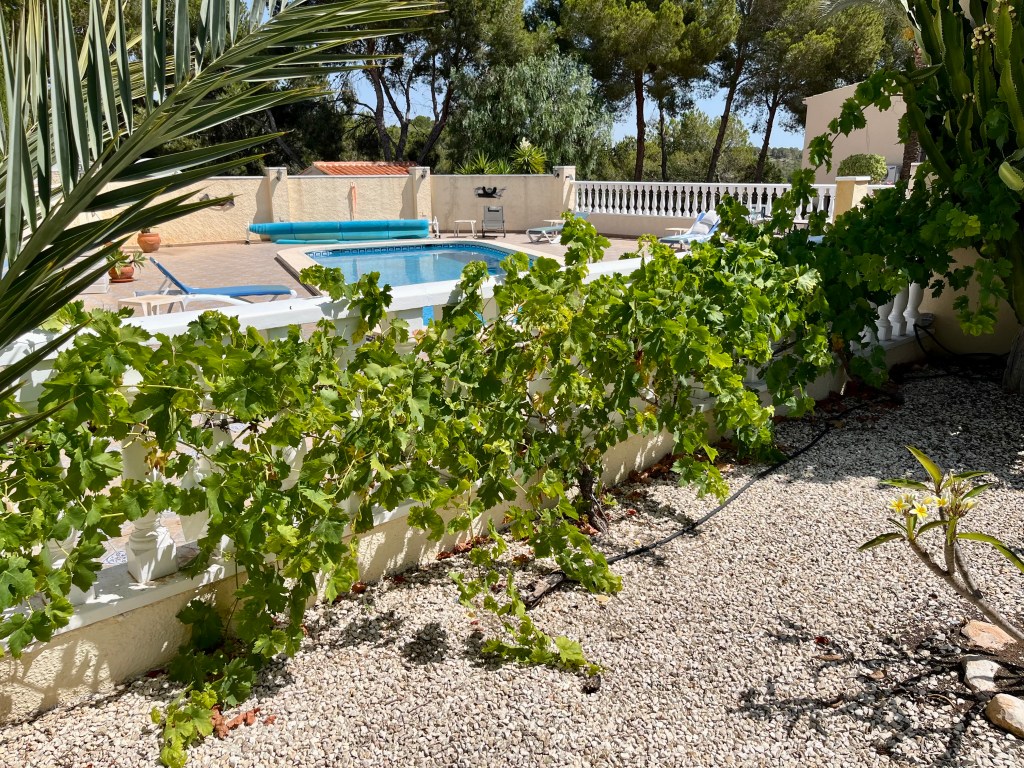
Dressing grapevines and bagging grapes. At this time of year your grapevines will be overflowing with leaf growth and hopefully some bunches of grapes. The photos below show my grapevines as leafy behemoths.

Now if you are growing them to be ornamental – like the one at the front of my house – then this is fine. However, if you want to maximise grapes, then you need to dress your grapevines. This process has been going on for centuries and is even mentioned in the Bible. In effect it means, pruning, tying in, removing suckers, thinning leaves and generally maximising your opportunities for grapes.

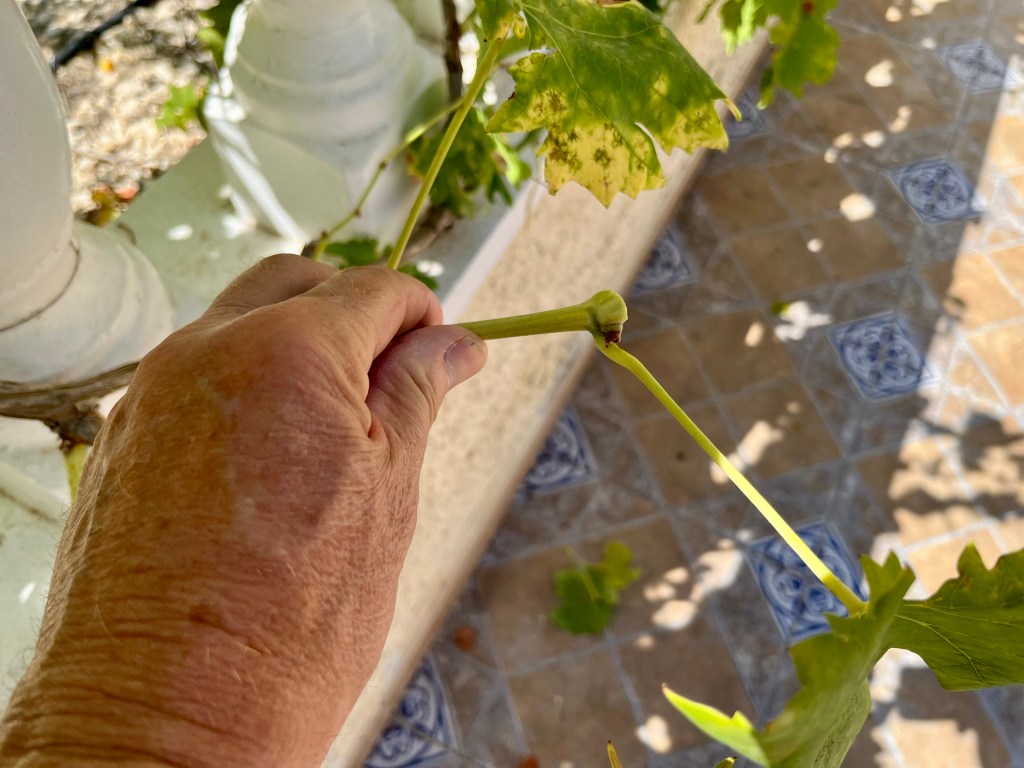
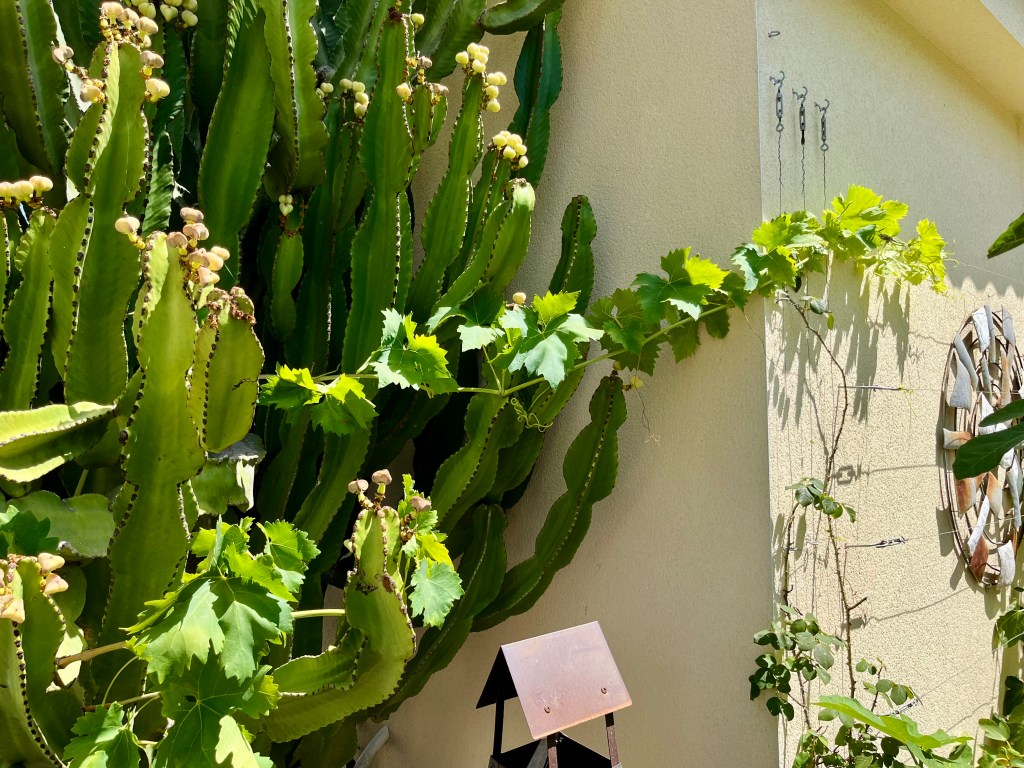
At this time of year your will need to cutback the unproductive growth on your grapevine as this will take energy away from grape production. Just cutback to a leaf node on the longest branches and make sure you let light into the grapes. The photos below show firstly, where to cutback and secondly you can see that I am training a vine to go through an existing Euphorbia and along a wire ( just for fun).
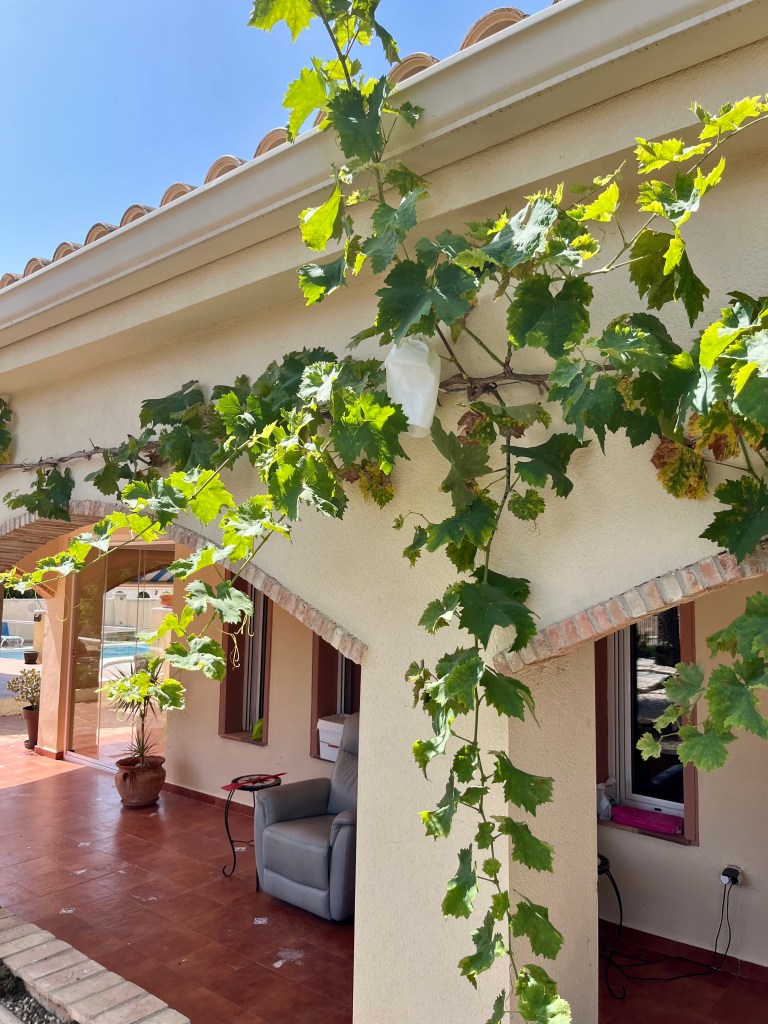
Finally, if you really want to get serious with your grapes, bag them into horticultural bags. This saves them from wasps, too much sun and other baddies. You can buy these bags in most garden centres in Spain and on Amazon. All you do is pop the grapes into the open end of the bag and then tie the bag at the top. By leaving the bottom open the grapes get air, and you get to check them occasionally. When they are ready just cut them off at the vine, turn the bag upside down and you have a ready made bag of grapes – enjoy!

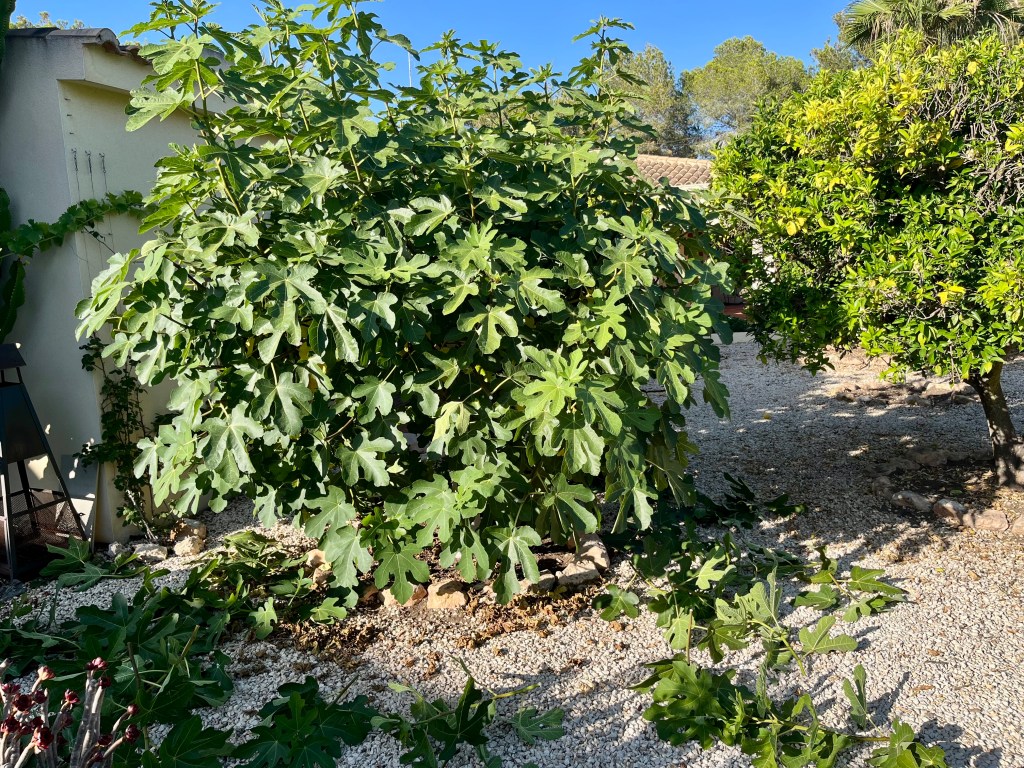
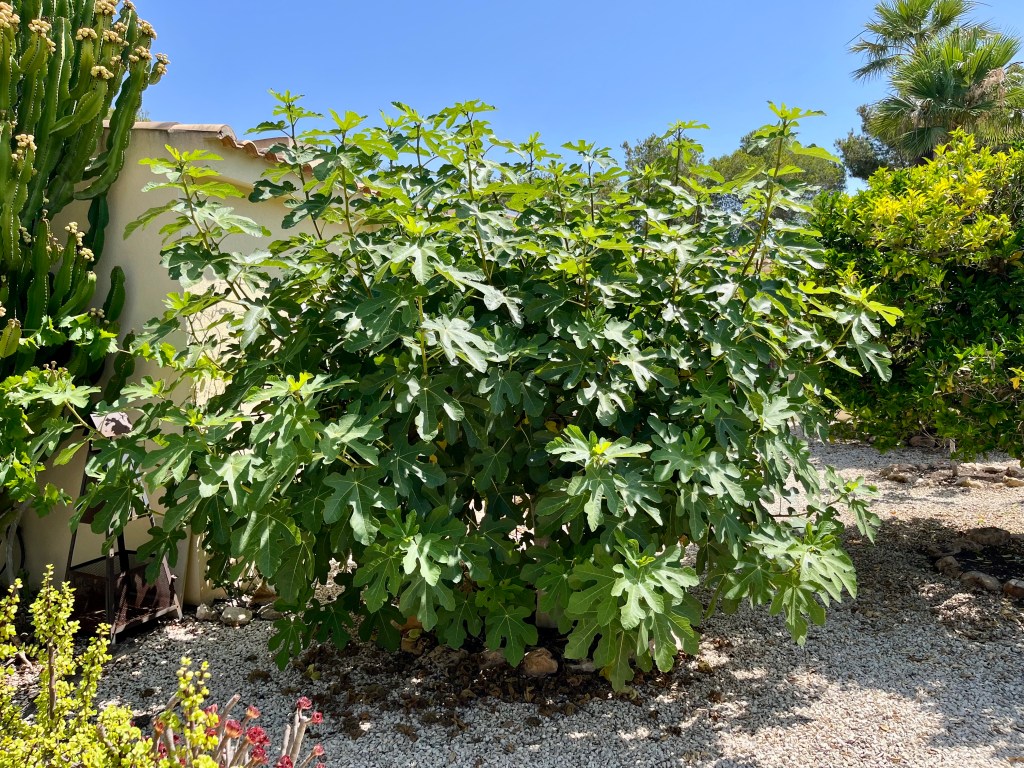
Getting my figs ready for netting. Regular readers of this blog will know that I prune my figs back very hard each January in pollarding style. They always come back with tremendous growth and hopefully give me two flushes of fruits. The only slight setback with this method is that the new growth can hinder the necessary netting of the figs to stop birds eating everything. The photo below shows my very leafy figs

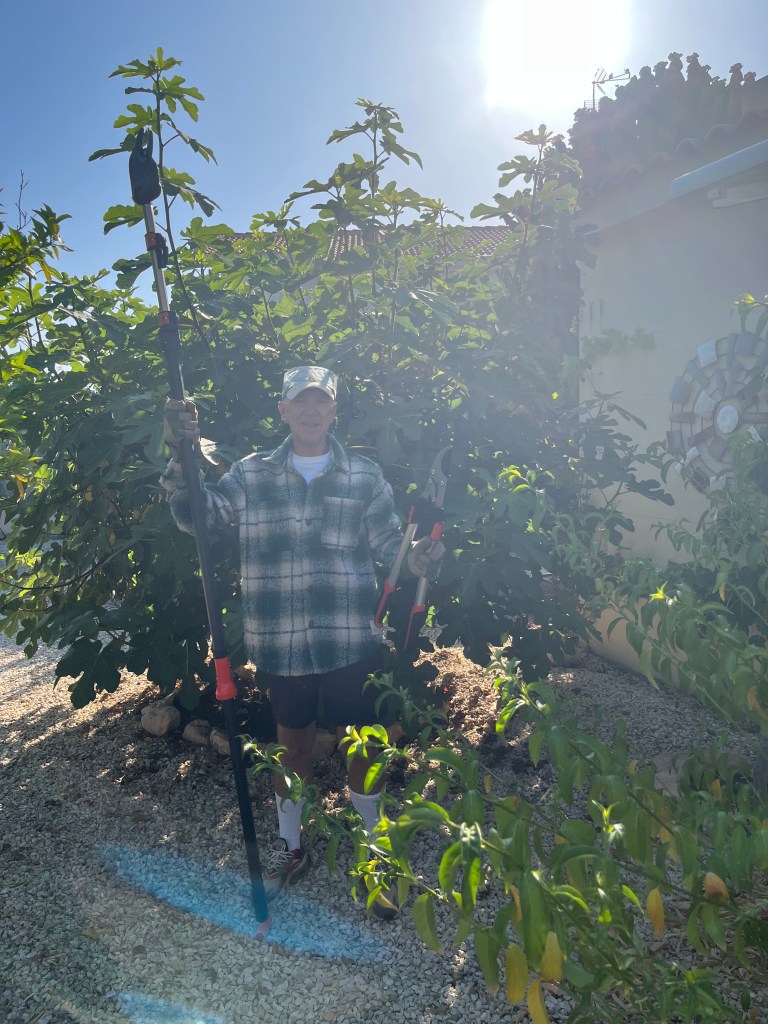
To successfully net the figs requires me to take off the longest branches. The danger in doing this in Summer is that when cut, figs weep a very caustic sap which will burn flesh quite severely. So before you cut, gear up with long sleeved jacket, proper shoes and socks a hat and preferably eye covering as well. The photos below show me dressed in my extreme winter gear ready to get cutting( I had to wear shorts it was so hot).

When you are cutting the fig, start from the bottom and work your way around the tree to the top. In this way you will not have caustic sap dripping on you as you work. The photos below show my working from the bottom and the caustic sap dripping from a cut branch.

Finally don’t try and clear anything up for at least 24 hours, this will ensure that the sap will be completely dried both on the cuttings and the tree branches.

Don’t you dare touch this for at least 24 hours or off to A&E you will go

Succession planting with Petunias. A good gardener will have a succession plan for their garden to ensure that they have seasonal flowers nearly all year. Now I know that you are all good gardeners and you wouldn’t consider just going out every weekend and buying more plants from garden centres!

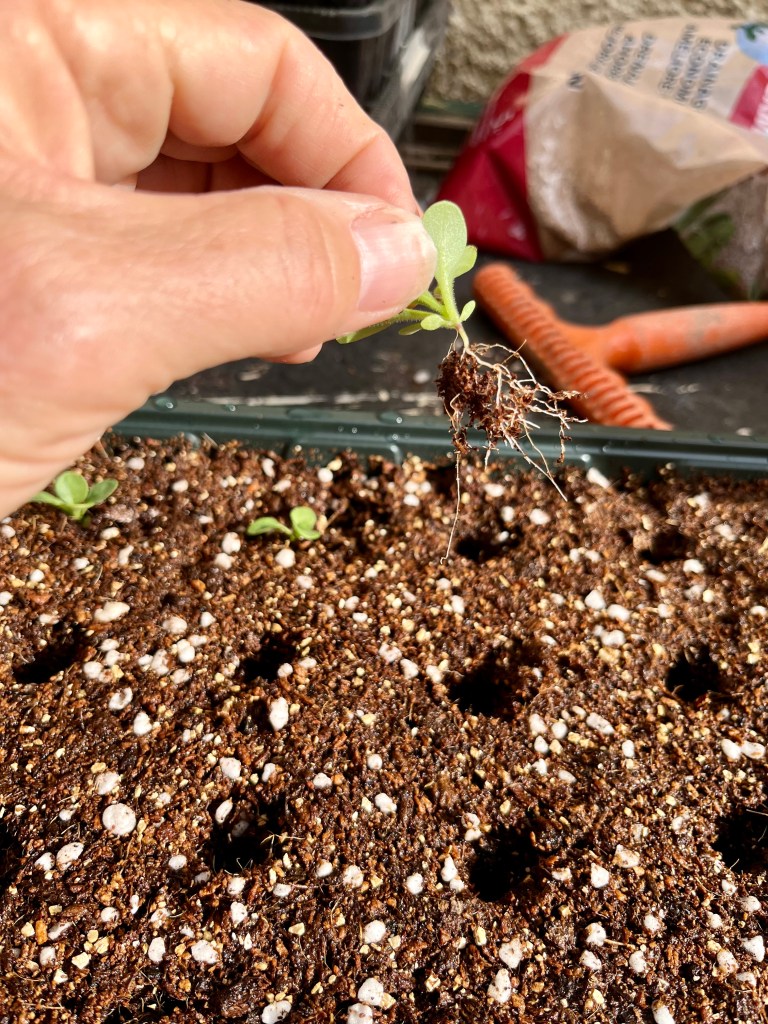
My final part of succession planting for this year is Petunias. These go into the spaces left by early bulbs and various Irises. A packet of Petunia seeds will provide you with hundreds of plants for just a few Euros. The photos below show the various stages of my little Petunias as they make their way to the planting beds.

With all succession planting the key is to reinvigorate and prepare the soil between each round of plantings. In this case it means lightly digging over the soil with a trowel, removing spent bulb stalks and them most importantly replenishing the soil with a layer of fresh compost from your compost bin. The photos below show this process.

Lovely free compost

Finally it is time to plant out the new seedlings. Remember you can only plant now with plants that you have grown from seed and fully acclimatised; plants bought from garden centres and planted now will usually die. The photos show some of the many seedlings I planted followed by a photo of the first flowers.

They will flower all the way through till October as long as you take off spent flowers by plucking not cutting

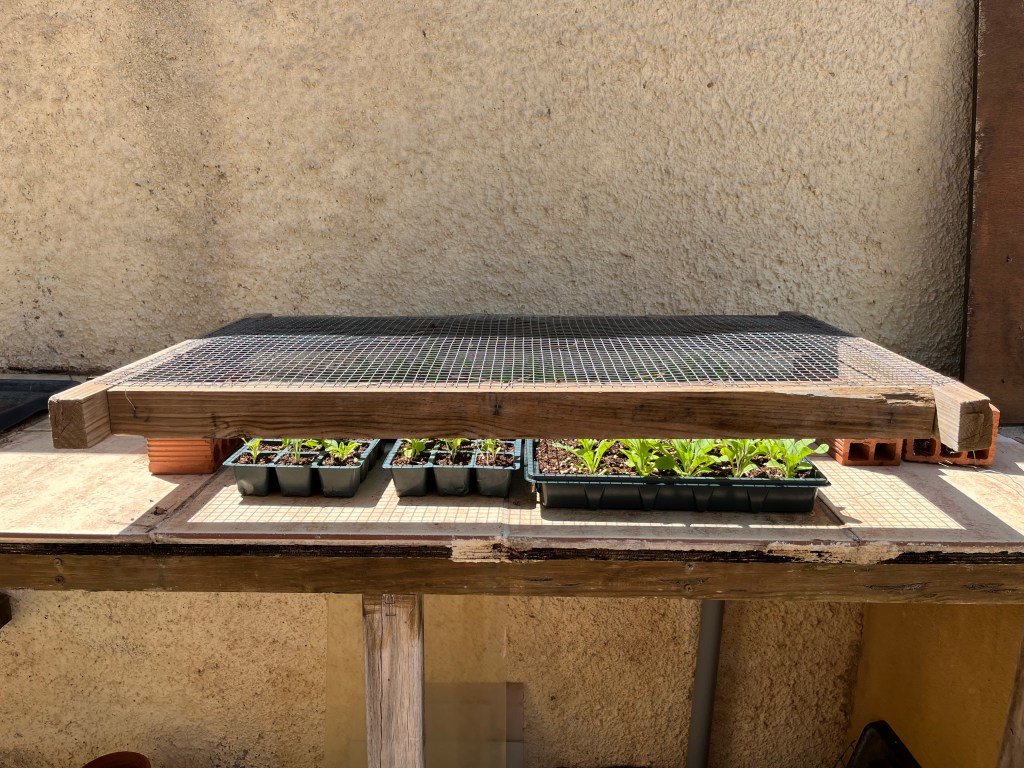
Goodbye to the mini greenhouse till next year. With just my cheap little mini greenhouse and packets of seeds I have managed to keep my garden in flower all year. It is now time to put the little greenhouse away together with all my seed trays. Remember you could easily do this starting from next January. You would not only save money, you would have the joy of nurturing your own plants from seeds to planting and see the wonders of God at close hand.

The death of Sussex. I was just walking up the drive to deadhead some Marigolds, when I heard a squawking from under an Orange tree. I looked round and Sussex (the chicken) just keeled over and died. When I informed Cruella (my wife) she screamed “what have you done”. Despite all my protestations she insisted on gathering what she termed forensic evidence; she watches too much CSI type programmes.

Anyway, she swabbed the inside of my mouth with a cotton bud, took scrapings from under my nails and plucked a load of hair from my head. She has informed me that this is going off to the Lab and that I shouldn’t leave the country. She tried to get me to report to her every evening and surrender my Passport, but I refused.

So technically I am on the run. I mainly hide out in the shed and at night sleep in the compost bins. I only sneak out in the late evening to do a bit of deadheading or sometimes prune a few things back. She knows I am still here as she has placed police tape across all the gates to stop me getting away.

The photo below shows Sussex involved in a delegation lobbying me on some chicken rights issue.

Leaks, borders, deserts and birthdays

I have had to leave the garden. Cruella (my wife) demanded we go back to our English house to celebrate the 30th birthday of our idiot son. She insisted we have house sitters with previous experience of chickens as she was worried her girls would pine; no mention of needing gardening experience. Every night she insisted on FaceTime calls with the chickens; I wasn’t involved as they all spoke chickenese. I had to comfort myself by looking on Google maps at the garden.

Anyway on with the gardening; or what’s left of it.

30th July 2024. Things I have been doing lately.

  • Dealing with water leaks everywhere.
  • Bringing the borders back under control
  • Dealing with the desertification of the lawn
  • Celebrating the idiots birthday

Dealing with water leaks everywhere. I spent many sleepless nights worrying about the garden whilst I was away. Cruella complained that my nightly mumbling kept her awake, but to be honest I don’t know how she could even hear me as the area of ceiling she normally hangs from is right over the other side of the bedroom.

Anyway, you can imagine the state of the garden when I got back. But the worst things was the many leaks that had sprung up all over my various irrigation systems. Our water bills are normally high, but the one that met us on our return was €700? Apart from a mains leak which was creating a new swimming pool for me, the rest were leaks from split irrigation pipes.

I normally keep an eye on all my irrigation pipes, but it just shows you that even a couple of weeks away can make a big difference. Irrigation pipes in Spain become very brittle in the sun and as a consequence are liable to splits. So get outside now and start your checks.

  • turn all your irrigation systems off
  • turn them on one at a time
  • as you turn each system on walk the length of the piping looking for leaks or suspicious area of lush growth
  • once you detect a leak cut out a decent length of the piping as it will usually be weak in other areas close by
  • connect the piping with appropriate connectors ( see below)
  • then check that your repair is not leaking
I possess more piping and irrigation connectors than most hardware stores

The photo below shows my mobile leak repair tools as I deal with yet another leak.

Just to give you an idea of the scale of the problem I have faced, it has taken two days to track down and repair most of the leaks. The photos below show some of the areas where I am leaking money. Click on each photo for a larger view.

Bringing the borders back under control. By now all of your borders should be in full flower, and ideally you should be deadheading and staking up each day. The photos below show the state of my borders upon my return. Click on each photo for a larger view.

To the superficial eye, these may look fine, (not that I am accusing you of having superficial eyes). But to me there are heads to be deadheaded and stems to be staked. I tend to stake things first and then go round and deadhead. In this way I can see any dead flowers that may be dropping down.

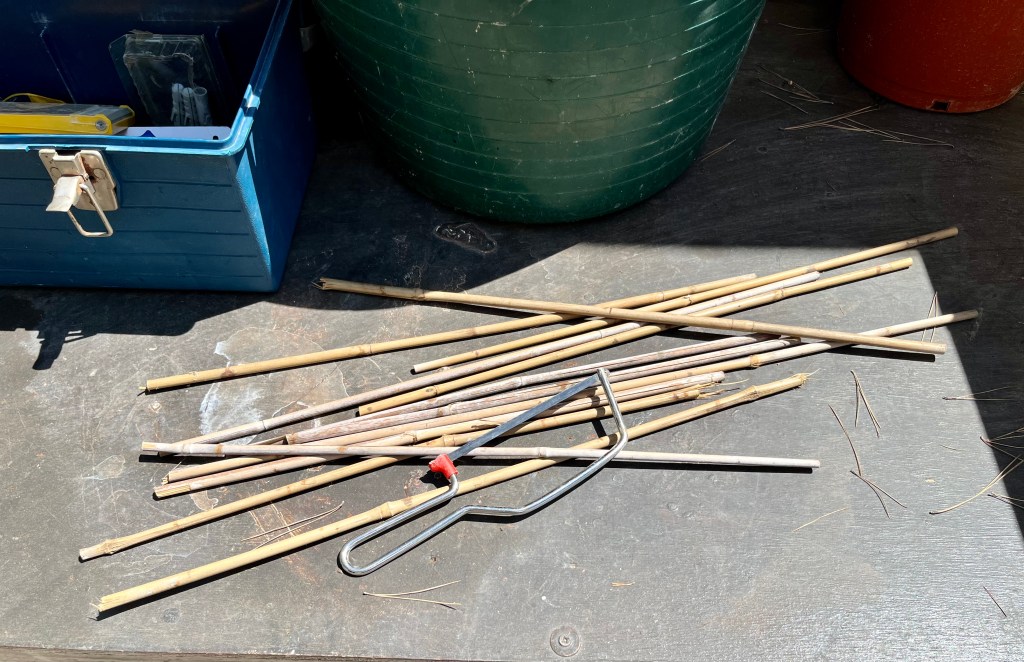
At this time of year the gardeners best friend are canes and twine. The photos below show me getting ready to go. Try not to use very long canes as this is not cost effective, instead cut long canes into four. Not only does this save you money, it will also stop you having expensive eye surgery when you bend down and poke your eye out. Click on each photo for a larger view.

Once you are set to go, wander round looking for drooping and fallen stems. Most plants will stop flowering if there is a kink or break in their stem. You need to get them upright as soon as possible. I know it may sound stupid, but there is a correct way to tie up a plant. Ideally you should form a figure of eight around the cane and the plant stem. You achieve this by first tying your twine around the stake and then forming another loop around the plant stem. The idea is to stop the stem chafing against the stake, thereby causing a wound that may let pathogens in. The photo below shows how well I attended to knot tying in the Scouts.

For some reason Cruella (my wife) is very good at tying knots. I asked her about this one day and she told me it is all about tying down small animals for sacrifice!

Once you have tied everything up, then it is time to go around deadheading. Remember don’t just cut off the flower head, go back to the next leaf node and cut just above there. In this was you will not leave dead stem for infection to enter. Once you have finished deadheading the obvious, take a good look into your borders to see whether anything else interesting is popping up. I cut back my mini sunflowers and discovered some lovely new little blooms at the bottom of their stems, see the photos below. Click on each photo for a larger view.

The last thing I do when I am deadheading is to go round with single handed shears and take off all seed heads from Osteospermums and the Honeysuckle.

Dealing with the desertification of the lawn. My lawn as I jokingly call it has suffered greatly this dry summer. But to be honest my biggest problem is chickens. In the Spring I could have reseeded areas, and I could even do it this autumn. However, if I put any seed down the chickens would scoff it immediately. I am rethinking the whole lawn thing, but just to give you an idea of the problem of desertification, see the photos below. Any idea or suggestions are welcome. Click on each photo for a larger view.

Celebrating the idiots birthday. Cruella (my wife) insisted that I put a celebratory birthday photo of the idiot son into my blog. I protested that it was a gardening blog and as such nobody would be interested. She threatened me that if I didn’t put a photo in the blog she would set fire to my shed.

Anyway, here it is. Cruella is on the left, you can just see a hint of her tail though she has tried to tuck it away, normally you could see her horns but she is cleverly burying them in the beard of the idiot boy. I am on the right, the idiot is in the middle.

I judge a flower beauty parade and a gipsy helps me net the big fig

By now your garden should be in full bloom and this is probably as good as it gets in Spain. Although July has been hot we know that the heat of August will just knock the garden over the edge and begin the long slow roll into autumn. I know that sounds a bit depressing but it’s not. We gardeners love all seasons and a key part of gardening is constantly thinking and planning ahead for the next season and next year. Having said that don’t forget to enjoy the moment; stroll round your garden every day, talk to your plants, compliment them on how well they are looking and sympathise with the ones that are just losing their bloom.

Anyway, enough of this sentimentality, I think I am becoming the Emily Dickinson of gardening. There are lots of things to be busy with not least picking your best flowers for seed, trimming some key plants back and surprisingly netting the big fig. On with the show.

26th July 2023. Things I have been doing lately:

Judging the best flowers for next years seed. This is the time of year when you should be beginning to think of next years seed. I know a lot of you don’t garden from seed and instead prefer to go out and buy plants, which is fine, but growing from seed is so much more fulfilling as a gardener, and it’s free. Now that your garden is full of blooms, wander round and pick the loveliest with the best shape and the most vibrant colour as potential seed heads.

You now need to mark these blooms or you are in danger of just deadheading them when they die back. I wrap a piece of wide masking tape around my selected blooms which hopefully stops me deadheading them – though mistakes do happen. Later in the summer when the plants has fulfilled all of its potential I will then harvest these seed-heads for my next years crop. The first photo below shows my trusty masking tape ready to fulfil its role. The other photos show some of my chosen blooms in situ. Click on each photo for a larger view.

Propping up plants. Most annuals will need some propping up during their short but floriferous life. If you just let them flop over, then stems get broken, flowers get squashed and it all looks a bit messy. I tend to prop up plants in two stages. When they first begin to “lean”, then I will use canes to hold back individual plants. If you have closely packed your flower beds then usually one propped up plant will hold a number of others in place. Later, as they progressively need more propping I will tie them in bunches around a line of canes. But let’s not get ahead of our selves, at the moment just use canes to prop up plants. The photos below show my propping activity. Click on each photo for a larger view.

Making Dame de Noche flower again. Many of you will have Dame de Noche (night flowering Jasmine) as part of your summer garden. Although this plant is not what you would term good looking, its value is in its exotic night scent which would put to shame the best perfumeries of Paris. Located next to your summer dining out areas, the Dame de Noche will astound your friends with its heady, exotic scent that comes in pulsing waves throughout the evening. The reason for this exotic night scent is that it is pollinated by a tiny little moth.

However, your Dame de Noche will have finished flowering, so if you want that scent back for the rest of the Summer then you need to act now. To get the plant to flower again you need to cut it back by one third. The important thing is the one third bit. Cut back by one third, the plant (which is growing strongly) will know it has lost its seeds, but think it has time to flower and make more seeds this season. If you cut back by more than one third then the plant will know it doesn’t have enough time to make more seeds this season and instead will draw everything back to its roots.

Once cut back, the plant will come into flower again and quite profusely. This will give you that lovely night scent all the way from the end of August right through till October which is exactly when you want it. The photos below show my Dame de Noche before and after its little trim. Click on each photo for a larger view.

Netting the big fig. Regular readers of this blog will know that the last fruit plant I net each summer is my big fig (to be honest it’s not that big) but it needs a team of at least three or four to net it. Normally this has been an international event with previous years including teams from: Scotland, Northern Ireland, England, France and last years winners from “Wigan”. Anyway I had hoped that my idiot son and Cruella (my wife) would assist me but both refused claiming that as they were chicken royalty it was beneath them. I did try and net it myself, but I kept getting tangled up and falling over wrapped in net; much to the hilarity of the chickens.

Just at my moment of greatest despair my luck changed with a ring at my doorbell and there was my saviour, an itinerant Gypsy lady, Cathy Rose Lee who had camped locally and was now looking for casual work whilst her husband Ronnie was setting up his boxing booth. Cathy agreed to help me net the fig but first she insisted on telling my fortune in tea leaves. The photo below shows Cathy mid fortune telling; it turns out she predicted my drive needs tarmacing.

Once Cathy had read my fortune and I had crossed her palm with silver, it was straight to the fig netting. By this time Cruella had agreed to lend a hand as Cathy had convinced her that good fortune would follow for her and the chickens. If you have never netted a tree then there are five stages:

  • Unrolling and halving the net
  • Stretching the net
  • Joining the two halves of the net
  • Raising the net
  • Tying down

We started very well with Gipsy Cathy and Cruella working in perfect harmony as a team. The first photo shows them both enjoying the net unrolling stage. The second photo shows that they broke into a little dance as they moved to the halving process. Click on each photo for a larger view.

By the time we got to the next stage of stretching the net they were both singing harmoniously an old net stretching work song; Cathy was singing in Romani whilst Cruella harmonised in Chickenese – it was strangely haunting whilst at the same time scary. Click on each photo for a larger view.

Joining the two halves of the net is always a tricky exercise even with an experienced team, so you can imagine I was a bit apprehensive about the next stage and envisaged lots of torn areas of net. However, surprisingly they did extremely well and injected lots of fun into the process and even indulged in some “twerking” dance moves as the first photo below shows. From the final photo you can see the air of satisfaction they both feel at a net well joined. Click on each photo for a larger view.

The next stage is raising the net and this normally requires a team of five; one in each corner of the net with me in the middle with the net raising stick. The importance of this stage cannot be over stated, one slip, and you have a tangled torn net stuck high up the tree. From the photos below you can see we started off rather badly and there was lots of shouting and swearing as both Cruella and Gipsy Cathy kept getting caught up in the net. But finally we raised the net with a mighty cheer. Click on each photo for a larger view.

Gipsy Cathy was so pleased with this stage that she insisted on having a series of triumphal photos that she promised to display beside her best Capodimonte collection in her caravan. Click on each photo for a larger view.

I am pleased to say that the tying down stage went off without any problems, which was a relief after all the drama of the raising the net. This stage merely involves pulling the net down tightly over the whole tree and then tying it down with string every yard or so to the lower branches. Although the whole tree isn’t covered right to the ground, it is usually enough to put off the birds.

From the photos below you can see that the mood is much more relaxed with Cruella prefering an upright stance for tying down whilst Gipsy Cathy preferred to sit on the ground. When I asked if she was ok down there she said “don’t mind me luv, I gave birth to all my kids under a tree at hop picking, so I’m used to it”. The final photo shows the triumph of a job well done. Click on each photo for a larger view.

Deadhead, net your fruit, and the return of Chicken Boy

It is the height of summer and we are all really busy in our gardens, the work is endless, the heat relentless, the days long; as if it couldn’t get any worse, the idiot son has returned as “Chicken Boy”. I am too weary to explain now, let’s get on with the gardening and I will explain later.

18th July 2023. Things I have been doing lately:

Deadheading. The glory of summer is to see your borders and flower beds packed with flowering waving annuals, especially if you have grown them all from seed. I know I have said it before, but if you haven’t grown from seed, then try it, it will give you a whole new perspective on gardening. However, if you want to maintain that lovely packed flowering look all summer then you need to go round your garden and deadhead on a daily basis. The photo below shows one of my borders packed with flowers waiting for their daily prune.

All flowering plants need to be deadheaded otherwise they will produce one or two flowers and go straight into seed production. By deadheading you are removing the viable seed which forces the plant to produce more flowers and hence more seed. To deadhead flowers, don’t just chop off the flower head, if you do you will leave a useless piece of stem that will invite disease. Instead grasp the flowerhead in your hand and then with your other hand run your secateurs down the stem until you meet a lower group of leaves, and cut here. This will encourage the plant to throw another side shoot and flower from this point. Another deadheading technique you can use with multi flowering plants such as Osteospermums is to use hand held side shears to crop off the old flowers. Both techniques are shown in the photos below. For a larger view click on each photo.

Finally, don’t forget to prop up and stake plants that are beginning to flop. I will be covering this in future posts, but below you can see my mini sunflower already propped up with a broom handle.

I know the lawn looks terrible, please concentrate on the Sunflower.

Thinning fruit crops. If you have a heavy crop of fruit on a tree then you need to make a decision about thinning the crop. Thinning is simply removing a number of fruits to ensure that the tree does not begin to drop the fruit itself because it is in distress at a heavy crop. Another good reason for thinning is to ensure better size fruit. I always think it is better to have a slightly smaller crop with larger fruits, than a large crop with smaller fruits. I tend only to thin my persimmons and probably peach. I do not bother with figs as I tend to crop them on a daily basis. The first photo below shows me reluctantly pruning out healthy persimmons, whilst the second shows them on their way to the compost heap. For a larger view click on each photo.

Netting fruit. If you have soft fruit trees, and you want to retain the fruit as opposed to fattening the birds, then now is the time to net. I have a range of trees and plants that require netting. The photo below shows: fig, persimmons, and peach all prime bird fatteners. For a larger view click on each photo.

People often ask me when is the correct time to net their fruit? and the answer is simple, before it ripens. If you leave your fruit till it is ripe then the birds will undoubtedly beat you to it. Birds know the instant that fruit is ripe and they can easily strip a tree of all soft fruit in a day. If you are going to net your fruit then make sure you use a small mesh net as this is more bird friendly. Remember the key is to keep them out not trap them in your net. If you use a wide mesh net then birds will try and get through, and every morning you will be met by the sight of fat angry birds hanging upside down from your nets. The photo below shows the correct mesh size. Followed by a photo of a fig attacked by an enterprising bird even after I had netted. For a larger view click on each photo.

Keeping compost wet. It will soon be time for my annual “big compost special” post. And I know that you are all waiting with bated breath. But, in the meantime, it is important that you keep your compost wet in this very hot weather, otherwise you will find it full of ants and they can disrupt the composting process.. Every week, check your compost for ants and put your hand in to feel how dry it is. The idea is to use a watering can or hosepipe to keep the compost constantly damp, but not soaked. If you have two compost bins, one live and one resting then you still need to keep them both moist or the ants will just move to the other one. The action packed photos below show me watering both compost bins. For a larger view click on each photo.

Repotting plants. If you have plants that have become too big for their pot, or, if you have cuttings that have grown strongly and need a bigger pot, then now is the time to repot. There are two basic windows when you can repot plants. One is in January when everything is dormant and you can’t do much damage. The other is now when everything is growing strongly and the plant should take well to its new pot. Whilst both repotting windows are fine, I prefer now if possible as there is always the danger of overwatering in January when the plant has no growth and it’s roots will just sit and rot in the wet.

I have a little avocado tree that I have grown from a stone that now needs to be potted on to give it a bit more room. Eventually it will end up in the soil, but not just yet. If you decide it is time to pot on then ideally you want to disturb the plants roots as little as possible. This means preparing the right compost in advance and having the larger pot ready. When you are ready half fill the new pot with your compost. Then place your plant in its old pot into the centre of the new pot. Carefully fill around the old pot and tamp down the new compost so that it is firm but not compacted. Then holding the old pot twist it around and around to create a pot shaped space in the new compost. Once you have achieved this, carefully tap out the plant from its old pot and place it into the ready made hole in the new compost. If possible slightly tease out the roots before replanting. When finished water well and place in the shade for a few days. The first photo shows my little avocado about to occupy its new space. The second shows it resting in its new home in the shade. For a larger view click on each photo.

The return of Chicken Boy. Cruella (my wife) was beside herself with excitement as our idiot son was coming to visit for a week. Her normal excitement had been heightened by the fact that she had declared him her successor where chickens are concerned and expects him to inherit all her chickens. To this end she has declared him “Prince of all Chickens”, she gets upset when I call him Chicken Boy.

Anyway, they have both spent most of the week in the chicken coop conversing with the chickens in chickenese, as she and the chickens inaugurated him into the mysteries of chickendom. There was lots of chanting, squawking, smoke and some drumbeats (I didn’t even know chickens could play the drums). The end result was he emerged with a whole new set of pronouns, some chicken poo smeared on his face and a feather sticking out of his hair. From then on the whole holiday was spent with him showing off his chicken wrangling skills. The photos below show him in action. For a larger view click on each photo.

All good things come to an end and Chicken Boy had to go back to London to ruin the financial system of the City. Cruella meanwhile has sunk into the usual pit of despair that accompanies his leaving. For three days she has been sleeping in his bed and refusing to eat; declaring loudly that she will probably never eat again – I keep finding Mars bar wrappers under the bed! The photo below shows Cruella in the pit of despair. If you look carefully, those lumps in the bed is where she has sneaked chickens in.

In addition to the chickens hiding in the bed, all the rest are wearing black armbands and the chicken coop flag is at half mast.

Mulch, mulch, and mulch again. Meanwhile I disband the chicken football team

I want to get straight into the gardening in this post as I feel I have been wasting my time on too many chicken based activities. So it’s the height of summer the garden is blooming, let’s get busy.

3rd July 2023. Things I have been doing lately:

Mulching my plants. Mulching is such a wonderful word with tremendous onomatopoeic qualities – everything you need to know is in the name. But at the height of summer mulching comes into its own. At its simplest mulching is covering the soil to retain moisture. Plants are constantly losing moisture through a process called transpiration, whereby they lose moisture through their leaves and stem. This can be partially alleviated by using different types of mulch including: membrane, bark, stone and of course compost. The sun is baking the soil and plants find it difficult to get and retain moisture. By mulching around the plants you stop the sun reaching the soil and stop the plant roots from being baked when they come up looking for water.

If you buy new plants from the garden centre and plant them out now, in most cases you are wasting your time and money. The sun will bake the plants before they can establish themselves. Your only hope is to mulch as you plant. By far and away the best mulch is compost from your own bin, failing this buy some cheap bags of compost from a China shop, these will be ok as you are not using them as a planting medium but as ground cover.

The benefit of having a compost bin is that you will always have compost for planting, and in this case mulching. The photos below show the black gold that comes from my compost bins. Click on each photo for a larger view.

Mulching is very simple:

  • Thoroughly water the soil under and around your plants.
  • Apply the mulch to about two inches thick around the stems and immediate vecinity of your plant.
  • Where you have closely planted borders just spread the mulch lightly, but generously over the top of the plants.
  • Finish by once more watering the plants thoroughly and rinsing the mulch through the planted borders.

The first photo below shows me beginning to mulch directly around individual plants. The second shows the process of spreading mulch over closely planted beds before watering in. Finally some of this years sunflowers mulched up. Click on each photo for a larger view.

Success with Sago Palm pups. Regular readers of this blog will remember that some months ago I showed you how to remove and plant up Sago Palm pups. Removing and potting up pups is important for two reasons. Firstly, by removing the pups you restore the symmetry of your plant so that it retains its single stem clarity. Secondly, you get free plants from what is a very expensive plant to buy. Remember this process takes quite a long time – anything up to 6 months. I have great hopes that all my pups will eventually come to life. The photo below shows my pups bursting into life.

I have marked the little ones up so that you can see growth, the big ones are obvious.

Extracting Stephanotis seeds. Together with my Sago plant pup triumph, I am also very proud of being able to extract Stephanotis seeds from a pod. I am telling you these plant triumphs to inspire you. If you just buy plants from a garden centre you are “a shopper”, but if you grow them yourself, you are “a gardener” and the creative joy of gardening will always beat the sugar rush you get from buying instant plants – and it’s all free. Anyway enough of the preaching, let’s talk about the Stephanotis seeds.

I was visiting a neighbours garden in our village in Spain, when they showed me a large pod that had sprung from their Stephanotis. They asked me if I would like to have it, to which I of course said yes. I assumed that the pod was immature, but could eventually yield seeds. To ripen it I placed it on my potting bench in full sun for part of the day and shade when too hot. I turned the pod every other day to ensure it got even heat coverage. The pod began to shrink and dry in the sun, and at one point I thought it was just rotting. But instead nature was working its wonders. The heat and drying process was maturing the seeds in the pod and the pod would eventually start to split. The photos below show the pod starting to split, and the seeds beginning to form. Click on each photo for a larger view.

Once I had deemed the seeds were mature, I placed the whole pod into a plastic bag and took them into my kitchen (out of the wind) and began to extract the seeds. It was lovely as each seed came with its own little gossamer parachute to carry it on the wind. After, extracting each of the seeds I placed them into an envelope ready to plant next year. Unfortunately, I had left the kitchen window open and all the fluffy little parachutes blew all over the house. When Cruella (my wife) complained at the mess I said it must be Tango the lonely blind Labrador who is moulting. The photos below show the seed extracting process and my fall guy, Tango. Click on each photo for a larger view.

At least he got brushed.

Harvesting Chillis. If you have grown Chillis then you need to harvest them almost on a daily basis as the pods turn fully bright red. By harvesting them in this way you convince the plant it needs to keep flowering and thereby encourage more chilli pods. To harvest chillis you just snip off each pod but leave a small bit of stem to stop any rot starting. Freshly harvested chillis can be placed in a plastic bag in the freezer and will last all year. Whenever, you need a fresh chilli just take one out of your plastic bag and chop it up frozen and add it to your cooking. The photos below show the daily chilli harvest. Click on each photo for a larger view.

I disband the chicken football team. To be honestI didn’t want to disband the chicken football team, but they just wouldn’t do the training. I blame it on Cruella (my wife), she has pampered them, overfed them and encouraged a bad attitude. The rot set in when they refused to do the morning training runs. Each morning I would get them out of their coop early ready for training. We would start with some stretching exercises, which to be honest they only did half heartedly. They would languidly stretch out alternate wings whilst yawning, but the most embarrassing part was when they tried to pull one leg up behind them to stretch; they are all so fat they just kept falling over.

After the stretching we would go for a training run around the lawn, or at least Tango the lonely blind Labrador and I ran, the chickens just puffed along behind complaining, stopping to peck, some even tried to get out of training saying they had ladies problems and had to go lay an egg. The end result was I was met one morning at the front door by a delegation demanding to see Cruella and insisting they would no longer train. The photo below shows the delegation.

Despite Cruella’s intervention I insisted that it would be good for them and training must go on. However, they resorted to guerrilla tactics and in an act of wanton vandalism they just dug up the pitch. Needless to say the team is now disbanded. Nevertheless, Tango the lonely blind Labrador and I still go for early morning training runs past their coop. They sit there sullen eyed, watching us as we puff past laughing away in chickenese as poor old Tango crashes into yet another tree. The photos below show the damage to the lawn (pitch) and the extensive repairs I had to make. Click on each photo for a larger view.

Sawfly caterpillars, Brynhildr and the chicken Furies

I was happily meandering through my roses yesterday, when you can imagine my distress and horror as I saw the unmistakable trail of destruction left by sawfly caterpillars. I went weak at the knees and my life flashed before me. Eventually I pulled myself together and screamed at the top of my voice ”sawfly caterpillars emergency, emegency”. And now you know why I am rushing this special post out.

23rd July 2022. Things I have been doing lately:

Dealing with a sawfly caterpillar infestation. Those of you who have roses need to go out now and check whether you have sawfly caterpillars on them. The tell tale sign of an infestation is that starting from the top of a rose stem and going towards the ground all the leaves will have been eaten leaving a mere filigree of leaves. The photo below shows the damage to my roses.

If you look carefully you can see the stem is tear stained

To understand what is happening here, you have to understand the life cycle of the very clever sawfly. Mummy sawfly gets her name from the fact that at the bottom of her abdomen she has a saw like implement that she uses to saw a long strip from a rose stem. Once she has completed the sawing she then uses the same implement to insert a large number of eggs into individual cells along the cut which she then seals over. The cut is always made towards the top of the rose branch so that when the caterpillars hatch they then happily eat their way down your rose (getting bigger and fatter as they go) before eventually imbedding themselves in the soil before it all starts again.

Now here is the tricky part, you cannot kill sawfly caterpillars with caterpillar spray, because they are not caterpillars, they are larvae. Even though they look like a caterpillar act like a caterpillar etc. Anyway, the only way you can break this cycle is to pick them off by hand and then dispose of them. The funny thing is that they try to stop you by rearing up and looking at you with their pretend eyes and acting as if they have a sting. This works with birds, but not with us old intrepid gardeners. The first photo below shows mummy sawfly’s nursery. Whilst the second photo shows the extent of the infestation and the defensive position of the caterpillars. Click on each photo for a larger view.

I was just about to dispose of the collected caterpillars in the time honoured way of seeing if they could swim, when from out of nowhere I heard the music from Wagner’s The Ride of the Valkyries. Suddenly Cruella (my wife) appeared in a winged helmet, running across the lawn leading a motley crew of chickens. “Onward girls, onward”she kept screaming (in chickenese) as she pushed me roughly aside and the chickens attacked the sawfly caterpillars. Cruella was moving too fast for me to get a photo, but the photo below is a good depiction.

Since the sawfly incident Cruella has insisted I call her Brynhildr, she prefers the traditional spelling

The outcome was never in doubt as Cruella (or Brynhildr as she now insists on being called) and her chicken Furies descended on the sawfly caterpillars. The photos below show the ensuing massacre. Click on each photo for a larger view.

Cruella has now demanded that I take the name Siegfried, but I have refused as I know how it all ends and I am staying away from the Rhine.

Giant Marigolds, must do jobs and the Chicken Messiah

Yes, I know its hot and you just can’t bear it, but you knew all that when you started gardening so remember our motto: “when the going gets tough, the tough get hoeing”. Anyway, you think you’ve got problems, the idiot son has been with us on holiday and Cruella (my wife) has fixated on him being the next Chicken Messiah and leading her flock to the promised land. More chicken stuff later, in the meantime let’s get on with the important gardening.

18th July. Things I have been doing lately:

Selecting flowers for next years seeds. Wherever, possible I grow plants from my own seeds or cuttings. This not only improves your knowledge of gardening and is very inexpensive, but more importantly it will bring you joy. To get the best seeds you need to assess your plants as they flower. Look for good strong plants, with well shaped colourful flowers. You then need to select the best and mark them by placing a piece of masking tape around the stem; this will stop you deadheading the selected flowers as you want them to go fully to seed. There is no point waiting till all the flowers are dead and then selecting seedpods as they all look the same. The photos below show my flower marking system in action. Click on each photo for a larger view.

One of the major benefits of selecting flowers is that in the Darwinian sense you are mimicking natural selection and will get bigger better blooms. The photos below show me with some Marigolds that are over a metre to a metre and a half tall. I have been selecting these for about 6 years. Click on each photo for a larger view.

Time to cut back your Dame de Noche. If you have Dame de Noche (night scented Jasmine), and you want late season flowers, then now is the time to cut back. Cut the whole plant back by a third (no more). By taking a third off you will stimulate the plant into a growth burst that will reward you with a full flowering in September that will fill your late summer evenings with its intoxicating perfume. The photos below show my Dame de Noche before and after its trim. Click on each photo for a larger view.

Dealing with pests. With the intense heat you are probably not getting out in your garden as much as you should. But this does not mean that nobody else is in your garden. On the contrary garden pests are enjoying this weather, and proliferating and destroying your plants. You need to get out there and check stems and under leaves to see what is eating your prize plants. How you deal with these pests is up to you, chemicals or no chemicals, but deal with them you must.

The photos below show pests getting set to destroy parts of my garden. The first photo shows Farmer Ants happily setting up a Greenfly farm on my Dame de Noche, whilst the second shows an infestation on my Dipladenia. Click on each photo for a larger view.

Shading plants. I always argue that the right plant, in the right place should be able to stand anything thrown at it by the weather. And I stand by this maxim providing the plant is in the ground. However, if it is in a pot then it is different. Plants in the ground can always take their roots deeper to find cool and moisture. But this is not the case with plants in pots, they have no where to go and they are trapped in hot plastic buckets.

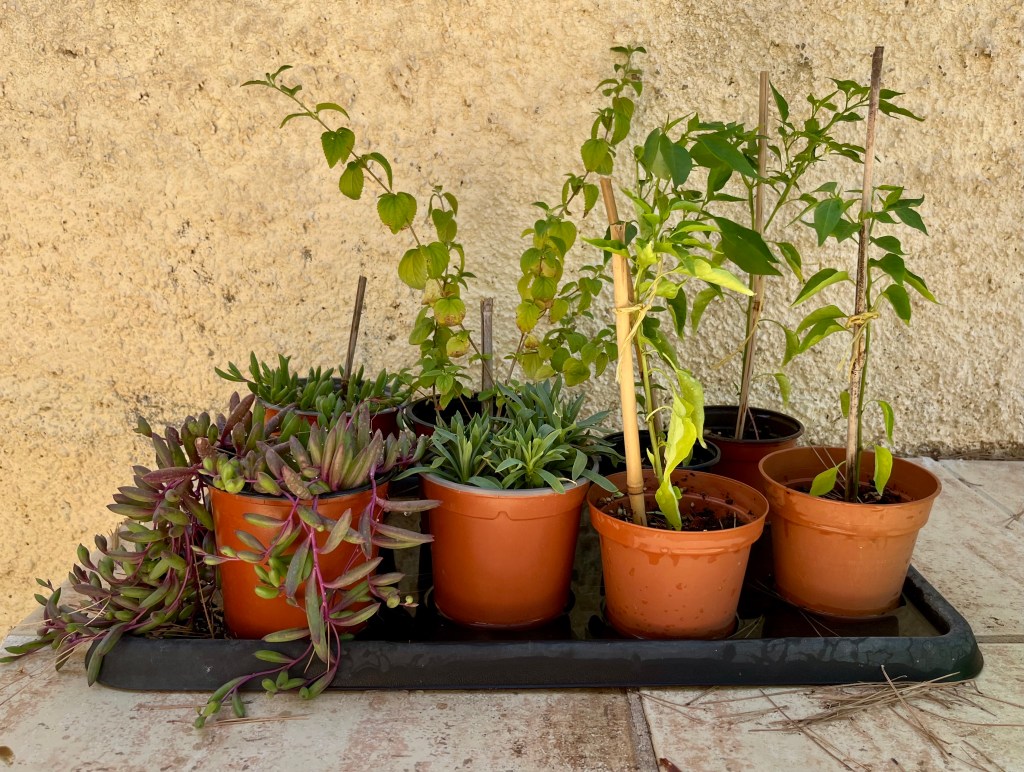
I don’t really grow vegetables, but at the moment I am growing some Chillis and a couple of Avocados and they are normally fine in full sun. But lately it has just been too much for them and they have been dropping leaves in distress and in the case of the Avocado it has become badly scorched. I have had to move all these plants to the rear North facing terrace where they will get early morning and late aftrenoon sun, but miss the terrible heat of the middle of the day. They are all now recovering, but the Avocado looks terrible and gives me reproachful looks every time I walk by.

The first photo below shows the plants now thankfully recovering in the shade. The second photo shows the Avocado reproaching me. Click on each photo for a larger view.

The coming of the Chicken Messiah. As I mentioned earlier our idiot son is with us on holiday and he has immediately taken to Cruella’s fancy chickens, but more importantly they have taken to him. The chickens follow him round, feed from his hand and let him cuddle them as he puts them to “bed” at night Cruella is in paroxysm’s of joy as she believes he is the promised one, “the chicken Messiah”. Given that Cruella is our local Church Warden, I mentioned that this might be seen as blasphemous, but she quickly countered with “we are talking chickens here not our Lord and Saviour”.

Anyway the upshot is that she wants him to leave his very successful career in City finance and come back home to be the Chosen One. To this end she is teaching him Chickenese and the hidden secrets of chicken wrangling. Me! I just ignore it all and carry on gardening.

The various photos below show the idiot son and his new found chicken followers. The next photos show Cruella conducting her evening Chickenese lessons from her perch beside the coop. The final photo shows the Chicken Messiah with Tango the lonely blind Labrador. Tango doesn’t even know we have chickens I’ve told him we have a CD of farmyard sounds. Click on each photo for a larger view.

Poor old Tango they even go into his kennel and drink his water

It is time for the world fig netting championship – and Cruella steals the show

Yes it is that time of the year again when you have to net your figs and other soft fruits, as failure to do so will only make the local birds happy and fat, whilst driving you insane. Regular readers of this blog will know that as part of my committment to international gardening and world peace I encourage fig netting teams from across the globe to assist me in this annual event. Past competitors have included teams from Northern Ireland, Scotland, Hemel Hempstead and Wigan.

This years competition filled me with a frisson of excitement as not only were last years champions from Wigan returning, but they would be facing a crack French team with all the bad will of Brexit adding a competitive edge. Anyway on with the gardening.

5th July 2022. Things I have been doing lately:

Preparing figs for netting. I have two fig trees one is a standard tree that I prune and pollard every winter whilst the other is an espalier that I have been gradually growing up a wall for about 8 years. The first photo below shows the large fig after its Winter pruning whilst the second shows the espalier in Winter. Click on each photo for a larger view.

Before netting your figs check that the tree is in good condition to ensure maximum fruiting. From the photos below you can see some yellowing in the leaves of the espalier, denoting chlorosis or lack of iron. This was quickly overcome with a good feed and a large dose of iron, and in a few days everything was looking good. Click on each photo for a larger view.

The next major problem before netting was to try and get the large fig to an appropriate size for netting. Now you should not prune figs in the summer for two main reasons. Firstly, they will weep a stringent sap all over you and it burns. Second, there is a possibility of letting in disease. However, needs must it had to be lightly pruned or the net could not go over.. The photos below show me manfully trimming a few of the longer branches whilst dodging the caustic sap shown in the final photo. Click on each photo for a larger view.

The last thing you have to do before netting, is to make sure you have the right size mesh netting. Too small a mesh means that the birds wont see it and will damage themselves flying in to it. Too large a mesh then the birds will think they can get in and you will end up with a lot of fat birds hanging upside down in your net each morning. The photo below shows the right size net as chosen by Goldilocks.


The world fig netting championship. With all the preparations done, the waiting was over and it was time to introduce the teams. I normally start the contest with a team line up, photos and playing of respective national anthems, followed by an opening speech of welcome given by me. However, this years opening ceremony was somewhat chaotic as Cruella (my wife) insisted that she should be involved and give the opening speech. However, this proved to be extremely problematic. As regular readers will know Cruella has recently purchased 5 fancy chickens which she dotes on and has even taken to speaking to them in what she calls ”chickenese”. Because of this she insisted in conducting the whole opening speech in chickenese, whilst simultaneosly placing her arms on her hips like wings and bobbing up and down like a demented chicken. The photo below tells it all.

The speech went something like: puck, puck , puck, squawk

Throwing down the fig challenge. Before things can start the captain of last years winning team from Wigan has to throw a fig at the opposition team, and if they pick it up then the challenge is accepted. The photo below shows Gordon the captain of Wigan throwing the ceremonial fig at the French, before John the French captain picks it up. The second photo shows the French ceremonial bow in accepting the challenge. Throughout this ceremony Cruella can be seen shouting out instructions in chickenese whilst still doing her chicken dance. Click on each photo for a larger view.

Stretching the net. The first stage of fig netting is the ceremonial stretching of the net. This stage encourages teamwork and lowers the potential of violence later in the competition. The whole process got off to a shaky start with the two captains adopting macho one handed net stretches. The first photo below shows the French captain adopting his aggressive one hand net hold. The second photo shows that the Wigan captain reciprocates. The only redeeming feature about this stage was that both the women competitors could be seen working in cooperation whilst I tried to calm the whole situation down. Click on each photo for a larger view.

The photos below show some other aspects of the net stretching that may be of interest to gardeners and anthropologists.

Unfortunately this stage ended slightly acrimoniously (as can be seen in the photos below) when the French captain accused the Wigan team of flying a drone overhead to spy on their technique, whilst Cruella insisted on showing everyone how to tie a net around your waist and do the chicken dance. Luckily I was able to calm things down by doing the ceremonial jog around the net which seemed to distract everyone. Click on each photo for a larger view.

This is harder than it looks as it involves 20 circumnavigations of the net running forwards and 10 backward

Raising the net. This stage is the most complex part of fig netting as it requires close cooperation between the teams. To be honest it should have gone far smoother than it eventually did, as I had already laid out all the necessary equipment and tools as can be seen in the photo below.

It is all in the preparation, or so I thought

Things got off to a pretty friendly start as can be seen in the photo below. But I knew there would be trouble as Cruella demanded a leading role as main net lifter. I only agreed because it was the only way I could keep the aggression low between the two captains and keep them apart. Click on each photo for a larger view.

However, the whole thing started to go wrong quite quickly when Cruella began to cry and hyper ventilate saying she was trapped in the net and wanted out; at first no one understood her as she was speaking chickenese. The photo below shows Cruella in distress.

I had to place Cruella in her chicken coop with her flock to calm her down

With Cruella safely out of the way I took over and we soon had the whole process back on track as can be seen from the photos below. Click on each photo for a larger view.

Tying down the net. As the evening drew on the final stage of the netting process; tying down was soon upon us. Basically this involves using lengths of string to tie the net to the lower branches of the tree. This is usually a non contentious stage as most aggression has been used up in the early stages. The photos below show a high level of cooperation between both teams. But the final photo shows one last flare up between the two team captains as they unexpectedly come across each other in the foliage. Click on each photo for a larger view.

I had to throw myself between them to stop violence

The annual fig netting championship dinner. I am pleased to say that overall things went well, we managed to get to the annual dinner and award ceremony in the evening without too much violence. The only problem was that Cruella insisted on giving the annual dinner closing speech; yep, you’ve guessed it, in chickenese. The photo below shows Cruella mid flow whilst Camilla from the Wigan team looks on mystified, Ann from the French team looks away in bewilderment and John the French captain can’t suppress a laugh. Meanwhile Gordon the Wigan captain is a seething mass of inchoate rage.

The main thrust of Cruella’s speech was: puck, puck , puck puck-puck-puck; it went down very well

Forget the Chelsea Chop, I have invented the Costa Blanca Cut

When I informed Cruella (my wife) that I had invented a whole new gardening procedure to replace the Chelsea Chop, she instantly exploded saying if you think we are going vegetarian then you can forget it. After I had explained that the Chelsea Chop was not a cut of meat she calmed down, but kept mumbling about sausages for over half an hour. Anyway, all of you gardeners know what I mean and I am sure will share my excitement.

Normally the Chelsea Chop refers to a cutback of herbaceous perennials that takes place at the end of May in the UK and coincides with the RHS Chelsea Flower Show. The aim is to cutback whilst the plants have had their first blooms and are still growing vigorously with the aim of getting much more flowering. This of course doesn’t apply to Spain, but after experimenting last year in July, I am proud to announce the Costa Blanca Cut (pat pending) is here to stay. I haven’t sold the film rights yet, but I want to be played by George Clooney whilst Cruella has expressed a preference for Morticia from the Addams Family.

Anyway on with the gardening.

30th July 2021. Things I have been doing lately.

The Costa Blanca Cut. Before beginning the Cut you need to decide which plants in your garden will benefit and assemble the necessary equipment. From my experiments so far any herbaceous woody perennials including Plumbago, Bignonia, Jasmine, Bougainvillea etc. If cut back now all should give a really strong second show of blooms. The photo below shows my assembled equipment.

This was just an advance scouting party.

Hedges. All across the front of my garden I have planted a large hedge that contains all the favourites that grow in the Costa Blanca. Over the years I have crowded more in and allowed them to fight for space to flower. This works exceptionally well and normally only requires a big cutback in January. But because the display can get a bit tired in July I invented the Costa Blanca Cut.

The first photos below show various aspects of my hedge in full bloom and before the Cut. Do not trim right back, but just shape the plant up by taking 6 to 12 inches off the stem. Click on each photo for a larger view.

The photos below show the hedge after the Costa Blanca Cut. As you can see the plants have been reshaped and lifted but they still have plenty of blooms. This will hopefully spur new growth into the Autumn. Click on each photo for a larger view.

Last but not least a sack of flowers that have been sacrificed for the greater good of the garden.

This could be a Nosegay for a giant.

Trimming the Flowering column. Regular readers of this blog will recall that years ago I had a diseased palm cut down to about 12 ft which I then wrapped in mesh and used as a support for climbers. This has been a spectacular success and was a prime candidate for the Cut. The climbers include: Solanum, and Pink Trumpet Vine with a later addition of Stephanotis. The Trumpet Vine produces magnificent and showy seed pods up to a metre long, but I don’t want them now as this stops the plant re flowering. By trimming up now I will have more flowers plus the seed pods in late September. The photos below show the flowers column before and after its trim.

Cut down Sunflowers. By now your Sunflowers should be over and done with. By all means keep the seed head to feed the birds, but otherwise cut them down now. With my Sunflowers I just cut off the stem about 6 inches from the ground. By leaving the root in the ground till the Autumn I stop all the disruption that would entail by dragging a large root ball out from the middle of a plant packed border. The photo below shows some of my Sunflowers making their last journey to the compost bin. As I wheel the wheelbarrow to the bin I sing the requiem Pie Jesu it seems to comfort us all.

By this time rigor mortis had set in.

Keep trimming Lavender. If you want your Lavender to keep having successive flower stems, then you need to trim it back as soon as the flower stems go black. I explained in the last post how to do this so I won’t repeat here. But just to say where you have a large plant, or lots to do, don’t hesitate to use your hedge trimmers as they will do an excellent job and save you lots of time. The photo shows the big Lavender clumps by one of my water features which were trimmed with hedge trimmers at the same time as I was undertaking the big Cut on my hedges. Click on each photo for a larger view.

Thin fruit. I don’t normally thin citrus fruits as they usually take care of this themselves. Similarly with Figs, I patrol the trees every day and take fruit off as it becomes ripe. The exception is Persimmon. I have a small Persimmon tree which is now about 5 years old and provides me with a small selection of its lovely fruit each year. However, to make the fruit larger and to stop it dropping too many fruits, I thin where bunches of fruits are too close to each other. The photos below show prime candidates for thinning whereby I take out the middle fruit where there are three. Click on each photo for a larger view.

I have been gardening in the nude so Cruella has made me invisible, and the idiot son has heatstroke.

In an attempt to deal with the grief at losing Nero (the Labrador), I have been gardening all day throughout the current oppressive heat. Of necessity this has meant that I have divested myself of all my clothes, apart from my gardening hat of course. Cruella (my wife) is concerned that the neighbours may see me so she has rendered me invisible. Anyway more of this nonsense later, let’s get on with the gardening .

12th July 2021. Things I have been doing lately:

Keeping gravelled areas clear. With all this heat, trees and perennials are starting to shed their leaves and foliage. This is a defensive mechanism to stop the plant losing too much water. The outcome of this is that gravelled areas of your garden will start to get covered with plant detritus which will soon mulch down into the gravel presenting a perfect mulch for weeds to take seed. To overcome this you need to rake or blow these areas clear. Failure to do this will mean that a whole new generation of weeds etc will spring forth from your gravel this autumn to torment you.

The photo below shows me cleaning up one of my gravelled areas; or at least it would if Cruella hadn’t made me invisible. If you look carefully to the left you can still see my shadow as I bent down to pick up the trug.

You can’t see it, but I have a very fetching all over tan

Cutting back foliage. Because of the heat you may find it necessary to trim back some of your plants foliage. This is especially the case if the plants are in pots as they will not be able to drive their roots down in search of water. I have had to trim back two large standards that grow in pots in my swimming pool area. Normally these would be lightly trimmed back after flowering and then severely pruned in the Autumn. However, the current extreme heat has meant that I have had to trim and sacrifice some short term flowering for the sake of the overall plant health. The first photo below shows the Standards with rampant foliage, whilst the second shows their life saving trim.

In addition to the Standards I decided to trim back two Red Peach cuttings I have been growing on. The largest of these will go in the ground next year, but in the meantime they need to be cut back because of the stress. From the photos of the before and after, you can see that I have just trimmed them back to give them a bit of trunk.

Pruning back a badly mauled Dame de Noche. I have a large mature Night scented Jasmine which is placed right beside our outside kitchen and seating area. Normally I can coax this plant to provide its exotic scent throughout mid to late Summer. However, the plant is liable to greenfly, whilst normally this is not a problem if you catch it on time. This year it had a bad infestation in early May and through my carelessness I didn’t spray until the infestation was well underway. When I did finally spray that stopped the infestation, but it was too late as the soft Spring growth was damaged by the sucking Aphids (when I saw the damage I didn’t say “sucking”.

Unfortunately the outcome is that I have had to take the plant back about six inches. This will lose me the mid Summer flowering, but I should get flowering and scent by Mid August. The first photo below shows the distortion caused to the stems by the Aphids. The next two photos show the Dame de.Noche before and after its trim.

Checking irrigation. Just because you put an irrigation system in a number of years ago, does not mean it is still in full working order. The current intense sunshine and high heat levels will play havoc with your irrigation system, causing leaks, clogs and general breakages. In addition the Spanish authorities have a habit of turning down water pressure in the Summer, which means water from your irrigation system may not actually be reaching your plants. By the time you notice that your plants are wilting it may already be too late.

You need to overhaul your system now by doing the following:

  • Turn on your system
  • Go round looking for any leaks and repair these
  • Once all the leaks are repaired, turn your system back on
  • With the system fully on, adjust each nozzle individually to make sure each plant is getting the necessary amount of water
  • Finally check that the batteries in your timers are still ok

The first photo below shows one of my many recent leaks that is now thankfully repaired. The cause of the leak can be seen in the second photo. From this you can see that the tube had become brittle in the sun and developed splits and cracks.

I have entered the Gardeners Turner Prize competition. I collect watering cans like Cruella (my wife) collects other peoples finger nails, small dead animals and noxious substances. She is continually berating me and asking why I need more watering cans, but when I explain that there is a watering can for every occasion, she merely scoffs that when I die the lot will be thrown out; we are working on our relationship, but overall I think we are getting on better.

Anyway, I digress. If like me you have a lot of watering cans, and like me you are always falling over them., then behold in the photo below my new artistic creation.

What’s not to like, practical and artistic. They are not all there, I need a bigger trellis

The idiot son got heatstroke. I may have mentioned that the idiot son is over on holiday. This has sent Cruella into paroxysms of motherhood. He is being fed like a big fat cuckoo chick and his every whim is being met. He watches what he wants on television, sits in the front of the car while I am left in the boot. But the worst thing is that she insists on carrying him on her back wherever we go. If you don’t believe me see the photo below. She carried him around for 5 hours the other day in the blazing sun and then he got heatstroke and she loved giving him cold baths.

She likens the whole process to St Christopher carrying God. I told her this was blasphemy and she would not go to heaven. She merely replied that she has another reservation waiting

Nero is dead – but he was framed by the squirrels and blackbirds

It is with great sadness that I have to inform you that Nero is dead. No not the Roman emperor, he died in 68 AD. I mean Nero one of our Labradors. Regular readers of this blog will know that we have (had) two Labradors who regularly featured in posts as they mauraded around the garden destroying my gardening efforts. Both dogs are old; but we still think of them as puppies, Nero was 10 whilst Tango is 12. Both suffered multiple ailments, Tango is blind and Nero suffered from bad arthritis, a dodgy liver and terminal stupidity.

This is what happened. We knew Nero was ill and the Vet warned us it was probably terminal. We asked if he would survive long enough for our idiot son to see him before he died. Both he and Nero were very close in intelligence and behaviour. But unfortunately it was not to be Nero died in my arms at 1.15am on Sunday morning and the idiot son arrived at 10.30 am. The idiot son and I dug his grave in our wild wood and he was laid to rest with all due ceremony. Cruella (my wife) at first wanted to reanimate Nero as she euphemistically called raising him from the dead, but eventually agreed to just sing “Dido’s Lament”. I read the epic poem “Beth Gelert” and the idiot son performed an expressive hip hop mime he had specially composed based on unrequited bereavement.

My reading of Beth Gelert was no accident, as the saddest thing is that Nero was infamous for digging up the lawn, causing me great fury and many hours patching it up. It turns out that Nero was innocent all along, just like Gelert. Since his demise digging activity has taken place and it appears that Nero was framed by squirrels and blackbirds who were the culprits all along. Because of this terrible injustice Cruella has insisted that I walk barefoot to Thomas á Becket’s shrine in Canterbury to make penance.

In memory of Nero I have included some photos below, but just so you know what he was like here are some of his greatest hits:

  • He ate a whole giant poisonous Toad and nearly died
  • He ate a blanket (yes a blanket) and Cruella had to pull it whole out of his bottom
  • He careered through flower beds and destroyed thousands of plants
  • He snapped his leg ligaments whilst running on the beach and I had to carry him half a mile to the car whist he was soaking wet and covered in sand; he weighed 45 kilos
  • He could swim whilst at the same time holding three tennis balls in his mouth
  • If you got in the way of Nero and a tennis ball whilst in the pool he would claw his way over you to get to it
  • He won best in show at our local dog show as a puppy by just sitting like a sack of depressed coal
  • He dug up the lawn on numerous occasions (offence now rescinded)

The first photo below shows Nero resting by a newly dug hole in the lawn, whilst the second shows Cruella trying to protect him from what has now turned out to be my unjustified wrath. Click on each photo for a larger view.

The photo below show a young brave and ambitious Nero being taught to swim by his big brother Tango.

And finally his grave in the Wild Wood. Normal garden blogging will resume when I am back from my penitential pilgrimage to Canterbury.

My final apology for wronging Nero will reach out beyond the grave. May the regret of Llewelyn at the death of Gelert serve him as a suitable epitaph.

Vain, vain was all Llewellyn’s woe; 
” Best of thy kind, adieu! 
The frantic deed which laid thee low. 
This heart shall ever rue!” 

I am hiding on top of the shed! Extending flowering and saving seed

When I told Cruella (my wife) that I had to urgently get this post out she scoffed and said there was no way I could waste time on my hobby as we had to get the house ready for the idiot son’s annual holiday in Spain. I argued that seeds and flowers wait for nobody, but she insisted. So that basically is how I ended up on top of the shed.

Over the years I have developed a passive aggressive strategy that involves agreeing to everything Cruella says and then basically going and hiding where she can’t find me. This tactic has served me well, but Cruella has got wise to it. As I lie in my new hiding place, at the back of the shed roof I can hear her searching all my normal hiding places. So far she has searched inside the shed, raised and slammed down the compost bin lids, plunged her hand down into the water butts (she knows I have a snorkel). She is now standing in the middle of the lawn threatening to cut the heads off of all the flowers if I don’t come out.

I will let you know what happens, in the meantime on with the gardening.

3rd July 2021. Things I have been doing lately:

🌻 Extending Sunflower flowering. If you have grown sunflowers this year then the main flower may just be about spent. You can if you wish leave this deadhead on to completely turn to seed which in turn will feed the birds. But if you want more flowers then you have to act now. You can get a second flush of smaller but perfectly formed sunflowers on the same stem, but only if you cut off the main flower head. Cut off the head and stem just above the last leaf at the top of the main stem. With luck and the right variety you will end up with a flush of mini sunflowers coming down the stem.

The first photo below shows my sunflowers just as they were beginning to come into flower. The next photos show the effect that cutting off the main head has on extending the flowering. And if you are worried about feeding the birds, then don’t; instead of getting a main course, they get a selection of Tapas (they are Spanish birds after all). Click on each photo for a larger view.

In total I planted 20 sunflowers and they all did wonderfully

🌼 Making the most of Marigolds. If you have sown Marigolds then you will know they are a joy to grow as they germinate quickly and provide you with hundred of flowers from one seed pack. But, if you want them to last all Summer and be at their absolute best then there are a number of things you should be doing right now.

The first thing you need to do is to save seed for next year from the very best blooms. The first flush of flowers will always be the biggest and the best, with successive flowering’s gradually getting smaller. It is from this first flush that you need to save your seed. Don’t just rely on you remembering which flower was the best. When they are all brown and withered they all look the same. Get some masking tape and wrap a piece of this round the stems of the best flowers. In this way when you come to dead head you know to leave these alone and let them go to seed.

The first photo below shows my trusty masking tape ready to be deployed, whilst the rest of the photos show the chosen ones. Click on each photo for a larger view.

As well as collecting seed you need to make sure that you tie up the stems to stop them dropping. This requires lots of canes and string, but it is worth it. The other important thing you have to do is deadhead daily to ensure consecutive blooms. The first photo shows my tying in activities, whilst the next photo shows a deadheading foray. The final photo shows the view down the drive. Click on each photo for a larger view.

🪚 Keeping lavender trimmed. Lavender grows very well in our Spanish climate, and most people will have all sorts of lavender in their garden. The secret to multiple flushes of lavender is to trim it at the right time and in the correct way. Not all types of lavender will be ready to trim at the same time. So before you trim make sure that the flower stems are fully dried, but preferably before they start dropping seed.

The first photo below shows one of my mini water features which I have surrounded with a lavender circle that is now ready to trim. The next photo shows you exactly where you need to trim. Trimming should be at the bottom of the dried flower stem, but you must not cut into the green growth as this is where your next flush of flowers is coming from. The final photo shows the newly trimmed lavender ready to get flowering again. Click on each photo for a larger view.

I haven’t yet achieved a full circle as I have to put new cuttings in each time one dies.

🫖 Taking a break. We keen gardeners can sometimes forget how old we are, and think we can garden all day, just as we did in our young days. But in the Summer heat it is important to take regular breaks and get your self out of the sun. I don’t want to go all “Nanny state” on you, but it is not a good idea to drink alcohol and then garden in the sun. Far better to drink water regularly, or if you are a tea fanatic like me, buy some good loose leaf Early Grey and mix it with loose leaf Darjeeling and let it brew for 3 to 6 minutes before drinking.

I offer you the elixir of life. Sin leche y sin azucre.

I’m letting the grass grow under my feet – and Cruella has a makeover

My goodness isn’t it hot! Both the maurading Labradors and myself are melting. Our day consists of bursts of gardening followed by pots of tea and dips in the pool. What I haven’t mentioned is that poor old Tango (the blonde one) has gone blind with cataracts and keeps falling into the pool; luckily he knows where the steps are. Any way enough of this nattering, on with the gardening.

1st August. Things I have been doing lately:

🌱 Letting the grass grow. I know that technically God makes the grass grow – mind you he is never around when it’s mowing time – but I have decided to assist him by letting my grass grow longer. When I told Cruella (my wife) that I was letting the grass grow she got very angry, when I asked why? She told me that longer grass would make it difficult for her to catch the frogs she uses in her beauty cream.

Now I understand that not many of you have a lawn in Spain as they can be tricky in the heat. But for those of you who do, then it’s time to let the grass grow a bit longer. There are a number of benefits from this:

  • It stops scorching over the Summer
  • It encourages low growing wild flowers
  • It helps pollinators as the wild flowers provide nectar
  • It saves you having to mow in the heat

One of the delights of the longer grass has been the low growing and creeping wildflowers. The first photo below shows the tiny yellow flowers of Creeping Woodsorrel that greet me every morning but then disappear by lunch as they escape the Sun. The second photo shows something I had never seen on the lawn, but is now happily growing in bare patches under shade. This is Asian Ponysfoot (from the shape of the leaf). I would have missed both of these if I had kept the mower blade low. Click on each photo for a larger view.

🍊 Harvesting Figs. Regular readers of this blog will know that I love Figs and look forward to the harvesting season with great anticipation. The great joy of Fig trees is that once they get mature then they produce fantastic harvests. The photo below shows the first figs of joy.

And so it begins!

The problem of course is that once the figs start then they come thick and fast. You need to harvest every day, preferably first thing in the morning when they will be at their juiciest. Figs keep perfectly happy in the fridge for weeks, but, try and use up as many as possible fresh; including sharing your harvest with friends. But if you want to save some for the future then dry them in the Sun. This is very simple;

  • Cut each fig in half
  • Place them on an open mesh tray
  • Place them on a table in full Sun
  • Cover them with a mesh cover to protect from birds
  • Try and remember to bring them indoors at night

The photo below shows my fig preparation area in action.

I could have my own cooking programme on TV. I could call it Fig off or F off for short.

After three days the Figs should be fully dried and you can them store them in a plastic box in the freezer for months. Now to assist you in this matter I have once again come up with a new invention to stop the ants devouring your figs as they dry. (See photo below). The main components of my new invention are orange juice bottles cut in half, filled with water and then with the table legs inserted . Once again I have great hopes of this device being stocked by Amazon.

You can now purchase both my cuttings shade and my patented fig dryer in a bargain bundle.

✂️ Trimming Trumpet Vine. I have lots of Pink Trumpet Vine growing in hedges etc in my garden, and it is a great joy with beautiful hanging flowers. Another of the great joys of Trumpet Vine is the hanging seed pods that are left after flowering. These provide great interest in the Autumn, but for now we need more flowers. To achieve another flush of flowers go round now chopping off all the seed pods and lo and behold you will have another huge burst of flowers. The next lot of seed pods can be left on as these will provide the plant with interest for the Autumn season. The first photo below shows the seed pods ripe for trimming, whilst the second photo shows the newly trimmed plant. Click on each photo for a larger view.

🦗 Spray Aphids. At this time of year you need to check your plants daily for pests such as Aphids. In my case this means putting on my glasses. Aphids and other pests start off very small and unnoticeable and till one day you have a biblical plague of them sucking the life out of your lovely plants. The first photo below shows my discovery of a new problem plague which I dealt with unmercifully with the methods in the second photo.

🧟‍♀️ Cruella has a Makeover. Regular readers of this blog will know that Cruella (my wife) is a proponent of the dark arts which I call Witchcraft but she insists is merely another way of looking at things. Any way because of the recent problems caused by identity politics she has decided that in case of bad publicity she needs a new image. Together with a number of her friends throughout the world she has formed a new association called Witches Lives Matter (WLM). To launch WLM Cruella has had a number of publicity photos taken showing her in a sympathetic light. In one photo she is seen swinging on a swing that is garlanded with flowers and with a garland of flowers in her hair. In another she is sitting on a rug before an open fire cuddling three cute little puppies. The photo she has Insisted I use in my blog is shown below and is self explanatory.

I asked her what happened to the puppies in the other photo and asked could we bring them home. She said no as she has sent them to live on a farm where they will be able to run around; but she said we will visit them in the future, so that is ok.

Scorched roots, compost donuts and a warning from Cruella

The above heading could be about a really bad hairdresser and a disgusting snack. But no, the world of gardening throws up all sorts of funny things especially after the great seed disaster of 2020. I know I’ve mentioned it once or twice, but did I tell you I lost all my seeds this year. Anyway, the fact of the matter is that having lost all my seeds I have had to rely on cuttings and bought plants to stock my borders. This has brought a number of problems which I insist on sharing with you.

14th July. Things I have been doing lately:

🙀 Trying to save bought plants. If you buy plants from garden centres etc at this time of year and then plant them in full Sun, then you are mainly wasting your time and money. The Sun will scorch the roots before the plants can get established and all you will have left is a few crispy leaves. The photo below shows a poor Lobelia who despite my best efforts did not survive its scorching.

Poor little Lobelia

The problem is this. You buy a new plant you plant it in a pre-watered hole and then you water at night. However, the roots don’t have time to get down into the soil and as the water is close to the surface the roots turn upwards. The Sun comes out the next day and scorches the roots. You see the plant is in distress and you water again and the same thing happens. The only thing that will stop this cycle and give your new plant a chance is to create a compost donut.

A compost donut is a ring of thick mulch compost that you apply all around the plant just after watering. Lift all the foliage up and pack the compost around the stem and to a distance of about 6 inches. This will act as a barrier to the Sun and give your new plants a fighting chance. You will probably have to renew the donut every week as the Blackbirds will take delight in tossing it everywhere in their pursuit of insects. The photos below show operation donut in action. Click on each image for a larger view.

🌂 Shading cuttings. I normally take lots of cuttings in late Spring and then plant them out in early Autumn when they have decent root growth. But because I am trying to fill beds I have been forced to try and bring the cuttings on faster. This again was another mistake. Because of the fierce Sun, cuttings like the new plants (discussed above), do not have sufficient roots to withstand the heat. Because of this, and at great expense, I have developed a patented Cuttings Shade that is suitable for all potting benches. The photo below shows my prototype; extra bricks are available as plants grow, I call it my extension kit. I am hoping that Amazon will stock it.

The basic model.
The basic model enhanced by an extension kit.

🌼 Dealing with Sunflowers. One of the serendipitous outcomes of the great seed disaster of 2020 was that I planted some Sunflower seeds. I found an old packet of seeds that I had more or less ignored because, I had other things to grow, and they were all I had left. Well they didn’t disappoint they were lovely as you can see from the photo below.

Sunflowers just make you smile.

After an excellent show of flowers I am now in the process of preparing the seed for next year. There are various methods of doing this, you can leave the head on and let it dry then harvest the seed. Or, you can do, as I am trying by letting the head partly dry then cutting it off and letting the whole thing dry off the stem. If you want to follow my approach then there are three basic stages.

  • Wait till the outer petals are very dry and brown.
  • Cut off the head with about 4inches of stem.
  • Hang the head upside down to complete drying

At the end of this process you supposedly will have your seeds. I will keep you informed. The photos below show the three stages. Click on each image for a larger view.

🧟‍♀️ Cruella sends a warning. I was just on the phone to Cruella (my wife) informing her that I did not think it was appropriate for me to continue to include her in this blog. I was explaining that I wanted to keep it simply about gardening and I was worried about her advocacy of Witchcraft. I had no sooner uttered the words when a glass dish sitting on our kitchen island flew across the room and smashed on the floor. Our two maurading Labradors hearing the smash charged into the kitchen expecting to find food on the floor. Both dogs proceeded to skid around on the glass and yelping as they cut their paws. I rushed forward forgetting I had no shoes on and unfortunately joined them in this manic dance where we were all trying to get our feet off the ground, but only making matters worse. From the abandoned phone I could hear Cruella chanting Red Rum, Red Rum over and over again.

It was only after cleaning up the blood and the gore did I see a message cracked into one of our floor tiles (see photo below). Needlesss to say I have seen Jack Nicholson films, and Cruella will definitely be featuring in future posts

Just hold this picture up to the mirror. Be afraid…be very afraid.

Cut, Trim, Nip, Tuck and Primp

The above title is not the name of a famous firm of Plastic Surgeons, but instead is an accurate description of what you should be doing in your garden right now. Don’t be one of those gardeners who sits back and watches their plants flower once and then it’s on to Autumn. No, if you take action right now you will have flowering right through to November and the loveliness of your garden will be the envy of your friends. Most flowering plants (that are not single stem) are capable of multi-flowering, but only if you actively intervene and stop them going to seed. Once a plant has flowered it believes its work is done and it will put all its energy into making seed. Your job is to intervene cut off the flowering heads and force the plant to start again and to make a new flower. There you have it, that’s the gist of the whole thing. Let’s get on with it.

1st July. Things I have been doing lately:

🌺 Deadheading and tidying Roses. If you have Roses in your garden then you will know that they’re grow splendidly in Spain. Most Roses will flower at least twice in Spain, in March-June and again in September-November. Depending on the type of Rose some will continue to flower all Summer. But in each case it is important that you deadhead continuously and also that you tie in and cut back. The first photo below shows a typical morning trug full of deadheads, the second and third photos show a couple of lovely Roses (Tess of the D’urbervilles) that I had to move as they were not thriving. In their new position I want them to climb up wires so it is necessary to cutback any outward growing branches – marked in red. Click on each photo for a larger view.

✂️ Trimming back Lavender. Here in Spain if you do the right thing then you can have at least three flowerings of Lavender. Once the flower spikes have gone completely black, and you notice that the bees are no longer bothering to visit the plant, then this is the time to trim back. Using your secateurs or garden shears trim off all the flowering spikes. Do not trim into the main body of the plant as this will inhibit flowering and may cause die back. When you have trimmed the plant back give it a good feed to encourage the new flowering. The first photo below shows the Lavender plant in need of a trim. The second shows it trimmed back and ready for its next flowering.


✂️ Trimming back Gaura. When trimming back Gaura you apply exactly the same process as Lavender. Take off only the flower spikes. In the case of Gaura you will probably get only two flowering’s a year, but the second flowering will last from July till October. Now that is what I call good value. The first photo shows the Gaura ready for cut back whilst the second shows it trimmed. Click on each photo for a larger view.

🧟‍♀️ Cruella does gardening. Those familiar with this blog will know that Cruella (my wife) has introduced her own range of lifestyle clothing and household items with a gardening and witchcraft theme. In my last post she insisted that I introduce her new range, and in this post she wants me to tell you about her new female Assassin clothing range. When I questioned her about this she said it was important for female assassins to retain their femininty even if they were cold blooded killers. The photo below shows Cruella modelling her new “Lady Killer” jacket. She tells me it is bullet proof, has a blood resistant lining and a full range of pockets for knives, and guns. With an added touch of style for the lady assassin who has everything, the waist drawstring can be quickly converted to a garrotte.

This is Cruella’s reassuring smile … if you see this it’s time to run.

Magreits, Sago Palm Pups and Figageddon

What a cornucopia of gardening delights are summed up in this heading. Now we are at the height of Summer I am sure you are running around like headless chickens not knowing which job to tackle next. There are flowers to be deadheaded, weeds to be hoed, grass to be cut and the nightly watering ritual that has turned me into a Spanish version of Kipling’s “Gunga Din” – gardening and empire, I am spoiling you.

29th July. Things I have been doing lately:

🛏 Re-making a bed. A flower bed obviously before you ask. I have a number of island beds within my garden which every couple of years need a make over. The photo below shows the flower bed before its make over.

A rather messy bed that would easily outdo Tracey Emin. In fact I may enter for the Royal Acedemy Summer Exhibition next year

From the photo you can see the flower bed has been left with a profusion of Magreit Daisies that I have deliberately allowed to self seed into the surrounding shingle. The flowers surround a mature Sago Palm and in their first couple of years it looks interesting and very naturalistic. But, as I have left this for at least three years, with just a cut back every year, the Magreits have become woody and will not take another cut back, so it is time to clear up. Also, the Sago Palm is in need of a trim to keep its architectural structure.

The first thing to do is pull up the Magreits sometimes they can be quite tough to get up, but the reward is that underneath will be a number of seedlings which I will replant in this bed in September/October. The first photo below shows the poor old Magreits lying like plague corpses waiting to go in the charnel pit; but wait! there is new life as the second photo shows some seedlings (many more will come out now they can see the light).

Once the Magreits have been cleared it was time to turn my attention to the Sago Palm. These Palms are relatively slow growing and very expensive so you don’t want to mess up the pruning and have it die. The rule here is you can cut back, but you must leave at least two rows of fronds at the top of the trunk. This is your insurance policy, it is possible to lose one row, but to paraphrase the words of Lady Bracknell, “to lose one row may be regarded as a misfortune, to lose both looks like carelessness”. Just snip round with lopers until you have just two rows left and then stop don’t be tempted to go any further. The first photo below shows the underneath of the unpruned Palm, whilst the second shows just how many fronds can come off.

Finally, and this is the bonus. You remember that I told you a few paragraphs ago how expensive Sago Palms are, well this is your surprise. If you are lucky your Sago Palm will have produced some “pups” at the base of their trunk. These are mini Sago Palms that can be harvested and grown as completely new Palms thereby saving you a fortune. I will show you how to do this in a couple of months. In the meantime here is a photo of the pups to get you excited, and finally a photo of the completed bed.

🦇 Beginning to harvest Figs. Yes, it really is Figageddon. Now I like Figs; no I actually love Figs, and if you have netted your trees you should be at the start of harvest. If on the other hand you have not netted your tree as I told you the other month, then all the fat over-Figged birds of the Costa Blanca thank you for the feast.

Figageddon, is not a term of exaggeration as I explained to Cruella (my wife) as I ran into her bedroom at 5am the other morning screaming “Figageddon is upon us”. To say she was underwhelmed would be an exaggeration; she didn’t even come down from the beam where she was hanging and I had to conduct the whole conversation with her hanging upside down and still with her wings wrapped around her. Anyway, I explained to Cruella that Figageddon is a technical term (which I have invented) for a “glut” of Figs that will overwhelm you unless you harvest every day. You need to check your Fig trees every morning. At first you will get 3 or 4 ripe Figs, then 6 or 7 , but it will gradually build up to “FIGAGEDDON’ where dozens will ripen each day. At this point no matter how many you eat, you will still have to give some away to friends, make Fig Jam or dry them like I do. I’ll tell you more about drying later. Meanwhile here is a photo of the start of Figageddon – you have been warned.

I know it doesn’t look much now – but you just wait.

Deadhead and cutback for a new garden

I know “deadhead and cutback”sounds like the employers of Bob Cratchit before he worked for Scrooge, but really it’s just the way to get two gardens in one Summer. If like most people you let your garden flower once and then just leave it alone, then you are missing out on a whole new flowering which is just like having two gardens. Now is the time to deadhead everything and cutback perennials and off it will all go again.

19th July. Things I have been doing lately:

🌿 Cutting back Lavender. Most people think that once Lavender has flowered then that is it. But no, if you cut it back you will get another full flush of flowering, and just as importantly you will get lovely flower heads which you can dry and place in your wardrobe to smell lovely all Winter. Or as Cruella (my wife) does to use in the spell of your choice.

The first two photos below show the Lavender near my water feature which have flowered and will stay like this if not cutback. When cutting back Lavender try not to go into new wood, just go to the bottom of the flowering stem and cut there. The third photo shows where to cut. Finally, and best of all store the cut flower stems in a plastic bag for a few days and let them dry in the Sun. once they are fully dry place them in small muslin bags and hang them in your wardrobe. If you haven’t got muslin bags then cut up an old pair of tights (but don’t tell Cruella, I have convinced her we have moths).

🌺 Cutting back the seed pods of Pink Trumpet Vine. Lots of us have Pink Trumpet Vine in our gardens here in Campoverde. It likes the soil and it loves the climate. Although Pink Trumpet flowers profusely it will try and set its seed pods early if you let it. Once it begins to set seed then it will divert all its energy into this rather than continuing to flower. The photo below shows the distinctive and lovely seed pods hanging from one of my Pink Trumpet Vine. You need to cut these off now and the plant will continue to flower all Summer. I tend to leave the seed pods from late October as they make a nice Autumn feature. But now you must cut them back.

These seed pods can grow to over a metre long; but not now, they have to go

✂️ Cutting back Bird of Paradise. To be honest you shouldn’t really cut back Strelitzia in the Summer, but I just like to tidy it up a bit. The first photo below shows my Bird of Paradise looking a bit scruffy. When I prune it in the Winter I cut back the flowering stems to a joint. But when I am tidying up I take the cut right to the bottom and take the full stem out. The first photo shows the plant before it’s tidy up, whilst the second shows it post the cut back. Can you see the difference? No me neither, I am obviously wasting my time here.

🌳 Cutting back potted Standards. If like me you have standards in pots whether it be Roses, Lantana or any of the other plants that are shown as Standards in Spain, then you now need to shape them up a bit. During June to August your standards will put on lots of leaf and flower, which would be fine if they were in the ground, but in pots they cannot get their roots down deep enough and therefore are constantly crying out for water. If you don’t want to end up with the arm length of a Gorilla from going backward and and forwards with heavy watering cans, then now is the time to reshape them.

I have two Standards which sit in large pots inside the gates of my swimming pool. In Winter I reshape them to tight “lollipops”, but in the Summer I let them expand and flower. By reshaping them now, they will continue to flower right into October and beyond.

The first photo below shows one of my poor Standards crying out for water. The second shows it reshaped with just about a third taken off. Finally you can see both reshaped standards sitting proudly outside the gates, within a week they will be back in full flower.

🧛‍♀️ Cruella is in her counting house. We regularly raise money for “good causes” in our village and we entrust Cruella with counting all the loose change and then banking it. When I confronted her the other day about where she finds the money for her huge range of bikinis and matching nail varnish; all I got was the gleeful look you can see in the photo below.

The grapes have got mildew again and Cruella does a harvest dance

It certainly is a busy time in the garden at the moment, the days just don’t seem long enough to fit everything in. But if you relax for even a moment the pests and diseases will overwhelm you. On that cheerful note let’s get on with what we are supposed to be doing.

6th July: Things I have been doing lately.

💧 Dealing with leaks. I know it sounds boring but you really need to check your irrigation systems at this time of the year. Don’t assume that just because you have set up an irrigation system that it will remain water tight for ever. Gradually, over time all irrigation systems leak, and sometimes not in a very obvious way. But slow persistent leaks can cost you a lot of money here in Spain, not to mention the cost to the environment and the plants that don’t get watered.

Turn each of your irrigation systems on one at a time and check that all your watering nodules are working with the correct pressure. Once you have done this and are satisfied that everything is getting watered, then go round and check all the joints, corners and connecting pieces. A small but persistent leak will cost you a lot of money. The photo below shows one of my systems that was leaking before the water timer and was therefore running 24 hours a day.

The news is fake, but the leaks are real.

🍇 Treating the grapes for mildew. Every year it is the same story; the grapevine along the front of my house gets mildew. No matter what I do the result is always the same. The main culprit here is the fact that the Vine is against a wall and therefore does not have enough air circulation. If you have a problem of mildew then at the first sign spray. If however, as in my case, the mildew is too bad, then just cut off all the leaves and side shoots and dispose of them in the rubbish. The resultant denuded plant will soon sprout a second flush of leaves, you will lose the grapes this year, but, at least it will look nice. The first photo below shows my poor mouldy grapes (no pun intended). Whilst the second shows my bare grapevine.

🐛 Beware the Palm Weevil. Now that Summer is at its height the Palm Weevil will be flying around waiting to destroy your Phoenix Palms. If your trees are small enough, then spray the crown with a proprietary Weevil killer. If not either call in a contractor or follow my home made method. I have drilled holes in all my Phoenix Palms and inserted a perforated tube halfway into the trunk. I have attached this to another tube that I wind around the tree. I pour a Weevil killing chemical into the tube which then acts as a reservoir and drips this into the tree there to be taken up to the fronds by the rising sap. This very effective method can be seen in the photos below. The first photo shows my tubing (or tree bondage). Whilst the second shows me pouring the chemical in – the old Fairy Liquid bottle is not product placement.

🦅 Netting your soft fruits. If you have not done so yet, now is the time to net your soft fruits such as Figs. Although the fruit is not yet ripe the birds will be watching it closely, and if you are not careful they will get there before you. So if you don’t want fat birds (again no pun intended) then get netting.

When you do net it is important that you use a small mesh net to stop birds being caught in the net. I assure you it can be quite distressing to come out in the morning and find half a dozen fat birds hanging upside down in your net (I have already apologised for this pun).

Because our main Fig tree is getting quite tall I invited our tall friends Helen and John for a barbecue with the ulterior motive of coaxing them into net duty. From the first photo below you can see that together with Cruella they provided a very able net crew.

You can see that Campoverde used to be a fishing village – and we still have the skills.

Once the net is in place it is important that you tie the net down to the lower branches of the tree. This serves two purposes. Firstly, it stops the net blowing away in the night and you having to go from garden to garden asking your neighbours if they have seen your net. Secondly, it stops the cleverer and sneakier birds from getting underneath. The photo below shows John tying in the net supervised by Cruella.

I am hiding under the tree

Once we had finished things starting taking a strange turn. Cruella started chanting, and then turning to Helen they began a strange harvest dance that ended in them hugging and “gurning” at each other. You can see them mid dance in the first photo. The second photo shows the finale of the dance with John still trying to get me to come out from under the tree.